
REFRIGERATORS Refrigeration It is the process of producing
- Slides: 10
REFRIGERATORS Refrigeration: Ø It is the process of producing and maintaining the temperature below atmospheric temperature. Air Conditioning: Ø It is simultaneous control of (i) Temperature (ii) Humidity (iii) Air flow & Circulation (iv) Air filtering; of the atmosphere in the specified space in summer and winter. Basic Components: Ø Compressor Ø Condenser Ø Throttle Valve Ø Evaporator.
REFRIGERATORS – HOUSEHOLD TYPE
REFRIGERATORS – HOUSEHOLD TYPE
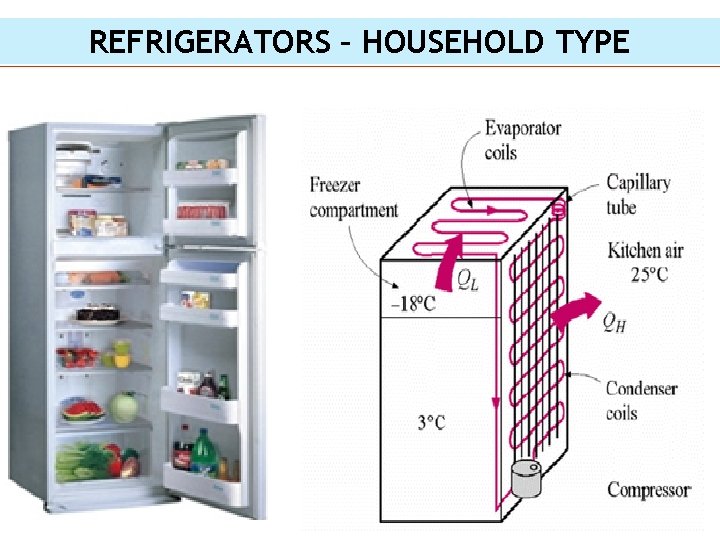
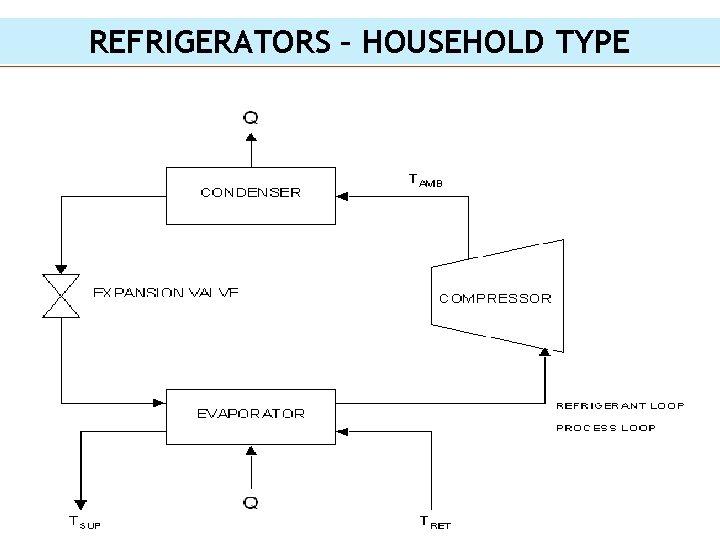
REFRIGERATORS – HOUSEHOLD TYPE Ø It works on vapour compression refrigeration system. Ø The compressor draws low pressure vapour from the evaporator and compresses it to a higher pressure & temperature. Ø The high pressure liquid refrigerant is throttled through the throttle valve or capillary tube to low temperature and pressure. Ø The low temperature and pressure refrigerant then enters the evaporator where it produces the desired cooling effect. Ø Due to heat removal from refrigerated space the refrigerant evaporates and is taken by the compressor and the cycle repeats. Ø The Capacity is expressed in terms of available refrigerated space. For example – 100 litres, 165 or 185 or 220 litres, etc.
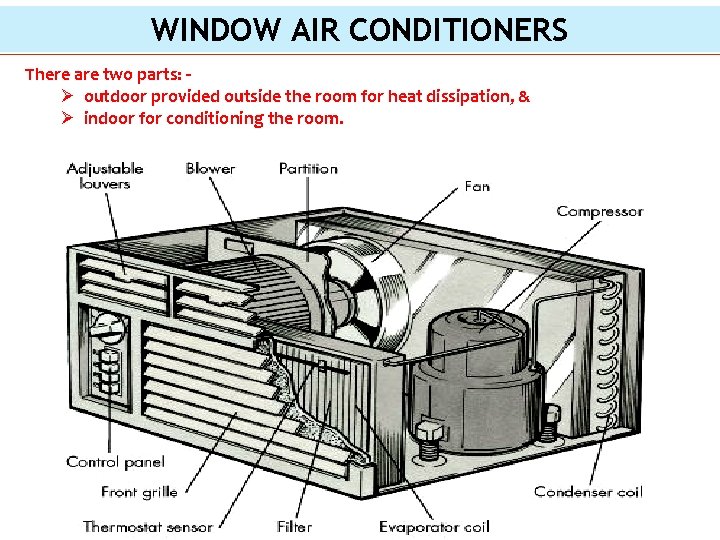
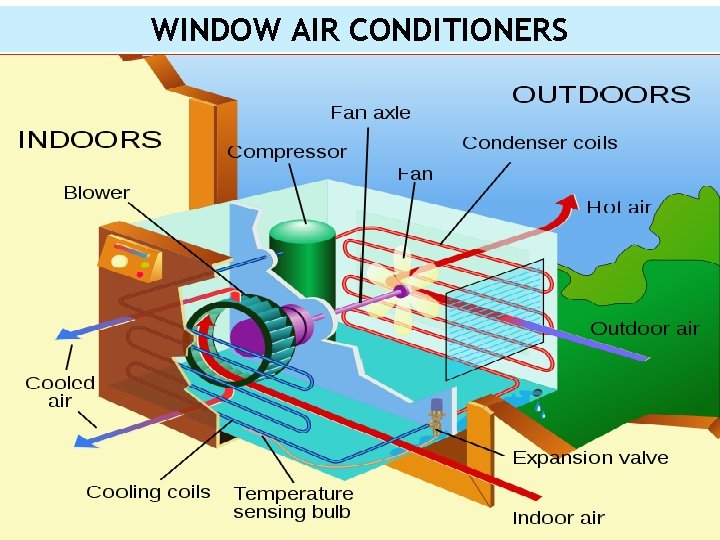
WINDOW AIR CONDITIONERS There are two parts: Ø outdoor provided outside the room for heat dissipation, & Ø indoor for conditioning the room.
WINDOW AIR CONDITIONERS
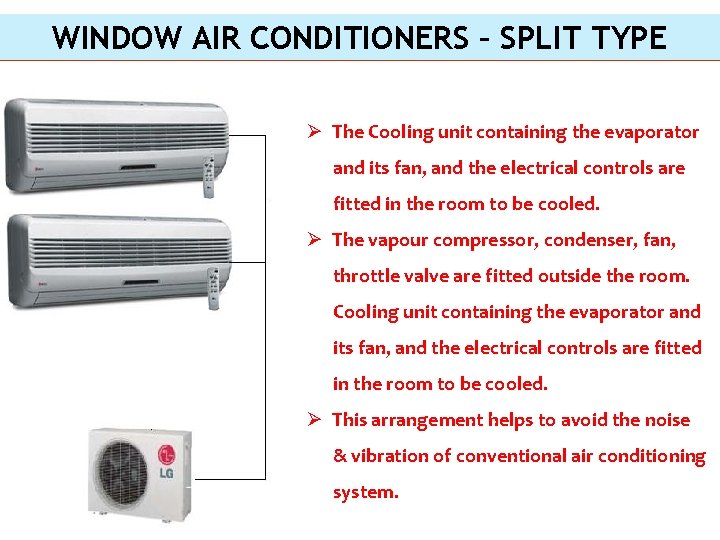
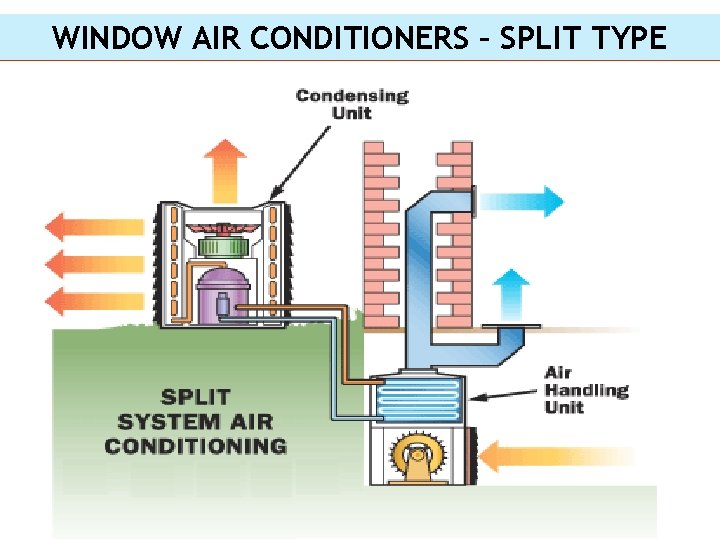
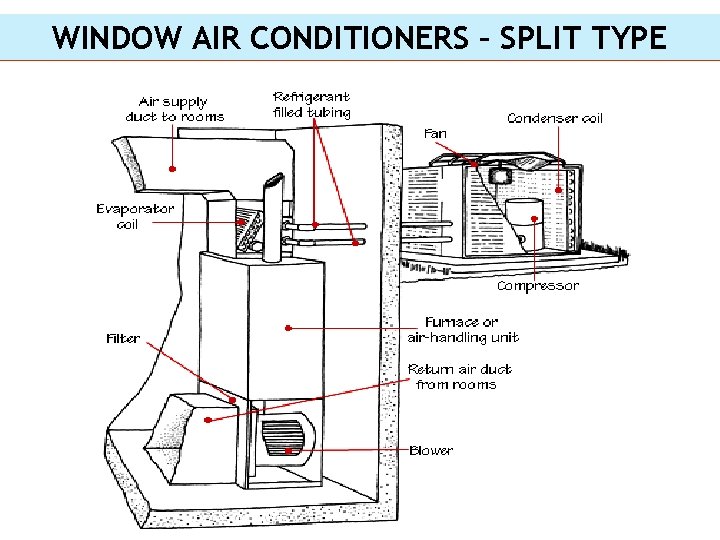
WINDOW AIR CONDITIONERS – SPLIT TYPE Ø The Cooling unit containing the evaporator and its fan, and the electrical controls are fitted in the room to be cooled. Ø The vapour compressor, condenser, fan, throttle valve are fitted outside the room. Cooling unit containing the evaporator and its fan, and the electrical controls are fitted in the room to be cooled. Ø This arrangement helps to avoid the noise & vibration of conventional air conditioning system.
WINDOW AIR CONDITIONERS – SPLIT TYPE
WINDOW AIR CONDITIONERS – SPLIT TYPE
EFFECTS OF REFRIGERANTS Ozone Depletion: Ø The ozone layer is O 3 gas and blocks UV rays of sun. Ø Refrigerants in the presence of sunlight release chlorine gas which reacts with ozone layer to form chlorine oxide and nascent oxygen is released. Ø Damaged ozone layer allows UV rays of sun to reach earth’s surface and these rays have many adverse effects. Global Warming: Ø Due to release of Green House Gases the heat of the sun is trapped in the layer of atmosphere causing prolonged heating of earth’s surface.