
Reframing Organizations 5 th ed Chapter 5 Organizing

- Slides: 16
Reframing Organizations, 5 th ed.
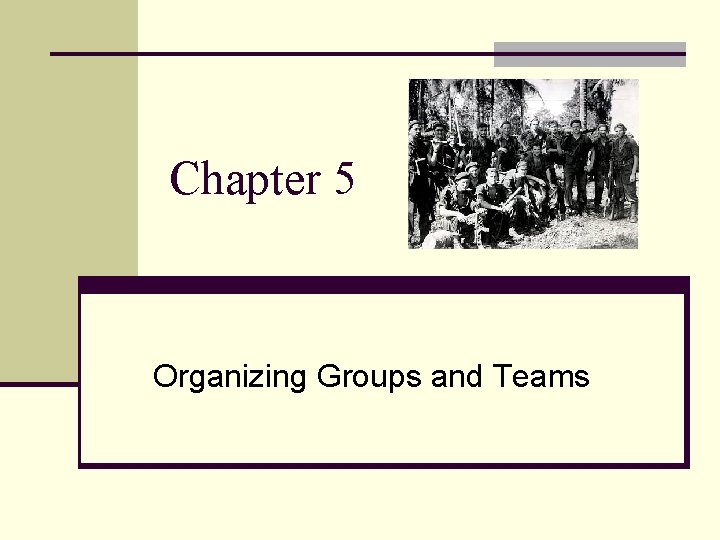
Chapter 5 Organizing Groups and Teams
The Power of Teams n Teams are vital to organizational performance n Transplant surgeon Peter Minnich: the team is as important as the surgeon n High-performance commando team: fluid, lateral structure for planning, top-down structure for execution n Top-performing teams need the right blueprint of roles and relationships
Organizing Groups and Teams n Tasks and Linkages in Small Groups n Teamwork and Interdependence n Determinants of Successful Teamwork n Team Structure and Top Performance n Saturn: The Story Behind the Story
Tasks and Linkages in Small Groups n Structural Options n Situational Variables Influencing Structure n What is our goal? n What needs to be done? n Who should do what? n How should we make decisions? n Who is in charge? n How do we coordinate efforts?
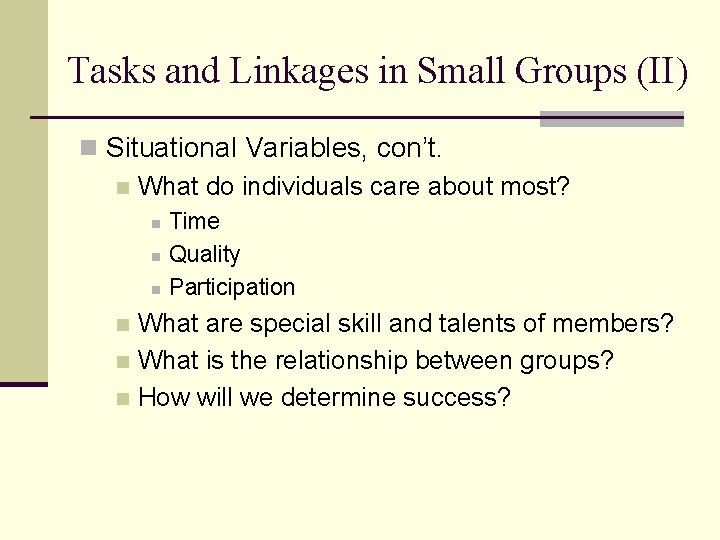
Tasks and Linkages in Small Groups (II) n Situational Variables, con’t. n What do individuals care about most? n n n Time Quality Participation What are special skill and talents of members? n What is the relationship between groups? n How will we determine success? n
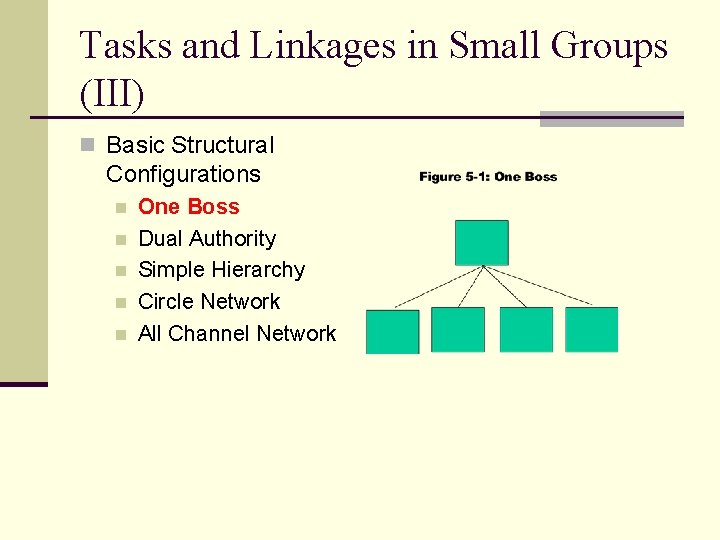
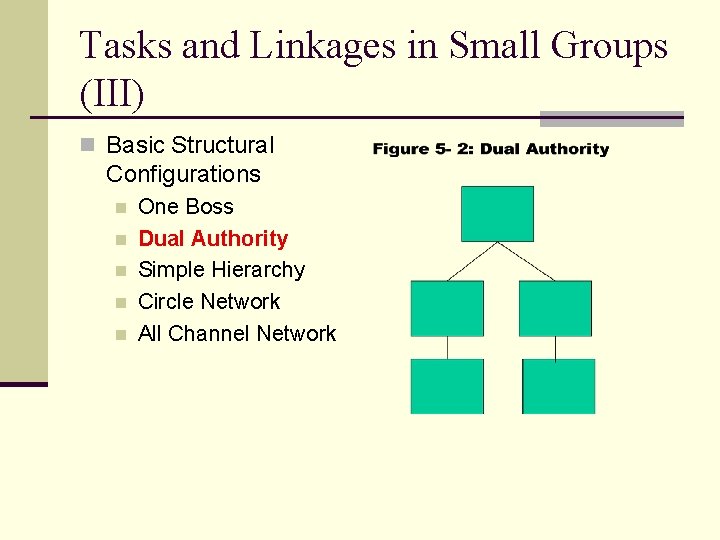
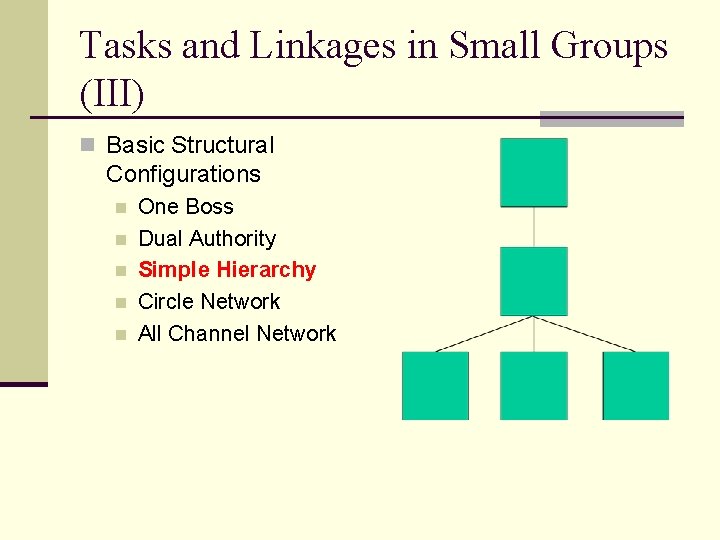
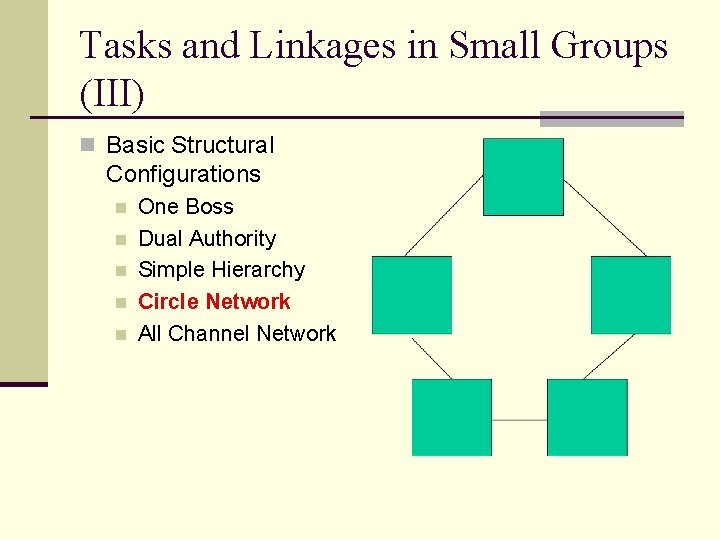
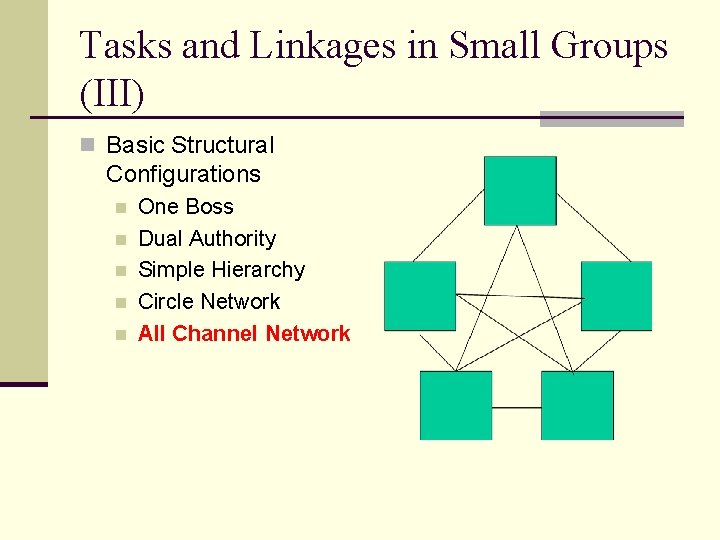
Tasks and Linkages in Small Groups (III) n Basic Structural Configurations n n n One Boss Dual Authority Simple Hierarchy Circle Network All Channel Network
Tasks and Linkages in Small Groups (III) n Basic Structural Configurations n n n One Boss Dual Authority Simple Hierarchy Circle Network All Channel Network
Tasks and Linkages in Small Groups (III) n Basic Structural Configurations n n n One Boss Dual Authority Simple Hierarchy Circle Network All Channel Network
Tasks and Linkages in Small Groups (III) n Basic Structural Configurations n n n One Boss Dual Authority Simple Hierarchy Circle Network All Channel Network
Tasks and Linkages in Small Groups (III) n Basic Structural Configurations n n n One Boss Dual Authority Simple Hierarchy Circle Network All Channel Network
Teamwork and Interdependence n Baseball n Football n Basketball
Determinants of Successful Teamwork n Determining an appropriate structural design n Nature and degree of task interaction n Geographic distribution of members n Where is autonomy needed, given the team’s goals and objectives? n Should structure be conglomerate, mechanistic, or organic? n Task of management: n n n fill out line-up card prepare game plan Influence flow
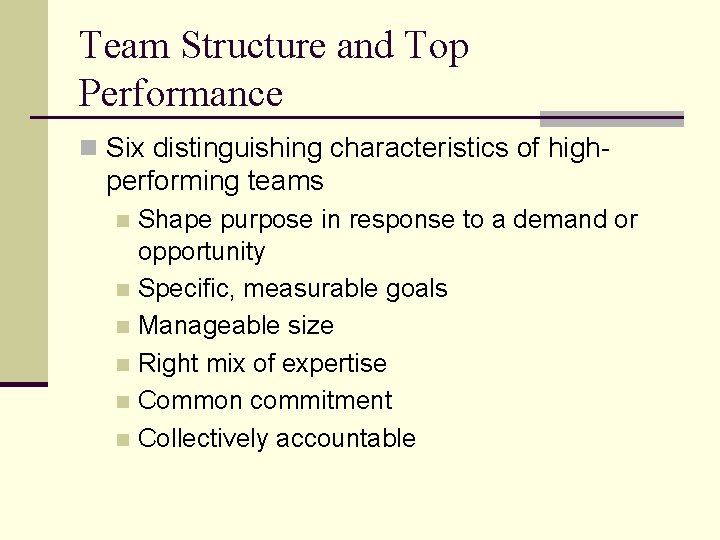
Team Structure and Top Performance n Six distinguishing characteristics of high- performing teams Shape purpose in response to a demand or opportunity n Specific, measurable goals n Manageable size n Right mix of expertise n Common commitment n Collectively accountable n
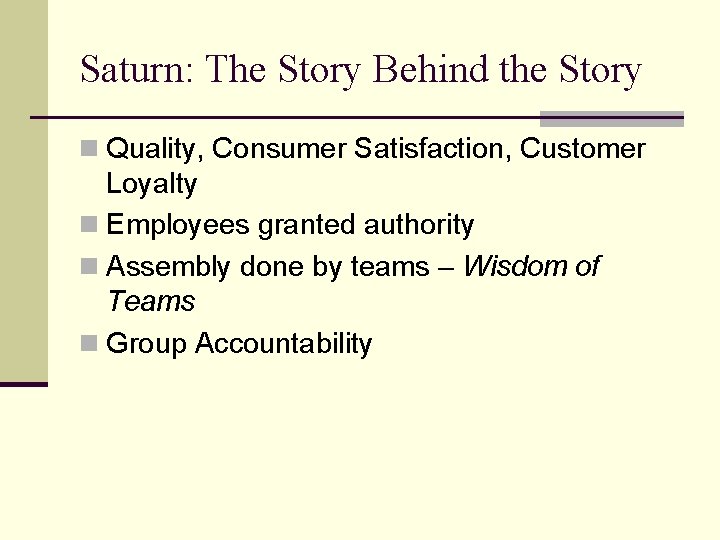
Saturn: The Story Behind the Story n Quality, Consumer Satisfaction, Customer Loyalty n Employees granted authority n Assembly done by teams – Wisdom of Teams n Group Accountability
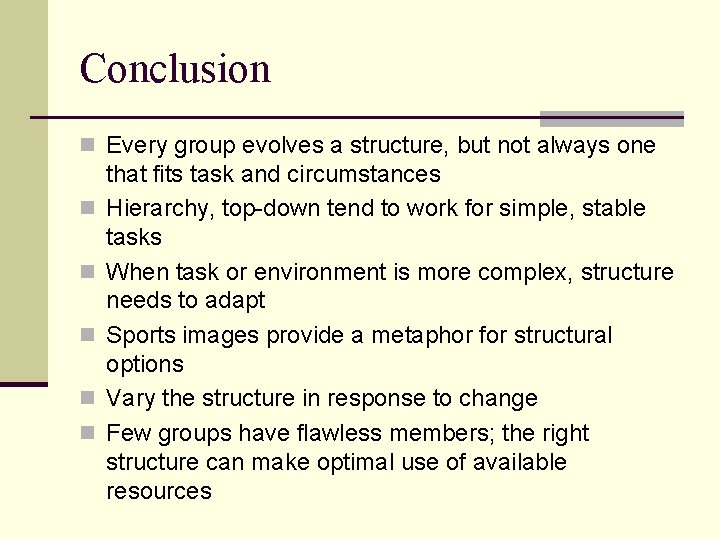
Conclusion n Every group evolves a structure, but not always one n n n that fits task and circumstances Hierarchy, top-down tend to work for simple, stable tasks When task or environment is more complex, structure needs to adapt Sports images provide a metaphor for structural options Vary the structure in response to change Few groups have flawless members; the right structure can make optimal use of available resources