
Reframing Organizations 4 th ed Chapter 9 Power
- Slides: 11
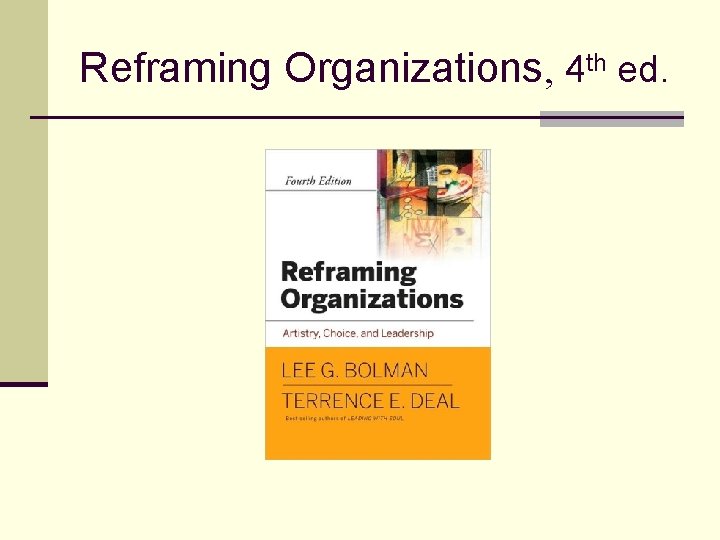
Reframing Organizations, 4 th ed.
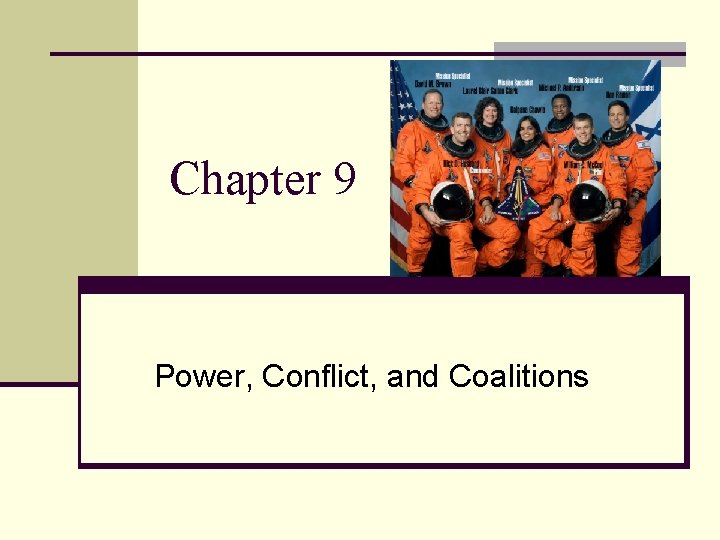
Chapter 9 Power, Conflict, and Coalitions
Power, Conflict and Coalitions n Assumptions of the Political Frame n Organizations as Coalitions n Power and Decision-Making n Authorities and Partisans n Sources of Power n Distribution of Power: Overbounded and Underbounded Systems n Conflict in Organizations n Moral Mazes: The Politics of Getting Ahead
Assumptions of the Political Frame n Organizations are coalitions n Enduring differences among coalition members n Allocation of scarce resources n Scarce resources and differences make conflict the central dynamic which makes power the most important asset n Goals and decisions arise from bargaining, negotiation and jockeying for position
Organizations as Coalitions rather than pyramids n Organizational goals are multiple and sometimes conflicting because they reflect bargaining involving multiple players with divergent interests n
Power and Decision-Making n Gamson: Authorities and partisans n Authorities make binding decisions § Agents of social control § Seek to maintain authority; their position depends on it n Partisans are subject to authorities’ decisions; they will support or question authority depending on decisions affect their interests § Recipients of control from authorities § Support authority when satisfied, but may challenge when not
Sources of Power n Position power n Control of rewards n Coercive power n Information and expertise n Reputation n Personal power n Alliances and networks n Access and control of agenda n Framing: control of meaning and symbols
Distribution of Power: Overbounded and Underbounded Systems n Overbounded: strong, top-down control, conflict is tightly-regulated (e. g. , Iraq under Saddam Hussein) n Underbounded: weak authority, chaotic decision-making, open conflict and power struggles (Iraq after invasion and collapse of old regime)
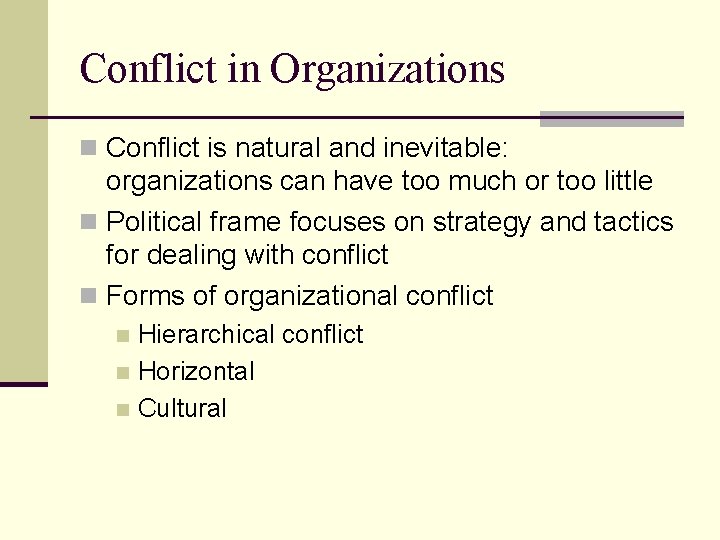
Conflict in Organizations n Conflict is natural and inevitable: organizations can have too much or too little n Political frame focuses on strategy and tactics for dealing with conflict n Forms of organizational conflict Hierarchical conflict n Horizontal n Cultural n
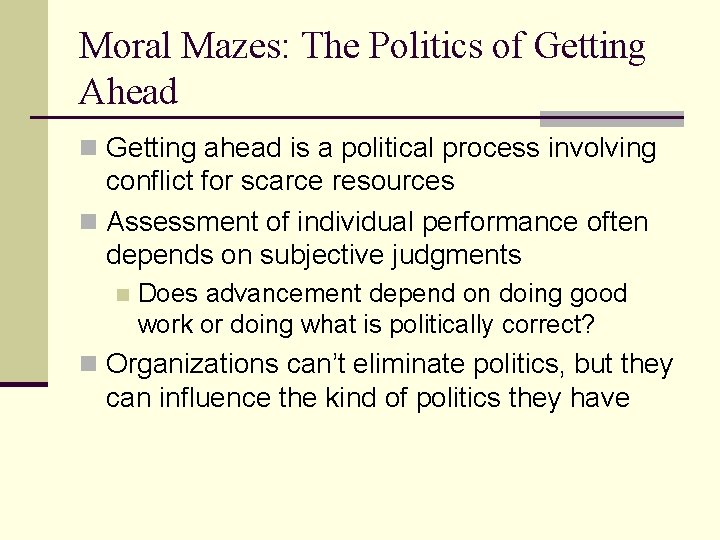
Moral Mazes: The Politics of Getting Ahead n Getting ahead is a political process involving conflict for scarce resources n Assessment of individual performance often depends on subjective judgments n Does advancement depend on doing good work or doing what is politically correct? n Organizations can’t eliminate politics, but they can influence the kind of politics they have
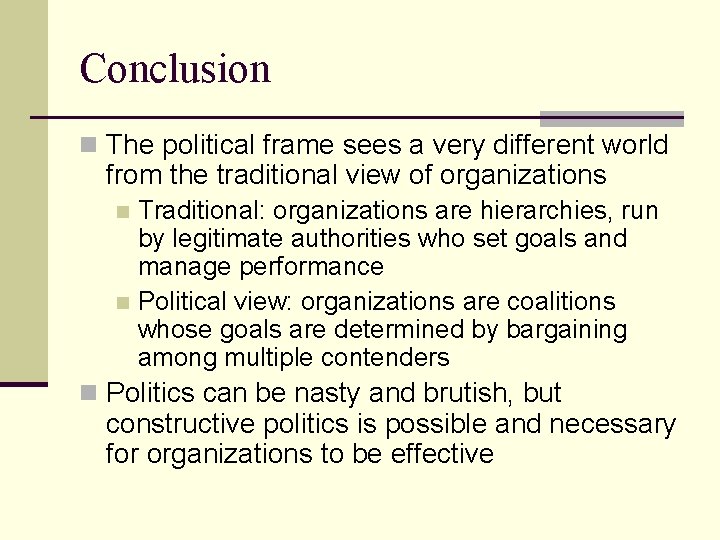
Conclusion n The political frame sees a very different world from the traditional view of organizations Traditional: organizations are hierarchies, run by legitimate authorities who set goals and manage performance n Political view: organizations are coalitions whose goals are determined by bargaining among multiple contenders n n Politics can be nasty and brutish, but constructive politics is possible and necessary for organizations to be effective