
Reframing Organizations 4 th ed Chapter 2 Simple
- Slides: 14
Reframing Organizations, 4 th ed.
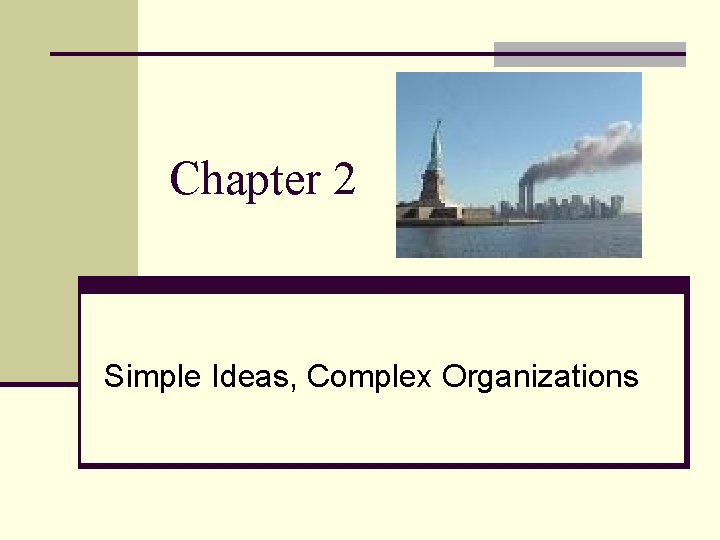
Chapter 2 Simple Ideas, Complex Organizations
Simple Ideas, Complex Organizations n Common Fallacies in Organizational Diagnosis n Peculiarities of Organizations n Organizational Learning n Coping with Ambiguity and Complexity
Error in Organizations: The Tragedy of 9/11 n System Failures Helped Terrorists Succeed n Mindset error: defense systems hadn’t planned for domestic air attack, even though the possibility had long been recognized (they didn’t anticipate a “black swan” because they’d only seen white ones) n Coordination error I: FBI/CIA (terrorists should have been on airport security watch lists) n Coordination error II: FAA/NORAD (weak lateral communication hindered the two agencies from working together during the emergency)
Error in Organizations: Helen Demarco n Osborne announces revitalization plan n Demarco and colleagues agree: it can’t work but we can’t tell him n “Study” to buy time and develop strategy n Option B: low benefits at high costs n Technical jargon as camouflage n Demarco feels frustration, failure
Peculiarities of Organizations n Organizations are complex n Organizations are surprising n Organizations are deceptive n Organizations are ambiguous
Sources of ambiguity n Not sure what the problem is n Not sure what’s going on n Not sure (or can’t agree) on what we want n Don’t have the resources we need n Not sure who’s supposed to do what n Not sure how to get what we want n Not sure how to know if we succeed or fail
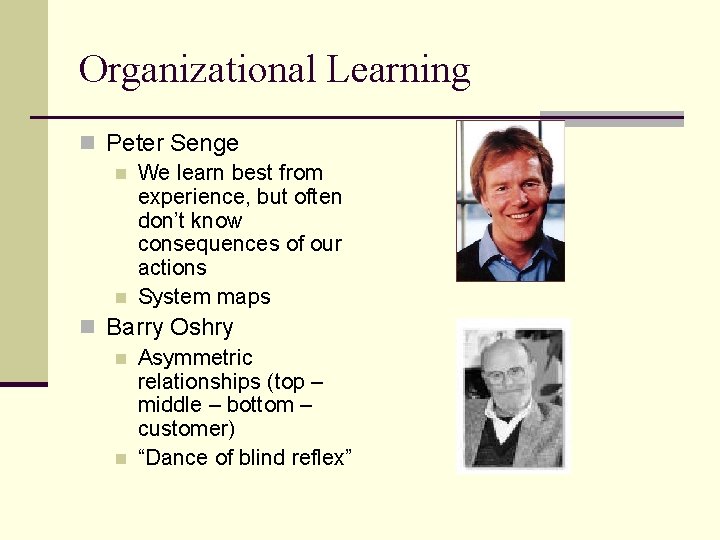
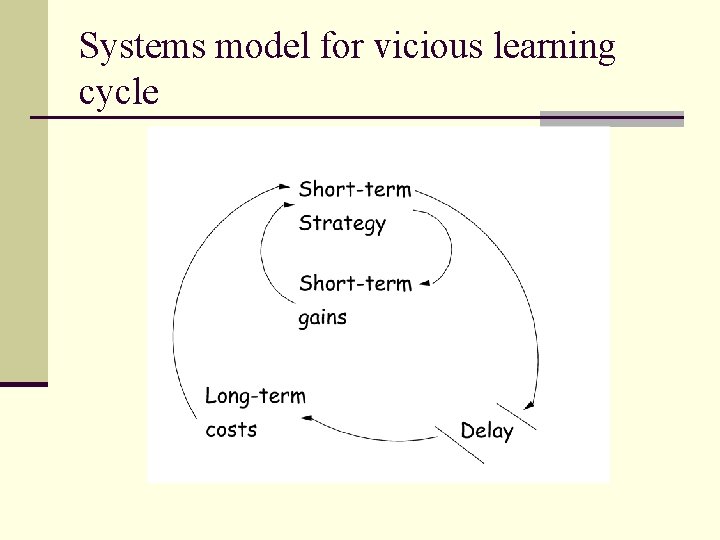
Organizational Learning n Peter Senge n We learn best from experience, but often don’t know consequences of our actions n System maps n Barry Oshry n Asymmetric relationships (top – middle – bottom – customer) n “Dance of blind reflex”
Systems model for vicious learning cycle
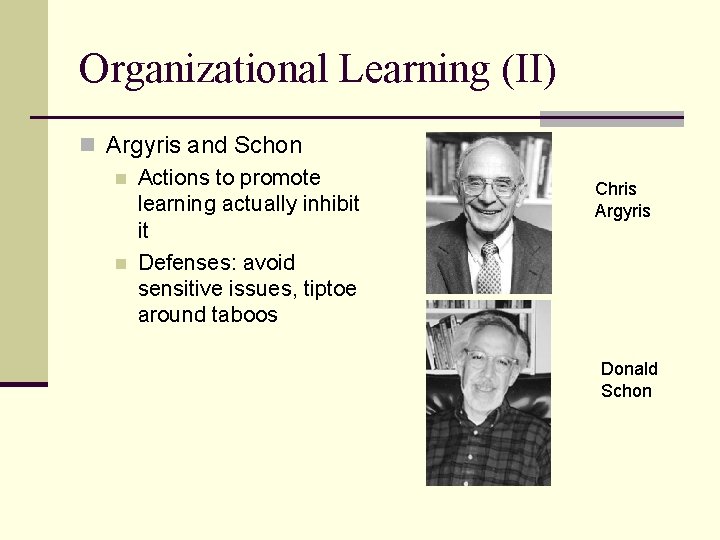
Organizational Learning (II) n Argyris and Schon n Actions to promote learning actually inhibit it n Defenses: avoid sensitive issues, tiptoe around taboos Chris Argyris Donald Schon
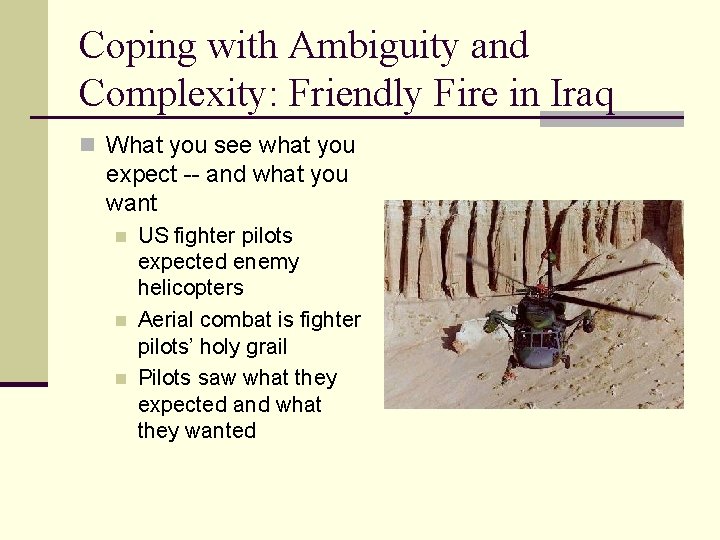
Coping with Ambiguity and Complexity: Friendly Fire in Iraq n What you see what you expect -- and what you want n n n US fighter pilots expected enemy helicopters Aerial combat is fighter pilots’ holy grail Pilots saw what they expected and what they wanted
Coping with ambiguity: conserve or change? n Advantages of relying on existing frames and routines Protect investment in learning them n They make it easier to understand what’s happening and what to do about it n …but we may misread the situation, take the wrong action, and fail to learn from our errors n n Change requires time and energy for learning new approaches but is necessary to developing new skills and capacities
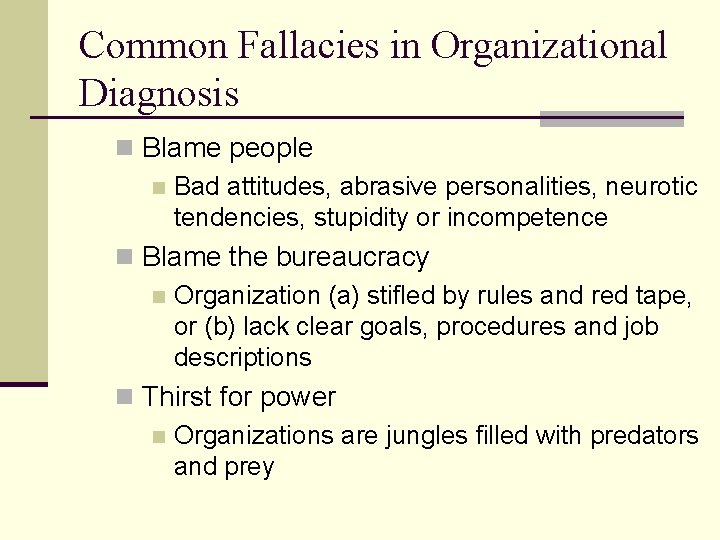
Common Fallacies in Organizational Diagnosis n Blame people n Bad attitudes, abrasive personalities, neurotic tendencies, stupidity or incompetence n Blame the bureaucracy n Organization (a) stifled by rules and red tape, or (b) lack clear goals, procedures and job descriptions n Thirst for power n Organizations are jungles filled with predators and prey
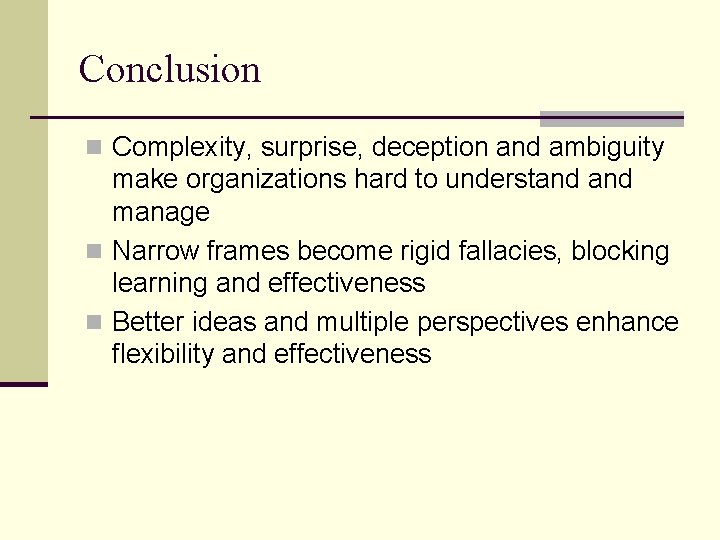
Conclusion n Complexity, surprise, deception and ambiguity make organizations hard to understand manage n Narrow frames become rigid fallacies, blocking learning and effectiveness n Better ideas and multiple perspectives enhance flexibility and effectiveness