
Reframing Organizations 3 rd ed Chapter 12 Organizational
- Slides: 10
Reframing Organizations, 3 rd ed.
Chapter 12 Organizational Culture and Symbols
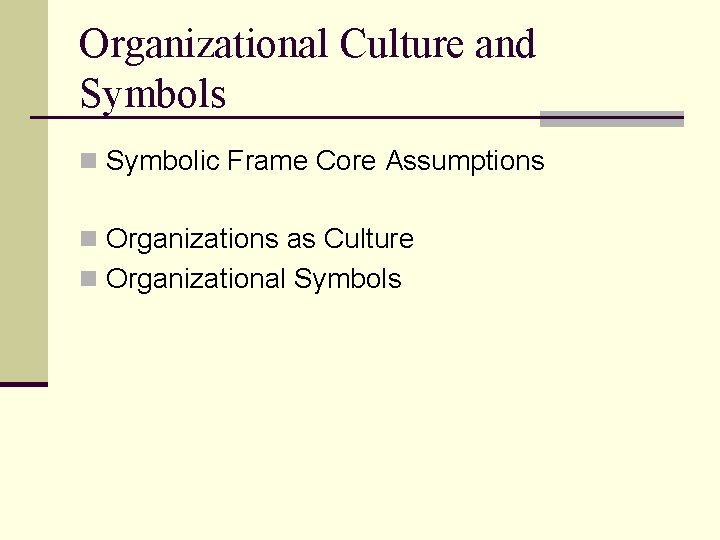
Organizational Culture and Symbols n Symbolic Frame Core Assumptions n Organizations as Culture n Organizational Symbols
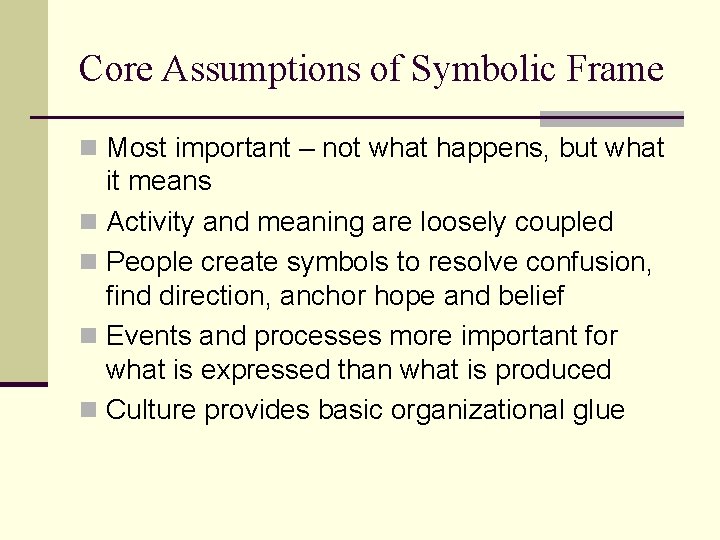
Core Assumptions of Symbolic Frame n Most important – not what happens, but what it means n Activity and meaning are loosely coupled n People create symbols to resolve confusion, find direction, anchor hope and belief n Events and processes more important for what is expressed than what is produced n Culture provides basic organizational glue
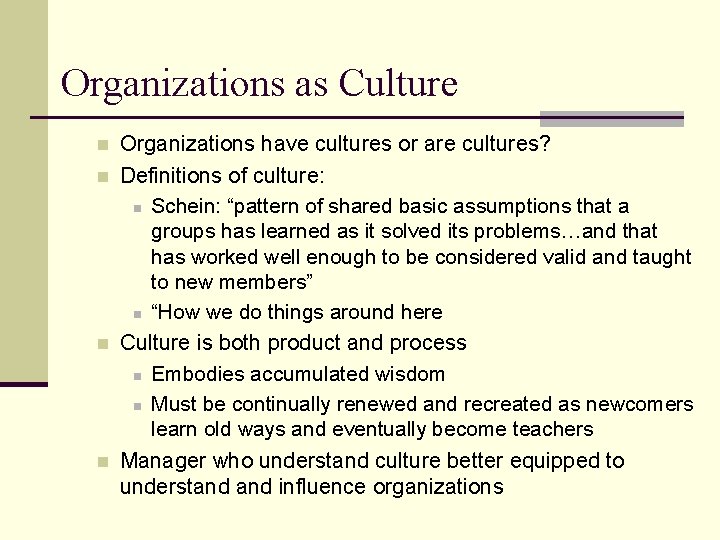
Organizations as Culture n n Organizations have cultures or are cultures? Definitions of culture: n Schein: “pattern of shared basic assumptions that a groups has learned as it solved its problems…and that has worked well enough to be considered valid and taught to new members” n “How we do things around here Culture is both product and process n Embodies accumulated wisdom n Must be continually renewed and recreated as newcomers learn old ways and eventually become teachers Manager who understand culture better equipped to understand influence organizations
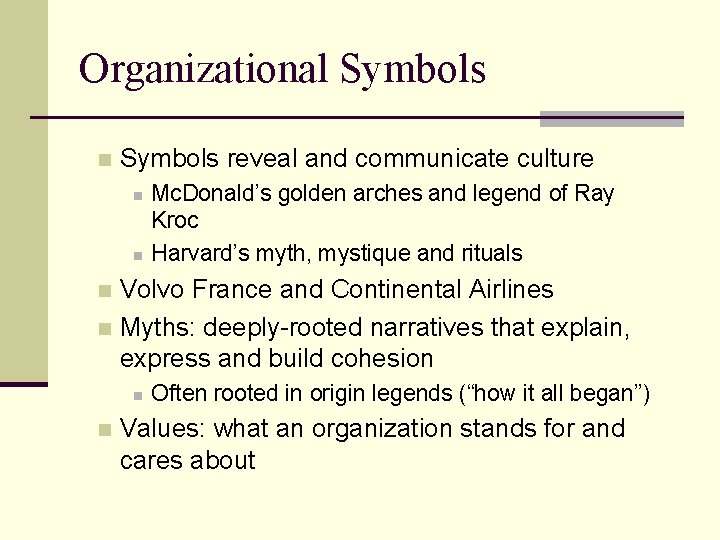
Organizational Symbols n Symbols reveal and communicate culture n n Mc. Donald’s golden arches and legend of Ray Kroc Harvard’s myth, mystique and rituals Volvo France and Continental Airlines n Myths: deeply-rooted narratives that explain, express and build cohesion n Often rooted in origin legends (“how it all began”) Values: what an organization stands for and cares about
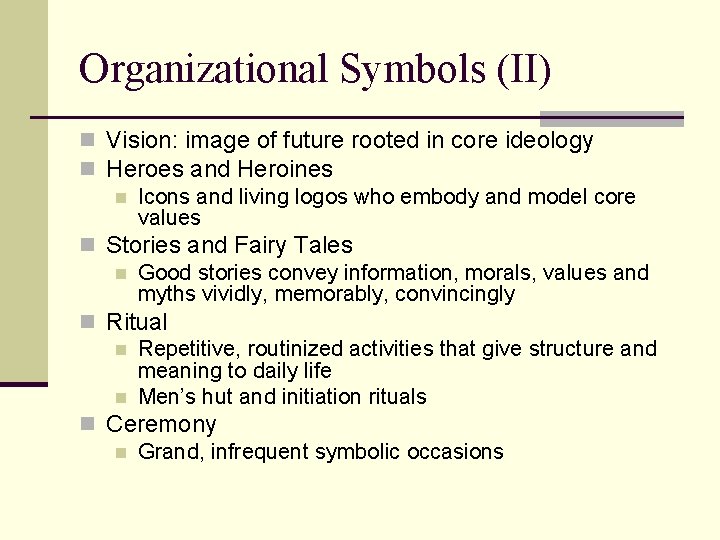
Organizational Symbols (II) n Vision: image of future rooted in core ideology n Heroes and Heroines n Icons and living logos who embody and model core values n Stories and Fairy Tales n Good stories convey information, morals, values and myths vividly, memorably, convincingly n Ritual n Repetitive, routinized activities that give structure and meaning to daily life n Men’s hut and initiation rituals n Ceremony n Grand, infrequent symbolic occasions
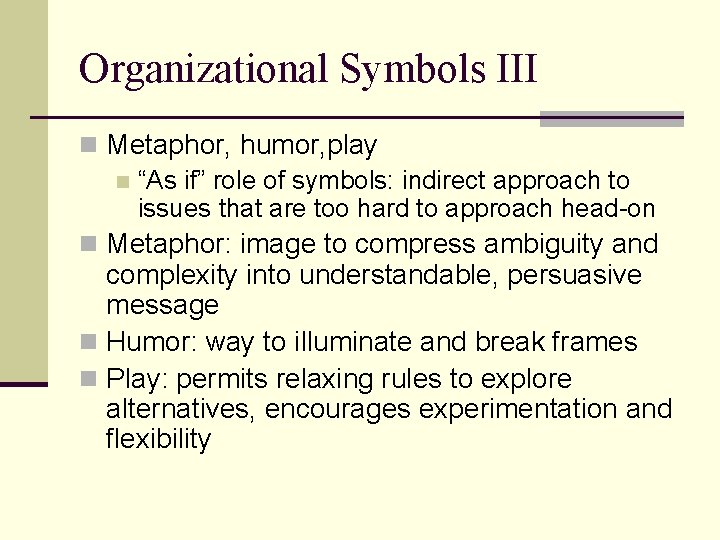
Organizational Symbols III n Metaphor, humor, play n “As if” role of symbols: indirect approach to issues that are too hard to approach head-on n Metaphor: image to compress ambiguity and complexity into understandable, persuasive message n Humor: way to illuminate and break frames n Play: permits relaxing rules to explore alternatives, encourages experimentation and flexibility
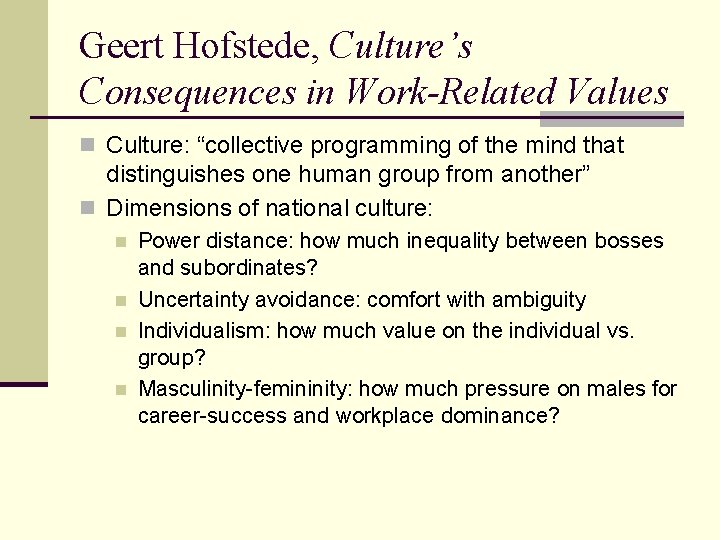
Geert Hofstede, Culture’s Consequences in Work-Related Values n Culture: “collective programming of the mind that distinguishes one human group from another” n Dimensions of national culture: n n Power distance: how much inequality between bosses and subordinates? Uncertainty avoidance: comfort with ambiguity Individualism: how much value on the individual vs. group? Masculinity-femininity: how much pressure on males for career-success and workplace dominance?
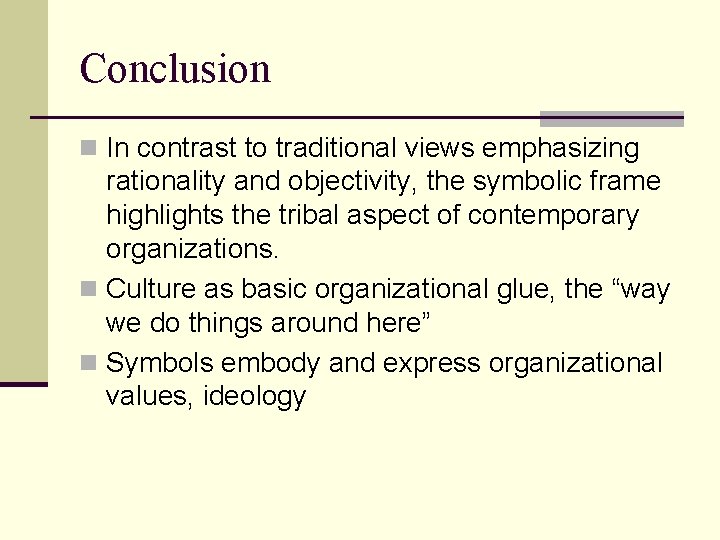
Conclusion n In contrast to traditional views emphasizing rationality and objectivity, the symbolic frame highlights the tribal aspect of contemporary organizations. n Culture as basic organizational glue, the “way we do things around here” n Symbols embody and express organizational values, ideology