
REFRACTORY METALS The refractory metals are described as
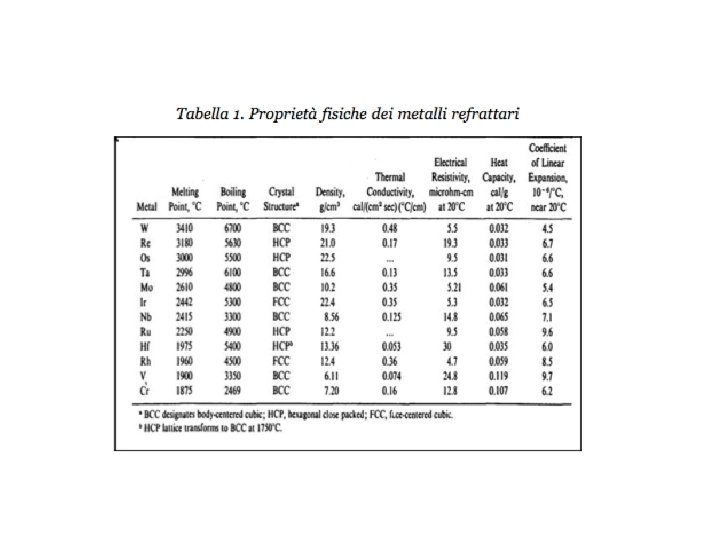
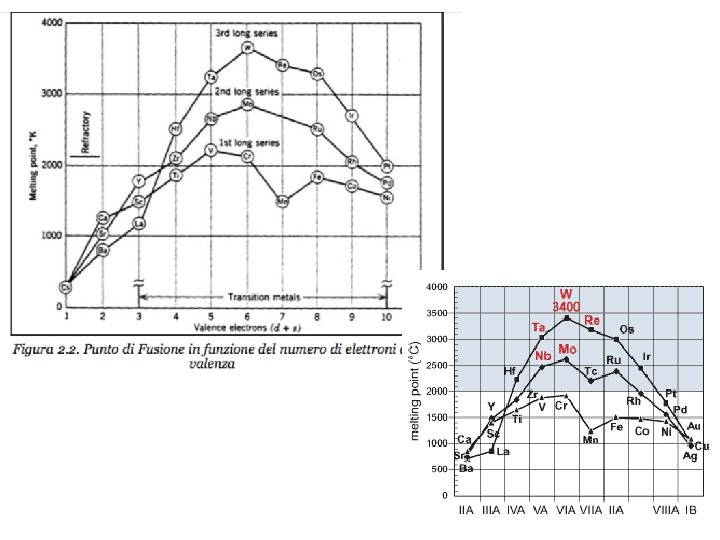
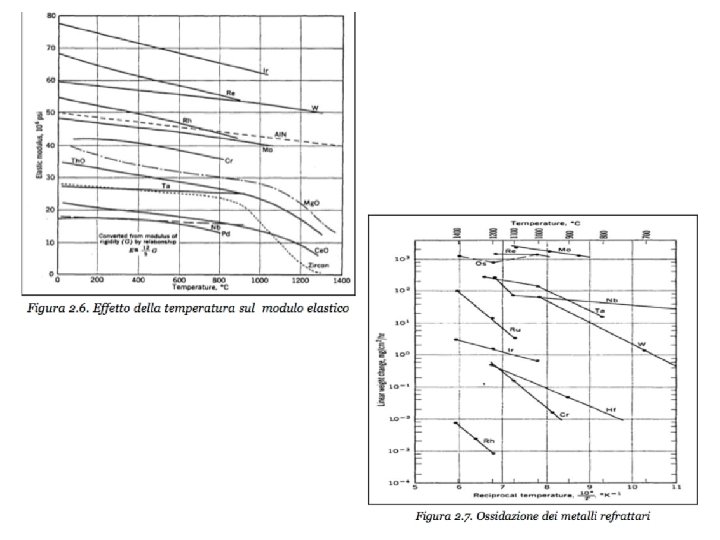
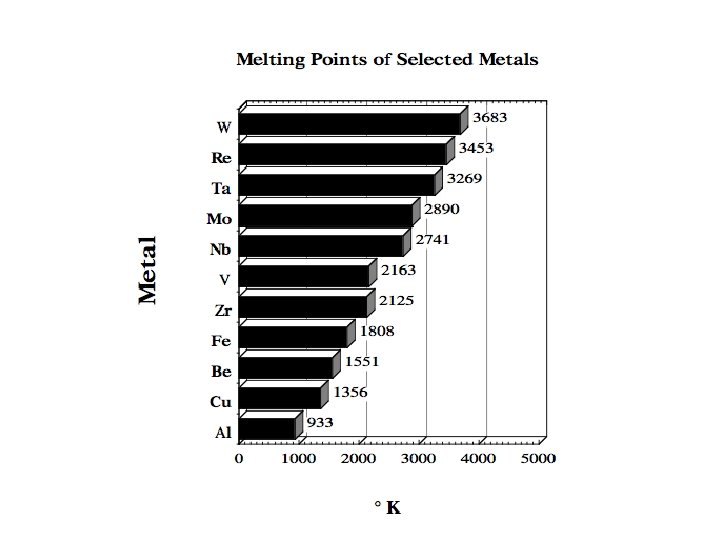
REFRACTORY METALS The refractory metals are described as those which, first of all, melt at temperatures well above the melting points of the common alloying bases, Fe, Co, and Ni. Second, it seems appropriate to consider the refractory metals as those which have higher melting points than do Ti (melting point 1660°C) and Zr (1850°C), which are used chiefly at intermediate temperatures. Therefore Cr (melting point 1875°C) is usually classed as a refractory metal. Although the melting points of these metals are very high, they oxidize at much lower temperatures. Accelerated oxidation in air occurs at 190 C for W, 395 C for Mo, and 425 C for Ta and Nb. Therefore, protective coatings must be applied to these metals if they are to be used at higher temperatures. When the refractory metals are considered to be those metals melting at temperatures above 1850°C, 12 metals are in this group: W (melting point 3410°C), Mo, Nb, Re, Ta, Ir, Os, Ru, Hf, Rh, V, Cr.
Refractory metals are used in lighting, tools, lubricants, nuclear reaction control rods, as catalysts, and for their chemical or electrical properties. Because of their high melting point, refractory metal components are never fabricated by casting. The process of powder metallurgy is used. Powders of the pure metal are compacted, heated using electric current, and further fabricated by cold working with annealing steps. Refractory metals can be worked into wire, ingots, bars, sheets or foil. Refractory metals are a class of metals extraordinarily resistant to heat, wear, and corrosion. These properties make them useful in many applications. The five refractory metals are: • Tungsten (W) • Molybdenum (Mo) • Niobium (Nb) • Tantalum (Ta) • Rhenium (Re)
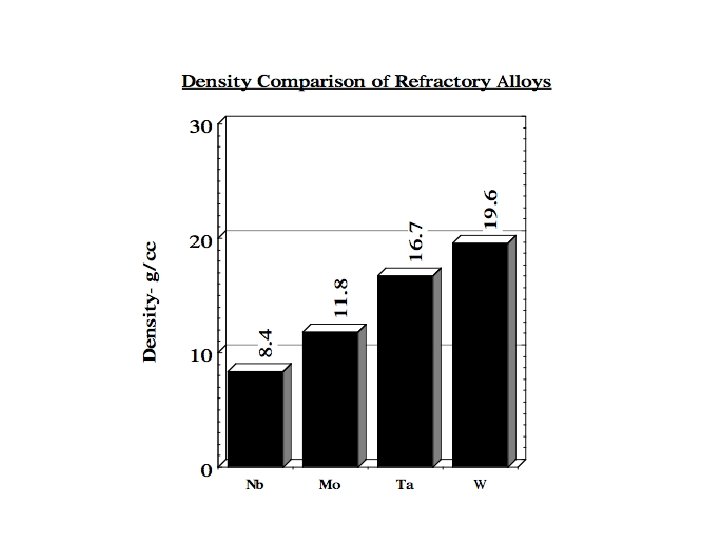
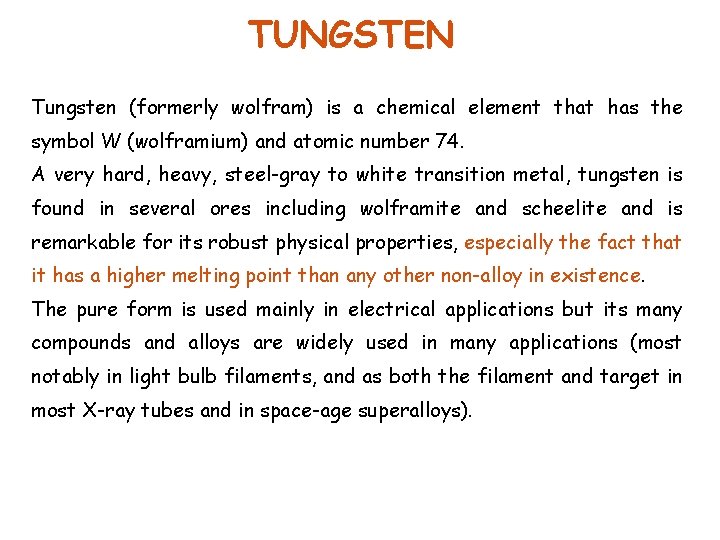
TUNGSTEN Tungsten (formerly wolfram) is a chemical element that has the symbol W (wolframium) and atomic number 74. A very hard, heavy, steel-gray to white transition metal, tungsten is found in several ores including wolframite and scheelite and is remarkable for its robust physical properties, especially the fact that it has a higher melting point than any other non-alloy in existence. The pure form is used mainly in electrical applications but its many compounds and alloys are widely used in many applications (most notably in light bulb filaments, and as both the filament and target in most X-ray tubes and in space-age superalloys).
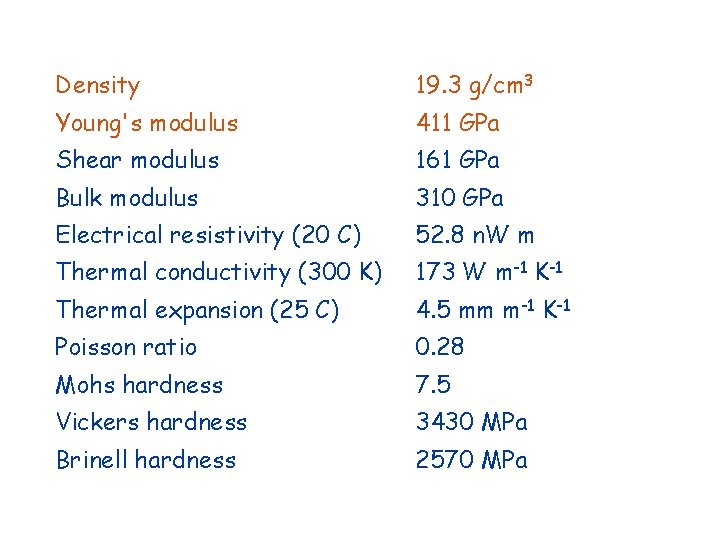
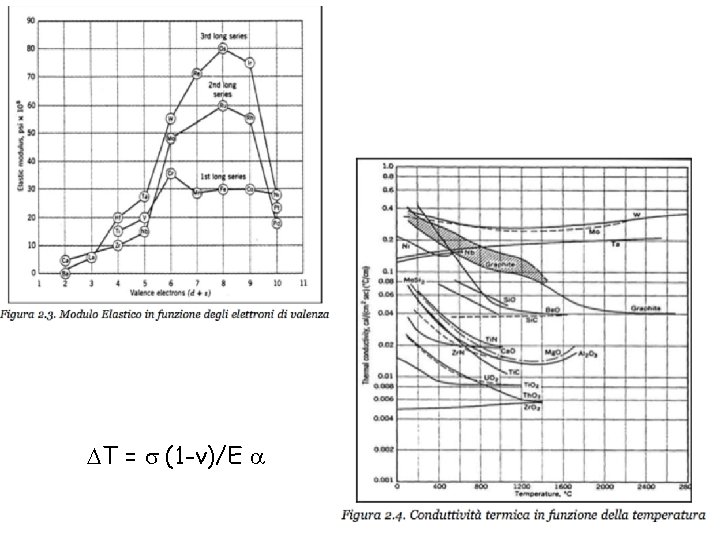
Density 19. 3 g/cm 3 Young's modulus 411 GPa Shear modulus 161 GPa Bulk modulus 310 GPa Electrical resistivity (20 C) 52. 8 n. W m Thermal conductivity (300 K) 173 W m-1 K-1 Thermal expansion (25 C) 4. 5 mm m-1 K-1 Poisson ratio 0. 28 Mohs hardness 7. 5 Vickers hardness 3430 MPa Brinell hardness 2570 MPa
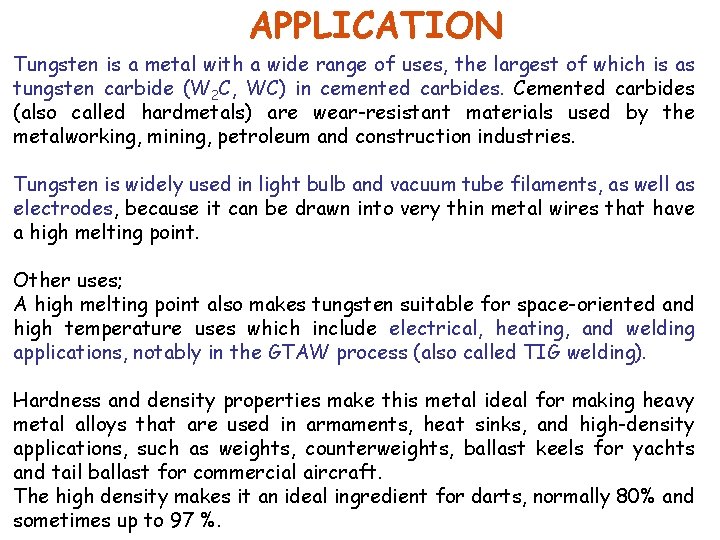
APPLICATION Tungsten is a metal with a wide range of uses, the largest of which is as tungsten carbide (W 2 C, WC) in cemented carbides. Cemented carbides (also called hardmetals) are wear-resistant materials used by the metalworking, mining, petroleum and construction industries. Tungsten is widely used in light bulb and vacuum tube filaments, as well as electrodes, because it can be drawn into very thin metal wires that have a high melting point. Other uses; A high melting point also makes tungsten suitable for space-oriented and high temperature uses which include electrical, heating, and welding applications, notably in the GTAW process (also called TIG welding). Hardness and density properties make this metal ideal for making heavy metal alloys that are used in armaments, heat sinks, and high-density applications, such as weights, counterweights, ballast keels for yachts and tail ballast for commercial aircraft. The high density makes it an ideal ingredient for darts, normally 80% and sometimes up to 97 %.
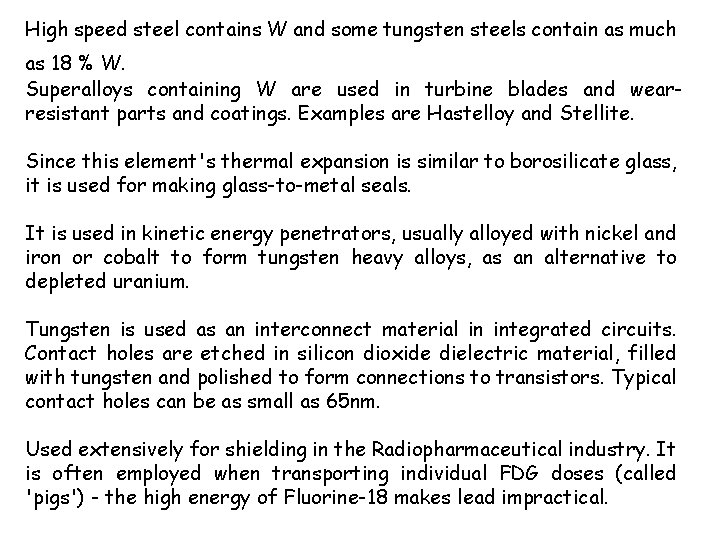
High speed steel contains W and some tungsten steels contain as much as 18 % W. Superalloys containing W are used in turbine blades and wearresistant parts and coatings. Examples are Hastelloy and Stellite. Since this element's thermal expansion is similar to borosilicate glass, it is used for making glass-to-metal seals. It is used in kinetic energy penetrators, usually alloyed with nickel and iron or cobalt to form tungsten heavy alloys, as an alternative to depleted uranium. Tungsten is used as an interconnect material in integrated circuits. Contact holes are etched in silicon dioxide dielectric material, filled with tungsten and polished to form connections to transistors. Typical contact holes can be as small as 65 nm. Used extensively for shielding in the Radiopharmaceutical industry. It is often employed when transporting individual FDG doses (called 'pigs') - the high energy of Fluorine-18 makes lead impractical.
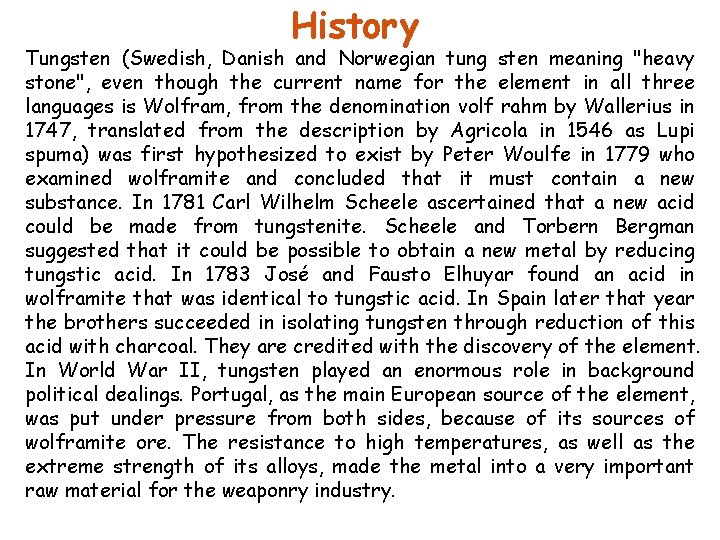
History Tungsten (Swedish, Danish and Norwegian tung sten meaning "heavy stone", even though the current name for the element in all three languages is Wolfram, from the denomination volf rahm by Wallerius in 1747, translated from the description by Agricola in 1546 as Lupi spuma) was first hypothesized to exist by Peter Woulfe in 1779 who examined wolframite and concluded that it must contain a new substance. In 1781 Carl Wilhelm Scheele ascertained that a new acid could be made from tungstenite. Scheele and Torbern Bergman suggested that it could be possible to obtain a new metal by reducing tungstic acid. In 1783 José and Fausto Elhuyar found an acid in wolframite that was identical to tungstic acid. In Spain later that year the brothers succeeded in isolating tungsten through reduction of this acid with charcoal. They are credited with the discovery of the element. In World War II, tungsten played an enormous role in background political dealings. Portugal, as the main European source of the element, was put under pressure from both sides, because of its sources of wolframite ore. The resistance to high temperatures, as well as the extreme strength of its alloys, made the metal into a very important raw material for the weaponry industry.
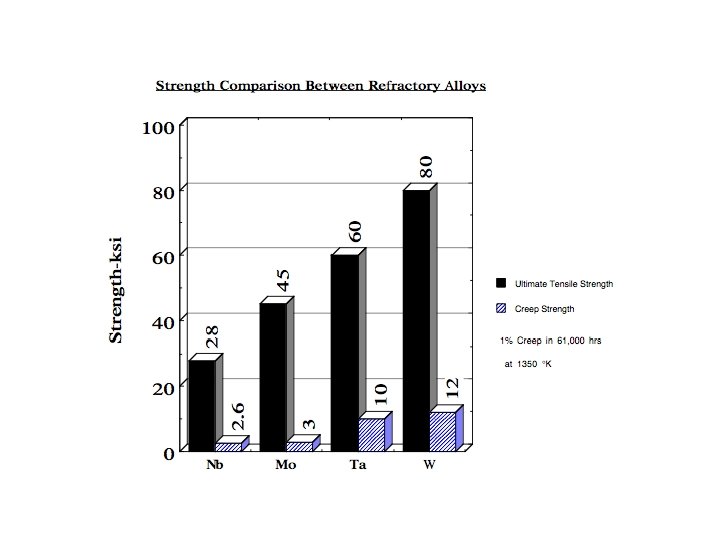
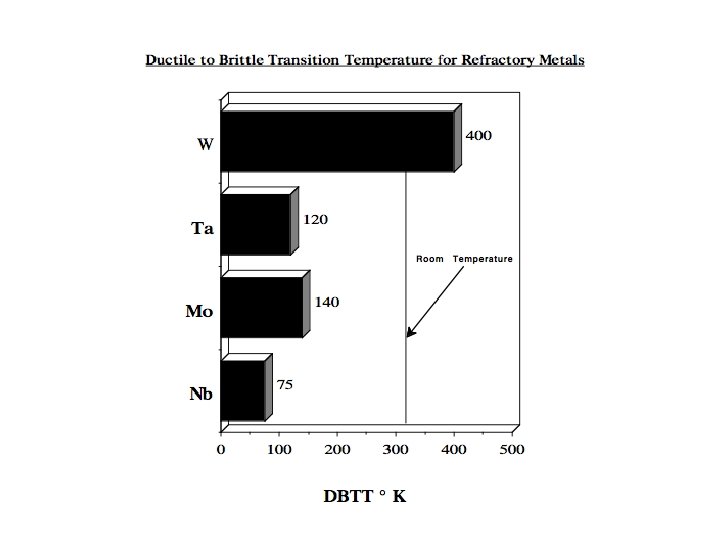
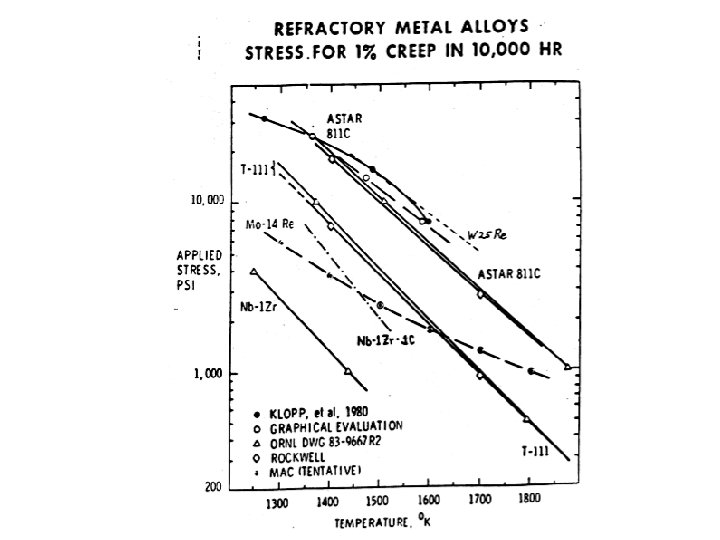
Tungsten Alloys Low-temperature brittleness is the most crucial aspect in the manufacture of pure tungsten metal. Therefore, in the past, much effort has been directed at lowering the ductile-to-brittle transition temperature (DBTT) and hence improving the fabricability of the metal. In this regard, W-Re alloys have gained outstanding importance. They exhibit a significantly lower DBTT and are even stronger than unalloyed tungsten at high temperatures. To fully realize the potential of W in high-temperature applications, dispersion strengthening and precipitation hardening turned out to be the most effective way to increase the high-temperature strength and creep resistance. Non-sag tungsten alloys or thoriated tungsten, used for lamp filaments, are examples of this group of materials. Moreover, alloys based on W-Re-Th. O 2 and W-Re-Hf. C are among the strongest alloys used today for construction parts in high-vacuum and high-temperature technology.
Solid solution alloys Mo, Nb, and Ta (BCC crystal structure) form a continuous series of solid solutions with W, but only Nb and Ta additions lead to a strong straining effect. Higher additions of Nb and Ta raise the recrystallization temperature but also increase the Ductile to Brittle Temperature Transition (DBTT) and thus decrease the workability. Therefore, none of these binary or ternary tungsten base alloys developed in the past has attained commercial importance. The only important tungsten-based solid-solution alloy today is W-Re Tungsten additions to Mo, Nb, and Ta, on the other hand, improve the high temperature strength and creep properties of these metals.
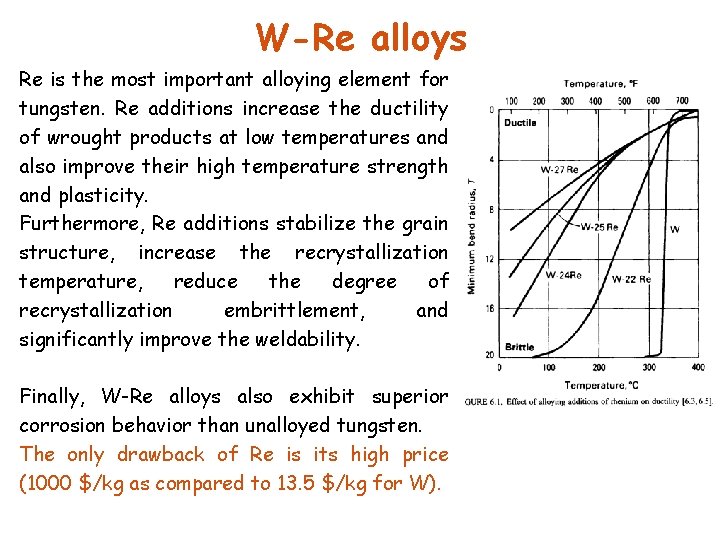
W-Re alloys Re is the most important alloying element for tungsten. Re additions increase the ductility of wrought products at low temperatures and also improve their high temperature strength and plasticity. Furthermore, Re additions stabilize the grain structure, increase the recrystallization temperature, reduce the degree of recrystallization embrittlement, and significantly improve the weldability. Finally, W-Re alloys also exhibit superior corrosion behavior than unalloyed tungsten. The only drawback of Re is its high price (1000 $/kg as compared to 13. 5 $/kg for W).
W-Re alloys The Re ductilizing effect is more pronounced at higher Re additions and reaches a maximum at the solid solubility limit (approximately 27 wt% Re). Beyond that, embrittlement occurs due to the formation of a hard and brittle -phase. Recrystallized W-26 Re exhibits a fine and even microstructure and behaves in a ductile manner at room temperature. The most important alloy compositions are W-(3 -5)Re, W-IORe, and W -(25 -26)Re. Alloys with 5% Re exhibit the hardness minimum and highest creep strength; alloys with >8% Re show good workability (minimum forging temperature 156 O C, annealing temp. 1600 -180 O C) and have significantly better welding properties. The 3 -10% Re is extremely resistant against alternating thermal stresses which occur in X-ray anodes with high-energy electron beams. Thermocouples based on W-Re alloys can be used to measure temperatures up to 230 O C and, for short times, up to 270 O C (W 3 Re/W-25 Re; W-5 Re/W-26 Re).
DISPERSION-STRENGTHENED AND PRECIPITATION-HARDENING ALLOYS At half of the solidus temperature on the absolute temperature scale (i. e. , ~18500 C for t. W), solid-solution alloys lose much of their strength, and dispersion-strengthened or precipitation-hardened alloys are significantly stronger and creep resistant. Non-Sag Tungsten wires are commonly used as filaments in incandescent lamps. However, due to the high working temperatures (up to 3000 C in halogen lamps), pure tungsten wire would fail rapidly as a result of grain boundary sliding ("offsetting"). In order to increase the lifetime of such filaments so-called non-sag tungsten wires are used. The term non-sag refers to the resistance of the wire against deformation ("sagging") under its own weight at incandescent temperatures
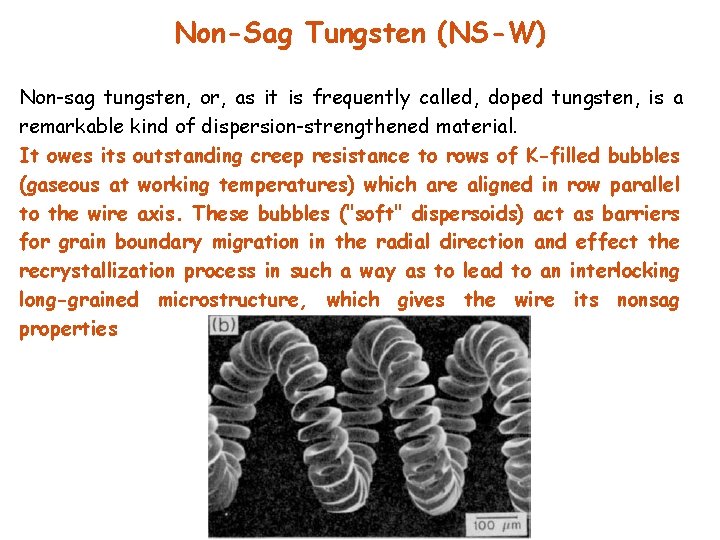
Non-Sag Tungsten (NS-W) Non-sag tungsten, or, as it is frequently called, doped tungsten, is a remarkable kind of dispersion-strengthened material. It owes its outstanding creep resistance to rows of K-filled bubbles (gaseous at working temperatures) which are aligned in row parallel to the wire axis. These bubbles ("soft" dispersoids) act as barriers for grain boundary migration in the radial direction and effect the recrystallization process in such a way as to lead to an interlocking long-grained microstructure, which gives the wire its nonsag properties
Non-Sag Tungsten (NS-W) The discovery of NS-W was a fluke. In the early days of wire fabrication (1910 -1925), it was realized that the source of the tungsten oxide used for metal powder fabrication played an important role in determining the wire quality. Tungsten filaments, originating from material which was treated in clay crucibles were shown to be much more stable in shape at incandescent temperatures. Subsequent chemical analysis indicated that a certain pick-up of K, Al, and Si occurred during powder processing, but only K remained in the sintered ingot in significant amounts. The formation of thin "tubes" of dope aligned parallel to the wire axis and the occurrence of rows of pores, which hinder the movement of dislocations and thus increase the resistance to off-setting, was first stated in the late fifties. Later, the formation of K filled bubbles was demonstrated by TEM investigations, and metallic K was identified as the bubble-forming material. The K bubbles are elongated durin wire drawing and finally form the rows of tiny bubbles (typically in the range of 20 -40 nm), which are essential for generating the NS microstructure.
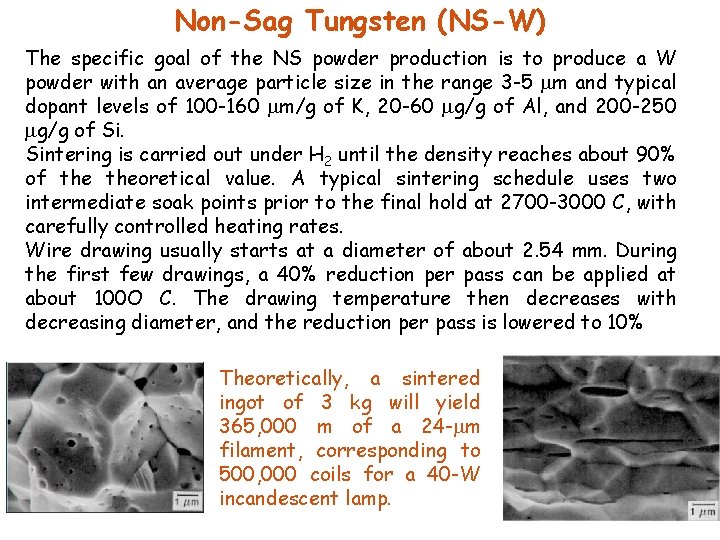
Non-Sag Tungsten (NS-W) The specific goal of the NS powder production is to produce a W powder with an average particle size in the range 3 -5 m and typical dopant levels of 100 -160 m/g of K, 20 -60 g/g of Al, and 200 -250 g/g of Si. Sintering is carried out under H 2 until the density reaches about 90% of theoretical value. A typical sintering schedule uses two intermediate soak points prior to the final hold at 2700 -3000 C, with carefully controlled heating rates. Wire drawing usually starts at a diameter of about 2. 54 mm. During the first few drawings, a 40% reduction per pass can be applied at about 100 O C. The drawing temperature then decreases with decreasing diameter, and the reduction per pass is lowered to 10% Theoretically, a sintered ingot of 3 kg will yield 365, 000 m of a 24 - m filament, corresponding to 500, 000 coils for a 40 -W incandescent lamp.
Alloys with Oxide Dispersoids- ODS Th. O 2 is insoluble in W and has a very high thermal stability, which makes it an ideal dispersoid. Additions of 0. 5 -4 wt% significantly restrict grain coarsening during sintering, which leads to a fine-grained sintered microstructure. The thoria particles are located at the grain boundaries, thus impeding their mobility. Th. O 2 additions increase the recrystallization temperature and improve the hot strength and creep resistance of tungsten. Th. O 2 hardening in W-Re is effective up to 193 O C Th. O 2 additions lower the electronic work function (which is the electrical energy that an electron needs to escape from a tungsten surface) and enhances thermionic emission. This is important for all types of tubes, such as radio valves and X-ray tubes, as well as for discharge lamps and welding electrodes (TIG welding*), where it improves the ignition behavior of the electrodes and gives a constant and stable arc.
Fine oxide dispersions of yttrium, lanthanum, zirconium, hafnium, cerium, and erbium behave similarly to thoria, although they possess different emission characteristics, depending on temperature. Electrodes, based on W-(l-2 wt%)Ce. O 2 and W-(l-2 wt%)La 2 O 3 have demonstrated good arc striking, excellent arc stability, and low electrode consumption and have even outperformed thoriated tungsten in welding applications. Electrodes with 0. 8 wt% Zr. O 2 are used for special welding operations
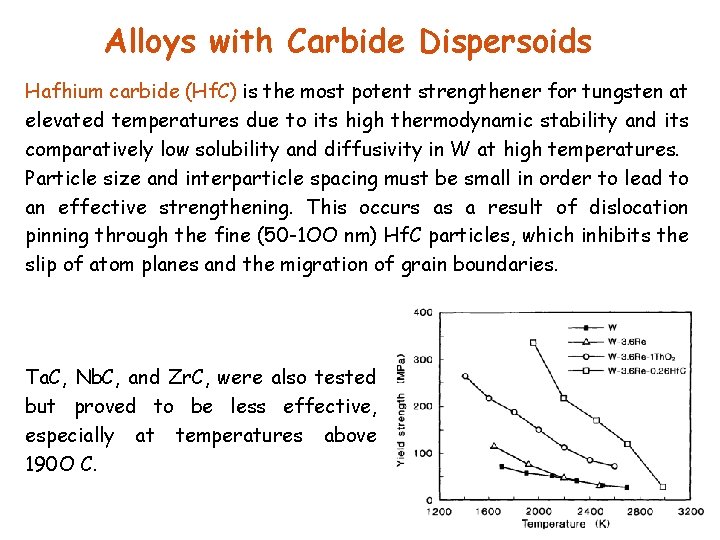
Alloys with Carbide Dispersoids Hafhium carbide (Hf. C) is the most potent strengthener for tungsten at elevated temperatures due to its high thermodynamic stability and its comparatively low solubility and diffusivity in W at high temperatures. Particle size and interparticle spacing must be small in order to lead to an effective strengthening. This occurs as a result of dislocation pinning through the fine (50 -1 OO nm) Hf. C particles, which inhibits the slip of atom planes and the migration of grain boundaries. Ta. C, Nb. C, and Zr. C, were also tested but proved to be less effective, especially at temperatures above 190 O C.
TUNGSTEN COMPOSITES For certain applications, electrical and thermal conductivity, sensitivity toward oxidation, and poor workability of W are unsatisfactory. These limitations have led to the development of two-phase alloys, in which the useful properties of tungsten are combined with those of the additive. Two important alloy systems belong to this group and are: • The so-called heavy metal alloys, based on W-Ni-Fe and W-Ni-Cu-(Fe). They are used wherever high density, excellent mechanical properties, and good workability are required. • W-Cu and W-Ag alloys, in which the high electrical and thermal conductivity of copper or silver is combined with the high hardness and wear resistance of tungsten.
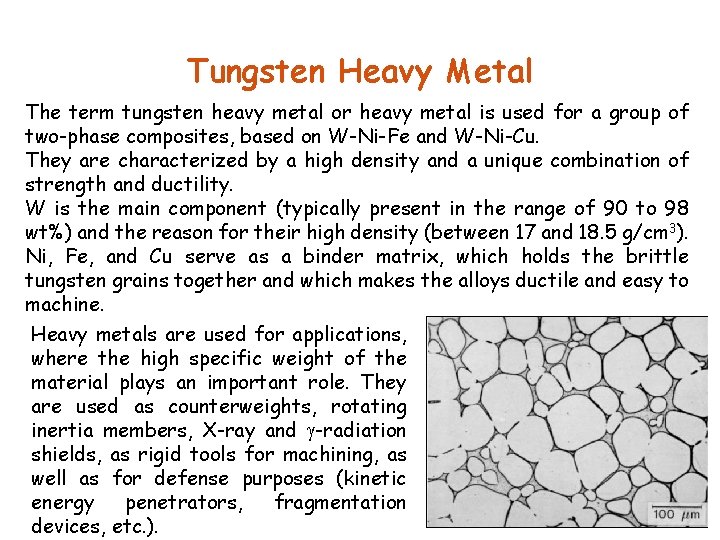
Tungsten Heavy Metal The term tungsten heavy metal or heavy metal is used for a group of two-phase composites, based on W-Ni-Fe and W-Ni-Cu. They are characterized by a high density and a unique combination of strength and ductility. W is the main component (typically present in the range of 90 to 98 wt%) and the reason for their high density (between 17 and 18. 5 g/cm 3). Ni, Fe, and Cu serve as a binder matrix, which holds the brittle tungsten grains together and which makes the alloys ductile and easy to machine. Heavy metals are used for applications, where the high specific weight of the material plays an important role. They are used as counterweights, rotating inertia members, X-ray and -radiation shields, as rigid tools for machining, as well as for defense purposes (kinetic energy penetrators, fragmentation devices, etc. ).
Besides the high density and the unique combination of high strength and ductility, there are other attributes which make heavy metals a versatile product: • the high modulus of elasticity (much higher than steel), • excellent vibration damping characteristics (for chatter free heavy machining), • its good machinability, • the high absorption ability for X-rays and y-rays, • good thermal and electrical conductivity, • low electrical erosion and welding tendency, • good corrosion resistance.
Tungsten Copper and Tungsten Silver Typical applications include high-, medium-, and low-voltage circuit breakers (W-Cu, W-Ag), resistance welding electrodes, electrode materials for electrical discharge machining, and heat sink materials for microelectronic packaging (WCu). They combine the high hardness, hot strength, and wear resistance of tungsten with the outstanding electrical and thermal conductivity of the two high-conductivity metals. The tungsten content in contact materials varies between 10 and 90 wt%, but composites between 70 and 90 wt% W, and W particle sizes between 5 and 50 m are the standard materials for arcing contacts. Compositions between 25 and 40 wt% Cu are preferably used for electrical discharge machining. For special switches, WC-(20 -65) Ag and WC-(30 -50)Cu composites are used. W-Ag exhibits better oxidation and corrosion resistance than W-Cu and has higher current-carrying capacity
Properties Molybdenum Atomic Weight: 95. 95 g/gatom Density : 10. 22 g/cc Young modulus 327 GPa High Melting Temperature : 2610 C Lowest Thermal Expansion Coefficient of the Engineering Metals : 4. 3 x 10 -6/°C High Thermal Conductivity : 142 W/m • K at 20°C Crystal Structure : Body-Centered Cubic; Mo withstand high temperatures and maintain strength under these conditions. In fact, it can work at temperatures above 1100°C (in nonoxidising conditions), which is higher than steels and nickel-based superalloys. When exposed to temperatures in excess of 760°C in air rapid oxidation can result. Under these conditions, the oxide layer sublimes and the base metal is attacked. Thus, molybdenum performs best in inert of vacuum environments
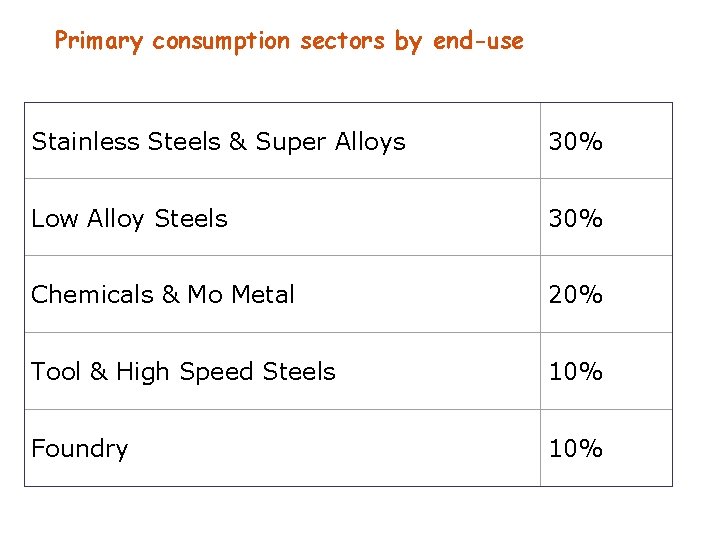
Primary consumption sectors by end-use Stainless Steels & Super Alloys 30% Low Alloy Steels 30% Chemicals & Mo Metal 20% Tool & High Speed Steels 10% Foundry 10%
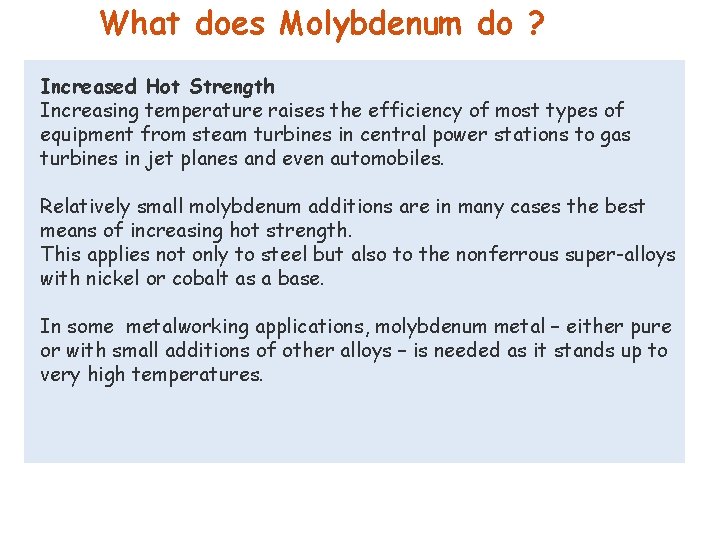
What does Molybdenum do ? Increased Hot Strength Increasing temperature raises the efficiency of most types of equipment from steam turbines in central power stations to gas turbines in jet planes and even automobiles. Relatively small molybdenum additions are in many cases the best means of increasing hot strength. This applies not only to steel but also to the nonferrous super-alloys with nickel or cobalt as a base. In some metalworking applications, molybdenum metal – either pure or with small additions of other alloys – is needed as it stands up to very high temperatures.
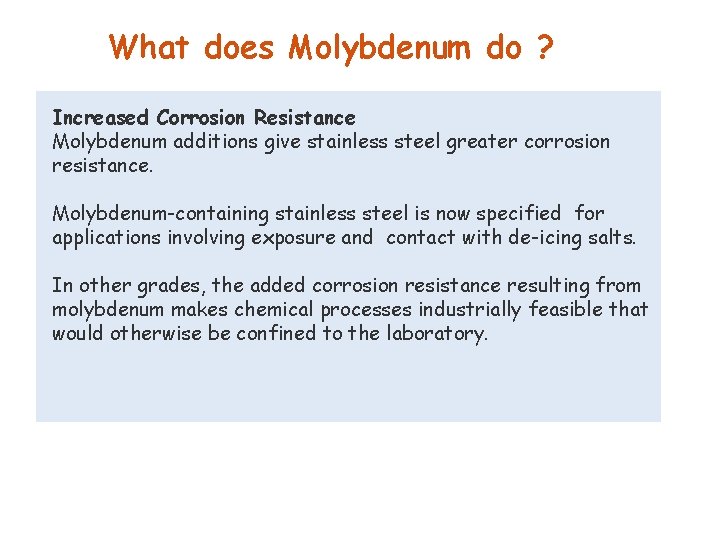
What does Molybdenum do ? Increased Corrosion Resistance Molybdenum additions give stainless steel greater corrosion resistance. Molybdenum-containing stainless steel is now specified for applications involving exposure and contact with de-icing salts. In other grades, the added corrosion resistance resulting from molybdenum makes chemical processes industrially feasible that would otherwise be confined to the laboratory.
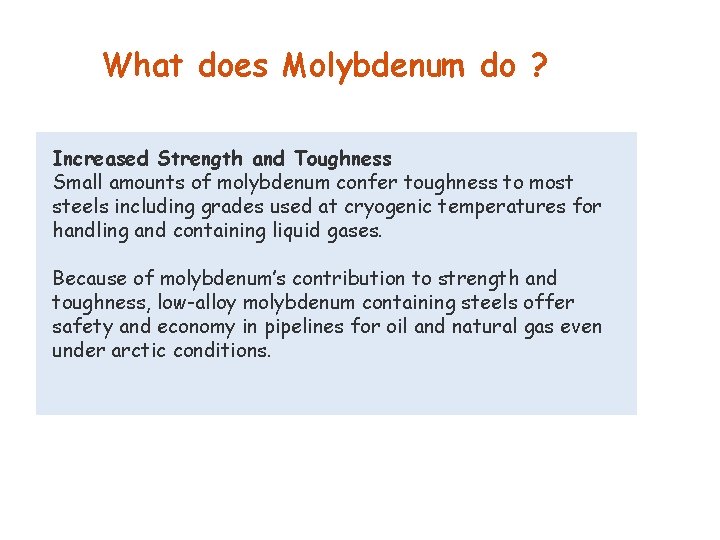
What does Molybdenum do ? Increased Strength and Toughness Small amounts of molybdenum confer toughness to most steels including grades used at cryogenic temperatures for handling and containing liquid gases. Because of molybdenum’s contribution to strength and toughness, low-alloy molybdenum containing steels offer safety and economy in pipelines for oil and natural gas even under arctic conditions.
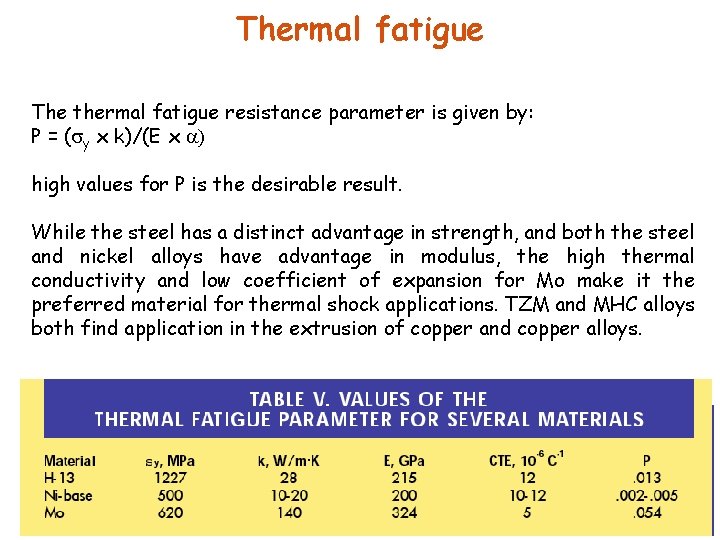
Thermal fatigue The thermal fatigue resistance parameter is given by: P = ( y x k)/(E x high values for P is the desirable result. While the steel has a distinct advantage in strength, and both the steel and nickel alloys have advantage in modulus, the high thermal conductivity and low coefficient of expansion for Mo make it the preferred material for thermal shock applications. TZM and MHC alloys both find application in the extrusion of copper and copper alloys.
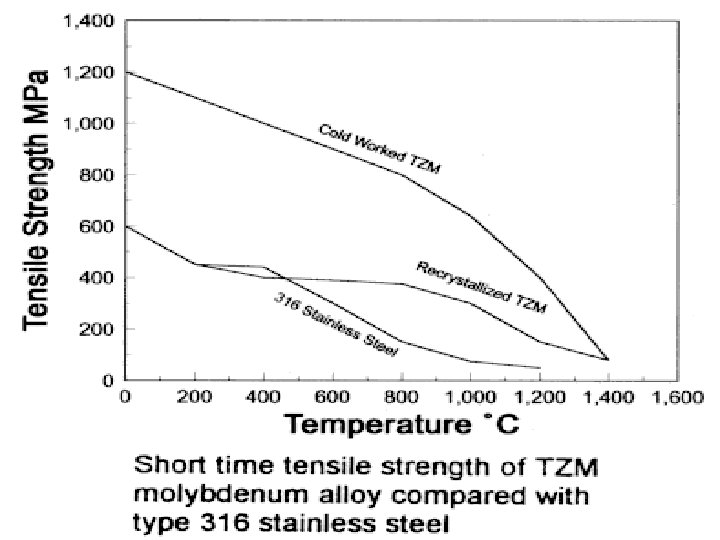
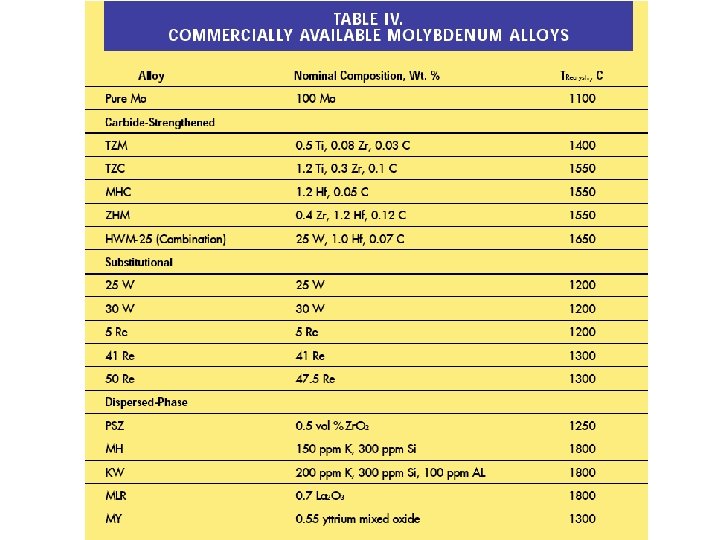
TZM Alloys (Ti-Zr-Mo) TZM is a solid-solution hardened and particle-strengthened Mo based alloy. The development of a Mo-Ti solid solution and the fine dispersed Ticarbides are responsible for the excellent strength properties at temperatures up to 1400°C. The average nominal chemical composition in weight%: 0. 5 Ti, 0. 08 Zr, 0. 02 C, remainder Mo. Advantages compared to pure Mo: better creep resistance higher recrystallization temperature better high-temperature strength better welding properties Typical areas of application: components for HIP, sintering and heat treatment furnaces, metals for rotating anodes for medical diagnostics, boats for annealing and sintering processes (up to 1400 °C), forming tools
MHC alloys (Mo-Hf-Carbides) In an attempt to improve the high-temperature strength of TZM alloys, alloys have been developed in which Ti and Zr carbide is replaced by hafnium carbide. MHC is a particle-strengthened Mo-based alloy with an excellent high-temperature strength. The addition of Hf and C leads to the formation of fine-distributed Hf -carbides, which are very stable leading to high particle hardening even in the high-temperature area (up to 1550°C). The average nominal chemical composition in weight%: 1. 2 Hf, 0. 1 C, remainder Mo. Advantages compared to pure Mo: higher high-temperature strength higher recrystallization temperature better creep resistance Advantages compared to TZM: higher high-temperature strength and therefore higher application temperatures of 100 -150 °C
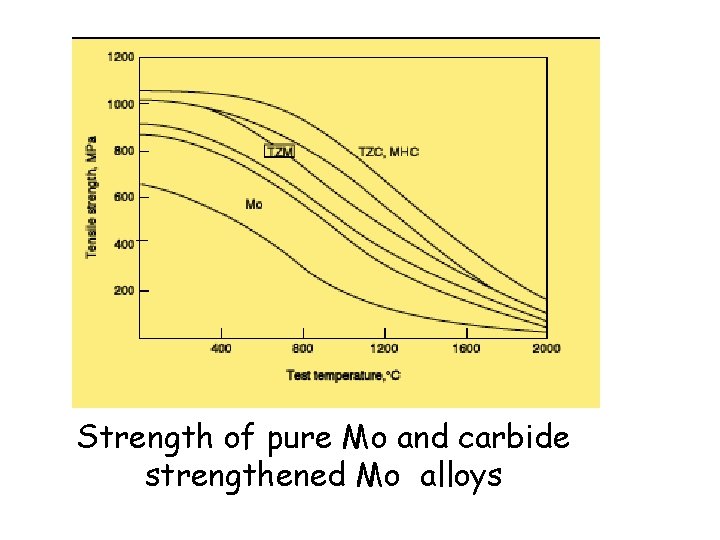
Strength of pure Mo and carbide strengthened Mo alloys
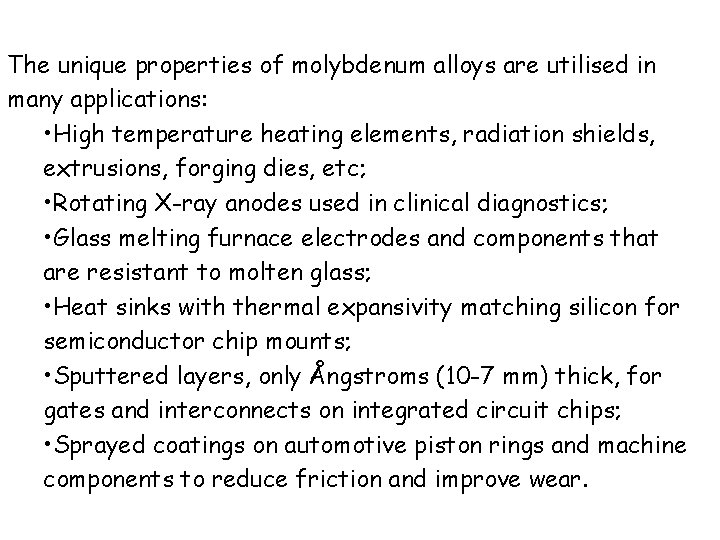
The unique properties of molybdenum alloys are utilised in many applications: • High temperature heating elements, radiation shields, extrusions, forging dies, etc; • Rotating X-ray anodes used in clinical diagnostics; • Glass melting furnace electrodes and components that are resistant to molten glass; • Heat sinks with thermal expansivity matching silicon for semiconductor chip mounts; • Sputtered layers, only Ångstroms (10 -7 mm) thick, for gates and interconnects on integrated circuit chips; • Sprayed coatings on automotive piston rings and machine components to reduce friction and improve wear.
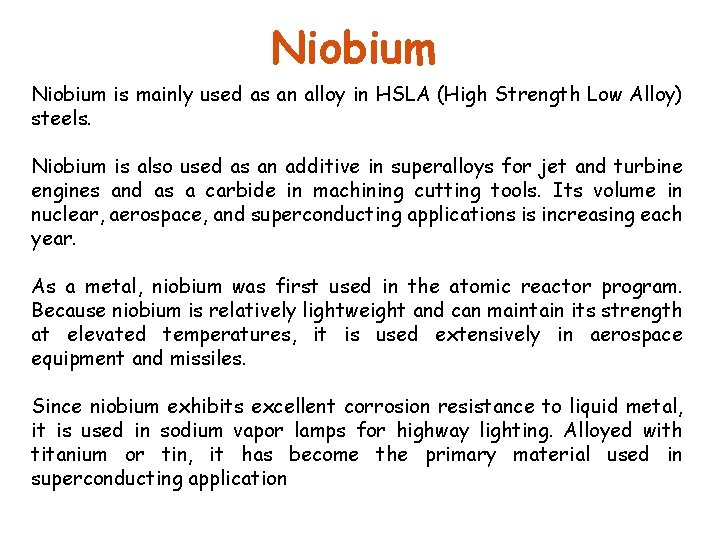
Niobium is mainly used as an alloy in HSLA (High Strength Low Alloy) steels. Niobium is also used as an additive in superalloys for jet and turbine engines and as a carbide in machining cutting tools. Its volume in nuclear, aerospace, and superconducting applications is increasing each year. As a metal, niobium was first used in the atomic reactor program. Because niobium is relatively lightweight and can maintain its strength at elevated temperatures, it is used extensively in aerospace equipment and missiles. Since niobium exhibits excellent corrosion resistance to liquid metal, it is used in sodium vapor lamps for highway lighting. Alloyed with titanium or tin, it has become the primary material used in superconducting application
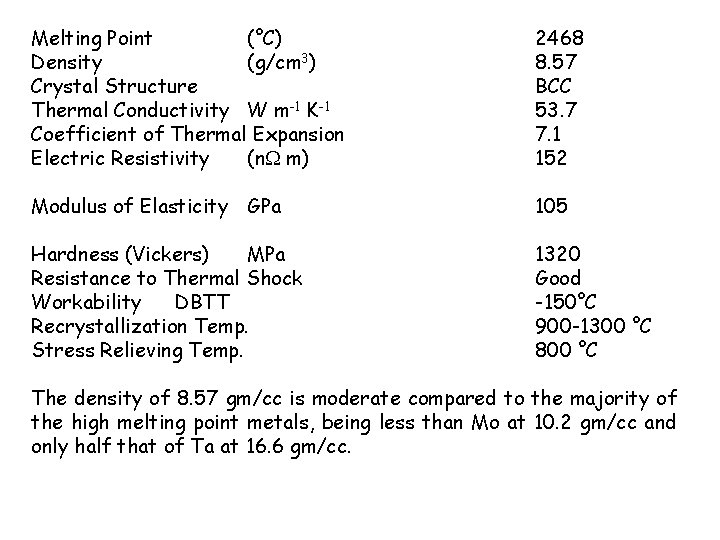
Melting Point (°C) Density (g/cm 3) Crystal Structure Thermal Conductivity W m-1 K-1 Coefficient of Thermal Expansion Electric Resistivity (n m) 2468 8. 57 BCC 53. 7 7. 1 152 Modulus of Elasticity GPa 105 Hardness (Vickers) MPa Resistance to Thermal Shock Workability DBTT Recrystallization Temp. Stress Relieving Temp. 1320 Good -150°C 900 -1300 °C 800 °C The density of 8. 57 gm/cc is moderate compared to the majority of the high melting point metals, being less than Mo at 10. 2 gm/cc and only half that of Ta at 16. 6 gm/cc.
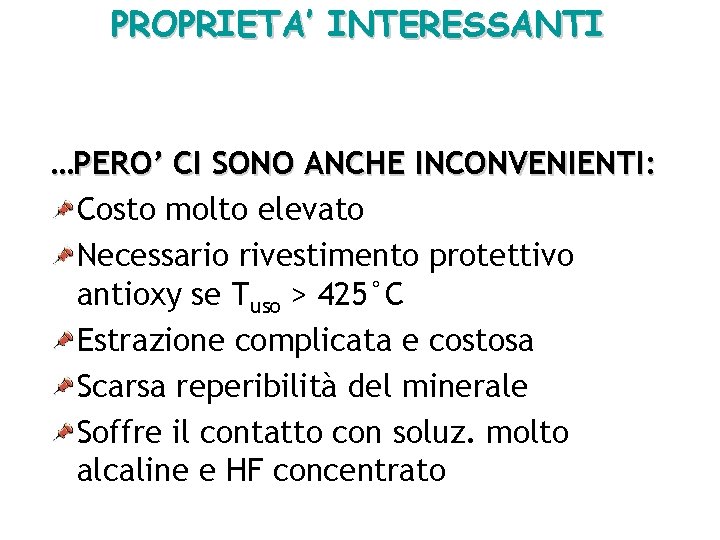
PROPRIETA’ INTERESSANTI …PERO’ CI SONO ANCHE INCONVENIENTI: Costo molto elevato Necessario rivestimento protettivo antioxy se Tuso > 425°C Estrazione complicata e costosa Scarsa reperibilità del minerale Soffre il contatto con soluz. molto alcaline e HF concentrato
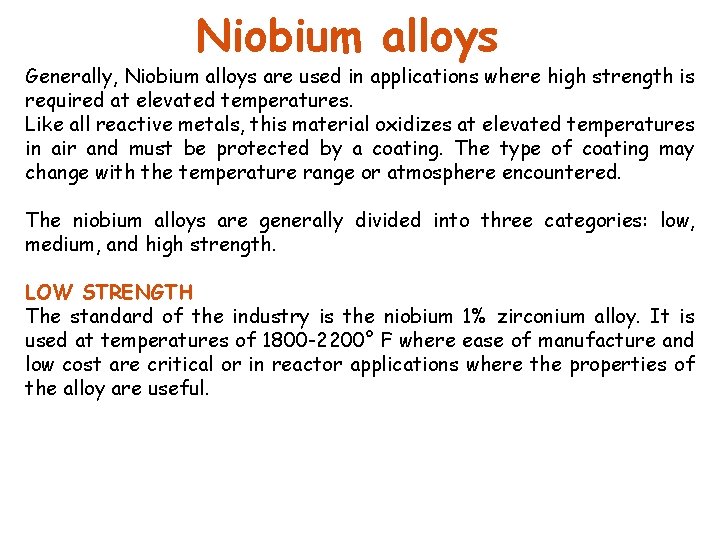
Niobium alloys Generally, Niobium alloys are used in applications where high strength is required at elevated temperatures. Like all reactive metals, this material oxidizes at elevated temperatures in air and must be protected by a coating. The type of coating may change with the temperature range or atmosphere encountered. The niobium alloys are generally divided into three categories: low, medium, and high strength. LOW STRENGTH The standard of the industry is the niobium 1% zirconium alloy. It is used at temperatures of 1800 -2200° F where ease of manufacture and low cost are critical or in reactor applications where the properties of the alloy are useful.
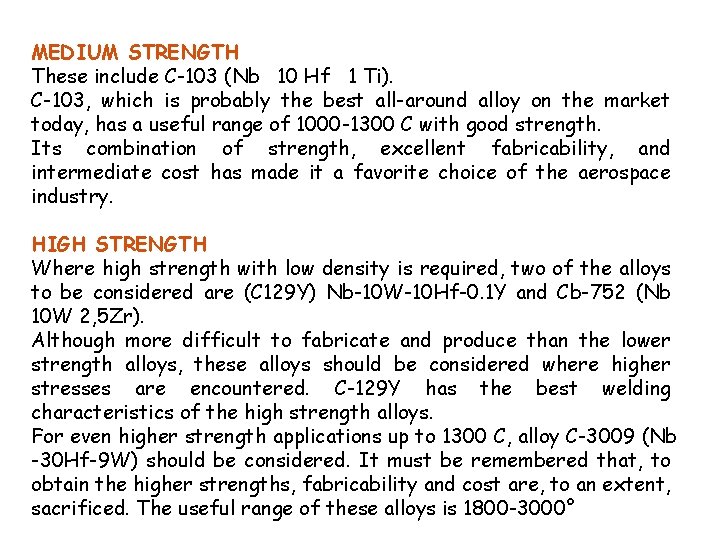
MEDIUM STRENGTH These include C-103 (Nb 10 Hf 1 Ti). C-103, which is probably the best all-around alloy on the market today, has a useful range of 1000 -1300 C with good strength. Its combination of strength, excellent fabricability, and intermediate cost has made it a favorite choice of the aerospace industry. HIGH STRENGTH Where high strength with low density is required, two of the alloys to be considered are (C 129 Y) Nb-10 W-10 Hf-0. 1 Y and Cb-752 (Nb 10 W 2, 5 Zr). Although more difficult to fabricate and produce than the lower strength alloys, these alloys should be considered where higher stresses are encountered. C-129 Y has the best welding characteristics of the high strength alloys. For even higher strength applications up to 1300 C, alloy C-3009 (Nb -30 Hf-9 W) should be considered. It must be remembered that, to obtain the higher strengths, fabricability and cost are, to an extent, sacrificed. The useful range of these alloys is 1800 -3000°
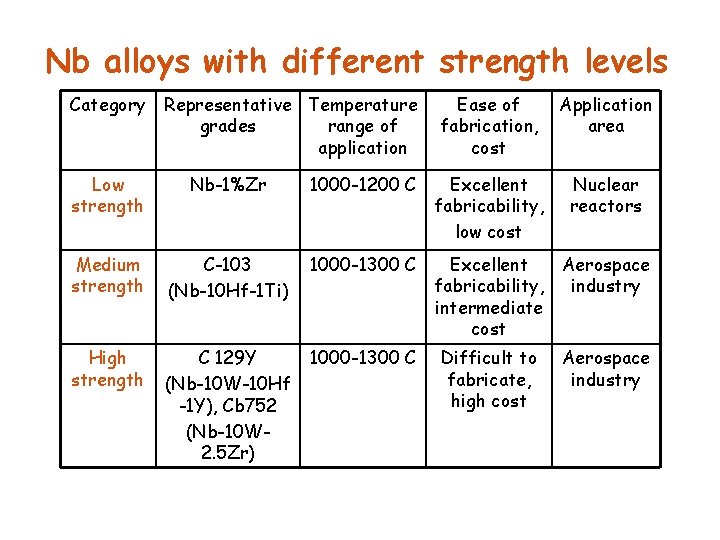
Nb alloys with different strength levels Category Representative Temperature grades range of application Ease of fabrication, cost Application area Low strength Nb-1%Zr 1000 -1200 C Excellent fabricability, low cost Nuclear reactors Medium strength C-103 (Nb-10 Hf-1 Ti) 1000 -1300 C Excellent fabricability, intermediate cost Aerospace industry High strength C 129 Y (Nb-10 W-10 Hf -1 Y), Cb 752 (Nb-10 W 2. 5 Zr) 1000 -1300 C Difficult to fabricate, high cost Aerospace industry
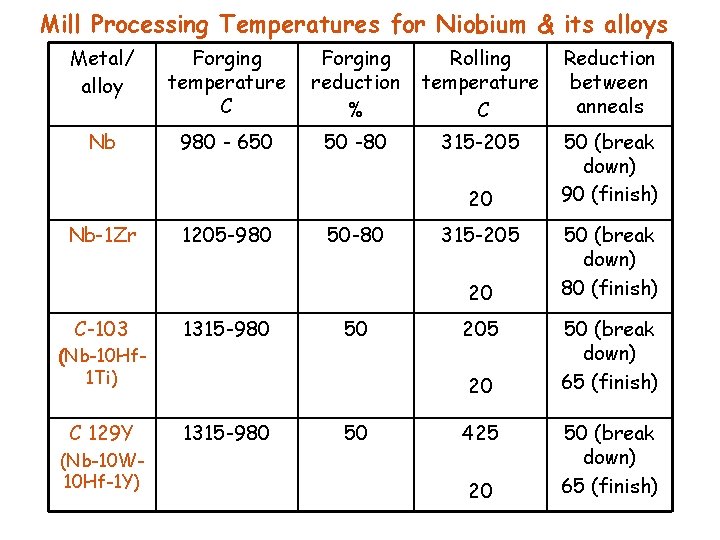
Mill Processing Temperatures for Niobium & its alloys Metal/ alloy Forging temperature C Forging reduction % Rolling temperature C Reduction between anneals Nb 980 - 650 50 -80 315 -205 50 (break down) 90 (finish) 20 Nb-1 Zr 1205 -980 50 -80 315 -205 20 C-103 1315 -980 50 (Nb-10 Hf 1 Ti) C 129 Y (Nb-10 W 10 Hf-1 Y) 205 20 1315 -980 50 425 20 50 (break down) 80 (finish) 50 (break down) 65 (finish)
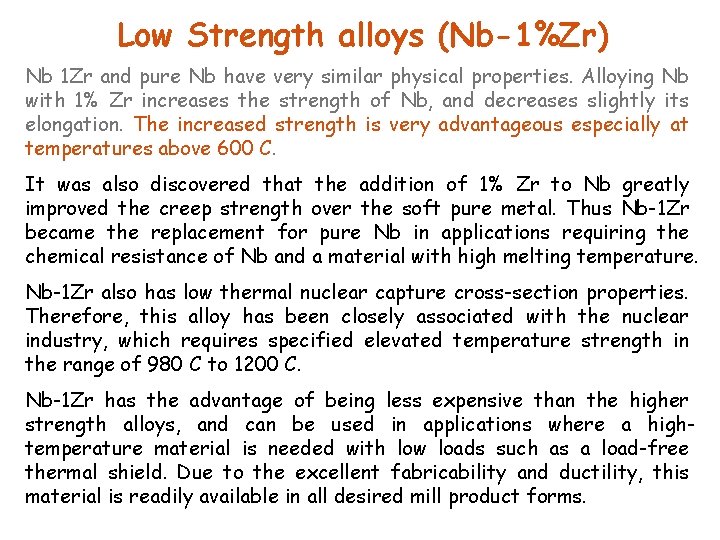
Low Strength alloys (Nb-1%Zr) Nb 1 Zr and pure Nb have very similar physical properties. Alloying Nb with 1% Zr increases the strength of Nb, and decreases slightly its elongation. The increased strength is very advantageous especially at temperatures above 600 C. It was also discovered that the addition of 1% Zr to Nb greatly improved the creep strength over the soft pure metal. Thus Nb-1 Zr became the replacement for pure Nb in applications requiring the chemical resistance of Nb and a material with high melting temperature. Nb-1 Zr also has low thermal nuclear capture cross-section properties. Therefore, this alloy has been closely associated with the nuclear industry, which requires specified elevated temperature strength in the range of 980 C to 1200 C. Nb-1 Zr has the advantage of being less expensive than the higher strength alloys, and can be used in applications where a hightemperature material is needed with low loads such as a load-free thermal shield. Due to the excellent fabricability and ductility, this material is readily available in all desired mill product forms.
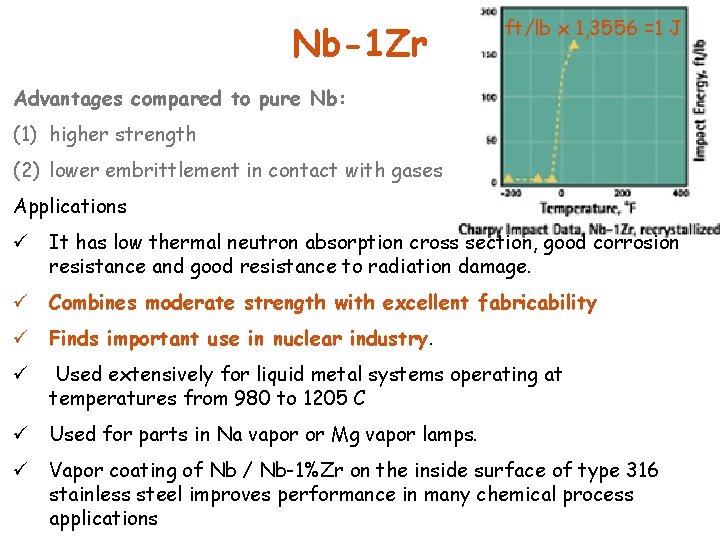
Nb-1 Zr ft/lb x 1, 3556 =1 J Advantages compared to pure Nb: (1) higher strength (2) lower embrittlement in contact with gases Applications ü It has low thermal neutron absorption cross section, good corrosion resistance and good resistance to radiation damage. ü Combines moderate strength with excellent fabricability ü Finds important use in nuclear industry. ü Used extensively for liquid metal systems operating at temperatures from 980 to 1205 C ü Used for parts in Na vapor or Mg vapor lamps. ü Vapor coating of Nb / Nb-1%Zr on the inside surface of type 316 stainless steel improves performance in many chemical process applications
Medium strength alloys (Nb- 10 Hf- 1 Ti) Alloy has been widely used for rocket components that require medium strength at temperatures in the range 1095 -1370 C Refractory metals capable of withstanding high-stress levels at elevated temperatures have been developed to meet the needs of high -performance, lightweight aerospace propulsion systems. The alloys which best demonstrate this are the niobium based alloys. C -103 (Nb- 10 Hf- 1 Ti) was selected to satisfy initial design requirements because of its excellent fabrication capabilities. It is the most "forgivable" niobium alloy for welding and shape forming. This niobium-hafnium-titanium alloy satisfies most rocket engine requirements for temperatures up to 1480 C Niobium-based alloys offer tremendous weight savings over many other rocket engine design materials. Consequently, they are being used, in many different fabricated forms, in most major aerospace programs.
Applications of C 129 Y and Cb-752 The alloys possess higher elevated temperature tensile and creep strengths than C-103, while maintaing good fabricability, coatability and thermal stability. Used for leading edges, nose caps for hypersonic flight vehicles, rocket nozzles, gas turbines and guidance structures for reentry vehicles
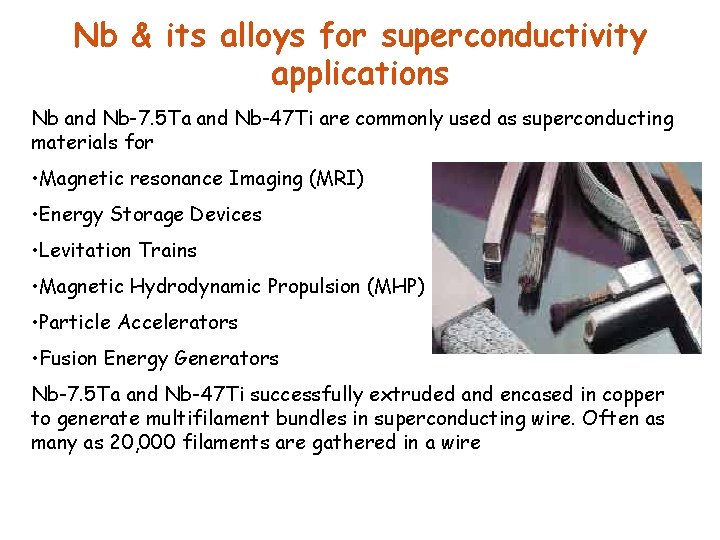
Nb & its alloys for superconductivity applications Nb and Nb-7. 5 Ta and Nb-47 Ti are commonly used as superconducting materials for • Magnetic resonance Imaging (MRI) • Energy Storage Devices • Levitation Trains • Magnetic Hydrodynamic Propulsion (MHP) • Particle Accelerators • Fusion Energy Generators Nb-7. 5 Ta and Nb-47 Ti successfully extruded and encased in copper to generate multifilament bundles in superconducting wire. Often as many as 20, 000 filaments are gathered in a wire
Coatings • Niobium and its alloys are coated to prevent oxidation in high temperature service (>425 C) • Early coatings centered on pack cementation and chemical vapor deposition. Problems of increase in DBTT of metal and part distortion encountered. • Later slurry coatings of complex aluminides and subsequently silicides were devised to overcome these problems • Si-20 Cr-20 Fe composition became the mainstay coating
Nb corrosion behaviour Niobium's corrosion properties are similar to those of tantalum; however, it is less expensive and should be considered in all applications requiring tantalum. Niobium has replaced tantalum in some hydrochloric acid applications. Niobium is resistant to attack in many liquid metals to relatively high temperatures. These include bismuth below 510 C; gallium below 400 C; lead below 850 C; lithium below 1000 C; mercury below 600 C; sodium, potassium, and sodium-potassium alloys below 1000 C; thorium -magnesium eutectic below 850 C; uranium below 1400 C; and zinc below 450 C. Since liquid metals are excellent heat-transfer media, they can be used in very compact thermal systems, such as fast breeder reactors, reactors for space vehicles, and fusion reactors. Niobium resists attack both by sodium vapor at high temperatures and pressures. The Nb-1% Zr alloy is in use as the end caps on high pressure sodium vapor lamps.
Rhenium (Re) is one of the last elements to be discovered (1925). Re is known for its high melting point, and its high density. • Rhenium is scarce in the earth's crust -0. 7 parts per million. • Rhenium with a melting point of 3180 ºC, has the second-highest melting point. Only Os, Ir, and Pt exceed its density of 21. 04 g/cc. • It is the only refractory metal that does not form carbides. • Its crystallographic structure is hexagonal close-packed (hcp), while other refractory metals have a body-centered cubic (bcc) structure. Rhenium does not have a ductile-to-brittle transition temperature. In other words, it maintains its ductility from absolute zero all the way to its melting point. • It has a high modulus of elasticity. Re has the third-highest modulus of elasticity of any metallic element This means that structures made of Re will have very good stability and rigidity. • Re offers high electrical resistivity across a wide temperature range
A high recrystallization temperature is a prerequisite for good creep resistance. Among refractory metals, Re has the highest. At temperatures up to 2800 ºC and high stresses, the rupture life of Re is longer than tungsten. The metal also accommodates wide swings in temperature - large thermal expansions and contractions – without incurring mechanical damage. Rhenium-metal rocket thrusters, for example, have withstood more than 100, 000 thermal fatigue cycles without any evidence of failure. Products made from rhenium can be thermally cycled thousands of times with no ill effect. It can be alloyed with tungsten or molybdenum and, near the solubility limits, imparts improved ductility to those materials. High-temperature strength, low friction, ductility and other unique properties make it the material of choice for many critical applications. Rhenium can be welded using inert gas or electron beam methods when protected against oxidation. ECM (electrochemical machining), EDM (electrical discharge machining), and abrasive cutting/grinding methods achieve excellent results for rhenium and rhenium alloys.
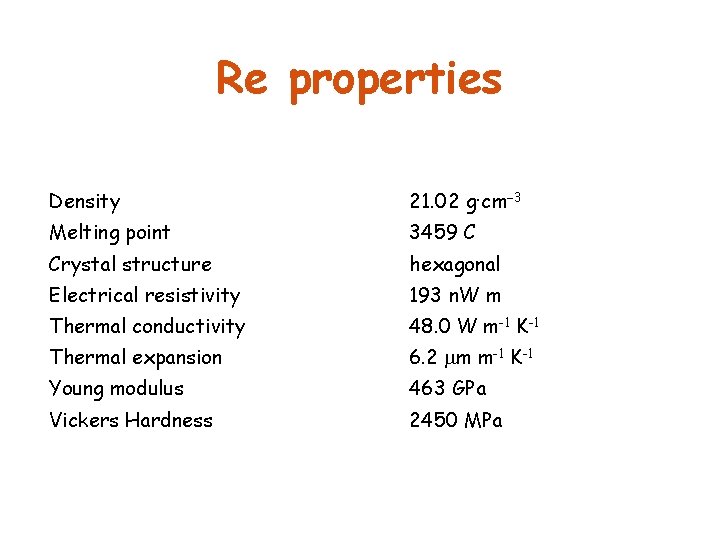
Re properties Density 21. 02 g·cm− 3 Melting point 3459 C Crystal structure hexagonal Electrical resistivity 193 n. W m Thermal conductivity 48. 0 W m-1 K-1 Thermal expansion 6. 2 m m-1 K-1 Young modulus 463 GPa Vickers Hardness 2450 MPa
Mo-Re alloys Molybdenum-Rhenium, commonly known as Moly-Rhenium (Mo-Re), is used extensively in industries as diverse as medicine, defense, pure research and production welding. Thanks to its excellent thermal and mechanical properties, this material is a less costly alternative to pure rhenium. Moly-Rhenium products are available in three standard alloy compositions: Mo-Re 41% Mo-Re 44. 5% Mo-Re 47. 5% (DBTT less than 254 C)
W-Re alloys Tungsten-Rhenium’s unique quality is its ductility. Unlike pure tungsten, tungsten-rhenium (W-Re) maintains a much greater ductility due to its rhenium content. Long-life light bulbs are a good example for this property. W-Re 3% W-Re 5% W-Re 26%
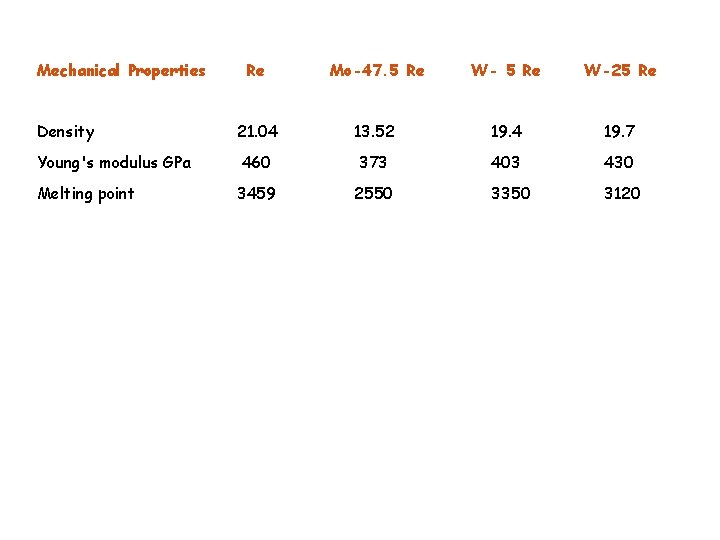
Mechanical Properties Re Mo-47. 5 Re W-25 Re Density 21. 04 13. 52 19. 4 19. 7 Young's modulus GPa 460 373 403 430 Melting point 3459 2550 3350 3120
Tantalum In the binary system, tungsten-tantalum unlimited solubility exists. However, only the Ta-rich side is of technical importance. Tantalum-tungsten alloys combine the good corrosion resistance and high elasticity of tantalum with the better hot strength of tungsten. Typical alloy compositions are Ta-2. 5 W, Ta-7. 5 W, and Ta-10 W. They are used for construction materials in strongly corrosive media and in cases where the hot strength of pure tantalum is inadequate. Tantalum can be further strengthened by additions of Hf (solutionstrengthening) or hafnium nitrides, carbides, or oxides (precipitation/dispersion-strengthening). Typical alloy compositions of this type are: Ta-8 W-2 Hf and Ta-10 W-2. 5 Hf-0. 01 C.
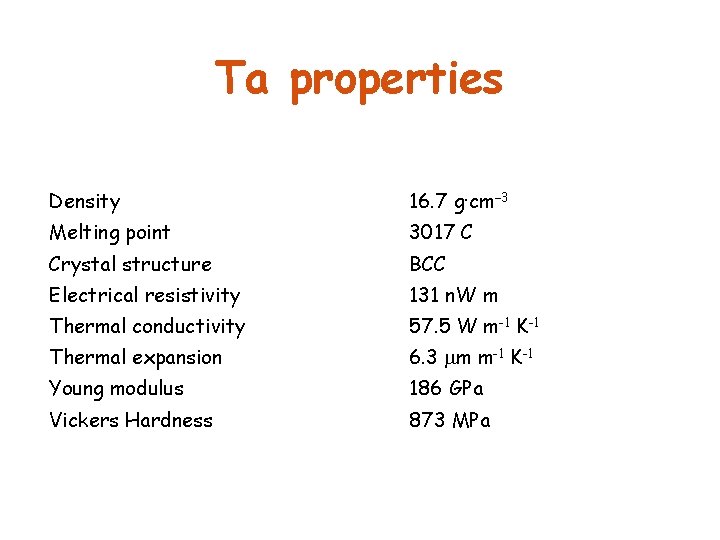
Ta properties Density 16. 7 g·cm− 3 Melting point 3017 C Crystal structure BCC Electrical resistivity 131 n. W m Thermal conductivity 57. 5 W m-1 K-1 Thermal expansion 6. 3 m m-1 K-1 Young modulus 186 GPa Vickers Hardness 873 MPa
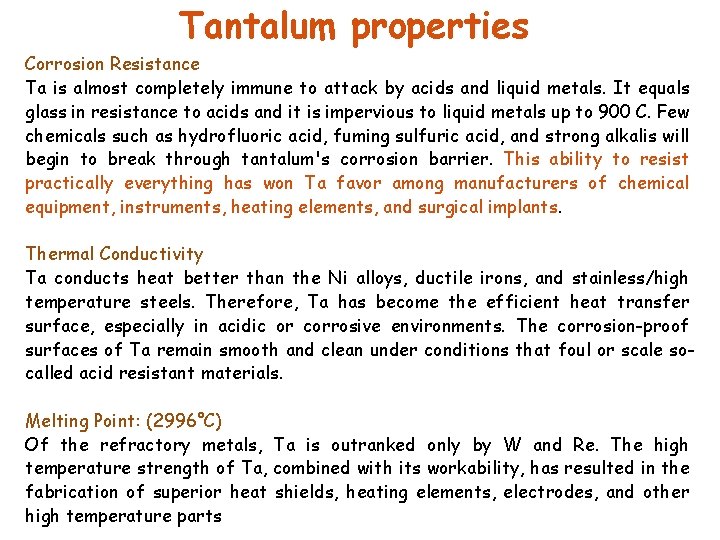
Tantalum properties Corrosion Resistance Ta is almost completely immune to attack by acids and liquid metals. It equals glass in resistance to acids and it is impervious to liquid metals up to 900 C. Few chemicals such as hydrofluoric acid, fuming sulfuric acid, and strong alkalis will begin to break through tantalum's corrosion barrier. This ability to resist practically everything has won Ta favor among manufacturers of chemical equipment, instruments, heating elements, and surgical implants. Thermal Conductivity Ta conducts heat better than the Ni alloys, ductile irons, and stainless/high temperature steels. Therefore, Ta has become the efficient heat transfer surface, especially in acidic or corrosive environments. The corrosion-proof surfaces of Ta remain smooth and clean under conditions that foul or scale socalled acid resistant materials. Melting Point: (2996°C) Of the refractory metals, Ta is outranked only by W and Re. The high temperature strength of Ta, combined with its workability, has resulted in the fabrication of superior heat shields, heating elements, electrodes, and other high temperature parts
- Slides: 66