
Refraction Refraction Light travels in a straight line


- Slides: 16
Refraction
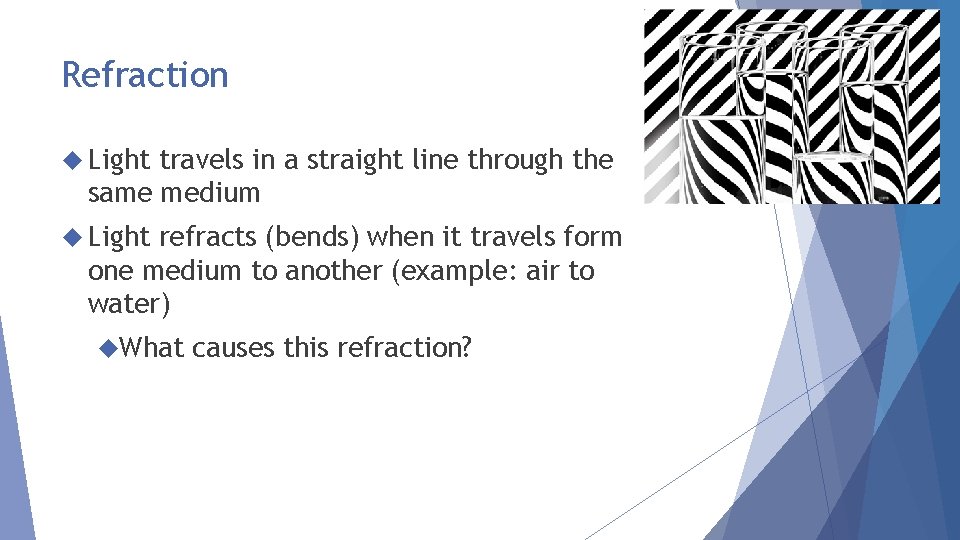
Refraction Light travels in a straight line through the same medium Light refracts (bends) when it travels form one medium to another (example: air to water) What causes this refraction?
Refraction occurs because light travels at different speeds in different media Example: Light travels at a different speed through air than it does through water When light changes speed as it moves from one medium to another, the direction also changes
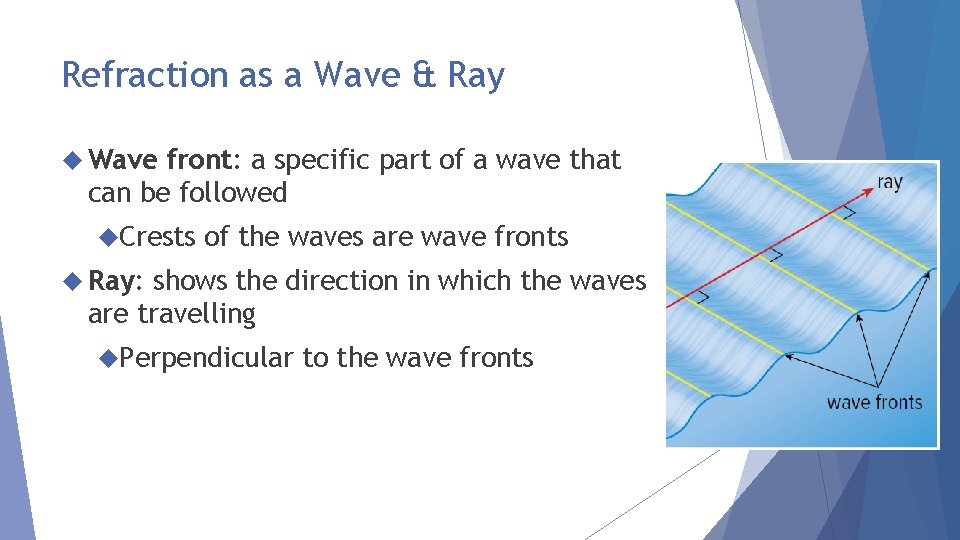
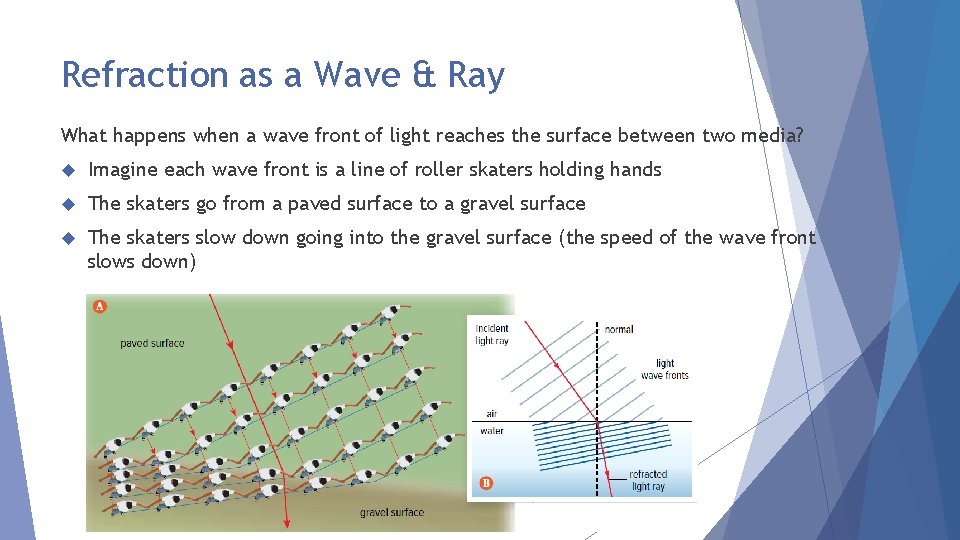
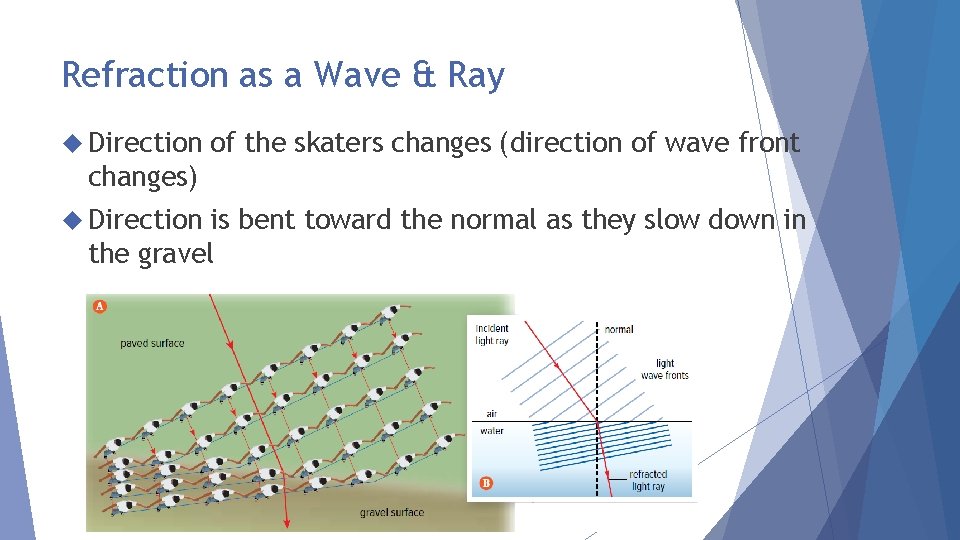
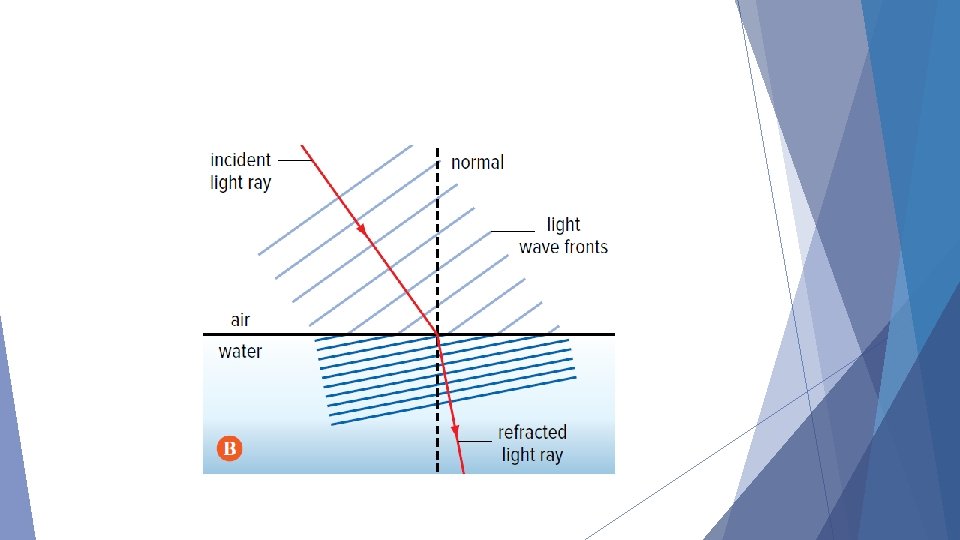
Refraction as a Wave & Ray Wave front: a specific part of a wave that can be followed Crests of the waves are wave fronts Ray: shows the direction in which the waves are travelling Perpendicular to the wave fronts
Refraction as a Wave & Ray What happens when a wave front of light reaches the surface between two media? Imagine each wave front is a line of roller skaters holding hands The skaters go from a paved surface to a gravel surface The skaters slow down going into the gravel surface (the speed of the wave front slows down)
Refraction as a Wave & Ray Direction of the skaters changes (direction of wave front changes) Direction is bent toward the normal as they slow down in the gravel
Density What does density mean? Light travels more slowly in a more dense medium than in a less dense medium Light travels from a less dense to a more dense medium: ray bends toward the normal Light travels from a more dense medium to a less dense medium: ray bends away from the normal
Lenses
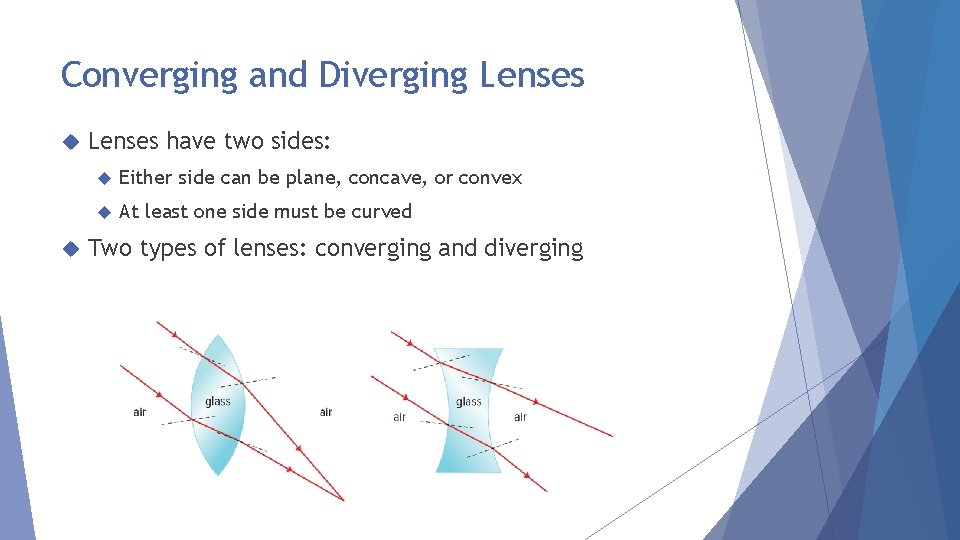
Converging and Diverging Lenses have two sides: Either side can be plane, concave, or convex At least one side must be curved Two types of lenses: converging and diverging
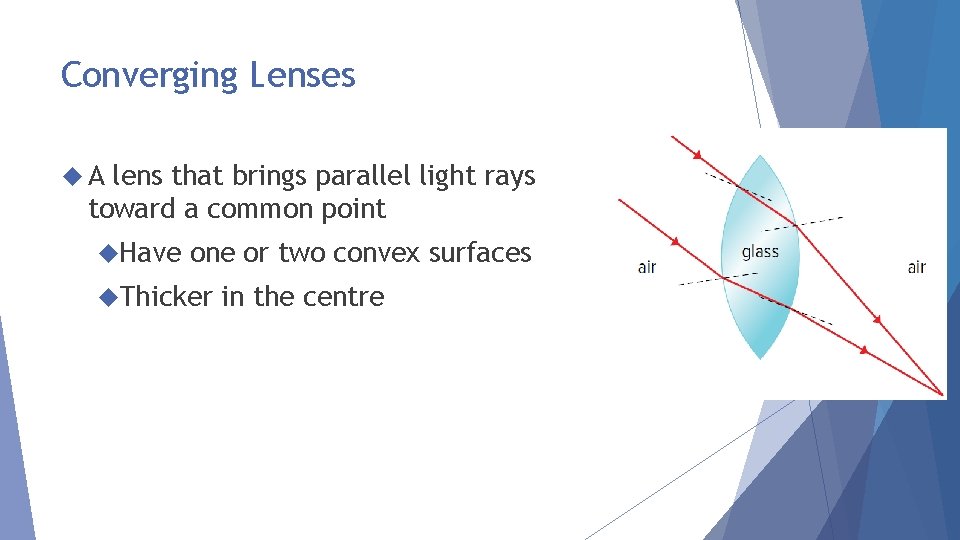
Converging Lenses A lens that brings parallel light rays toward a common point Have one or two convex surfaces Thicker in the centre
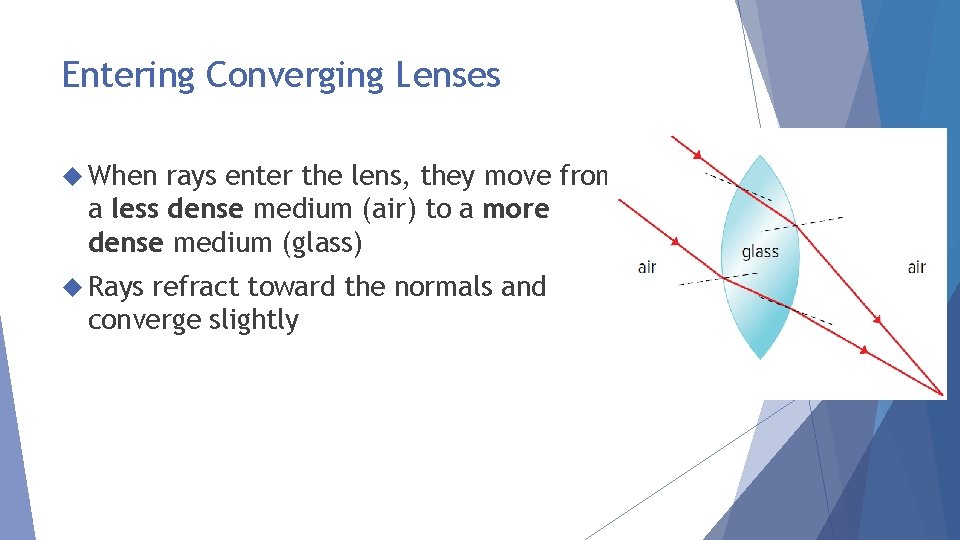
Entering Converging Lenses When rays enter the lens, they move from a less dense medium (air) to a more dense medium (glass) Rays refract toward the normals and converge slightly
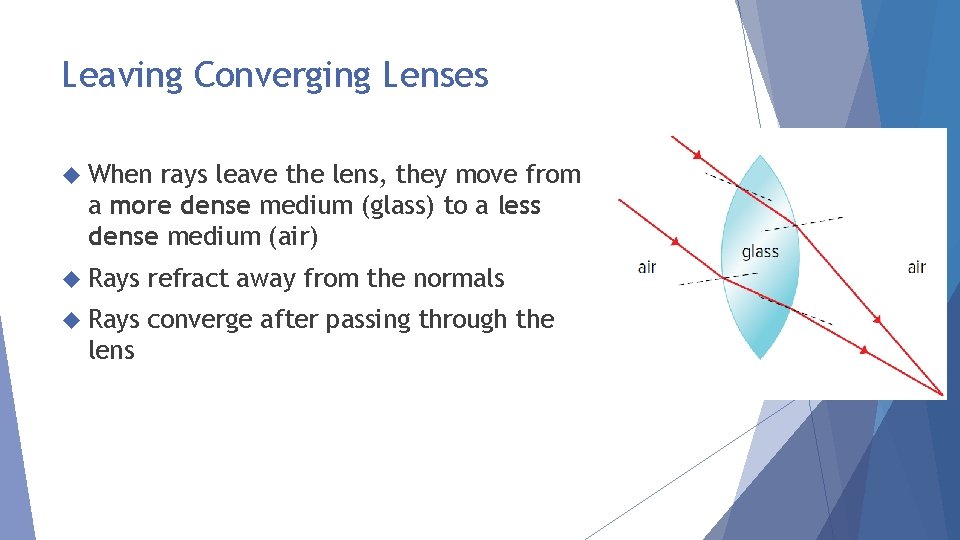
Leaving Converging Lenses When rays leave the lens, they move from a more dense medium (glass) to a less dense medium (air) Rays refract away from the normals Rays converge after passing through the lens
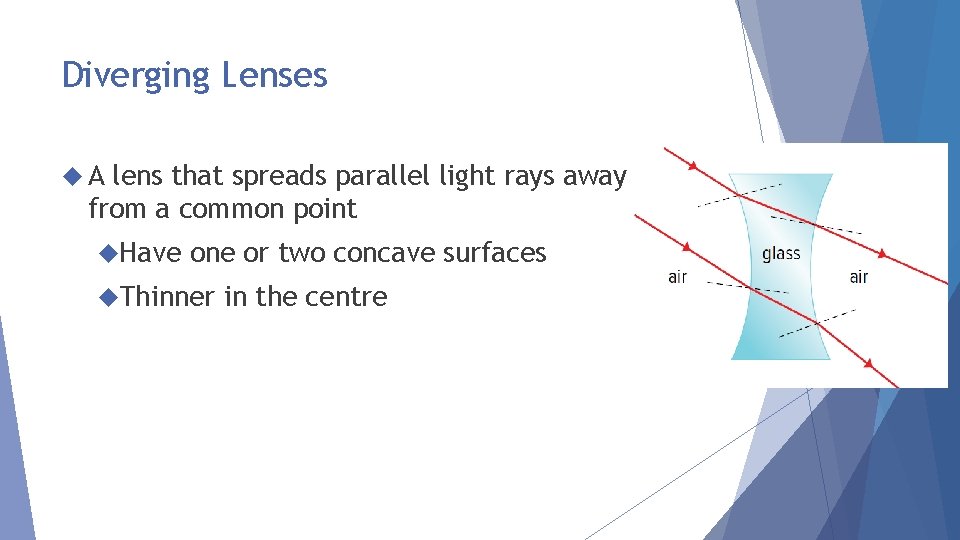
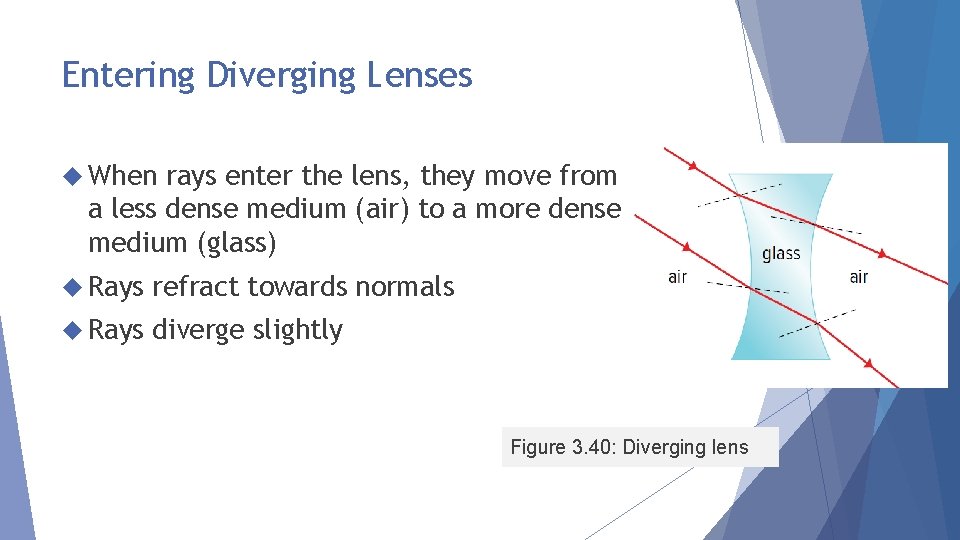
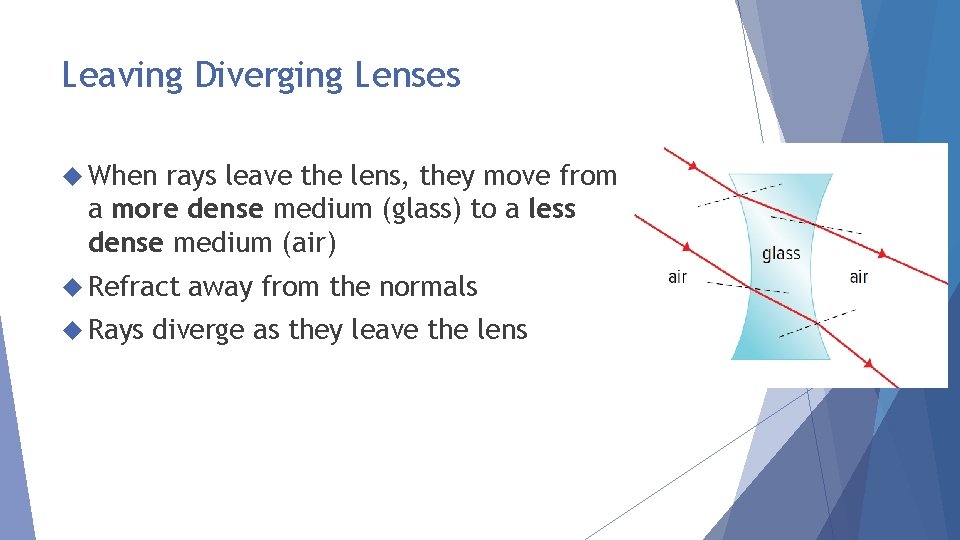
Diverging Lenses A lens that spreads parallel light rays away from a common point Have one or two concave surfaces Thinner in the centre
Entering Diverging Lenses When rays enter the lens, they move from a less dense medium (air) to a more dense medium (glass) Rays refract towards normals Rays diverge slightly Figure 3. 40: Diverging lens
Leaving Diverging Lenses When rays leave the lens, they move from a more dense medium (glass) to a less dense medium (air) Refract Rays away from the normals diverge as they leave the lens