
Refraction and Lenses Chapter 23 Section 3 Notes
- Slides: 18
Refraction and Lenses Chapter 23 Section 3 Notes
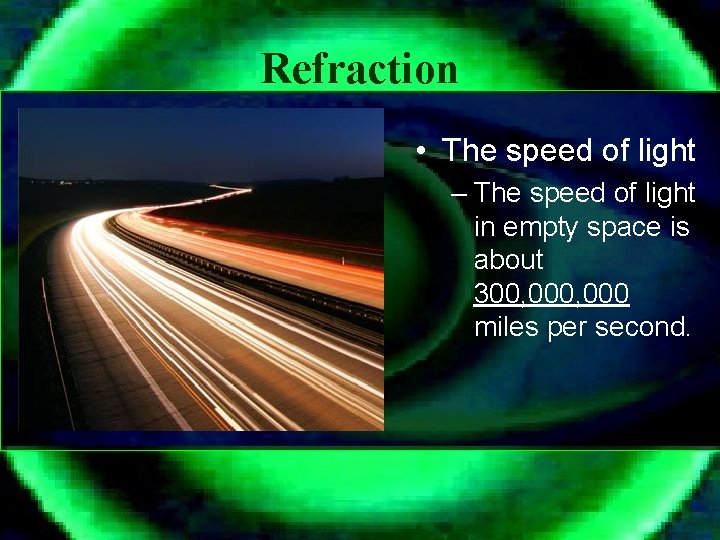
Refraction • The speed of light – The speed of light in empty space is about 300, 000 miles per second.
Refraction – Light travels more slowly when it travels through material. • The speed of light through water is about 227 million miles per second. • The speed of light through glass is about 197 million miles per second. • The speed of light through diamond is about 125 million miles per second.
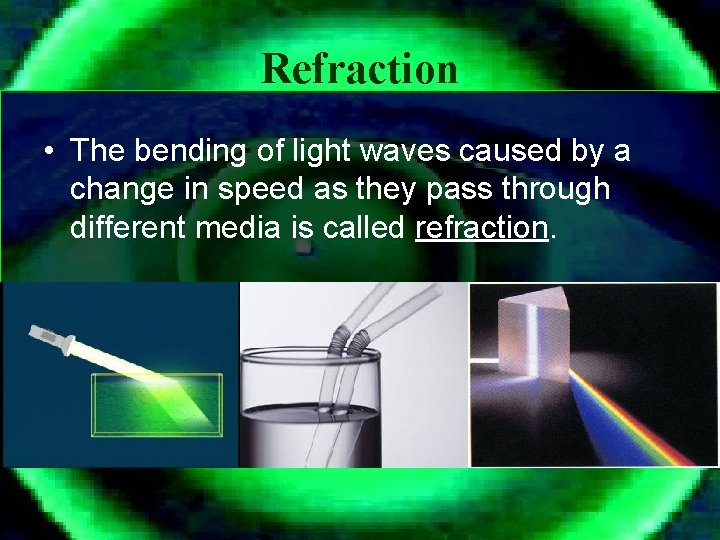
Refraction • The bending of light waves caused by a change in speed as they pass through different media is called refraction.
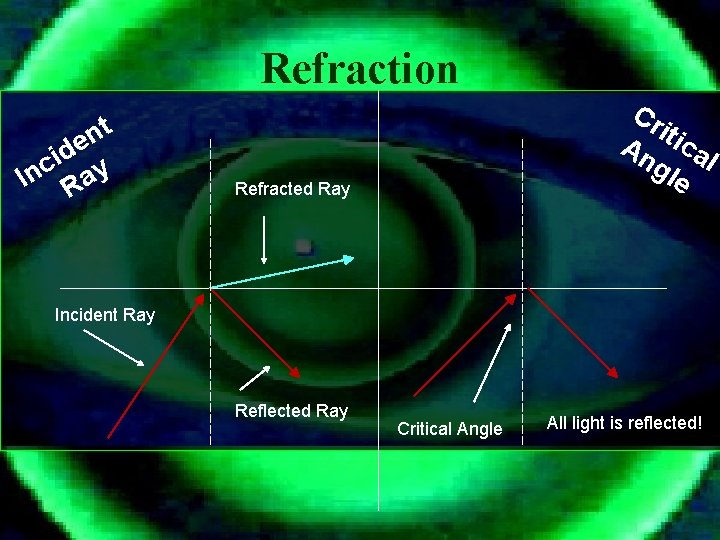
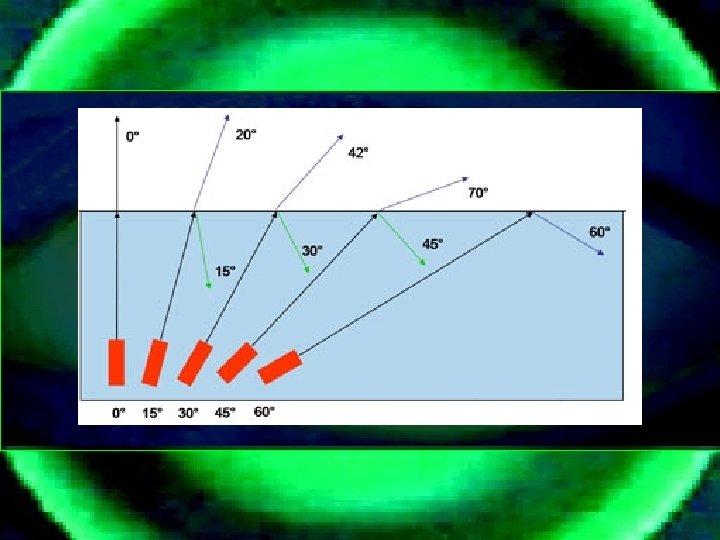
Refraction • When a light beam passes from one medium to another, some of its energy is reflected and some is refracted. As the incident beam makes a larger angle, less light energy is refracted and more is reflected. At the critical angle, all light is reflected.
Refraction t n e d i c n I Ray Cr itic An a gle l Refracted Ray Incident Ray Reflected Ray Critical Angle All light is reflected!
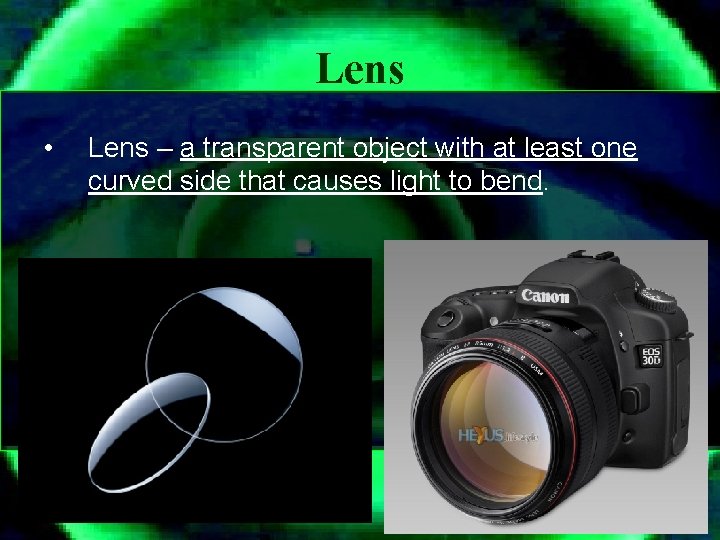
Lens • Lens – a transparent object with at least one curved side that causes light to bend.
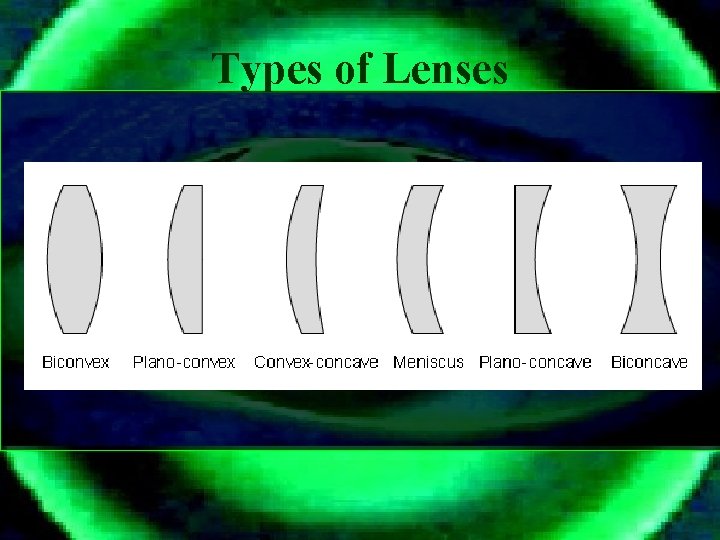
Types of Lenses
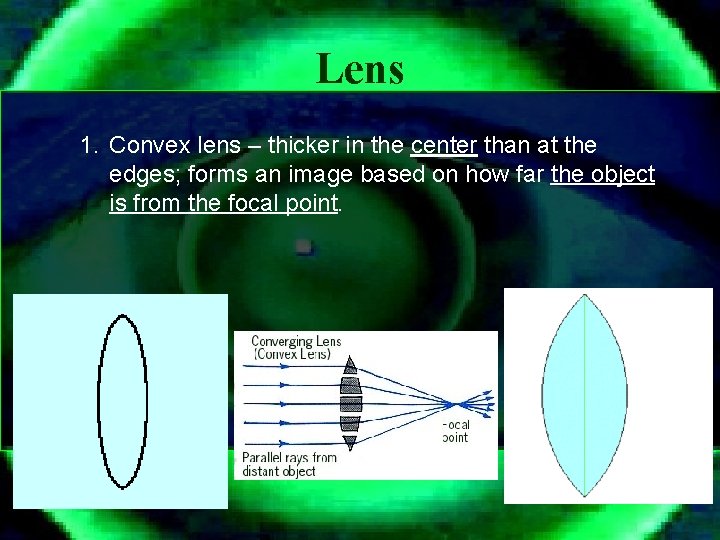
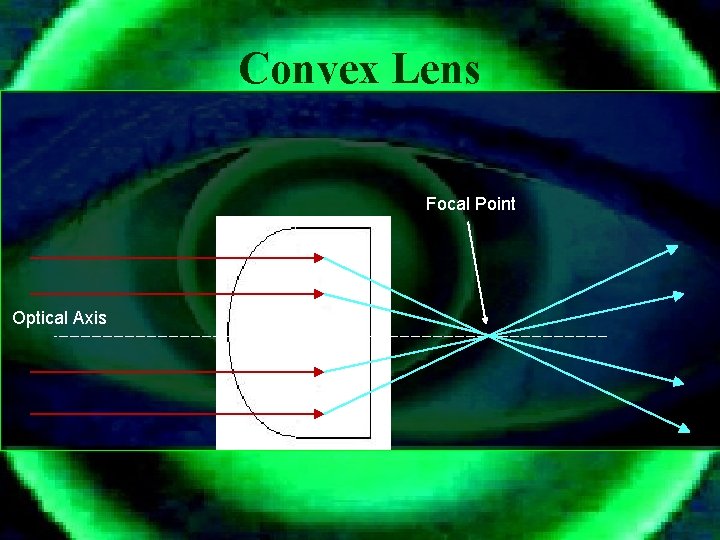
Lens 1. Convex lens – thicker in the center than at the edges; forms an image based on how far the object is from the focal point.
Lens • • • Also called a converging lens. Image formed is very similar to an image formed by a concave mirror. A magnifying glass forms an image in this way. As long as the magnifying glass is less than one focal length from the object, you can make the image larger by moving the magnifying glass away from the object.
Convex Lens Focal Point Optical Axis
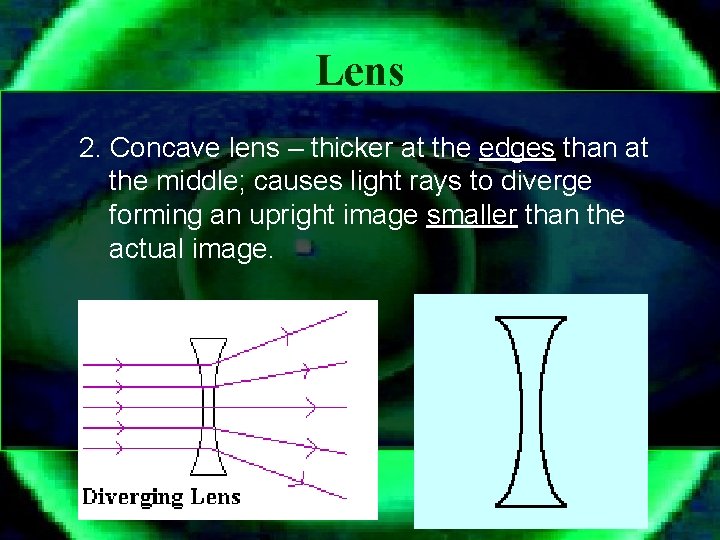
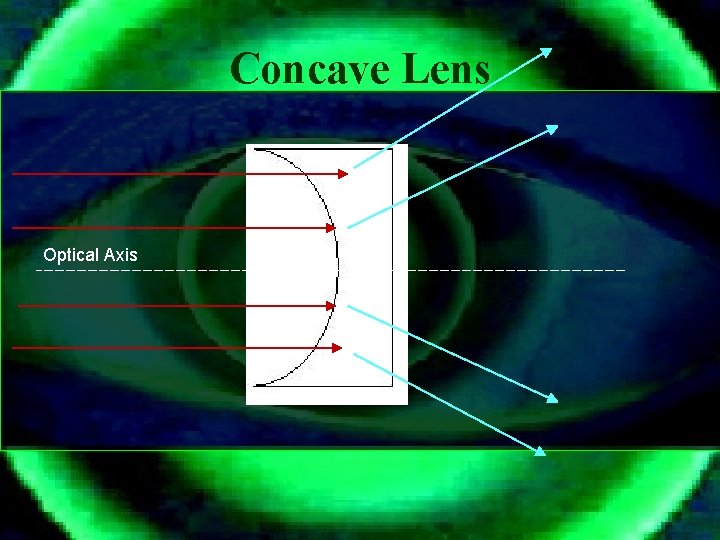
Lens 2. Concave lens – thicker at the edges than at the middle; causes light rays to diverge forming an upright image smaller than the actual image.
Lens • • • Also called a diverging lens. Image formed is very similar to an image formed by a convex mirror. The light rays are not brought into focus with a concave lens.
Concave Lens Optical Axis