
Reforming the Industrial World The Industrial Revolution leads
- Slides: 7
Reforming the Industrial World The Industrial Revolution leads to economic, social, and political reforms. Ch. 9. 4
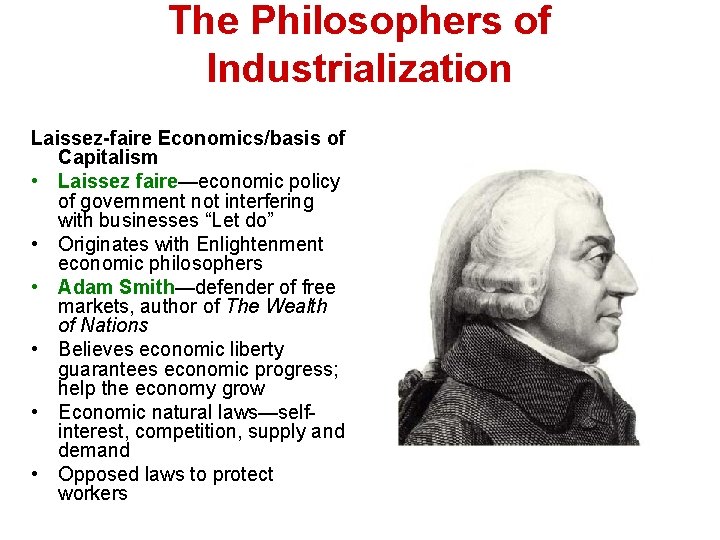
The Philosophers of Industrialization Laissez-faire Economics/basis of Capitalism • Laissez faire—economic policy of government not interfering with businesses “Let do” • Originates with Enlightenment economic philosophers • Adam Smith—defender of free markets, author of The Wealth of Nations • Believes economic liberty guarantees economic progress; help the economy grow • Economic natural laws—selfinterest, competition, supply and demand • Opposed laws to protect workers
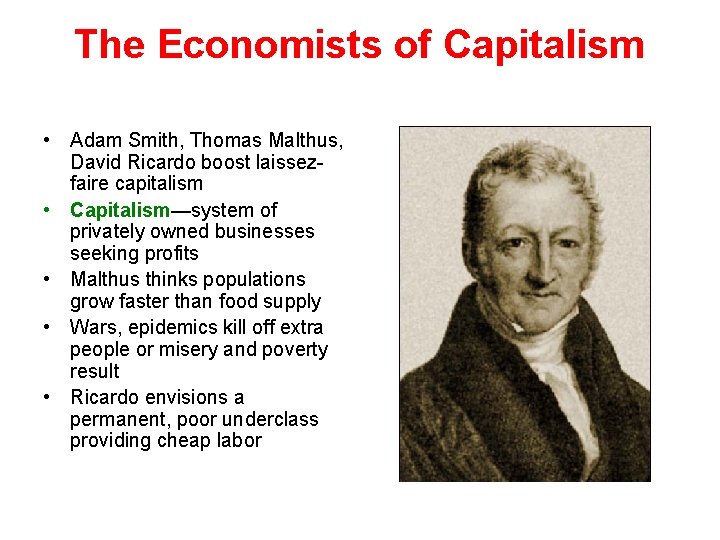
The Economists of Capitalism • Adam Smith, Thomas Malthus, David Ricardo boost laissezfaire capitalism • Capitalism—system of privately owned businesses seeking profits • Malthus thinks populations grow faster than food supply • Wars, epidemics kill off extra people or misery and poverty result • Ricardo envisions a permanent, poor underclass providing cheap labor
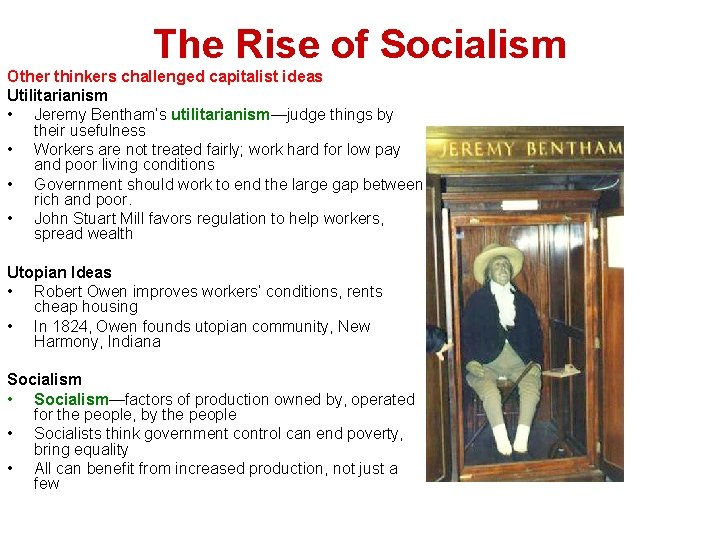
The Rise of Socialism Other thinkers challenged capitalist ideas Utilitarianism • Jeremy Bentham’s utilitarianism—judge things by their usefulness • Workers are not treated fairly; work hard for low pay and poor living conditions • Government should work to end the large gap between rich and poor. • John Stuart Mill favors regulation to help workers, spread wealth Utopian Ideas • Robert Owen improves workers’ conditions, rents cheap housing • In 1824, Owen founds utopian community, New Harmony, Indiana Socialism • Socialism—factors of production owned by, operated for the people, by the people • Socialists think government control can end poverty, bring equality • All can benefit from increased production, not just a few
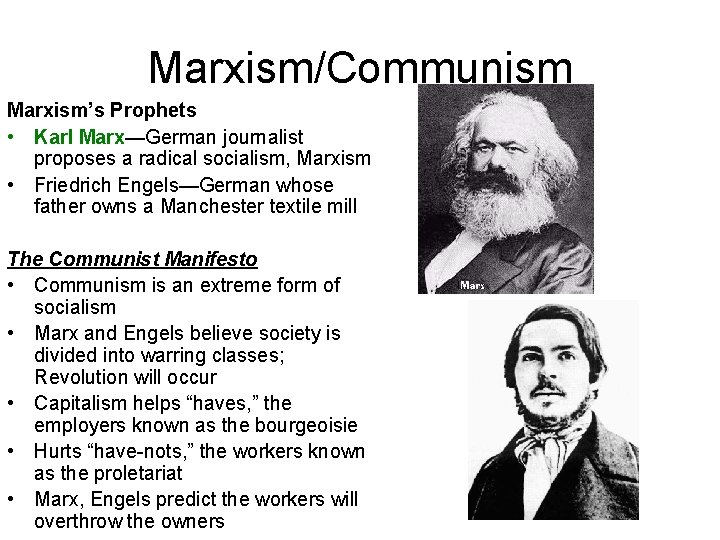
Marxism/Communism Marxism’s Prophets • Karl Marx—German journalist proposes a radical socialism, Marxism • Friedrich Engels—German whose father owns a Manchester textile mill The Communist Manifesto • Communism is an extreme form of socialism • Marx and Engels believe society is divided into warring classes; Revolution will occur • Capitalism helps “haves, ” the employers known as the bourgeoisie • Hurts “have-nots, ” the workers known as the proletariat • Marx, Engels predict the workers will overthrow the owners
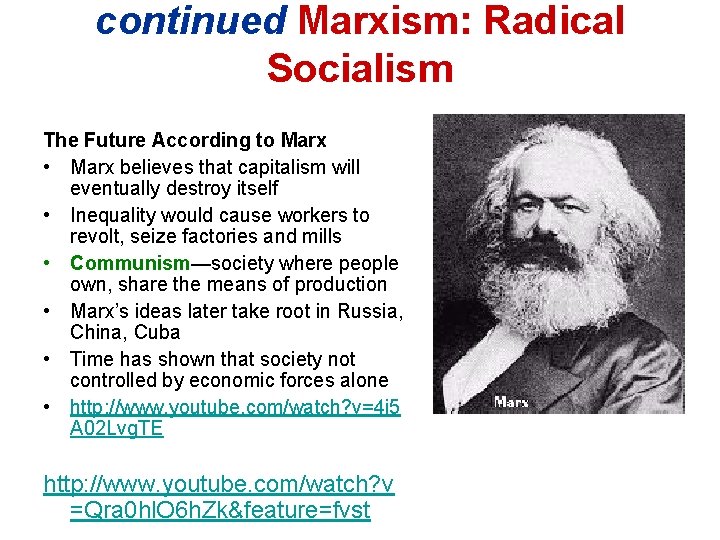
continued Marxism: Radical Socialism The Future According to Marx • Marx believes that capitalism will eventually destroy itself • Inequality would cause workers to revolt, seize factories and mills • Communism—society where people own, share the means of production • Marx’s ideas later take root in Russia, China, Cuba • Time has shown that society not controlled by economic forces alone • http: //www. youtube. com/watch? v=4 i 5 A 02 Lvg. TE http: //www. youtube. com/watch? v =Qra 0 hl. O 6 h. Zk&feature=fvst
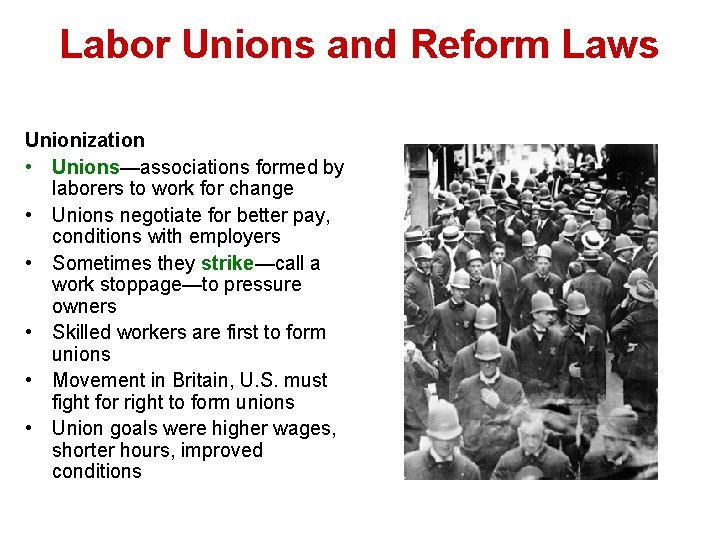
Labor Unions and Reform Laws Unionization • Unions—associations formed by laborers to work for change • Unions negotiate for better pay, conditions with employers • Sometimes they strike—call a work stoppage—to pressure owners • Skilled workers are first to form unions • Movement in Britain, U. S. must fight for right to form unions • Union goals were higher wages, shorter hours, improved conditions