
Reform and Renewal in the Christian Church Chapter
- Slides: 22
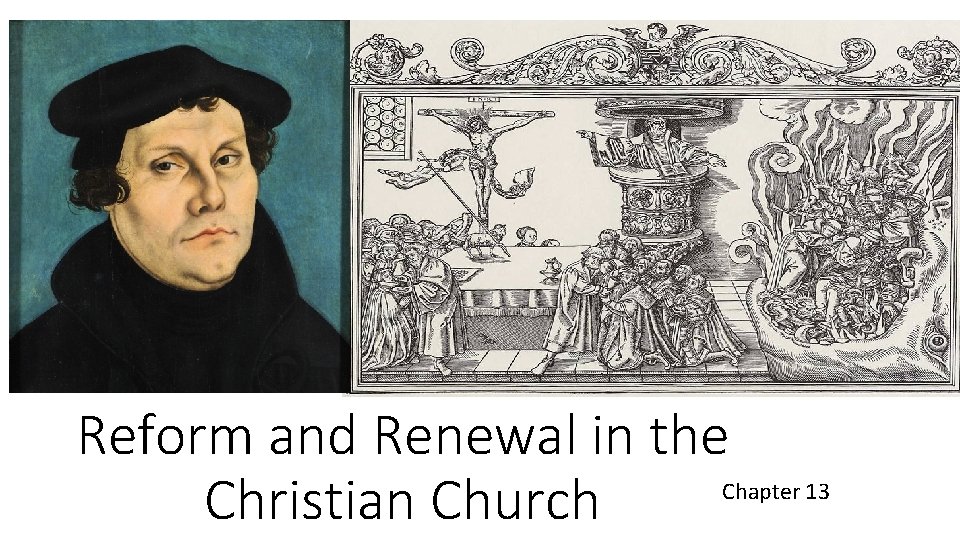
Reform and Renewal in the Christian Church Chapter 13
Catholic Church=One Church=Only Church=Church • Arguably the most momentous event of the early modern period • Started as a reform movement within the Catholic Church • Objective: purify the Catholic Church and renew Christian morals in European life
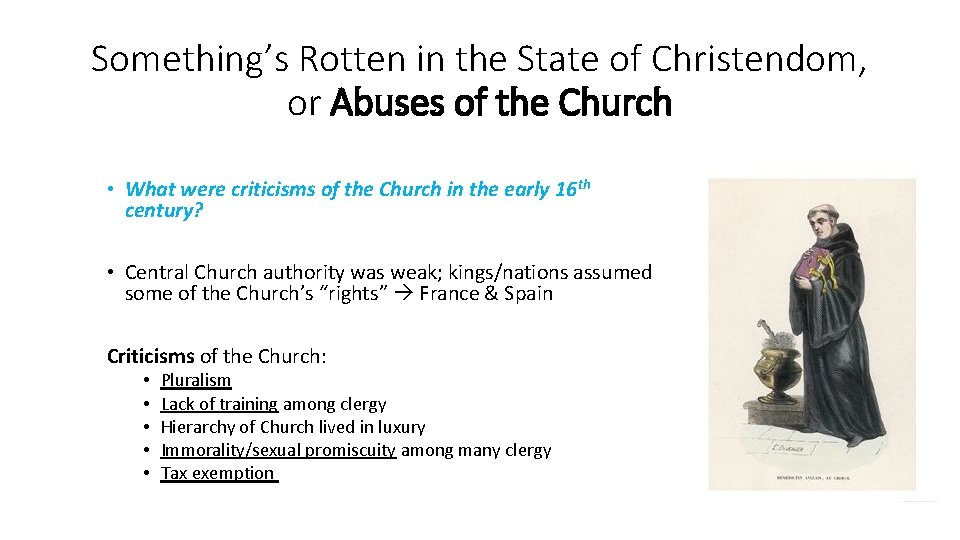
Something’s Rotten in the State of Christendom, or Abuses of the Church • What were criticisms of the Church in the early 16 th century? • Central Church authority was weak; kings/nations assumed some of the Church’s “rights” France & Spain Criticisms of the Church: • • • Pluralism Lack of training among clergy Hierarchy of Church lived in luxury Immorality/sexual promiscuity among many clergy Tax exemption
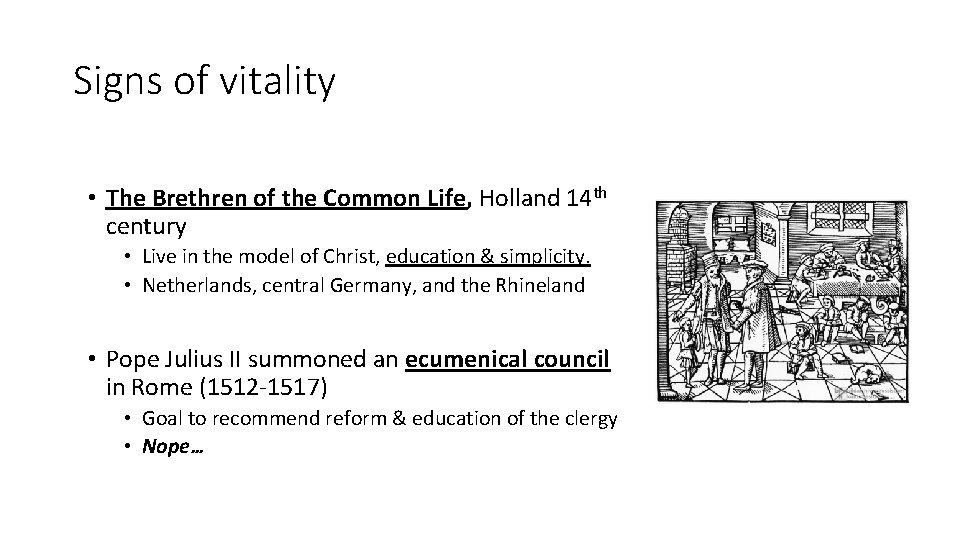
Signs of vitality • The Brethren of the Common Life, Holland 14 th century • Live in the model of Christ, education & simplicity. • Netherlands, central Germany, and the Rhineland • Pope Julius II summoned an ecumenical council in Rome (1512 -1517) • Goal to recommend reform & education of the clergy • Nope…
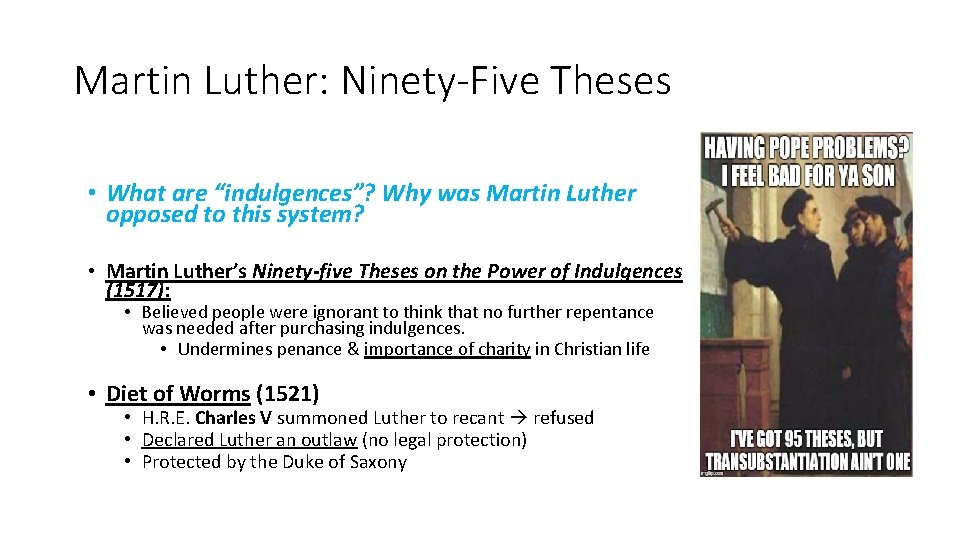
Martin Luther: Ninety-Five Theses • What are “indulgences”? Why was Martin Luther opposed to this system? • Martin Luther’s Ninety-five Theses on the Power of Indulgences (1517): • Believed people were ignorant to think that no further repentance was needed after purchasing indulgences. • Undermines penance & importance of charity in Christian life • Diet of Worms (1521) • H. R. E. Charles V summoned Luther to recant refused • Declared Luther an outlaw (no legal protection) • Protected by the Duke of Saxony
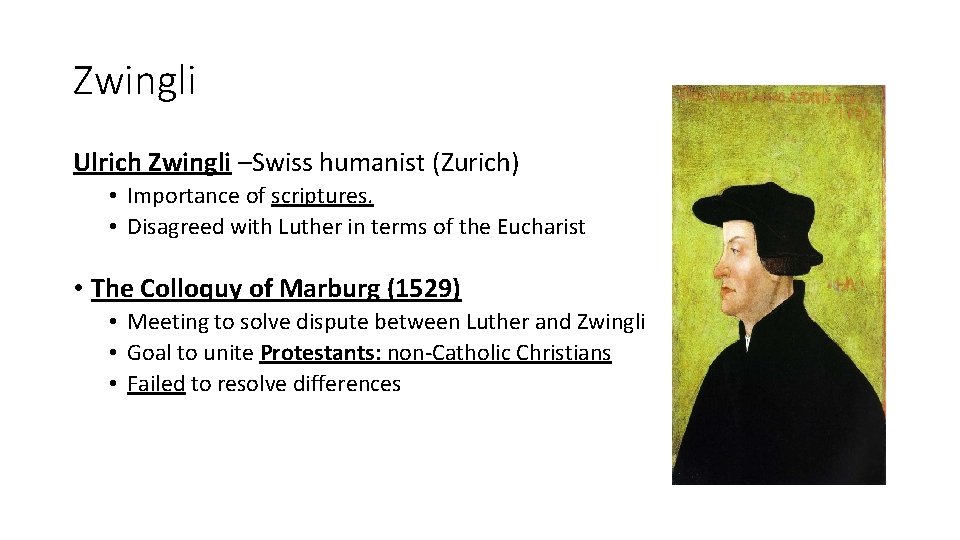
Zwingli Ulrich Zwingli –Swiss humanist (Zurich) • Importance of scriptures. • Disagreed with Luther in terms of the Eucharist • The Colloquy of Marburg (1529) • Meeting to solve dispute between Luther and Zwingli • Goal to unite Protestants: non-Catholic Christians • Failed to resolve differences
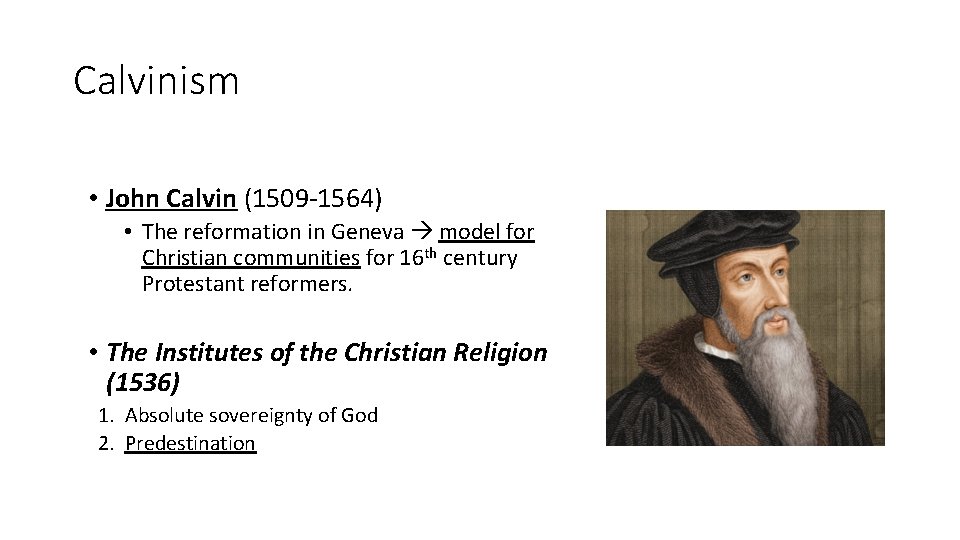
Calvinism • John Calvin (1509 -1564) • The reformation in Geneva model for Christian communities for 16 th century Protestant reformers. • The Institutes of the Christian Religion (1536) 1. Absolute sovereignty of God 2. Predestination
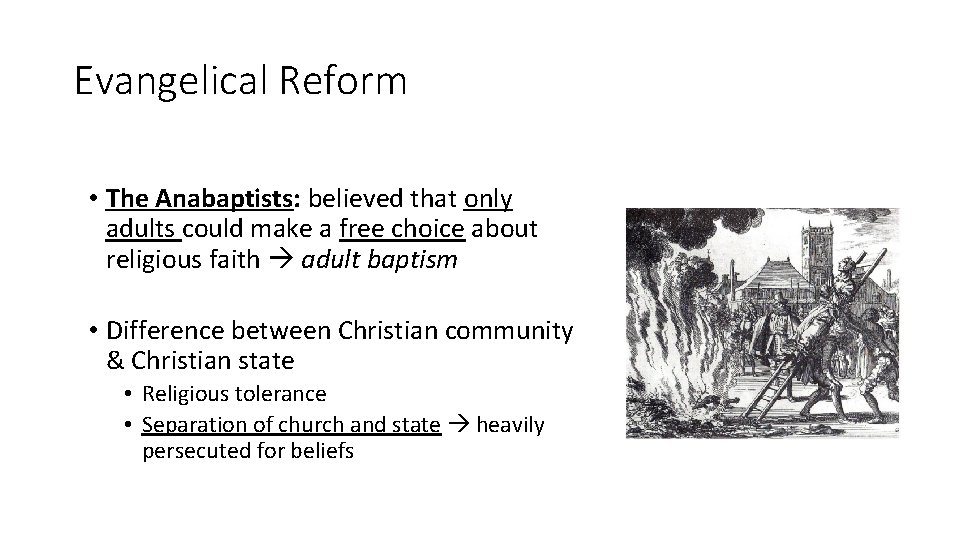
Evangelical Reform • The Anabaptists: believed that only adults could make a free choice about religious faith adult baptism • Difference between Christian community & Christian state • Religious tolerance • Separation of church and state heavily persecuted for beliefs
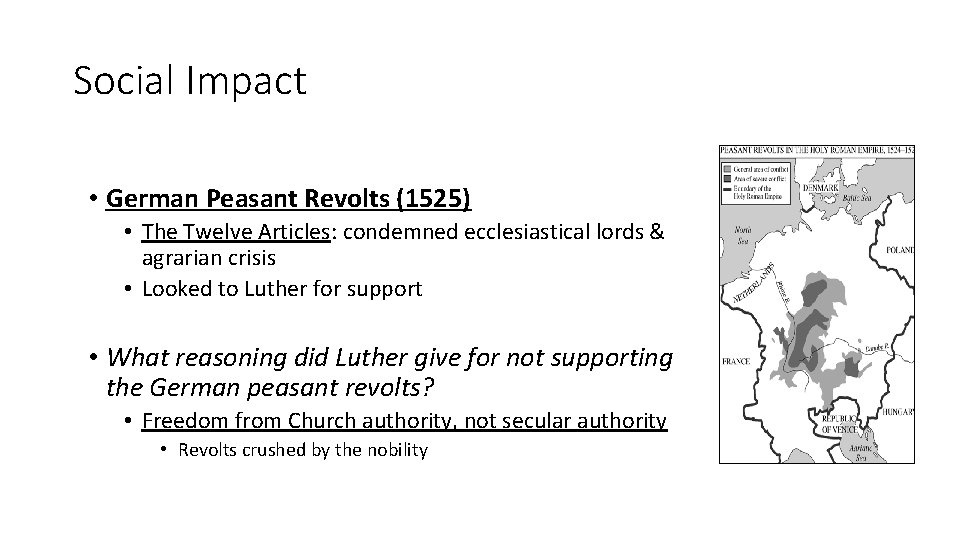
Social Impact • German Peasant Revolts (1525) • The Twelve Articles: condemned ecclesiastical lords & agrarian crisis • Looked to Luther for support • What reasoning did Luther give for not supporting the German peasant revolts? • Freedom from Church authority, not secular authority • Revolts crushed by the nobility
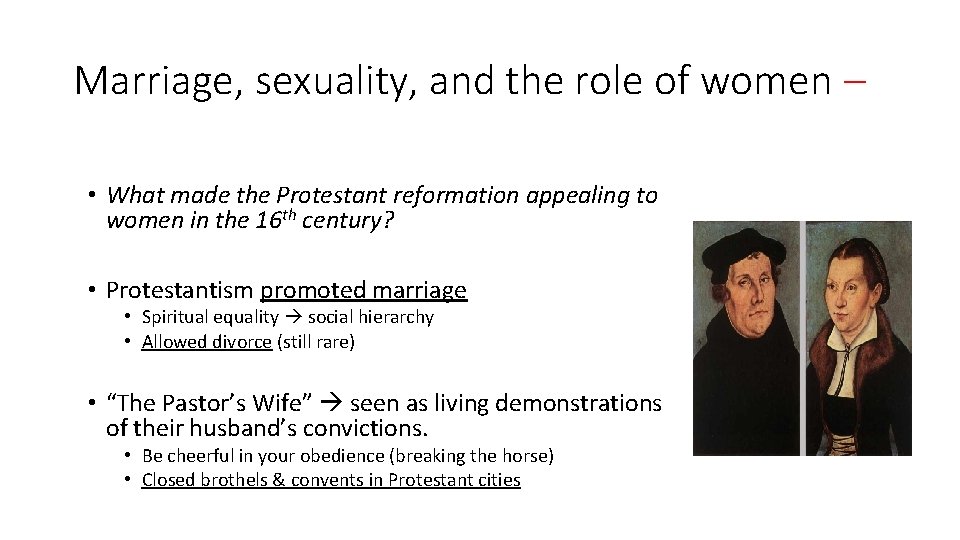
Marriage, sexuality, and the role of women – • What made the Protestant reformation appealing to women in the 16 th century? • Protestantism promoted marriage • Spiritual equality social hierarchy • Allowed divorce (still rare) • “The Pastor’s Wife” seen as living demonstrations of their husband’s convictions. • Be cheerful in your obedience (breaking the horse) • Closed brothels & convents in Protestant cities
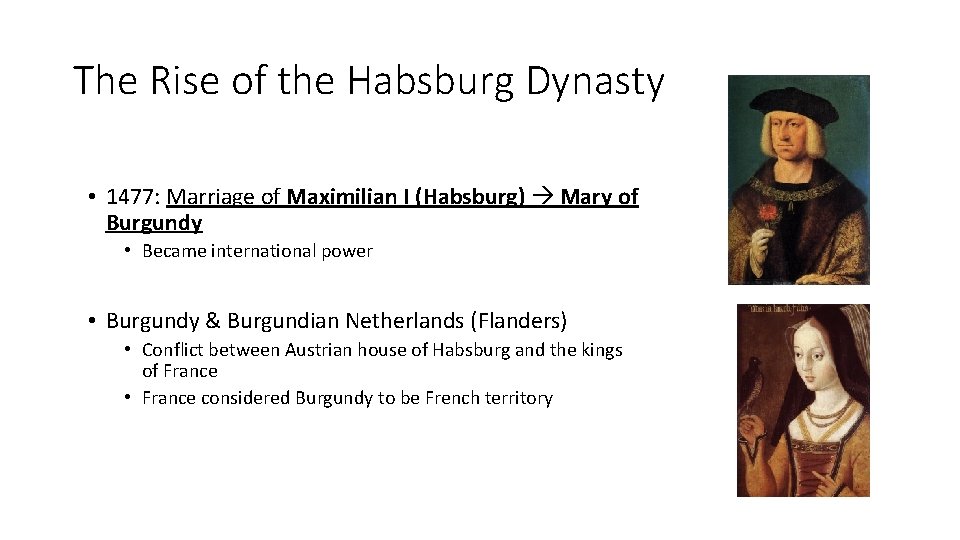
The Rise of the Habsburg Dynasty • 1477: Marriage of Maximilian I (Habsburg) Mary of Burgundy • Became international power • Burgundy & Burgundian Netherlands (Flanders) • Conflict between Austrian house of Habsburg and the kings of France • France considered Burgundy to be French territory
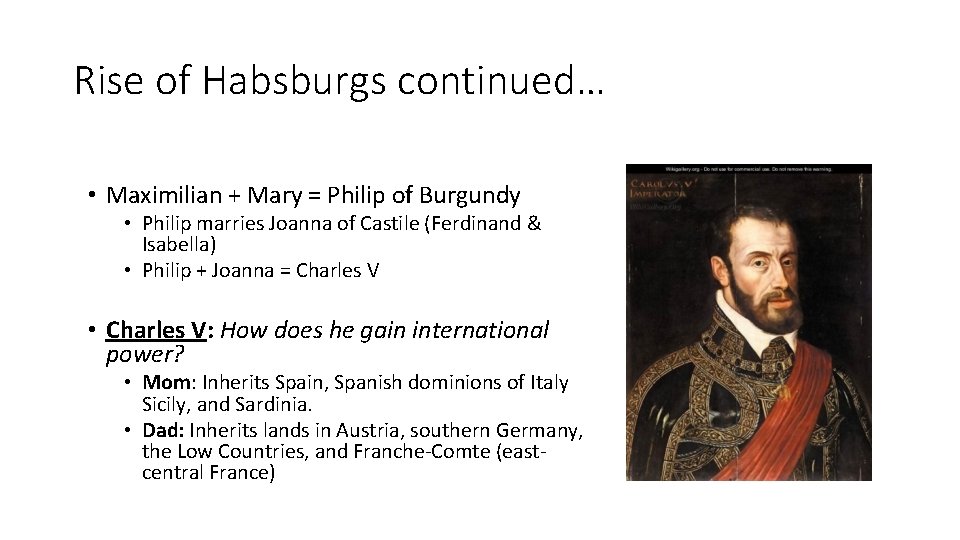
Rise of Habsburgs continued… • Maximilian + Mary = Philip of Burgundy • Philip marries Joanna of Castile (Ferdinand & Isabella) • Philip + Joanna = Charles V • Charles V: How does he gain international power? • Mom: Inherits Spain, Spanish dominions of Italy Sicily, and Sardinia. • Dad: Inherits lands in Austria, southern Germany, the Low Countries, and Franche-Comte (eastcentral France)
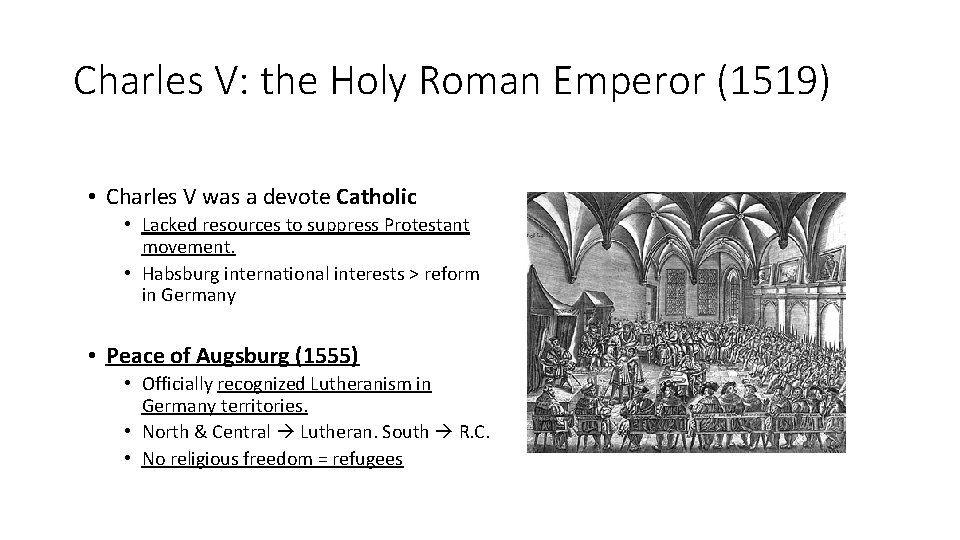
Charles V: the Holy Roman Emperor (1519) • Charles V was a devote Catholic • Lacked resources to suppress Protestant movement. • Habsburg international interests > reform in Germany • Peace of Augsburg (1555) • Officially recognized Lutheranism in Germany territories. • North & Central Lutheran. South R. C. • No religious freedom = refugees
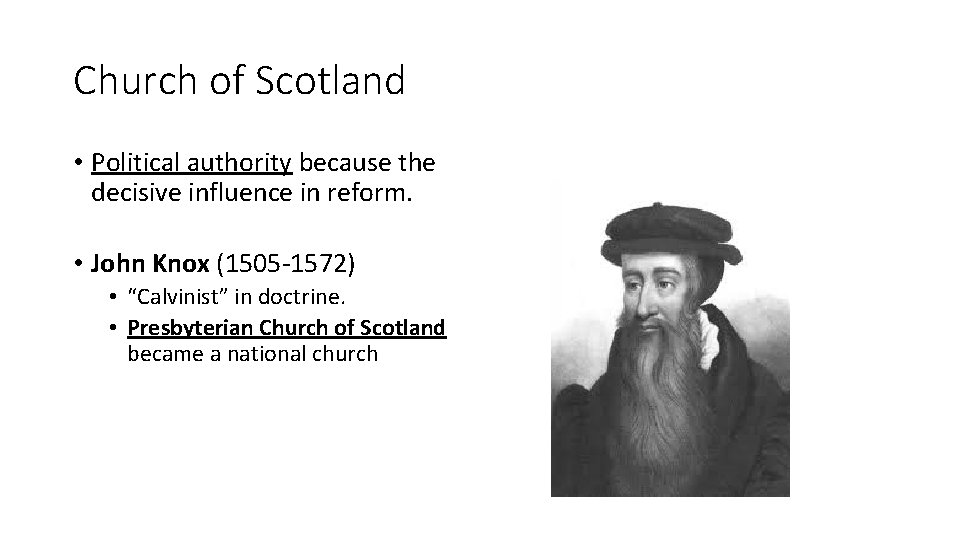
Church of Scotland • Political authority because the decisive influence in reform. • John Knox (1505 -1572) • “Calvinist” in doctrine. • Presbyterian Church of Scotland became a national church
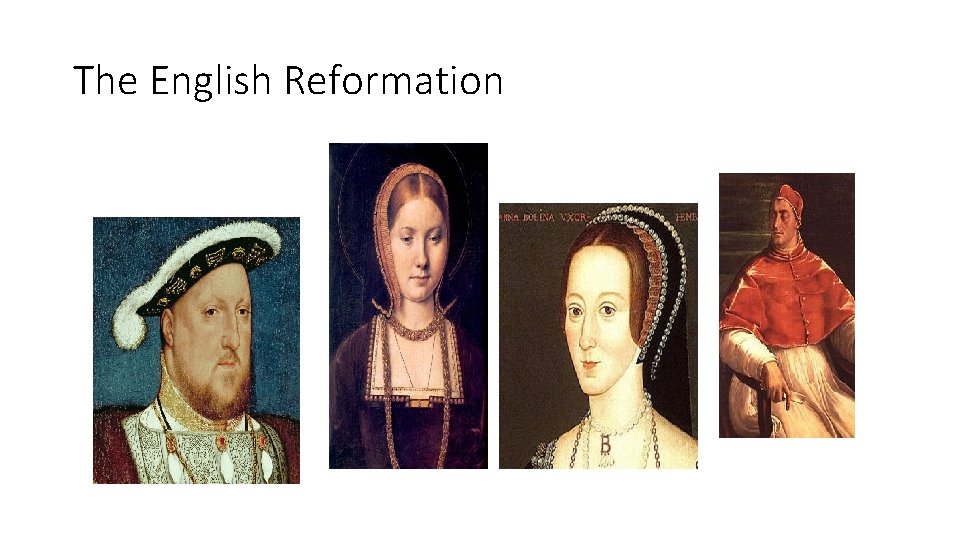
The English Reformation
The English Reformation Continued… • The Act in Restraint of Appeals (1533), The Act for the Submission of the Clergy (1534), and the Supremacy Act (1534) • The Crown is the highest legal authority in the land • The King is supreme head of the church of England • Churchmen are not allowed to publish ecclesiastical laws without royal permission • Question: Why did Henry VIII want to dissolve the monasteries in England?
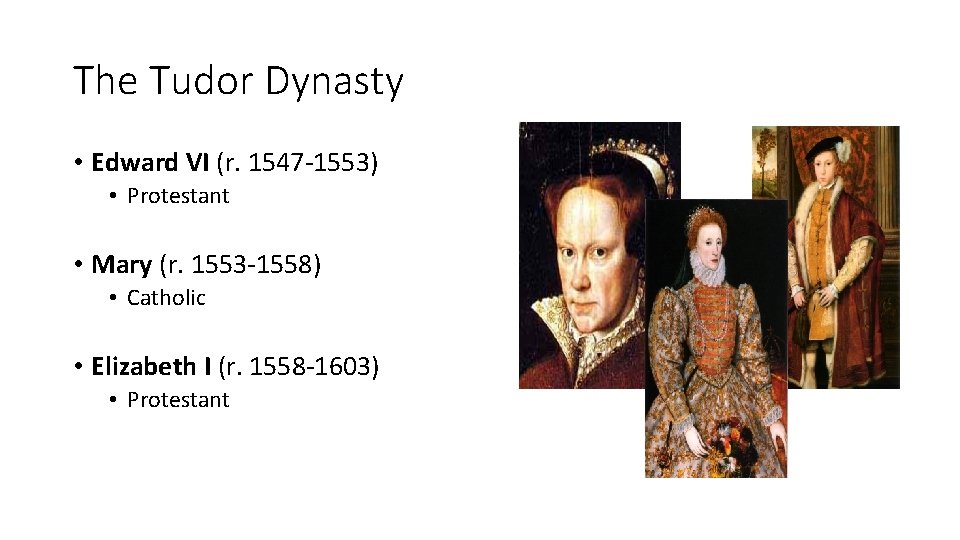
The Tudor Dynasty • Edward VI (r. 1547 -1553) • Protestant • Mary (r. 1553 -1558) • Catholic • Elizabeth I (r. 1558 -1603) • Protestant
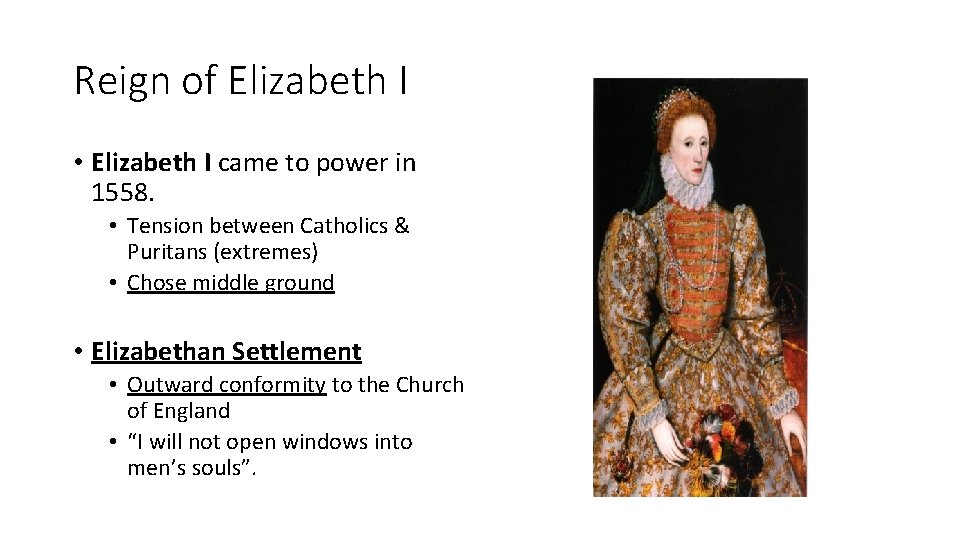
Reign of Elizabeth I • Elizabeth I came to power in 1558. • Tension between Catholics & Puritans (extremes) • Chose middle ground • Elizabethan Settlement • Outward conformity to the Church of England • “I will not open windows into men’s souls”.
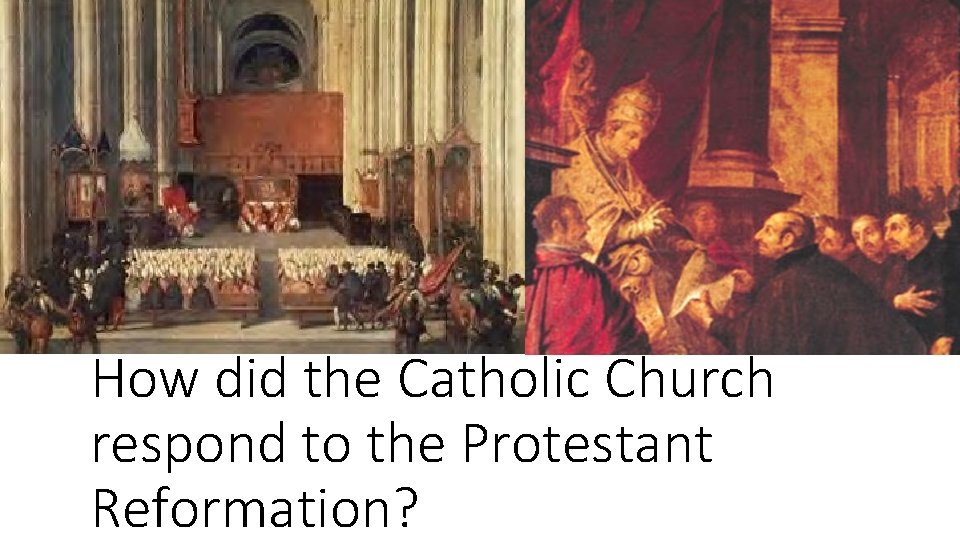
How did the Catholic Church respond to the Protestant Reformation?
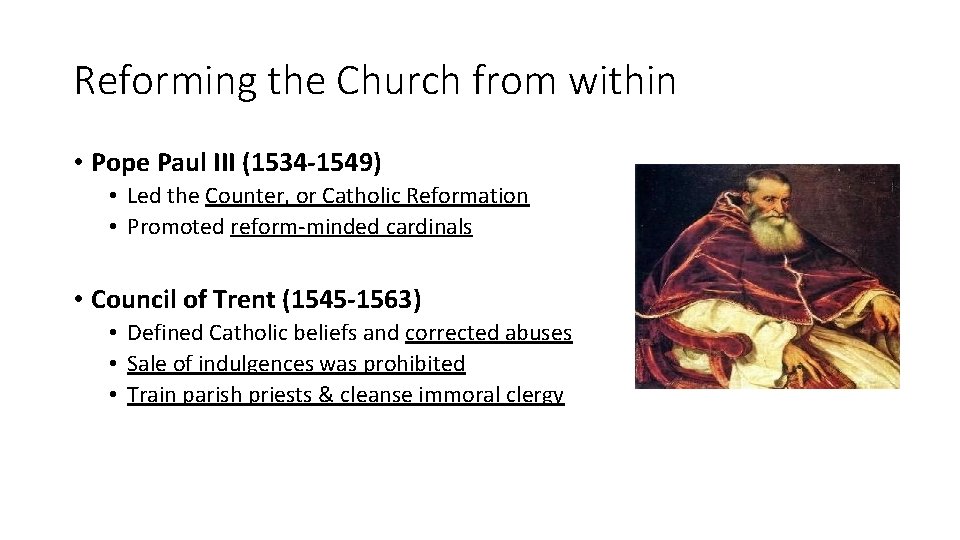
Reforming the Church from within • Pope Paul III (1534 -1549) • Led the Counter, or Catholic Reformation • Promoted reform-minded cardinals • Council of Trent (1545 -1563) • Defined Catholic beliefs and corrected abuses • Sale of indulgences was prohibited • Train parish priests & cleanse immoral clergy
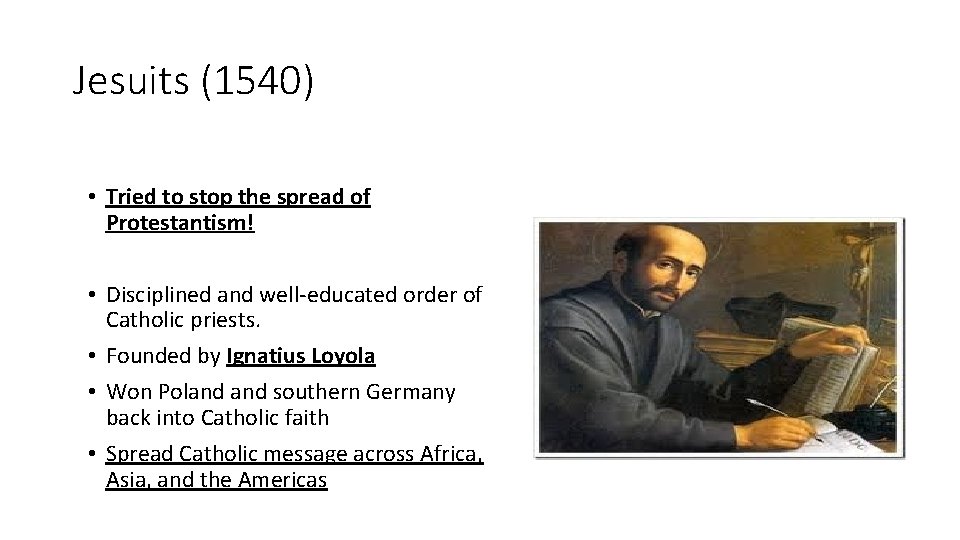
Jesuits (1540) • Tried to stop the spread of Protestantism! • Disciplined and well-educated order of Catholic priests. • Founded by Ignatius Loyola • Won Poland southern Germany back into Catholic faith • Spread Catholic message across Africa, Asia, and the Americas
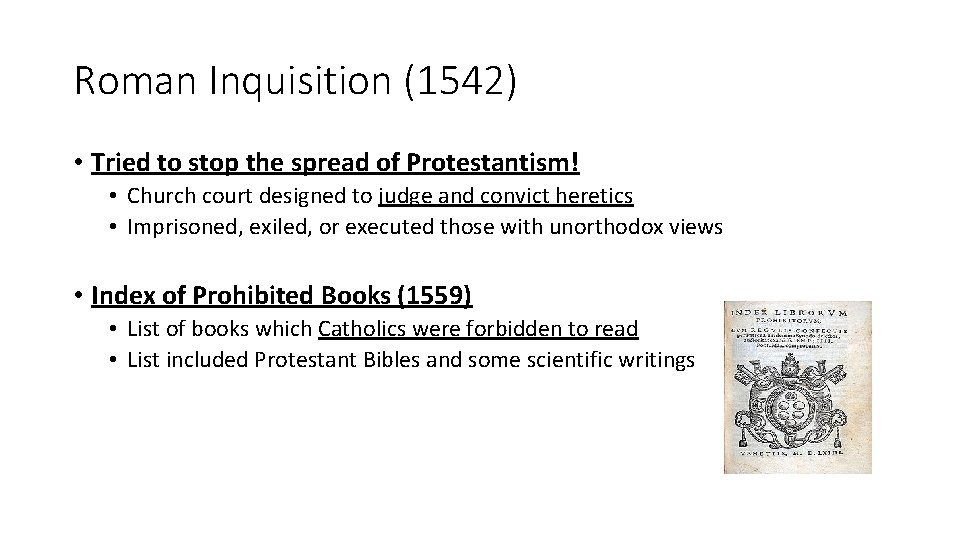
Roman Inquisition (1542) • Tried to stop the spread of Protestantism! • Church court designed to judge and convict heretics • Imprisoned, exiled, or executed those with unorthodox views • Index of Prohibited Books (1559) • List of books which Catholics were forbidden to read • List included Protestant Bibles and some scientific writings