
REFLEXIVITY IN SOCIAL SYSTEMS THEORIES OF GEORGE SOROS
- Slides: 36
REFLEXIVITY IN SOCIAL SYSTEMS: THEORIES OF GEORGE SOROS Stuart A. Umpleby President of the Executive Committee International Academy for Systems and Cybernetic Sciences www. iascys. org
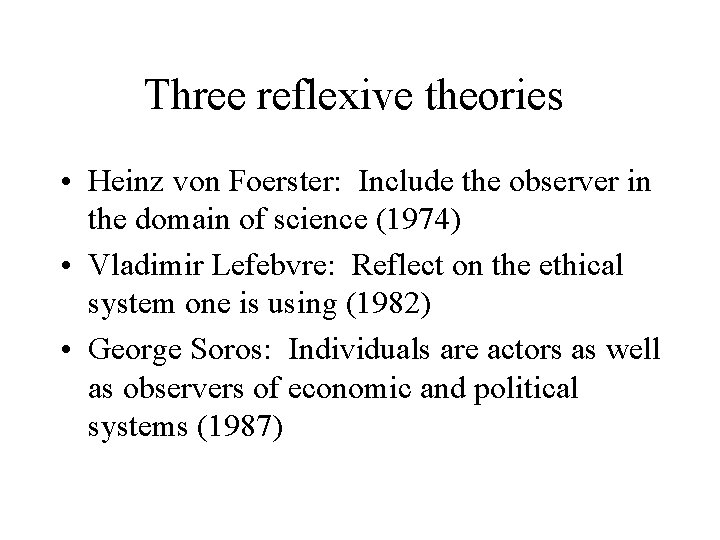
Three reflexive theories • Heinz von Foerster: Include the observer in the domain of science (1974) • Vladimir Lefebvre: Reflect on the ethical system one is using (1982) • George Soros: Individuals are actors as well as observers of economic and political systems (1987)
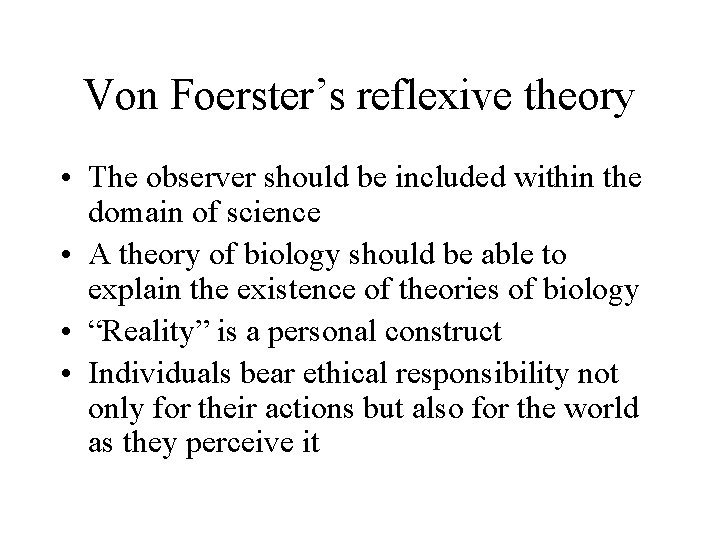
Von Foerster’s reflexive theory • The observer should be included within the domain of science • A theory of biology should be able to explain the existence of theories of biology • “Reality” is a personal construct • Individuals bear ethical responsibility not only for their actions but also for the world as they perceive it
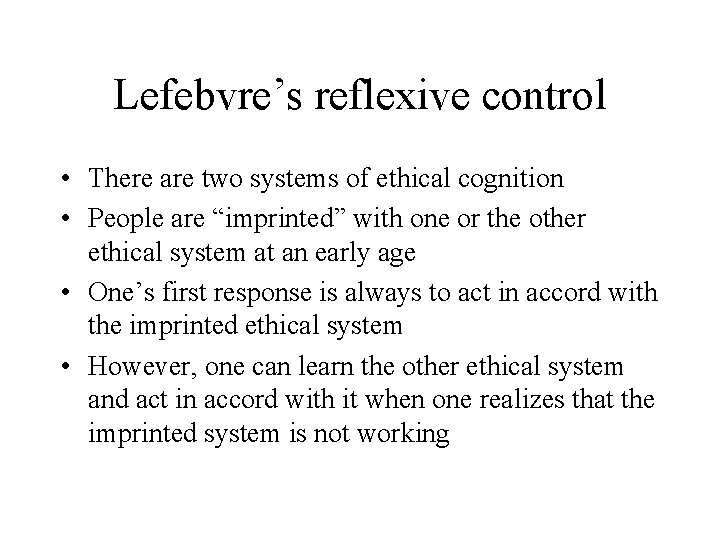
Lefebvre’s reflexive control • There are two systems of ethical cognition • People are “imprinted” with one or the other ethical system at an early age • One’s first response is always to act in accord with the imprinted ethical system • However, one can learn the other ethical system and act in accord with it when one realizes that the imprinted system is not working
Soros’s reflexivity theory • Soros’s theory is compatible with recent developments in cybernetics and systems science • Soros uses very little of the language of cybernetics and systems science • Soros’s theory provides a link between cybernetics and economics, finance, and political science
Reception of Soros’s work • Soros’s theory is widely known in the systems and cybernetics community • Soros’s theory is more well-known among people in finance than among economists • Soros has a participatory, not purely descriptive, theory of social systems
Karl Popper and George Soros • Soros studied with Karl Popper at the London School of Economics • He has worked to implement Popper’s idea of “open societies” • Soros uses Popper’s ideas of error correction and conjectures and refutations to guide his investments and social interventions
Soros on the philosophy of science • Soros rejects Popper’s “doctrine of the unity of method, ” the idea that all disciplines should use the same methods of inquiry as the natural sciences • Soros says in social systems there are two processes – observation and participation • The natural sciences require only observation
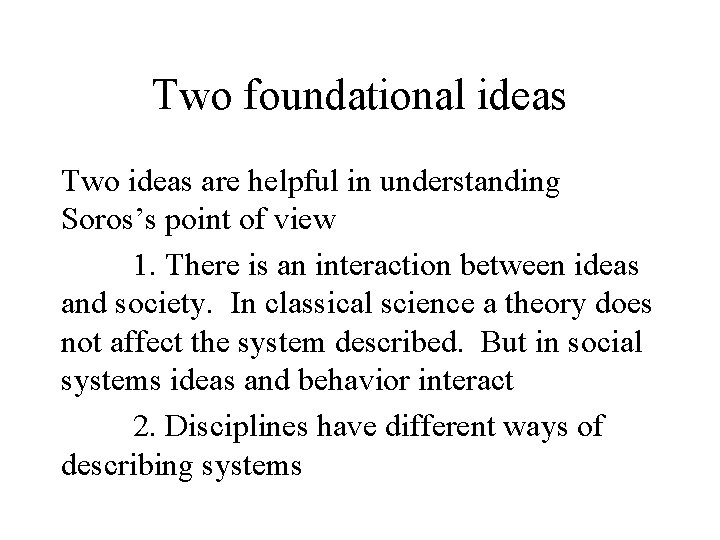
Two foundational ideas Two ideas are helpful in understanding Soros’s point of view 1. There is an interaction between ideas and society. In classical science a theory does not affect the system described. But in social systems ideas and behavior interact 2. Disciplines have different ways of describing systems
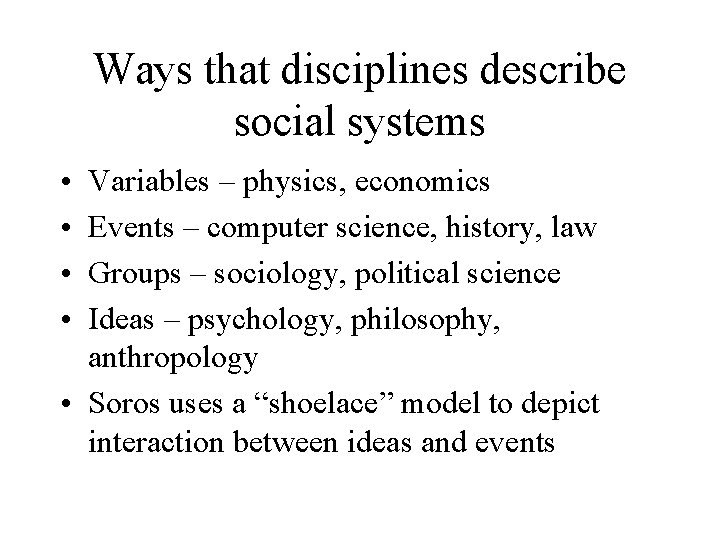
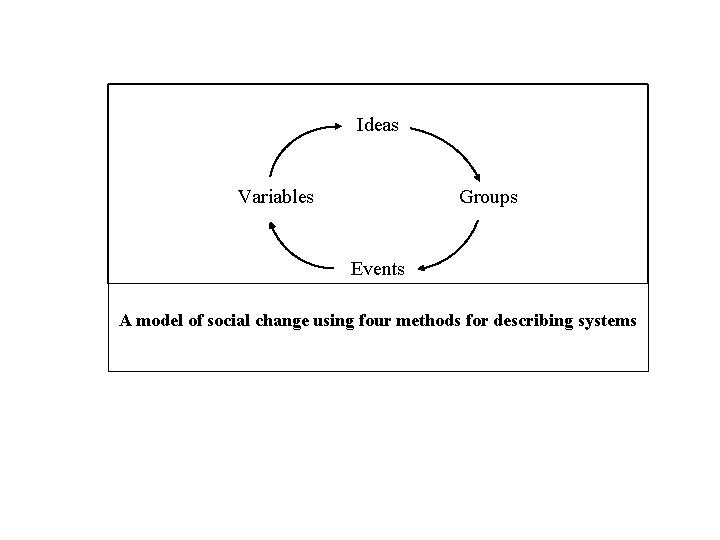
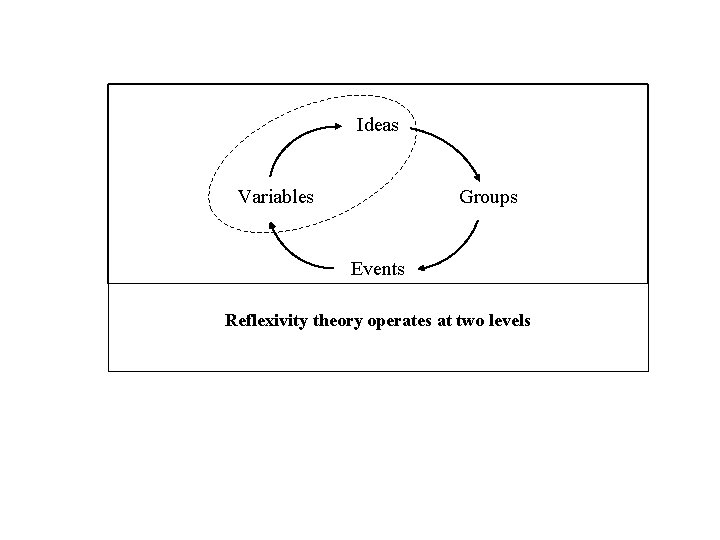
Ways that disciplines describe social systems • • Variables – physics, economics Events – computer science, history, law Groups – sociology, political science Ideas – psychology, philosophy, anthropology • Soros uses a “shoelace” model to depict interaction between ideas and events
Ideas Variables Groups Events A model of social change using four methods for describing systems
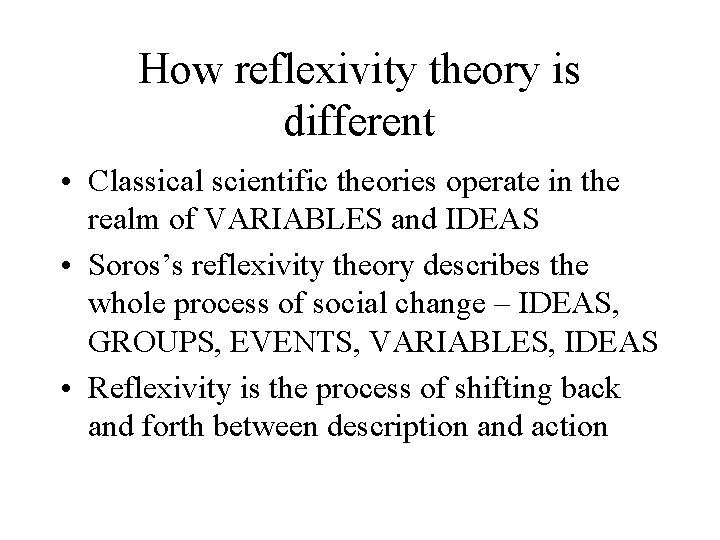
How reflexivity theory is different • Classical scientific theories operate in the realm of VARIABLES and IDEAS • Soros’s reflexivity theory describes the whole process of social change – IDEAS, GROUPS, EVENTS, VARIABLES, IDEAS • Reflexivity is the process of shifting back and forth between description and action
Ideas Variables Groups Events Reflexivity theory operates at two levels
The efficient market hypothesis • Economists assume that markets are efficient and that information is immediately reflected in market prices • Soros says that markets are always biased in one direction or another • Markets can influence the events they anticipate
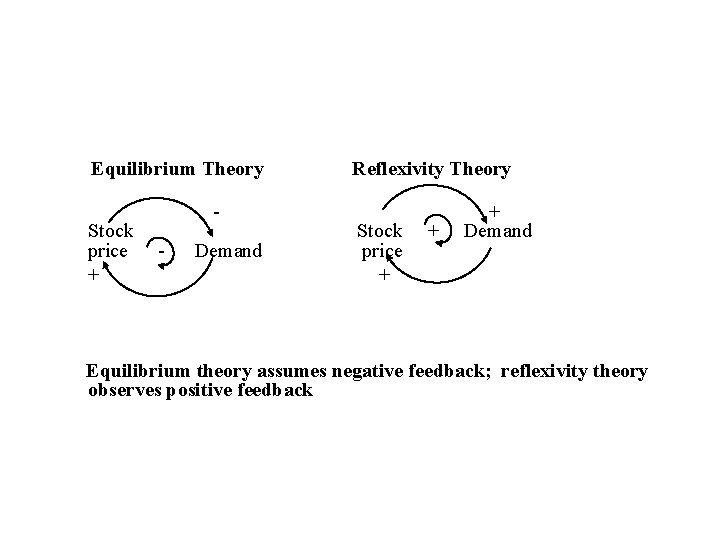
Equilibrium vs. reflexivity • An increase in demand • For “momentum will lead to higher investors” rising prices which will is a sign to buy, hence decrease demand further increasing price • A drop in supply will lead to a higher price • A falling price will which will increase lead many investors to supply sell, thus further reducing price
Equilibrium Theory Stock price + - Demand Reflexivity Theory Stock price + + + Demand Equilibrium theory assumes negative feedback; reflexivity theory observes positive feedback
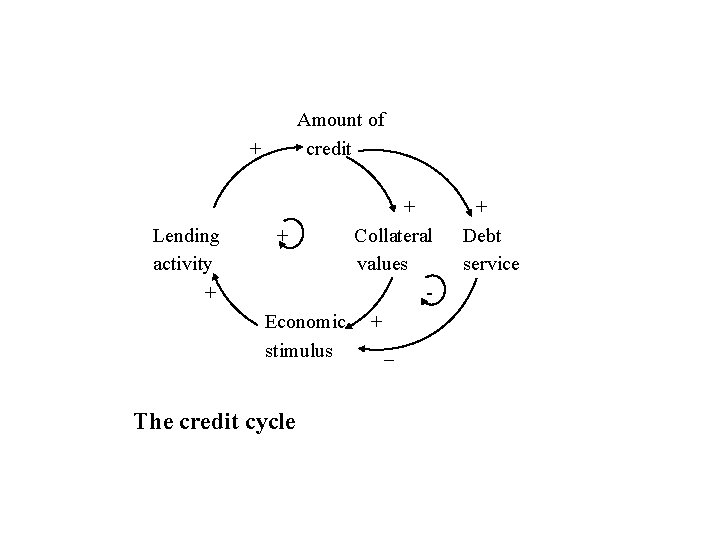
Examples in business and economics • • • The conglomerate boom Real Estate Investment Trusts (REITs) The venture capital boom and collapse The credit cycle The currency market See G. Soros, The Alchemy of Finance
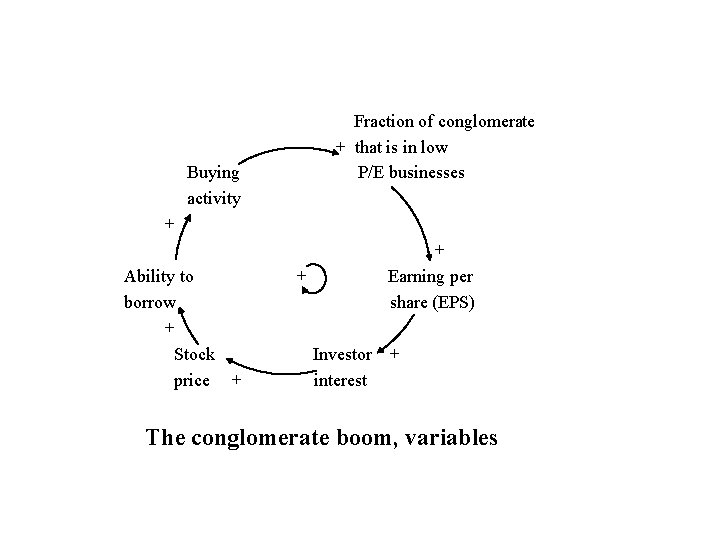
The conglomerate boom: Events • A high tech company with a high P/E ratio begins to diversify • It buys consumer goods companies with high dividends but low P/E ratios • As earnings improve, the price of the conglomerate rises • A high stock price means greater ability to borrow
The conglomerate boom (continued) • The conglomerate borrows to buy more consumer goods companies • Earnings per share continue to grow • Investors eagerly buy more stock • Eventually people realize that the character of the company has changed and a high P/E ratio is not justified
The conglomerate boom: Ideas • Conventional view • Reflexive view • Rising earnings per • Rising EPS is an share (EPS) mean the indicator that the company has found the character of the secret of good company has changed, management from high tech to consumer goods, and a high P/E ratio is no longer justified
The conglomerate boom: Groups • Corporate managers who buy other companies • Investors who believe in something new and foolproof • Investors who use Reflexivity Theory and realize the rise in stock value will not continue
Fraction of conglomerate + that is in low P/E businesses Buying activity + Ability to borrow + Stock price + + Earning per share (EPS) + Investor interest + The conglomerate boom, variables
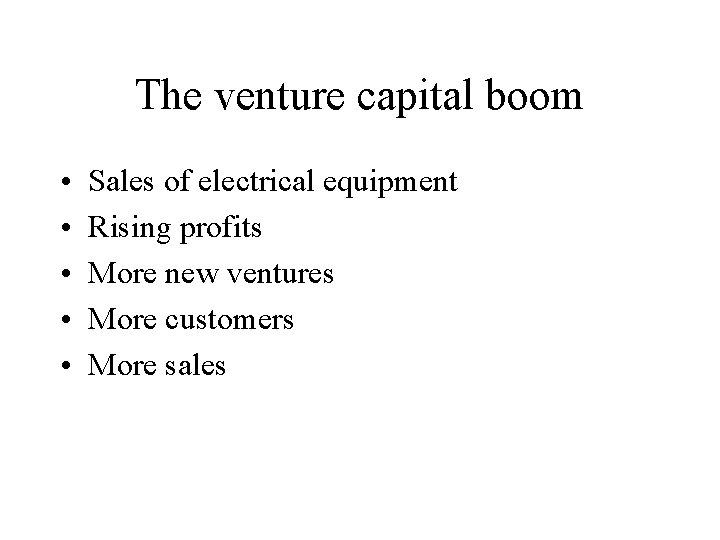
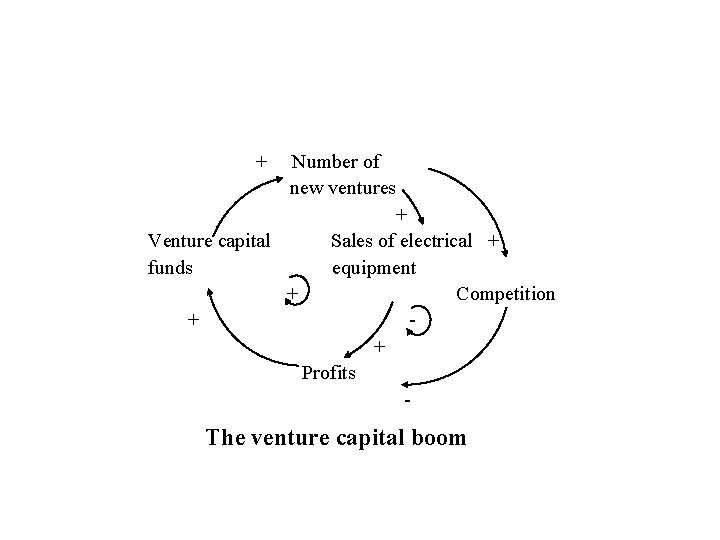
The venture capital boom • • • Sales of electrical equipment Rising profits More new ventures More customers More sales
+ Number of new ventures + Venture capital Sales of electrical + funds equipment + Competition + + Profits - The venture capital boom
Amount of credit + Lending activity + + + Collateral values Economic + stimulus _ The credit cycle + Debt service
Finance professors vs. Soros • Most academic work in the field of finance involves building mathematical models • Soros treats finance as a multi-person game involving human players, including himself • Behavioral finance is a growing field, but it tends to focus on defining limits to the assumption that people are rational actors
The process of selecting a portfolio 1. Soros emphasizes beliefs about future performance 2. Markowitz emphasizes how to select stocks for a portfolio
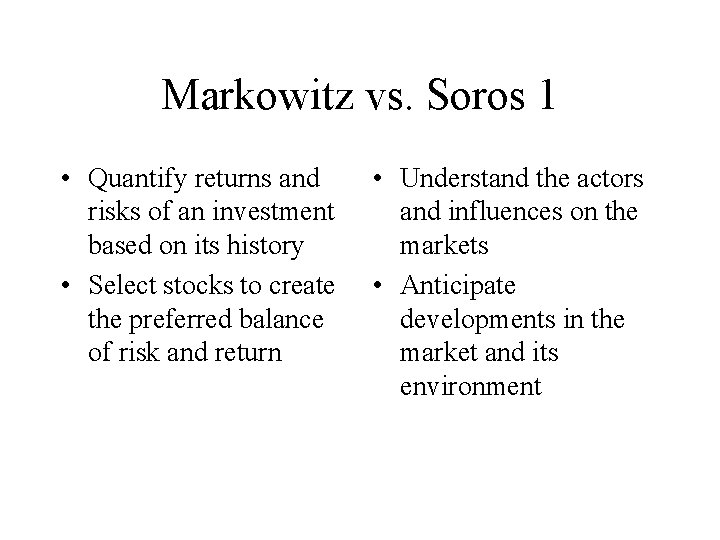
Markowitz vs. Soros 1 • Quantify returns and risks of an investment based on its history • Select stocks to create the preferred balance of risk and return • Understand the actors and influences on the markets • Anticipate developments in the market and its environment
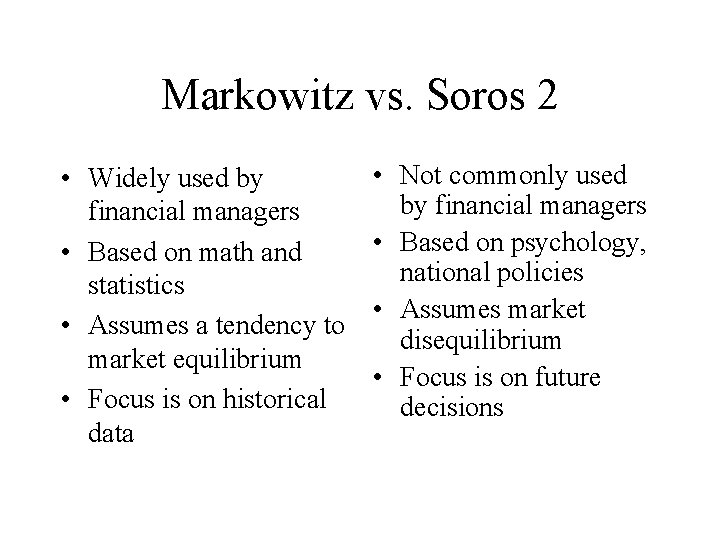
Markowitz vs. Soros 2 • Widely used by financial managers • Based on math and statistics • Assumes a tendency to market equilibrium • Focus is on historical data • Not commonly used by financial managers • Based on psychology, national policies • Assumes market disequilibrium • Focus is on future decisions
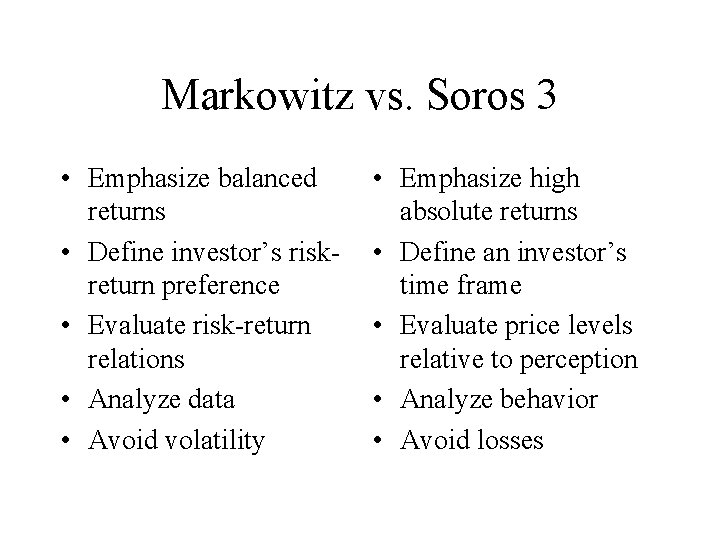
Markowitz vs. Soros 3 • Emphasize balanced returns • Define investor’s riskreturn preference • Evaluate risk-return relations • Analyze data • Avoid volatility • Emphasize high absolute returns • Define an investor’s time frame • Evaluate price levels relative to perception • Analyze behavior • Avoid losses
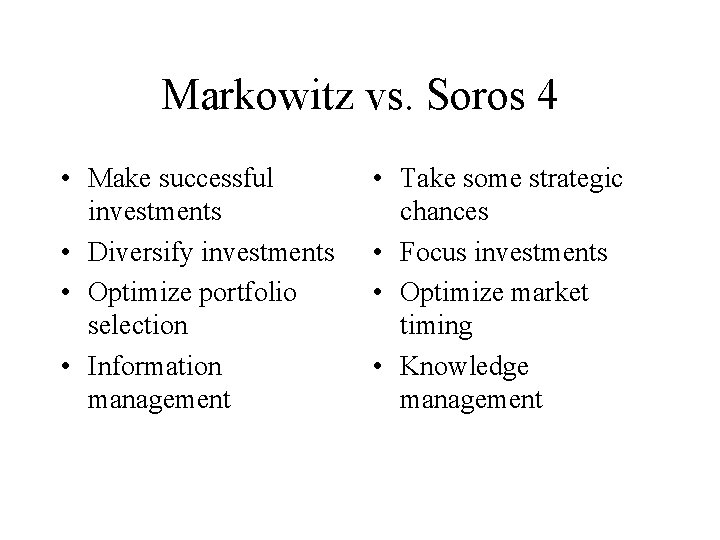
Markowitz vs. Soros 4 • Make successful investments • Diversify investments • Optimize portfolio selection • Information management • Take some strategic chances • Focus investments • Optimize market timing • Knowledge management
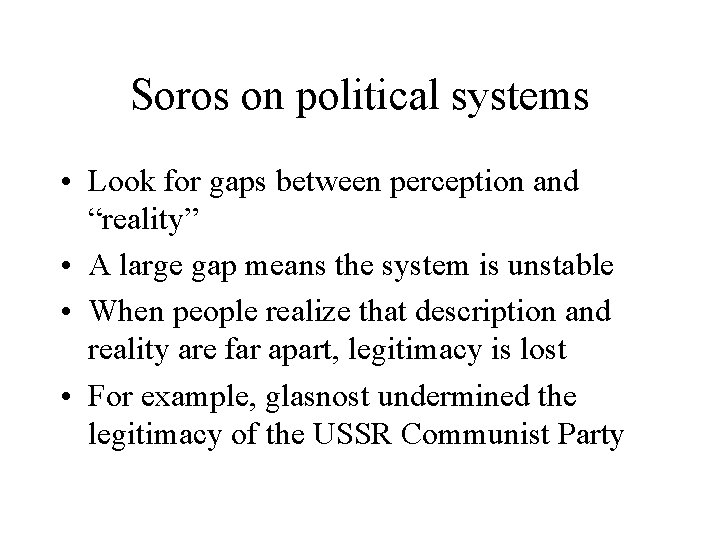
Soros on political systems • Look for gaps between perception and “reality” • A large gap means the system is unstable • When people realize that description and reality are far apart, legitimacy is lost • For example, glasnost undermined the legitimacy of the USSR Communist Party
Soros looks for • Rapid growth: Positive feedback systems – conglomerate boom, credit cycle, REITs, the high tech bubble • Instability before collapse: Gaps between perception and reality – e. g. , the conglomerate boom and claims of USSR Communist Party, overextension of national power (Paul Kennedy)
Conclusion • Soros’s approach expands the field of finance beyond mathematical models to anticipating the behavior of financial participants • He uses methods and insights from several disciplines, not just economics • He suggests a way to anticipate major changes -- look for a gap between perception and reality
Contact Information Prof. Stuart A. Umpleby Department of Management School of Business George Washington University Washington, DC 20052 USA blogs. gwu. edu/umpleby@gmail. com
Prepared for a conference at the Financial University under the Government of the Russian Federation Moscow, Russia November 21 -23, 2018