
Reflexive Verbs Most Any Verb Can Be Reflexive

Reflexive Verbs Most Any Verb Can Be Reflexive If the Doer and the Done to are the Same
• Reflexive verbs are used to talk about things people do to or for oneself. • You know it is reflexive when you see the “se” attached to the end of the infinitive. • probarse • llamarse
Reflexive verbs you have already learned: • levantarse – to get up • sentarse (e – ie) – to sit oneself down • pegarse – to hit oneself • reírse (e – ie) – to laugh (when you laugh, you are in charge of that action)
Reflexive verbs you have already learned: • romperse – to break oneself (harder to understand, but still reflexive) • llamarse – to call oneself, Me llamo Kate = I call myself Kate • subirse – to get oneself on • despertarse (e – ie) – to wake oneself up, you may have an alarm clock, but you open your own eyes
Reflexive verbs you have already learned: • dormirse (o – ue) – to put oneself to sleep, when you sleep, no one does it for you • enojarse – to get oneself angry
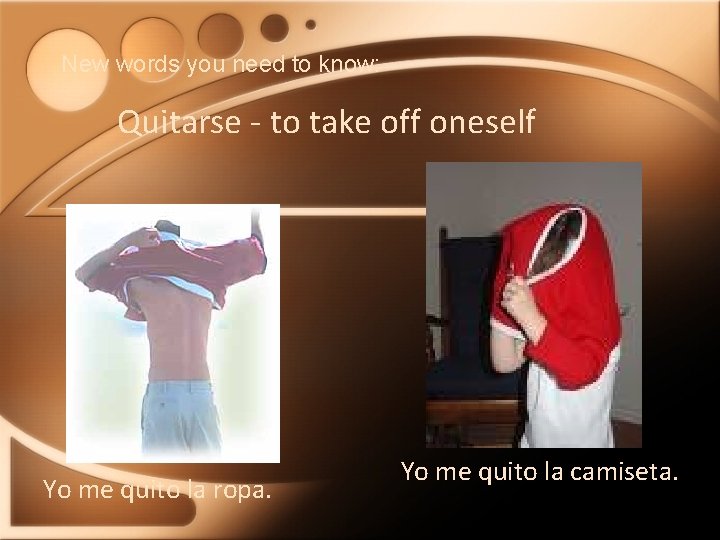
New words you need to know: Quitarse - to take off oneself Yo me quito la ropa. Yo me quito la camiseta.
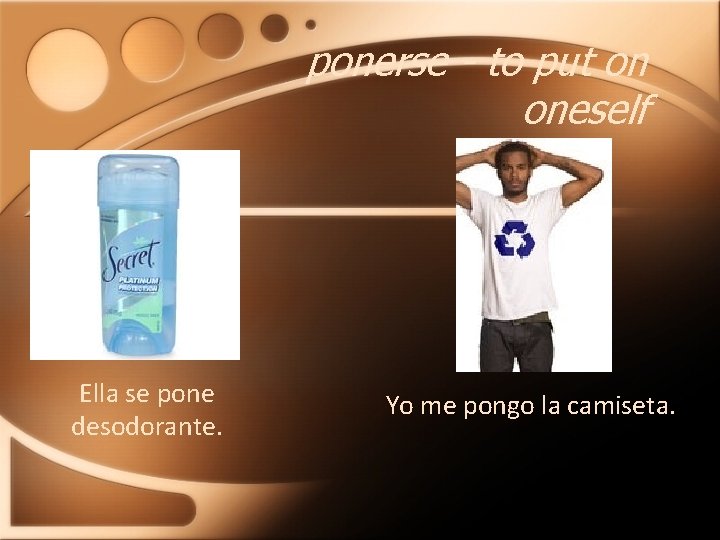
ponerse - to put on oneself Ella se pone desodorante. Yo me pongo la camiseta.
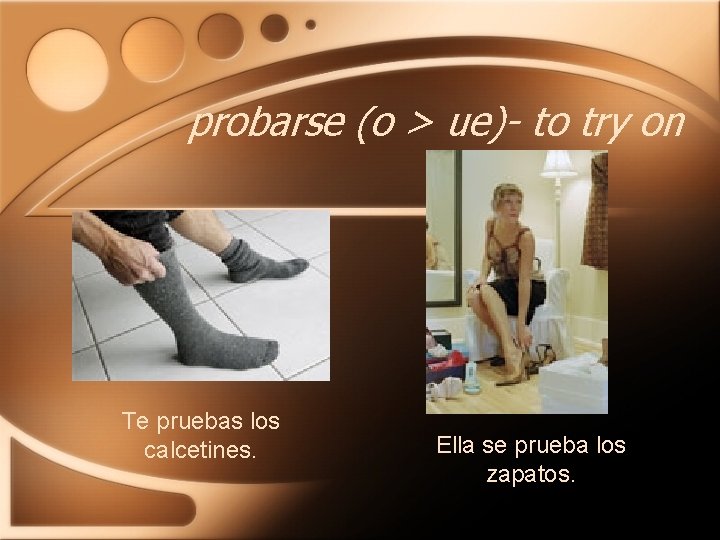
probarse (o > ue)- to try on Te pruebas los calcetines. Ella se prueba los zapatos.
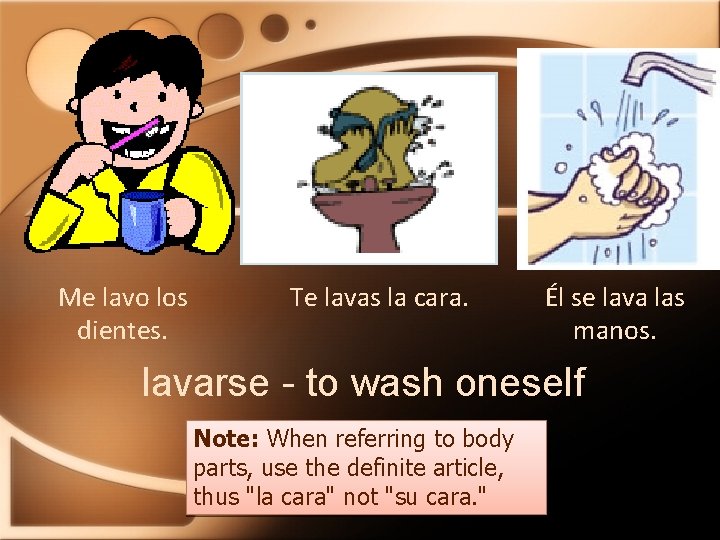
Me lavo los dientes. Te lavas la cara. Él se lava las manos. lavarse - to wash oneself Note: When referring to body parts, use the definite article, thus "la cara" not "su cara. "
Conjugating • It seems tricky, but there are two easy step you always have to take when you see a reflexive verb (that is, a verb with SE attached): 1. Write the reflexive pronouns – me, te, se, nos, se 2. Conjugate the verb
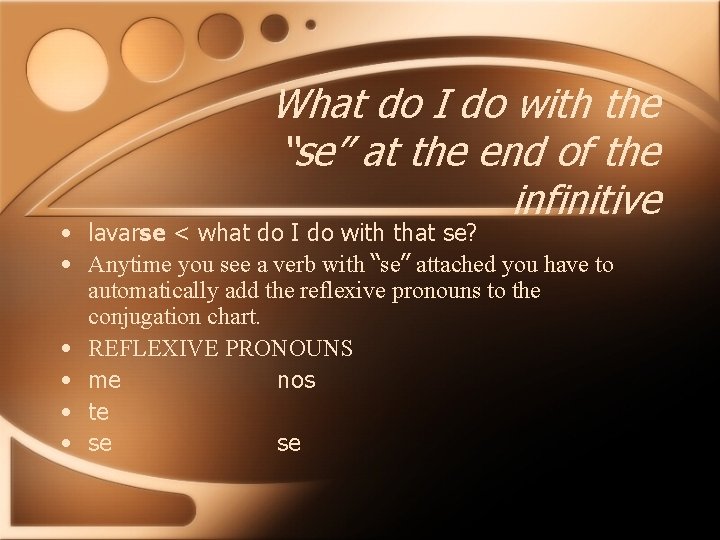
What do I do with the “se” at the end of the infinitive • lavarse < what do I do with that se? • Anytime you see a verb with “se” attached you have to automatically add the reflexive pronouns to the conjugation chart. • REFLEXIVE PRONOUNS • me nos • te • se se
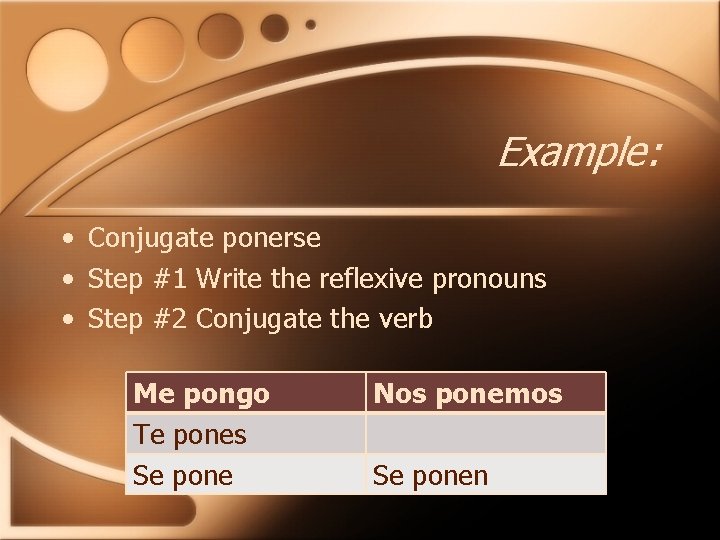
Example: • Conjugate ponerse • Step #1 Write the reflexive pronouns • Step #2 Conjugate the verb Me pongo Te pones Se pone Nos ponemos Se ponen
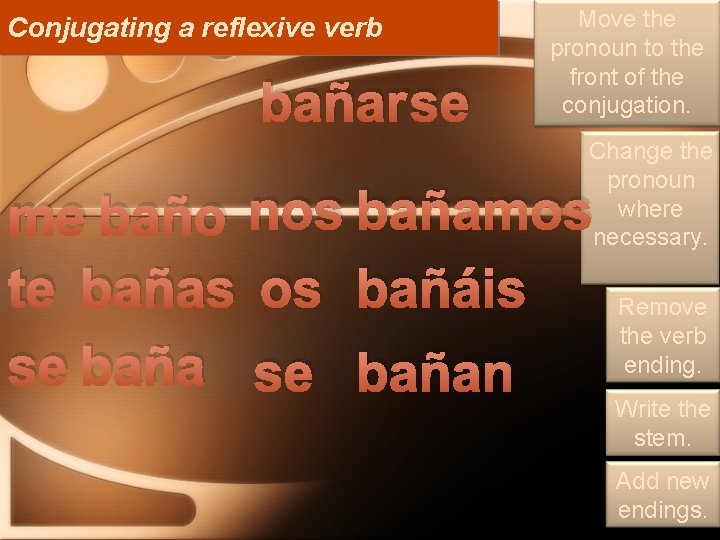
Conjugating a reflexive verb bañar se Move the pronoun to the front of the conjugation. Change the pronoun where necessary. me baño nos bañamos te bañas os bañáis se bañan Remove the verb ending. Write the stem. Add new endings.
Reflexive or Not? • Verbs are reflexive when the doer and the done to are the SAME but are NOT reflexive when the receiver is NOT THE SAME as the doer • Lavarse: Reflexive when you’re washing yourself • Lavar: Not reflexive when you are washing your car, your dog, the dishes, etc. • Ponerse: Reflexive when you’re putting something on yourself • Poner: Not reflexive when you are putting something somewhere else, like a table
REMEMBER: The action has to be reflected back to the person doing the action to be REFLEXIVE.
Now You Practice • On your notes, conjugate all of the verbs that are listed to conjugate. Write the definition for each word. Check with me to see if you have done it correctly.

TAREA • • • CONJUGATE & WRITE THE DEFINITION: enojarse romperse despertarse (e>ie) dormirse (o>ue) pegarse
- Slides: 17