
Reflexive verbs 1 Reflexive verbs are generally used
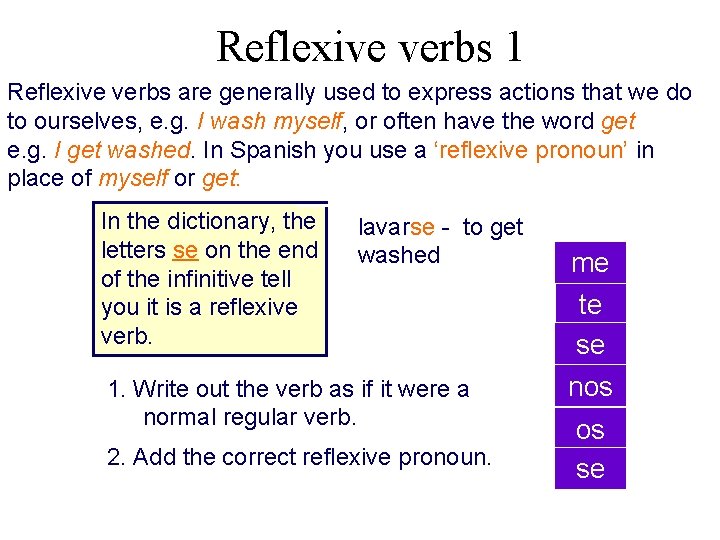
Reflexive verbs 1 Reflexive verbs are generally used to express actions that we do to ourselves, e. g. I wash myself, or often have the word get e. g. I get washed. In Spanish you use a ‘reflexive pronoun’ in place of myself or get: In the dictionary, the letters se on the end of the infinitive tell you it is a reflexive verb. lavarse - to get washed 1. Write out the verb as if it were a normal regular verb. 2. Add the correct reflexive pronoun. me te se nos os se
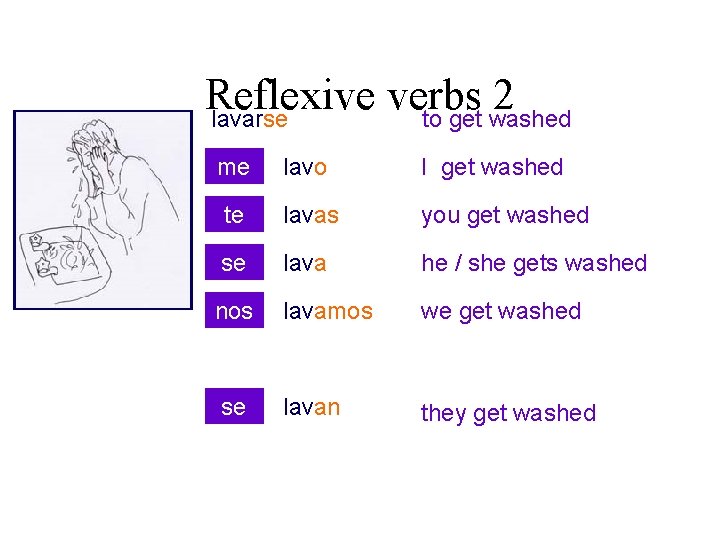
Reflexive verbs 2 lavarse to get washed me lavo I get washed te lavas you get washed se lava he / she gets washed nos lavamos we get washed se lavan they get washed
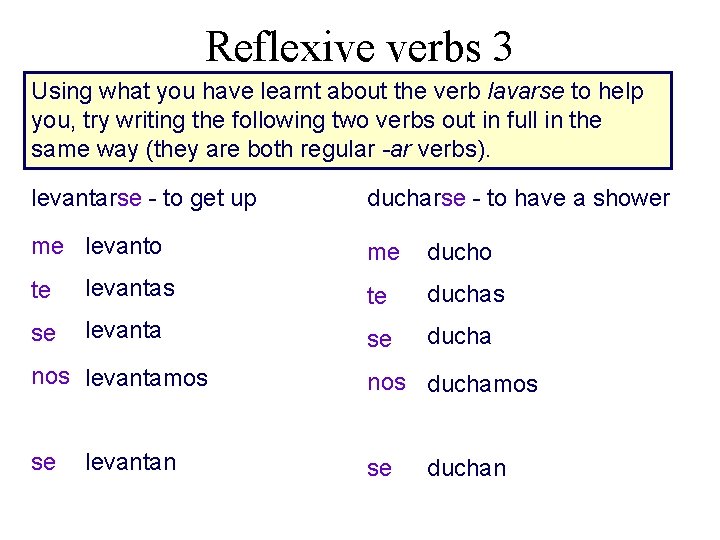
Reflexive verbs 3 Using what you have learnt about the verb lavarse to help you, try writing the following two verbs out in full in the same way (they are both regular -ar verbs). levantarse - to get up ducharse - to have a shower me levanto me ducho te levantas te duchas se levanta se ducha nos levantamos nos duchamos se se levantan duchan
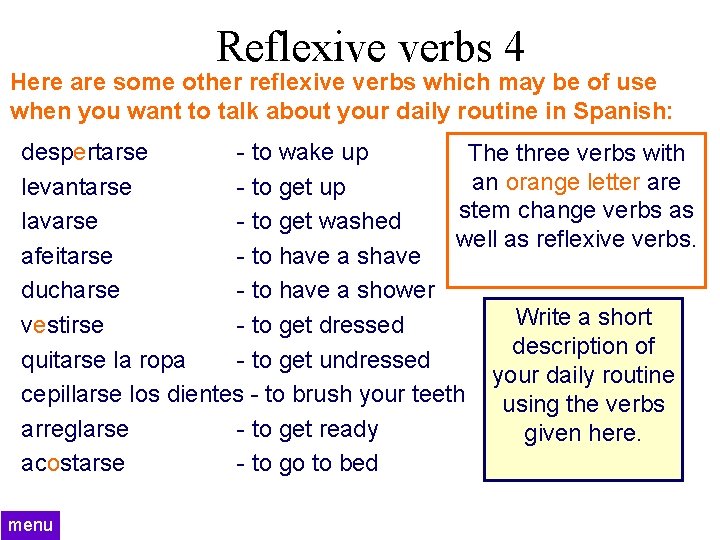
Reflexive verbs 4 Here are some other reflexive verbs which may be of use when you want to talk about your daily routine in Spanish: despertarse - to wake up The three verbs with an orange letter are levantarse - to get up stem change verbs as lavarse - to get washed well as reflexive verbs. afeitarse - to have a shave ducharse - to have a shower Write a short vestirse - to get dressed description of quitarse la ropa - to get undressed your daily routine cepillarse los dientes - to brush your teeth using the verbs arreglarse - to get ready given here. acostarse - to go to bed menu
- Slides: 4