
Reflectiveness Improving what I do now and in
- Slides: 14
Reflectiveness Improving what I do now and in the future by learning from what I’ve done in the past Literacy Focus: Understanding how I communicate with others
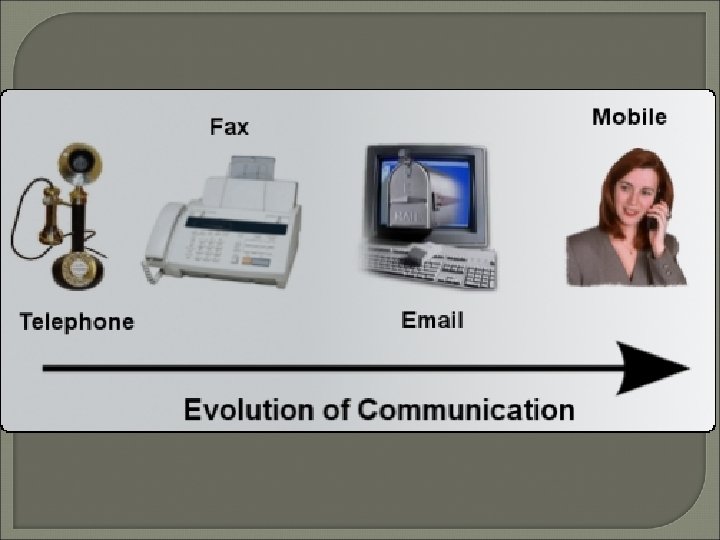
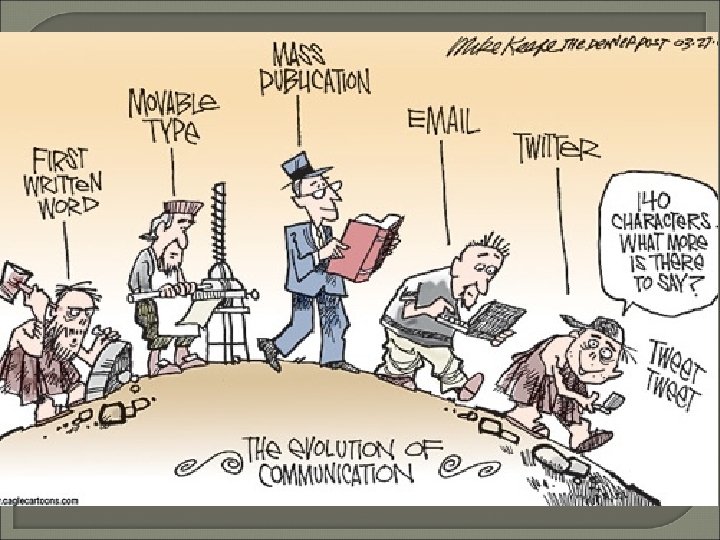
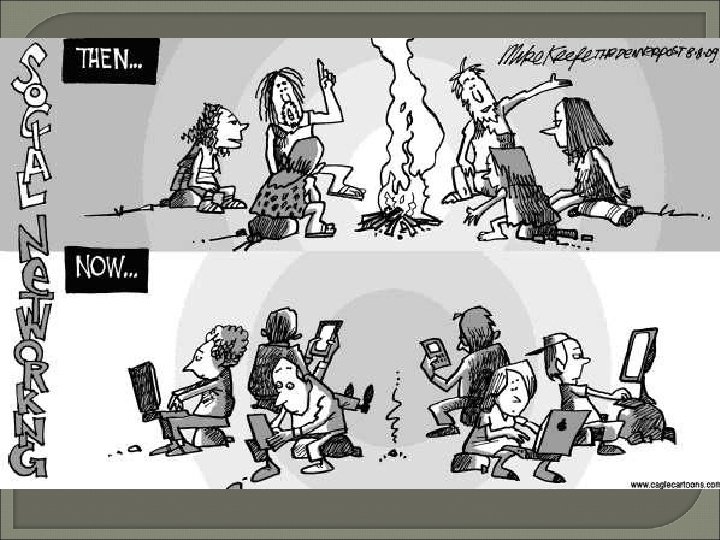
The evolution of communication �Consider the following images – your tutor will choose one person at a time to share what they can see and understand Listen well! �Avoid interrupting �Look at the speaker �Show positive body language
Time for a short video �Watch the video on the next slide to understand more about how communication has developed over time
�The history of communication dates back to the earliest signs of life. �Every day we communicate with one another through various means. �Our increasing knowledge of technology has forced how we communicate to evolve. �With new methods fast approaching, the question is what’s next?
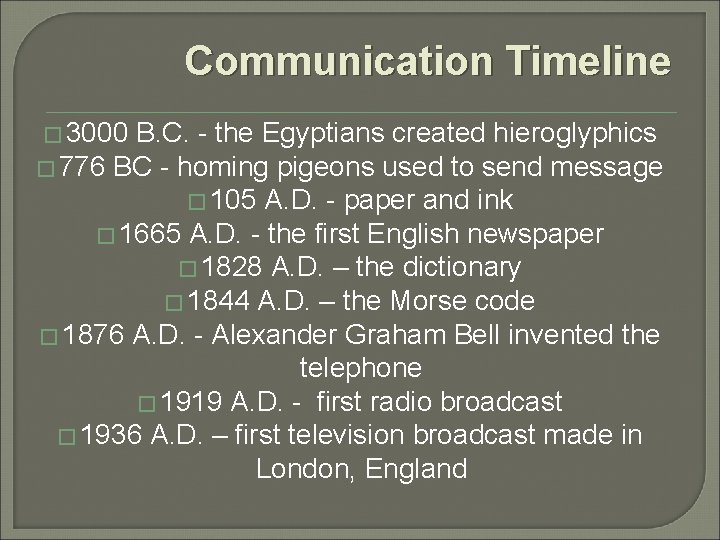
Communication Timeline � 3000 B. C. - the Egyptians created hieroglyphics � 776 BC - homing pigeons used to send message � 105 A. D. - paper and ink � 1665 A. D. - the first English newspaper � 1828 A. D. – the dictionary � 1844 A. D. – the Morse code � 1876 A. D. - Alexander Graham Bell invented the telephone � 1919 A. D. - first radio broadcast � 1936 A. D. – first television broadcast made in London, England
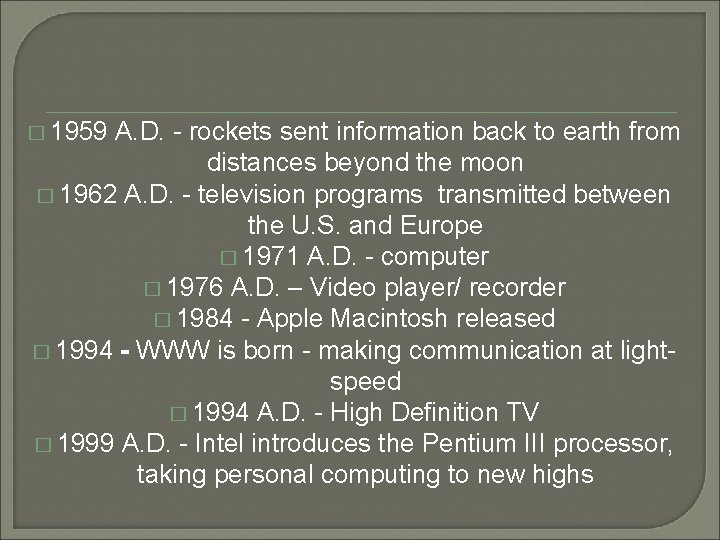
� 1959 A. D. - rockets sent information back to earth from distances beyond the moon � 1962 A. D. - television programs transmitted between the U. S. and Europe � 1971 A. D. - computer � 1976 A. D. – Video player/ recorder � 1984 - Apple Macintosh released � 1994 - WWW is born - making communication at lightspeed � 1994 A. D. - High Definition TV � 1999 A. D. - Intel introduces the Pentium III processor, taking personal computing to new highs
And then came. . . �Texting �Instant messaging �Social networking �Where 2050? do you think we will be in the year
My communications �I can speak on the phone �I can speak in a chat room �I can write on paper �I can write on the internet �I can text and use online messaging �I can mix and talk with others in school and at home face to face �I can mix and talk with people using social media
Being reflective �Has technology affected my ability to communicate with others? �Or has technology improved my communication? �Should I change the way I currently communicate?
Why speaking and listening FACE to FACE is vital � Good speaking and listening skills are a key aspect of employability: getting a job, maintaining employment and progressing at work � Good oral communication skills are important in other aspects of our wider lives, such as in family and peer relationships � We need to use and develop our speaking and listening skills to maximise our learning goals � We need well-developed speaking and listening skills to progress in our subjects