
Reflective Thinking for Adult Learners Helping Students Think
- Slides: 23
Reflective Thinking for Adult Learners: Helping Students Think Deeper By Ann Miles Gordon and Kate Williams Browne
Context for Presentation: Learning Outcomes • Create Examples from actual course content • Build Activities that enhance deeper reflection • Identify Strategies for success
Part 1: Reflection and Contemplation My Reaction: “Gossip in the Workplace”
What is Reflective Thinking? • Looking at the broader meaning of teaching by examining our experiences and learning from our actions • Taking time to think about our role, attitude & behavior • Being part of a community of learners • Focusing on the relationship between selfunderstanding and its impact on educational practices • Confronting our biases and beliefs
Types of Evaluations • Objective: How did I measure up to basic teaching competencies? • Subjective: How did I feel about an aspect of my teaching performance?
Benefits of Reflective Thinking • • Avenue for listening to yourself Self-awareness = Effective teaching Learning from mistakes Connecting with personal meaning Seeing oneself as a learner Confidence building Insights into others Supports for behavior changes
Reflective Incident Format • Instructions: Read the incident, reflect on the questions, then discuss it with your group. • Note: Ask group to create an incident and reflect on the questions as they discuss it with the group OR prompt them with one of your creation. • Questions: 1. How do I feel? 2. What should I do? In the moment? At the end of the day? At staff meeting? 3. What core values guide me? OR What resources do I have? 4. What are the likely results?
Part 2: Who Are You as an ECE Professional? Reflective Incident: “The Fire-Drill During Circle Time”
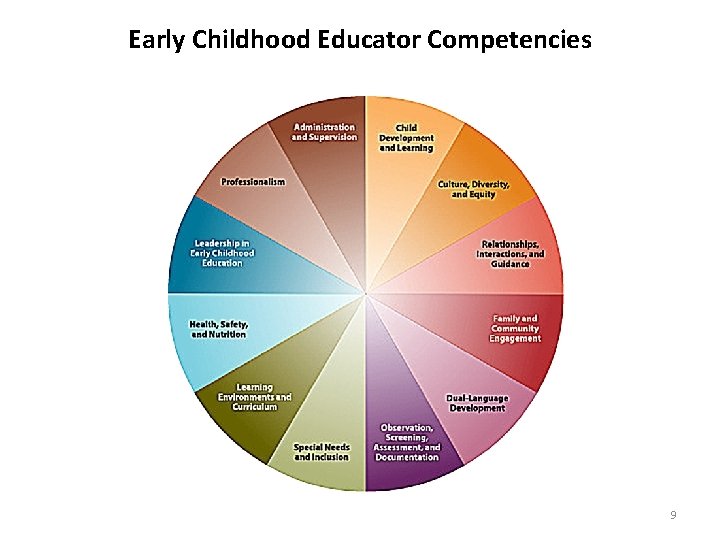
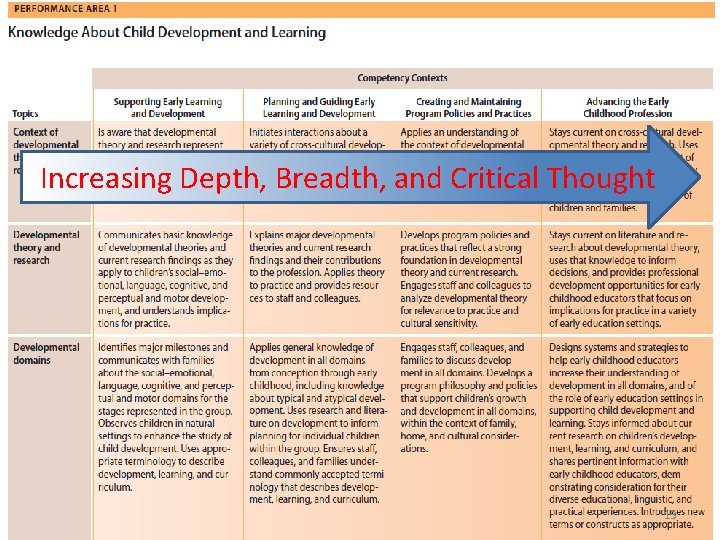
Early Childhood Educator Competencies 9
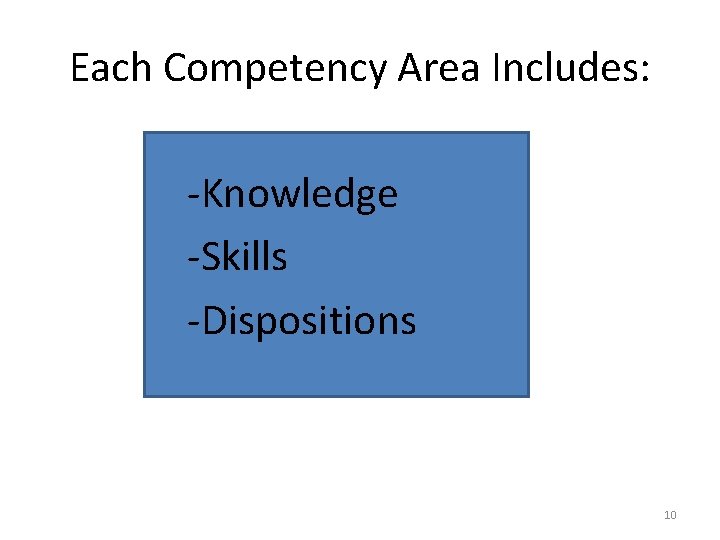
Each Competency Area Includes: -Knowledge -Skills -Dispositions 10
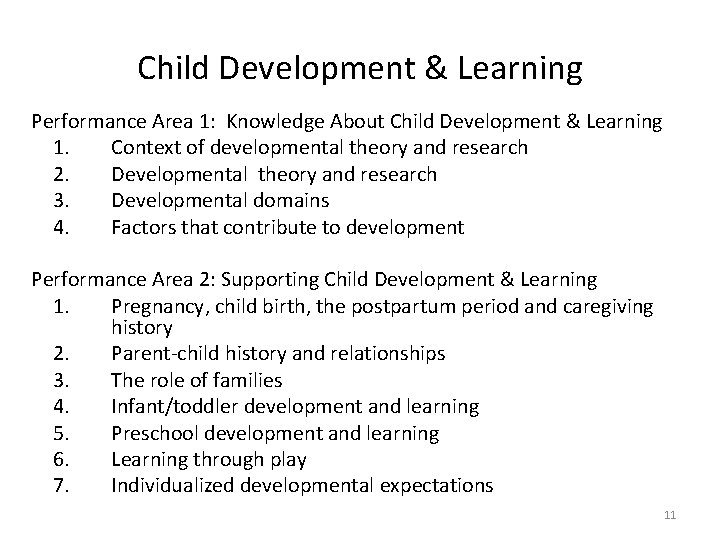
Child Development & Learning Performance Area 1: Knowledge About Child Development & Learning 1. Context of developmental theory and research 2. Developmental theory and research 3. Developmental domains 4. Factors that contribute to development Performance Area 2: Supporting Child Development & Learning 1. Pregnancy, child birth, the postpartum period and caregiving history 2. Parent-child history and relationships 3. The role of families 4. Infant/toddler development and learning 5. Preschool development and learning 6. Learning through play 7. Individualized developmental expectations 11
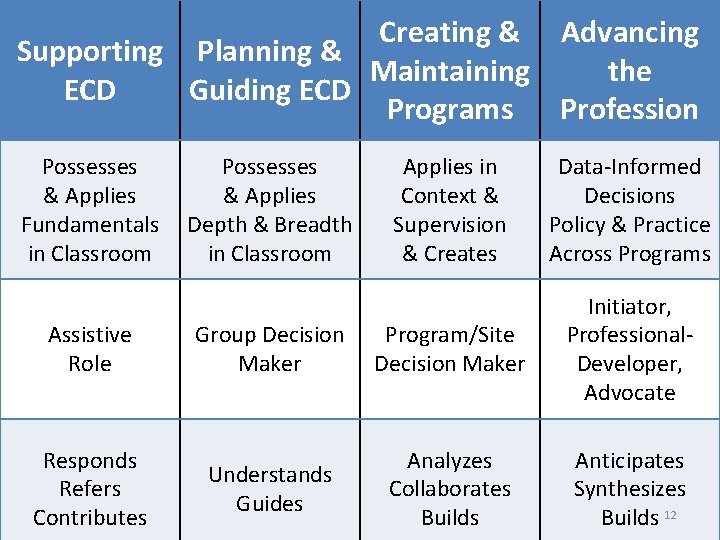
Creating & Advancing Supporting Planning & Maintaining the ECD Guiding ECD Programs Profession Possesses & Applies Fundamentals in Classroom Assistive Role Responds Refers Contributes Possesses & Applies Depth & Breadth in Classroom Applies in Context & Supervision & Creates Data-Informed Decisions Policy & Practice Across Programs Group Decision Maker Program/Site Decision Maker Initiator, Professional. Developer, Advocate Understands Guides Analyzes Collaborates Builds Anticipates Synthesizes Builds 12
Increasing Depth, Breadth, and Critical Thought 13
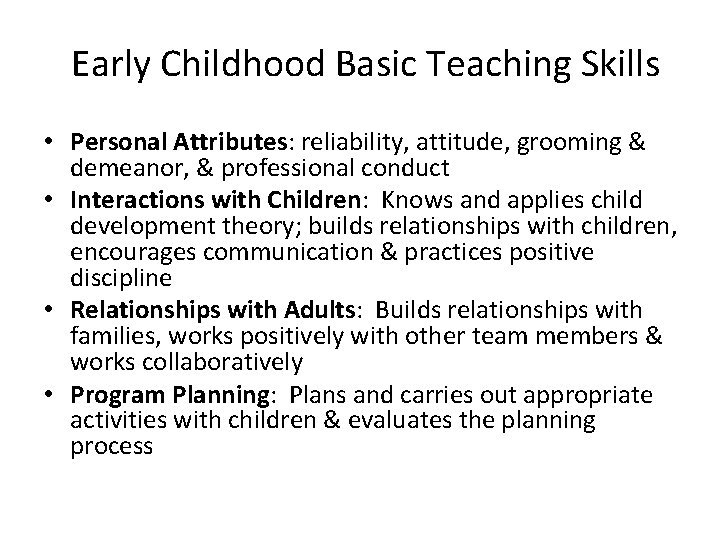
Early Childhood Basic Teaching Skills • Personal Attributes: reliability, attitude, grooming & demeanor, & professional conduct • Interactions with Children: Knows and applies child development theory; builds relationships with children, encourages communication & practices positive discipline • Relationships with Adults: Builds relationships with families, works positively with other team members & works collaboratively • Program Planning: Plans and carries out appropriate activities with children & evaluates the planning process
Early Childhood Teaching Dispositions My Reaction: “Self-Evaluation: How I’m Doing on My Teaching Goals”
Dispositions My Reaction: “When the Faculty Came: Being Observed and Evaluated”
Part 3: Building Reflection into Course Teaching • • Assignments Discussions Activities Challenges
Journaling Assignment Write about team relationships at your practicum site. – How do teachers work together? – Resolve conflicts? – Build a team?
Class Discussion Ethical Dilemma: “Confidentiality”
Guidance and Coaching Practicum Activity – Guides and Learners • How is your center “family friendly”? • List the ways that you think encourage families to feel comfortable, welcomed and encouraged to participate. • Note the problems & how they get resolved.
Challenges • Getting Started - How do you help students begin to become reflective? • Staying Focused - How can you give opportunity for individual thinking yet keep momentum for the group? • Finding Time - How will you find time for reflection while delivering content? • Mastering “Loose/Tight” - How can you balance the tension between transmitting knowledge and allowing for personal process?
Questions? Issues? Ideas?
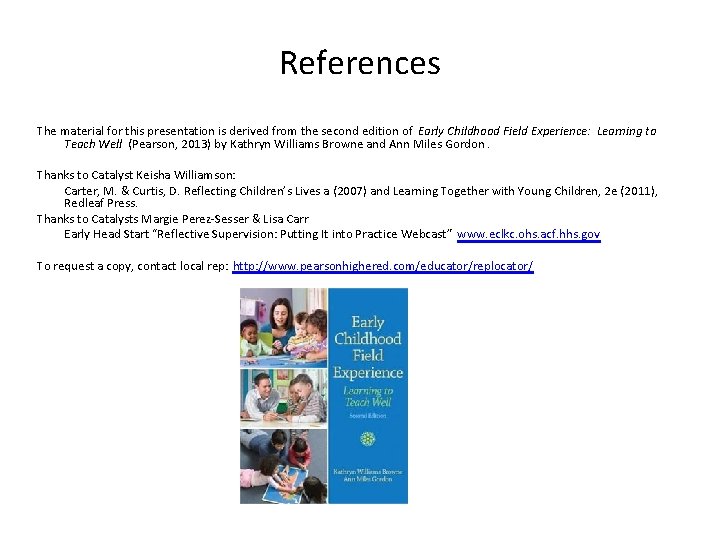
References The material for this presentation is derived from the second edition of Early Childhood Field Experience: Learning to Teach Well (Pearson, 2013) by Kathryn Williams Browne and Ann Miles Gordon. Thanks to Catalyst Keisha Williamson: Carter, M. & Curtis, D. Reflecting Children’s Lives a (2007) and Learning Together with Young Children, 2 e (2011), Redleaf Press. Thanks to Catalysts Margie Perez-Sesser & Lisa Carr Early Head Start “Reflective Supervision: Putting It into Practice Webcast” www. eclkc. ohs. acf. hhs. gov To request a copy, contact local rep: http: //www. pearsonhighered. com/educator/replocator/