
Reflective Supervision How to Be and What to
Reflective Supervision: How to Be and What to Do Learning & Development in the Practice of Reflective Supervision Andrea Foote, Psy. D, IMH-E (IV)® Jordana Ash, LCSW, IMH-E (IV)® Colorado Behavioral Health Care Council, September 2012

Why’d we start this way? • Reflective practice is cornerstone of clinical practice for administration, supervisors, clinicians, other practitioners. – Without it we are acting without full awareness of the vast majority of information and communication available to us • Mindfulness and self awareness can be seen as the foundation for the reflective relationship • Reflection as the foundation for safety & learning
Plan for today • Explore the concepts & foundations of reflective supervision • Links to Triple Aim • Administrative, clinical & reflective supervision • Small group discussion – BREAK (4: 00 -4: 15 ish) • How do you know it’s working? • Dyadic Experience • Wrap up

Video
Definition • Reflective supervision is an ongoing communication process that regulates and understands the flow of emotion, information and experience. • Reflective supervision occurs between two or more individuals whereby the developing relationships serve as the vehicle for acceptance, trust and respect and a mindful service delivery • The supervisor is a trained, skillful and experienced professional who creates a safe space from which a supervisee can learn and reflect about their work. Janet Dean, LCSW 2010 5
How to be & What to do Key Concepts in Reflective Supervision o Regularity o Consistent meeting time o No interruptions o Slowing down o Containment o Partnering with supervisee to regulate anxiety & emotions o Serves the purpose of being able to reflect rather than react o Remembering what was brought before
How to be & What to do Key Concepts in Reflective Supervision o Inquiry o Curiosity o Embracing complexity o Wondering together & tolerating now knowing o Cultural Considerations of the work o Direct advocacy & teaching, not just process o Reflection o Bringing awareness o Paying close attention to the supervisee’s thoughts, feelings & distractions o Experiences finding one’s own answers o Exploring what’s missing ?
How to be & What to do Key Concepts in Reflective Supervision o Reciprocity and Collaboration o Jointly setting the agenda o Trust that what comes forward is what needs to be looked at o Emotionally available supervisor/ emotionally open supervisee o Parallel Process o What happens between supervisor & supervisee is information about what is happening for supervisee & client, and client & child.
Safety & Learning in Reflective Supervision • A nurse's perspective

Safety & Learning in Reflective Supervision • Foundation for dealing with vicarious trauma, reducing burnout, fighting turnover • Insurance policy: practitioners are aware of what’s being acted out non-consciously or through lack of awareness with clients: Enactment is our unresolved behavior patterns acted out • Pays off administratively and clinically. 10
Critical Distinctions or A Relationship for All Kinds of Learning • Administrative – Performance Evaluations – Productivity – Agency/Organizational Expectations • Clinical – Case formulation – Diagnosis and Treatment Goals – Transference & Counter-transference • Reflective
Compelling Forces • Reflective supervision strives to continuously integrate compelling forces such as reflection and direct advocacy. • The provision of attuned guidance is measured by the need to stay in inquiry. 12
Table Talk Conversation o What is your current experience with reflective supervision in your organization or practice? o What aspects of a RS practice would be most challenging to implement? o Which messages about RS would resonate most in your organization?
Break
Supporting Reflective Supervision: why should agencies & organizations invest? o What’s the research out there? o Impacts of physical health o Minimizing effects vicarious trauma o In children & adults , increased self-regulation o Connection community and family supports o Staff retention/ staff morale o Knowledgeable and effective practitioners

What might it take? • Video
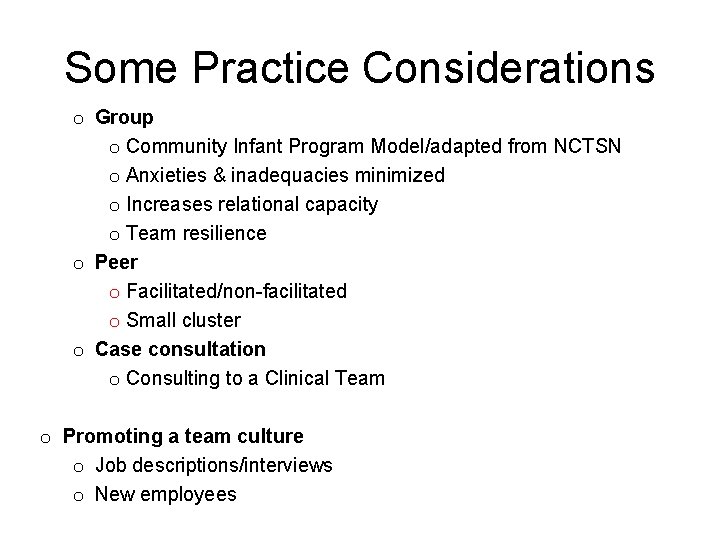
Some Practice Considerations o Group o Community Infant Program Model/adapted from NCTSN o Anxieties & inadequacies minimized o Increases relational capacity o Team resilience o Peer o Facilitated/non-facilitated o Small cluster o Case consultation o Consulting to a Clinical Team o Promoting a team culture o Job descriptions/interviews o New employees
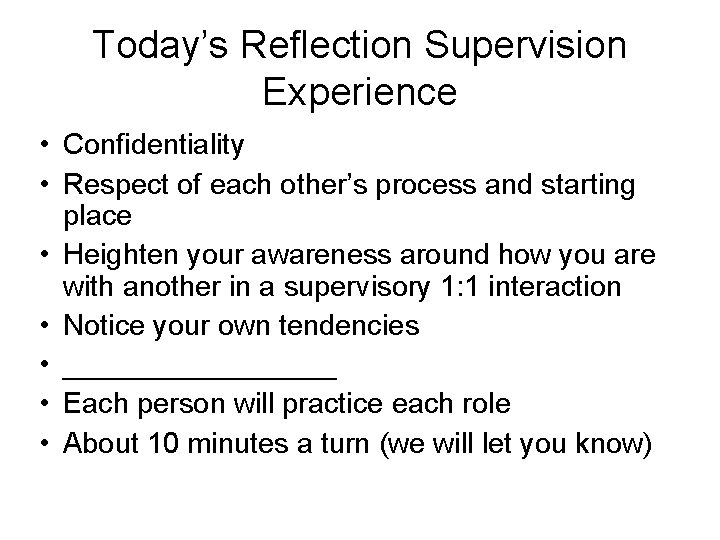
Today’s Reflection Supervision Experience • Confidentiality • Respect of each other’s process and starting place • Heighten your awareness around how you are with another in a supervisory 1: 1 interaction • Notice your own tendencies • _________ • Each person will practice each role • About 10 minutes a turn (we will let you know)
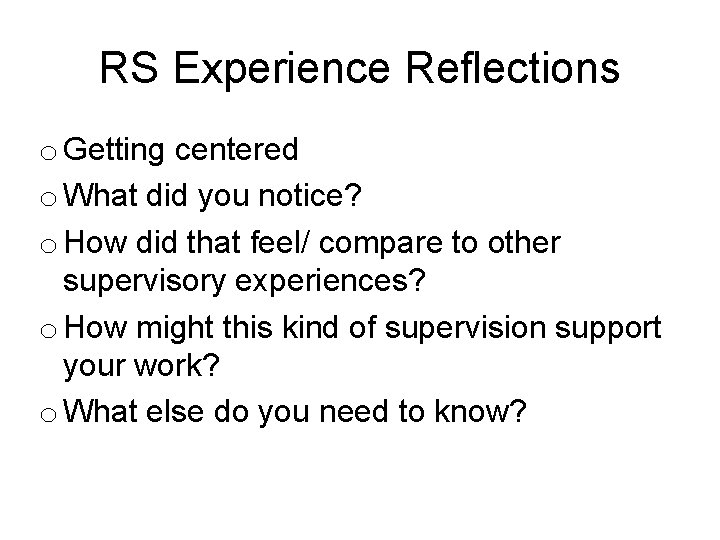
RS Experience Reflections o Getting centered o What did you notice? o How did that feel/ compare to other supervisory experiences? o How might this kind of supervision support your work? o What else do you need to know?
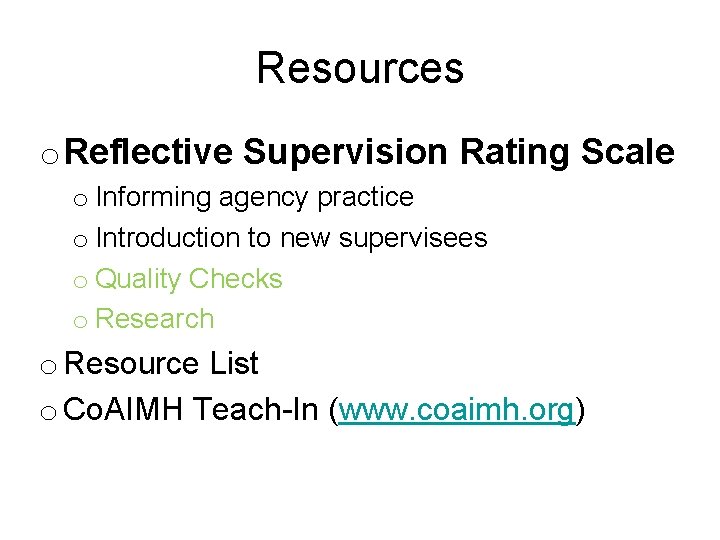
Resources o Reflective Supervision Rating Scale o Informing agency practice o Introduction to new supervisees o Quality Checks o Research o Resource List o Co. AIMH Teach-In (www. coaimh. org)

Wrap up • How to be & What to do • Q&A • What’s next for RS • Some last thoughts • Jordana Ash jash@mhpcolorado. org • Andrea Foote afoote@mhpcolorado. org
- Slides: 21