
Reflections on Culture for Safety Security Behaviour artefacts
Reflections on Culture for Safety & Security
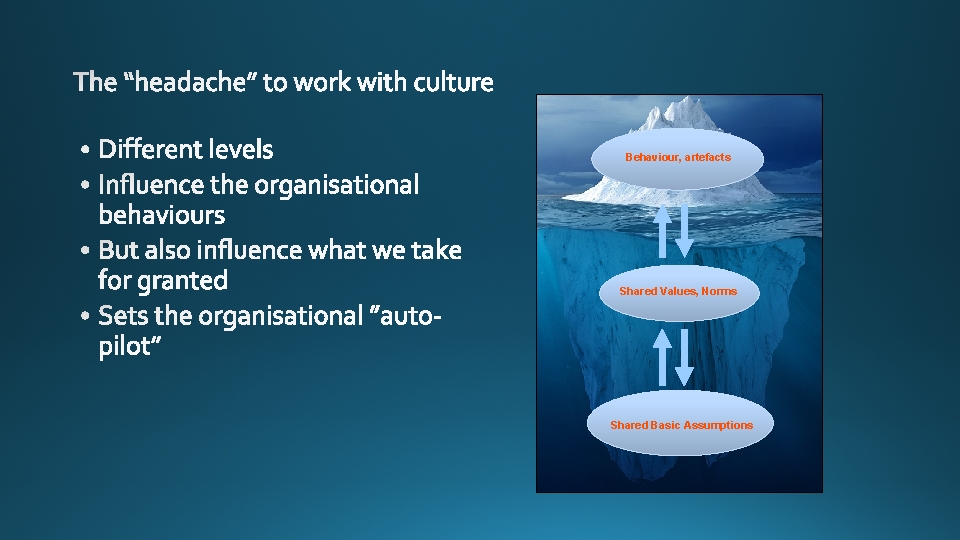
Behaviour, artefacts Shared Values, Norms Shared Basic Assumptions
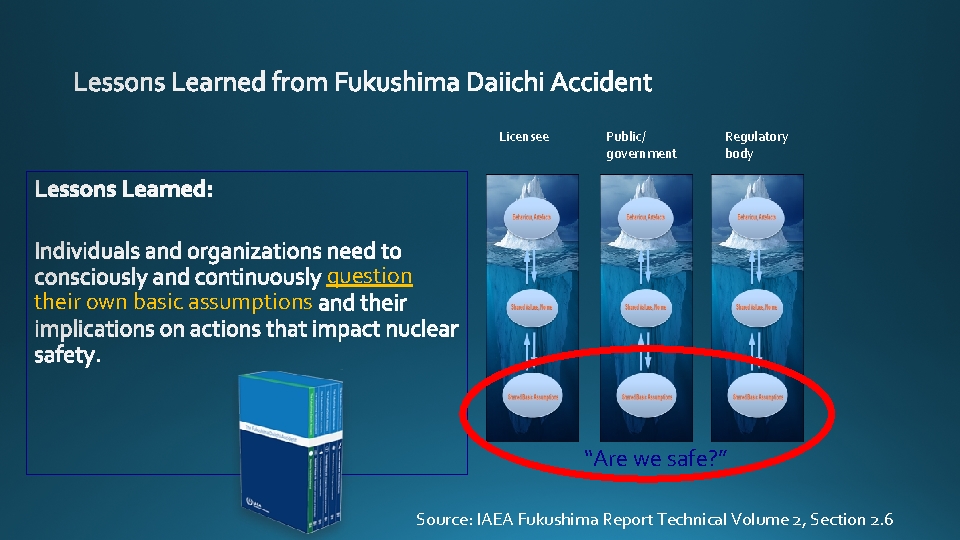
Licensee their own basic assumptions Public/ government Regulatory body question “Are we safe? ” Source: IAEA Fukushima Report Technical Volume 2, Section 2. 6
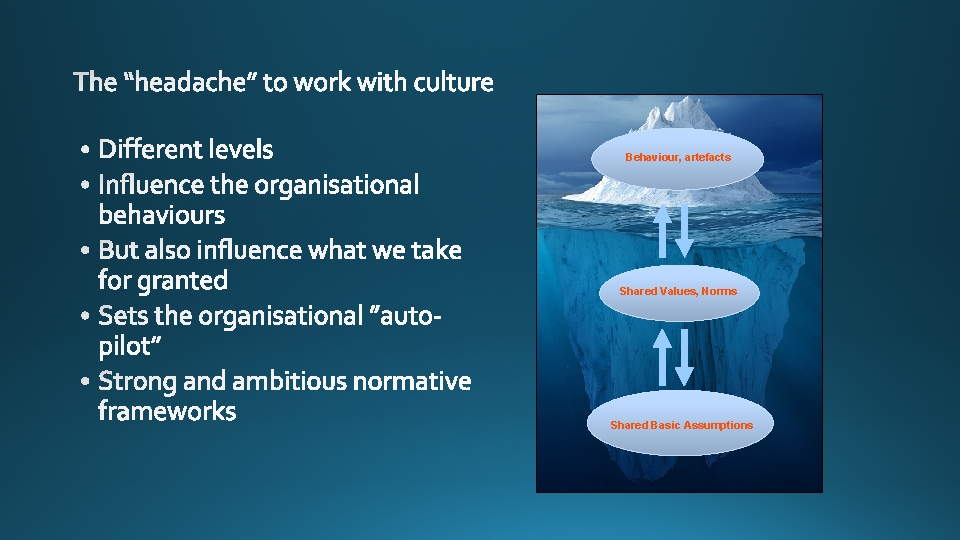
Behaviour, artefacts Shared Values, Norms Shared Basic Assumptions
Requirements on: • Responsibility for Safety • Leadership for Safety • Management for Safety • Culture for Safety • Measurement, Assessment and Improvement
Requirement 12: Fostering a culture for safety “Individuals in the organization, from senior management downwards, shall foster a strong safety culture. The management system and leadership for safety shall be such as to foster and sustain a strong safety culture”. Requirement 14: Measurement, assessment and improvement of leadership for safety and safety culture “Senior management shall regularly commission assessments of leadership for safety and safety culture in its own organization. ”
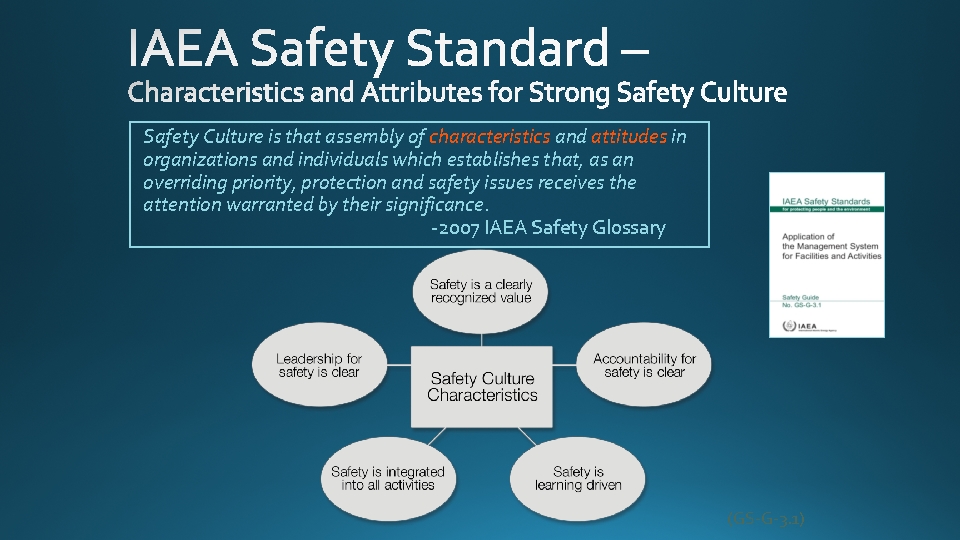
Safety Culture is that assembly of characteristics and attitudes in organizations and individuals which establishes that, as an overriding priority, protection and safety issues receives the attention warranted by their significance. -2007 IAEA Safety Glossary (GS-G-3. 1)
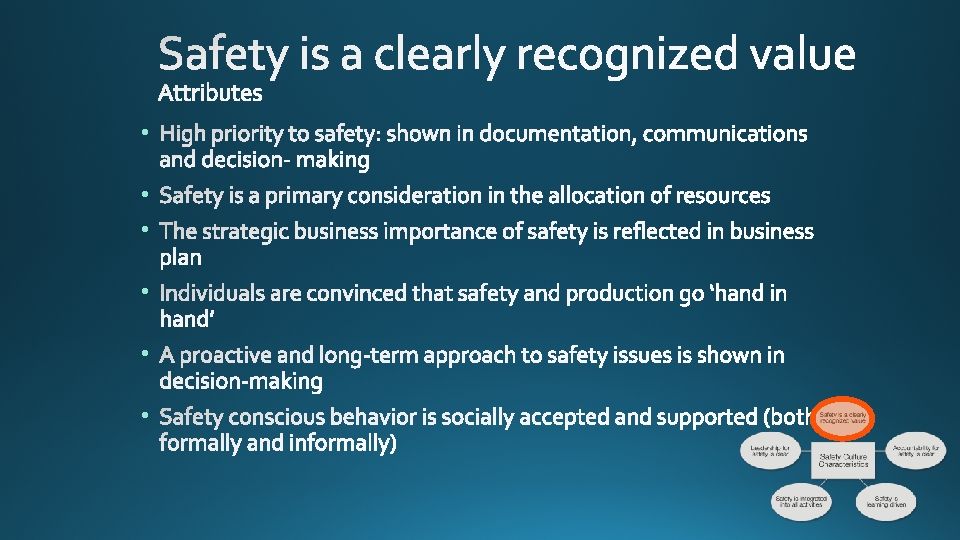
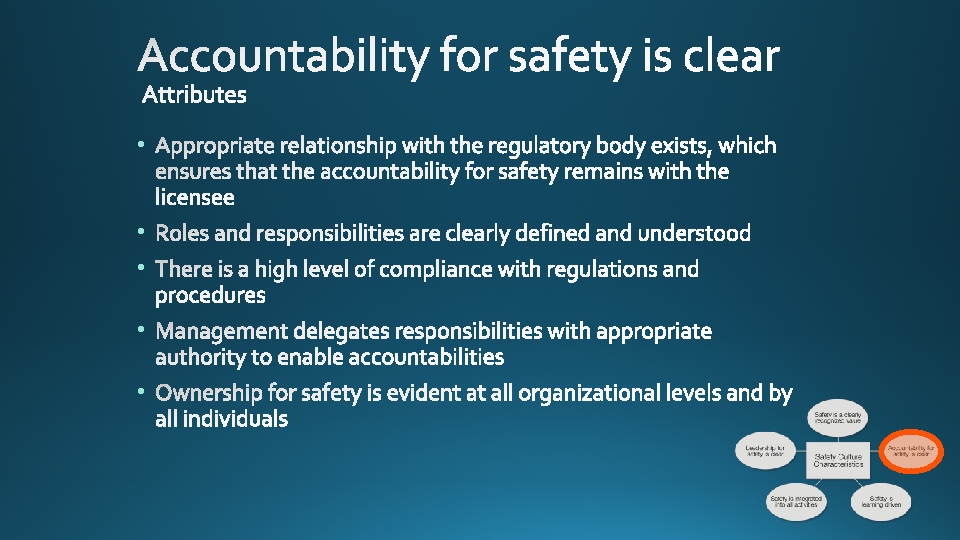
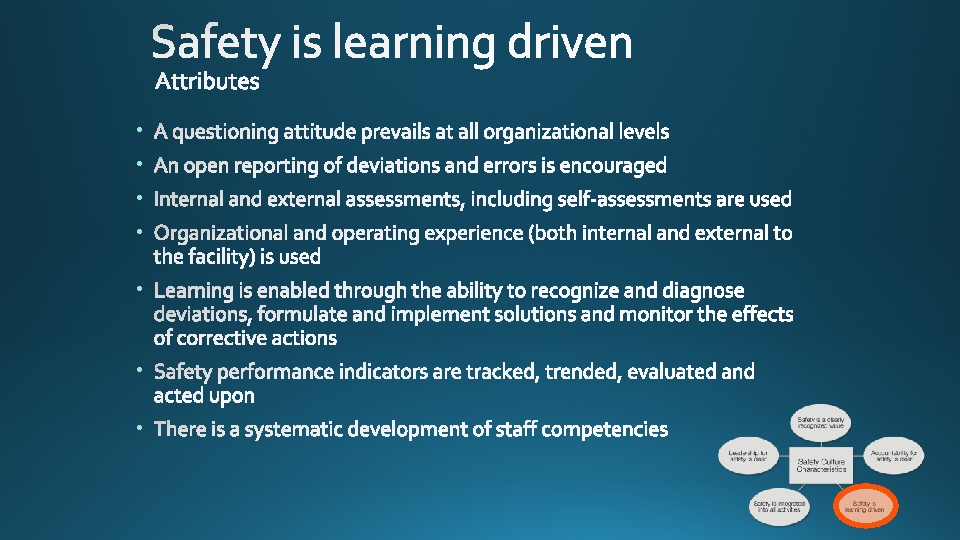
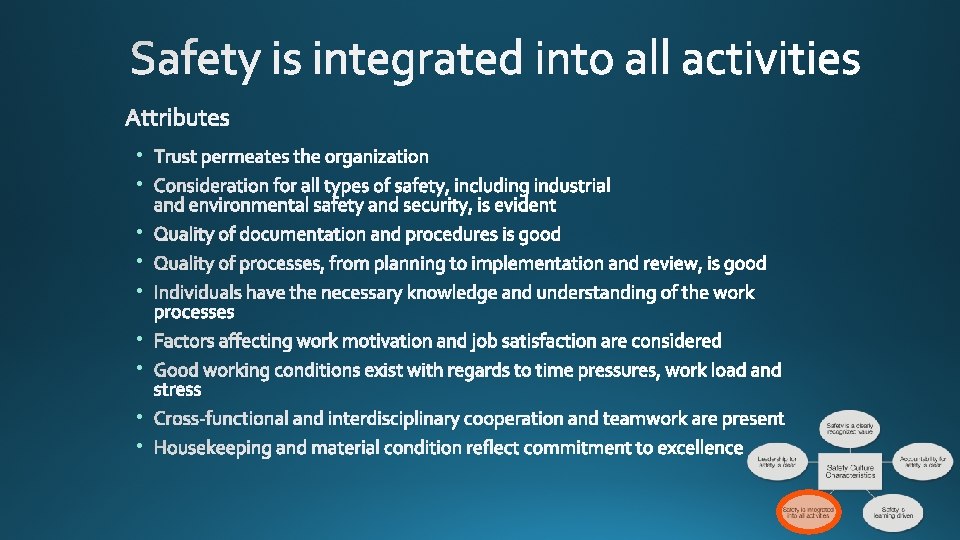
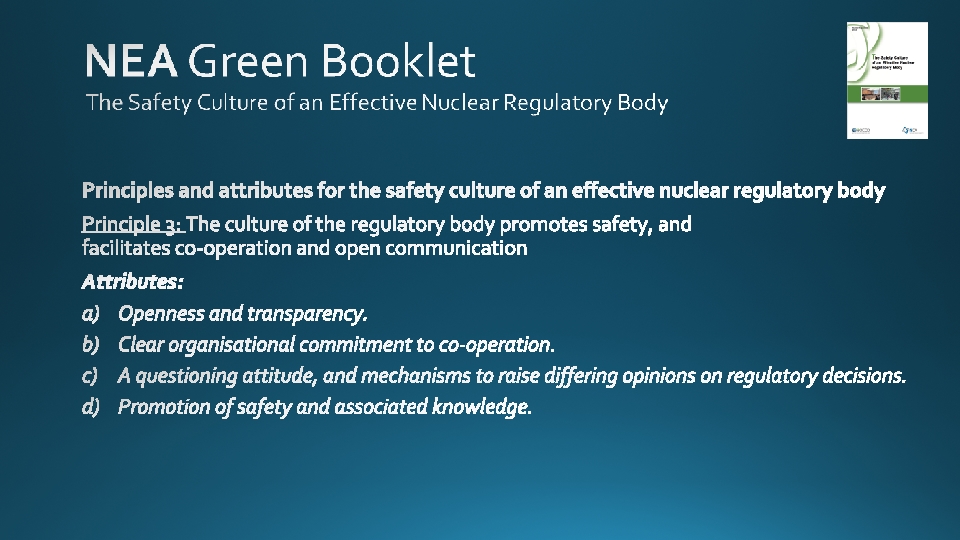
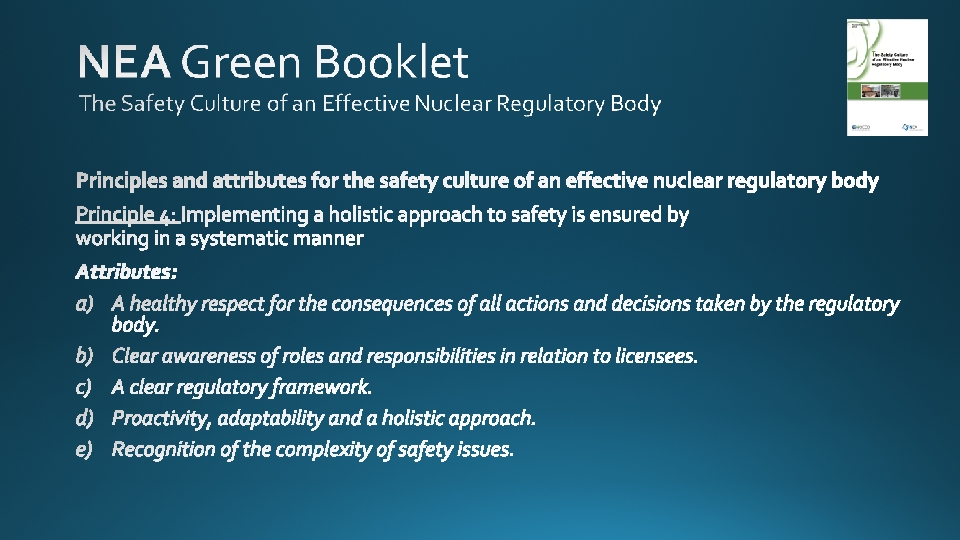
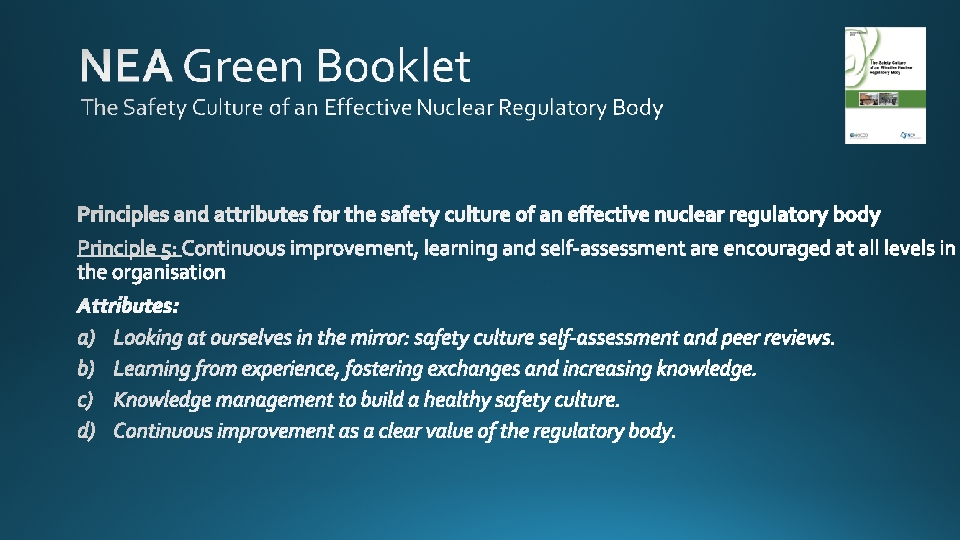
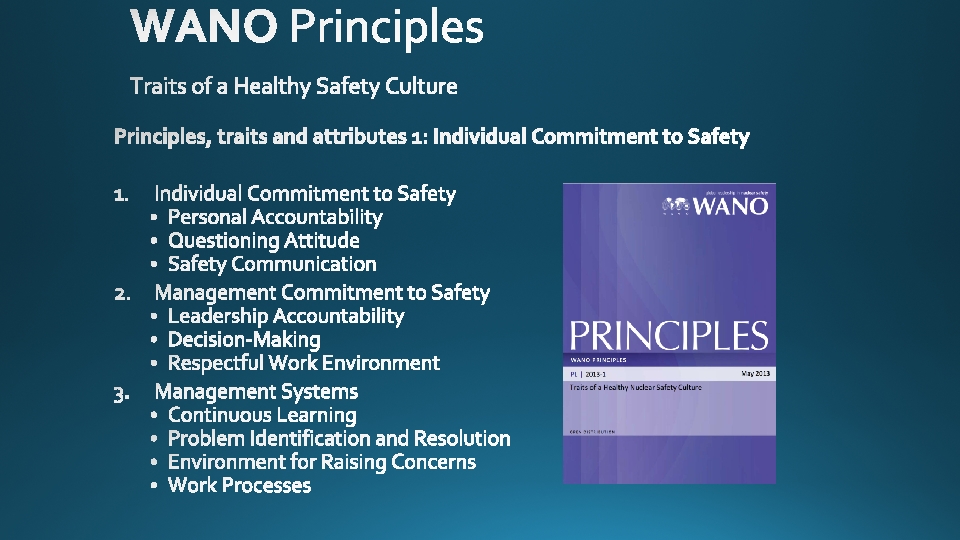


Behaviour, artefacts Shared Values, Norms Shared Basic Assumptions

regulatory body acknowledge its role within the national nuclear system and the nuclear industry’s safety culture

Systemic View of Interactions within the broader Sociotechnical System Legal Bodies Media Governmental Ministries Universities Regulatory Body Professional Associations Licensee Standards Organizations Competing Energy Providers Lobby Groups Interest Groups Work Unions Energy Markets Vendors Technical Support Organizations International Bodies Waste Management Organizations


Behaviour, artefacts Shared Values, Norms Shared Basic Assumptions

Structure: The systems, frameworks, infrastructure created to ensure a systematic approach to safety Progression: The enactment based on organizational learnings and evolved understandings Interrelationships: What happens between people, groups and organizations that shapes behaviours

Regulatory Body Licensee Structure: Requirement Structure: Management System Interrelationships: Regulator-Licensees, internal coordination Interrelationships: Leadership, collaboration/silos, openness Progression: Self-reflection and learning Progression: Continuous improvements, inquiring of the safety assumptions

Based Upon Source of cues Structure: Facts, knowledge, calculations, information Structure: Interrelationships: Emotions, sensitivity, interpretation, socialization Interrelationships: Progression: Wisdom, experiences, evolved understanding, exploration, lessons learned Progression: Plans, event investigations, information gathering, performance, KPI, etc Power dynamics, communication, leadership, accepted and not accepted behaviours, etc Response to peerreviews/audits/assessments, repeatable events, long-term strategies, self-reflection (individual, group and organizational level), etc

Structure: The systems, frameworks, infrastructure created to ensure a systematic approach to safety Progression: The enactment based on organizational learnings and evolved understandings Interrelationships: What happens between people, groups and organizations that shapes behaviours


Organizational Culture

Safety & Security Requirements

Safety Security

Leadership Safety Security

Leadership Safety Security Management Culture for Safety

monica. haage@gmail. com
- Slides: 46