
Reflection Seismic Method The hyperbolic form of the
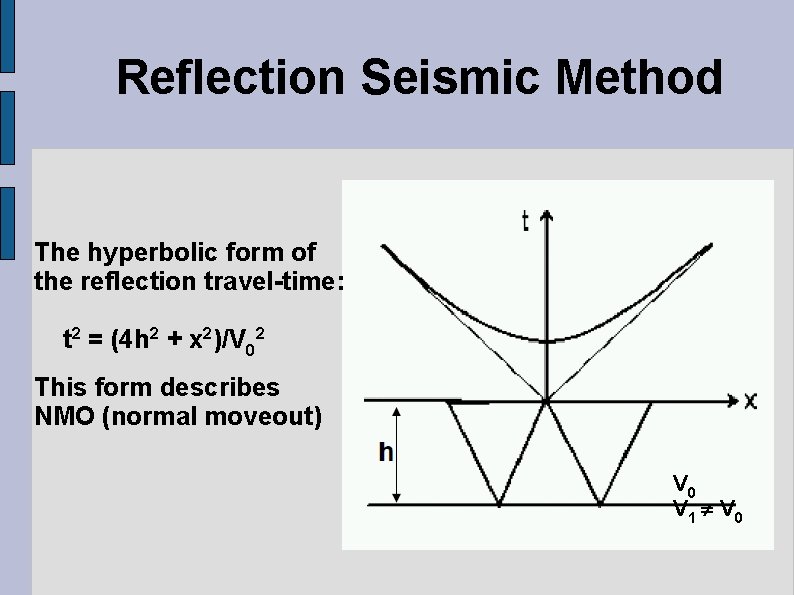
Reflection Seismic Method The hyperbolic form of the reflection travel-time: t 2 = (4 h 2 + x 2)/V 02 This form describes NMO (normal moveout) V 0 V 1 V 0
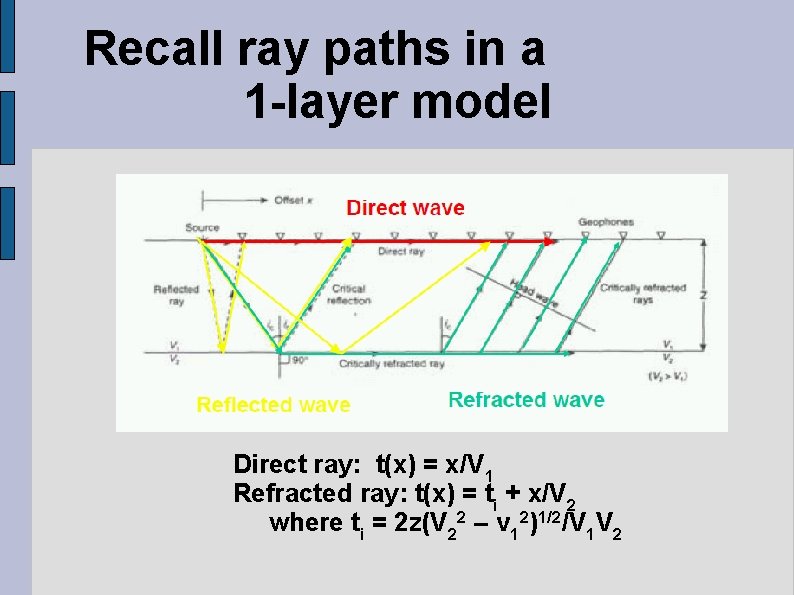
Recall ray paths in a 1 -layer model Direct ray: t(x) = x/V 1 Refracted ray: t(x) = ti + x/V 2 where ti = 2 z(V 22 – v 12)1/2/V 1 V 2

Direct and Refraction ray travel times Direct ray: t(x) = x/V 1 Refracted ray: t(x) = ti + x/V 2 where ti = 2 z(V 22 – V 12)1/2/V 1 V 2
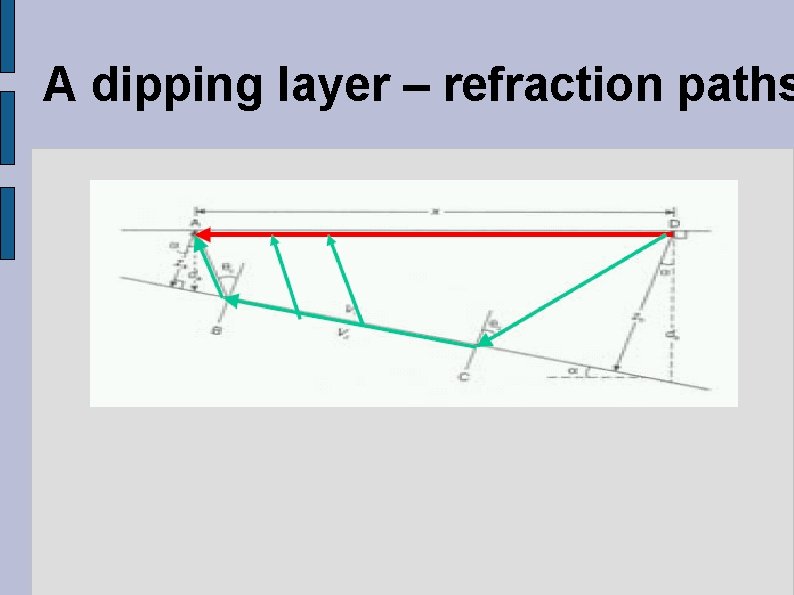
A dipping layer – refraction paths
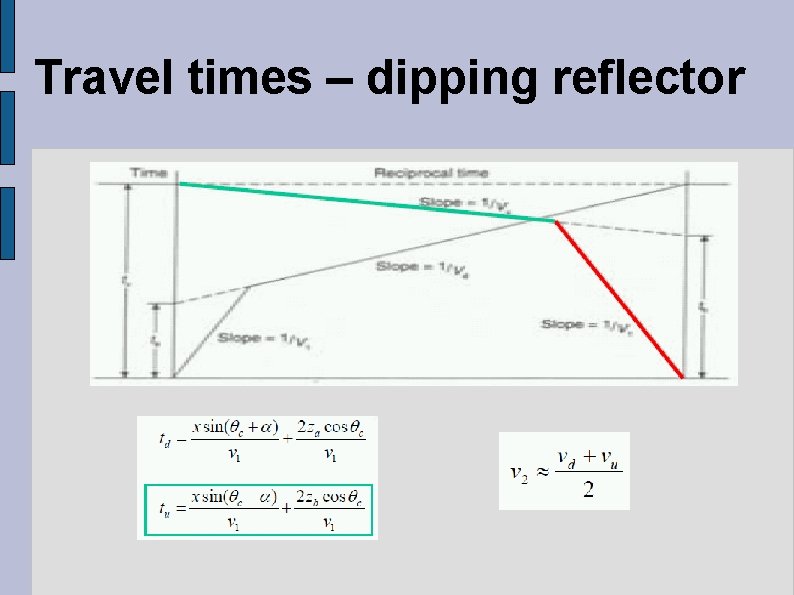
Travel times – dipping reflector

Diffractions masquerade as reflections
Amplitudes of seismic waves Waves lose amplitude due to: Geometric spreading as waves move farther into volume: Amplitude = 1/(distance)2 Absorption of wave energy into heat: Amplitude ~ A 0 e- x Scattering -- reflections, refractions, diffractions from layer inhomogeneities and anisotropies
Automatic gain control We compensate for the ever decreasing wave amplitude by preferentially amplifying the low amplitude signals. . . Logarithmic amplifiers. . . the signal records as the logarithm of its amplitude Gain-ranging amplifiers. . . the signal records according to the average signal amplitude during a short time window
Seismic wave sources for reflection surveys Land surveys: Dynamite (geogel), hammer, thumper, dropping weights – shock sources are not easily controllable as to waveform Vibrational sources -- “Vibroseis” a controlled source
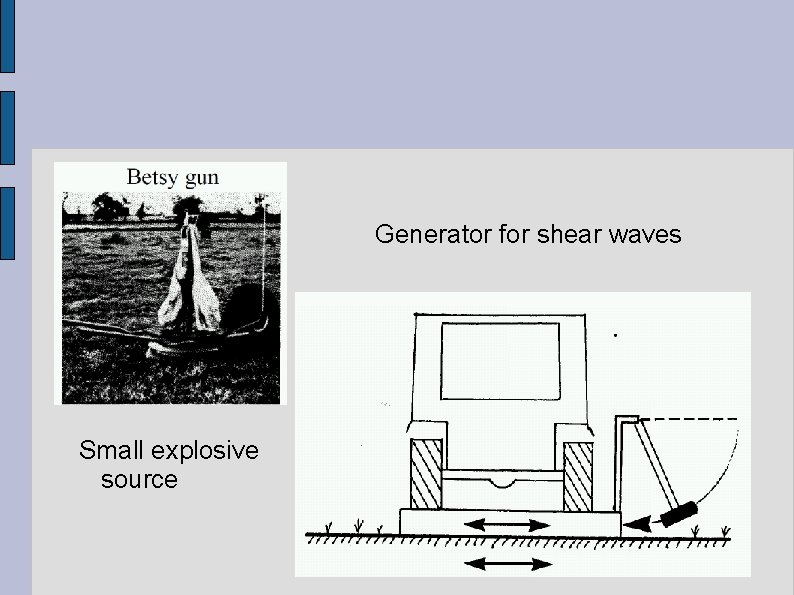
Generator for shear waves Small explosive source
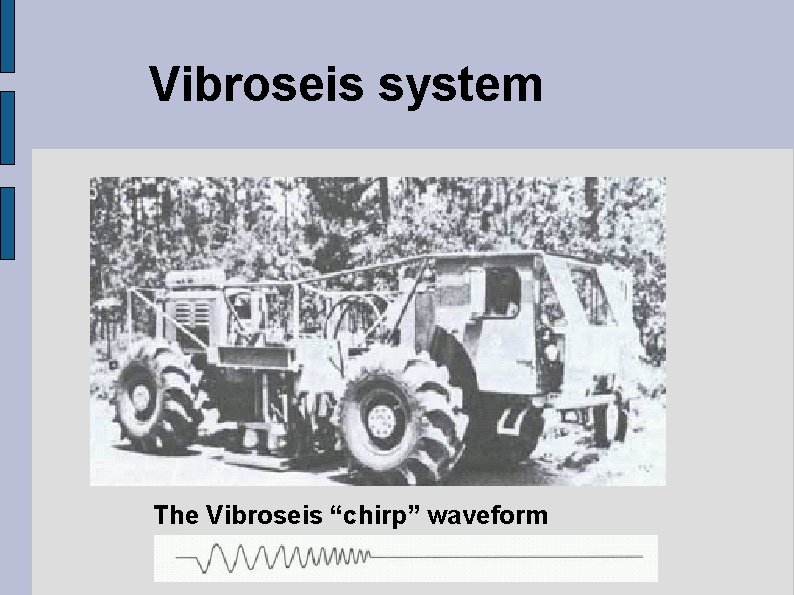
Vibroseis system The Vibroseis “chirp” waveform
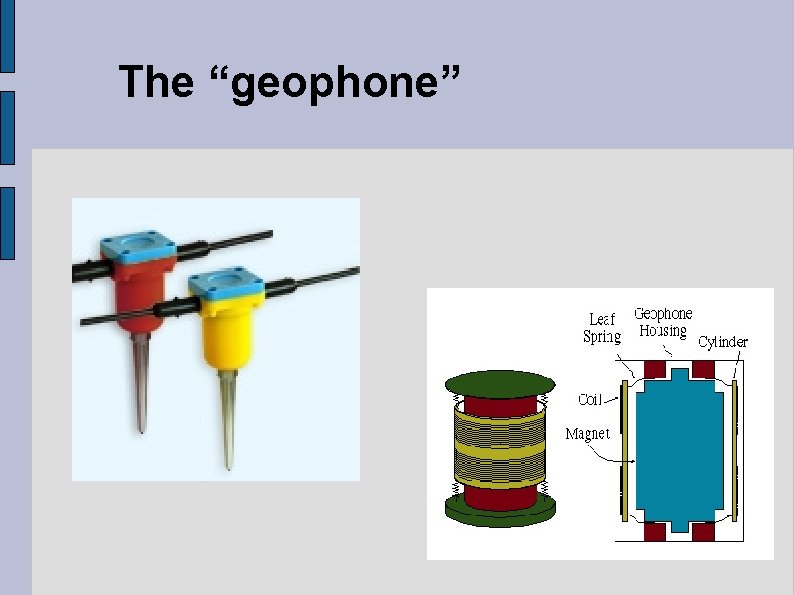
The “geophone”
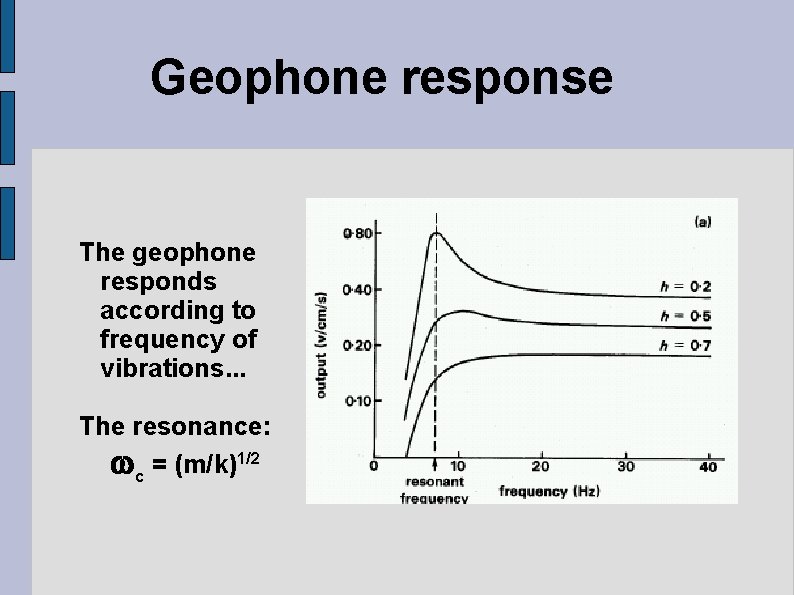
Geophone response The geophone responds according to frequency of vibrations. . . The resonance: c = (m/k)1/2
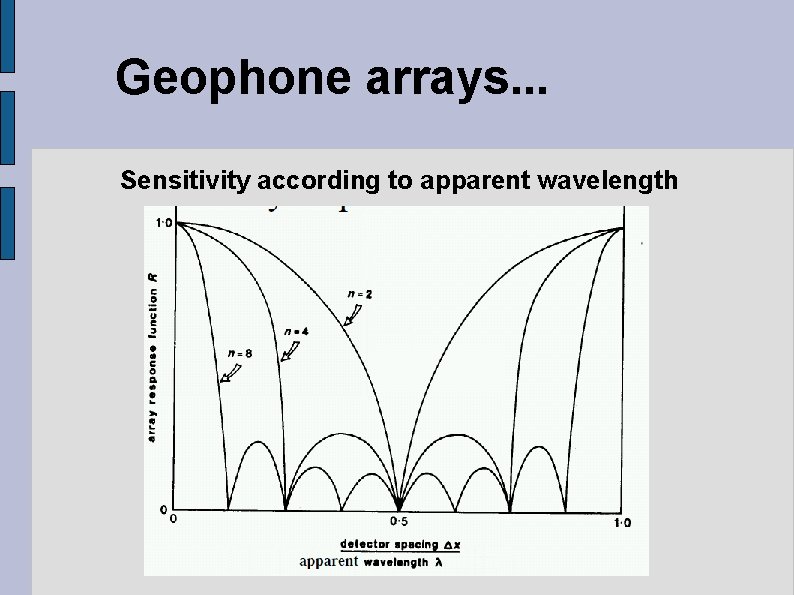
Geophone arrays. . . Sensitivity according to apparent wavelength
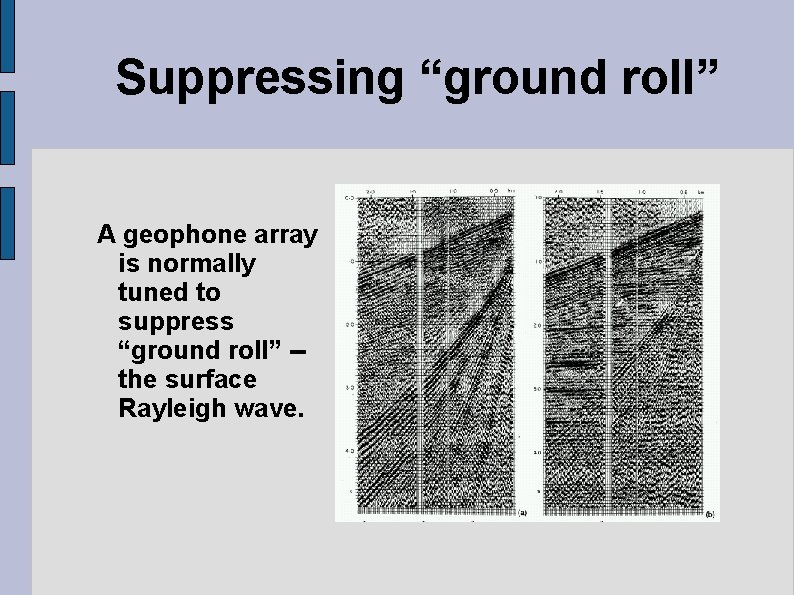
Suppressing “ground roll” A geophone array is normally tuned to suppress “ground roll” -the surface Rayleigh wave.
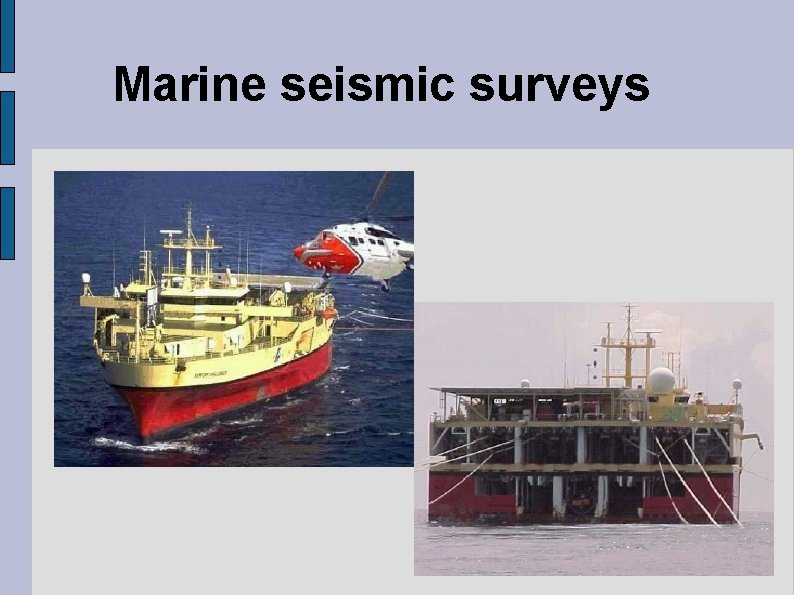
Marine seismic surveys
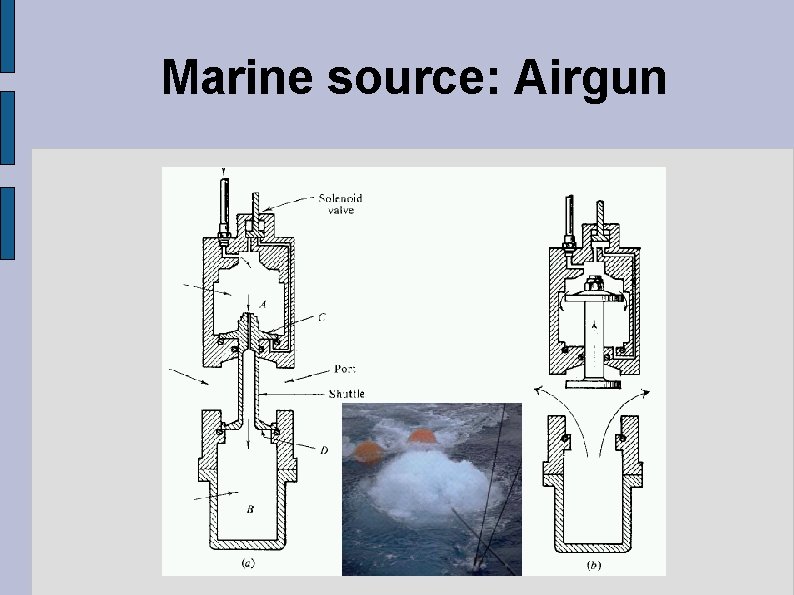
Marine source: Airgun
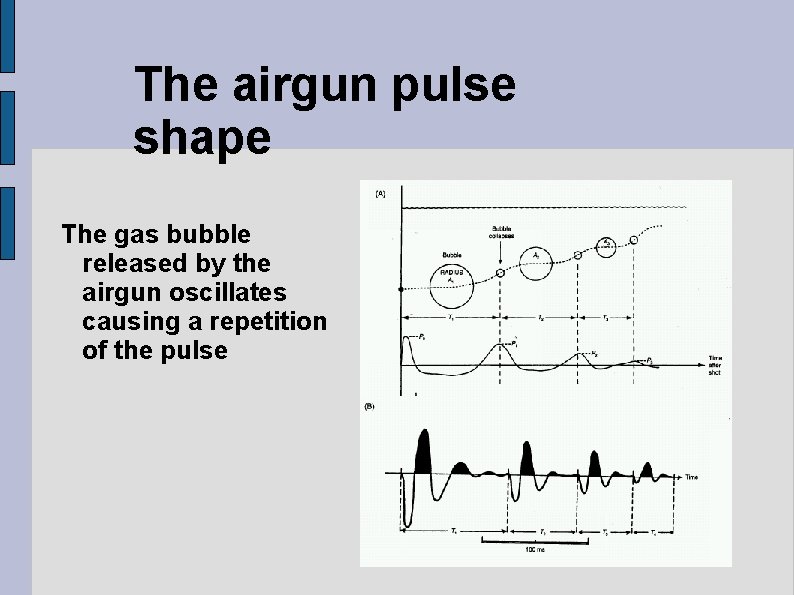
The airgun pulse shape The gas bubble released by the airgun oscillates causing a repetition of the pulse
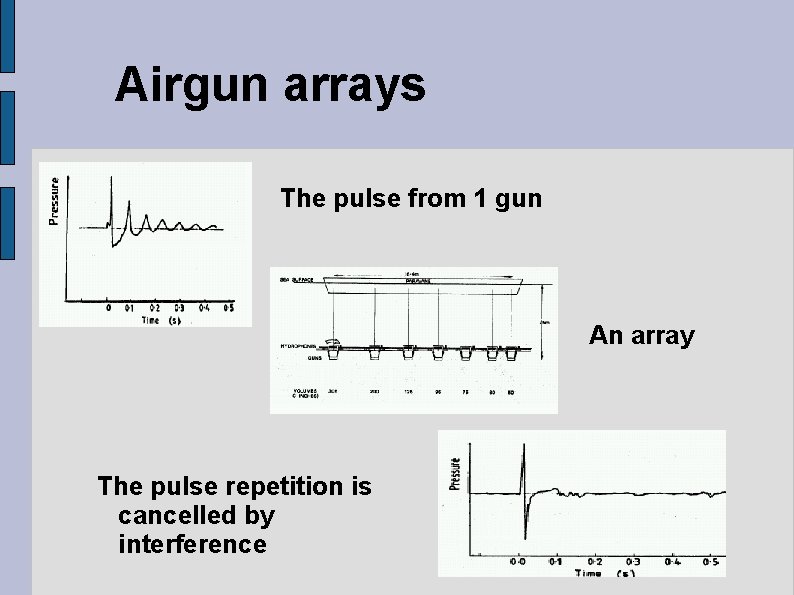
Airgun arrays The pulse from 1 gun An array The pulse repetition is cancelled by interference
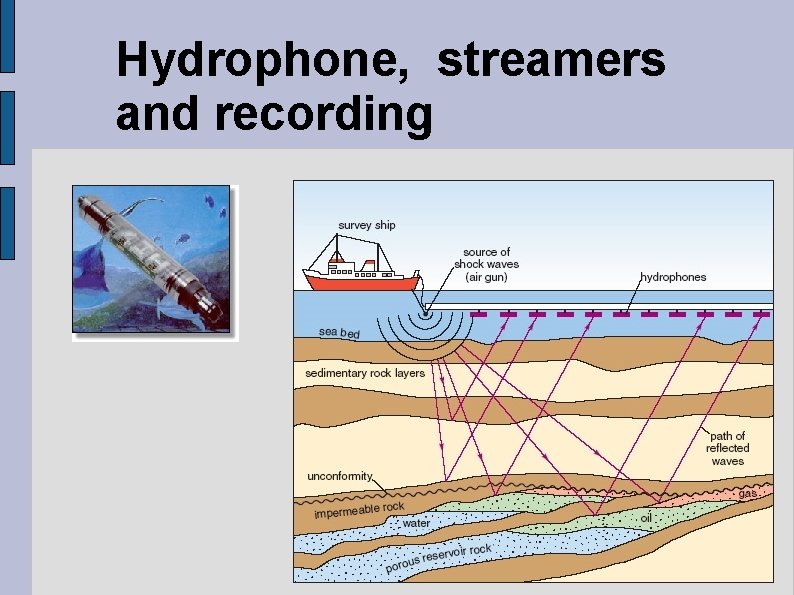
Hydrophone, streamers and recording
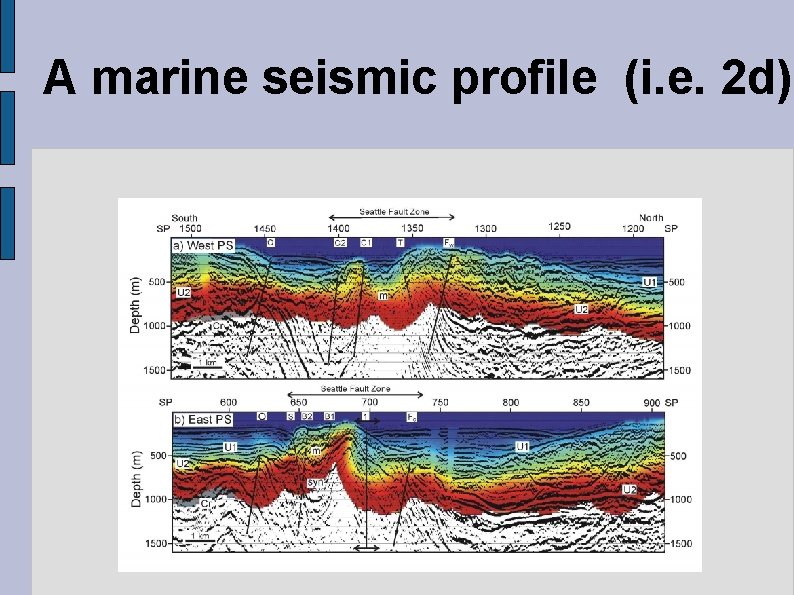
A marine seismic profile (i. e. 2 d)
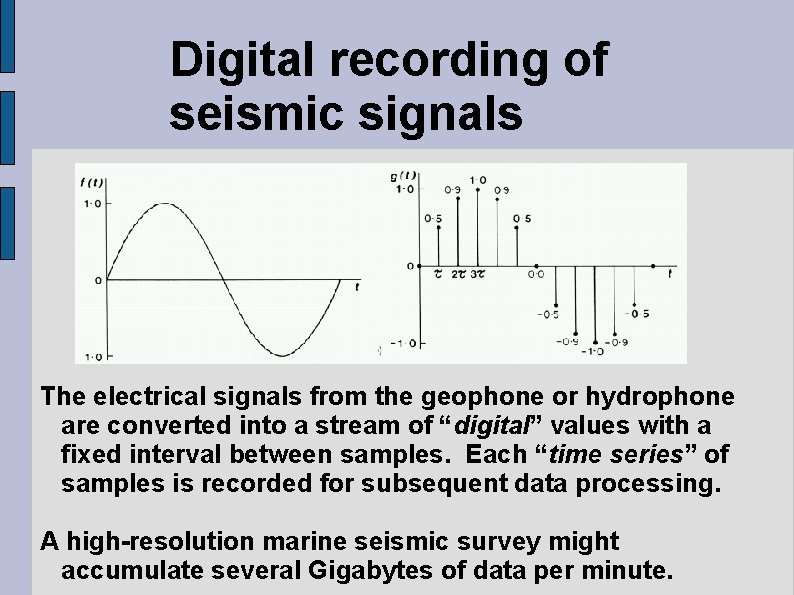
Digital recording of seismic signals The electrical signals from the geophone or hydrophone are converted into a stream of “digital” values with a fixed interval between samples. Each “time series” of samples is recorded for subsequent data processing. A high-resolution marine seismic survey might accumulate several Gigabytes of data per minute.
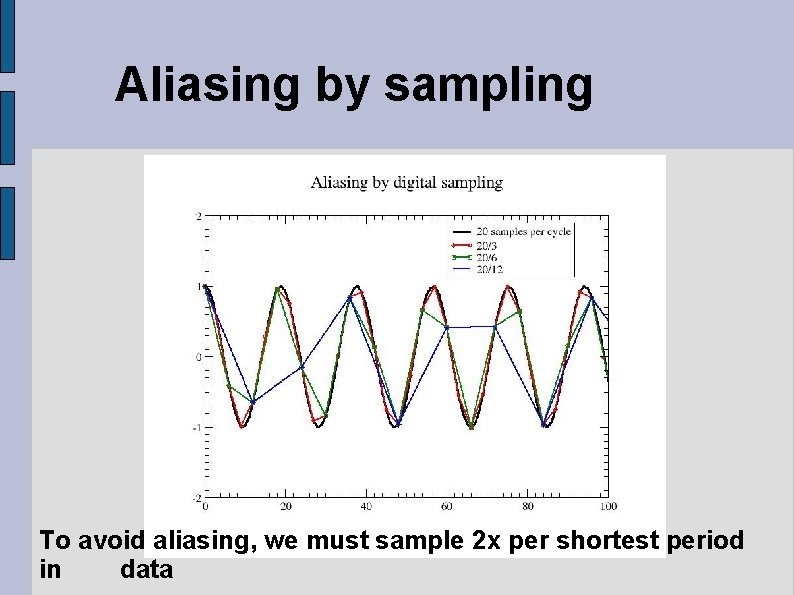
Aliasing by sampling To avoid aliasing, we must sample 2 x per shortest period in data
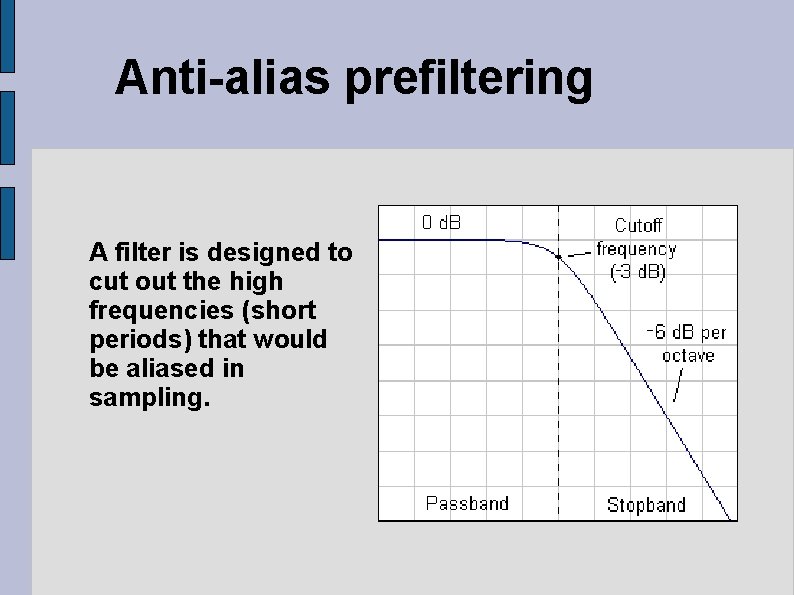
Anti-alias prefiltering A filter is designed to cut out the high frequencies (short periods) that would be aliased in sampling.
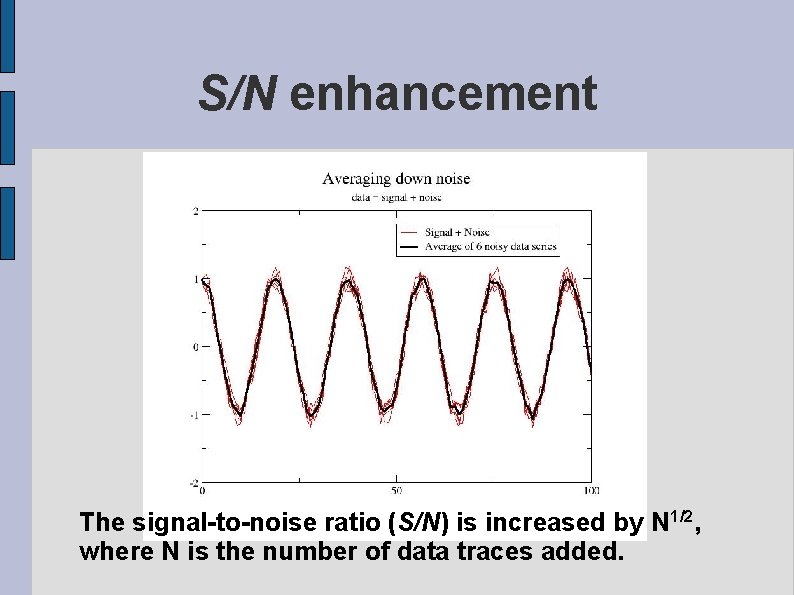
S/N enhancement The signal-to-noise ratio (S/N) is increased by N 1/2, where N is the number of data traces added.
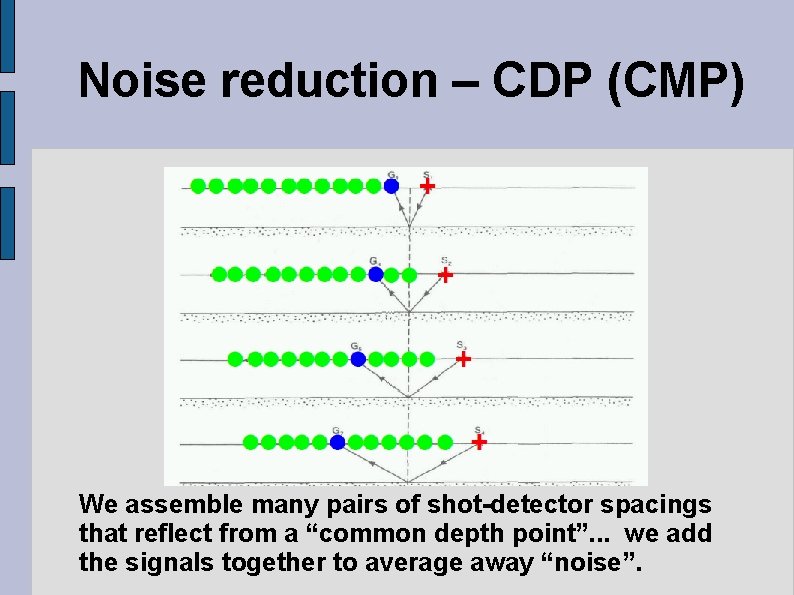
Noise reduction – CDP (CMP) We assemble many pairs of shot-detector spacings that reflect from a “common depth point”. . . we add the signals together to average away “noise”.
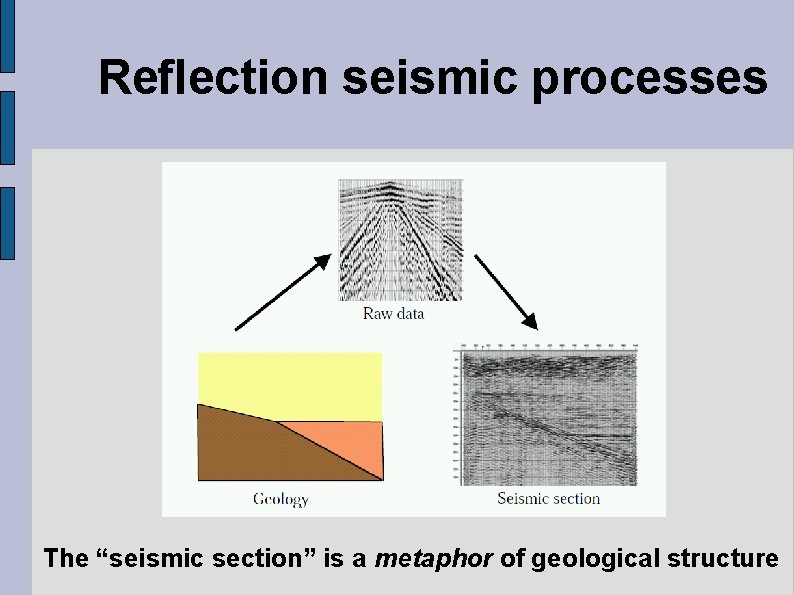
Reflection seismic processes The “seismic section” is a metaphor of geological structure
- Slides: 27