
Reflection n n What does it mean to



- Slides: 24
Reflection n n What does it mean to be human? What is the source of our “humanness”? Are we born with these human characteristics n Or, do we develop them through our interactions with others or our “socialization”? n
“Who Am I? ” n n n Take out a piece of paper Answer this question 20 times Respond “I am…”
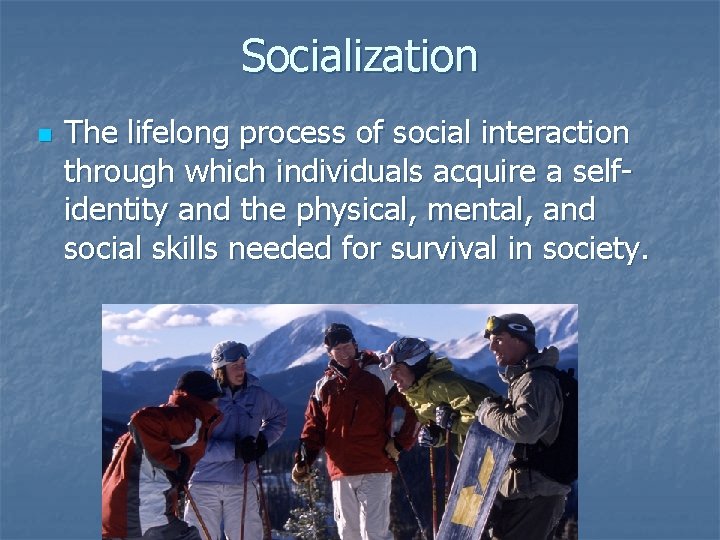
Socialization n The lifelong process of social interaction through which individuals acquire a selfidentity and the physical, mental, and social skills needed for survival in society.
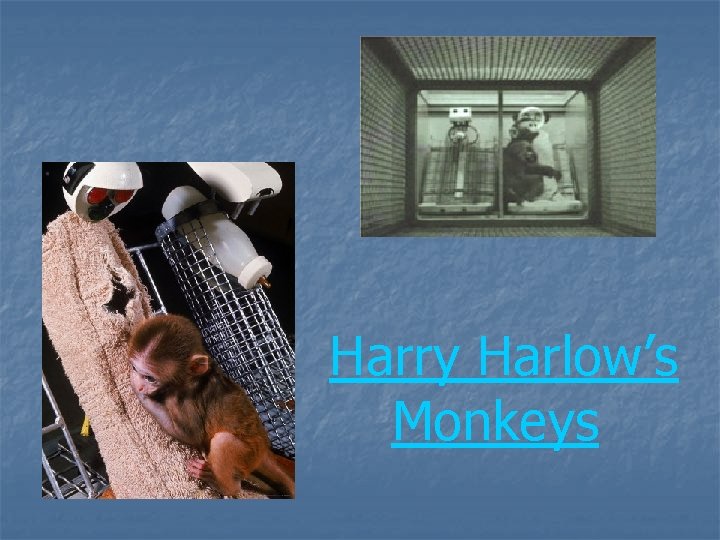
Hypothesize n n n If we are socialized by external forces (nurture), are there any aspects of our social selves that might be in-born (nature)? Is our need for human affection a product of nature or nurture? What can the monkeys tell us?
Harry Harlow’s Monkeys
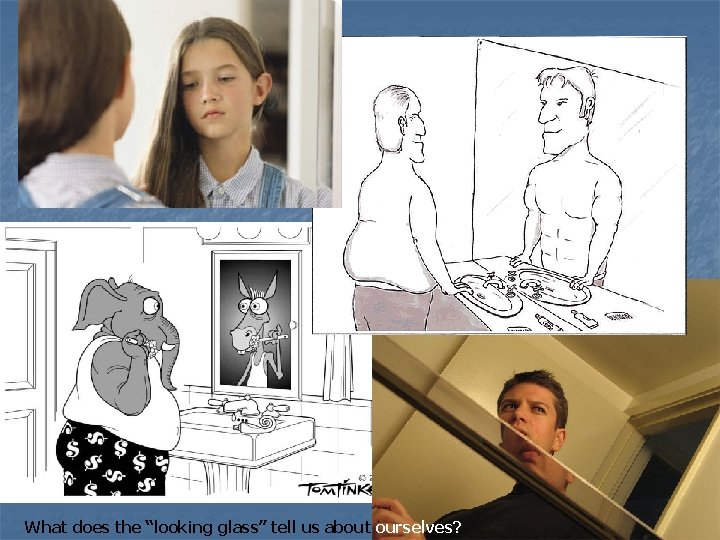
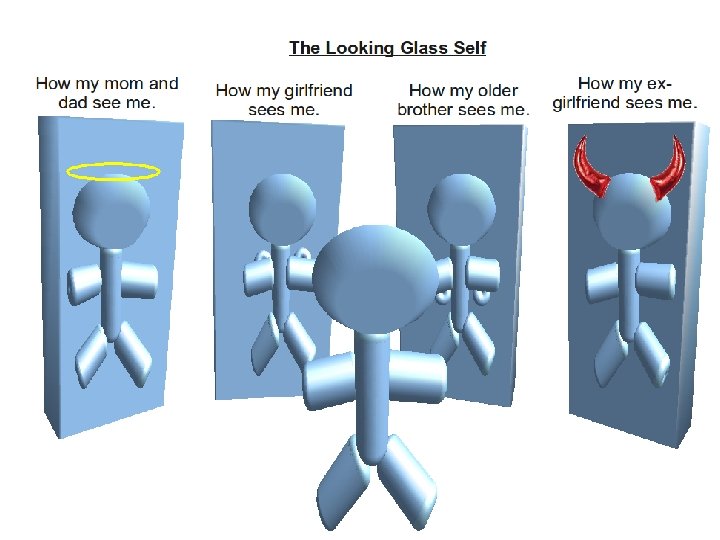
What does the “looking glass” tell us about ourselves?
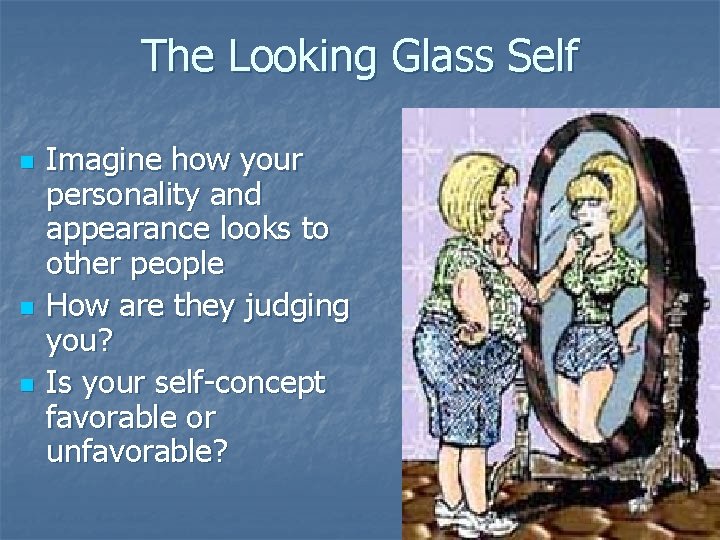
The Looking Glass Self n n n Imagine how your personality and appearance looks to other people How are they judging you? Is your self-concept favorable or unfavorable?
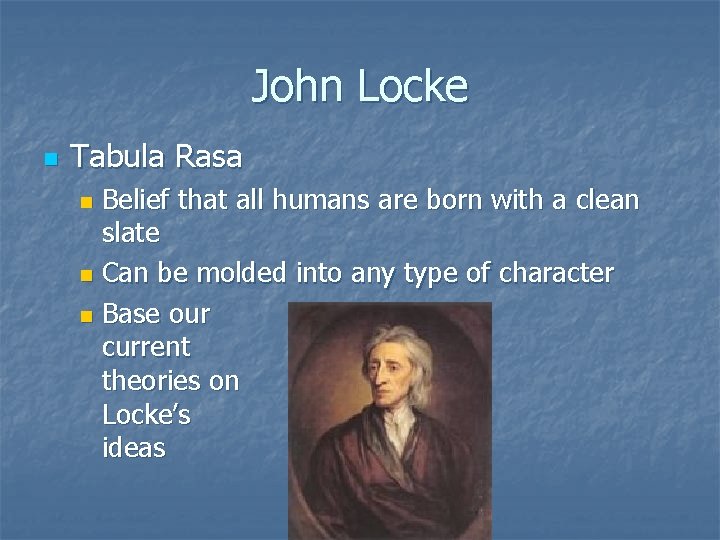
John Locke n Tabula Rasa Belief that all humans are born with a clean slate n Can be molded into any type of character n Base our current theories on Locke’s ideas n
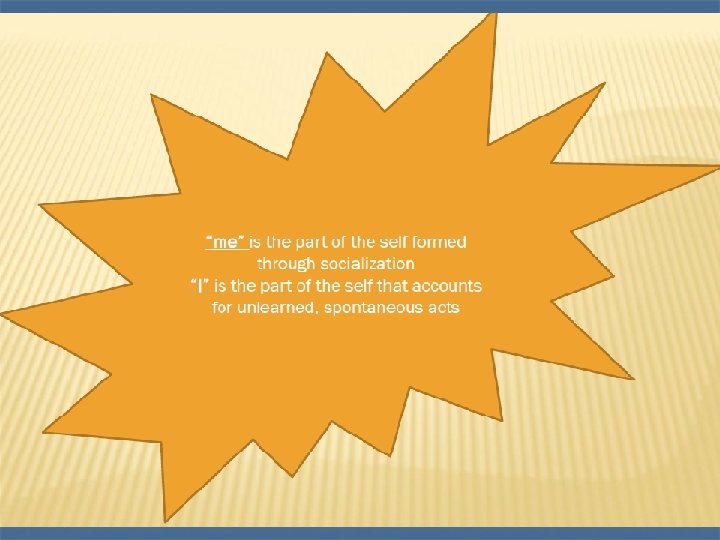
Mead and Cooley n You first have to understand the Social Self (Mead and Cooley) n the self – part of an individual's personality composed of self-awareness and self-image n self develops through social interaction (exchange of symbols – ergo, symbolic interaction) n humans respond to “intended” meaning and not just the action n As part of self development, we take on roles, which helps us understand others’ intentions n Eventually, we don’t need to take a role to see others’ perspectives; we develop: n A looking-glass self – we see ourselves how others see us
Socialization and Behavior n Is it just socialization? n n n Remember Genie, Isabelle, and Anna – we are more than just our socialization; our behavior is affected by our genes, psychology, and environment as well Does society make us human? Does socialization explain behavior? gender n race n religion n
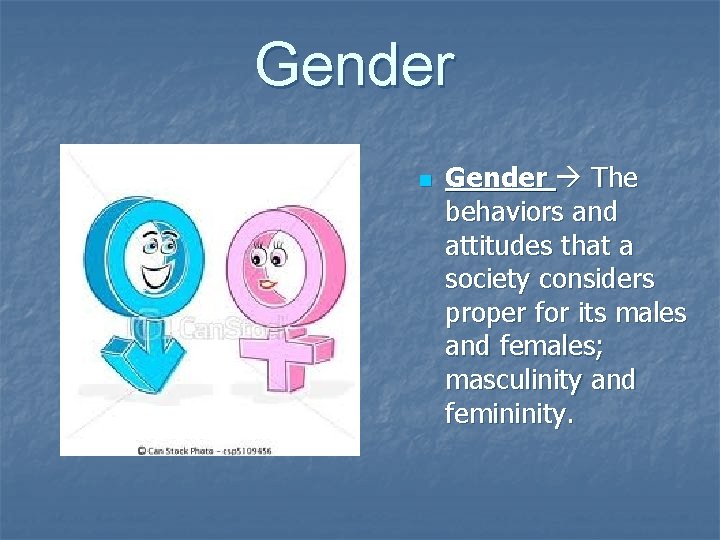
Gender n Gender The behaviors and attitudes that a society considers proper for its males and females; masculinity and femininity.
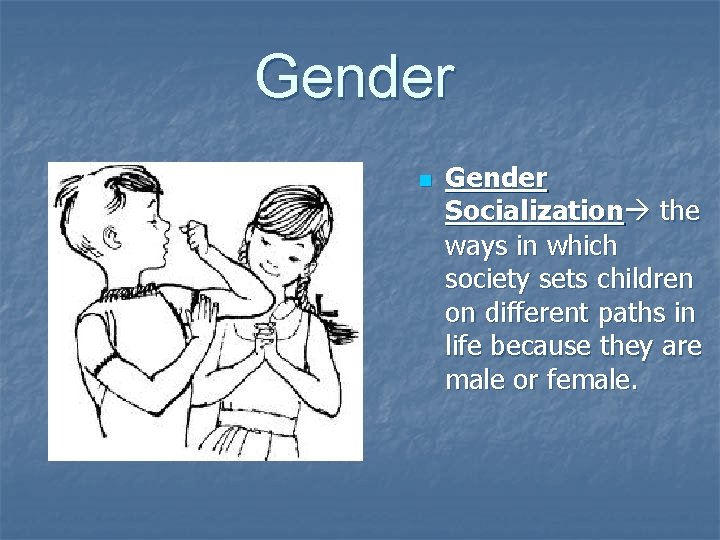
Gender n Gender Socialization the ways in which society sets children on different paths in life because they are male or female.
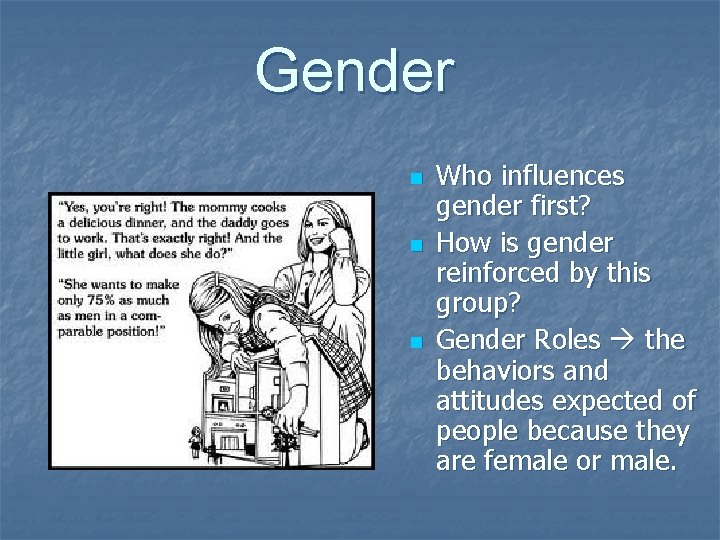
Gender n n n Who influences gender first? How is gender reinforced by this group? Gender Roles the behaviors and attitudes expected of people because they are female or male.
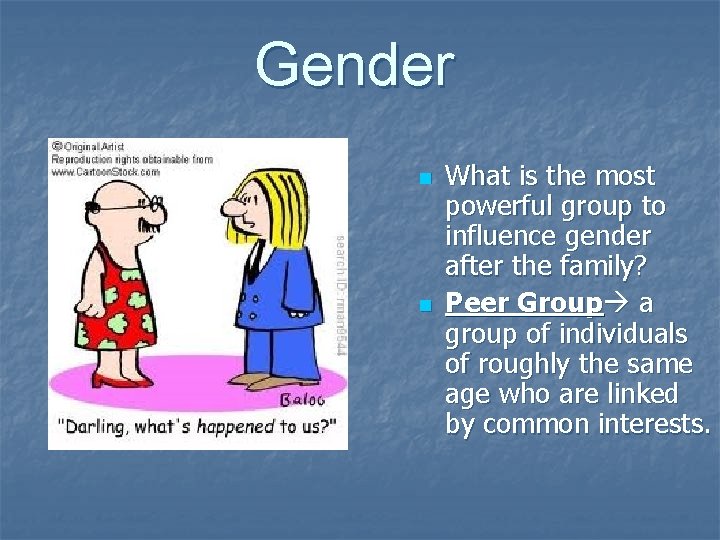
Gender n n What is the most powerful group to influence gender after the family? Peer Group a group of individuals of roughly the same age who are linked by common interests.
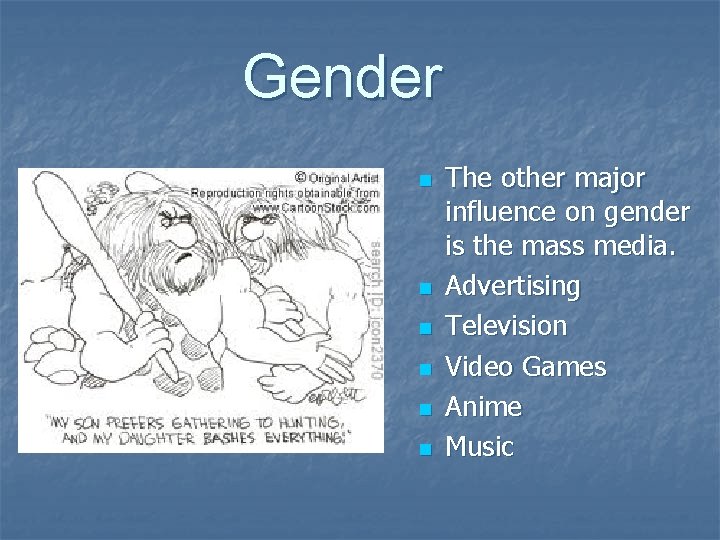
Gender n n n The other major influence on gender is the mass media. Advertising Television Video Games Anime Music
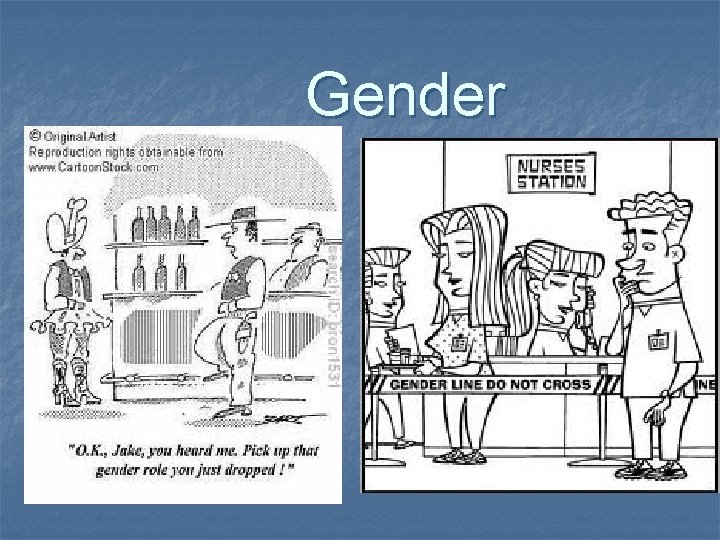
Gender
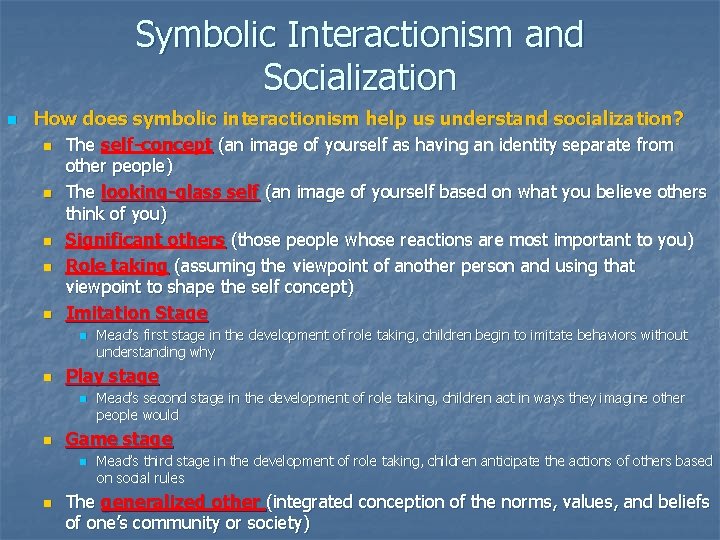
Symbolic Interactionism and Socialization n How does symbolic interactionism help us understand socialization? n n n The self-concept (an image of yourself as having an identity separate from other people) The looking-glass self (an image of yourself based on what you believe others think of you) Significant others (those people whose reactions are most important to you) Role taking (assuming the viewpoint of another person and using that viewpoint to shape the self concept) Imitation Stage n n Play stage n n Mead’s second stage in the development of role taking, children act in ways they imagine other people would Game stage n n Mead’s first stage in the development of role taking, children begin to imitate behaviors without understanding why Mead’s third stage in the development of role taking, children anticipate the actions of others based on social rules The generalized other (integrated conception of the norms, values, and beliefs of one’s community or society)
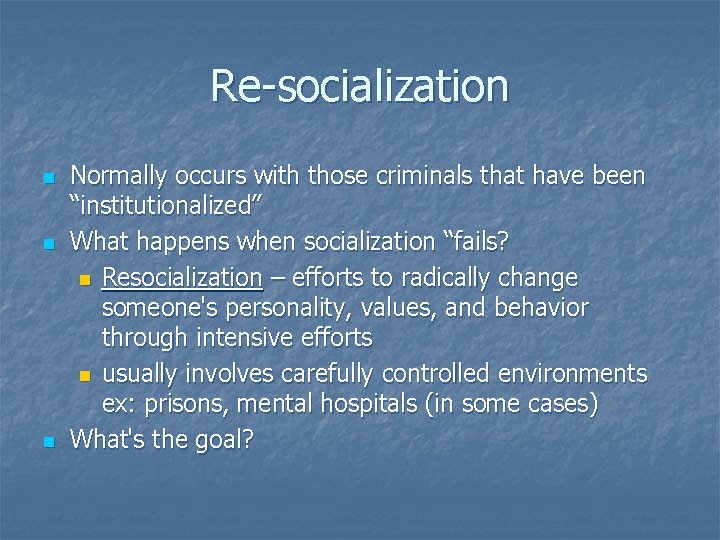
Re-socialization n Normally occurs with those criminals that have been “institutionalized” What happens when socialization “fails? n Resocialization – efforts to radically change someone's personality, values, and behavior through intensive efforts n usually involves carefully controlled environments ex: prisons, mental hospitals (in some cases) What's the goal?
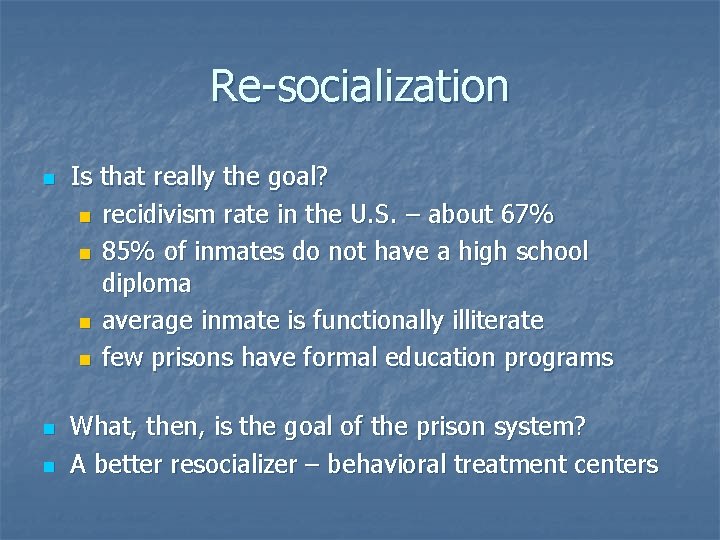
Re-socialization n Is that really the goal? n recidivism rate in the U. S. – about 67% n 85% of inmates do not have a high school diploma n average inmate is functionally illiterate n few prisons have formal education programs What, then, is the goal of the prison system? A better resocializer – behavioral treatment centers