
Reflection as a Lifelong Learning Tool Guiding Principles
- Slides: 18
Reflection as a Lifelong Learning Tool Guiding Principles Alice Fornari, Ed. D Barbara Hirsch, MD compassion community innovation humanism reflection professionalism communication empathy
Reflection as a SOM Value “We are committed to embedding in all our learning experiences the time and skills necessary to consciously examine, interpret and understand the thoughts and feelings that emanate from intense patient encounters. Through this process of mentored self-reflection and assessment, we ensure the development of a true learning and professional community capable of nurturing the transformation from student to physician. ”
Objectives 1. Explore Narrative Practices as integral to humanistic and patient centered care. 2. Actively experience reflective practice tools using a prompt and poem/story to engage in reflective practice. 3. Identify the use of Narrative Practice as a teaching and learning tool across medical education (CME, GME, UGME)
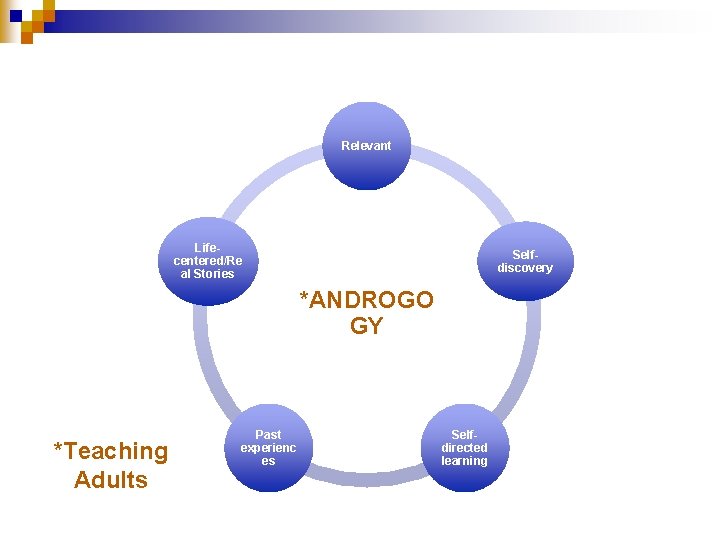
Relevant Lifecentered/Re al Stories Selfdiscovery *ANDROGO GY *Teaching Adults Past experienc es Selfdirected learning
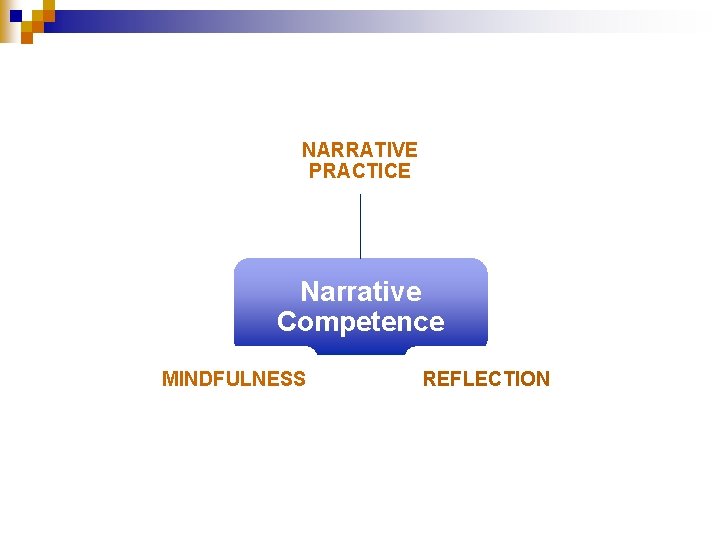
NARRATIVE PRACTICE Narrative Competence MINDFULNESS REFLECTION
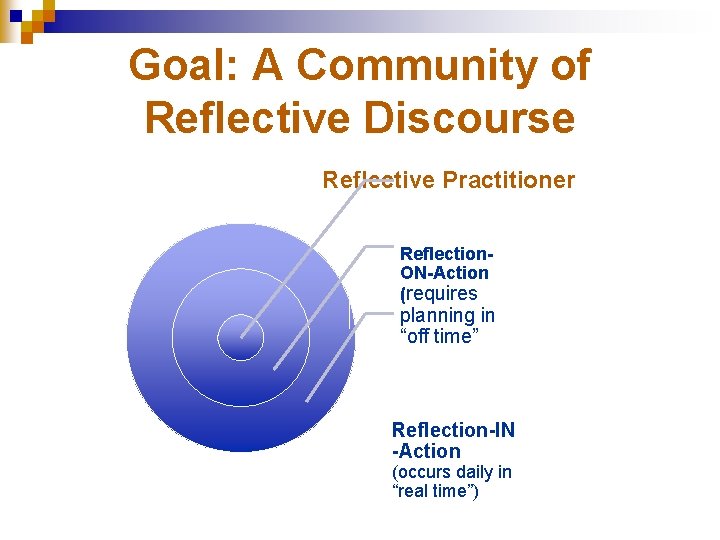
Goal: A Community of Reflective Discourse Reflective Practitioner Reflection. ON-Action (requires planning in “off time” Reflection-IN -Action (occurs daily in “real time”)
Let us Begin to Experience Reflection…
PROMPT as a Tool: Facilitator Begins with General Guidelines 1. 2. 3. Write freely, everything said in this session is confidential Write within the allotted time (7 min. ) Don’t worry about “getting the prompt right”
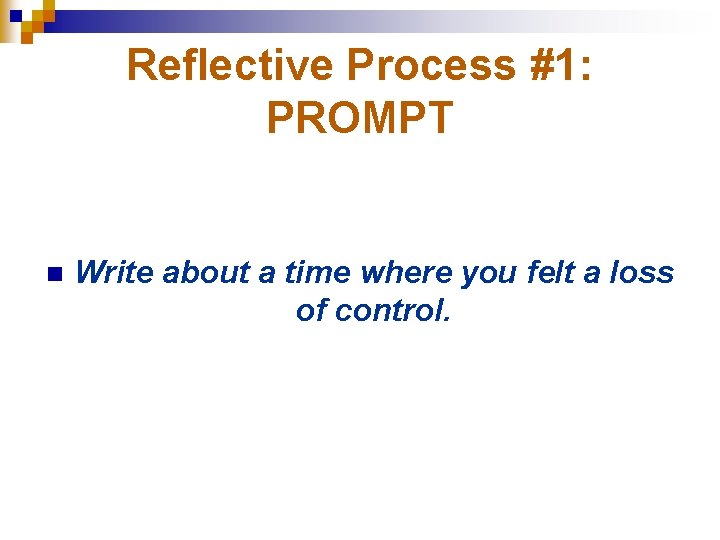
Reflective Process #1: PROMPT n Write about a time where you felt a loss of control.
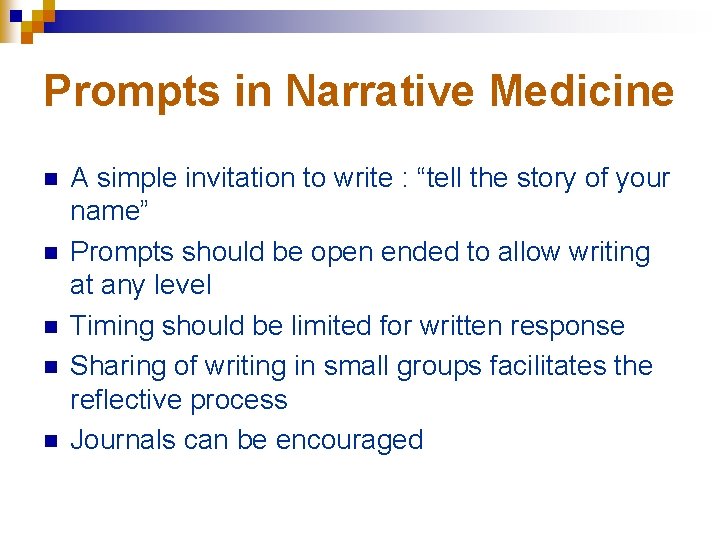
Prompts in Narrative Medicine n n n A simple invitation to write : “tell the story of your name” Prompts should be open ended to allow writing at any level Timing should be limited for written response Sharing of writing in small groups facilitates the reflective process Journals can be encouraged
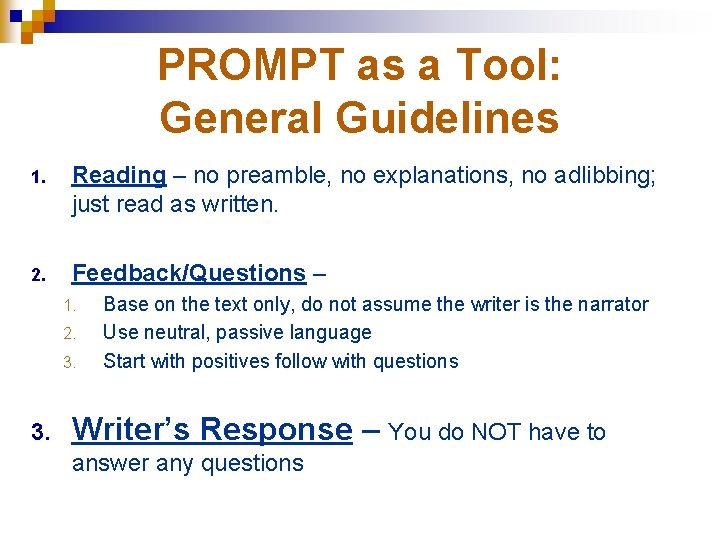
PROMPT as a Tool: General Guidelines 1. Reading – no preamble, no explanations, no adlibbing; just read as written. 2. Feedback/Questions – 1. 2. 3. Base on the text only, do not assume the writer is the narrator Use neutral, passive language Start with positives follow with questions Writer’s Response – You do NOT have to answer any questions
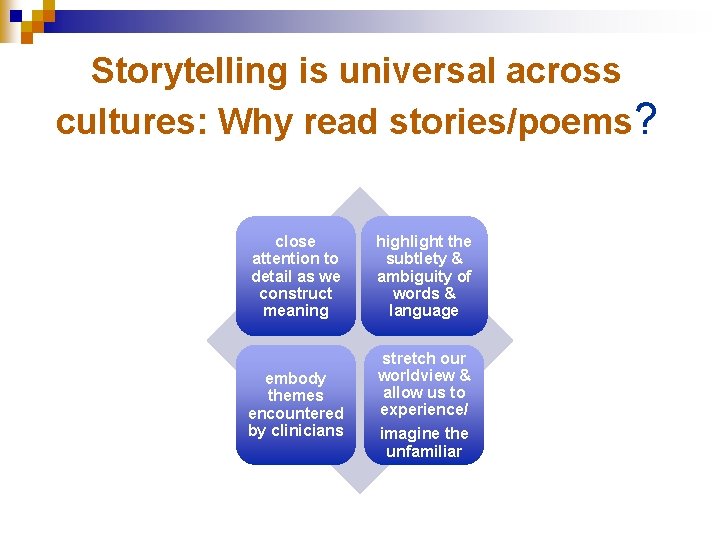
Storytelling is universal across cultures: Why read stories/poems? close attention to detail as we construct meaning embody themes encountered by clinicians highlight the subtlety & ambiguity of words & language stretch our worldview & allow us to experience/ imagine the unfamiliar
Reflective process #2: POEM as a Tool Fleeing Alzheimer’s Authored by Sandra Miller n Read the story/poem from start to finish twice : savour the experience
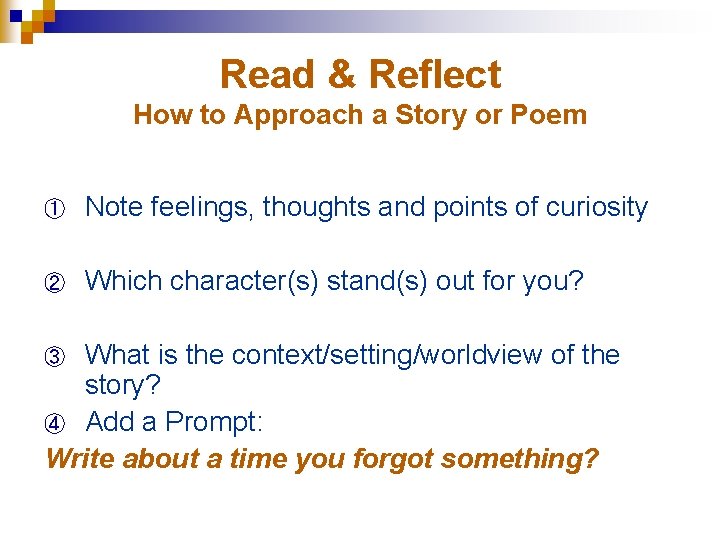
Read & Reflect How to Approach a Story or Poem ① Note feelings, thoughts and points of curiosity ② Which character(s) stand(s) out for you? What is the context/setting/worldview of the story? ④ Add a Prompt: Write about a time you forgot something? ③
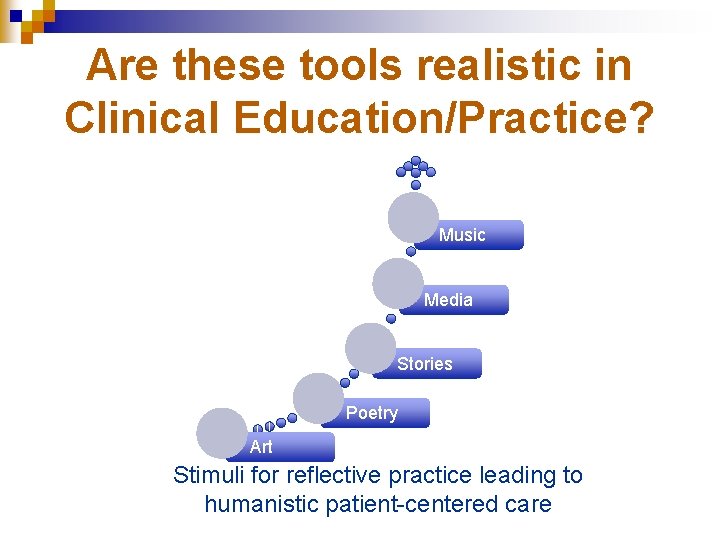
Are these tools realistic in Clinical Education/Practice? Music Media Stories Poetry Art Stimuli for reflective practice leading to humanistic patient-centered care
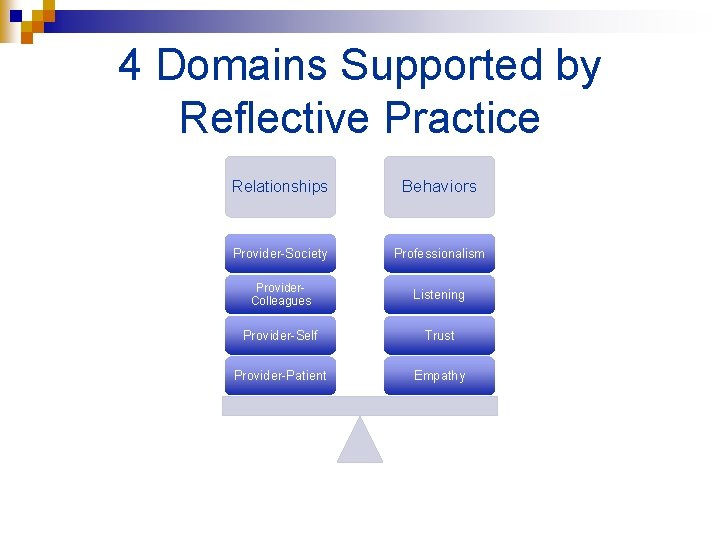
4 Domains Supported by Reflective Practice Relationships Behaviors Provider-Society Professionalism Provider. Colleagues Listening Provider-Self Trust Provider-Patient Empathy
Narrative Rounds: Promoting Humanism in Healthcare Ephraim Rubenstein, MFA n Tuesday, January 15 th, 2013 n Art and Medicine n Professor at Columbia University’s Department of Narrative Medicine
Narrateur: Reflections on Healthcare The Hofstra North Shore-LIJ School of Medicine Literary Journal n http: //www. narrateur. org n Open to all in the SOM and Health System n Second submission due date December 1, 2012, with March publication n