
Referencing A necessary evil Grays School of Art
![Illustrations • Numbered separately in your text, eg [3. 1] for chapter 3 illustration](https://slidetodoc.com/presentation_image_h2/4c5d5eb6111a9b7a2dccb663857b068a/image-18.jpg "Illustrations • Numbered separately in your text, eg [3. 1] for chapter 3 illustration")
![List of illustrations Renoir P-A. Madame Charpentier and her children [oil on canvas]. Reproduced](https://slidetodoc.com/presentation_image_h2/4c5d5eb6111a9b7a2dccb663857b068a/image-19.jpg "List of illustrations Renoir P-A. Madame Charpentier and her children [oil on canvas]. Reproduced")
- Slides: 22
Referencing A necessary evil Gray’s School of Art 1
Me • Chris Brown Faculty information coordinator (assistant librarian) 01224 -263485 Chris. brown@rgu. ac. uk libclient@rgu. ac. uk 2
Programme • The purpose of referencing • The elements of the reference and where to find the information you need most easily • Illustrations reproduced in your work • The new referencing guide 3
Plagiarism • • Form of academic misconduct Claiming someone else’s work as your own Words, thoughts or ideas Accidentally or deliberately conveying the impression that they are your own • Penalties can be severe • Plagiarism detection software is used by RGU • Avoid a charge by referencing fully and correctly 4
Referencing – why? • Credit and respect to other academic authors • Allows the reader to find the books, articles etc which you have read • Allows you to support your arguments • Makes a good impression 5
Referencing styles • Gray’s has stipulated that you should use a numeric style based on Vancouver referencing • Gray’s also wants footnotes 6
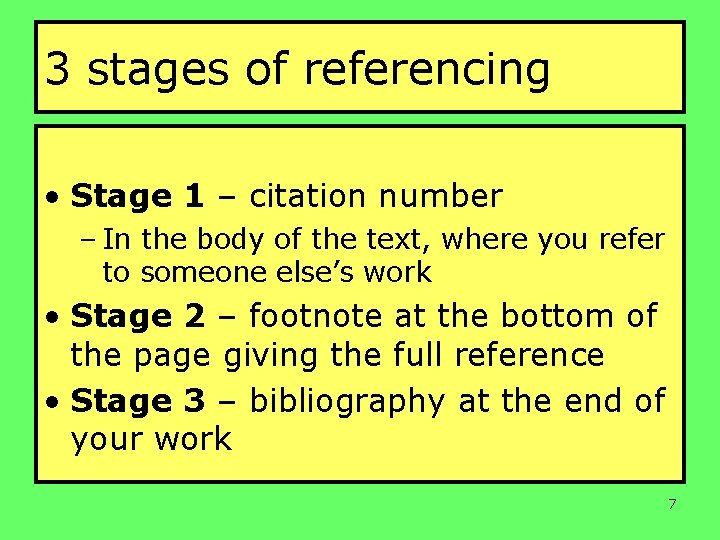
3 stages of referencing • Stage 1 – citation number – In the body of the text, where you refer to someone else’s work • Stage 2 – footnote at the bottom of the page giving the full reference • Stage 3 – bibliography at the end of your work 7
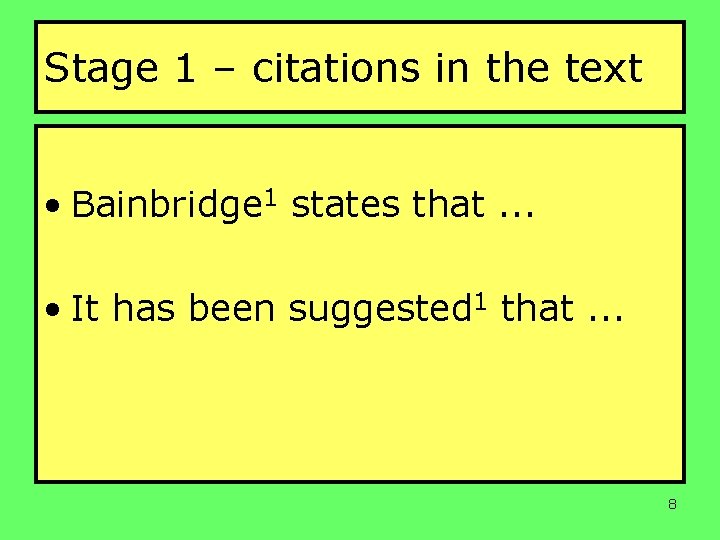
Stage 1 – citations in the text • Bainbridge 1 states that. . . • It has been suggested 1 that. . . 8
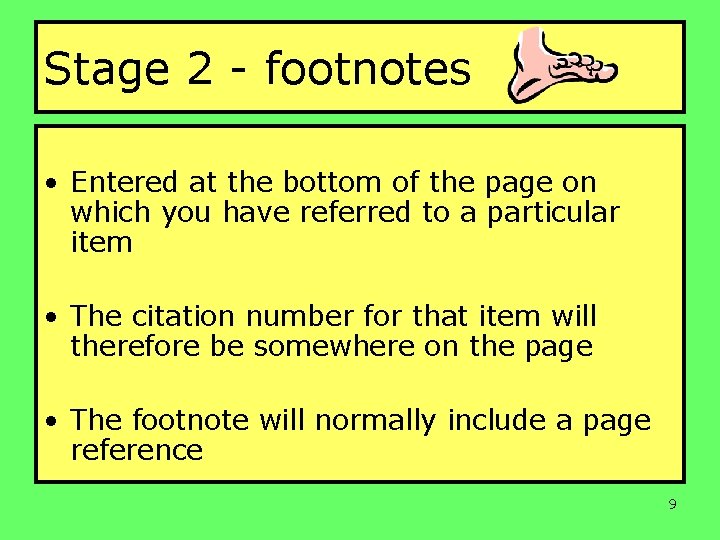
Stage 2 - footnotes • Entered at the bottom of the page on which you have referred to a particular item • The citation number for that item will therefore be somewhere on the page • The footnote will normally include a page reference 9
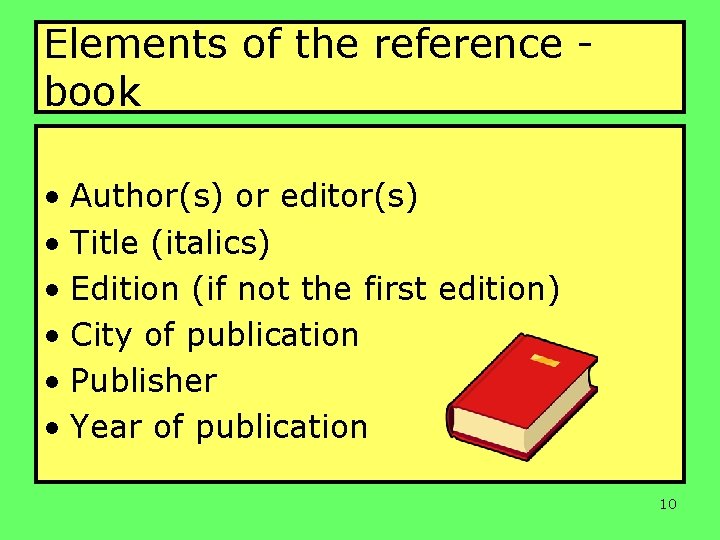
Elements of the reference book • Author(s) or editor(s) • Title (italics) • Edition (if not the first edition) • City of publication • Publisher • Year of publication 10
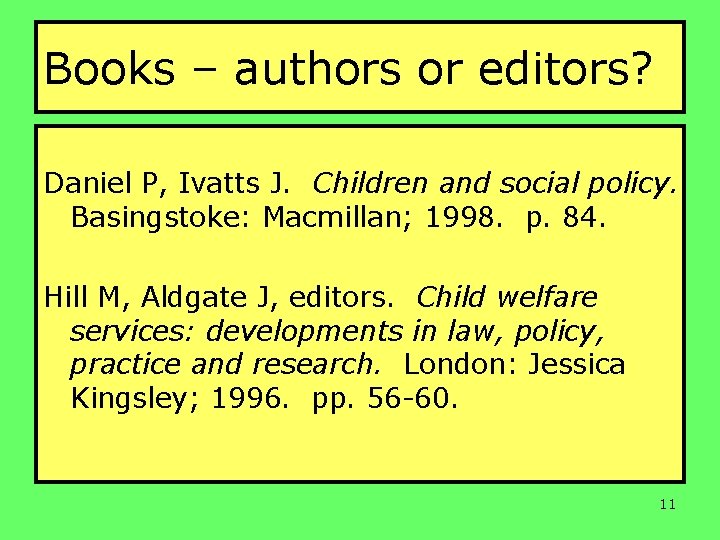
Books – authors or editors? Daniel P, Ivatts J. Children and social policy. Basingstoke: Macmillan; 1998. p. 84. Hill M, Aldgate J, editors. Child welfare services: developments in law, policy, practice and research. London: Jessica Kingsley; 1996. pp. 56 -60. 11
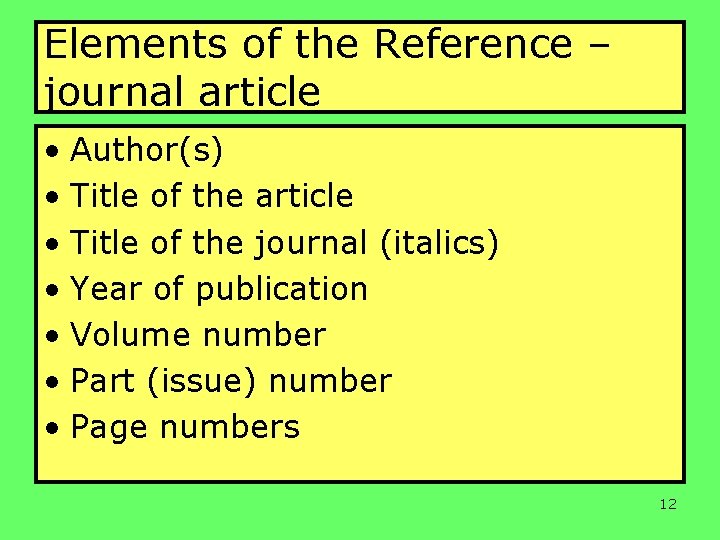
Elements of the Reference – journal article • Author(s) • Title of the article • Title of the journal (italics) • Year of publication • Volume number • Part (issue) number • Page numbers 12
Journal article Boyer M-F. Living dolls. World of Interiors. 2008; 28(2): 110 -117. p. 115. 13
Web page http: //www. crafts_council. org. uk Crafts Council website including references to all forthcoming exhibitions and events. 14
Finding the information for your references Use: • Library catalogue records - books • Database records – journal articles 15
Bibliography • Contains: – All the items to which you have referred and which therefore have citation numbers and footnotes in your text – Any other background reading which you have done 16
Bibliography (2) • Divided into sections by type of item, eg books, journal articles, web sites, exhibition catalogues • Each section is arranged alphabetically by author – YOU DO NOT NUMBER THE BIBLIOGRAPHY • Page numbers are NOT included 17
Illustrations • Numbered separately in your text, eg [3. 1] for chapter 3 illustration 1 • A list of illustrations is provided, by chapter if appropriate, after your bibliography at the end of your work 18
List of illustrations Renoir P-A. Madame Charpentier and her children [oil on canvas]. Reproduced in: Brown M, editor. Picturing Children. Aldershot: Ashgate; 2002. p. 29. 19
The Referencing Guide • Available online • Decide what type of item you are referencing, eg book, journal article, web page, illustration • Find an example template – use “Map View” 20
Ref. Works If you would like a session on using Ref. Works please contact Lesley Scott 21
And finally. . . The staff of the RGU Library Service are here to help. If you are having problems please do not hesitate to contact us. If you don’t use us this can lead to psychological problems amongst library staff 22