
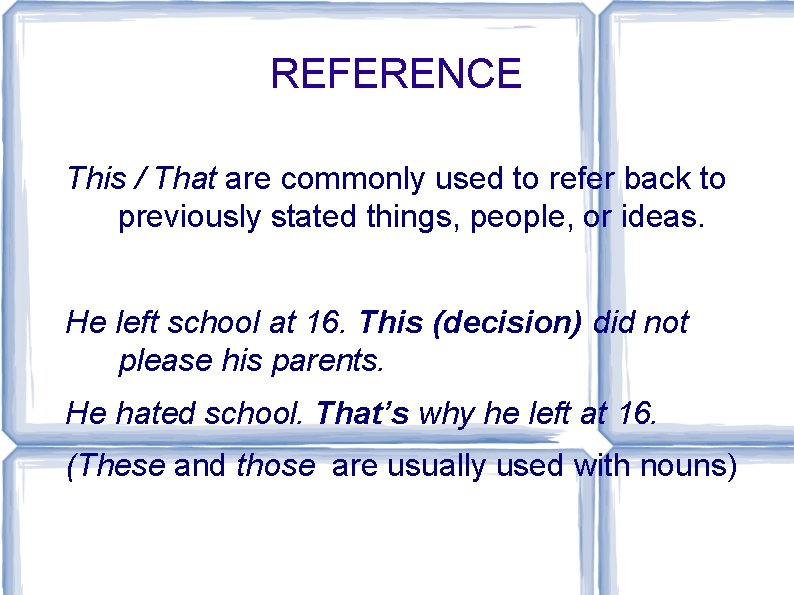
REFERENCE This That are commonly used to refer
- Slides: 13
REFERENCE This / That are commonly used to refer back to previously stated things, people, or ideas. He left school at 16. This (decision) did not please his parents. He hated school. That’s why he left at 16. (These and those are usually used with nouns)
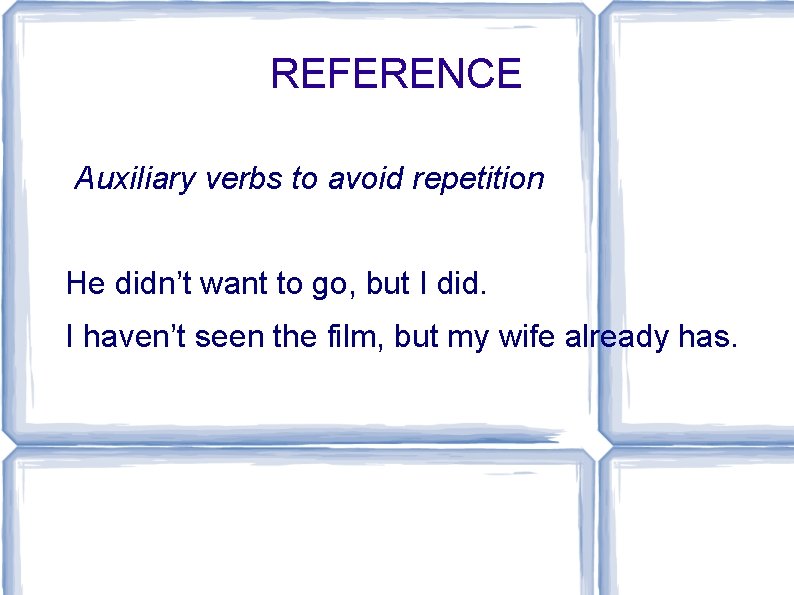
REFERENCE Auxiliary verbs to avoid repetition He didn’t want to go, but I did. I haven’t seen the film, but my wife already has.
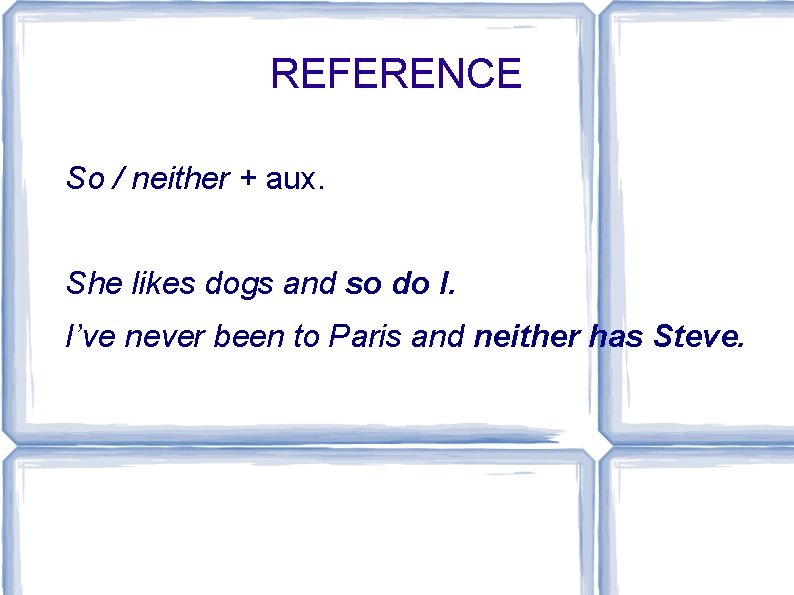
REFERENCE So / neither + aux. She likes dogs and so do I. I’ve never been to Paris and neither has Steve.
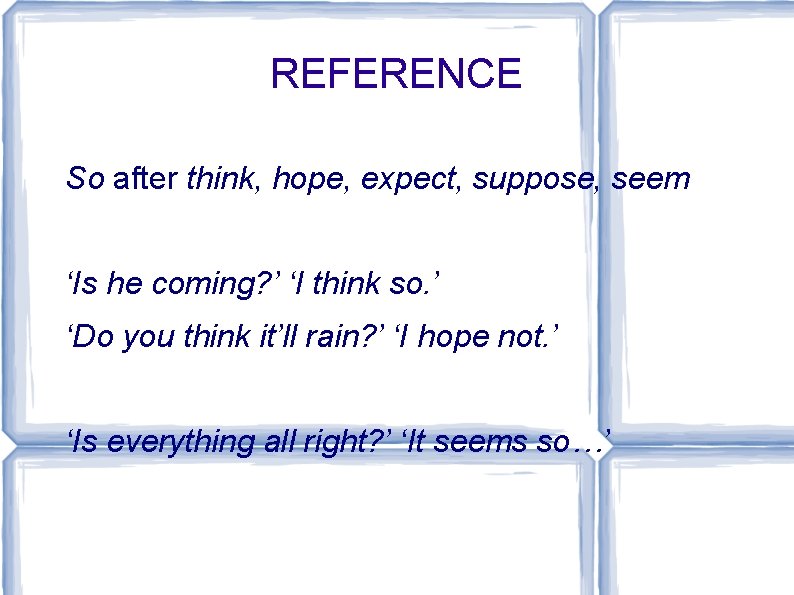
REFERENCE So after think, hope, expect, suppose, seem ‘Is he coming? ’ ‘I think so. ’ ‘Do you think it’ll rain? ’ ‘I hope not. ’ ‘Is everything all right? ’ ‘It seems so…’
ELLIPSIS Omitting words to avoid repetition After and but. He was impressed but I wasn’t. We play tennis on Tuesdays and sometimes on Sundays, too.
ELLIPSIS Omitting words to avoid repetition After auxiliary verbs I’d do it myself if I could. She said she’d phone but she hasn’t.
ELLIPSIS Shorten these sentences: “I live in Madrid and I work in Madrid. ”
ELLIPSIS Shorten these sentences: “I thought I’d like the film but I didn’t like the film. ”
ELLIPSIS Shorten these sentences: “He asked her to turn on the heat but she had already turned on the heat. ”
ELLIPSIS Shorten these sentences: “Do you think Barça will win the League? ” “I don’t think Barça will win. ”
What is a 'midlife crisis'? What about a 'quarterlife crisis'? What do you think that would be?
LISTENING Listen to speakers 1 -5 talk about the 'quarterlife crisis'. Does the speaker agree or disagree that twentysomethings have good reason to complain about their situation?
DISCUSSION Do you sympathize with those who claim to be suffering a 'quarterlife crisis'? In what ways is it easier or more difficult for young people now compated to previous generations? Do you prefer to have you life all 'mapped out' or does uncertainty 'add a bit of spice to life'?