
Reference Te Ara New Zealand Insects We are

- Slides: 24
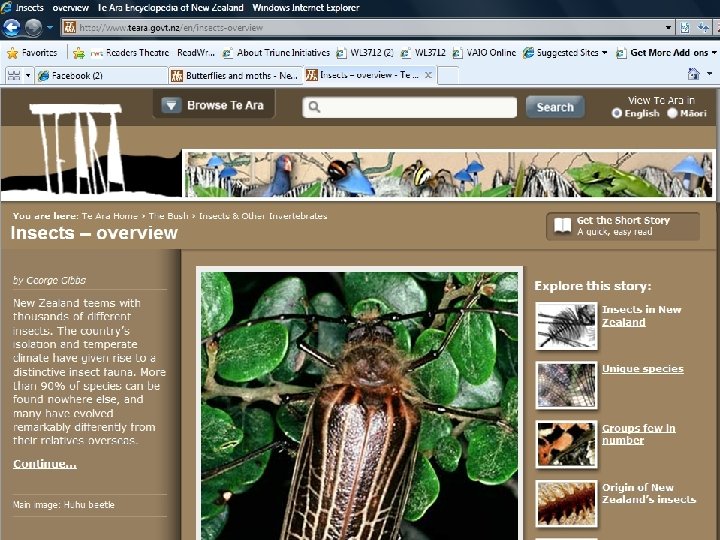
Reference – Te Ara New Zealand Insects
We are learning to: • Activate our prior knowledge • Identify key points in reading • Make connections (later in the week)
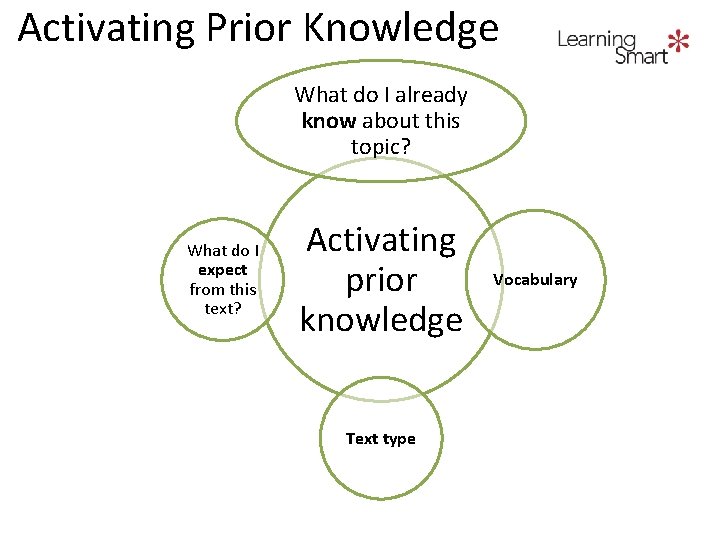
Activating Prior Knowledge What do I already know about this topic? What do I expect from this text? Activating prior knowledge Text type Vocabulary
Activating prior knowledge: Questions • What do I already know about this topic? • What have I read that seems similar to this? • What is the genre? What do I expect?
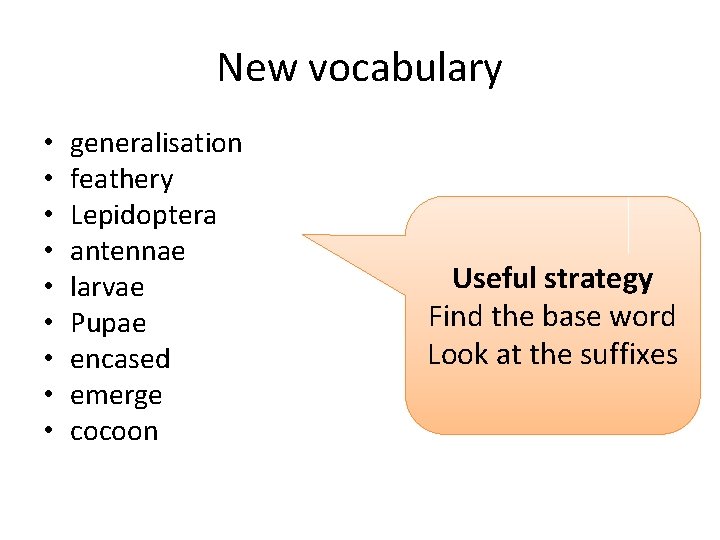
New vocabulary • • • generalisation feathery Lepidoptera antennae larvae Pupae encased emerge cocoon Useful strategy Find the base word Look at the suffixes
Day 2
We are learning to: • Activate our prior knowledge • Identify key points in reading • Make connections (later in the week)
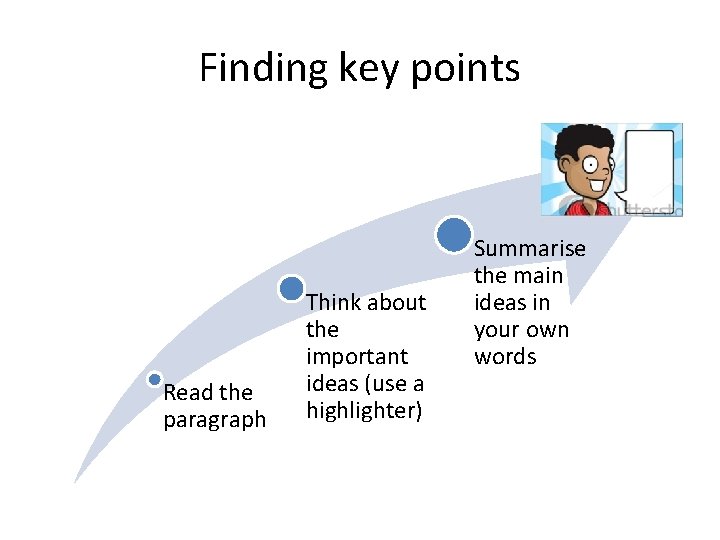
Finding key points Read the paragraph Think about the important ideas (use a highlighter) Summarise the main ideas in your own words
New vocabulary • • • generalisation feathery Lepidoptera antennae larvae Pupae encased emerge cocoon Useful strategy Find the base word Look at the suffixes
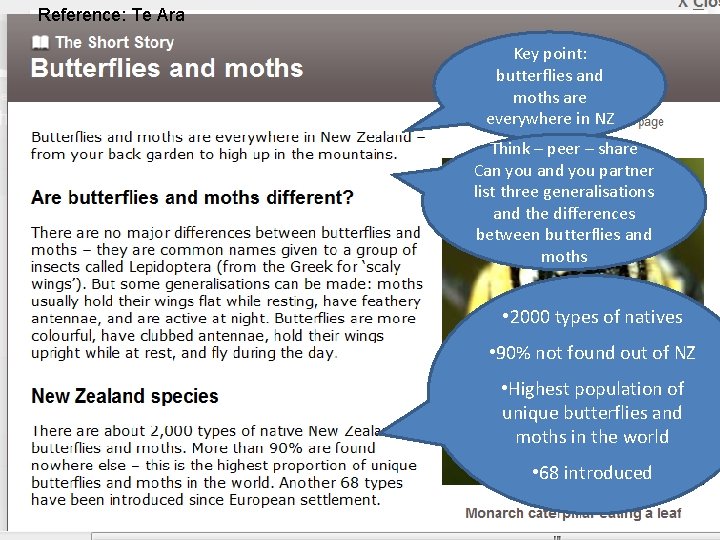
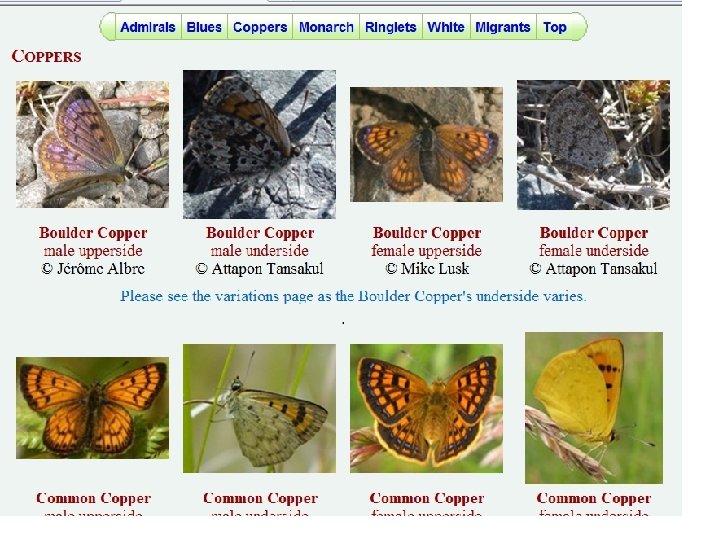
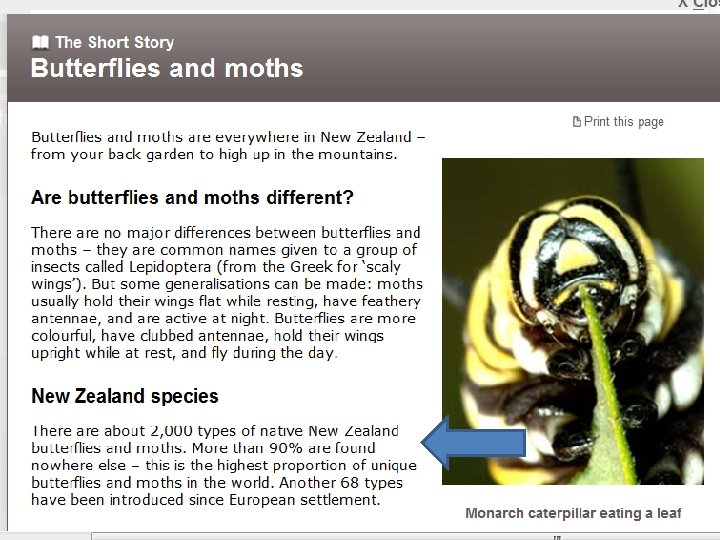
Reference: Te Ara Key point: butterflies and moths are everywhere in NZ Think – peer – share Can you and you partner list three generalisations and the differences between butterflies and moths • 2000 types of natives • 90% not found out of NZ • Highest population of unique butterflies and moths in the world • 68 introduced
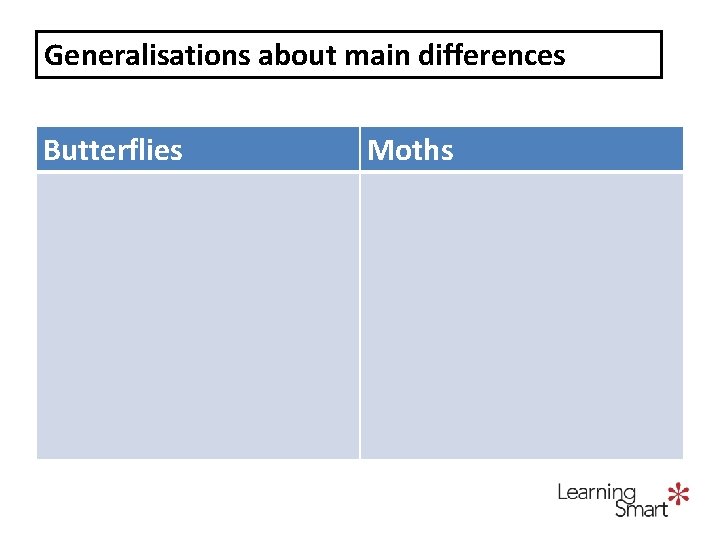
Generalisations about main differences Butterflies Moths
Day 3
We are learning to: • Activate our prior knowledge • Identify key points in reading • Make connections (later in the week) Can you give examples from reading this week?
New vocabulary • • • generalisation feathery Lepidoptera antennae larvae Pupae encased emerge cocoon Useful strategy Find the base word Look at the suffixes
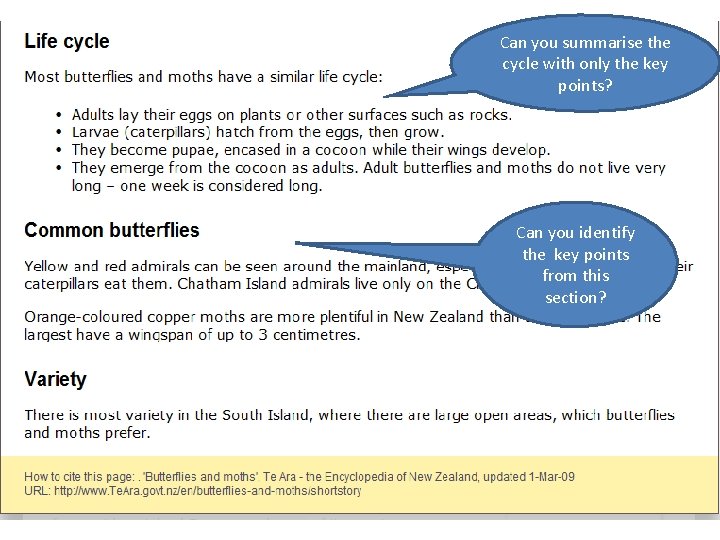
Can you summarise the cycle with only the key points? Can you identify the key points from this section?
Day 4
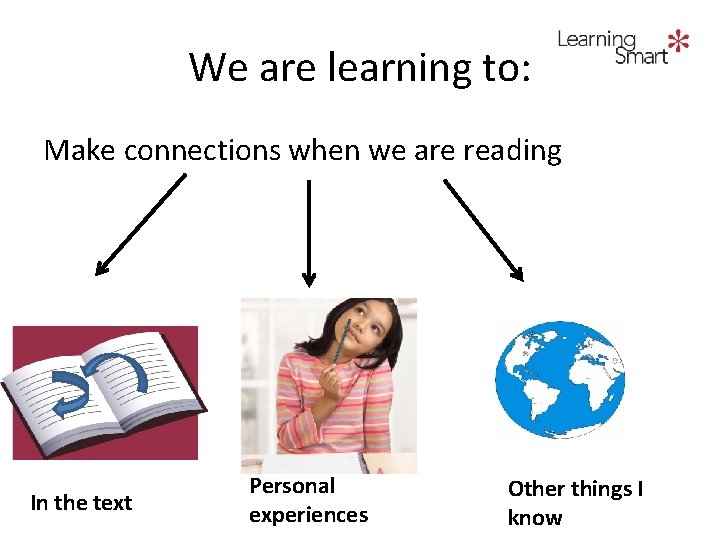
We are learning to: Make connections when we are reading In the text Personal experiences Other things I know
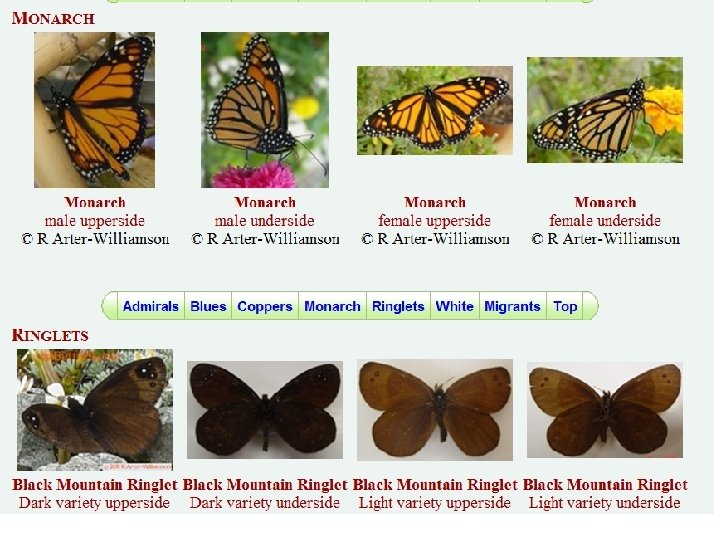
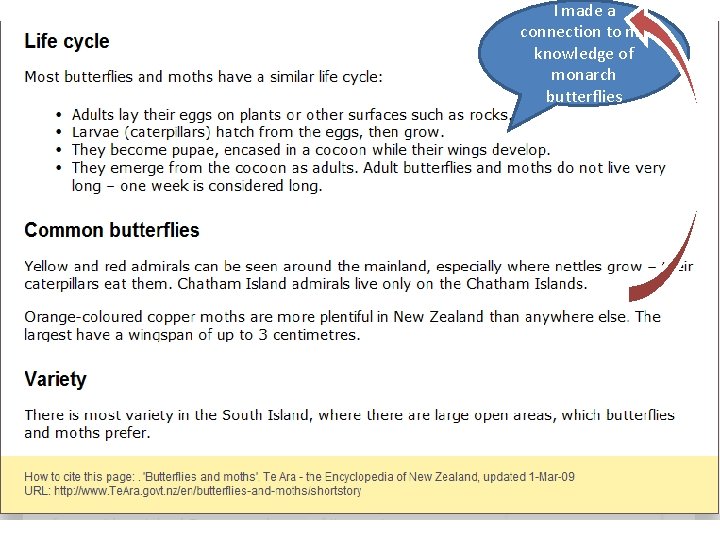
I made a connection to my knowledge of monarch butterflies
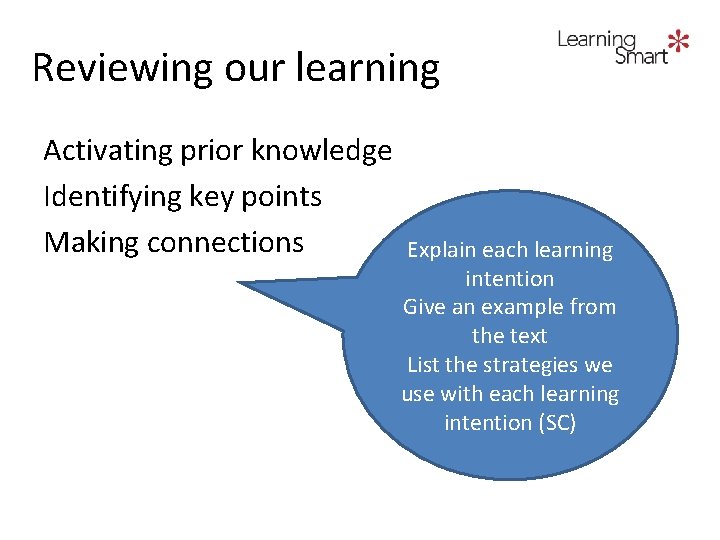
Reviewing our learning Activating prior knowledge Identifying key points Making connections Explain each learning intention Give an example from the text List the strategies we use with each learning intention (SC)