
Reference framework for the oral communication competencies of





- Slides: 40
Reference framework for the oral communication competencies of second language learners Immersion Education: Pathways to Bilingualism & Beyond October 16 -18, 2008 ; St. Paul, Minnesota Thierry Karsenti & Simon Collin, CRIFPE, Université de Montréal thierry. karsenti@umontreal. ca simon. collin@umontreal. ca
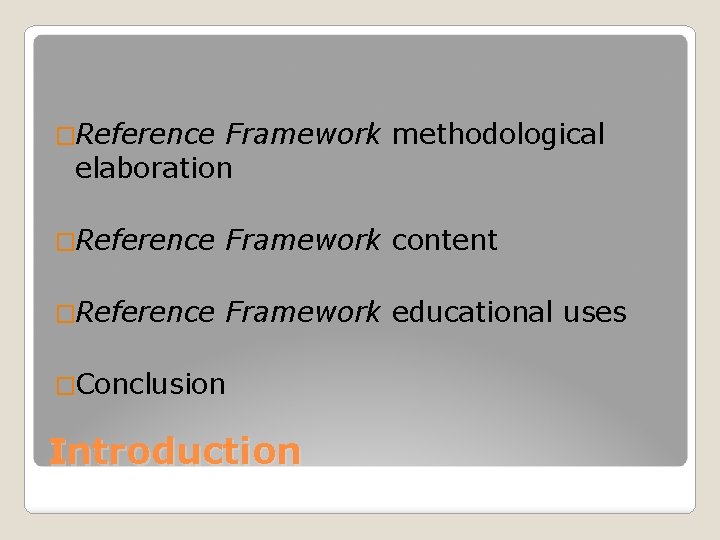
�Reference Framework methodological elaboration �Reference Framework content �Reference Framework educational uses �Conclusion Introduction
Reference Framework methodological elaboration
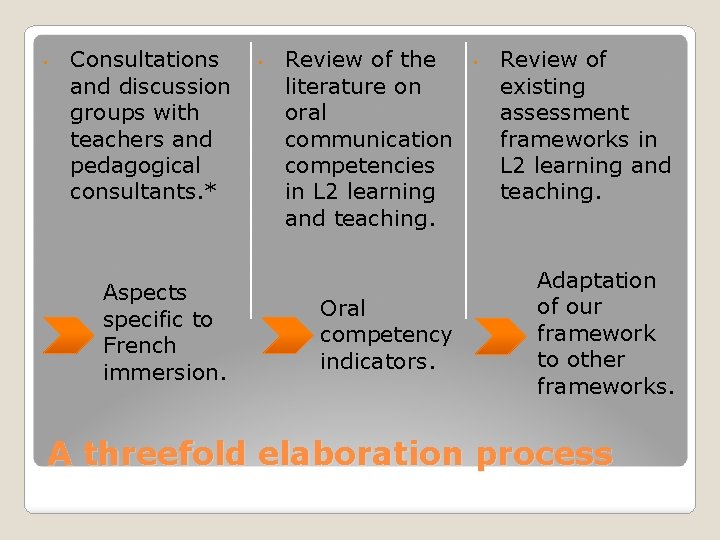
• Consultations and discussion groups with teachers and pedagogical consultants. * Aspects specific to French immersion. • Review of the literature on oral communication competencies in L 2 learning and teaching. Oral competency indicators. • Review of existing assessment frameworks in L 2 learning and teaching. Adaptation of our framework to other frameworks. A threefold elaboration process
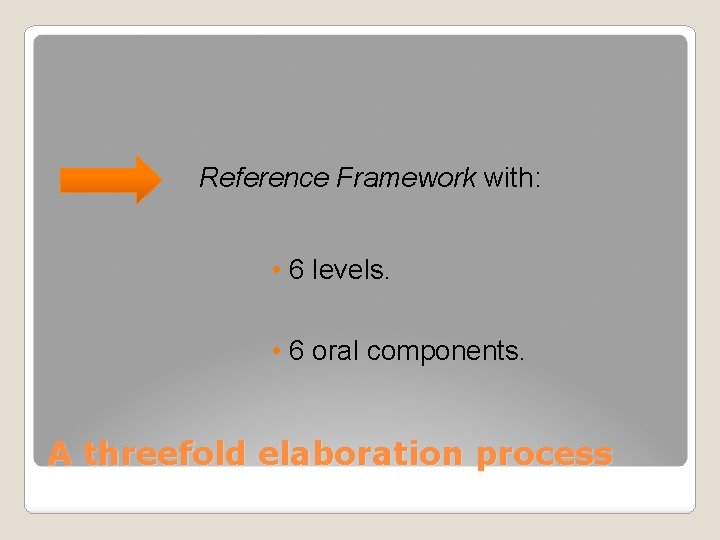
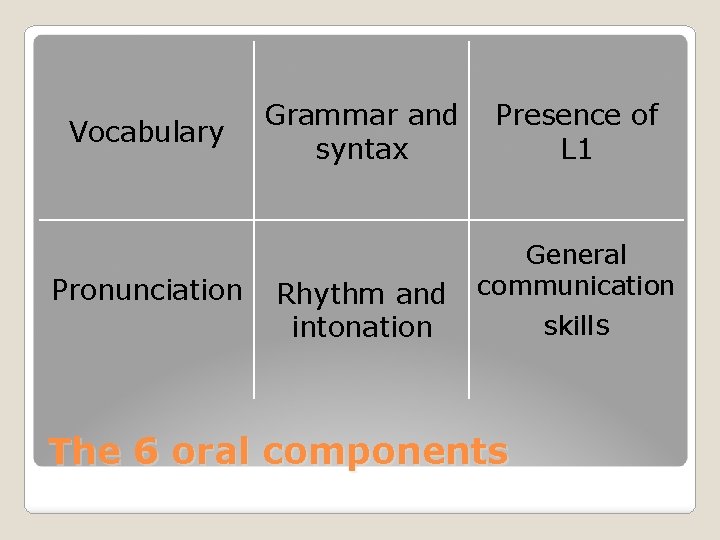
Reference Framework with: • 6 levels. • 6 oral components. A threefold elaboration process
Reference Framework characterization
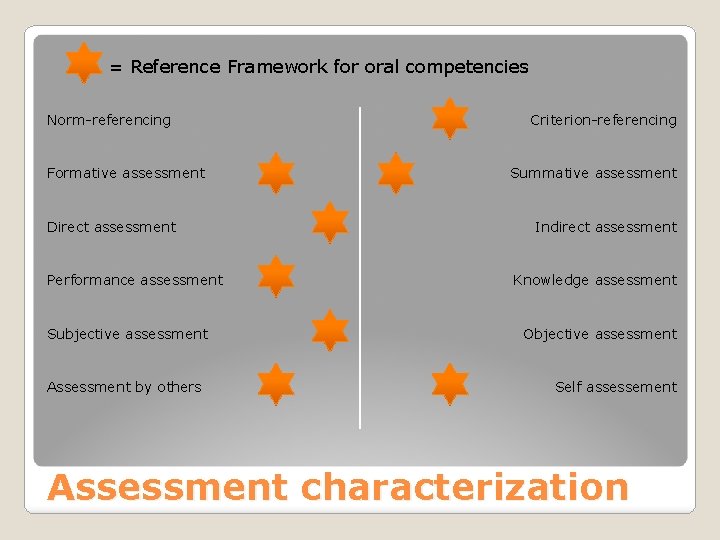
= Reference Framework for oral competencies Norm-referencing Formative assessment Direct assessment Performance assessment Subjective assessment Assessment by others Criterion-referencing Summative assessment Indirect assessment Knowledge assessment Objective assessment Self assessement Assessment characterization
Reference Framework content
Vocabulary Pronunciation Grammar and syntax Rhythm and intonation Presence of L 1 General communication The 6 oral components skills
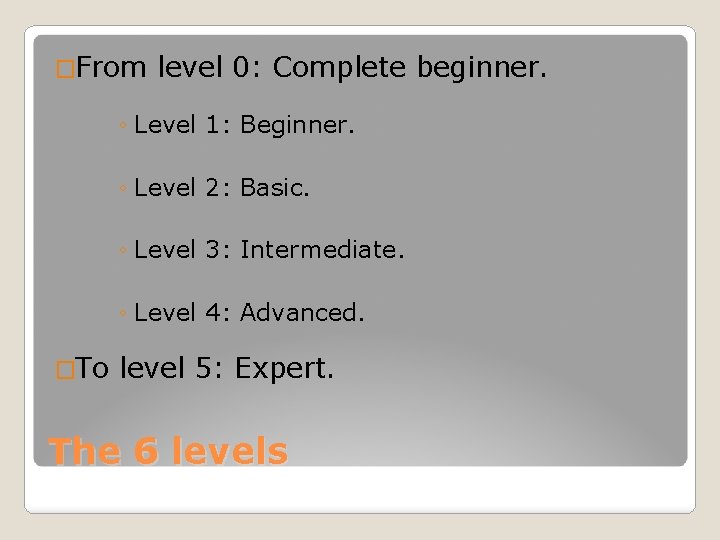
�From level 0: Complete beginner. ◦ Level 1: Beginner. ◦ Level 2: Basic. ◦ Level 3: Intermediate. ◦ Level 4: Advanced. �To level 5: Expert. The 6 levels
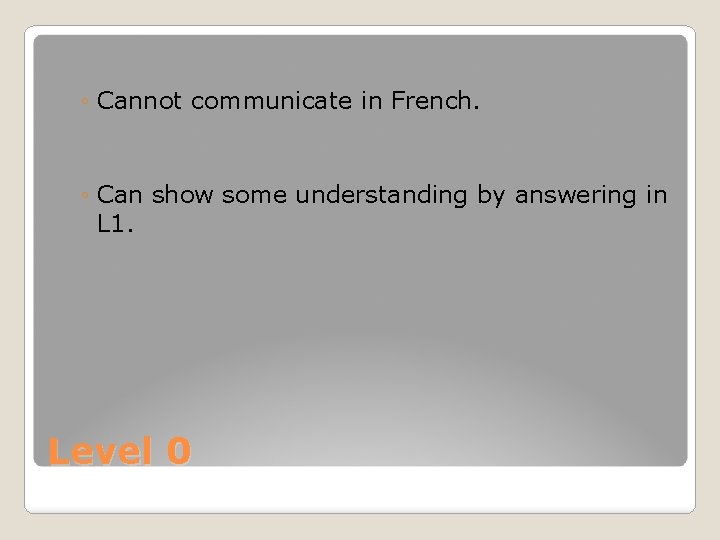
◦ Cannot communicate in French. ◦ Can show some understanding by answering in L 1. Level 0
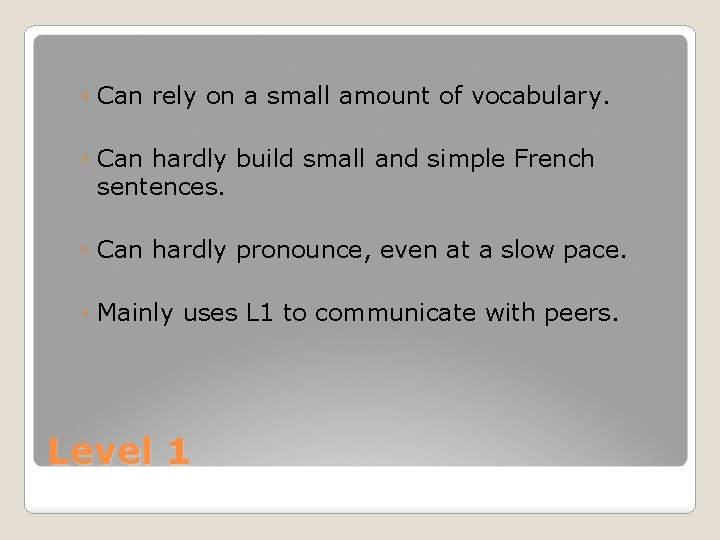
◦ Can rely on a small amount of vocabulary. ◦ Can hardly build small and simple French sentences. ◦ Can hardly pronounce, even at a slow pace. ◦ Mainly uses L 1 to communicate with peers. Level 1
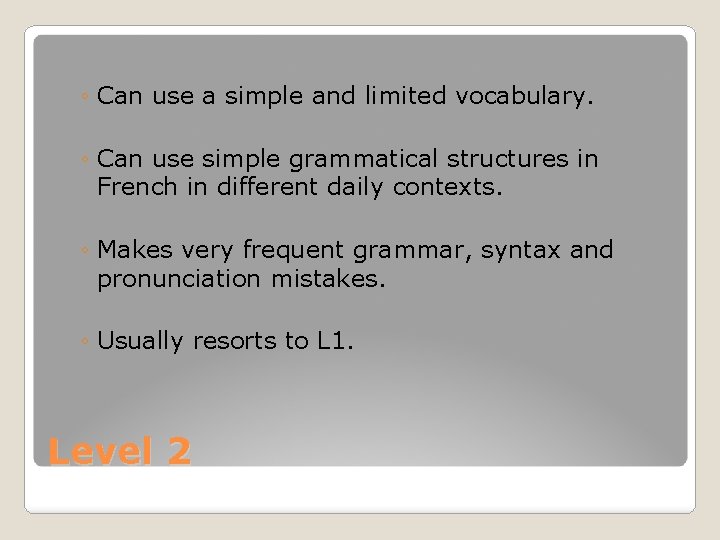
◦ Can use a simple and limited vocabulary. ◦ Can use simple grammatical structures in French in different daily contexts. ◦ Makes very frequent grammar, syntax and pronunciation mistakes. ◦ Usually resorts to L 1. Level 2
◦ Can use good rhythm and pronunciation. ◦ Can make complex sentences in French. ◦ Can use a large but sometimes inaccurate vocabulary. ◦ Faces oral difficulties when expressing complex ideas or unfamiliar topics. Level 3
◦ Can rely on a large and usually accurate vocabulary. ◦ Can communicate in a variety of contexts. ◦ Can express complex ideas through argumentation, explanation, etc. ◦ Can use a fluid rhythm and a clear pronunciation. ◦ Can self-correct. Level 4
◦ Can use a wide vocabulary. ◦ Can communicate spontaneously or express complex ideas without L 1, in almost any context. ◦ Scarcely makes grammar and pronunciation mistakes. Level 5
Reference Framework pedagogical uses
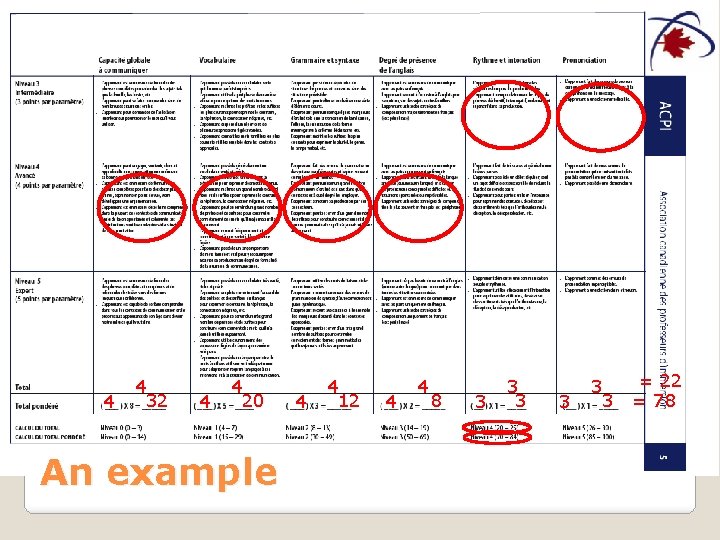
4 4 4 32 4 4 4 20 An example 4 4 4 12 4 4 4 8 3 3 3 3 = 22 = 78
Assessment by others (teachers): To assess one’s oral competencies, possibly at the initial stage. To assess one’s oral competencies in comparaison with other learners. To assess one’s oral competencies in comparison with previous results (to evaluate progress). Self-assessment: To assess one’s oral competencies in comparison with previous results (to evaluate progress). Pedagogical uses
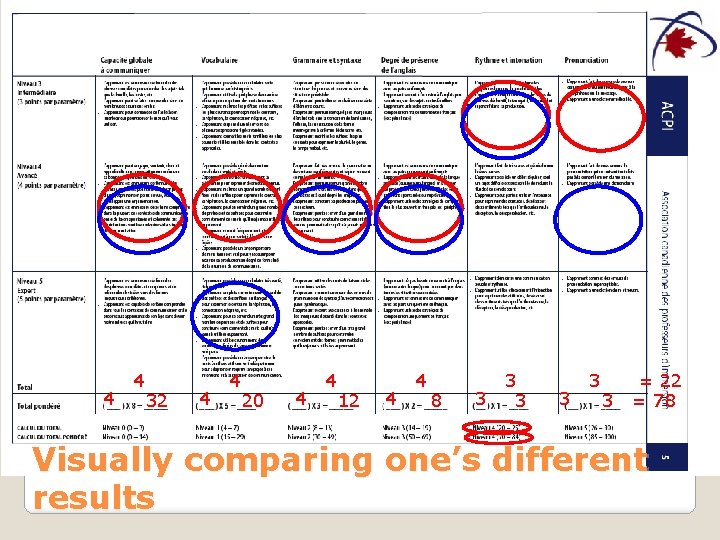
4 4 32 4 4 20 4 4 12 4 4 8 3 3 3 = 22 = 78 Visually comparing one’s different results
Reference Framework video clips
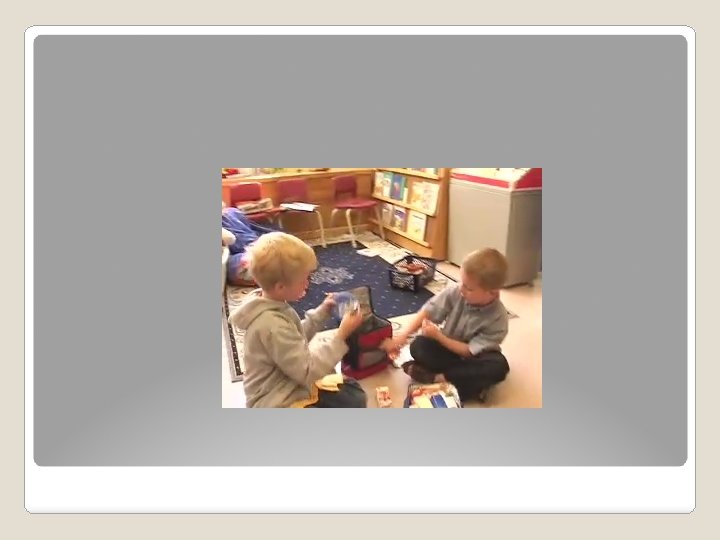
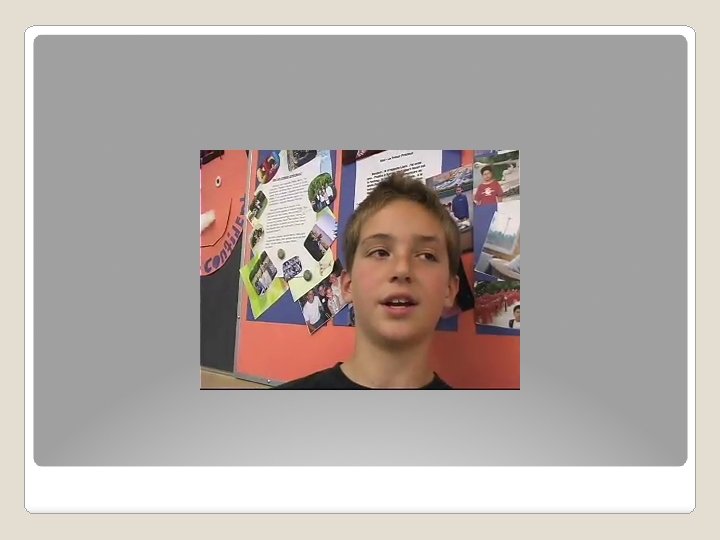
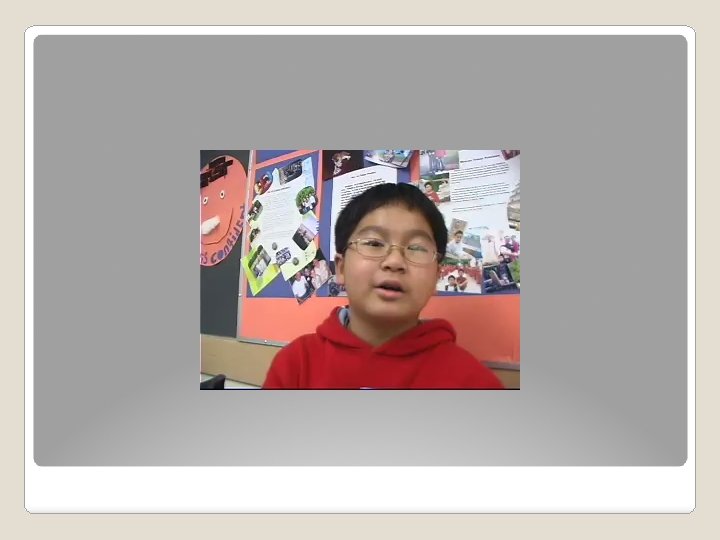
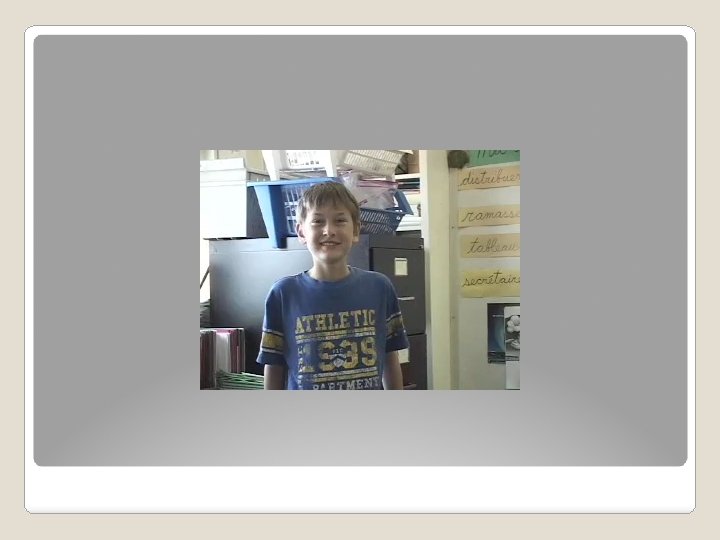
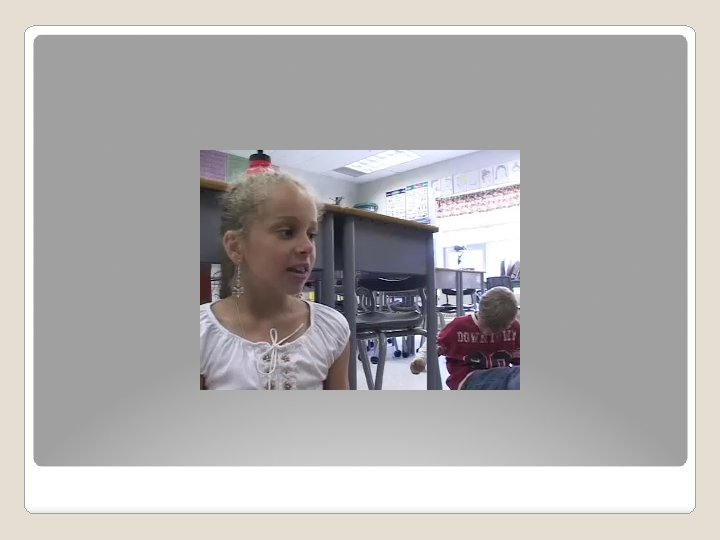
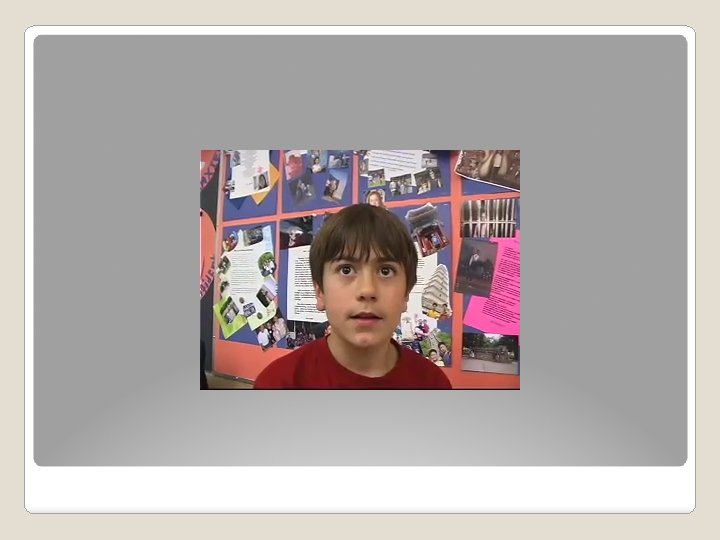
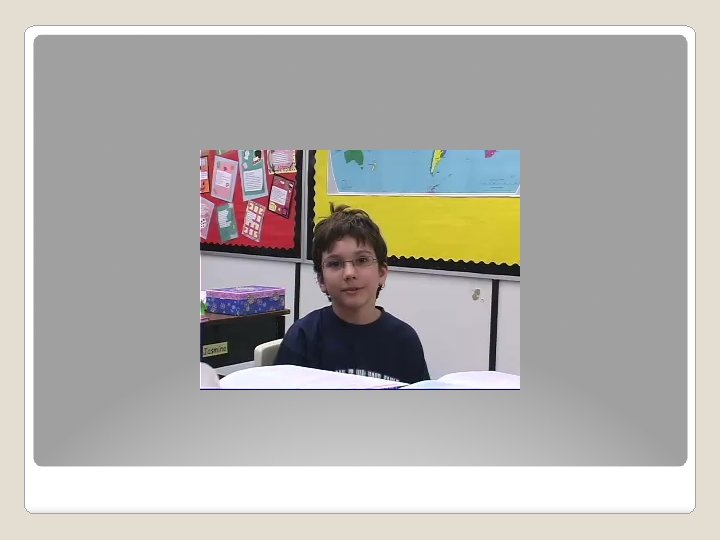
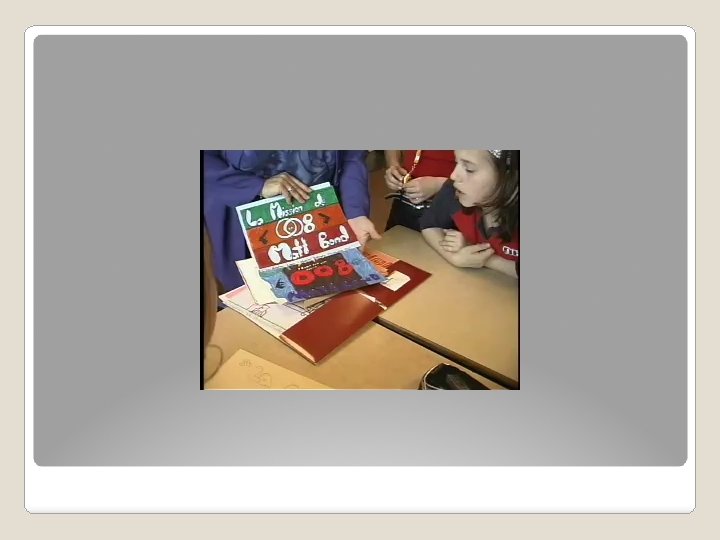
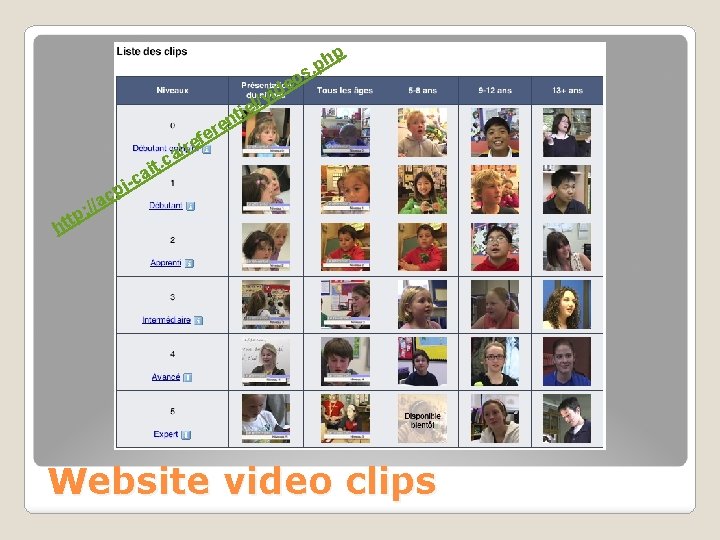
�The video clips show real classroom interactions between learners or with teachers. �Each level is illustrated by video clips of French immersion learners (different ages). Website video clips
. ph s o e a it. c r efe p e d i l/v e i nt /r ca i p c /a p: / htt Website video clips
�To help teachers in understanding and assigning the relevant levels to learners. �To position one’s oral competency level through viewing video clips of peers. �To get an idea of the next levels one could reach. Video clip pedagogical uses
http: //acpi. ca/: ◦ To download the Reference Framework. ◦ Free access to video clip. ◦ More information. For further information
�Pedagogical characteristics of the Reference Framework: ◦ Grounded in French immersion teachers’ and learners’ reality. ◦ Easy to use for teachers, learners, possibly parents. ◦ Innovative. Thank you for your attention Conclusion
Reference framework for the oral communication competencies of second language learners Immersion Education: Pathways to Bilingualism & Beyond October 16 -18, 2008 ; St. Paul, Minnesota Thierry Karsenti & Simon Collin, CRIFPE, Université de Montréal thierry. karsenti@umontreal. ca simon. collin@umontreal. ca