
Refactoring SENG 301 Learning Objectives By the end
Refactoring SENG 301
Learning Objectives By the end of this lecture, you should be able to • Define code smell and refactoring • Understand why refactoring is used • Identify common “basic” code smells • Identify or suggest situations where simple refactoring strategies can be used
Technical Debt “Building it this way is stupid, but we did it that way because it was faster” “Ugh, I’ll come back to this later and fix it up” “We should have done X” Technical debt: “the extra development work that arises when code that is easy to implement in the short run is used instead of applying the best overall solution”
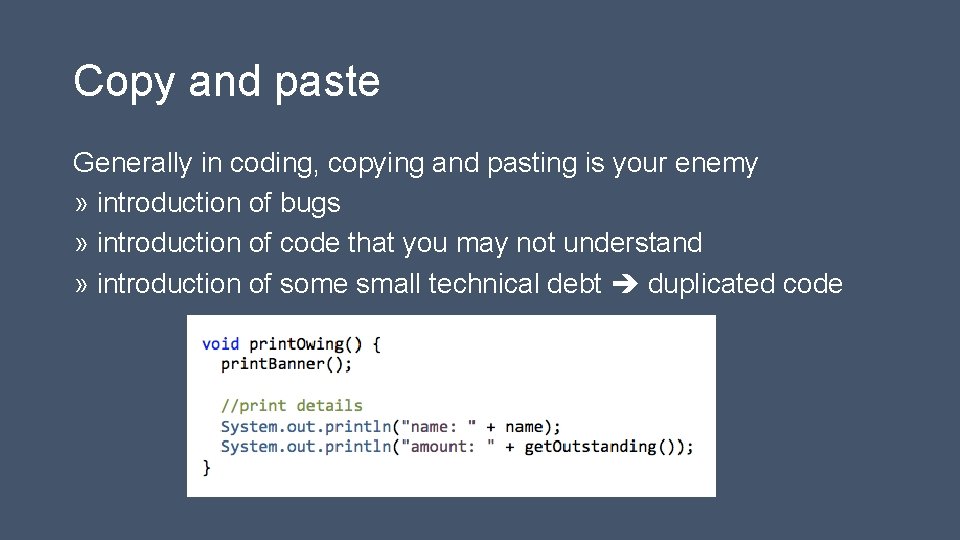
Copy and paste Generally in coding, copying and pasting is your enemy » introduction of bugs » introduction of code that you may not understand » introduction of some small technical debt duplicated code
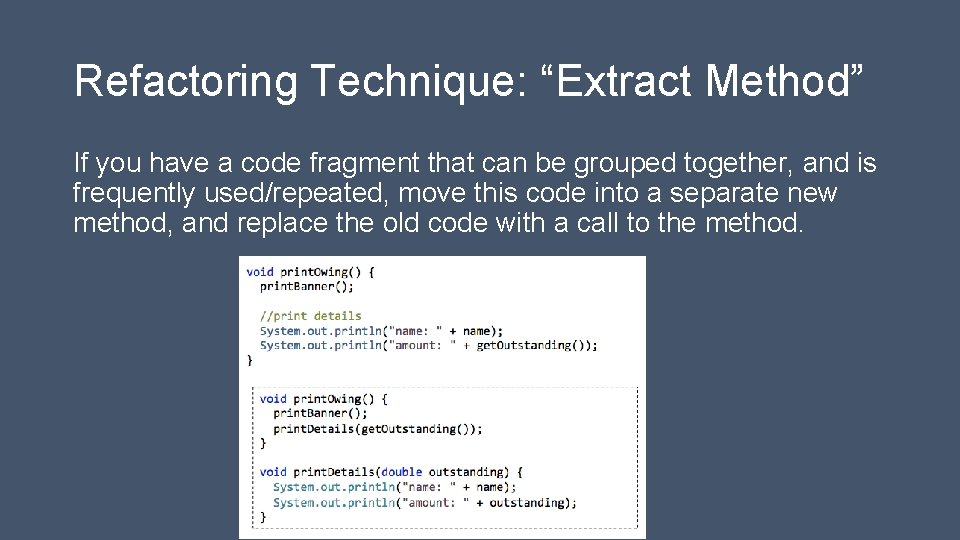
Refactoring Technique: “Extract Method” If you have a code fragment that can be grouped together, and is frequently used/repeated, move this code into a separate new method, and replace the old code with a call to the method.
Refactoring is changing a software system in such a way that it addresses non-functional requirements (e. g. comprehensibility, extensibility, usability, etc. ) without alter external behaviour of the code. » Cleaning up code so that it minimizes chances of bugs » Improving design of code after it is written
Problems and Techniques “Code smells” are surface indications that there are deeper problems in the system Most refactoring techniques are fairly straightforward, and there is often really good tool support for these (now) In both the case of code smells and refactoring techniques, there are new ones being “discovered” all the time, so the list of names is fairly long: we’ll look at a small subset of each
Code smell: Duplicated code If you see the same code structure in more than one place, unifying them is a good idea (e. g. propogating bug fixes) » same expression in methods of the same class » same expression in sibling subclasses » code is similar but not the same (are there opportunities here? ) » methods do the same thing with a different algorithm
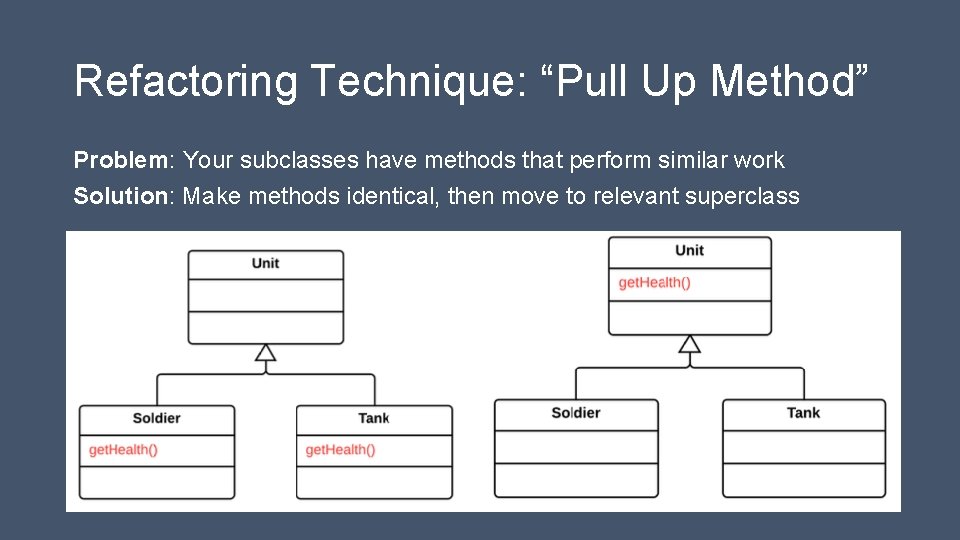
Refactoring Technique: “Pull Up Method” Problem: Your subclasses have methods that perform similar work Solution: Make methods identical, then move to relevant superclass
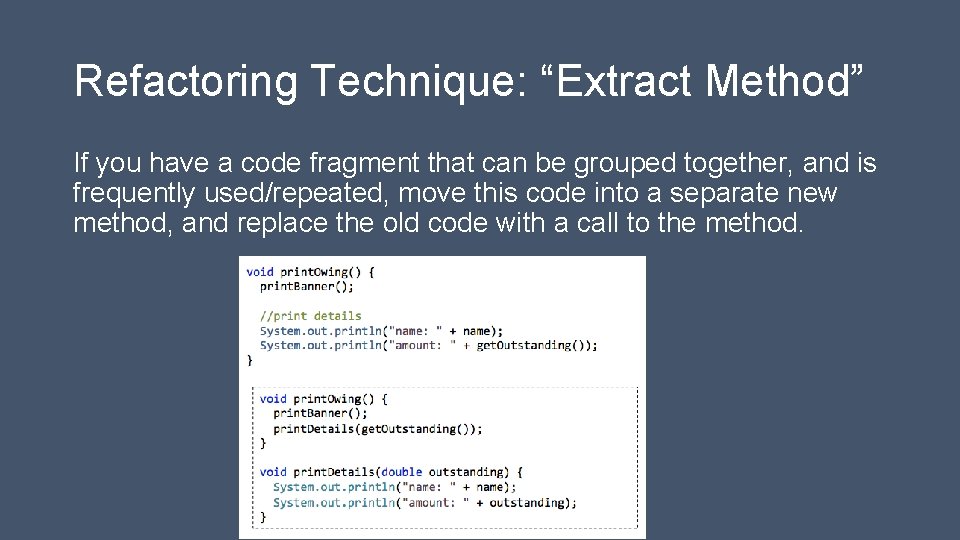
Refactoring Technique: “Extract Method” If you have a code fragment that can be grouped together, and is frequently used/repeated, move this code into a separate new method, and replace the old code with a call to the method.
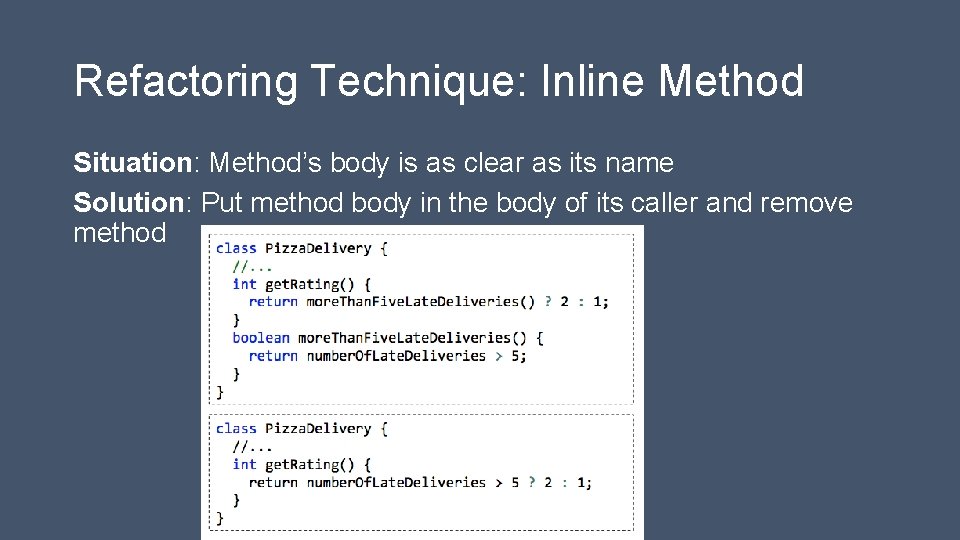
Refactoring Technique: Inline Method Situation: Method’s body is as clear as its name Solution: Put method body in the body of its caller and remove method
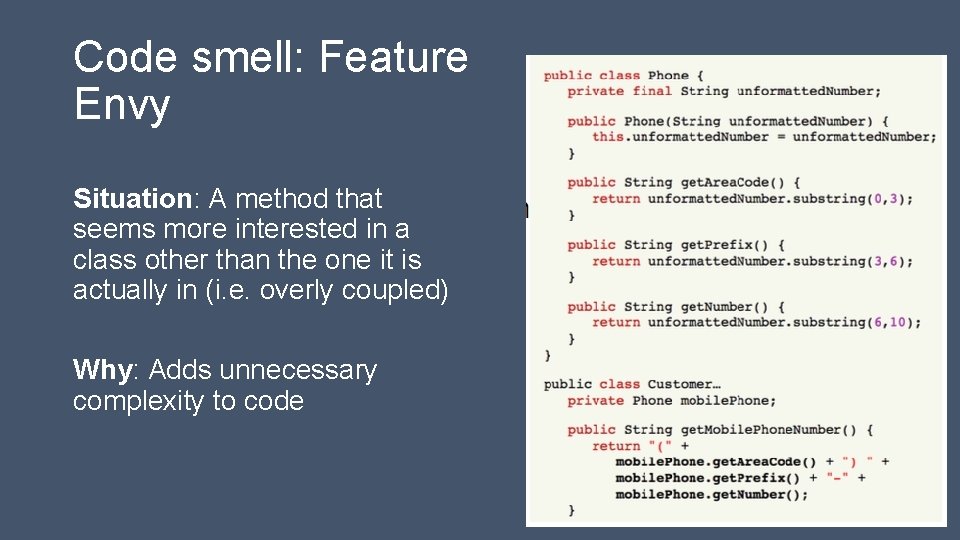
Code smell: Feature Envy Situation: A method that seems more interested in a class other than the one it is actually in (i. e. overly coupled) Why: Adds unnecessary complexity to code
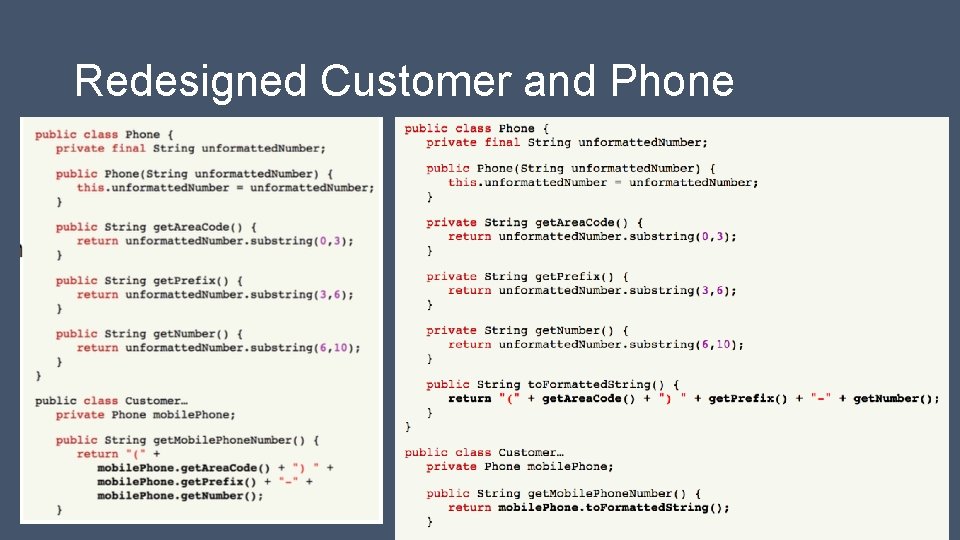
Redesigned Customer and Phone
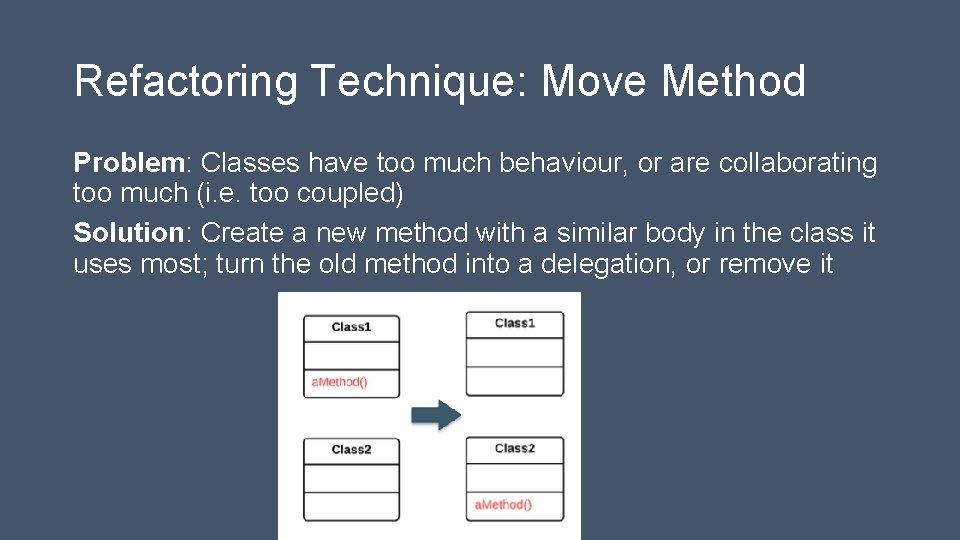
Refactoring Technique: Move Method Problem: Classes have too much behaviour, or are collaborating too much (i. e. too coupled) Solution: Create a new method with a similar body in the class it uses most; turn the old method into a delegation, or remove it
Code Smell: Middle Man One class delegates many of its requests to another class Beware classes that are merely wrappers over other classes or existing functionality in the framework
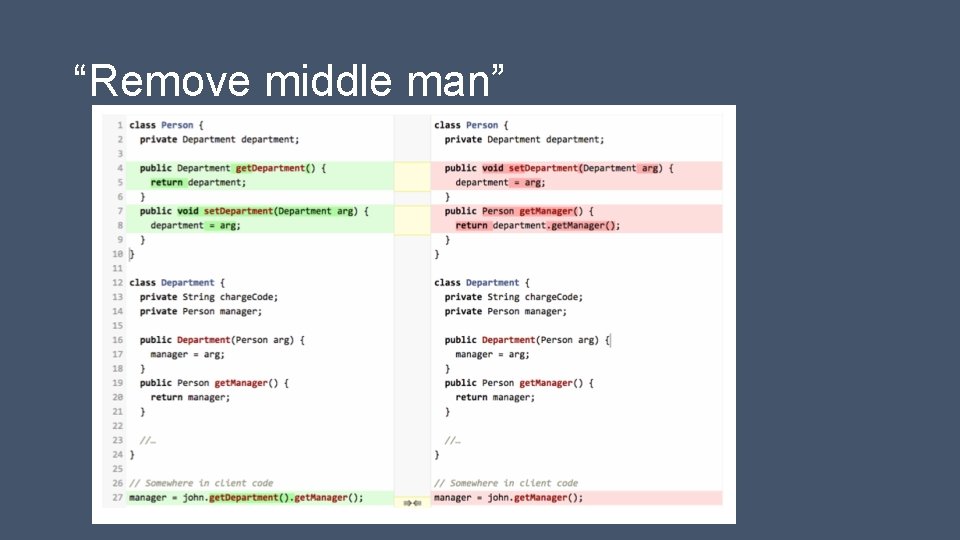
“Remove middle man”
Code Smell: Uncommunicative Name Problem: Name of the method or class does not succinctly describe what the class is for, or what the method does (e. g. When someone other than the developer looks at the code, they don’t know what is going on) Solution: rename or rewrite it!
Refactoring Technique: “Rename” Obvious, but bears repeating: names are one of the most important “signals” in code for comprehension “Sink” was meaningless for most of you Names are super important—methods, fields, local variables, types, etc. !! Avoid name collisions (sometimes happens), and make sure you have consistent ones: e. g. Open & Close vs. Open & Dispose We need to usually worry about subclasses and superclasses when we do this type of refactoring technique
Other Code Smells Long Method: All else equal, shorter methods are generally easier to read, to understand to troubleshoot Long Parameter List: The more parameters a method has, the more complex it is. Limit parameters to a method, or use an object to combine parameters Dead Code: Ruthlessly delete code that isn't being used. Indecent Exposure: Beware of classes that unnecessarily expose their internals. Aggressively refactor classes to minimize their public surface. You should have a compelling reason for every item you make public. If you don't, hide it.
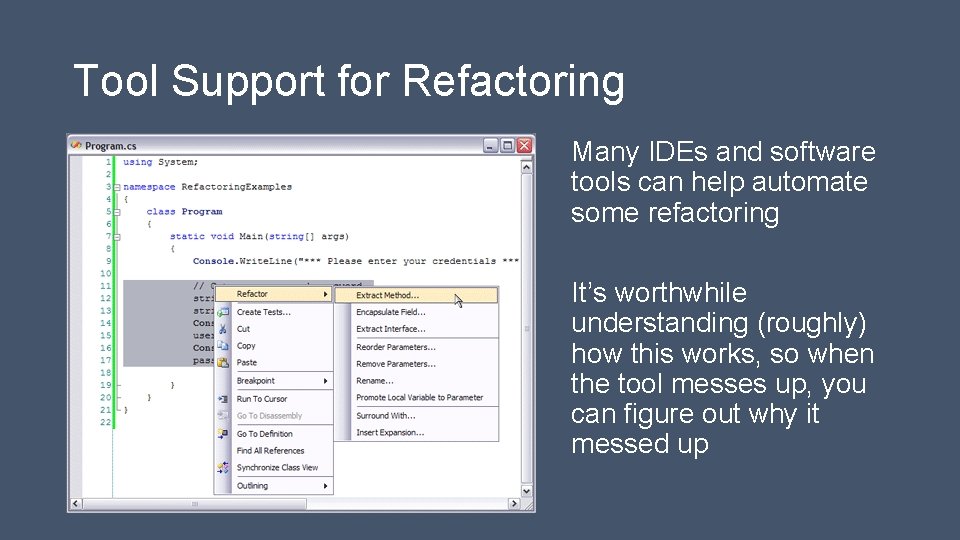
Tool Support for Refactoring Many IDEs and software tools can help automate some refactoring It’s worthwhile understanding (roughly) how this works, so when the tool messes up, you can figure out why it messed up
Consider Suppose I wanted to rename a method “Add” to “Increment”. Assuming that there was a good reason to do this, and the semantics made sense, why would it be a bad idea to simply do a Find+Replace across all the files in my code base for Add to Increment?
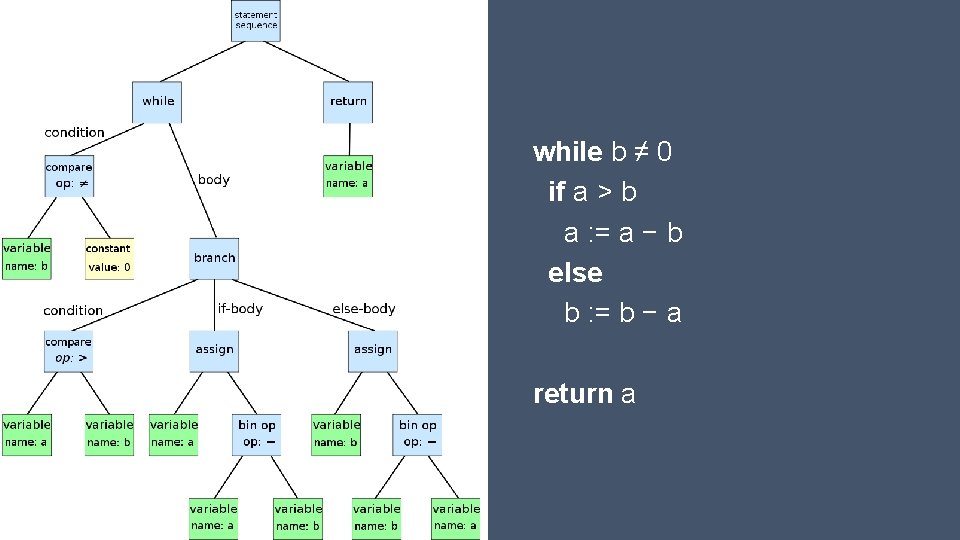
while b ≠ 0 if a > b a : = a − b else b : = b − a return a
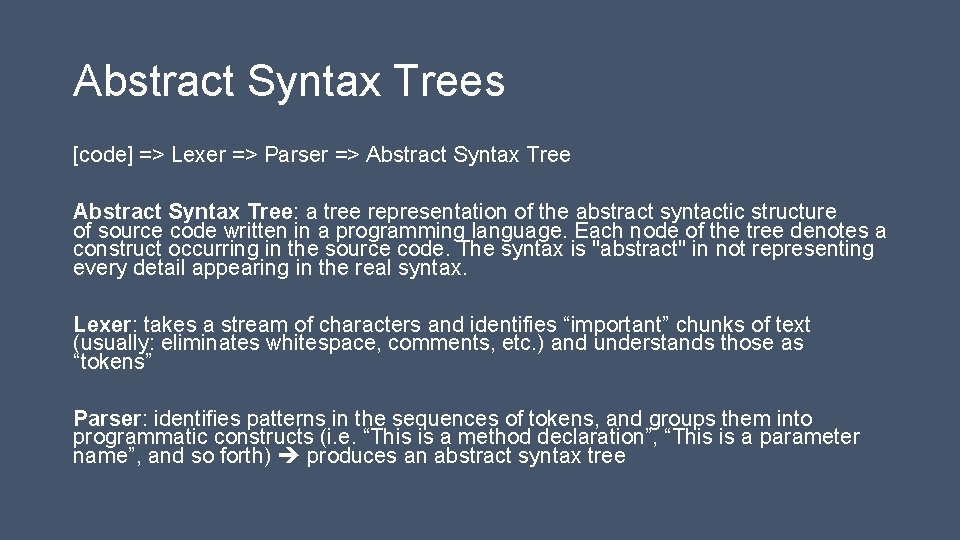
Abstract Syntax Trees [code] => Lexer => Parser => Abstract Syntax Tree: a tree representation of the abstract syntactic structure of source code written in a programming language. Each node of the tree denotes a construct occurring in the source code. The syntax is "abstract" in not representing every detail appearing in the real syntax. Lexer: takes a stream of characters and identifies “important” chunks of text (usually: eliminates whitespace, comments, etc. ) and understands those as “tokens” Parser: identifies patterns in the sequences of tokens, and groups them into programmatic constructs (i. e. “This is a method declaration”, “This is a parameter name”, and so forth) produces an abstract syntax tree
Code Model Internal representation of the code that (usually) allows programmatic manipulation e. g. var method = project. Get. Class(“Vending. Machine”). Get. Method(“Dispose”); method. Name = “Close”; method. Add. Parameter(“int”, “Foobar”);
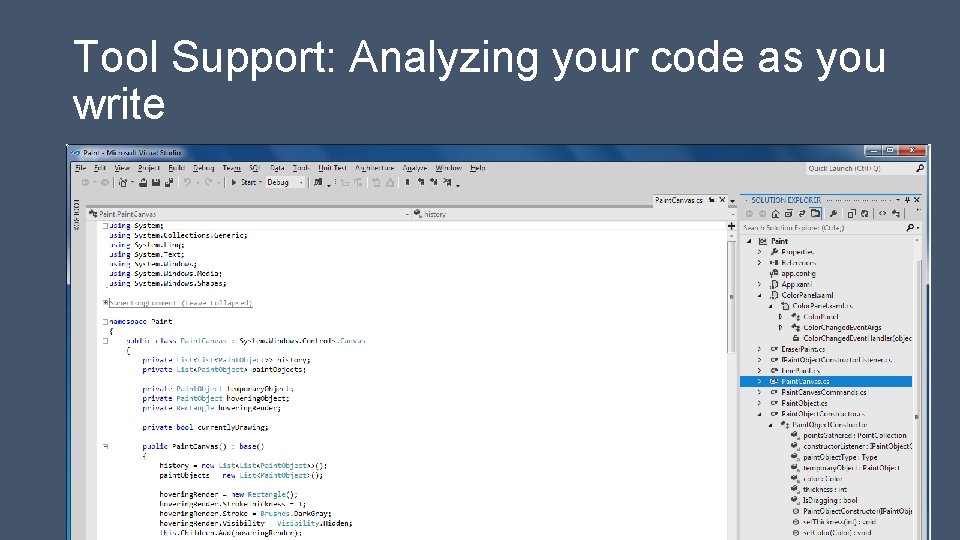
Tool Support: Analyzing your code as you write
Learning Objectives By the end of this lecture, you should be able to • Define code smell and refactoring • Understand why refactoring is used • Identify common “basic” code smells • Identify or suggest situations where simple refactoring strategies can be used

- Slides: 27