
Reduo da vulnerabilidade e mitigao do risco ssmico
Redução da vulnerabilidade e mitigação do risco sísmico. Aplicação à Área Metropolitana de Lisboa Alfredo Campos Costa e Maria Luísa Sousa Workshop projecto LESSLOSS – SP 10 – Earthquake disaster scenario prediction and loss modelling for urban areas Curso de formação em modelação de perdas em consequência de sismos, técnicas para a redução da vulnerabilidade e risco sísmico LNEC, 25 de Maio de 2006
Index 1. Choice of case study area 2. Vulnerability and inventory definition 3. Loss modelling for the Metropolitan Area of Lisbon - MAL 3. 1 Reference situation 3. 2 After mitigation 4. Conclusions
Index 1. Choice of case study area 2. Vulnerability and inventory definition 3. Loss modelling for the Metropolitan Area of Lisbon - MAL 3. 1 Reference situation 3. 2 After mitigation 4. Conclusions
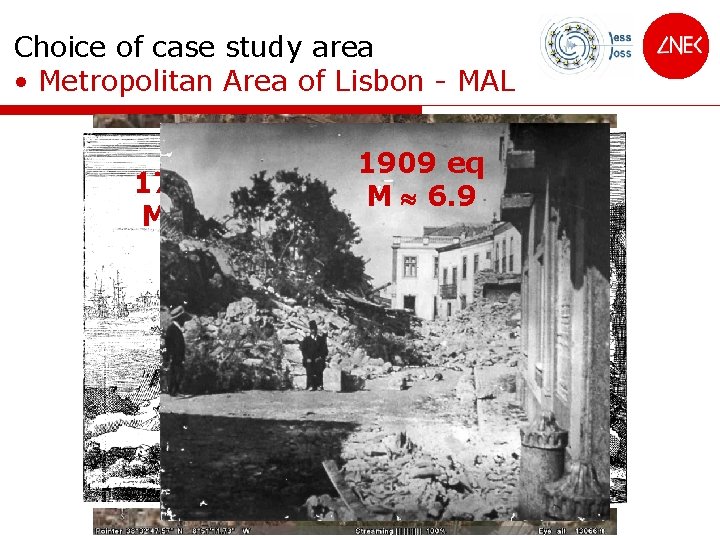
Choice of case study area • Metropolitan Area of Lisbon - MAL 1755 eq M 8. 75 1909 eq M 6. 9 3 x 10⁶ inhabitants
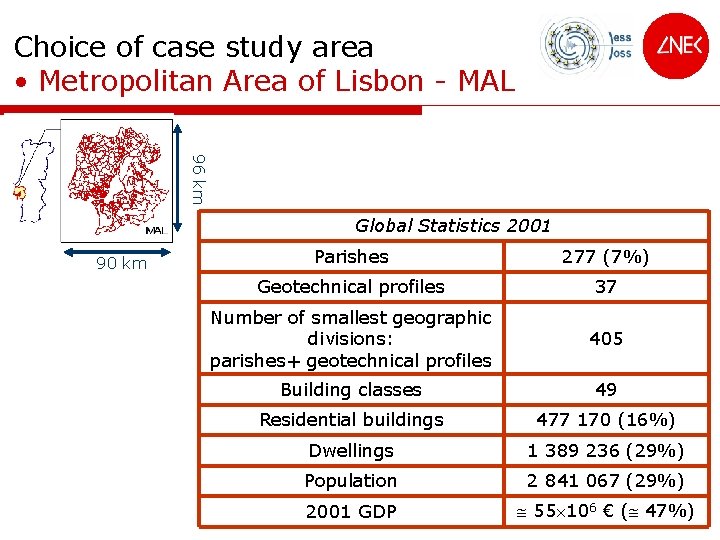
Choice of case study area • Metropolitan Area of Lisbon - MAL 96 km Global Statistics 2001 90 km Parishes 277 (7%) Geotechnical profiles 37 Number of smallest geographic divisions: parishes+ geotechnical profiles 405 Building classes 49 Residential buildings 477 170 (16%) Dwellings 1 389 236 (29%) Population 2 841 067 (29%) 2001 GDP 55 106 € ( 47%)
Choice of mitigation options • MAL q Main causes of losses • Human losses: severe and complete damage in most masonry buildings • Economic losses: damages on RC buildings with the highest exposure in the region (>1960) q Mitigation actions • Upgrading most masonry buildings • Upgrading of RC buildings >1960 mainly those located in soils correspondent of the higher exposure of buildings q Methodology • Develop new capacity and fragility curves; consider a possible range of modification techniques. • update LNECloss tool
Index 1. Choice of case study area 2. Vulnerability and inventory definition 3. Loss modelling for the Metropolitan Area of Lisbon - MAL 3. 1 Reference situation 3. 2 After mitigation 4. Conclusions
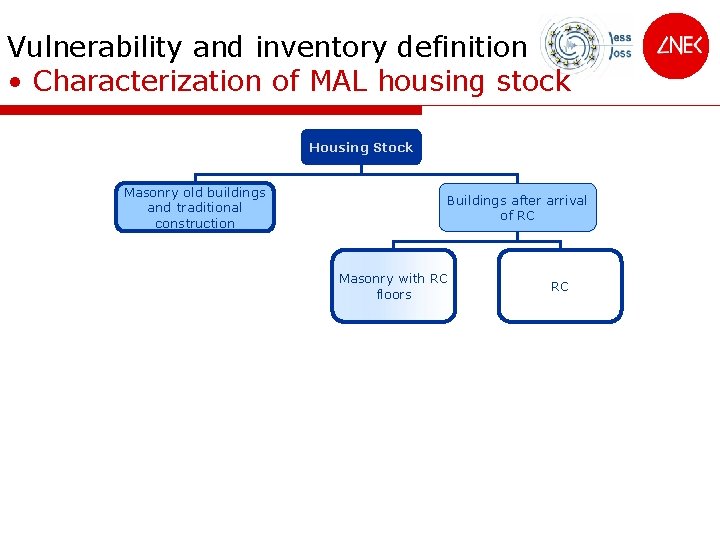
Vulnerability and inventory definition • Characterization of MAL housing stock Housing Stock Masonry old buildings and traditional construction Buildings after arrival of RC Masonry with RC floors RC
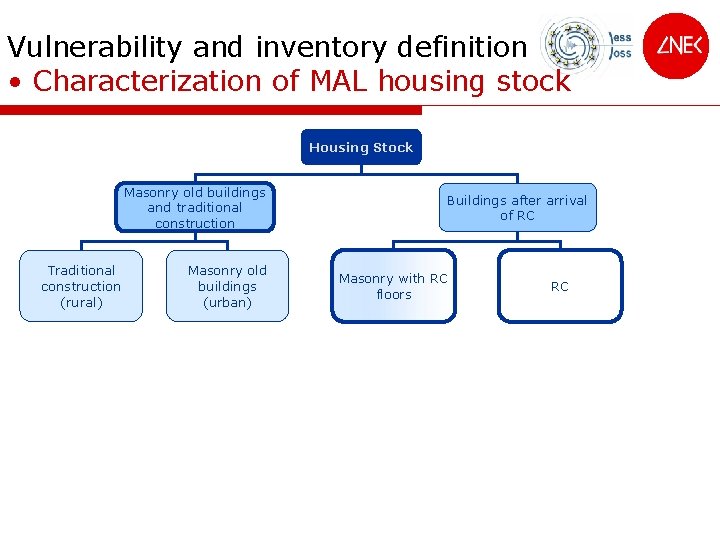
Vulnerability and inventory definition • Characterization of MAL housing stock Housing Stock Masonry old buildings and traditional construction Traditional construction (rural) Masonry old buildings (urban) Buildings after arrival of RC Masonry with RC floors RC
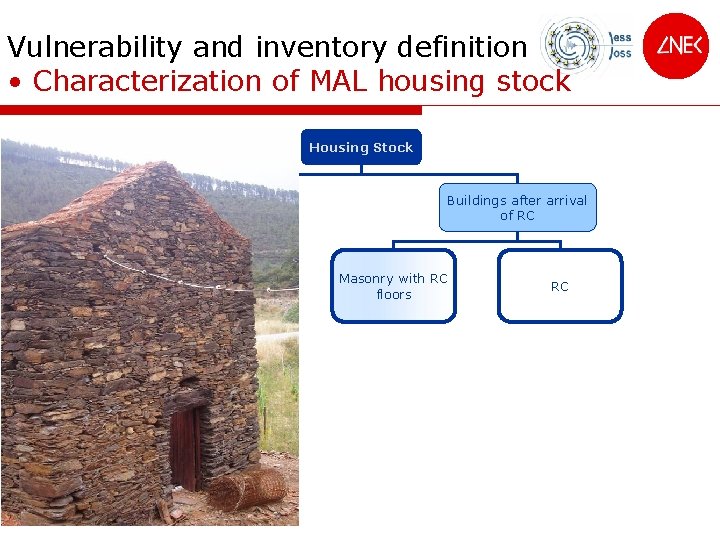
Vulnerability and inventory definition • Characterization of MAL housing stock Housing Stock Masonry old buildings and traditional construction Masonry old buildings (urban) Buildings after arrival of RC Masonry with RC floors RC
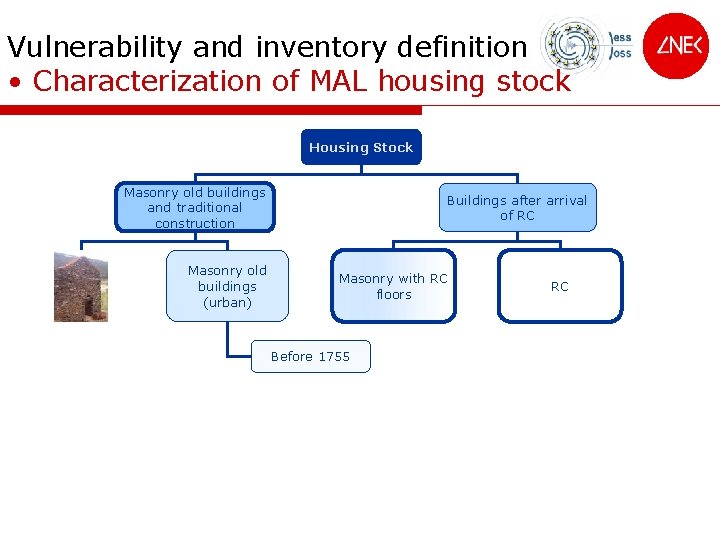
Vulnerability and inventory definition • Characterization of MAL housing stock Housing Stock Masonry old buildings and traditional construction Buildings after arrival of RC Masonry old buildings (urban) Masonry with RC floors Before 1755 RC
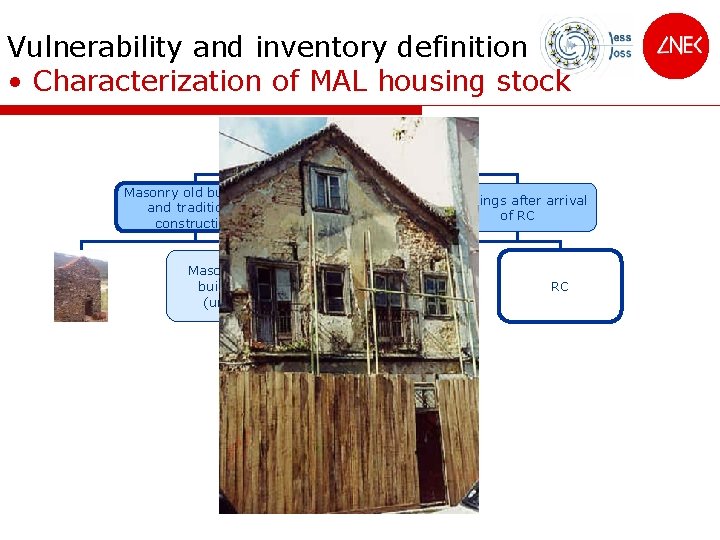
Vulnerability and inventory definition • Characterization of MAL housing stock Housing Stock Masonry old buildings and traditional construction Masonry old buildings (urban) Buildings after arrival of RC Masonry with RC floors RC
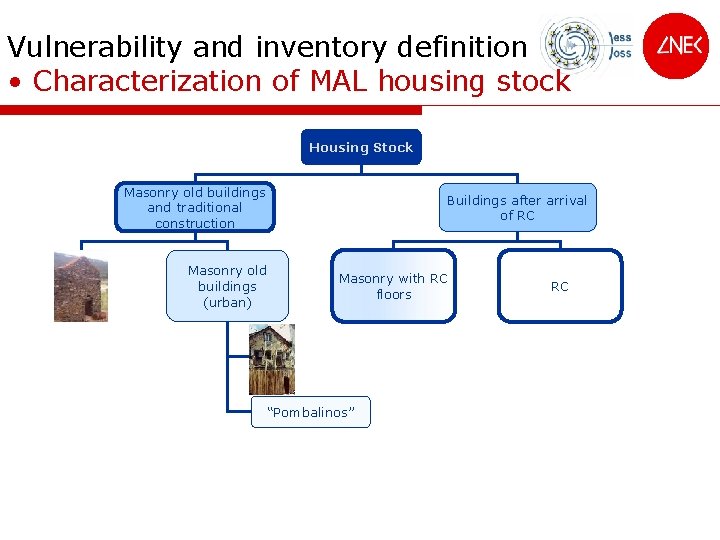
Vulnerability and inventory definition • Characterization of MAL housing stock Housing Stock Masonry old buildings and traditional construction Masonry old buildings (urban) Buildings after arrival of RC Masonry with RC floors “Pombalinos” RC
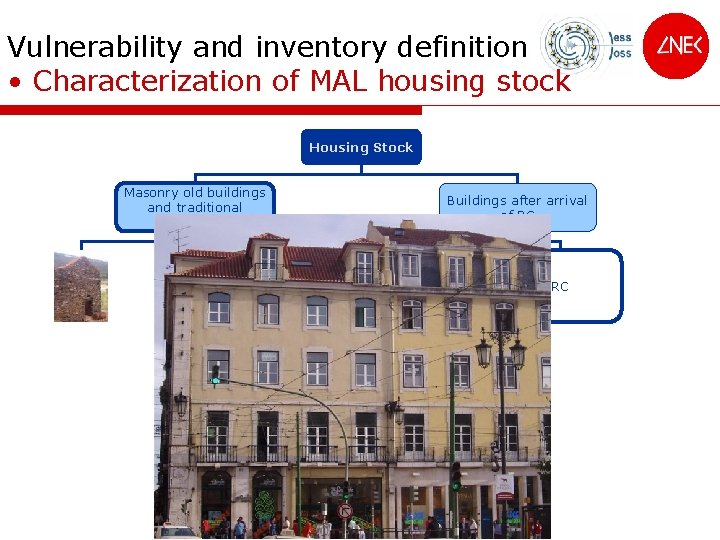
Vulnerability and inventory definition • Characterization of MAL housing stock Housing Stock Masonry old buildings and traditional construction Masonry old buildings (urban) Buildings after arrival of RC Masonry with RC floors RC
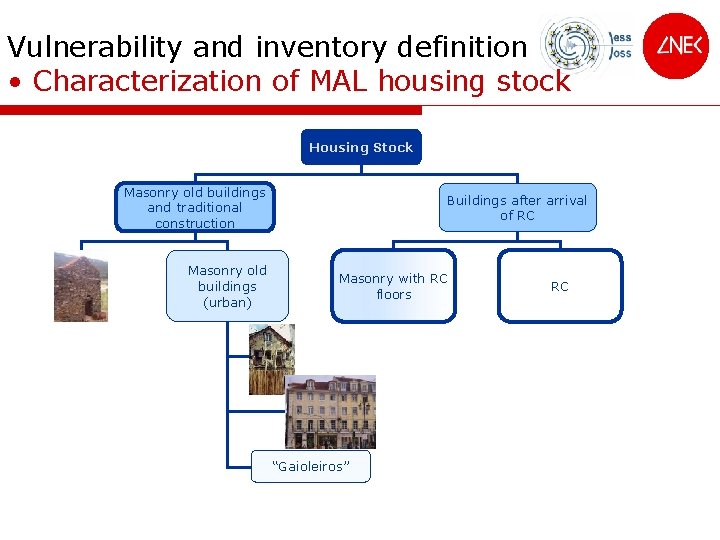
Vulnerability and inventory definition • Characterization of MAL housing stock Housing Stock Masonry old buildings and traditional construction Masonry old buildings (urban) Buildings after arrival of RC Masonry with RC floors “Gaioleiros” RC
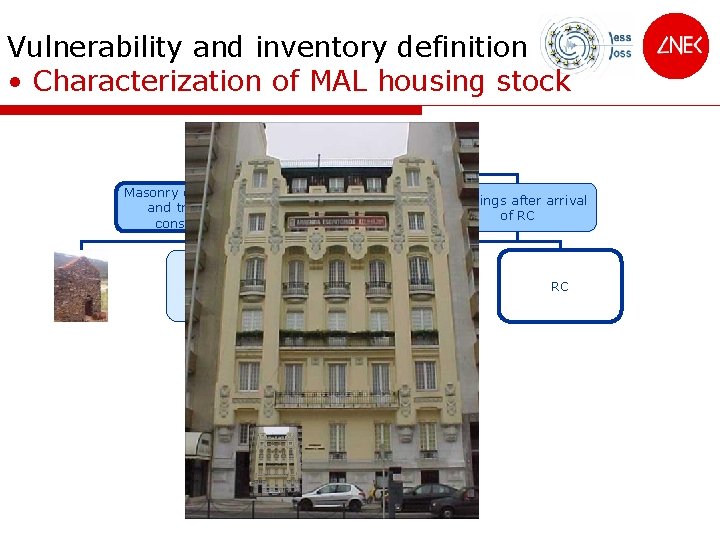
Vulnerability and inventory definition • Characterization of MAL housing stock Housing Stock Masonry old buildings and traditional construction Masonry old buildings (urban) Buildings after arrival of RC Masonry with RC floors RC

Vulnerability and inventory definition • Characterization of MAL housing stock Housing Stock Masonry old buildings and traditional construction Masonry old buildings (urban) Buildings after arrival of RC Masonry with RC floors Unreinforced brick with RC floors “Placa” RC
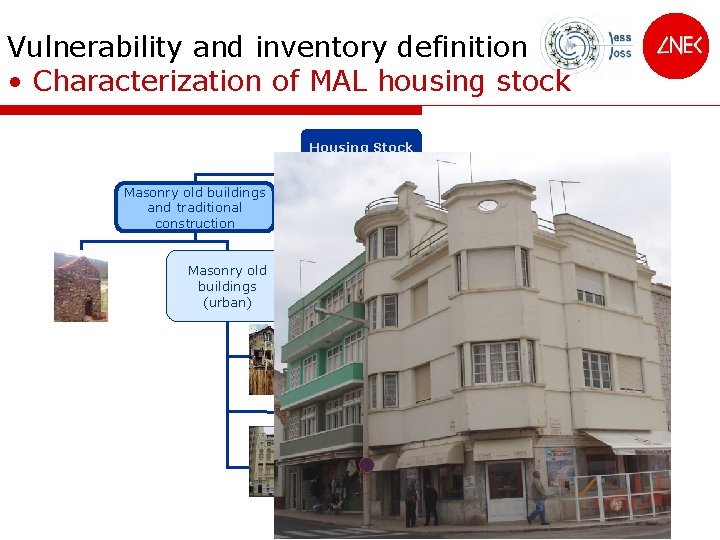
Vulnerability and inventory definition • Characterization of MAL housing stock Housing Stock Masonry old buildings and traditional construction Masonry old buildings (urban) Buildings after arrival of RC Masonry with RC floors RC
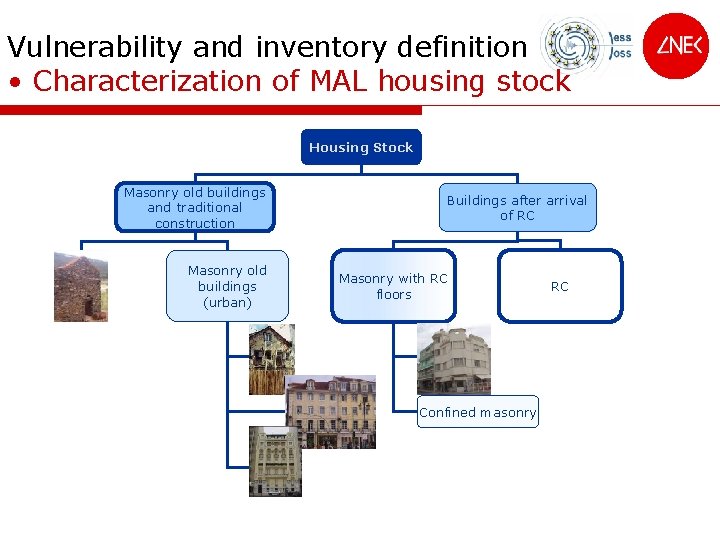
Vulnerability and inventory definition • Characterization of MAL housing stock Housing Stock Masonry old buildings and traditional construction Masonry old buildings (urban) Buildings after arrival of RC Masonry with RC floors Confined masonry RC
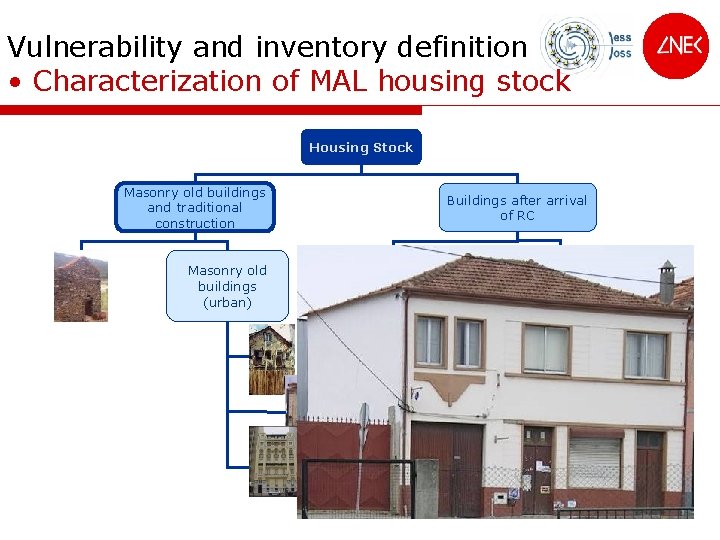
Vulnerability and inventory definition • Characterization of MAL housing stock Housing Stock Masonry old buildings and traditional construction Masonry old buildings (urban) Buildings after arrival of RC Masonry with RC floors RC
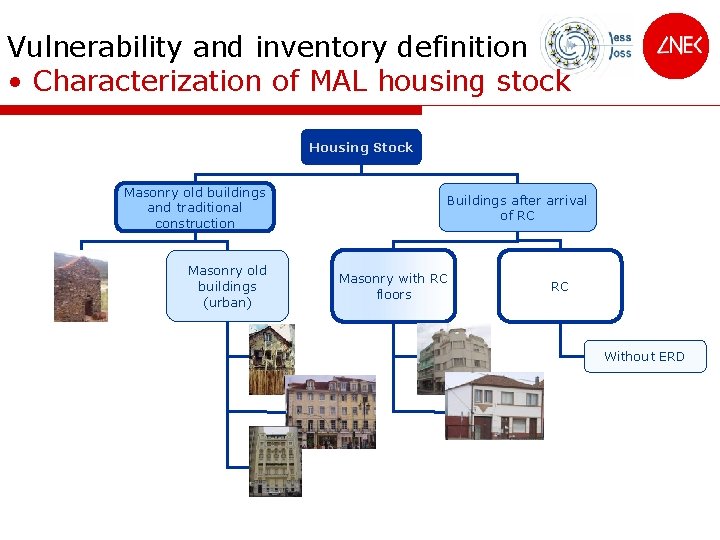
Vulnerability and inventory definition • Characterization of MAL housing stock Housing Stock Masonry old buildings and traditional construction Masonry old buildings (urban) Buildings after arrival of RC Masonry with RC floors RC Without ERD
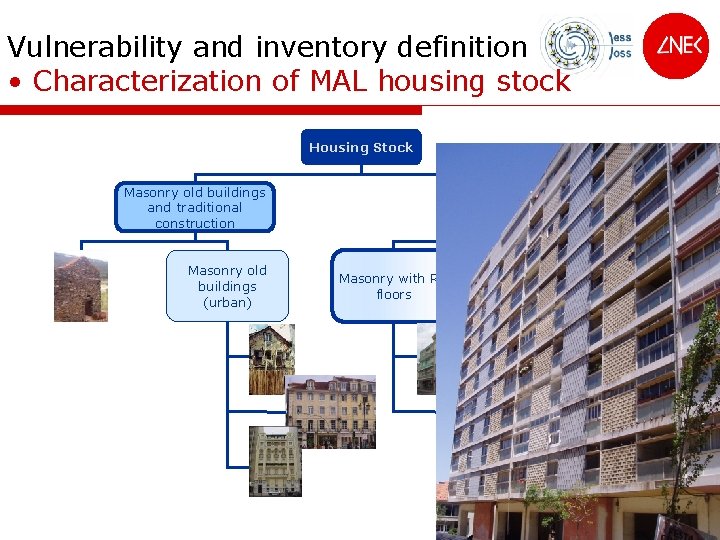
Vulnerability and inventory definition • Characterization of MAL housing stock Housing Stock Masonry old buildings and traditional construction Masonry old buildings (urban) Buildings after arrival of RC Masonry with RC floors RC
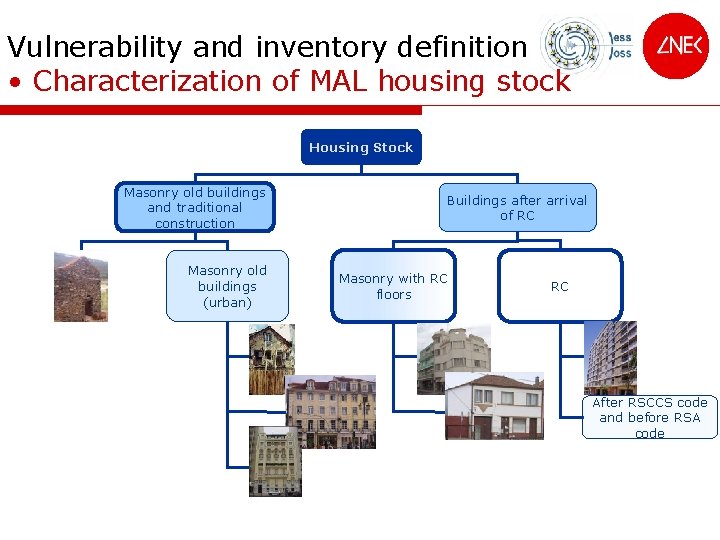
Vulnerability and inventory definition • Characterization of MAL housing stock Housing Stock Masonry old buildings and traditional construction Masonry old buildings (urban) Buildings after arrival of RC Masonry with RC floors RC After RSCCS code and before RSA code
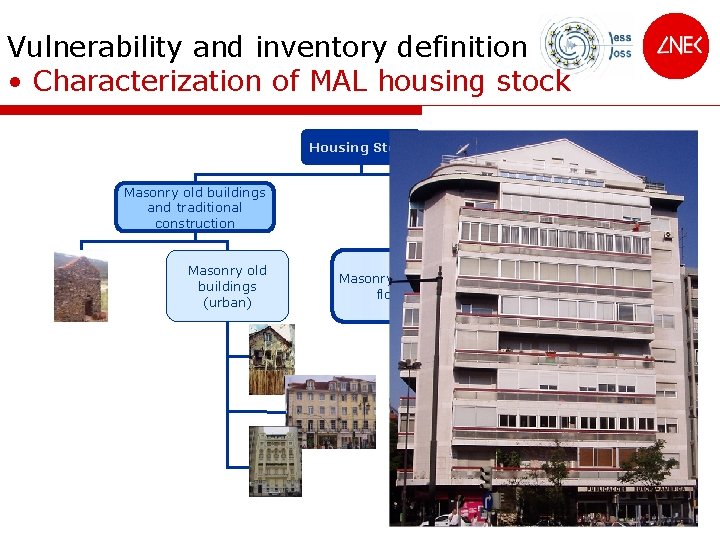
Vulnerability and inventory definition • Characterization of MAL housing stock Housing Stock Masonry old buildings and traditional construction Masonry old buildings (urban) Buildings after arrival of RC Masonry with RC floors RC
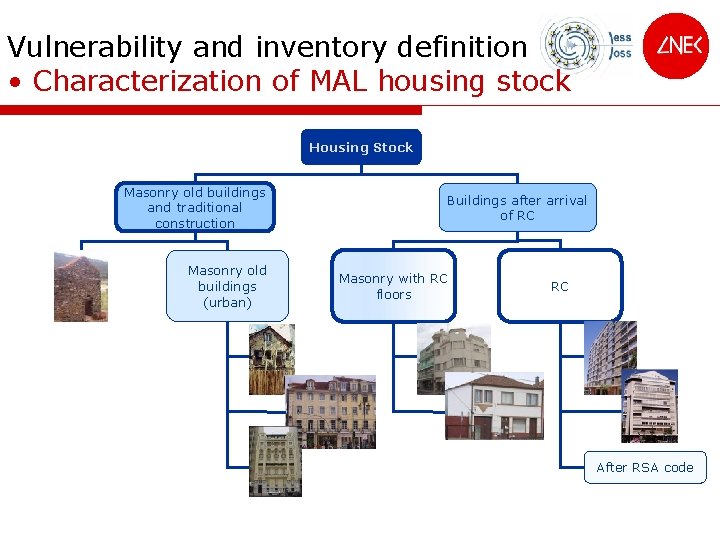
Vulnerability and inventory definition • Characterization of MAL housing stock Housing Stock Masonry old buildings and traditional construction Masonry old buildings (urban) Buildings after arrival of RC Masonry with RC floors RC After RSA code
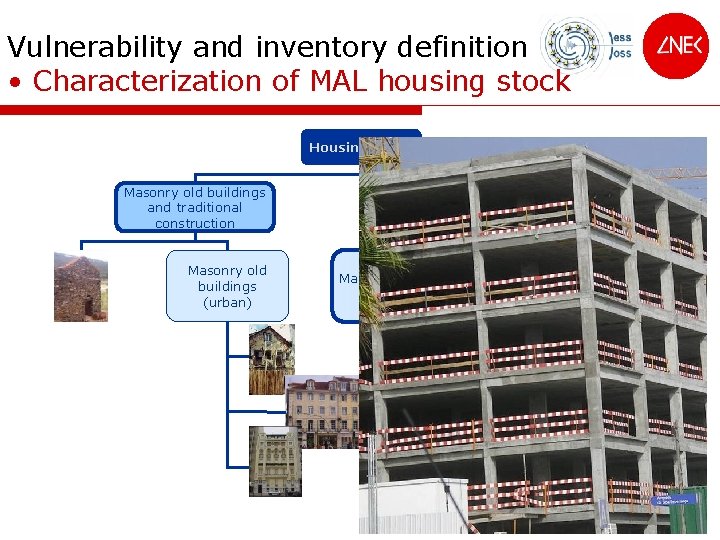
Vulnerability and inventory definition • Characterization of MAL housing stock Housing Stock Masonry old buildings and traditional construction Masonry old buildings (urban) Buildings after arrival of RC Masonry with RC floors RC
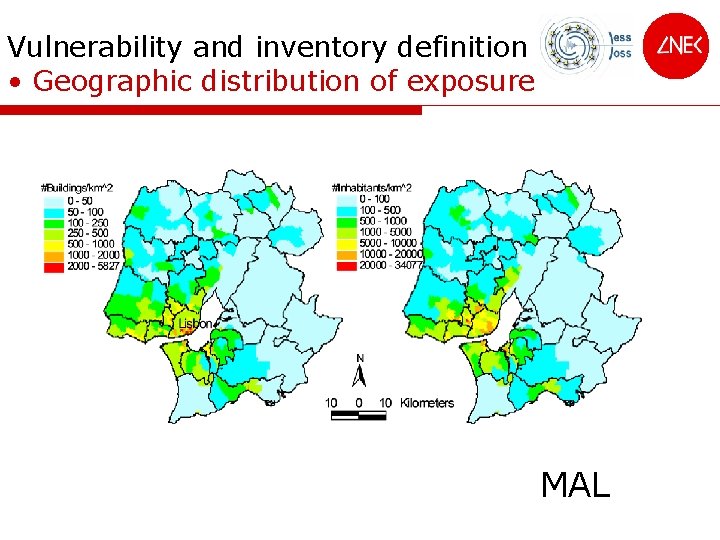
Vulnerability and inventory definition • Geographic distribution of exposure MAL
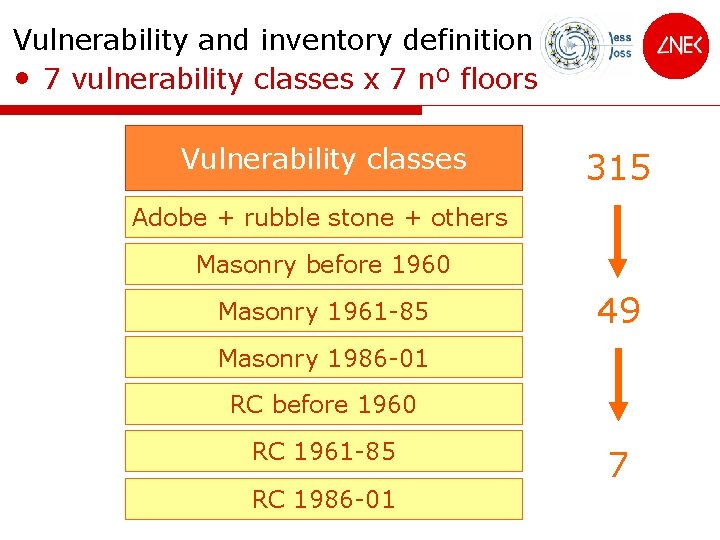
Vulnerability and inventory definition • 7 vulnerability classes x 7 nº floors Vulnerability classes 315 Adobe + rubble stone + others Masonry before 1960 Masonry 1961 -85 49 Masonry 1986 -01 RC before 1960 RC 1961 -85 RC 1986 -01 7
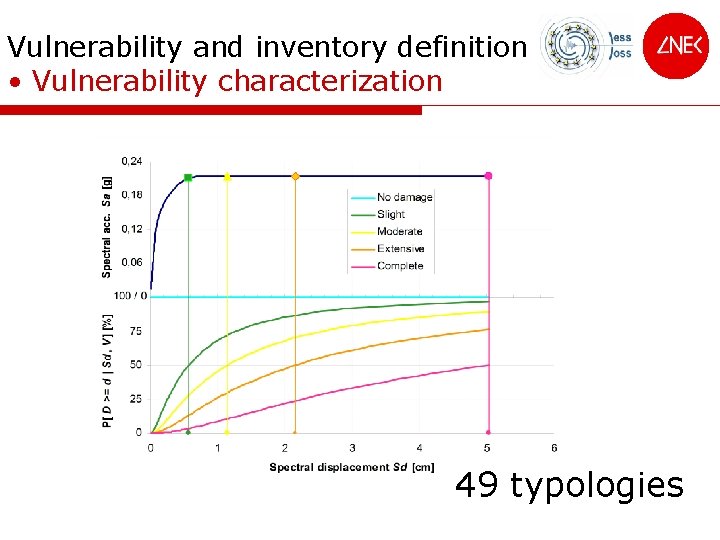
Vulnerability and inventory definition • Vulnerability characterization 49 typologies
![Vulnerability and inventory definition • Soil classification Ground type Stratigraphic profile vs [m/s] A](http://slidetodoc.com/presentation_image/0c034521c5fb9fc0eda613793b76ca07/image-30.jpg "Vulnerability and inventory definition • Soil classification Ground type Stratigraphic profile vs [m/s] A")
Vulnerability and inventory definition • Soil classification Ground type Stratigraphic profile vs [m/s] A Rock and hard soil > 350 B Intermediate soil 200 -350 C Soft soil < 200 37 3 MAL
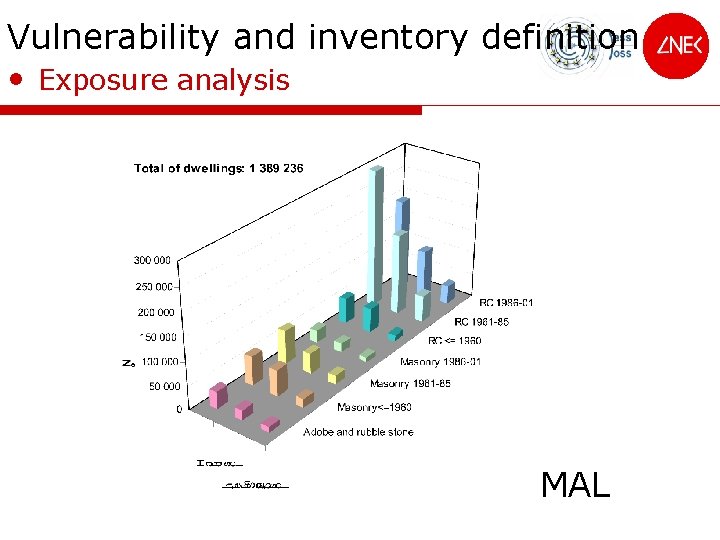
Vulnerability and inventory definition • Exposure analysis MAL
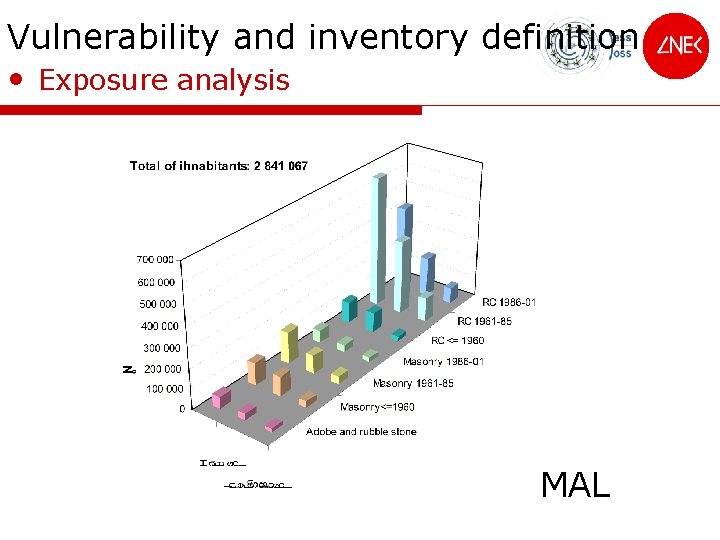
Vulnerability and inventory definition • Exposure analysis MAL
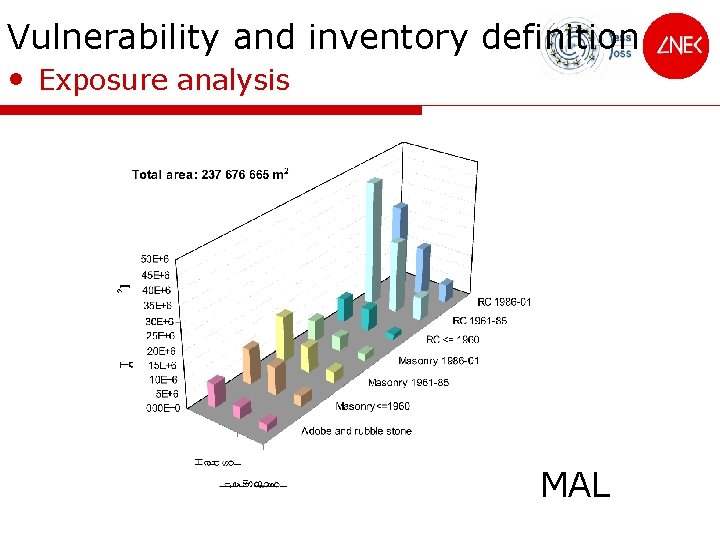
Vulnerability and inventory definition • Exposure analysis MAL
Index 1. Choice of case study area 2. Vulnerability and inventory definition 3. Loss modelling for the Metropolitan Area of Lisbon - MAL 3. 1 Reference situation 3. 2 After mitigation 4. Conclusions
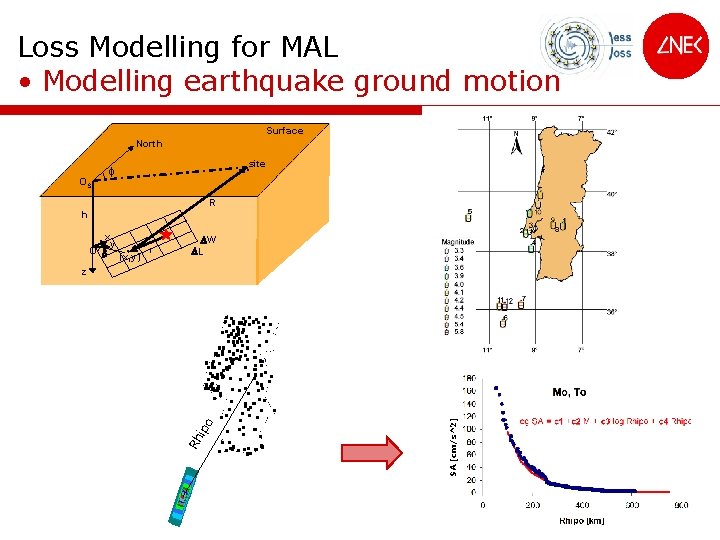
Loss Modelling for MAL • Modelling earthquake ground motion Surface North OS site R h x y r O (x, y) W L SA [cm/s^2] Rh ipo z
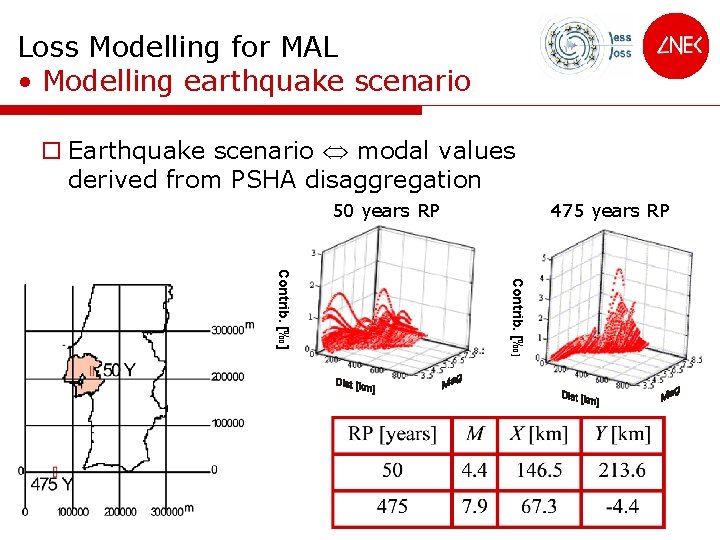
Loss Modelling for MAL • Modelling earthquake scenario o Earthquake scenario modal values derived from PSHA disaggregation 475 years RP 50 years RP Contrib. [‰]
![Site effects • Soil dynamic amplification Sa [g] 1. 2 1 0. 8 0.](http://slidetodoc.com/presentation_image/0c034521c5fb9fc0eda613793b76ca07/image-37.jpg "Site effects • Soil dynamic amplification Sa [g] 1. 2 1 0. 8 0.")
Site effects • Soil dynamic amplification Sa [g] 1. 2 1 0. 8 0. 6 0. 4 0. 2 0 0 5 10 15 20 Sd [cm] 25
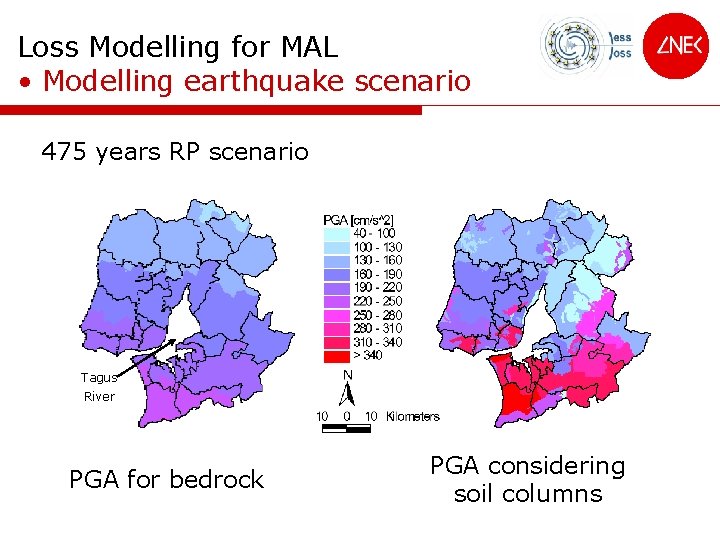
Loss Modelling for MAL • Modelling earthquake scenario 475 years RP scenario Tagus River PGA for bedrock PGA considering soil columns
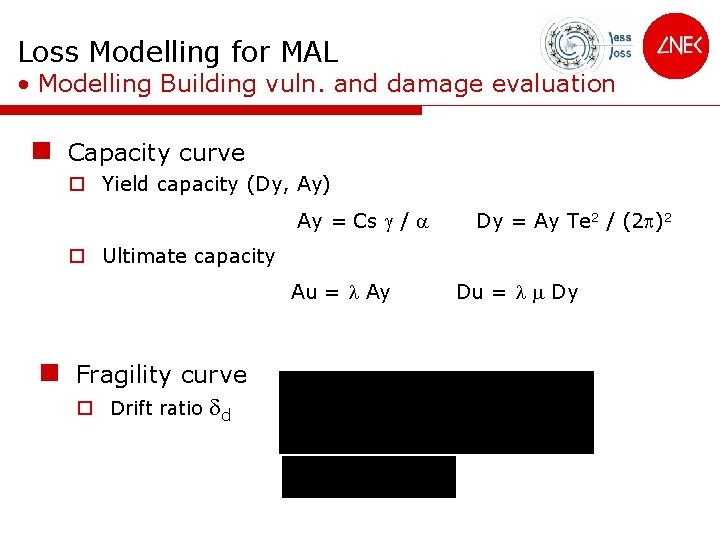
Loss Modelling for MAL • Modelling Building vuln. and damage evaluation n Capacity curve o Yield capacity (Dy, Ay) Ay = Cs / Dy = Ay Te 2 / (2 )2 o Ultimate capacity Au = Ay n Fragility curve o Drift ratio d Du = Dy
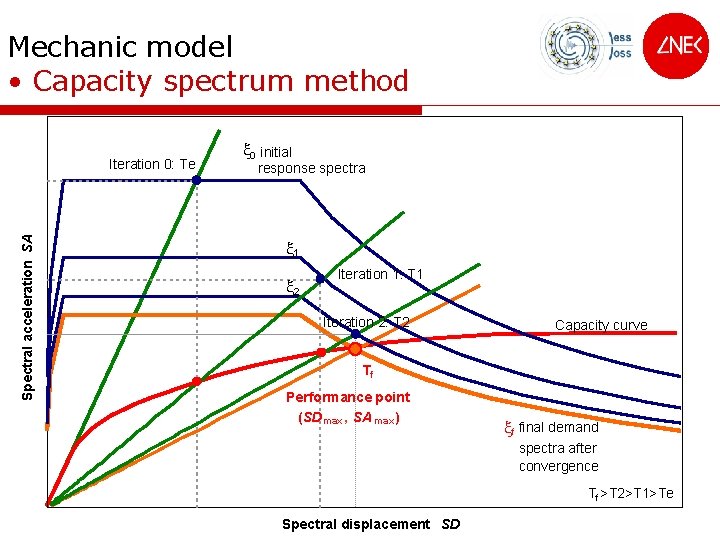
Mechanic model • Capacity spectrum method Spectral acceleration SA Iteration 0: Te x 0 initial response spectra x 1 x 2 Iteration 1: T 1 Iteration 2: T 2 Capacity curve Tf Performance point (SD max , SA max ) xf final demand spectra after convergence Tf >T 2>T 1>Te Spectral displacement SD
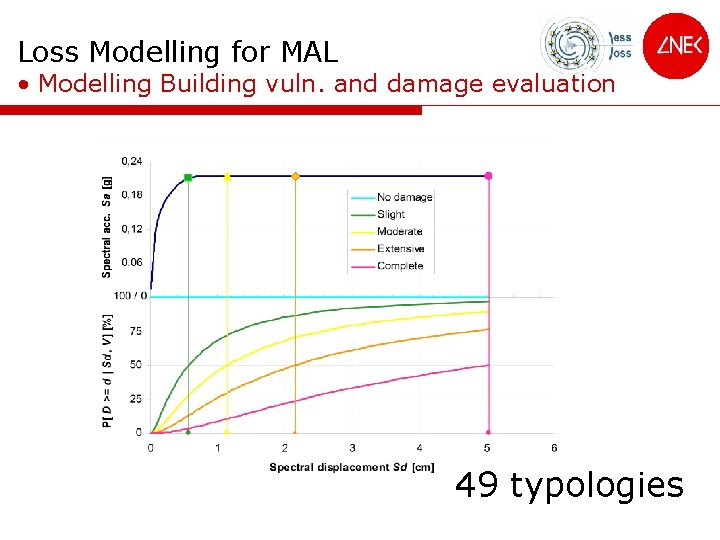
Loss Modelling for MAL • Modelling Building vuln. and damage evaluation 49 typologies
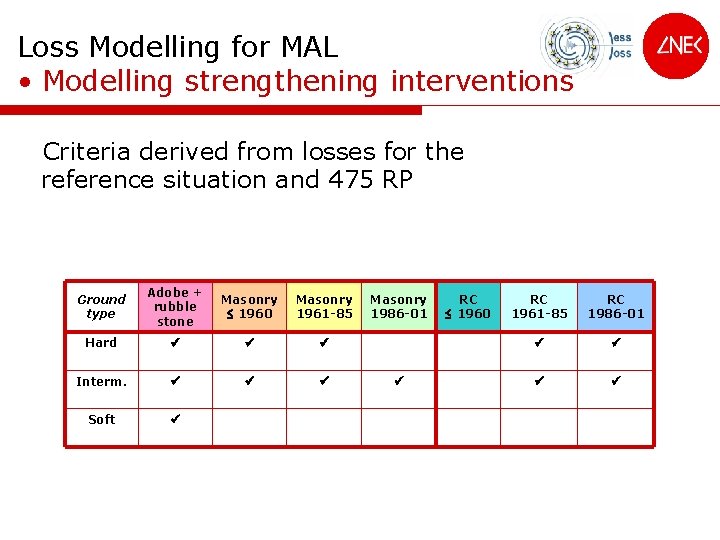
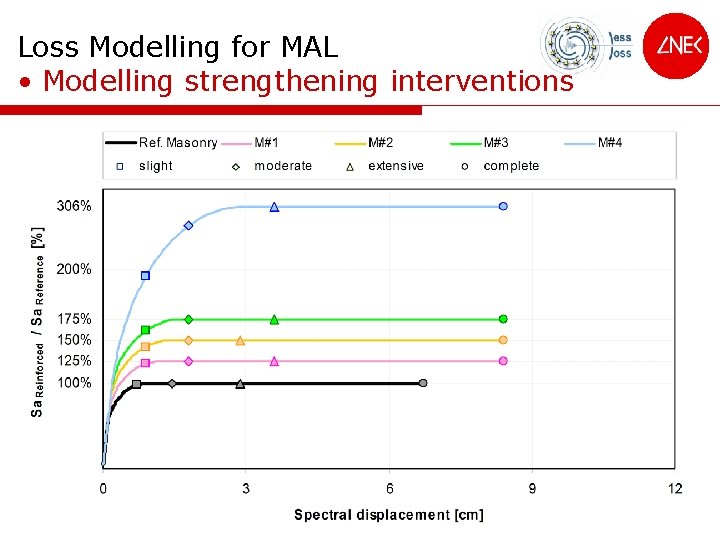
Loss Modelling for MAL • Modelling strengthening interventions Criteria derived from losses for the reference situation and 475 RP Ground type Adobe + rubble stone Masonry 1960 Masonry 1961 -85 Hard Interm. Soft Masonry 1986 -01 RC 1960 RC 1961 -85 RC 1986 -01
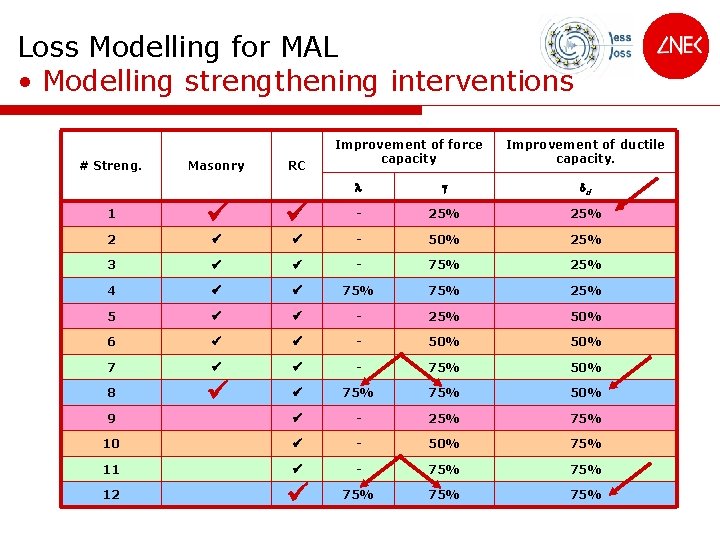
Loss Modelling for MAL • Modelling strengthening interventions # Streng. Masonry RC Improvement of force capacity Improvement of ductile capacity. d 1 - 25% 2 - 50% 25% 3 - 75% 25% 4 75% 25% 5 - 25% 50% 6 - 50% 7 - 75% 50% 8 75% 50% 9 - 25% 75% 10 - 50% 75% 11 - 75% 12 75% 75%
Loss Modelling for MAL • Modelling strengthening interventions
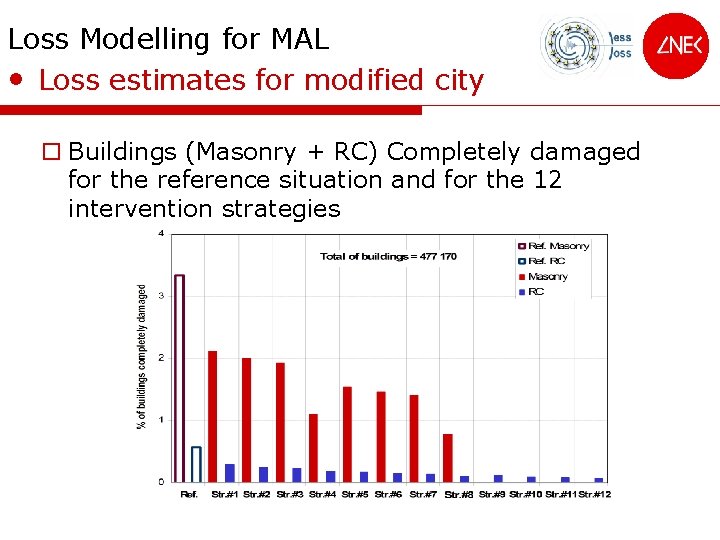
Loss Modelling for MAL • Loss estimates for modified city o Buildings (Masonry + RC) Completely damaged for the reference situation and for the 12 intervention strategies
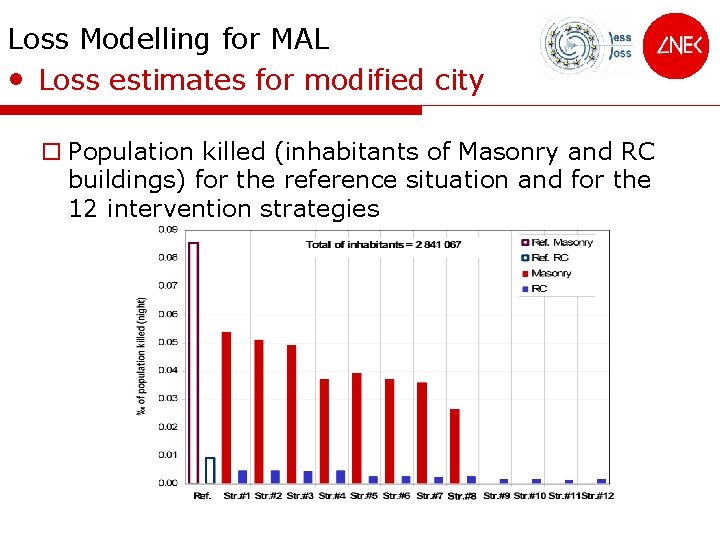
Loss Modelling for MAL • Loss estimates for modified city o Population killed (inhabitants of Masonry and RC buildings) for the reference situation and for the 12 intervention strategies
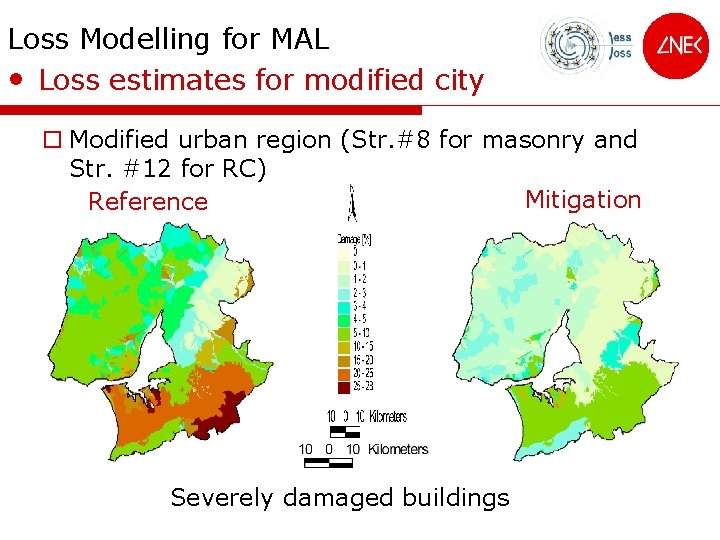
Loss Modelling for MAL • Loss estimates for modified city o Modified urban region (Str. #8 for masonry and Str. #12 for RC) Mitigation Reference Severely damaged buildings
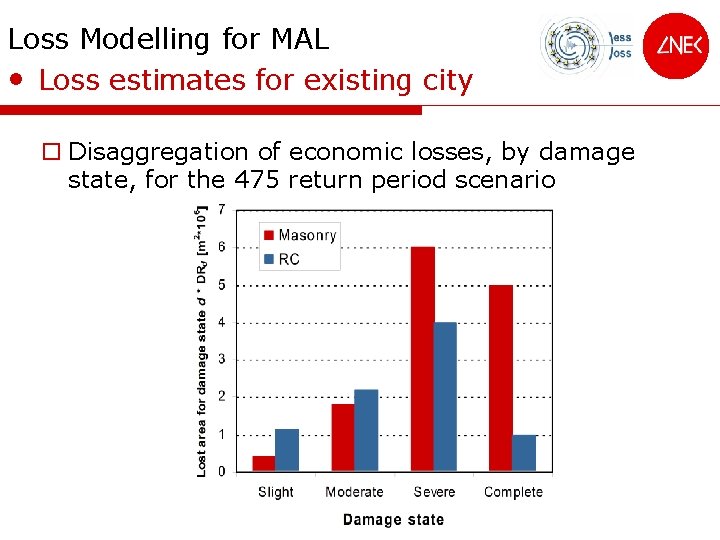
Loss Modelling for MAL • Loss estimates for existing city o Disaggregation of economic losses, by damage state, for the 475 return period scenario
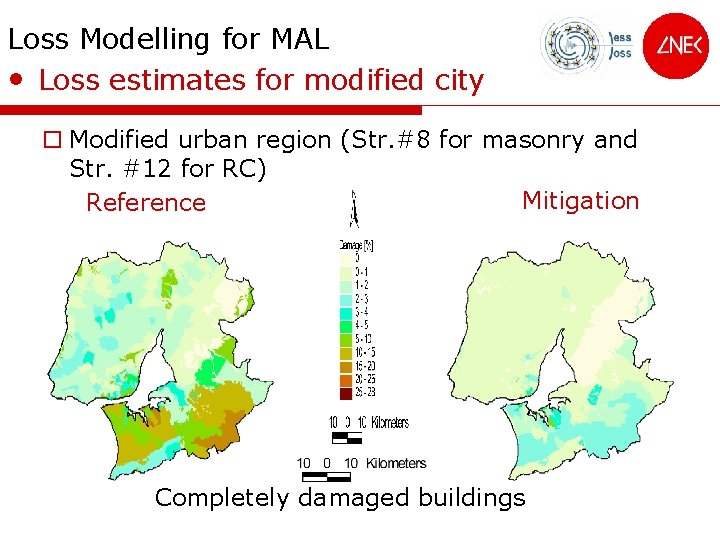
Loss Modelling for MAL • Loss estimates for modified city o Modified urban region (Str. #8 for masonry and Str. #12 for RC) Mitigation Reference Completely damaged buildings
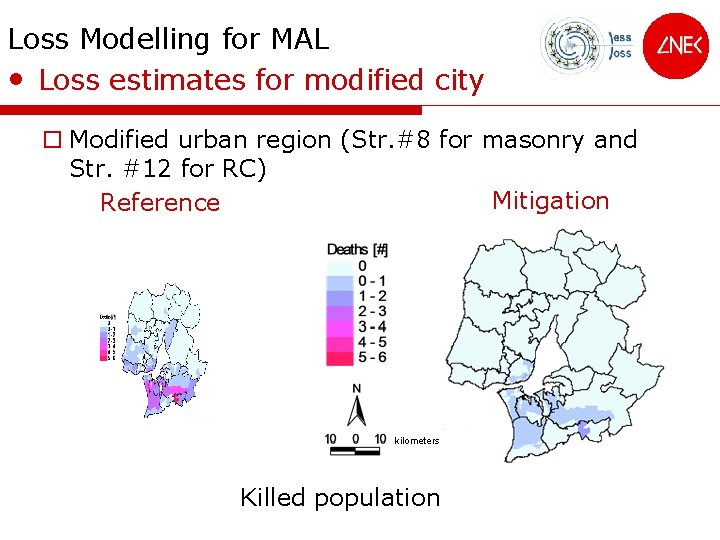
Loss Modelling for MAL • Loss estimates for modified city o Modified urban region (Str. #8 for masonry and Str. #12 for RC) Mitigation Reference kilometers Killed population
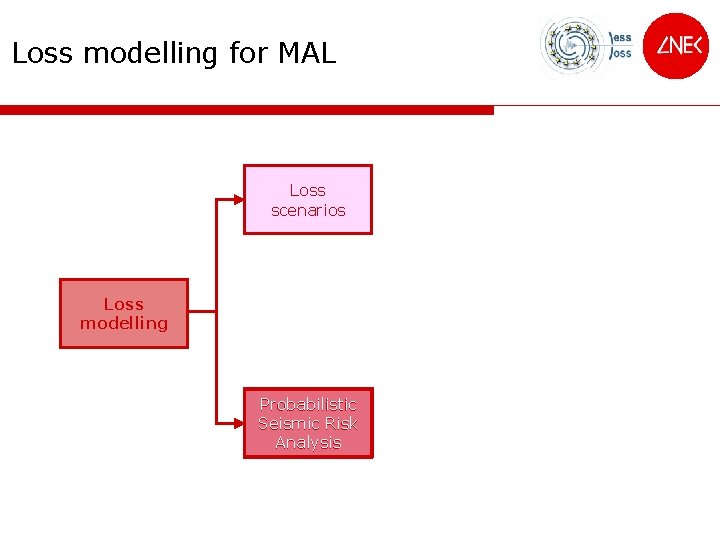
Loss modelling for MAL Loss scenarios Loss modelling Probabilistic Seismic Risk Analysis
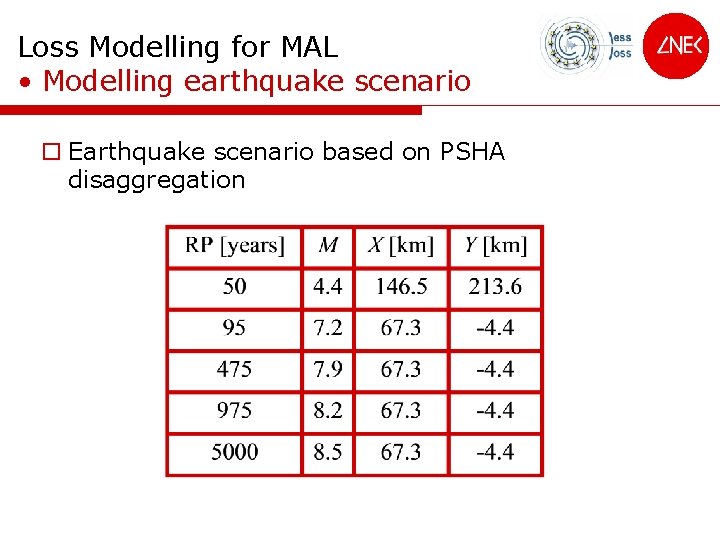
Loss Modelling for MAL • Modelling earthquake scenario o Earthquake scenario based on PSHA disaggregation
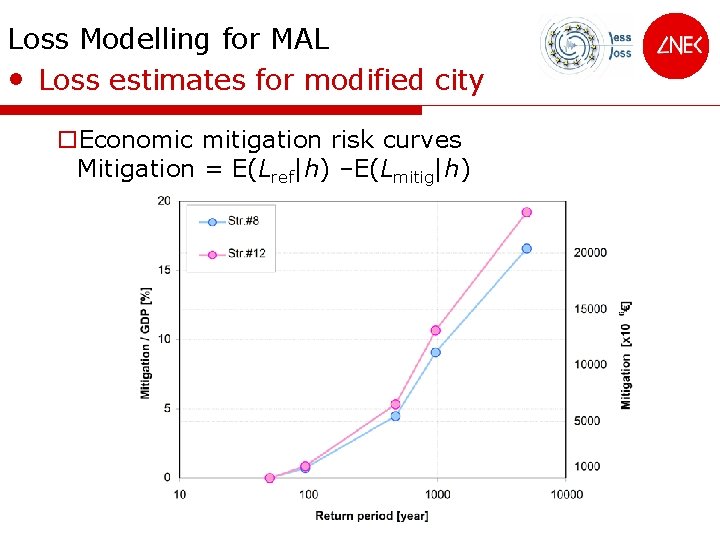
Loss Modelling for MAL • Loss estimates for modified city o. Economic mitigation risk curves Mitigation = E(Lref|h) –E(Lmitig|h)
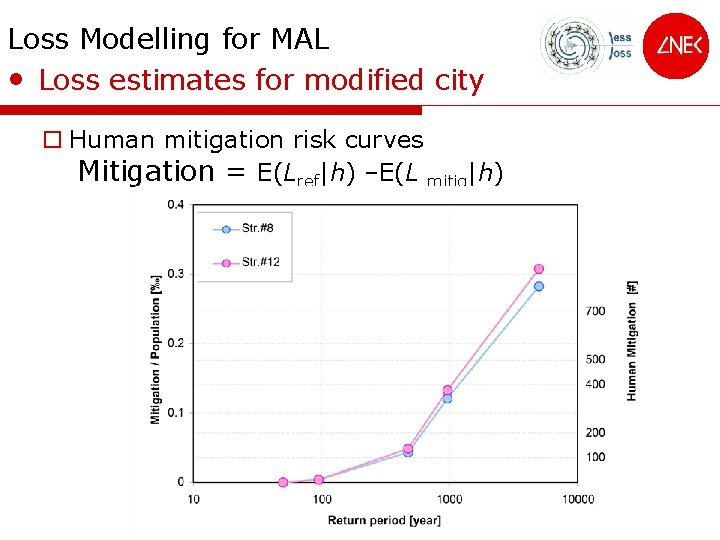
Loss Modelling for MAL • Loss estimates for modified city o Human mitigation risk curves Mitigation = E(Lref|h) –E(L mitig|h)
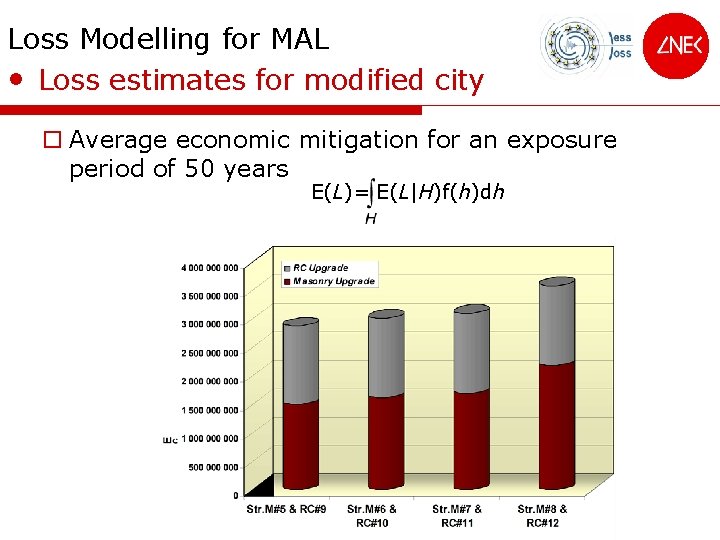
Loss Modelling for MAL • Loss estimates for modified city o Average economic mitigation for an exposure period of 50 years E(L)= E(L|H)f(h)dh
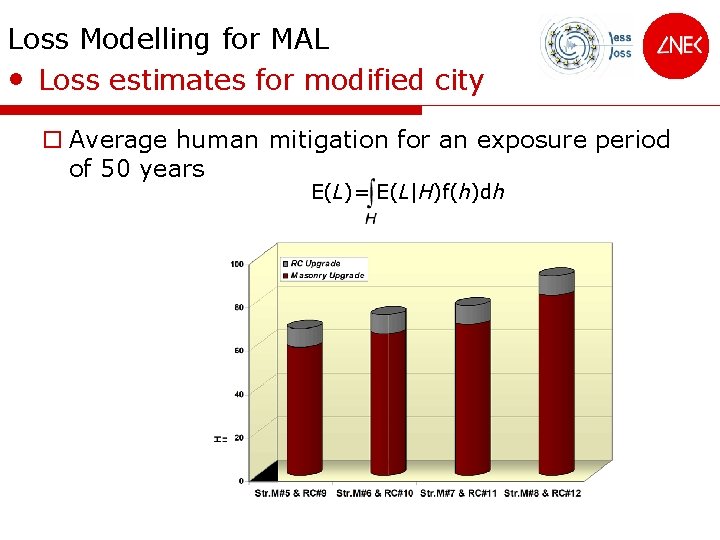
Loss Modelling for MAL • Loss estimates for modified city o Average human mitigation for an exposure period of 50 years E(L)= E(L|H)f(h)dh
Index 1. Choice of case study area 2. Vulnerability and inventory definition 3. Loss modelling for the Metropolitan Area of Lisbon - MAL 3. 1 Reference situation 3. 2 After mitigation 4. Conclusions
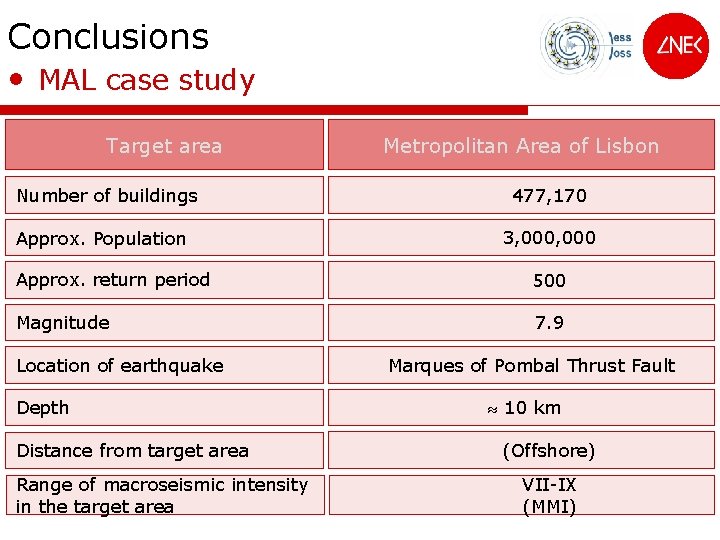
Conclusions • MAL case study Target area Number of buildings Approx. Population Metropolitan Area of Lisbon 477, 170 3, 000 Approx. return period 500 Magnitude 7. 9 Location of earthquake Depth Distance from target area Range of macroseismic intensity in the target area Marques of Pombal Thrust Fault 10 km (Offshore) VII-IX (MMI)
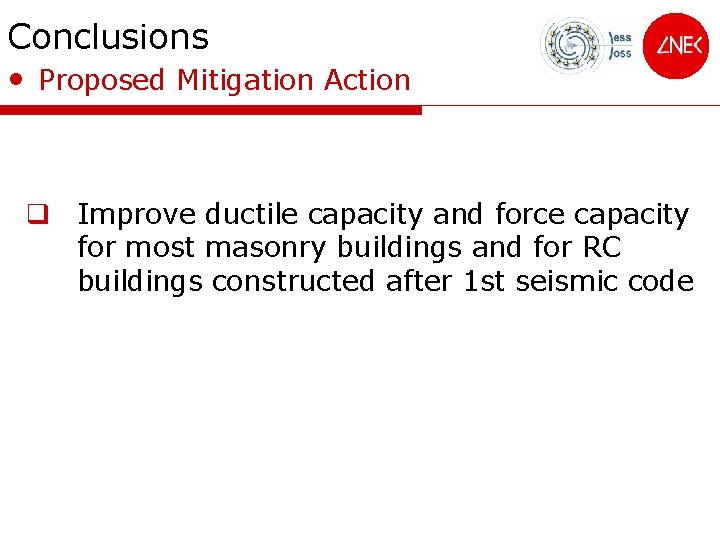
Conclusions • Proposed Mitigation Action q Improve ductile capacity and force capacity for most masonry buildings and for RC buildings constructed after 1 st seismic code
Conclusions • Losses are a consequence of: 1. Some masonry classes being high vulnerable (e. g. Adobe + rubble stone) cause significant human losses 2. Less severe physical damages plays an important relative contribution to economic losses, mainly in RC buildings
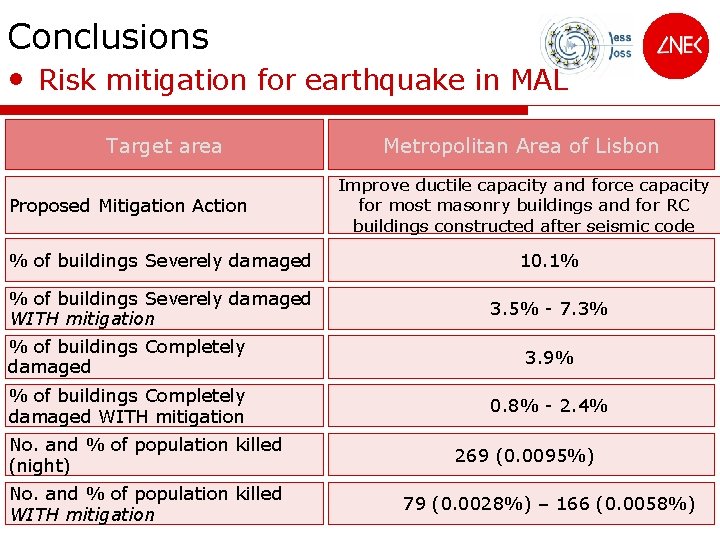
Conclusions • Risk mitigation for earthquake in MAL Target area Proposed Mitigation Action Metropolitan Area of Lisbon Improve ductile capacity and force capacity for most masonry buildings and for RC buildings constructed after seismic code % of buildings Severely damaged 10. 1% % of buildings Severely damaged WITH mitigation 3. 5% - 7. 3% % of buildings Completely damaged 3. 9% % of buildings Completely damaged WITH mitigation 0. 8% - 2. 4% No. and % of population killed (night) No. and % of population killed WITH mitigation 269 (0. 0095%) 79 (0. 0028%) – 166 (0. 0058%)
![Conclusions • Impact of the purposed mitigation actions Benefits = [E(Lref|h) –E(Lmitig|h)]/ E(Lref|h) Impact](http://slidetodoc.com/presentation_image/0c034521c5fb9fc0eda613793b76ca07/image-62.jpg "Conclusions • Impact of the purposed mitigation actions Benefits = [E(Lref|h) –E(Lmitig|h)]/ E(Lref|h) Impact")
Conclusions • Impact of the purposed mitigation actions Benefits = [E(Lref|h) –E(Lmitig|h)]/ E(Lref|h) Impact indicator Buildings Severely damaged Buildings Completely damaged Population killed Before mitigation After Mitigation benefits 48 580 (10. 1%*) 16 901 (3. 5%) till 34 866 (7. 3%) 28% till 65% 18 660 (3. 9%) 4 032 (0. 8%) till 11 489 (2. 4%) 38% till 78% 269 (0. 0095%) 79 (0. 0028%) till 166 (0. 0058%) 38% till 71% *The numbers indicated in brackets represent the percentage of losses relatively to total MAL buildings
- Slides: 62