
Reduction of Environmental Impacts by Development of Industrial
Reduction of Environmental Impacts by Development of Industrial Symbiosis in Japan - Case Studies for Application of Co-production Technologies in Steel Industries and its Reduction Potential of Greenhouse Gas Emissions - Yasunari Matsuno, Ichiro Daigo, Masaru Yamashita and Yoshihiro Adachi Department of Material Engineering, Graduate School of Engineering, The University of Tokyo
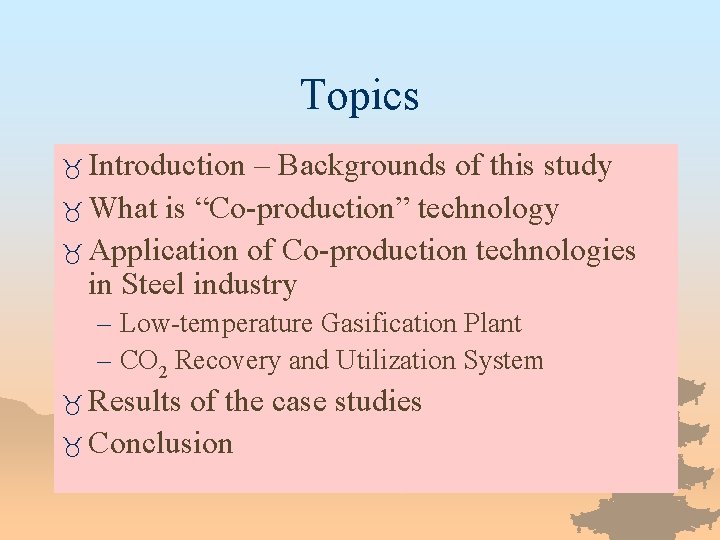
Topics _ Introduction – Backgrounds of this study _ What is “Co-production” technology _ Application of Co-production technologies in Steel industry – Low-temperature Gasification Plant – CO 2 Recovery and Utilization System _ Results of the case studies _ Conclusion
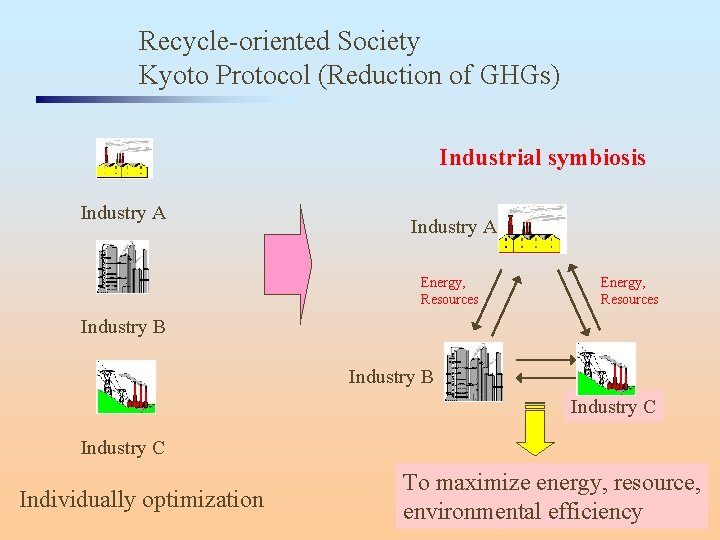
Recycle-oriented Society Kyoto Protocol (Reduction of GHGs) Industrial symbiosis Industry A Energy, Resources Industry B Industry C Individually optimization To maximize energy, resource, environmental efficiency
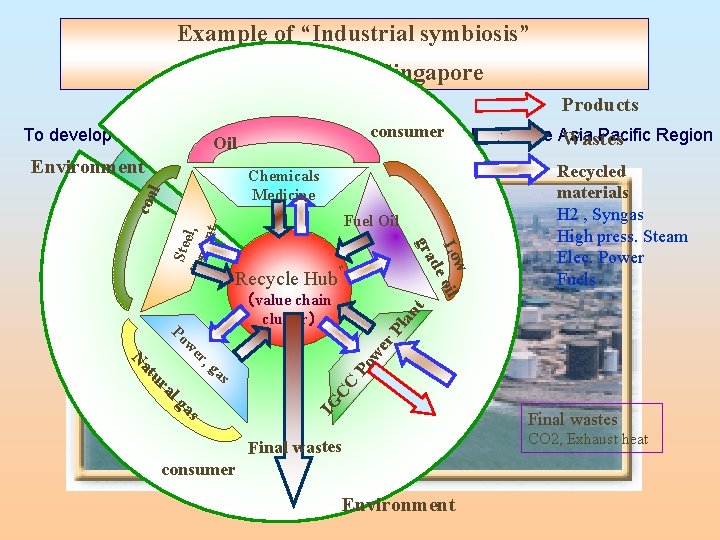
Example of “Industrial symbiosis” Jurong Island, Singapore Products consumer To develop Jurong Island Pacific Region Wastes Oilinto a World-Class Chemicals Hub in the Asia Environment Fuel Oil w oil de Lo gra Stee Cem l, ent coa l Chemicals Medicine Recycle Hub゙ la r. P Po nt (value chain cluster) Recycled materials H 2 , Syngas High press. Steam Elec. Power Fuels er we w Po CC al ur at as Final wastes s ga IG N , g Final wastes consumer Environment CO 2, Exhaust heat
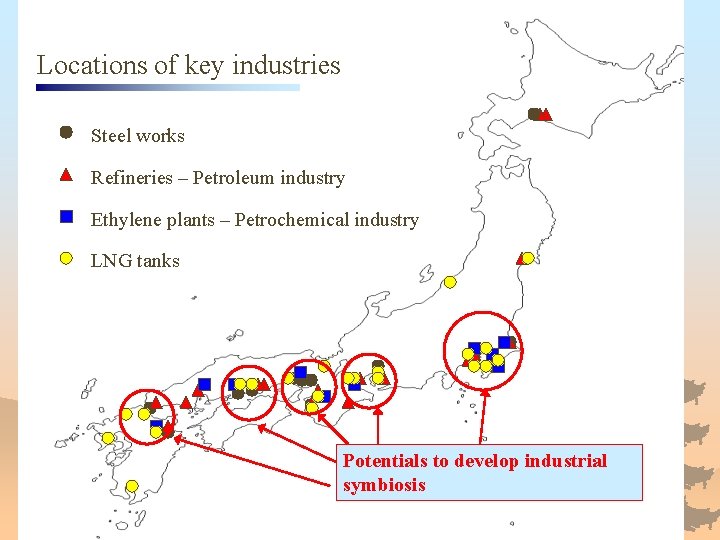
Locations of key industries Steel works Refineries – Petroleum industry Ethylene plants – Petrochemical industry LNG tanks Potentials to develop industrial symbiosis
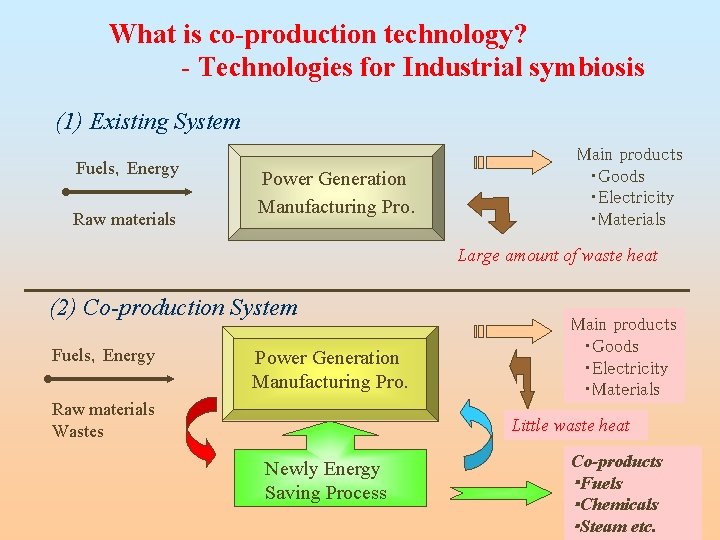
What is co-production technology? - Technologies for Industrial symbiosis (1) Existing System Fuels,Energy Raw materials Power Generation Manufacturing Pro. Main products ・Goods ・Electricity ・Materials Large amount of waste heat (2) Co-production System Fuels,Energy Power Generation Manufacturing Pro. Raw materials Wastes Main products ・Goods ・Electricity ・Materials Little waste heat Newly Energy Saving Process Co-products ・Fuels ・Chemicals ・Steam etc.
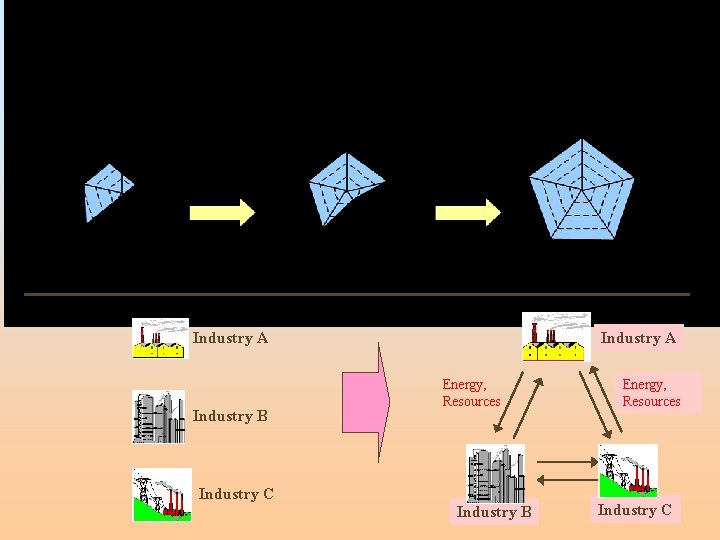
Industry A Industry B Industry A Energy, Resources Industry C Industry B Energy, Resources Industry C
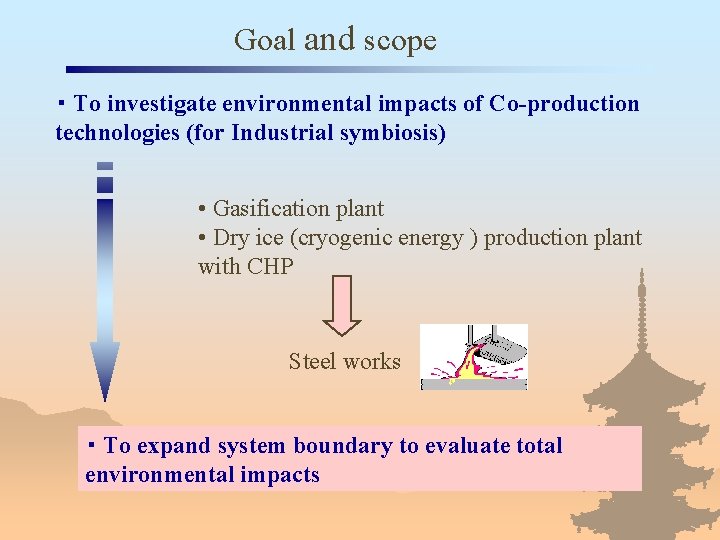
Goal and scope ・ To investigate environmental impacts of Co-production technologies (for Industrial symbiosis) • Gasification plant • Dry ice (cryogenic energy ) production plant with CHP Steel works ・ To expand system boundary to evaluate total environmental impacts
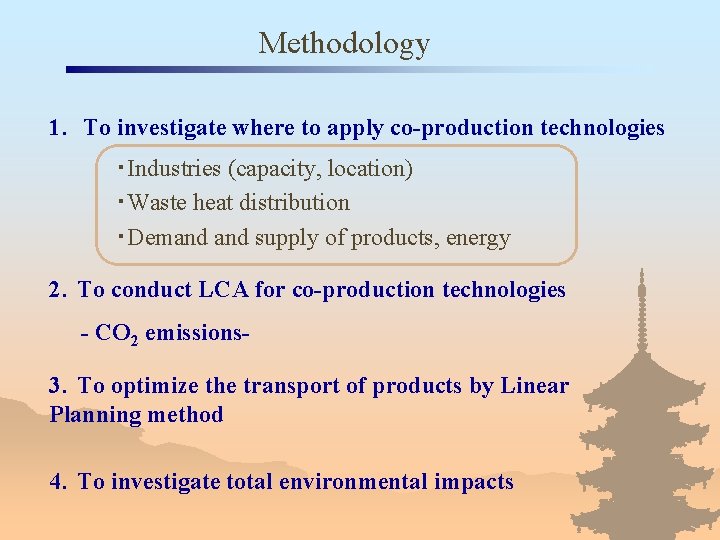
Methodology 1. To investigate where to apply co-production technologies ・Industries (capacity, location) ・Waste heat distribution ・Demand supply of products, energy 2.To conduct LCA for co-production technologies - CO 2 emissions 3.To optimize the transport of products by Linear Planning method 4.To investigate total environmental impacts
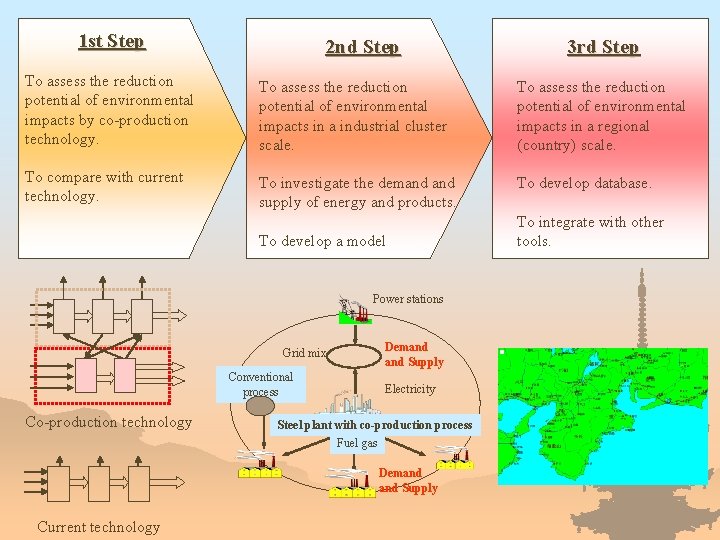
1 st Step 2 nd Step 3 rd Step To assess the reduction potential of environmental impacts by co-production technology. To assess the reduction potential of environmental impacts in a industrial cluster scale. To assess the reduction potential of environmental impacts in a regional (country) scale. To compare with current technology. To investigate the demand supply of energy and products. To develop database. To develop a model Power stations Grid mix Conventional process Co-production technology Demand Supply Electricity Steel plant with co-production process Fuel gas Demand Supply Current technology To integrate with other tools.
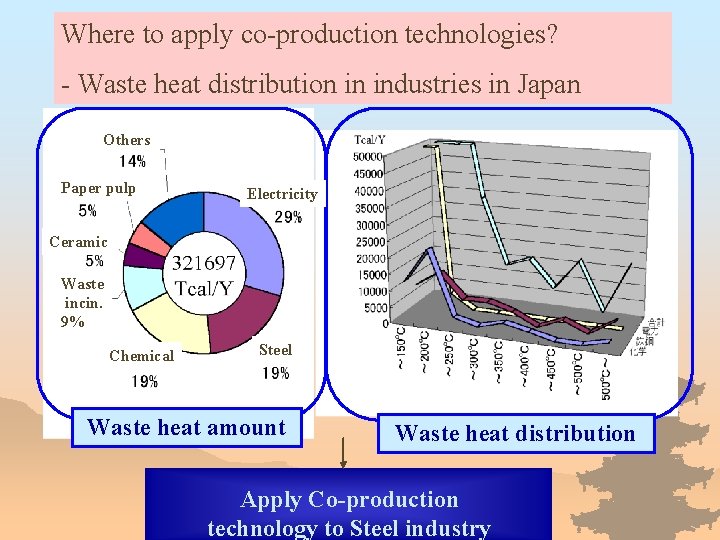
Where to apply co-production technologies? - Waste heat distribution in industries in Japan Others Paper pulp Electricity Ceramic Waste incin. 9% Chemical Steel Waste heat amount Waste heat distribution Apply Co-production technology to Steel industry
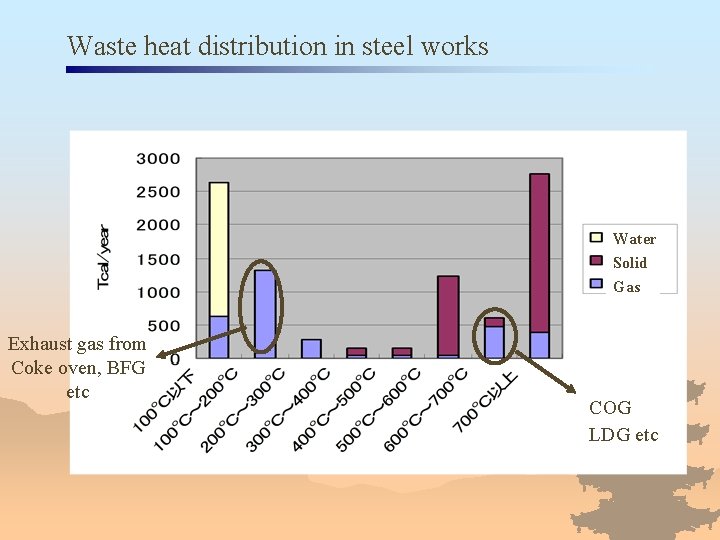
Waste heat distribution in steel works Water Solid Gas Exhaust gas from Coke oven, BFG etc COG LDG etc
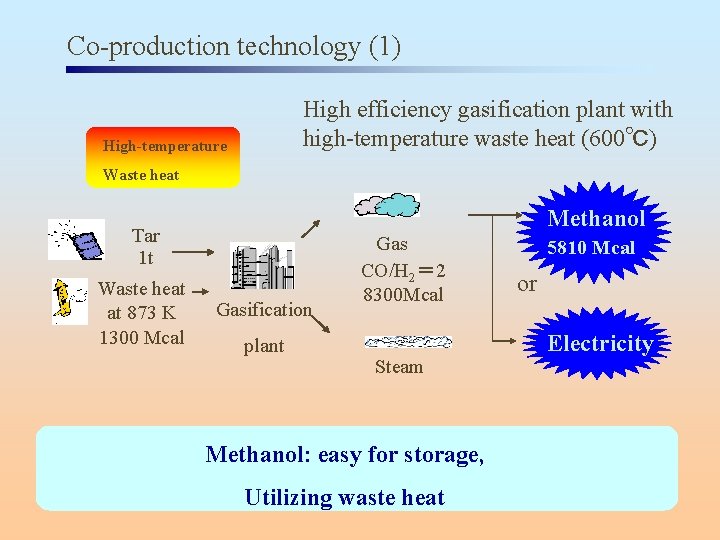
Co-production technology (1) High efficiency gasification plant with high-temperature waste heat (600℃) High-temperature Waste heat Methanol Tar 1 t Waste heat at 873 K 1300 Mcal Gasification plant Gas CO/H 2= 2 8300 Mcal Steam Methanol: easy for storage, Utilizing waste heat 5810 Mcal or Electricity
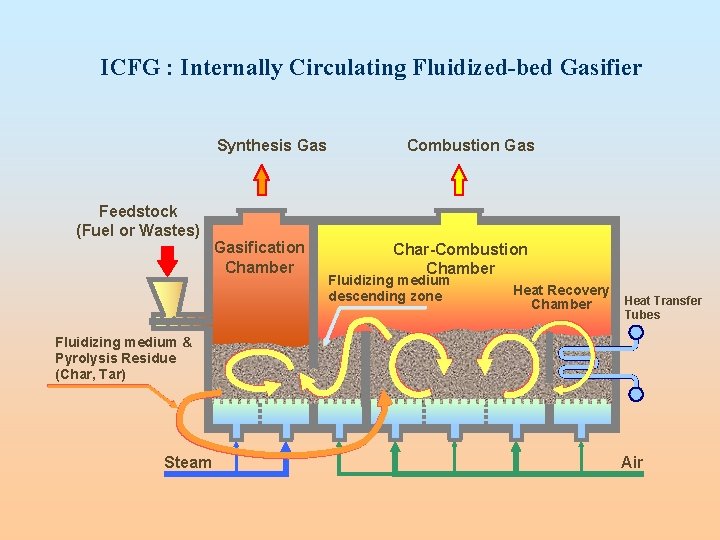
ICFG : Internally Circulating Fluidized-bed Gasifier Synthesis Gas Feedstock (Fuel or Wastes) Gasification Chamber Combustion Gas Char-Combustion Chamber Fluidizing medium descending zone Heat Recovery Chamber Heat Transfer Tubes Fluidizing medium & Pyrolysis Residue (Char, Tar) Steam Air
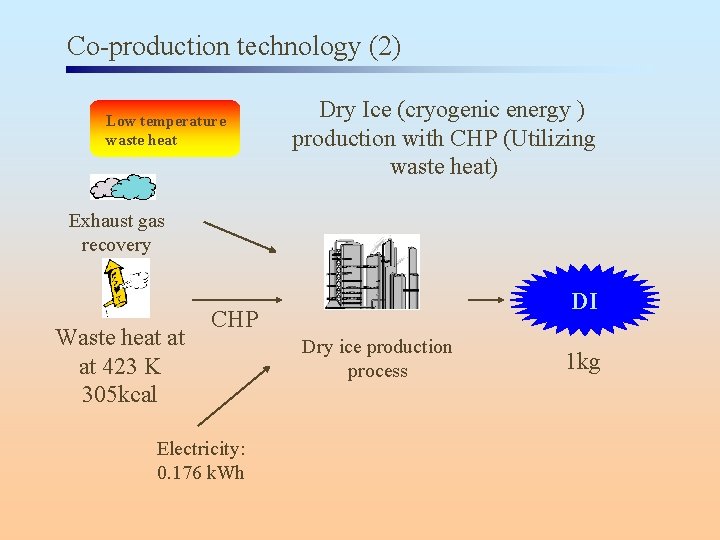
Co-production technology (2) Low temperature waste heat Dry Ice (cryogenic energy ) production with CHP (Utilizing waste heat) Exhaust gas recovery Waste heat at at 423 K 305 kcal DI CHP Electricity: 0. 176 k. Wh Dry ice production process 1 kg
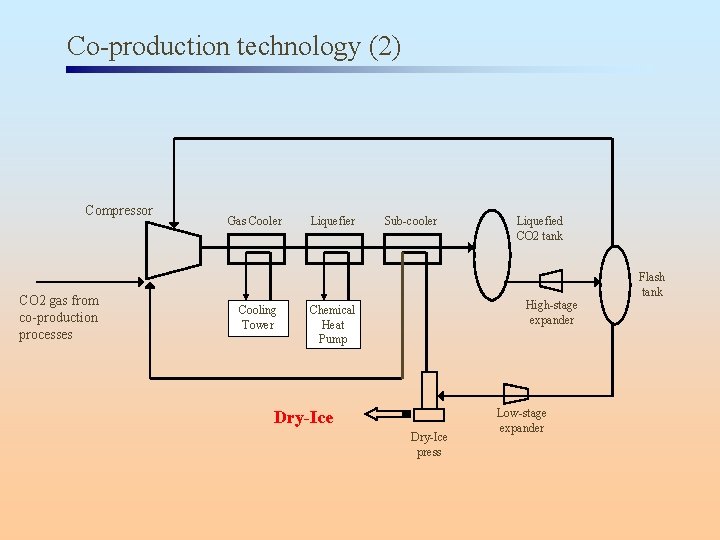
Co-production technology (2) Compressor CO 2 gas from co-production processes Gas Cooler Liquefier Sub-cooler Liquefied CO 2 tank Flash tank Cooling Tower High-stage expander Chemical Heat Pump Dry-Ice press Low-stage expander
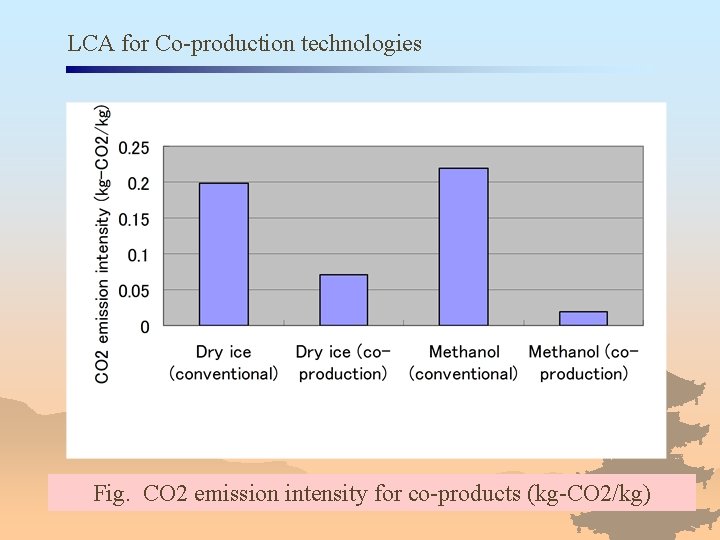
LCA for Co-production technologies Fig. CO 2 emission intensity for co-products (kg-CO 2/kg)
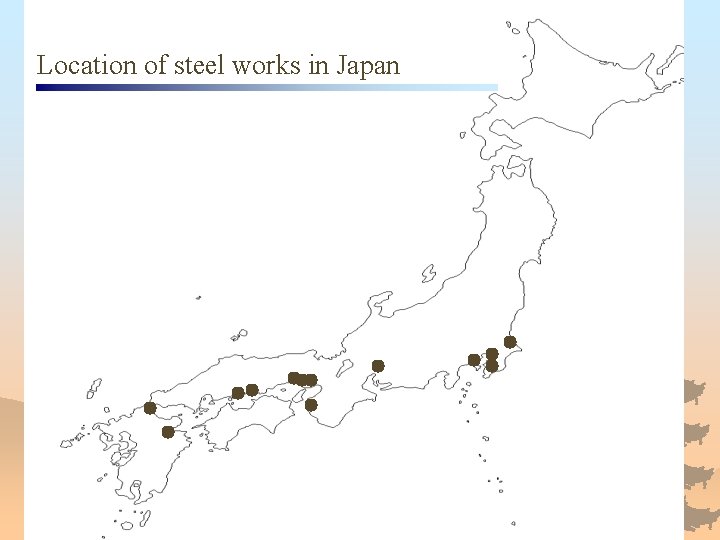
Location of steel works in Japan
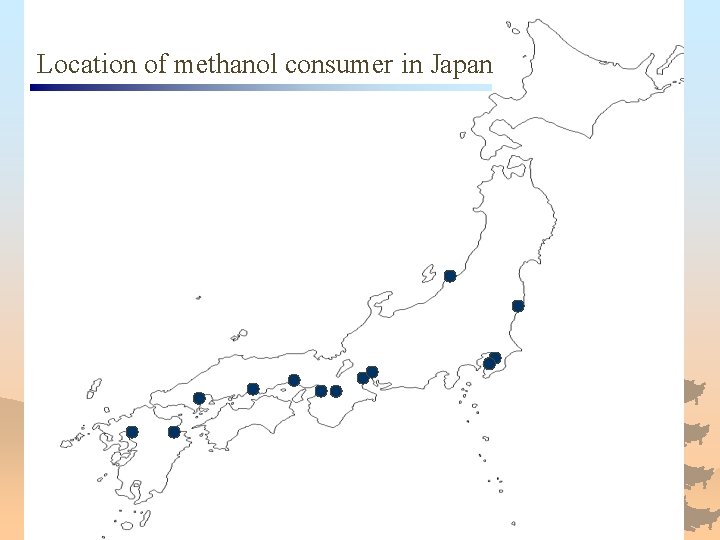
Location of methanol consumer in Japan
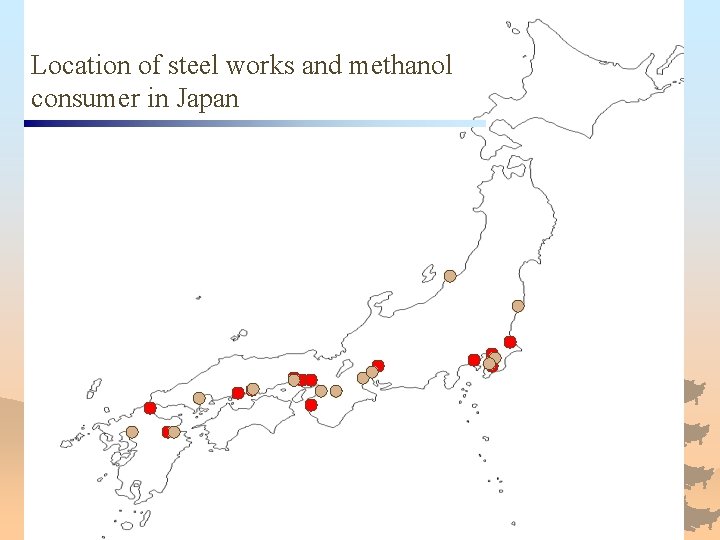
Location of steel works and methanol consumer in Japan
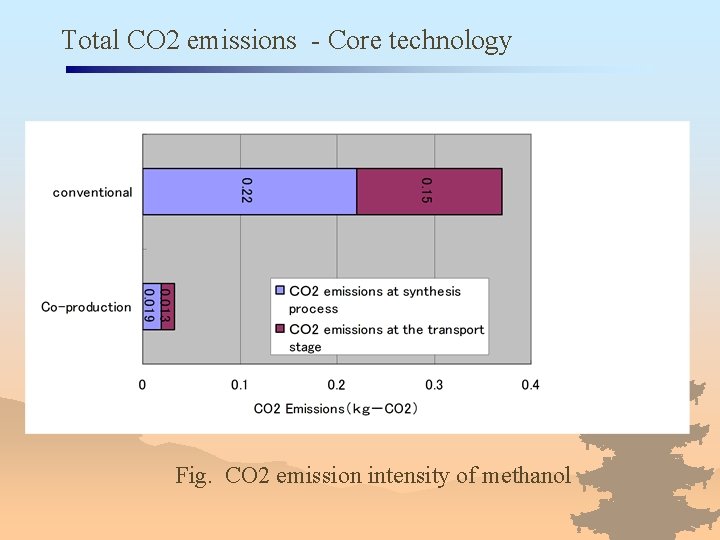
Total CO 2 emissions - Core technology Fig. CO 2 emission intensity of methanol
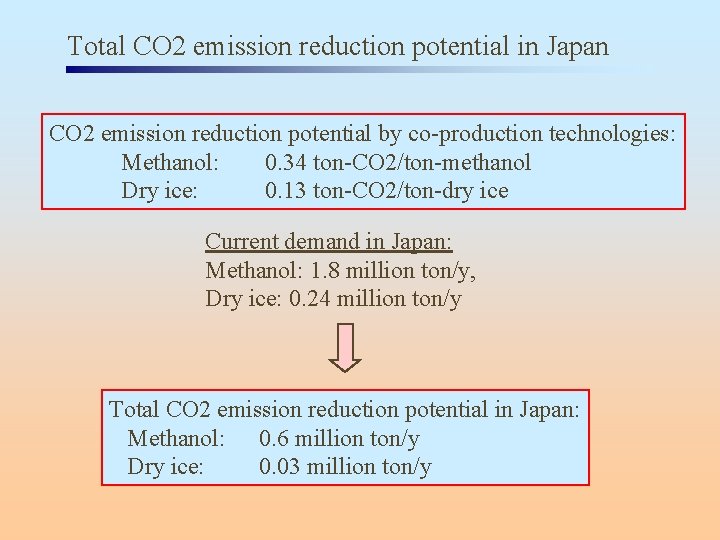
Total CO 2 emission reduction potential in Japan CO 2 emission reduction potential by co-production technologies: Methanol: 0. 34 ton-CO 2/ton-methanol Dry ice: 0. 13 ton-CO 2/ton-dry ice Current demand in Japan: Methanol: 1. 8 million ton/y, Dry ice: 0. 24 million ton/y Total CO 2 emission reduction potential in Japan: Methanol: 0. 6 million ton/y Dry ice: 0. 03 million ton/y
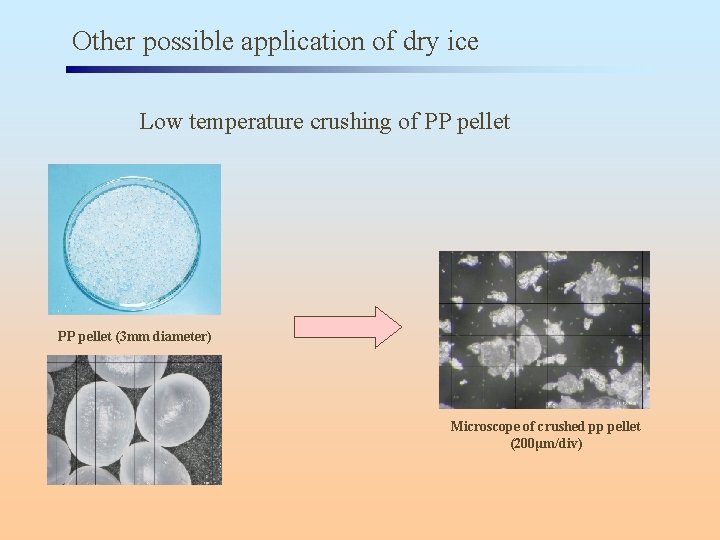
Other possible application of dry ice Low temperature crushing of PP pellet (3 mm diameter) Microscope of crushed pp pellet (200μm/div)
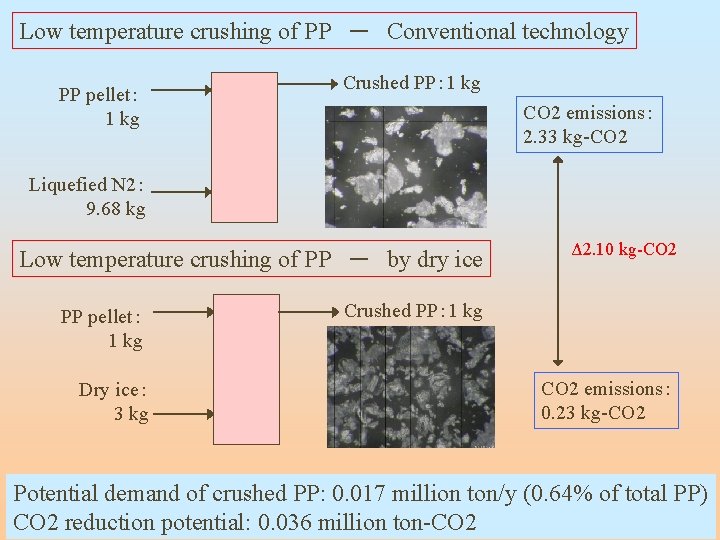
Low temperature crushing of PP - Conventional technology PP pellet: 1 kg Crushed PP: 1 kg CO 2 emissions: 2. 33 kg-CO 2 Liquefied N 2: 9. 68 kg Low temperature crushing of PP - by dry ice PP pellet: 1 kg Dry ice: 3 kg Δ 2. 10 kg-CO 2 Crushed PP: 1 kg CO 2 emissions: 0. 23 kg-CO 2 Potential demand of crushed PP: 0. 017 million ton/y (0. 64% of total PP) CO 2 reduction potential: 0. 036 million ton-CO 2
Conclusion • Methanol production by co-production technology (gasification plant) will reduce CO 2 emissions by 91% compared with conventional technology (92% reduction in production, 90% reduction in transport) • Total CO 2 emission reduction potential in Japan by methanol production : 0. 6 million ton-CO 2 • Dry Ice (cryogenic energy) production by co-production technology will also reduce CO 2 emissions by 64% compared with conventional technology. Total CO 2 emission reduction potential in Japan is 0. 03 million ton-CO 2. • Other CO 2 reduction potential by applying dry ice is being investigated, such as low temperature crushing of PP pellet

_Thank you very much for your attention. _For further information; matsuno@material. t. u-tokyo. ac. jp
- Slides: 26