
Reduction of Aldehydes and Ketones 19 8 Reduction
- Slides: 25
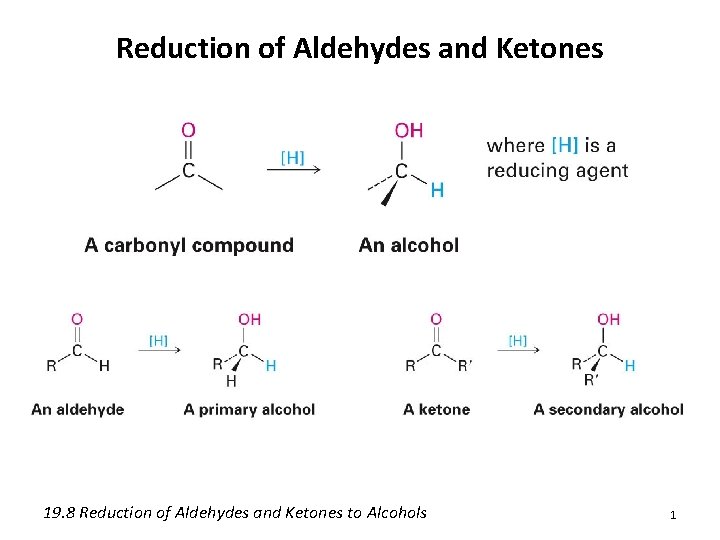
Reduction of Aldehydes and Ketones 19. 8 Reduction of Aldehydes and Ketones to Alcohols 1
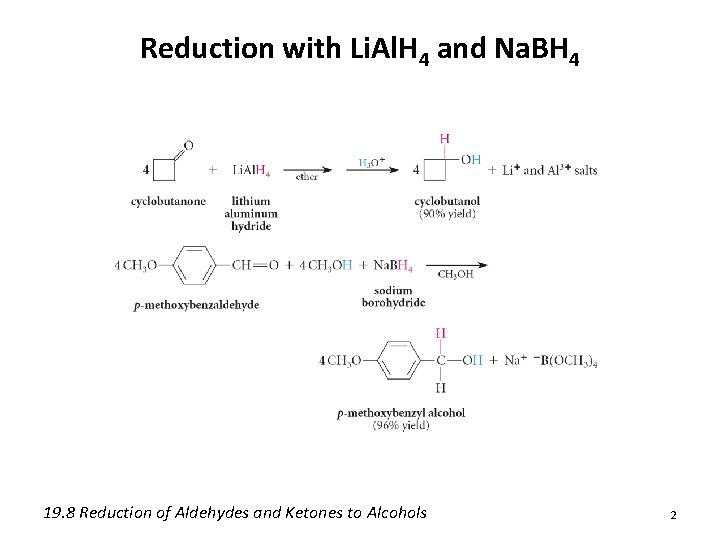
Reduction with Li. Al. H 4 and Na. BH 4 19. 8 Reduction of Aldehydes and Ketones to Alcohols 2
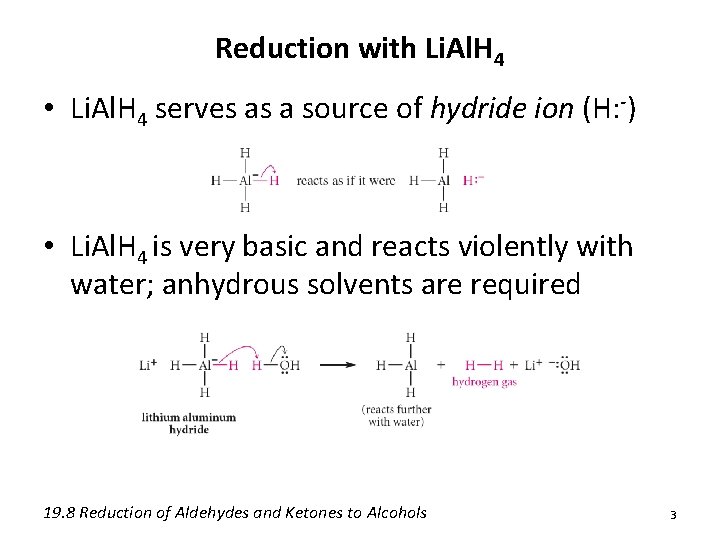
Reduction with Li. Al. H 4 • Li. Al. H 4 serves as a source of hydride ion (H: -) • Li. Al. H 4 is very basic and reacts violently with water; anhydrous solvents are required 19. 8 Reduction of Aldehydes and Ketones to Alcohols 3
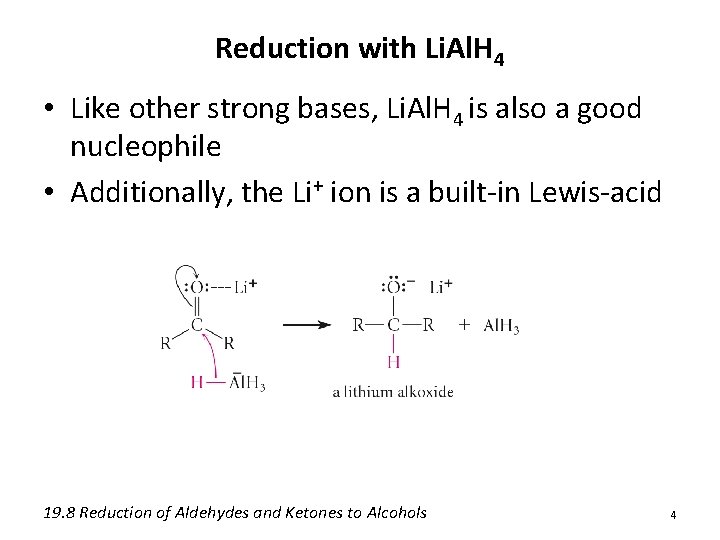
Reduction with Li. Al. H 4 • Like other strong bases, Li. Al. H 4 is also a good nucleophile • Additionally, the Li+ ion is a built-in Lewis-acid 19. 8 Reduction of Aldehydes and Ketones to Alcohols 4
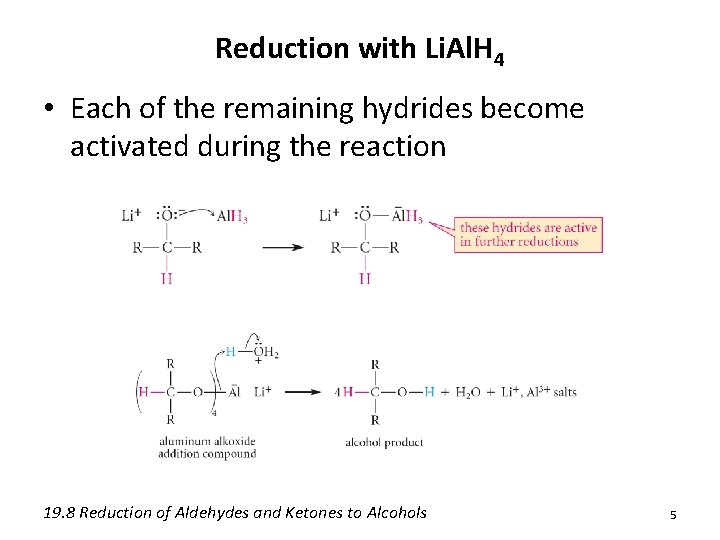
Reduction with Li. Al. H 4 • Each of the remaining hydrides become activated during the reaction 19. 8 Reduction of Aldehydes and Ketones to Alcohols 5
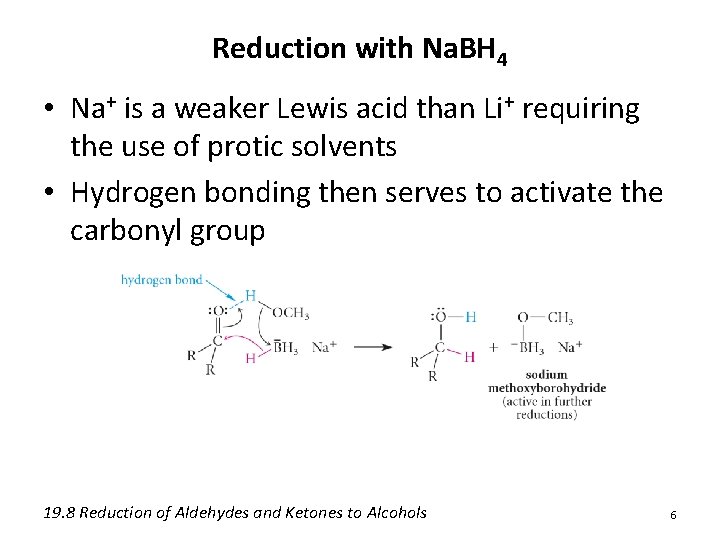
Reduction with Na. BH 4 • Na+ is a weaker Lewis acid than Li+ requiring the use of protic solvents • Hydrogen bonding then serves to activate the carbonyl group 19. 8 Reduction of Aldehydes and Ketones to Alcohols 6
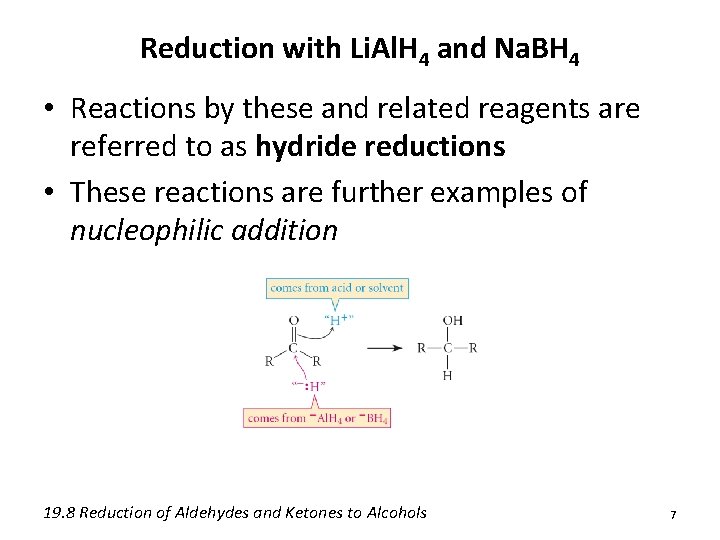
Reduction with Li. Al. H 4 and Na. BH 4 • Reactions by these and related reagents are referred to as hydride reductions • These reactions are further examples of nucleophilic addition 19. 8 Reduction of Aldehydes and Ketones to Alcohols 7
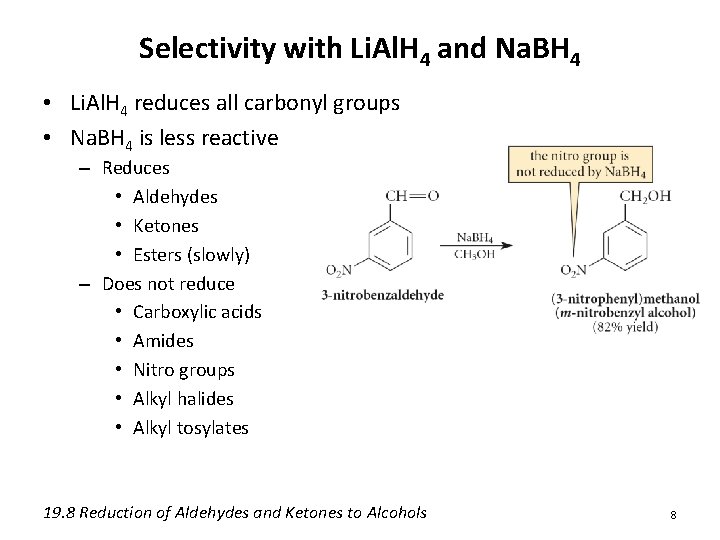
Selectivity with Li. Al. H 4 and Na. BH 4 • Li. Al. H 4 reduces all carbonyl groups • Na. BH 4 is less reactive – Reduces • Aldehydes • Ketones • Esters (slowly) – Does not reduce • Carboxylic acids • Amides • Nitro groups • Alkyl halides • Alkyl tosylates 19. 8 Reduction of Aldehydes and Ketones to Alcohols 8
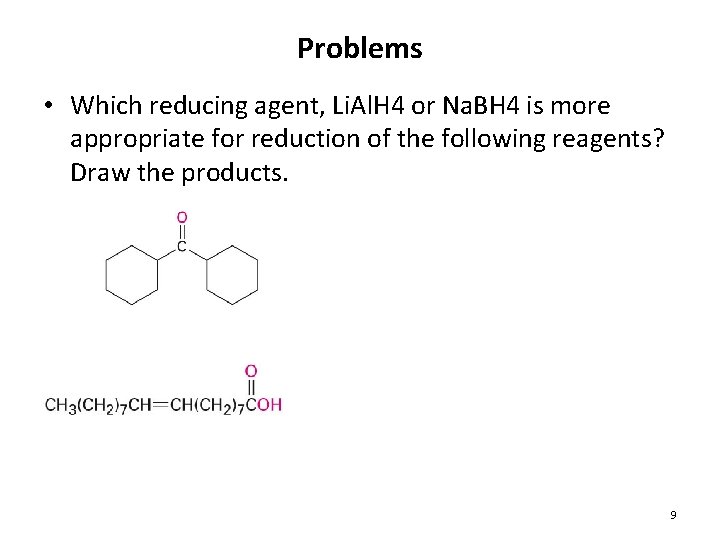
Problems • Which reducing agent, Li. Al. H 4 or Na. BH 4 is more appropriate for reduction of the following reagents? Draw the products. 9
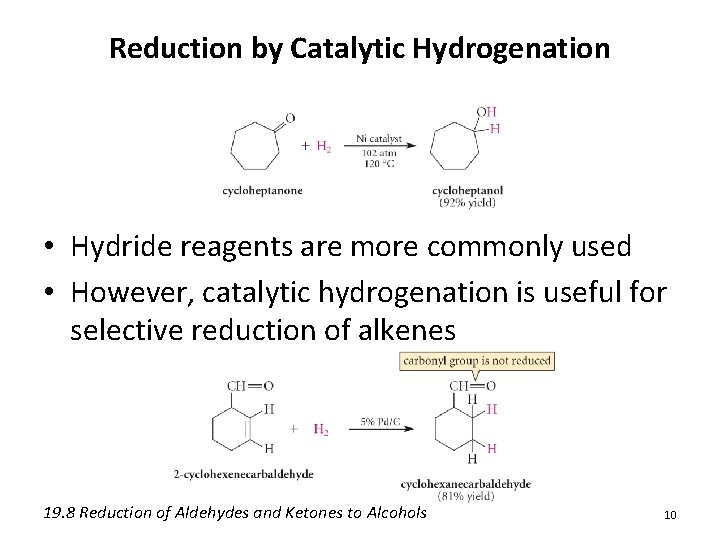
Reduction by Catalytic Hydrogenation • Hydride reagents are more commonly used • However, catalytic hydrogenation is useful for selective reduction of alkenes 19. 8 Reduction of Aldehydes and Ketones to Alcohols 10
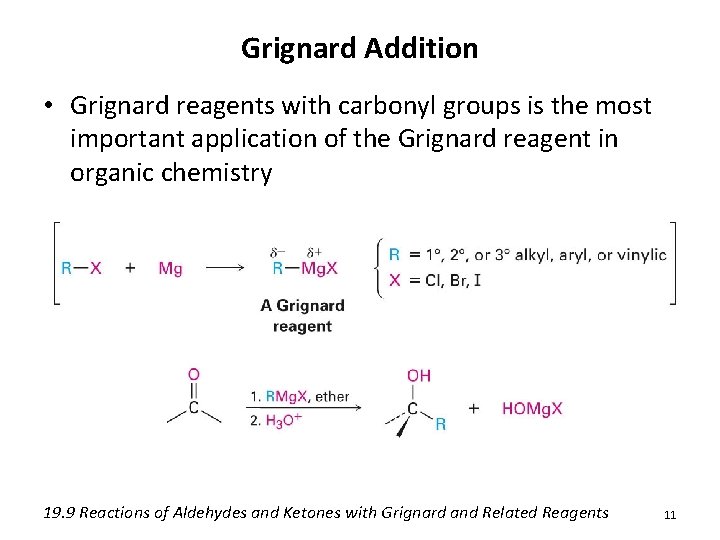
Grignard Addition • Grignard reagents with carbonyl groups is the most important application of the Grignard reagent in organic chemistry 19. 9 Reactions of Aldehydes and Ketones with Grignard and Related Reagents 11
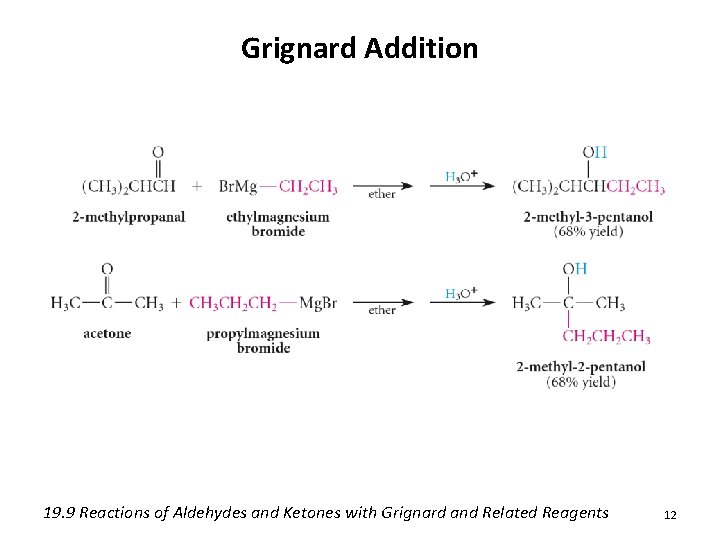
Grignard Addition 19. 9 Reactions of Aldehydes and Ketones with Grignard and Related Reagents 12
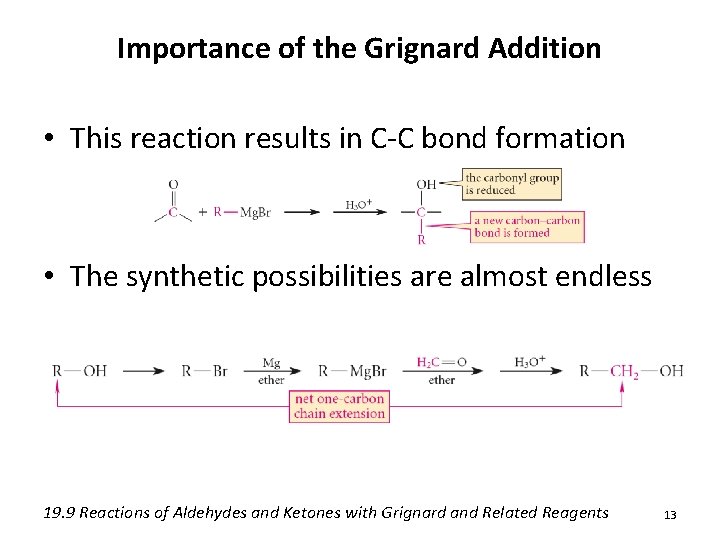
Importance of the Grignard Addition • This reaction results in C-C bond formation • The synthetic possibilities are almost endless 19. 9 Reactions of Aldehydes and Ketones with Grignard and Related Reagents 13
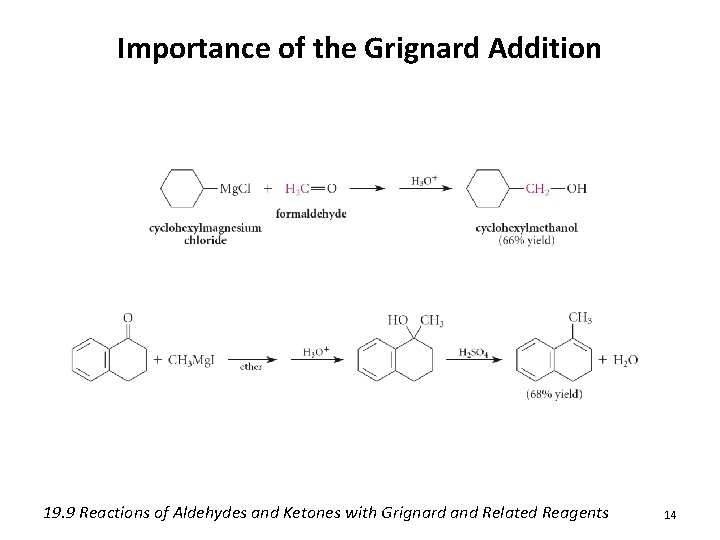
Importance of the Grignard Addition 19. 9 Reactions of Aldehydes and Ketones with Grignard and Related Reagents 14
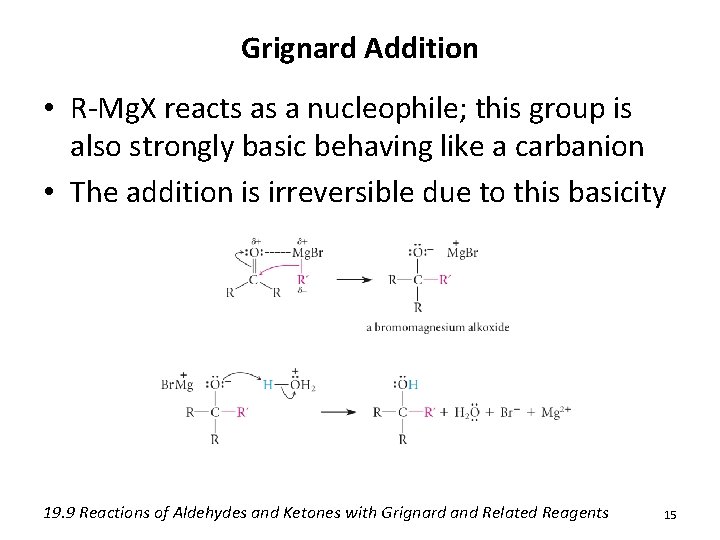
Grignard Addition • R-Mg. X reacts as a nucleophile; this group is also strongly basic behaving like a carbanion • The addition is irreversible due to this basicity 19. 9 Reactions of Aldehydes and Ketones with Grignard and Related Reagents 15
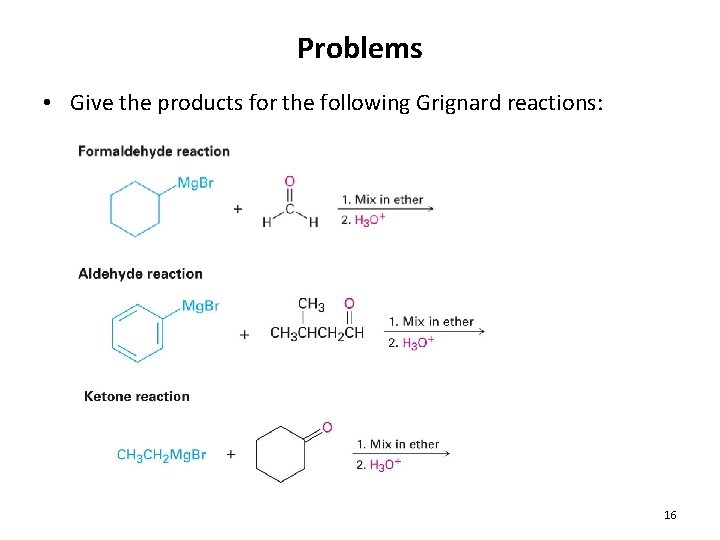
Problems • Give the products for the following Grignard reactions: 16
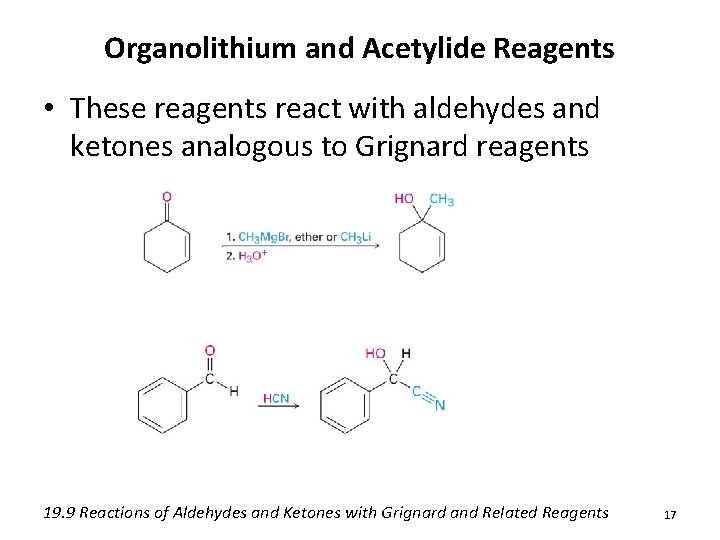
Organolithium and Acetylide Reagents • These reagents react with aldehydes and ketones analogous to Grignard reagents 19. 9 Reactions of Aldehydes and Ketones with Grignard and Related Reagents 17
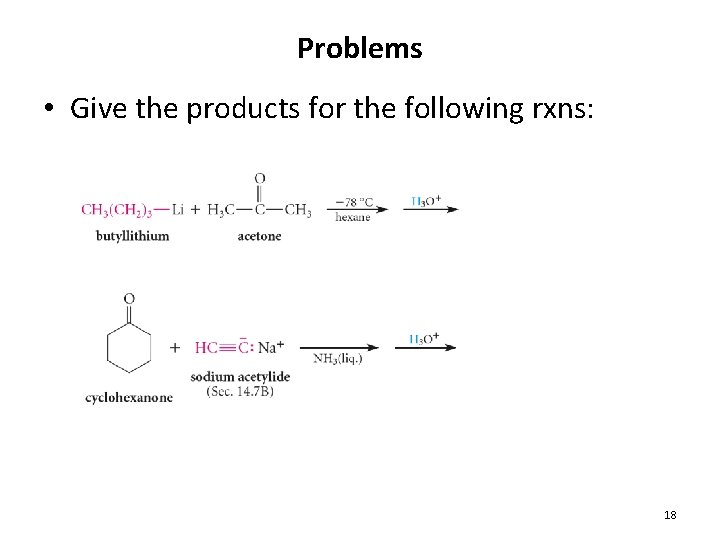
Problems • Give the products for the following rxns: 18
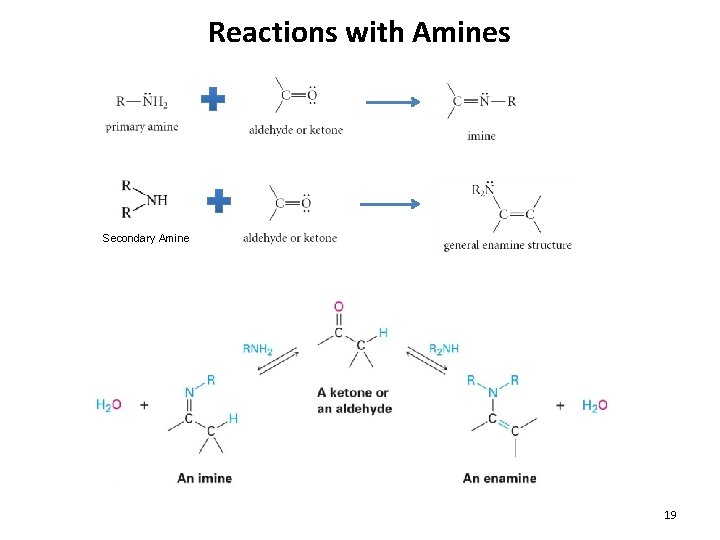
Reactions with Amines Secondary Amine 19
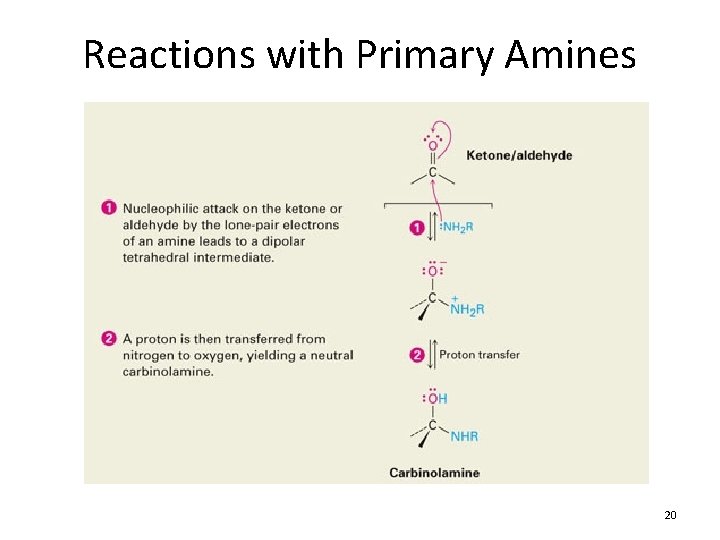
Reactions with Primary Amines 20
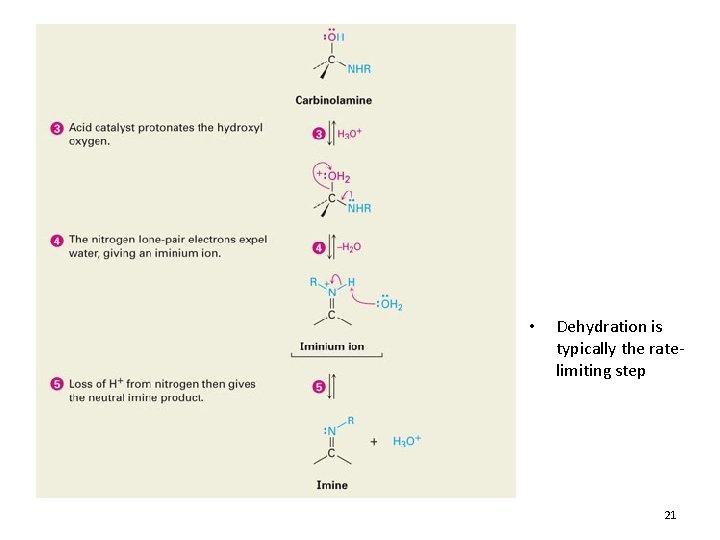
• Dehydration is typically the ratelimiting step 21
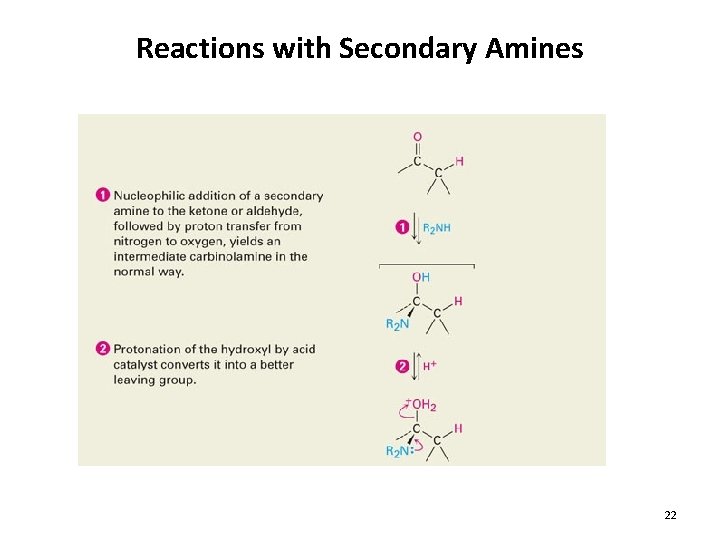
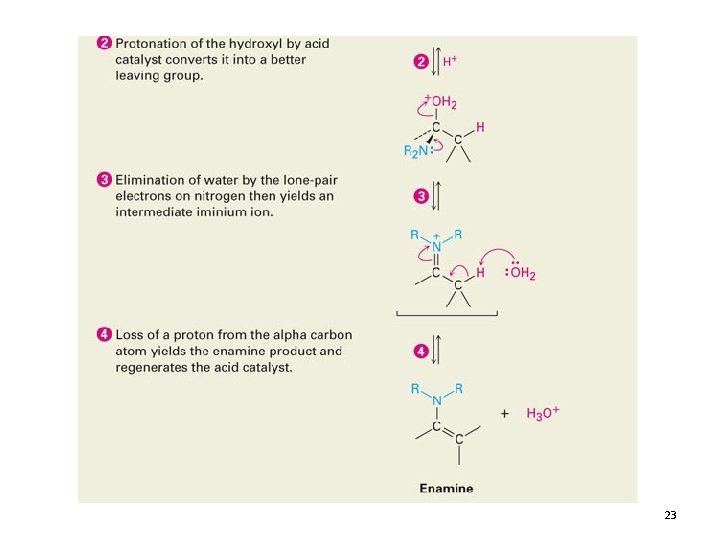
Reactions with Secondary Amines 22
23
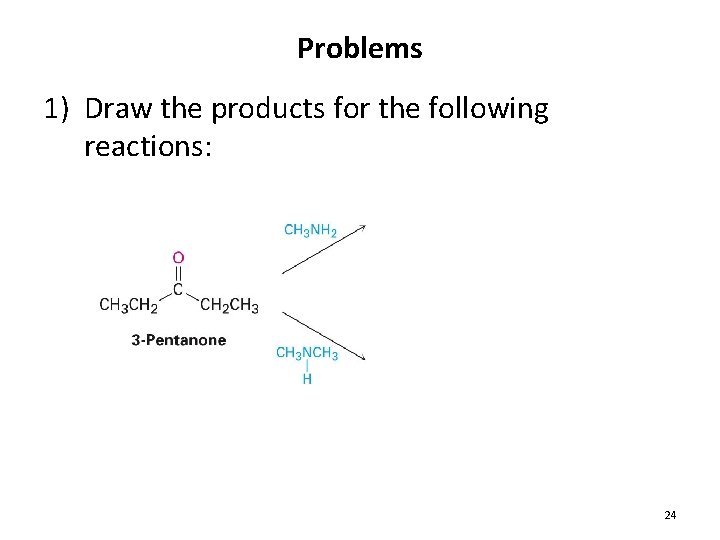
Problems 1) Draw the products for the following reactions: 24
2) Draw the mechanism for the formation of the imine in the previous question 25