
Reducing Slips Trips Falls Objectives Over the past
Reducing “Slips, Trips & Falls”
Objectives • Over the past five years, the NEEIA employer base has incurred over $30 million in workers’ compensation injury claims • Over 43% of NEEIA claim costs are the result of Slips & Falls
Objectives • Understand • Causes • Strategy
Implications Claims Cost • Direct • Medical • Indemnity costs • Expenses From 2016 -2019, members of NEEIA have experienced over $12 Million in “Direct” workers’ comp claims involving “slips & falls. ”
Implications Claims Cost • Direct • Hidden/Indirect
Implications Claims Cost • Direct • Hidden/Indirect • Administrative costs • Preparing and submitting reports and documents
Implications Claims Cost • Direct • Hidden/Indirect • Administrative costs • Interacting with insurers
Implications Claims Cost • Direct • Hidden/Indirect • Administrative costs • Investigating the accident • Avoid repeat accident • Subrogate • Determine compensability • Retrain employees.
Implications Claims Cost • Direct • Hidden/Indirect • Operational costs • Work stoppage associated with the accident/injury
Implications Claims Cost • Direct • Hidden/Indirect • Operational costs • Any lost wages not covered by workers' comp
Implications Claims Cost • Direct • Hidden/Indirect • Operational costs • Overtime costs
Implications Claims Cost • Direct • Hidden/Indirect • Operational costs • The cost of hiring and training a replacement for the injured employee
Implications Claims Cost • Direct • Hidden/Indirect • Operational costs • Lost productivity, including lower productivity associated with new hires and the injured employee if they require accommodation when they return to work.
Implications Fines Lawsuits
Implications Fines OSHA fines • Serious - $13, 494 per violation • Failure to abate - $13, 494 per day beyond the abatement date • Willful or Repeated - $134, 937 per violation
Implications Lawsuits Legal proceedings are costly both to the organization’s bottom line and the organization’s morale
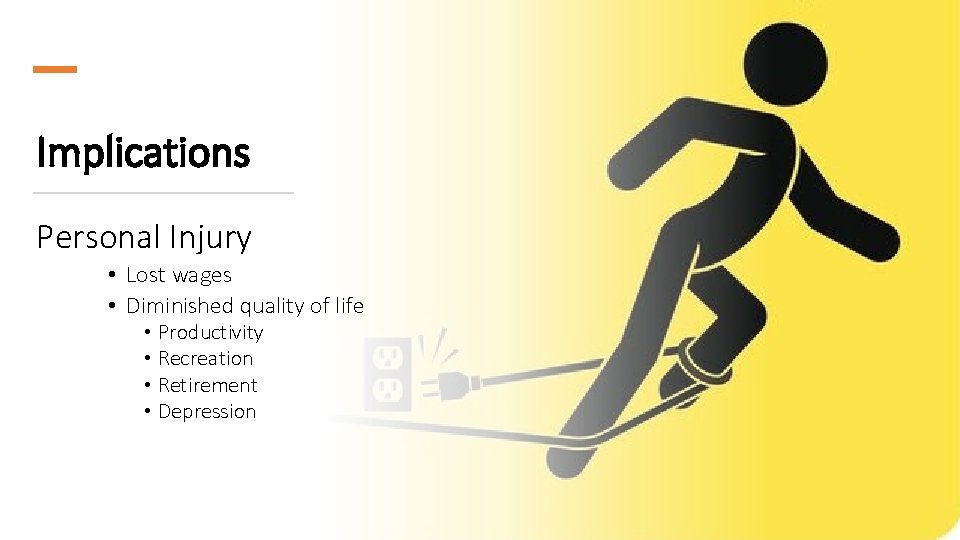
Implications Personal Injury • Lost wages • Diminished quality of life • Productivity • Recreation • Retirement • Depression
Types of Slips and Falls Injuries • Falls From Elevation • Falls from the Same level • Falls from Snow and Ice • From Property
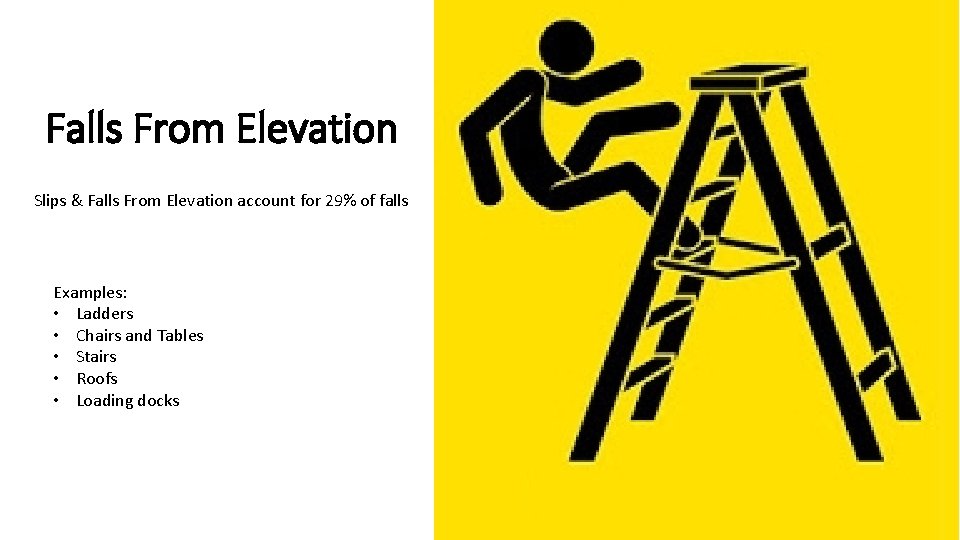
Falls From Elevation Slips & Falls From Elevation account for 29% of falls Examples: • Ladders • Chairs and Tables • Stairs • Roofs • Loading docks
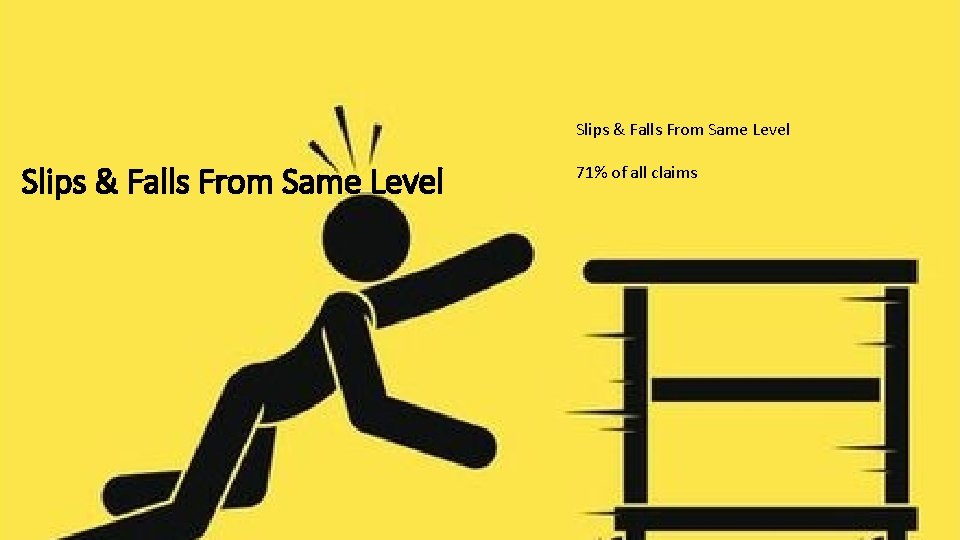
Slips & Falls From Same Level 71% of all claims
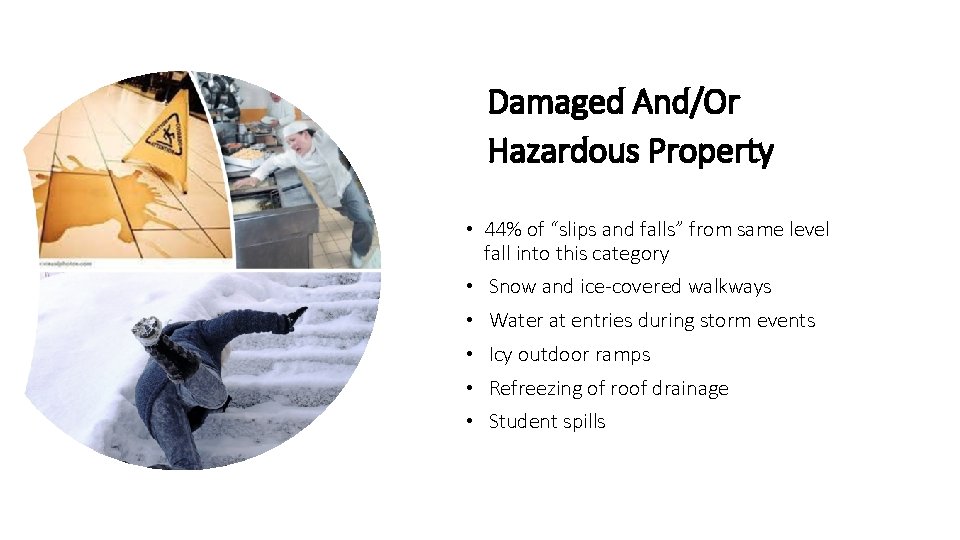
Damaged And/Or Hazardous Property • 44% of “slips and falls” from same level fall into this category • Snow and ice-covered walkways • Water at entries during storm events • Icy outdoor ramps • Refreezing of roof drainage • Student spills
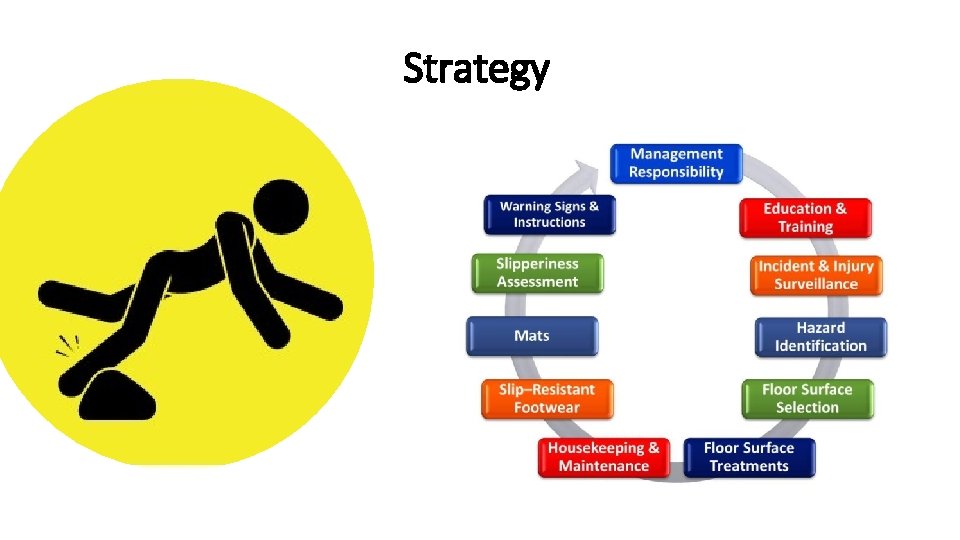
Strategy
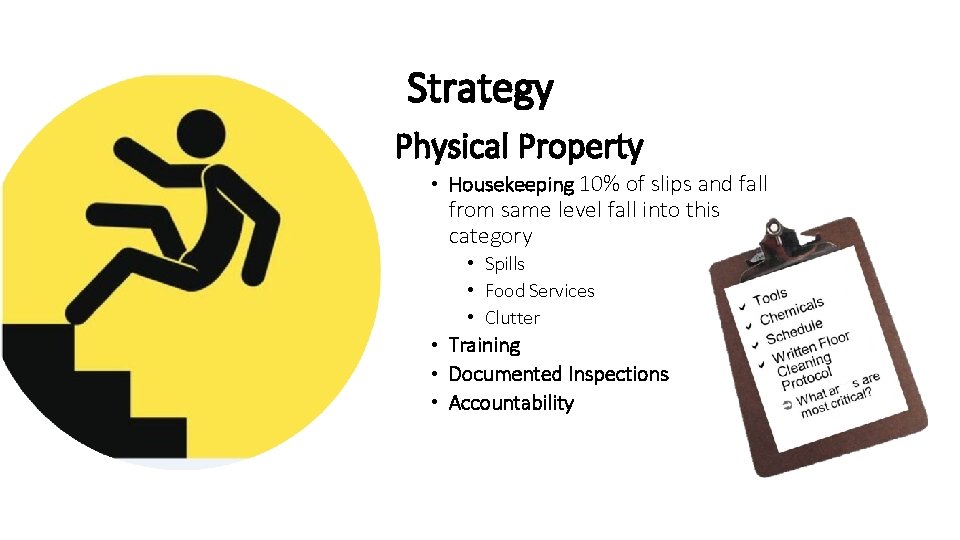
Strategy Physical Property • Housekeeping 10% of slips and fall from same level fall into this category • Spills • Food Services • Clutter • Training • Documented Inspections • Accountability
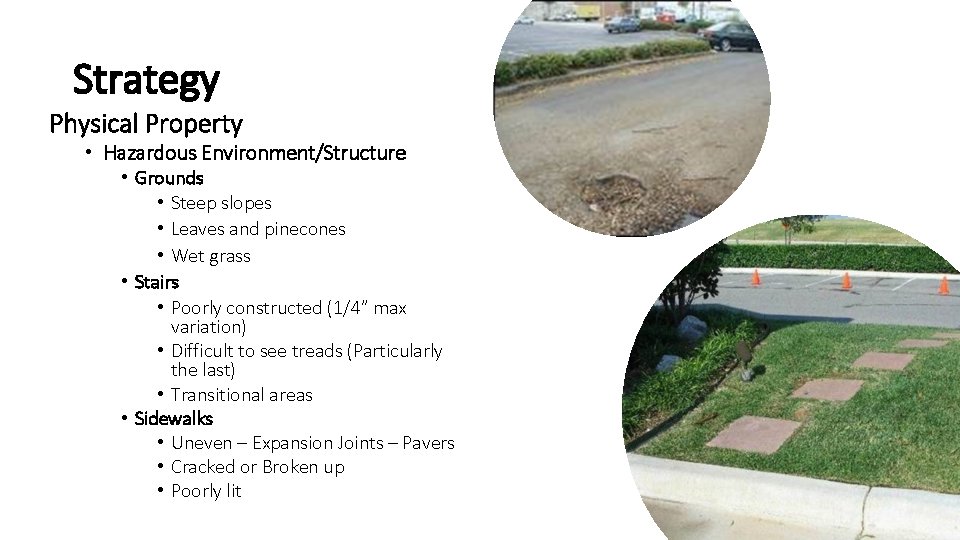
Strategy Physical Property • Hazardous Environment/Structure • Grounds • Steep slopes • Leaves and pinecones • Wet grass • Stairs • Poorly constructed (1/4” max variation) • Difficult to see treads (Particularly the last) • Transitional areas • Sidewalks • Uneven – Expansion Joints – Pavers • Cracked or Broken up • Poorly lit
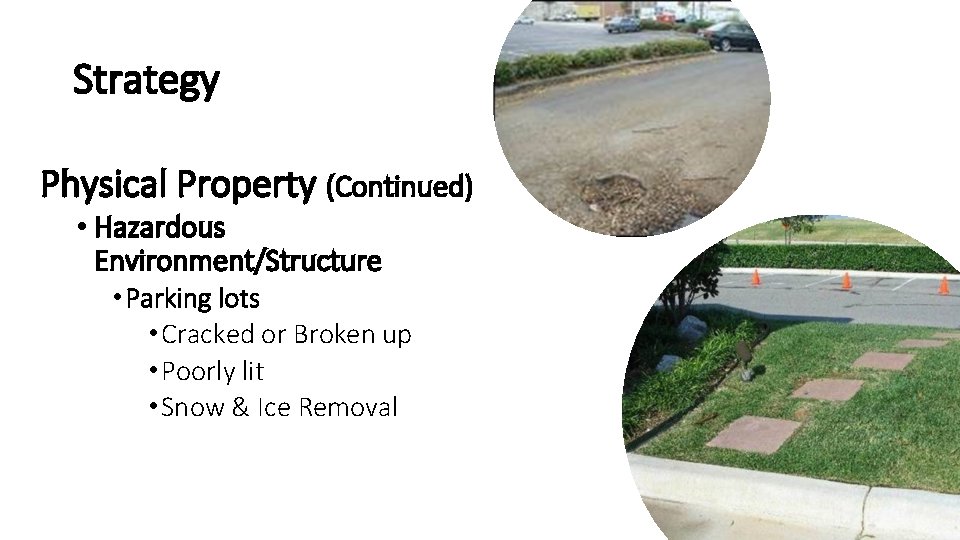
Strategy Physical Property (Continued) • Hazardous Environment/Structure • Parking lots • Cracked or Broken up • Poorly lit • Snow & Ice Removal
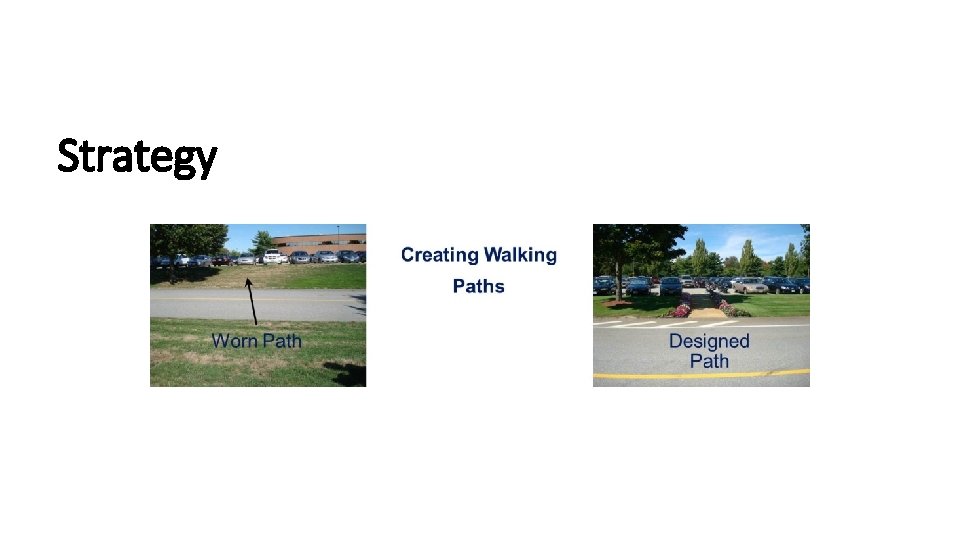
Strategy
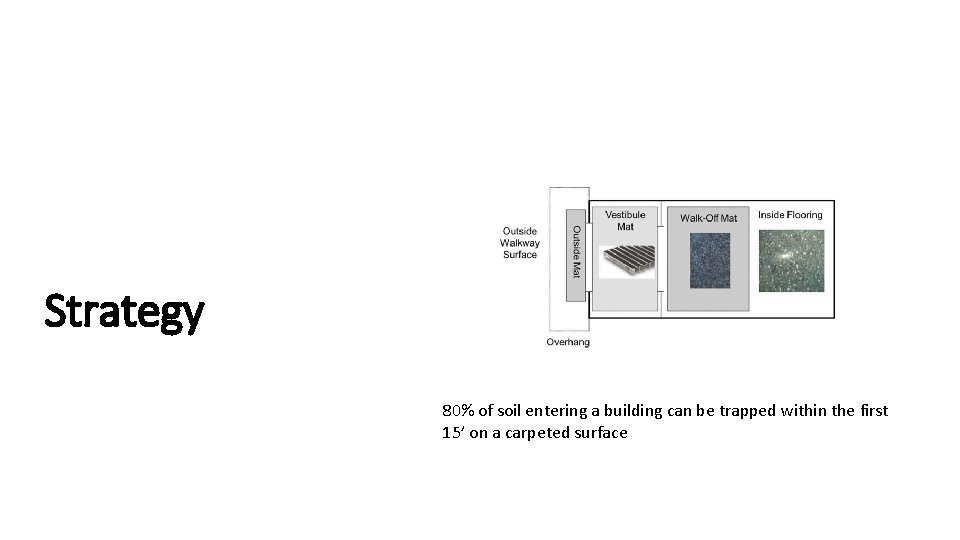
Strategy 80% of soil entering a building can be trapped within the first 15’ on a carpeted surface
Strategy Individual Employees • Seasonal/Footwear • No universal standard on what is slipresistant • Look for “Slip Resistant” on the shoe itself or on the box/descriptive literature • “Oil-Resistant”, “Non-Marking”, “Skid. Resistant” are not the same! • Tread material • Softer rubber outsole conforms to floor surface • Tread design • Large contact area (no large gaps between contact surfaces) • Lots of crisscrossing grooves • Overshoes are available
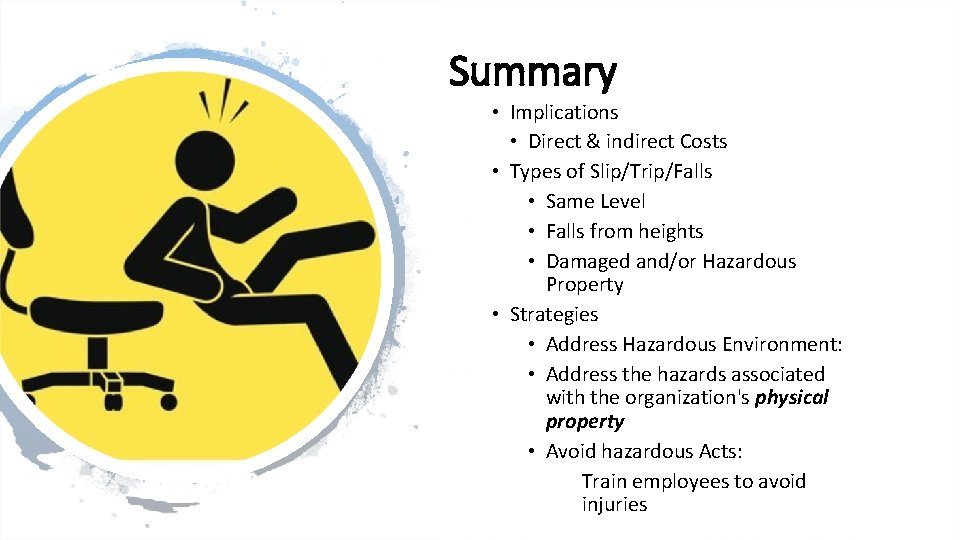
Summary • Implications • Direct & indirect Costs • Types of Slip/Trip/Falls • Same Level • Falls from heights • Damaged and/or Hazardous Property • Strategies • Address Hazardous Environment: • Address the hazards associated with the organization's physical property • Avoid hazardous Acts: Train employees to avoid injuries
- Slides: 29