
REDUCING PSYCHOLOGICAL DEPENDENCY ON SOCIAL GROUPS Kira Harris
- Slides: 12
REDUCING PSYCHOLOGICAL DEPENDENCY ON SOCIAL GROUPS Kira Harris kira. harris@ecu. edu. au Supervisors: Dr. Eyal Gringart, Dr. Deirdre Drake
THE IMPORTANCE OF SOCIAL GROUPS “You know the brotherhood sort of thing. We’ll all stand by each other and no one will ever let me down again in my life. You know, because they’re binded to me more than anything. ” Cohesive ideological groups Social identity
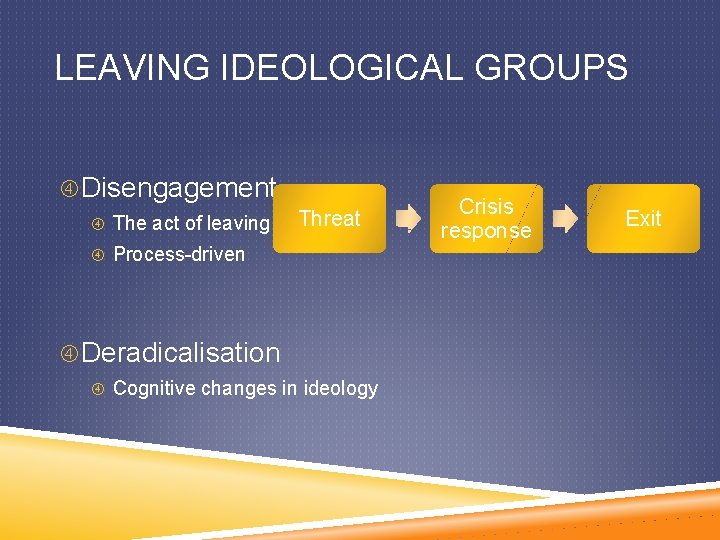
LEAVING IDEOLOGICAL GROUPS Disengagement The act of leaving Threat Process-driven Deradicalisation Cognitive changes in ideology Crisis response Exit
RESEARCH QUESTION / AIMS Understand the individual psychological experience of leaving an ideological social group Further the understanding the causes for leaving The psychological processes for leaving The implications for identity and ideology
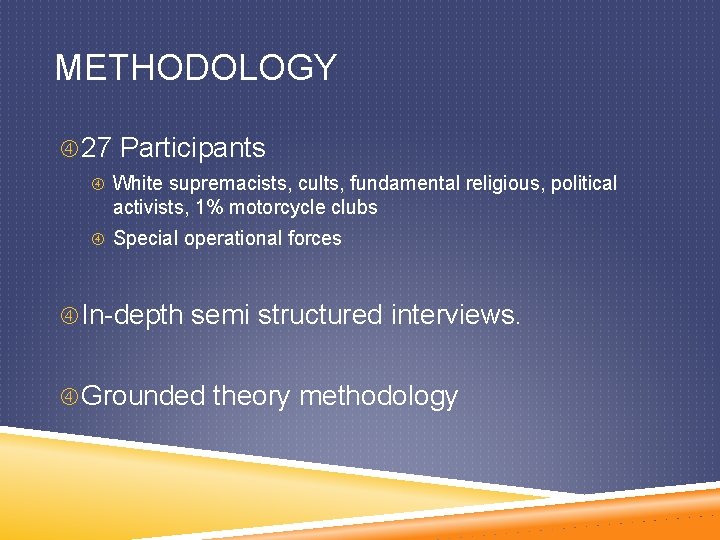
METHODOLOGY 27 Participants White supremacists, cults, fundamental religious, political activists, 1% motorcycle clubs Special operational forces In-depth semi structured interviews. Grounded theory methodology
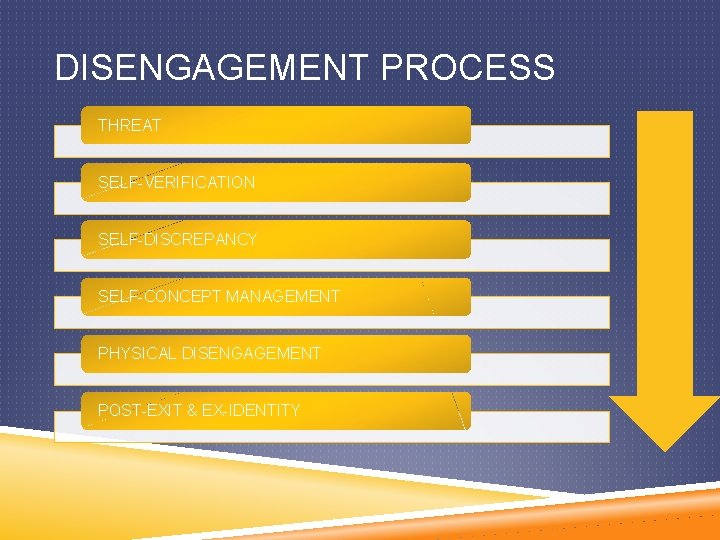
DISENGAGEMENT PROCESS THREAT SELF-VERIFICATION SELF-DISCREPANCY SELF-CONCEPT MANAGEMENT PHYSICAL DISENGAGEMENT POST-EXIT & EX-IDENTITY
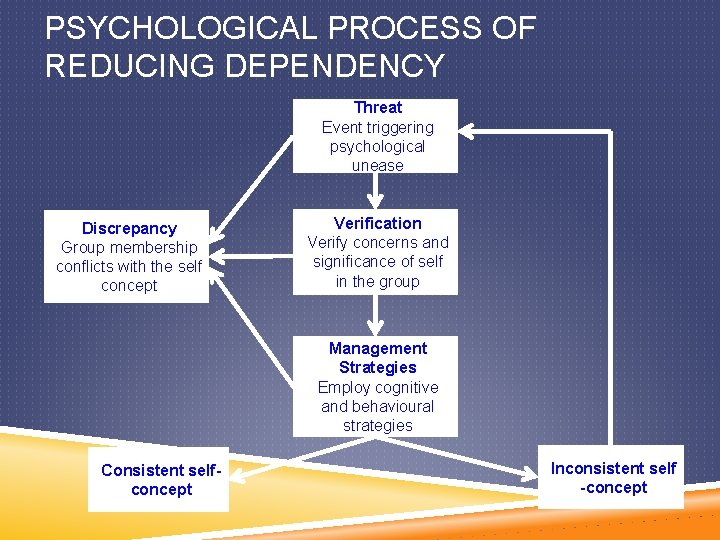
PSYCHOLOGICAL PROCESS OF REDUCING DEPENDENCY Threat Event triggering psychological unease Discrepancy Group membership conflicts with the self concept Verification Verify concerns and significance of self in the group Management Strategies Employ cognitive and behavioural strategies Consistent selfconcept Inconsistent self -concept
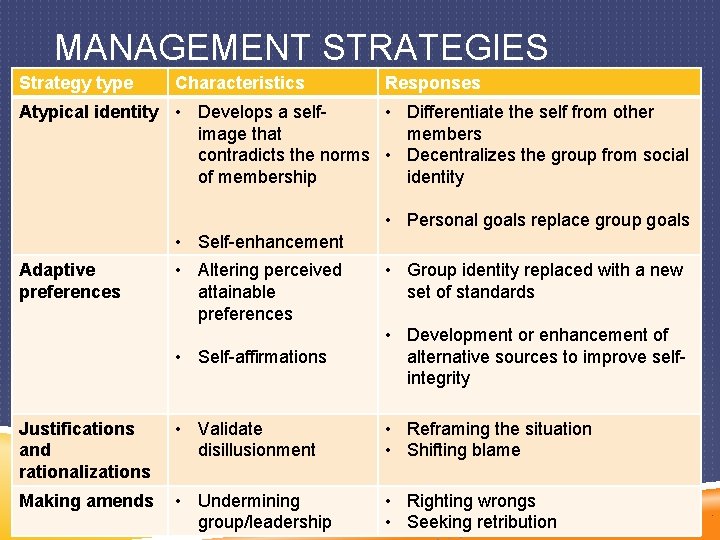
MANAGEMENT STRATEGIES Strategy type Characteristics Responses Atypical identity • Develops a self • Differentiate the self from other image that members contradicts the norms • Decentralizes the group from social of membership identity • Personal goals replace group goals • Self-enhancement Adaptive preferences • Altering perceived attainable preferences • Group identity replaced with a new set of standards • Self-affirmations • Development or enhancement of alternative sources to improve selfintegrity Justifications and rationalizations • Validate disillusionment • Reframing the situation • Shifting blame Making amends • Undermining group/leadership • Righting wrongs • Seeking retribution
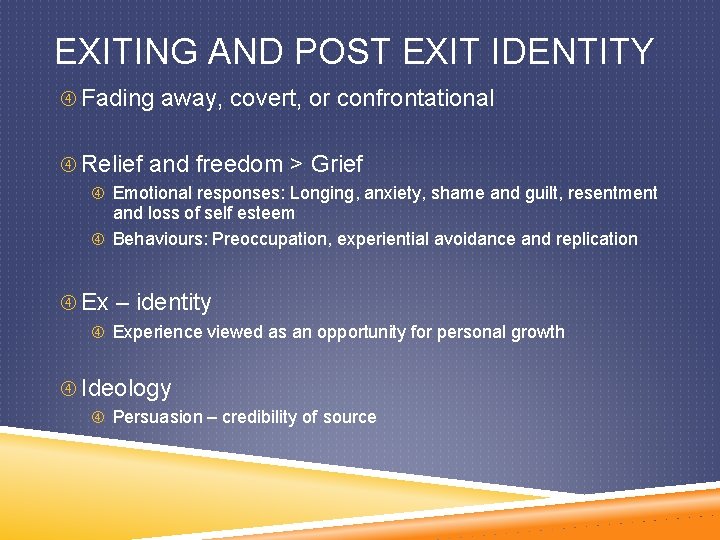
EXITING AND POST EXIT IDENTITY Fading away, covert, or confrontational Relief and freedom > Grief Emotional responses: Longing, anxiety, shame and guilt, resentment and loss of self esteem Behaviours: Preoccupation, experiential avoidance and replication Ex – identity Experience viewed as an opportunity for personal growth Ideology Persuasion – credibility of source
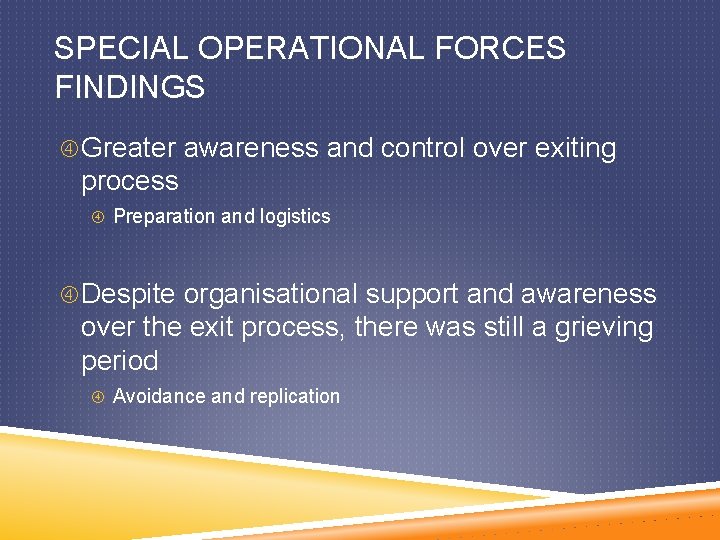
SPECIAL OPERATIONAL FORCES FINDINGS Greater awareness and control over exiting process Preparation and logistics Despite organisational support and awareness over the exit process, there was still a grieving period Avoidance and replication
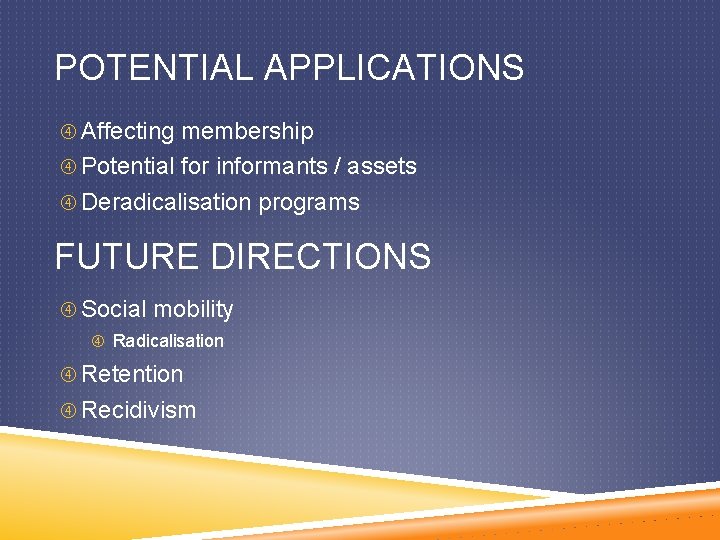
POTENTIAL APPLICATIONS Affecting membership Potential for informants / assets Deradicalisation programs FUTURE DIRECTIONS Social mobility Radicalisation Retention Recidivism
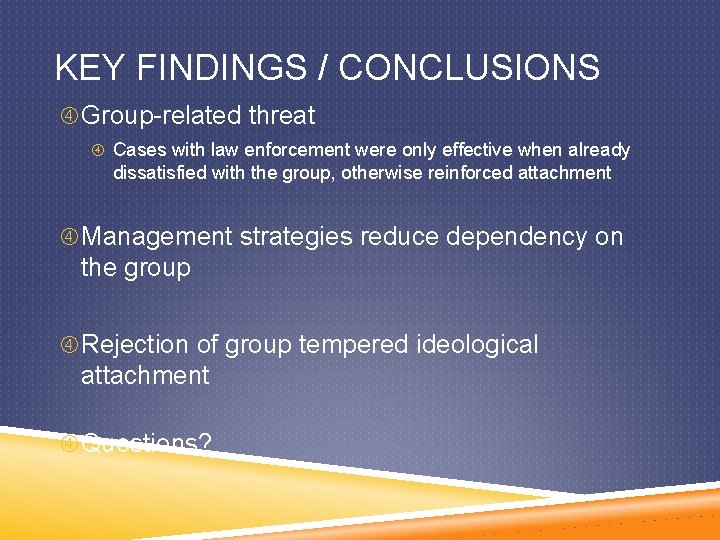
KEY FINDINGS / CONCLUSIONS Group-related threat Cases with law enforcement were only effective when already dissatisfied with the group, otherwise reinforced attachment Management strategies reduce dependency on the group Rejection of group tempered ideological attachment Questions?