
Reducing Freeway Emission via Ramp Metering Control Melissa

- Slides: 32
Reducing Freeway Emission via Ramp Metering Control Melissa Doll, 5 th Grade Science, Lakota Endeavor School Gina Rider, 9 th Grade Algebra I, Seton High School 1
Table of Contents • Abstract • Introduction Ø Congestion Control Ø Ramp Meter System • Project Overview • Background Literature Review • Goals and Objectives Ø Ø Ø Research Tasks Evaluating Output Project Conclusion Timeline References • Challenge Based Learning Units • Acknowledgements 2
3 Abstract • Evaluating the efficiency of ramp metering with respect to emissions • Study conducted using the following: – Traffic counts – PM 2. 5 sensors – GPS data • Criteria developed for future study sites
4 Introduction • More than 50% of congestion is recurring mainly due to heavy volume. • 5. 5 billion extra hours spent travelling. • 2. 9 billion extra gallons of fuel used. • Total congestion cost of $121 billion spent.
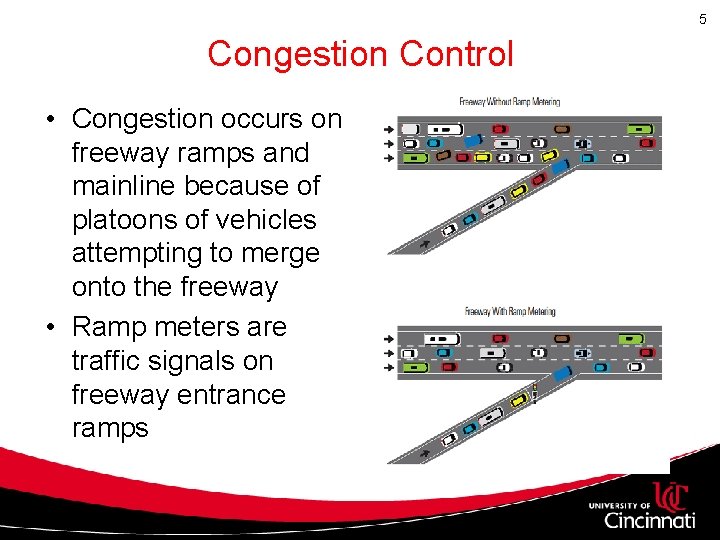
5 Congestion Control • Congestion occurs on freeway ramps and mainline because of platoons of vehicles attempting to merge onto the freeway • Ramp meters are traffic signals on freeway entrance ramps
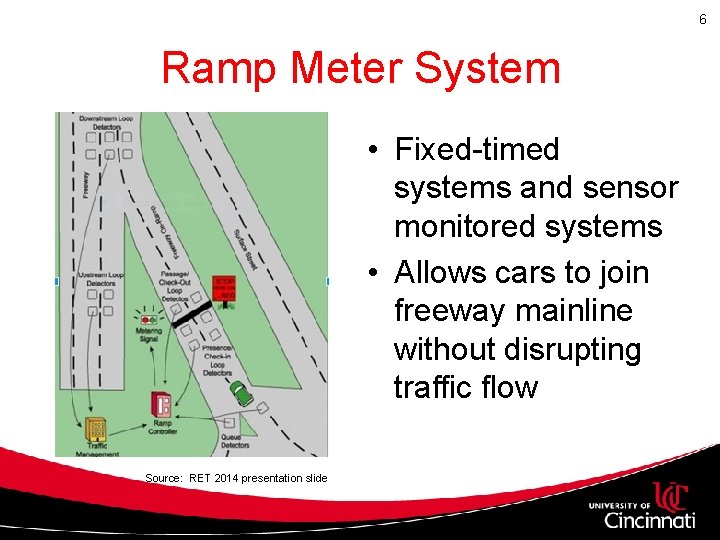
6 Ramp Meter System • Fixed-timed systems and sensor monitored systems • Allows cars to join freeway mainline without disrupting traffic flow Source: RET 2014 presentation slide
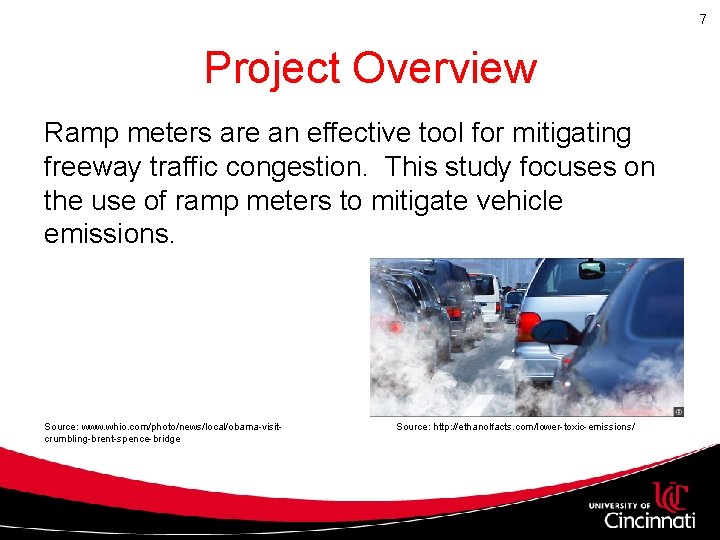
7 Project Overview Ramp meters are an effective tool for mitigating freeway traffic congestion. This study focuses on the use of ramp meters to mitigate vehicle emissions. Source: www. whio. com/photo/news/local/obama-visitcrumbling-brent-spence-bridge Source: http: //ethanolfacts. com/lower-toxic-emissions/
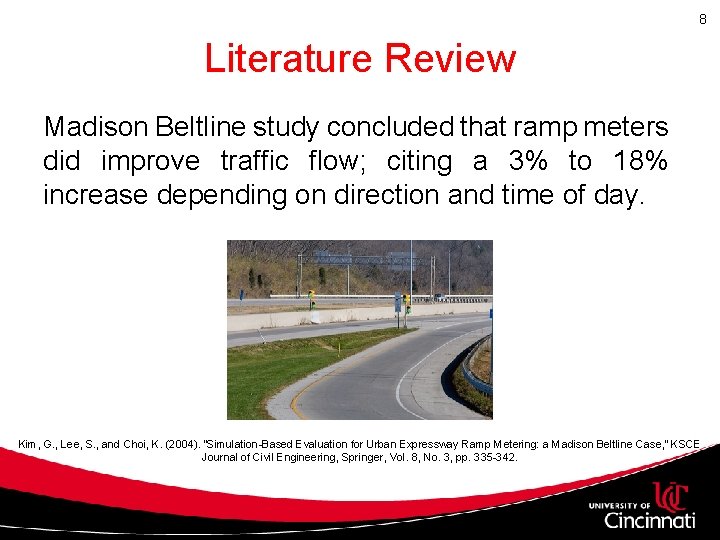
8 Literature Review Madison Beltline study concluded that ramp meters did improve traffic flow; citing a 3% to 18% increase depending on direction and time of day. Kim, G. , Lee, S. , and Choi, K. (2004). “Simulation-Based Evaluation for Urban Expressway Ramp Metering: a Madison Beltline Case, ” KSCE Journal of Civil Engineering, Springer, Vol. 8, No. 3, pp. 335 -342.
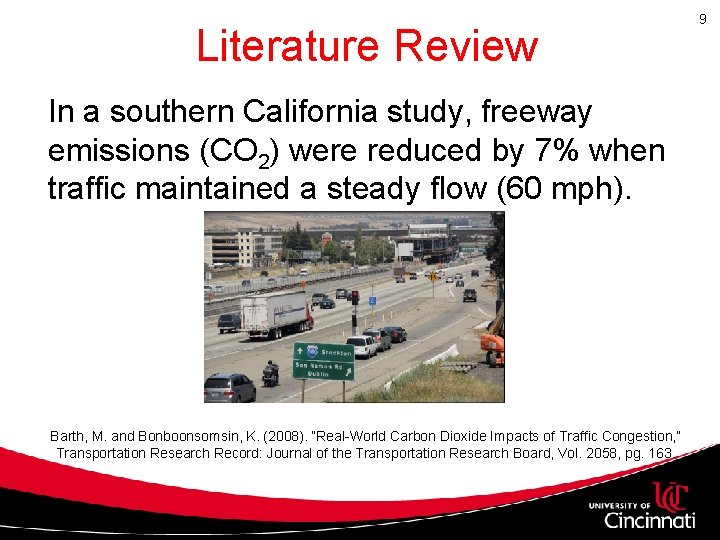
Literature Review In a southern California study, freeway emissions (CO 2) were reduced by 7% when traffic maintained a steady flow (60 mph). Barth, M. and Bonboonsomsin, K. (2008). “Real-World Carbon Dioxide Impacts of Traffic Congestion, ” Transportation Research Record: Journal of the Transportation Research Board, Vol. 2058, pg. 163. 9
10 Goals and Objectives • Goal: Evaluating the effectiveness of a ramp meter at reducing freeway emissions • Objectives: – Understanding Traffic Flow, Queueing, Shockwave Theories and Ramp Meter Operations – Collecting GPS and PM 2. 5 data – Using MOVES to analyze data and to compile results
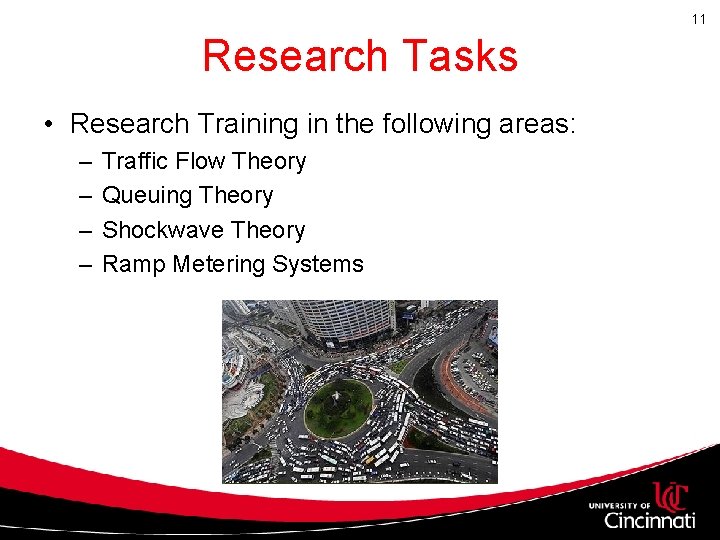
11 Research Tasks • Research Training in the following areas: – – Traffic Flow Theory Queuing Theory Shockwave Theory Ramp Metering Systems
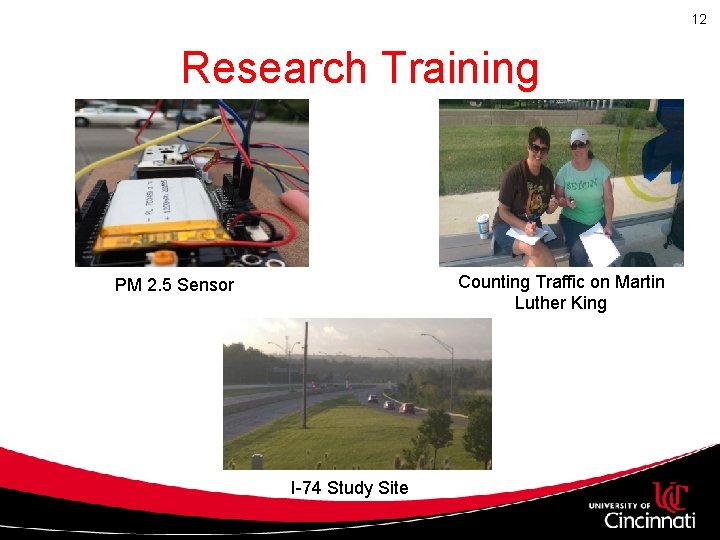
12 Research Training Counting Traffic on Martin Luther King PM 2. 5 Sensor I-74 Study Site
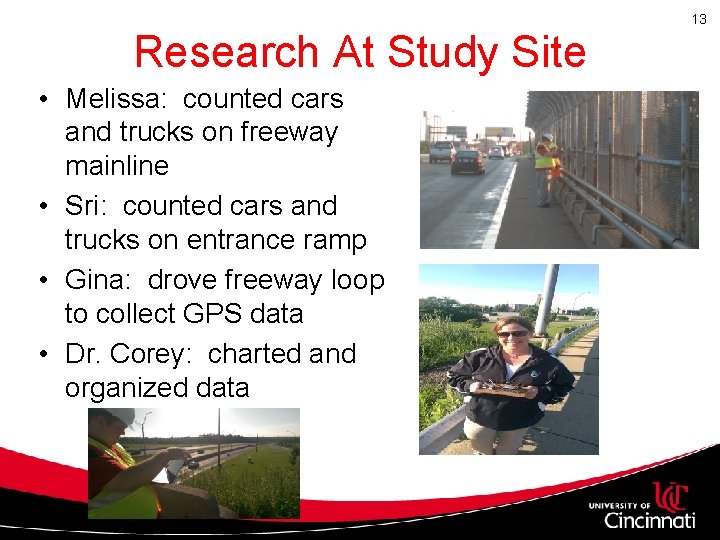
Research At Study Site • Melissa: counted cars and trucks on freeway mainline • Sri: counted cars and trucks on entrance ramp • Gina: drove freeway loop to collect GPS data • Dr. Corey: charted and organized data 13
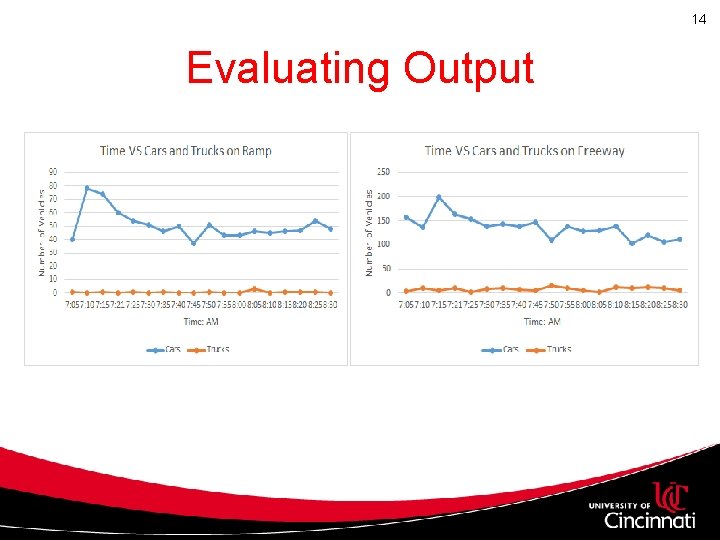
14 Evaluating Output
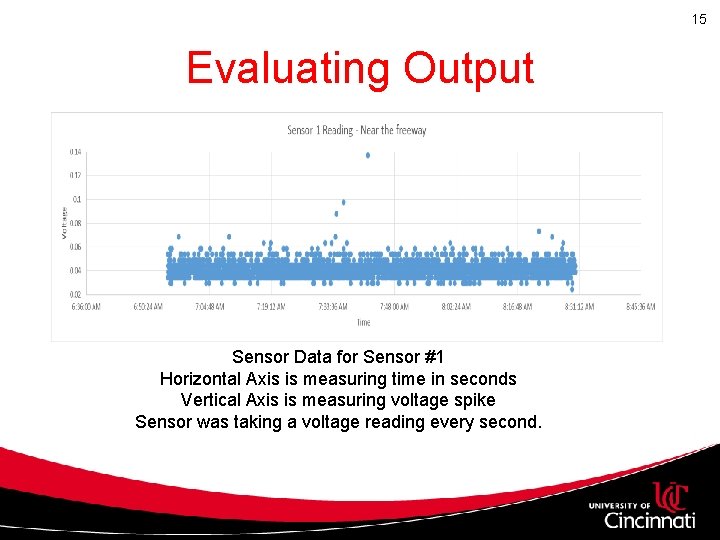
15 Evaluating Output Sensor Data for Sensor #1 Horizontal Axis is measuring time in seconds Vertical Axis is measuring voltage spike Sensor was taking a voltage reading every second.
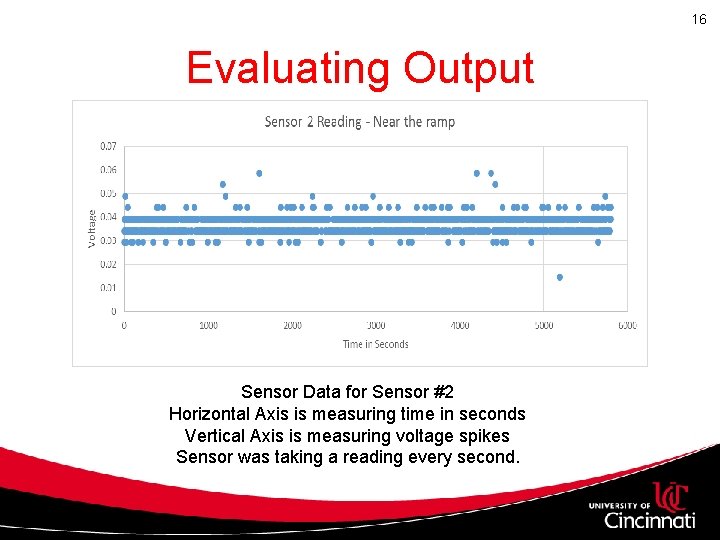
16 Evaluating Output Sensor Data for Sensor #2 Horizontal Axis is measuring time in seconds Vertical Axis is measuring voltage spikes Sensor was taking a reading every second.
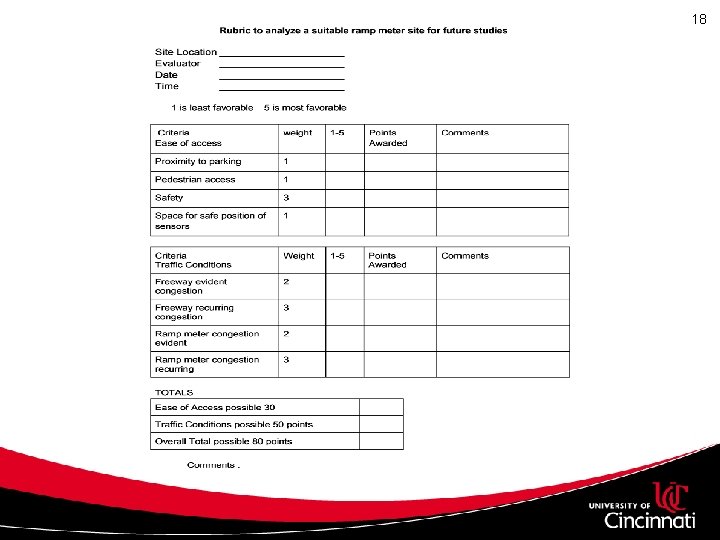
17 Project Conclusion • MOVES was not utilized since there was no evidence of freeway congestion • Criteria generated for future study sites – Access Conditions – Traffic Conditions
18
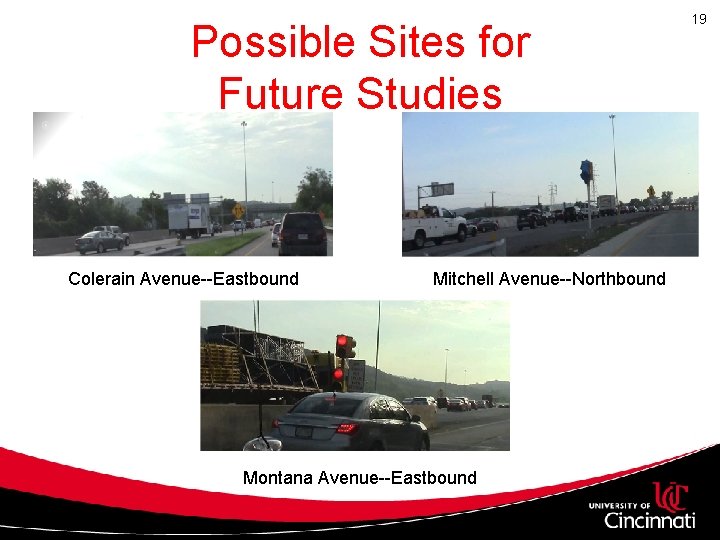
Possible Sites for Future Studies Colerain Avenue--Eastbound Mitchell Avenue--Northbound Montana Avenue--Eastbound 19
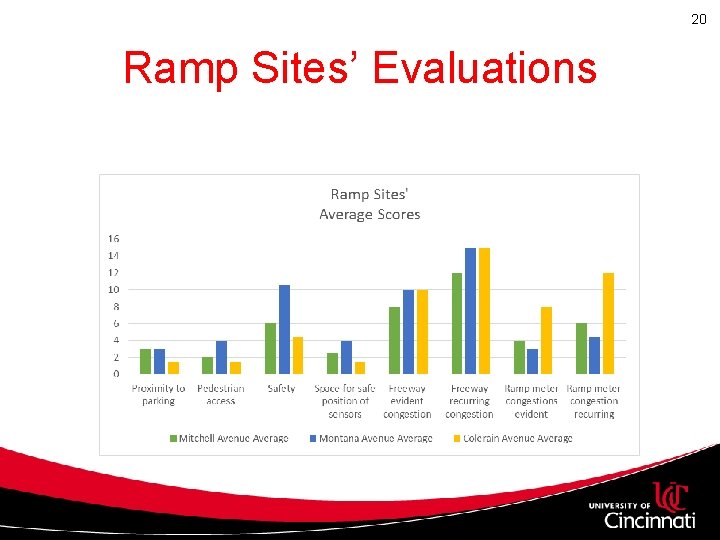
20 Ramp Sites’ Evaluations
21 Project Timeline Week 1 Week 2 Research Training Technical Training Data Collection Research Report EDP training CBL Unit Week 3 Week 4 Week 5 Traffic, Shockwave, Queueing Theories MOVES, GPS Sensors MLK, I-75, Dalton Ave, I-74 Literature Review, Powerpoint, Video Workshops Development of individual units and activities Week 6 Week 7
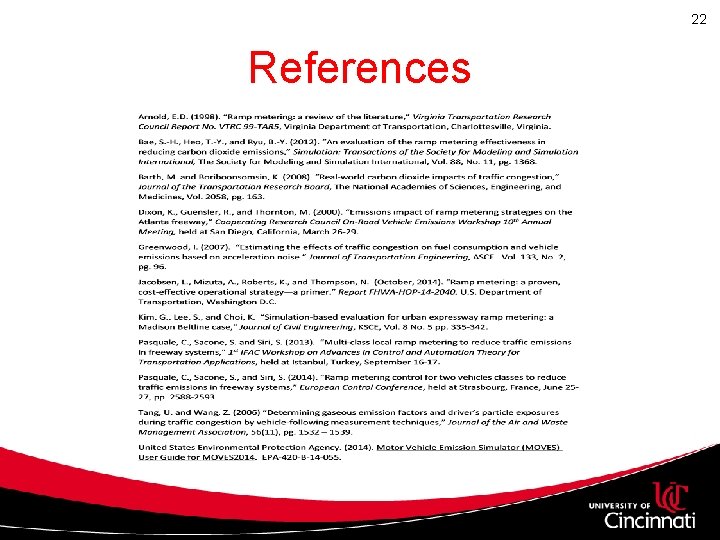
22 References
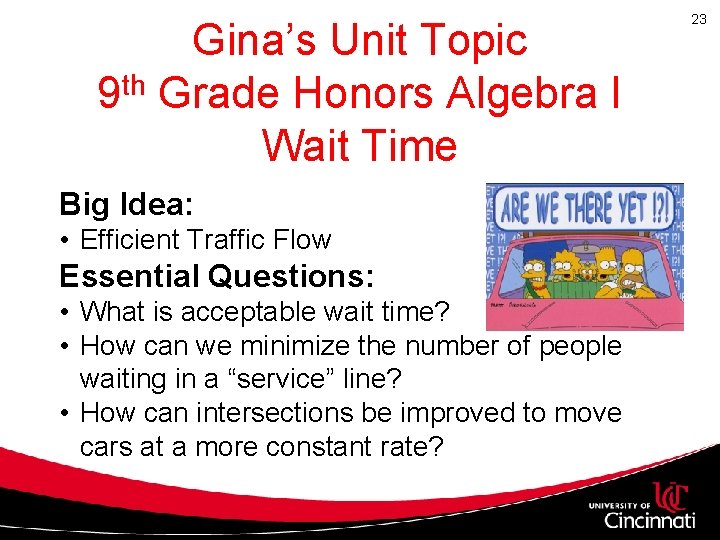
Gina’s Unit Topic th 9 Grade Honors Algebra I Wait Time Big Idea: • Efficient Traffic Flow Essential Questions: • What is acceptable wait time? • How can we minimize the number of people waiting in a “service” line? • How can intersections be improved to move cars at a more constant rate? 23
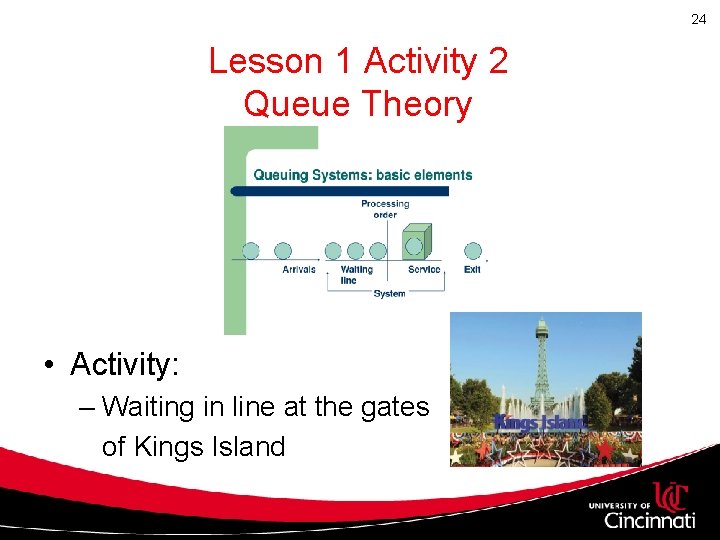
24 Lesson 1 Activity 2 Queue Theory • Activity: – Waiting in line at the gates of Kings Island
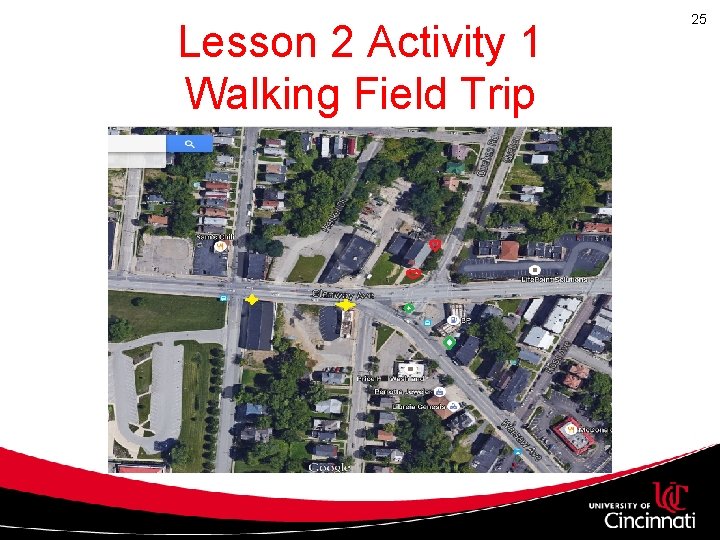
Lesson 2 Activity 1 Walking Field Trip 25
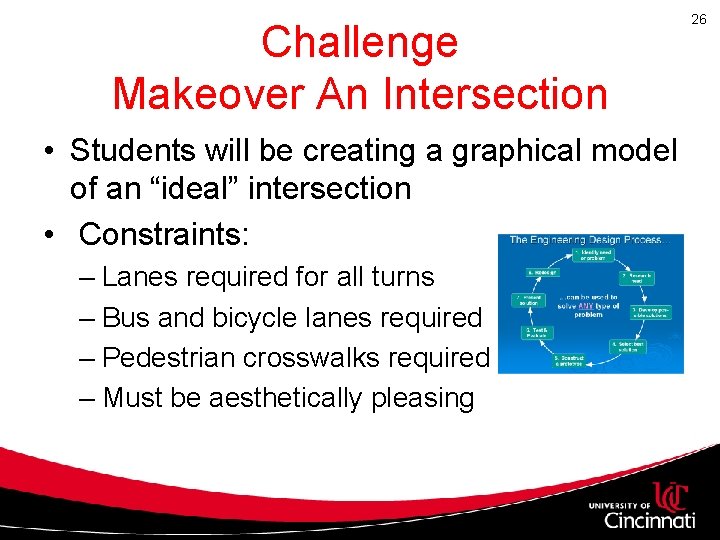
Challenge Makeover An Intersection • Students will be creating a graphical model of an “ideal” intersection • Constraints: – Lanes required for all turns – Bus and bicycle lanes required – Pedestrian crosswalks required – Must be aesthetically pleasing 26
Melissa Doll’s Unit 5 th Grade Science Force, Motion and Speed • Unit Topic: Force, Motion and Speed • Big Idea: Cars are moved by a force and the amount of force can be calculated (speed). • Essential Question: How can different forces be used to move a car forward? • Standard: 5 PS 4 The amount of change in movement of an object is based on the mass of the object and the amount of force related. 27
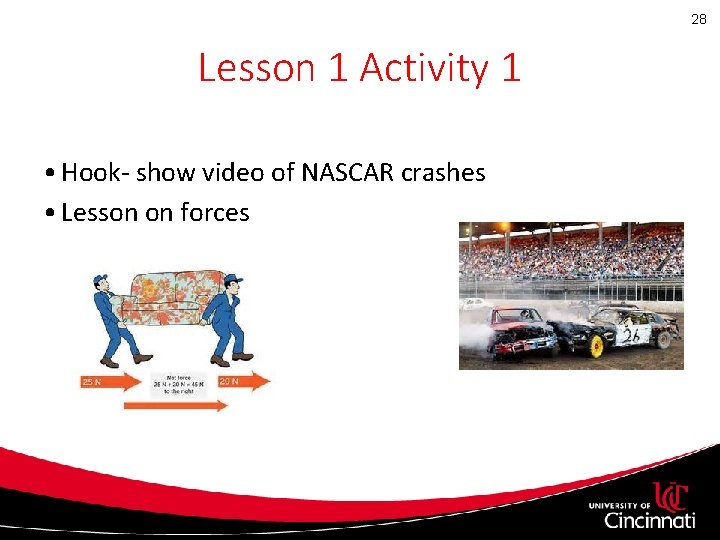
28 Lesson 1 Activity 1 • Hook- show video of NASCAR crashes • Lesson on forces
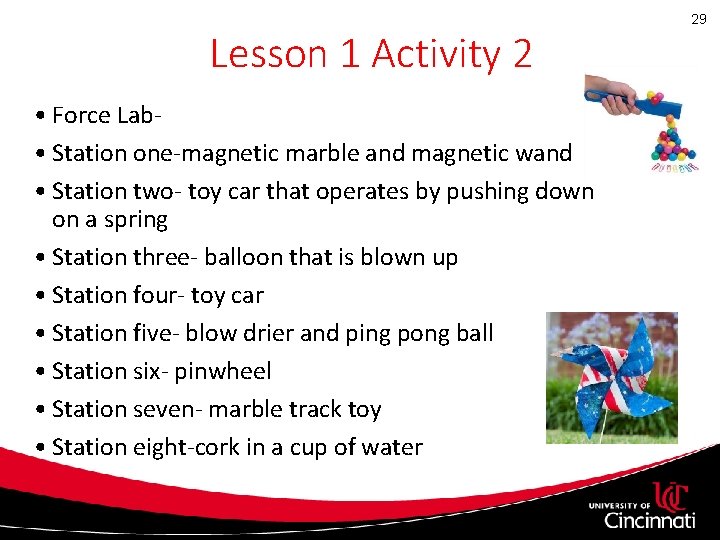
Lesson 1 Activity 2 • Force Lab • Station one-magnetic marble and magnetic wand • Station two- toy car that operates by pushing down on a spring • Station three- balloon that is blown up • Station four- toy car • Station five- blow drier and ping pong ball • Station six- pinwheel • Station seven- marble track toy • Station eight-cork in a cup of water 29
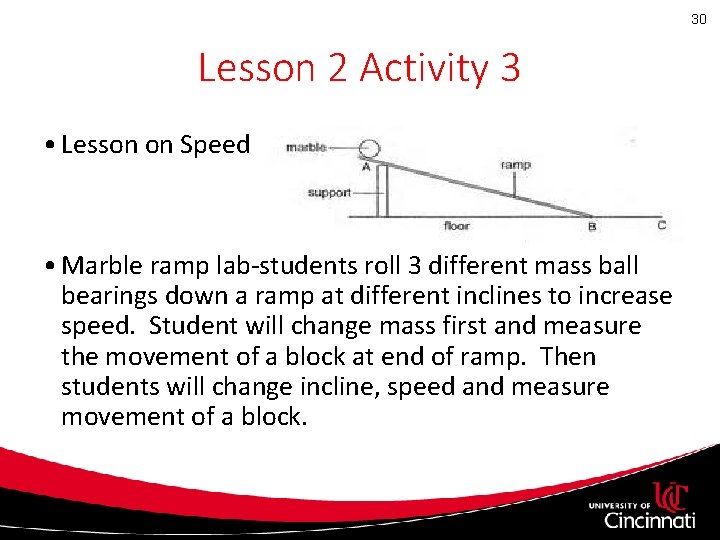
30 Lesson 2 Activity 3 • Lesson on Speed • Marble ramp lab-students roll 3 different mass ball bearings down a ramp at different inclines to increase speed. Student will change mass first and measure the movement of a block at end of ramp. Then students will change incline, speed and measure movement of a block.
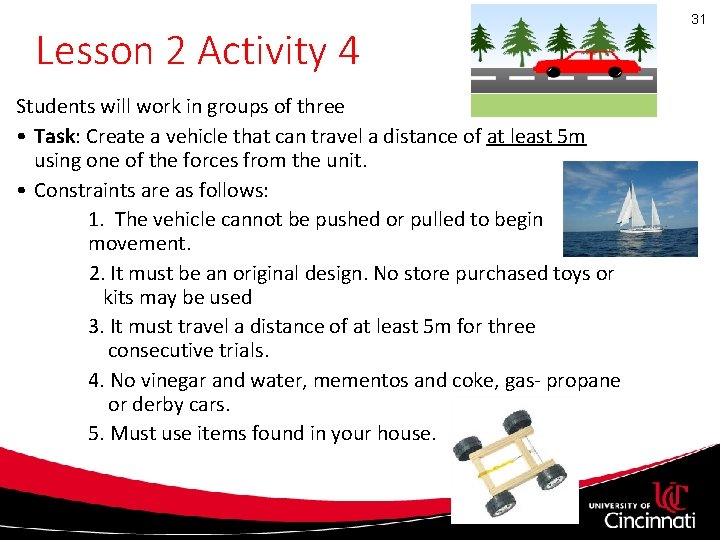
Lesson 2 Activity 4 Students will work in groups of three • Task: Create a vehicle that can travel a distance of at least 5 m using one of the forces from the unit. • Constraints are as follows: 1. The vehicle cannot be pushed or pulled to begin movement. 2. It must be an original design. No store purchased toys or kits may be used 3. It must travel a distance of at least 5 m for three consecutive trials. 4. No vinegar and water, mementos and coke, gas- propane or derby cars. 5. Must use items found in your house. 31
Acknowledgements • The RET Program is funded by the National Science Foundation, Grant ID # EEC-1404766 • Special thanks to the following, who without their support, this project would not have been possible: – Project Faculty Member, Dr. Jonathan Corey – Graduate Research Assistant, Mr. Sri Harsha Mulpuru – RET Project Director & Private Investigator, Dr. Anant R. Kukreti – RET Resource & Grant Coordinator, Debbie Liberi – RET Resource Teacher, David Macmorine 32