
Reducing construction waste through design Dave Marsh Construction


- Slides: 41
Reducing construction waste through design Dave Marsh Construction Project Manager
n. WRAP’s n. How approach to Design out Waste – key principles – design review process n. Tools and resources contents
WRAP’s approach
including n. Architects n. Civil engineers n. Geotechnical n. Structural n. Cost engineers consultants / quantity surveyors n. Specialist technical consultants n. Landscape n. Interior architects / fit out designers
energy efficiency accessibility water efficiency sustainable procurement recycled content future proofing BREEAM embodied carbon Designing out waste
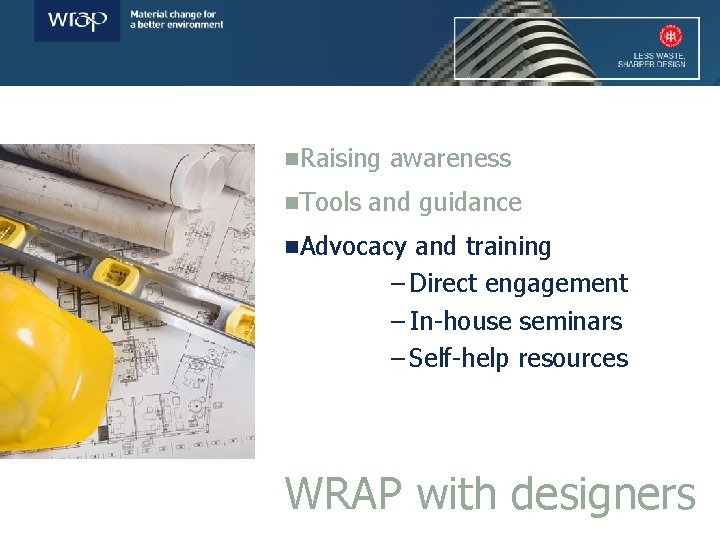
n. Raising n. Tools awareness and guidance n. Advocacy and training WRAP with designers
n. Raising awareness – Workshop events – RIBA design competition – Case studies – Marketing & PR WRAP with designers
n. Raising n. Tools awareness and guidance – Design guides – Design detailing data sheets – Cost benefit analyses – Design tools WRAP with designers
n. Raising n. Tools awareness and guidance – Design guides – Design detailing data sheets – Cost benefit analyses – Design tools WRAP with designers
n. Raising n. Tools awareness and guidance n. Advocacy and training – Direct engagement – In-house seminars – Self-help resources WRAP with designers
How to go about it
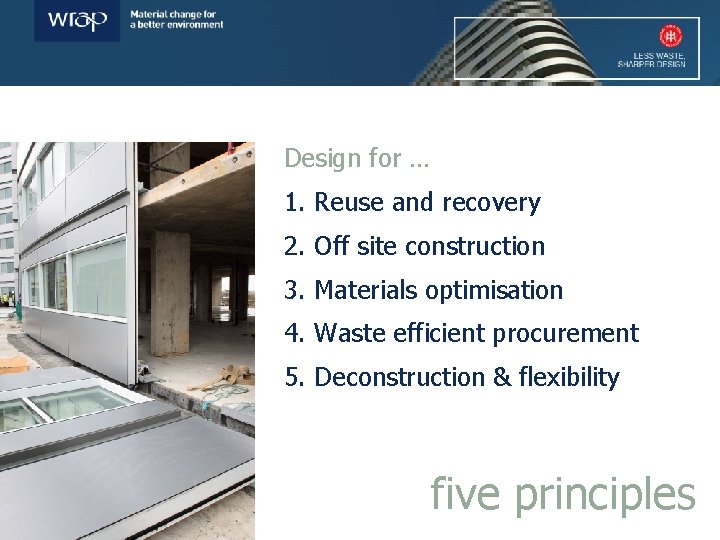
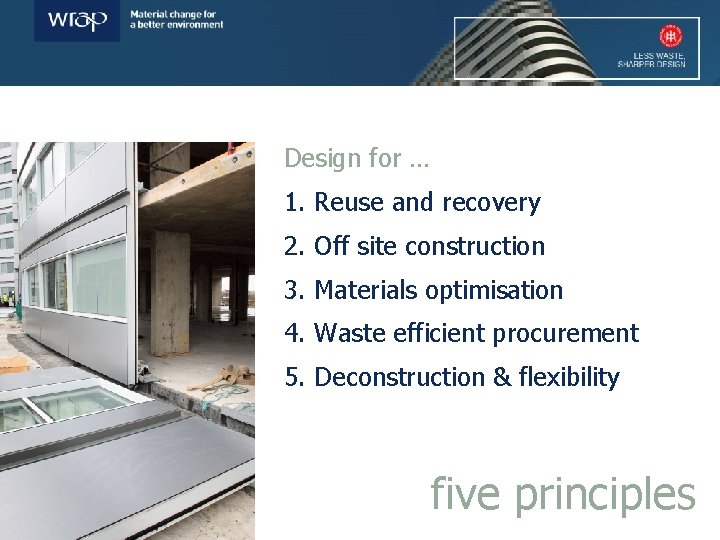
Design for … 1. Reuse and recovery 2. Off site construction 3. Materials optimisation 4. Waste efficient procurement 5. Deconstruction & flexibility five principles
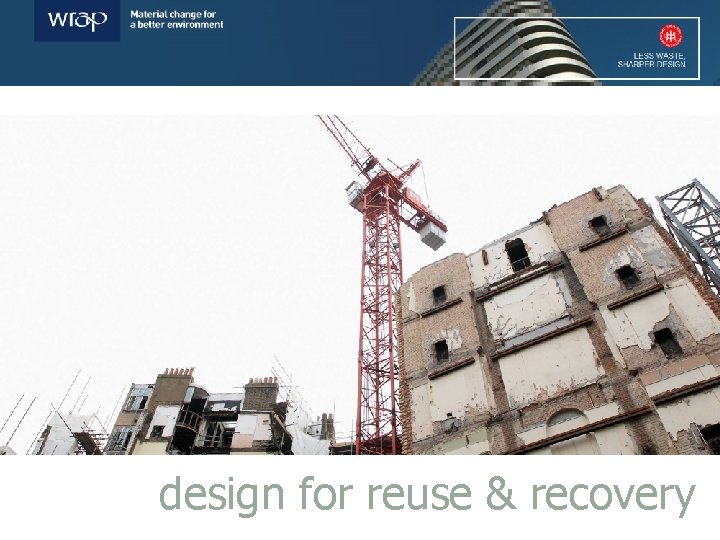
Insert relevant image design for reuse & recovery
key questions n. Can materials from demolition be reused in the design? n. Can reclaimed products or components be reused? n. Can materials be reused at their highest value? n. Can excavation materials be reused? n. Can cut and fill balance be achieved? How can it be optimised to avoid spoil removal from site? reuse & recovery
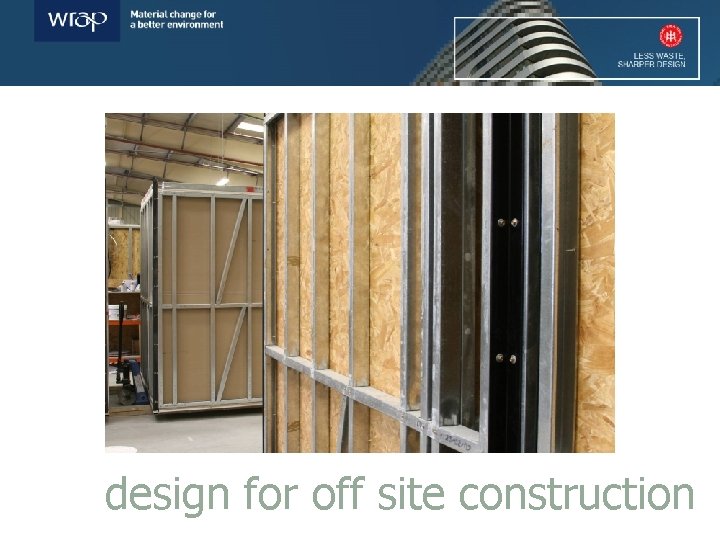
design for off site construction
key questions n. Can site? any part of the design be manufactured off n. Can site activities become a process of assembly rather than construction? off site construction
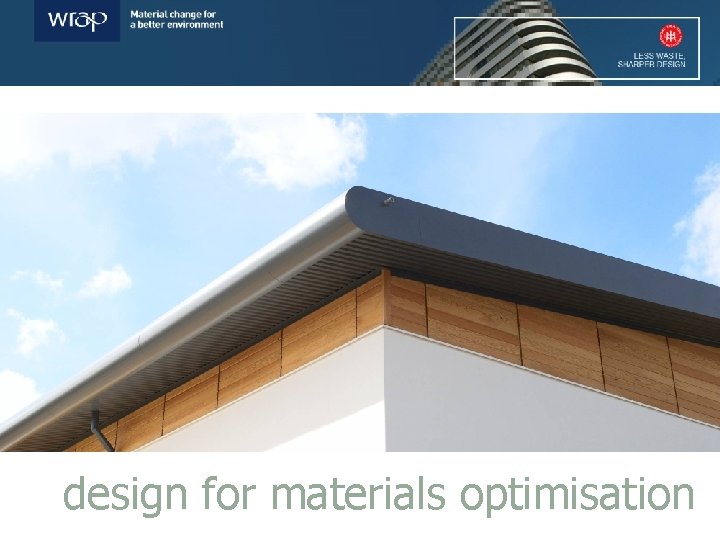
design for materials optimisation
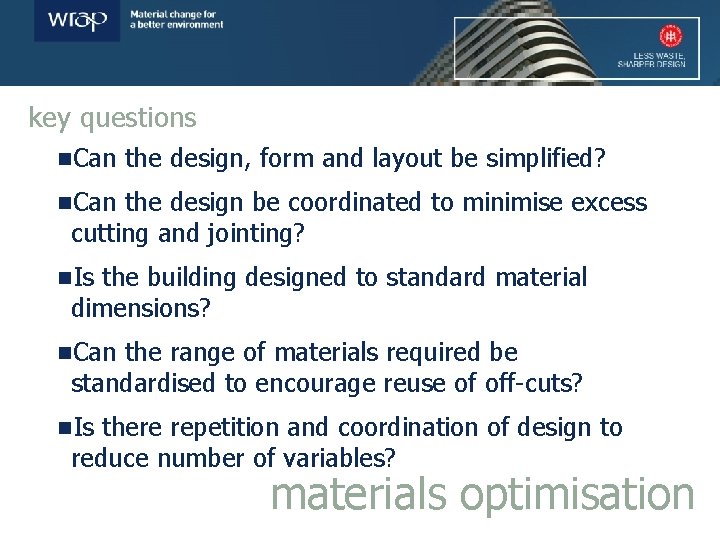
key questions n. Can the design, form and layout be simplified? n. Can the design be coordinated to minimise excess cutting and jointing? n. Is the building designed to standard material dimensions? n. Can the range of materials required be standardised to encourage reuse of off-cuts? n. Is there repetition and coordination of design to reduce number of variables? materials optimisation
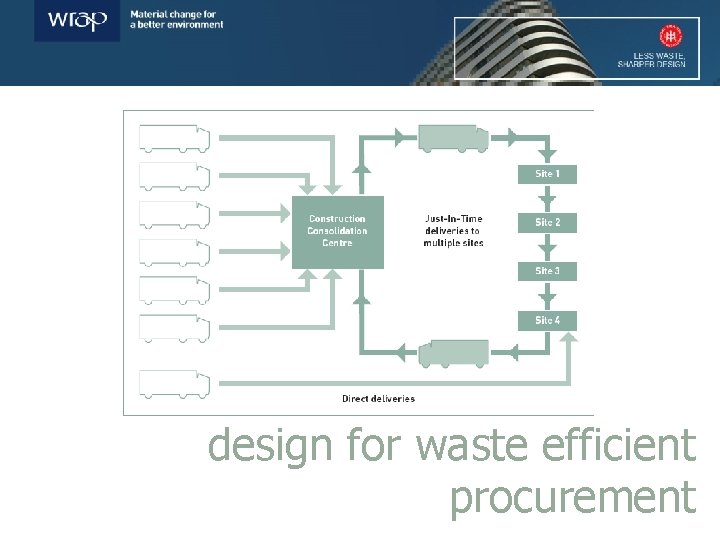
design for waste efficient procurement
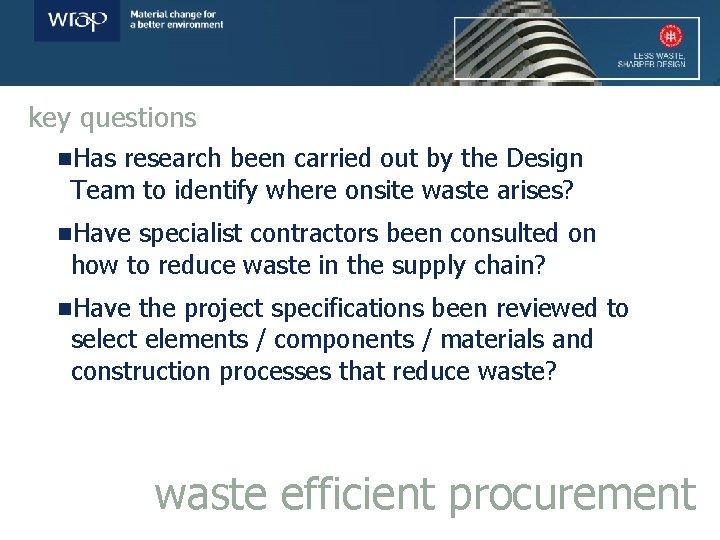
key questions n. Has research been carried out by the Design Team to identify where onsite waste arises? n. Have specialist contractors been consulted on how to reduce waste in the supply chain? n. Have the project specifications been reviewed to select elements / components / materials and construction processes that reduce waste? waste efficient procurement
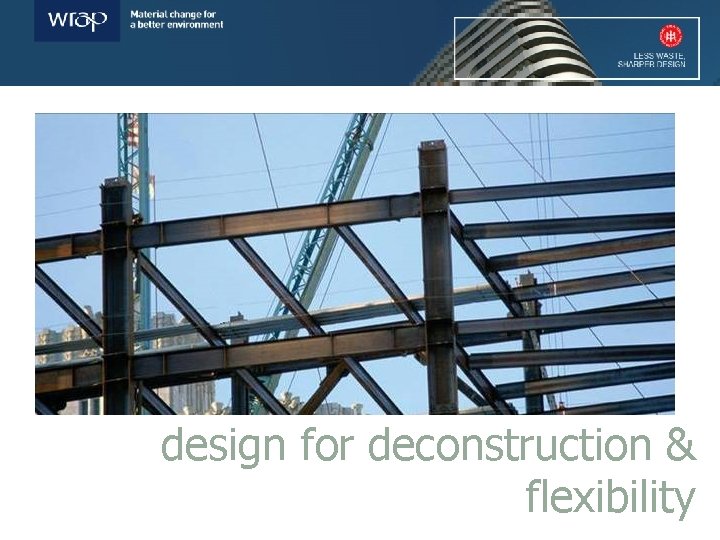
design for deconstruction & flexibility
key questions n. Is the design adaptable for a variety of purposes during its life span? n. Does the design incorporate reusable/recyclable components and materials? n. Are the building elements/components/materials easily disassembled? deconstruction & flexibility
Design for … 1. Reuse and recovery 2. Off site construction 3. Materials optimisation 4. Waste efficient procurement 5. Deconstruction & flexibility five principles
The design review process
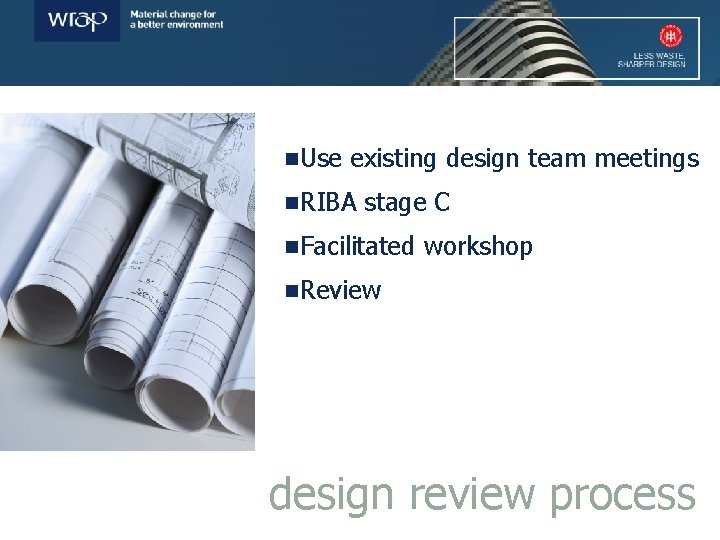
n. Use existing design team meetings n. RIBA stage C n. Facilitated workshop n. Review design review process
3 sessions n. Awareness n. Creativity n. Reasoning design review process
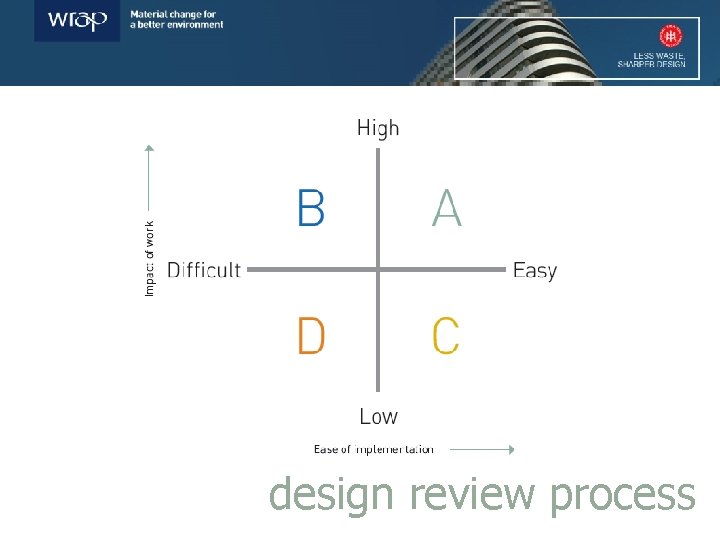
design review process
next steps n. Decide on options n. Allocate responsibilities n. Review at meetings n. Record in SWMP design review process
Tools and resources
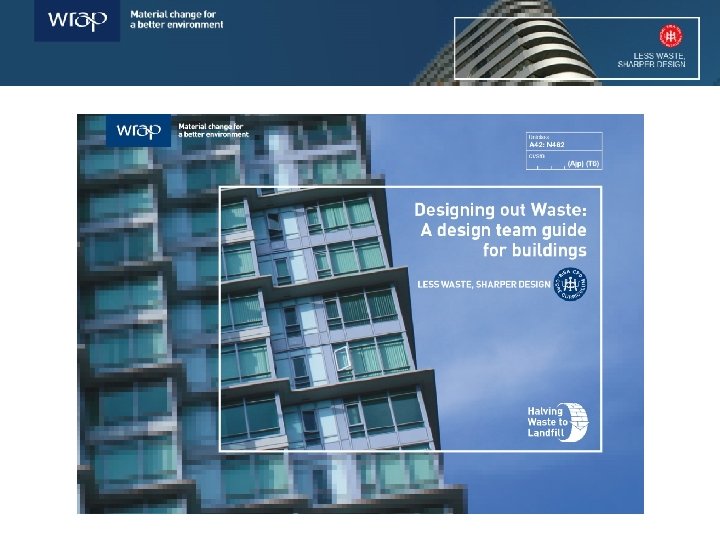
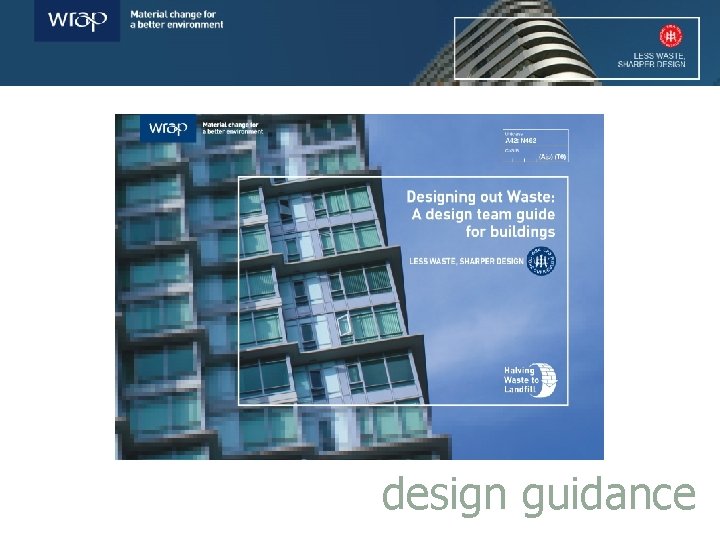
design guidance
case studies
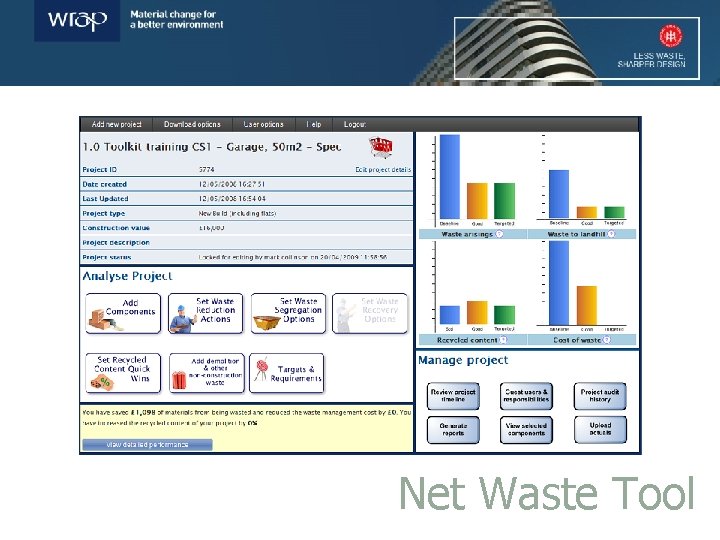
Net Waste Tool
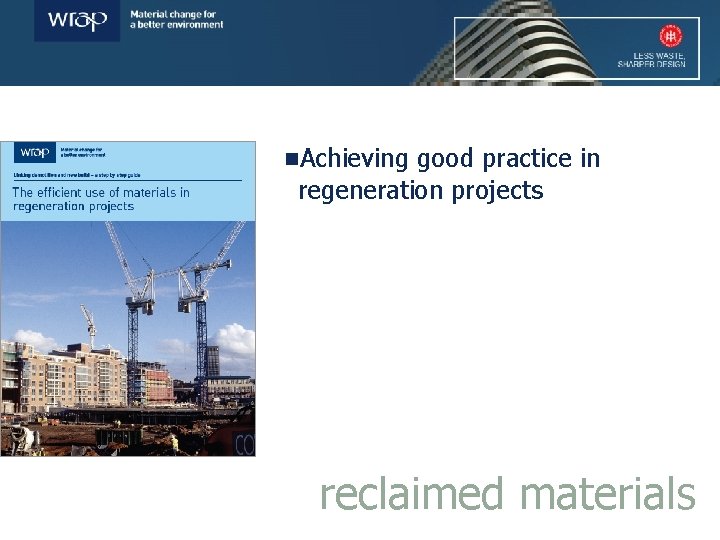
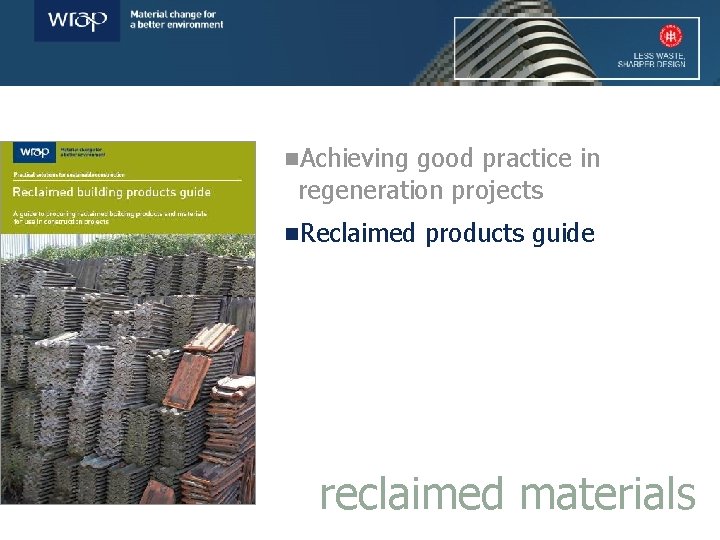
n. Achieving good practice in regeneration projects reclaimed materials
n. Achieving good practice in regeneration projects n. Reclaimed products guide reclaimed materials
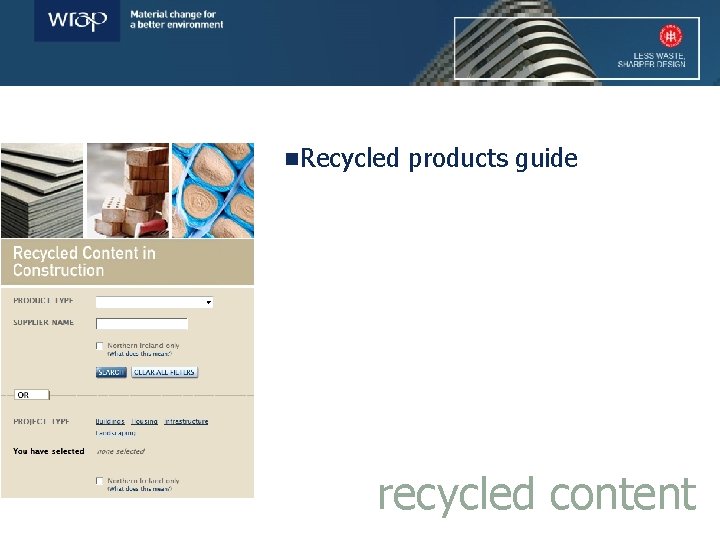
n. Recycled products guide recycled content
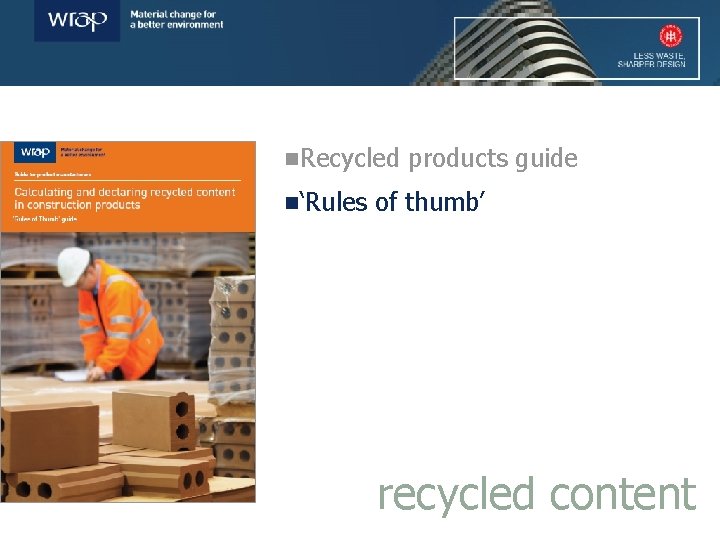
n. Recycled n‘Rules products guide of thumb’ recycled content
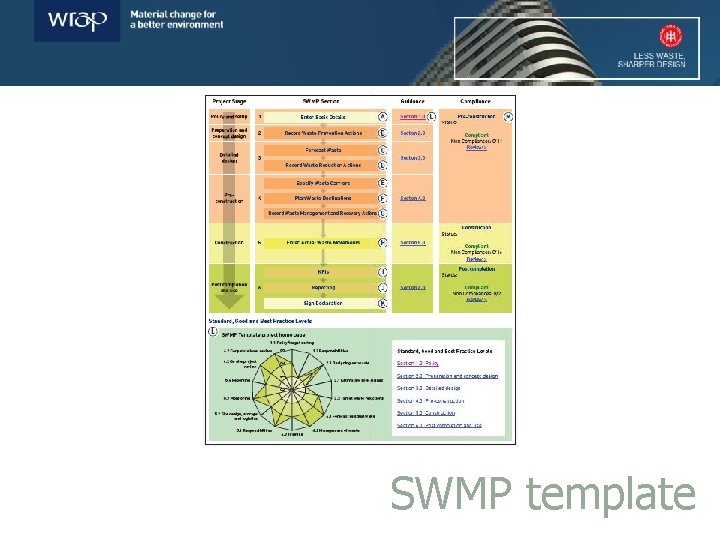
SWMP template
Summary
n. WRAP’s n. How approach to Design out Waste – key principles – design review process n. Tools and resources summary
Questions