
Reducing Commercial Food Waste in Ireland Sarah Broderick
Reducing Commercial Food Waste in Ireland Sarah Broderick Clean Technology Centre, CIT ENVIRON 28 March 2018
The world currently produces enough food for all its citizens
The problem is the difference between: What is produced & what is actually consumed
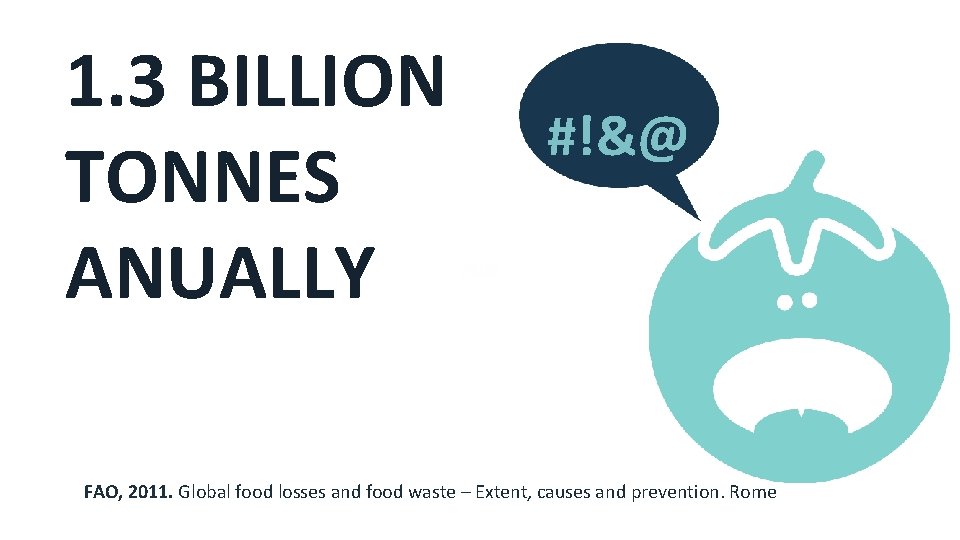
1. 3 BILLION TONNES ANUALLY #!&@ FAO, 2011. Global food losses and food waste – Extent, causes and prevention. Rome
Roughly ONE THIRD of all food produced for human consumption FAO, 2011. Global food losses and food waste – Extent, causes and prevention. Rome
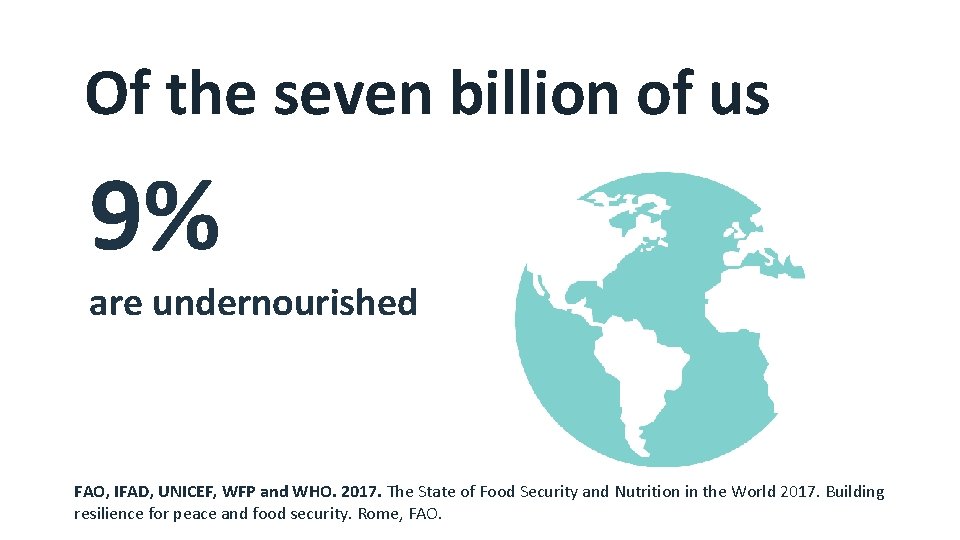
Of the seven billion of us 9% are undernourished FAO, IFAD, UNICEF, WFP and WHO. 2017. The State of Food Security and Nutrition in the World 2017. Building resilience for peace and food security. Rome, FAO.
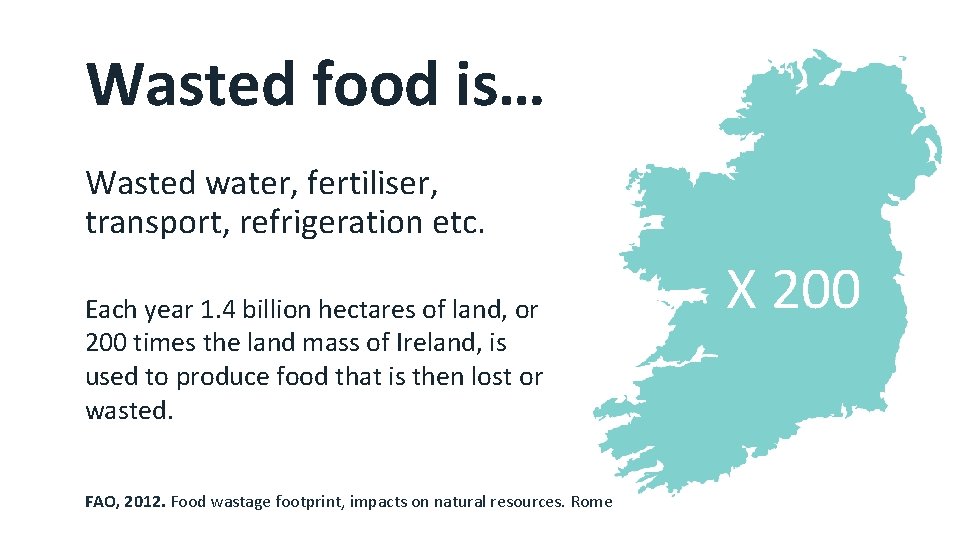
Wasted food is… Wasted water, fertiliser, transport, refrigeration etc. Each year 1. 4 billion hectares of land, or 200 times the land mass of Ireland, is used to produce food that is then lost or wasted. FAO, 2012. Food wastage footprint, impacts on natural resources. Rome X 200
Project Aims • Identify significant food waste generating sectors • Investigate the quantity, character, and sources of food waste • Identify best practice in food waste quantification and prevention • Develop sectoral food waste benchmarks • Design and trial interventions
Sector Identification 1. Sectoral Size – apply sectoral percentages to overall national waste figures • Based on the National Waste Report 2012 2. Sectoral Factors – use food waste indictors extracted from 2008 and apply them to most recent sectoral data • Primarily employee numbers from CSO • Also bed nights, travel numbers, student numbers and patient bed nights
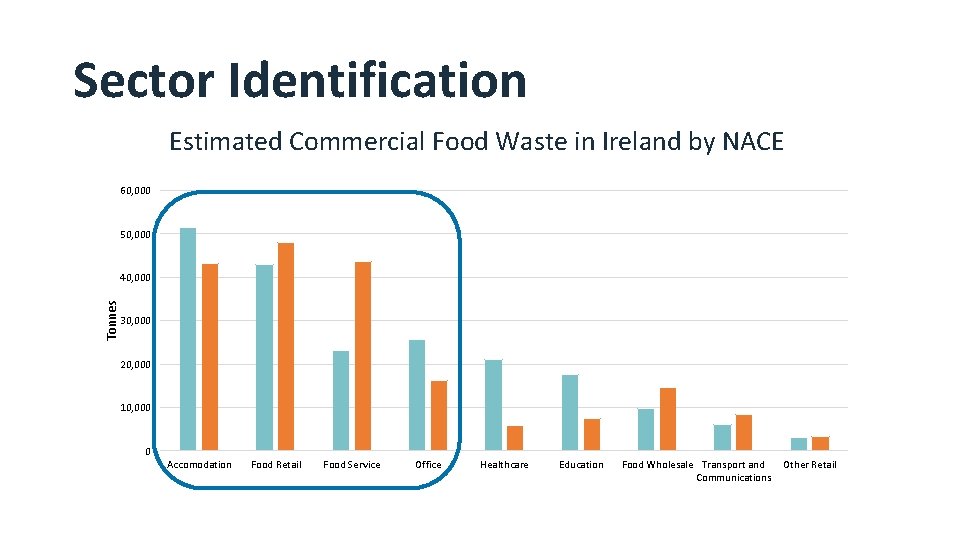
Sector Identification Estimated Commercial Food Waste in Ireland by NACE 60, 000 50, 000 Tonnes 40, 000 30, 000 20, 000 10, 000 0 Accomodation Food Retail Food Service Office Healthcare Education Food Wholesale Transport and Communications Other Retail
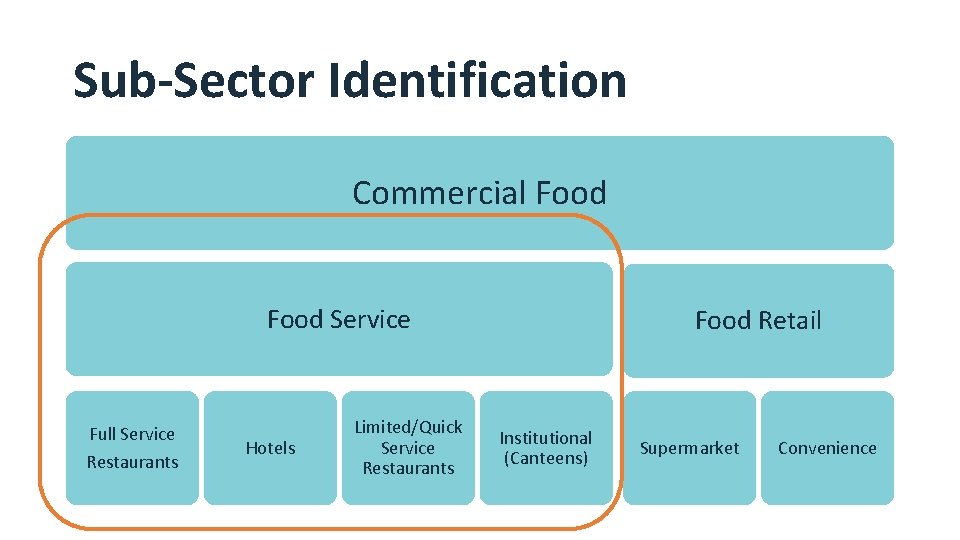
Sub-Sector Identification Commercial Food Service Full Service Restaurants Hotels Limited/Quick Service Restaurants Food Retail Institutional (Canteens) Supermarket Convenience
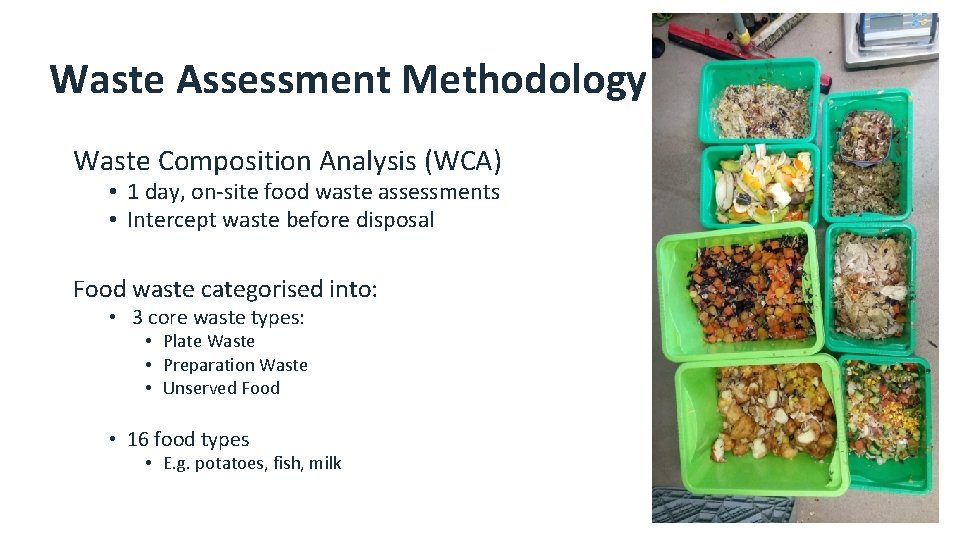
Waste Assessment Methodology Waste Composition Analysis (WCA) • 1 day, on-site food waste assessments • Intercept waste before disposal Food waste categorised into: • 3 core waste types: • Plate Waste • Preparation Waste • Unserved Food • 16 food types • E. g. potatoes, fish, milk
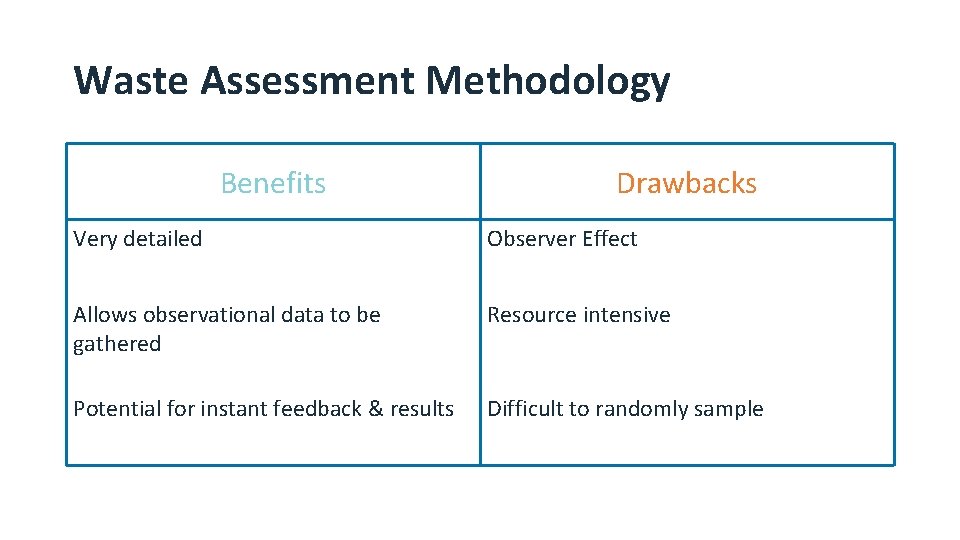
Waste Assessment Methodology Benefits Drawbacks Very detailed Observer Effect Allows observational data to be gathered Resource intensive Potential for instant feedback & results Difficult to randomly sample
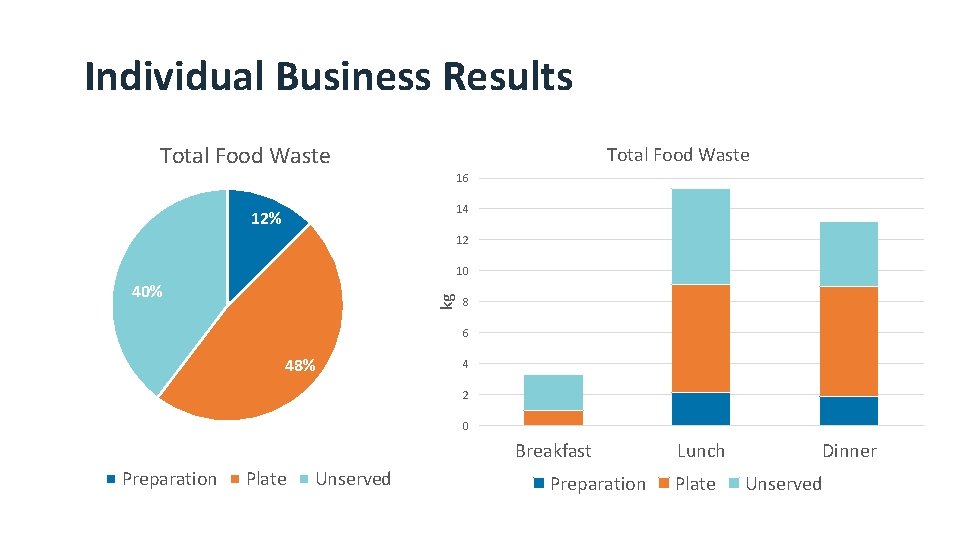
Individual Business Results Total Food Waste 16 14 12% 12 10 kg 40% 8 6 48% 4 2 0 Breakfast Preparation Plate Unserved Preparation Lunch Plate Dinner Unserved
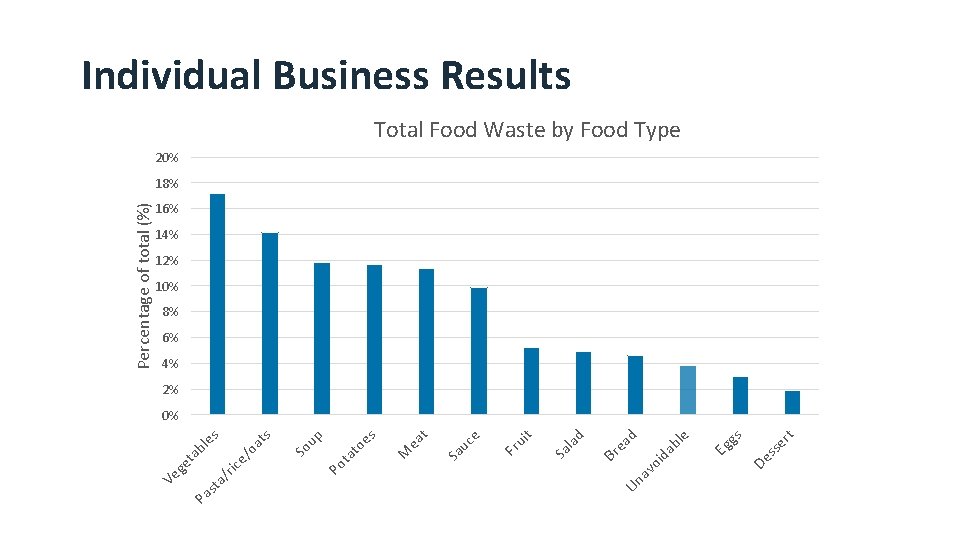
er t ss De gs Eg e bl ea d oi da av Un Br d la Sa t Fr ui e uc Sa t ea M es to ta Po up So s at /o le s ab ice /r st a Pa ge t Ve Percentage of total (%) Individual Business Results Total Food Waste by Food Type 20% 18% 16% 14% 12% 10% 8% 6% 4% 2% 0%
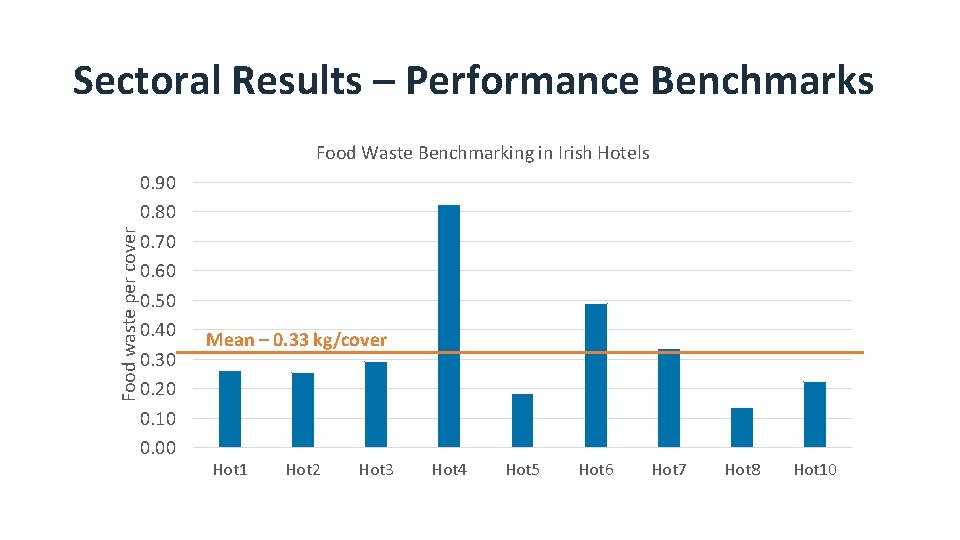
Sectoral Results – Performance Benchmarks Food waste per cover Food Waste Benchmarking in Irish Hotels 0. 90 0. 80 0. 70 0. 60 0. 50 0. 40 0. 30 0. 20 0. 10 0. 00 Mean – 0. 33 kg/cover Hot 1 Hot 2 Hot 3 Hot 4 Hot 5 Hot 6 Hot 7 Hot 8 Hot 10
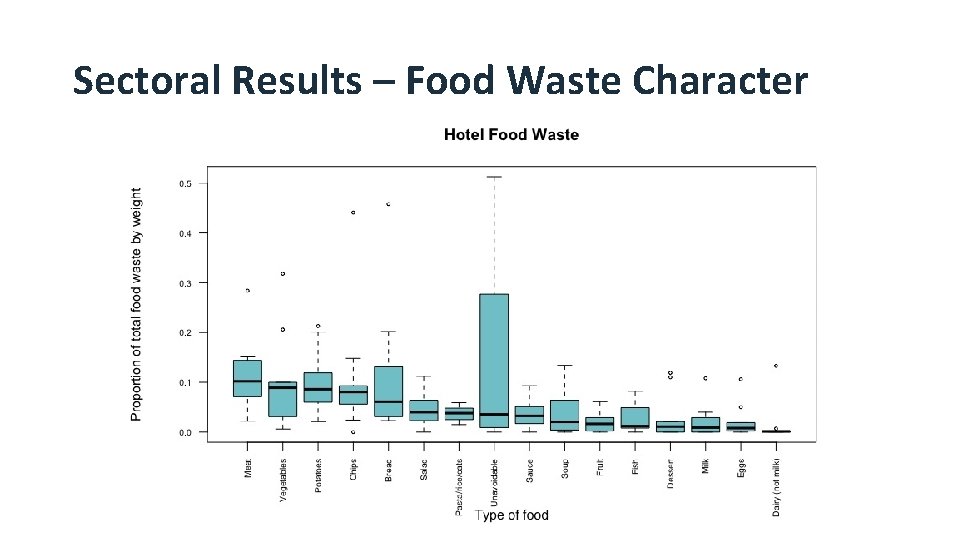
Sectoral Results – Food Waste Character
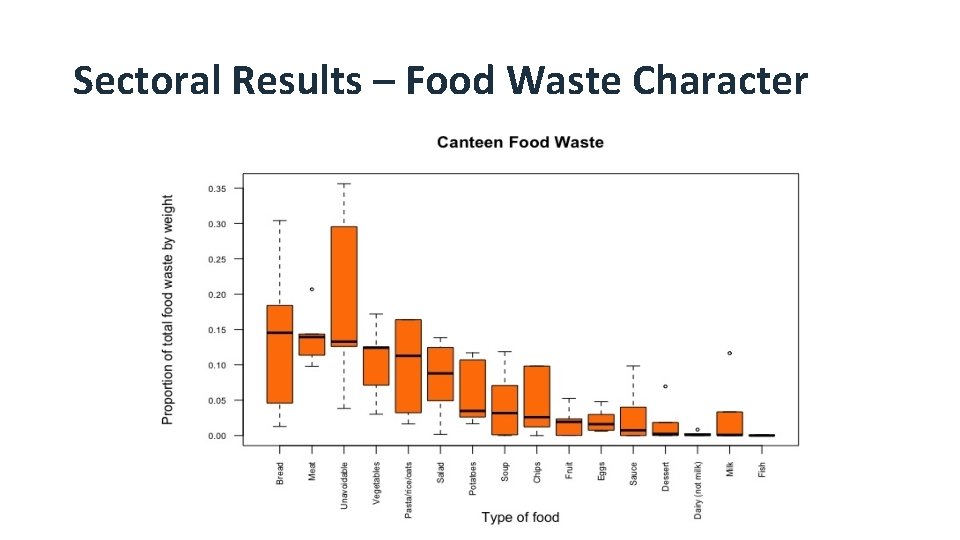
Sectoral Results – Food Waste Character
What’s Next? • Intervention trials • Cost of food waste estimate • Best practice publications
Thank you Questions? sarah. broderick@ctc-cork. ie www. ctc-cork. ie
- Slides: 21