
Reducibility 1 Problem is reduced to problem If

Reducibility 1
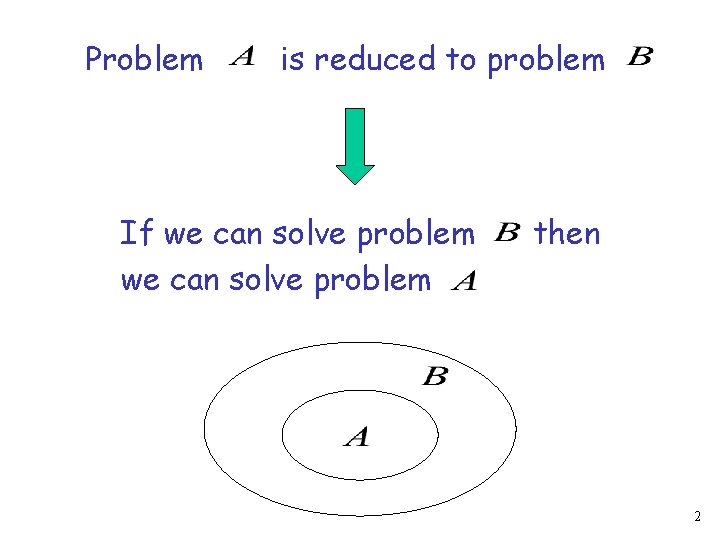
Problem is reduced to problem If we can solve problem then 2
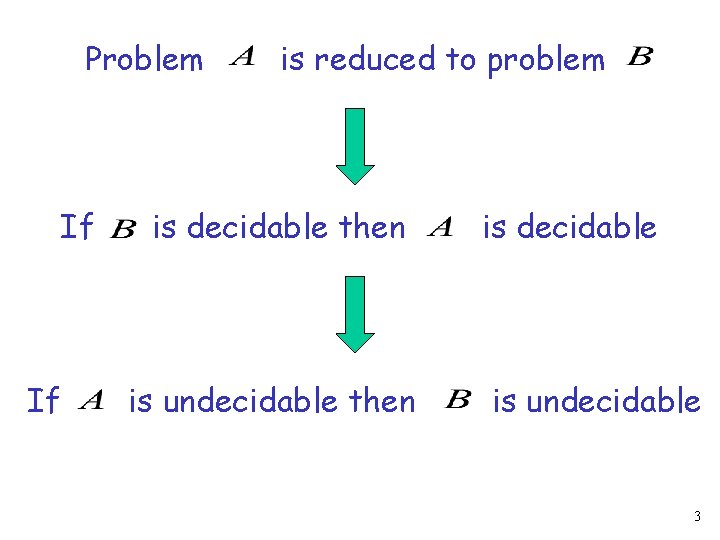
Problem If If is reduced to problem is decidable then is undecidable then is decidable is undecidable 3
Example: the halting problem is reduced to the state-entry problem 4
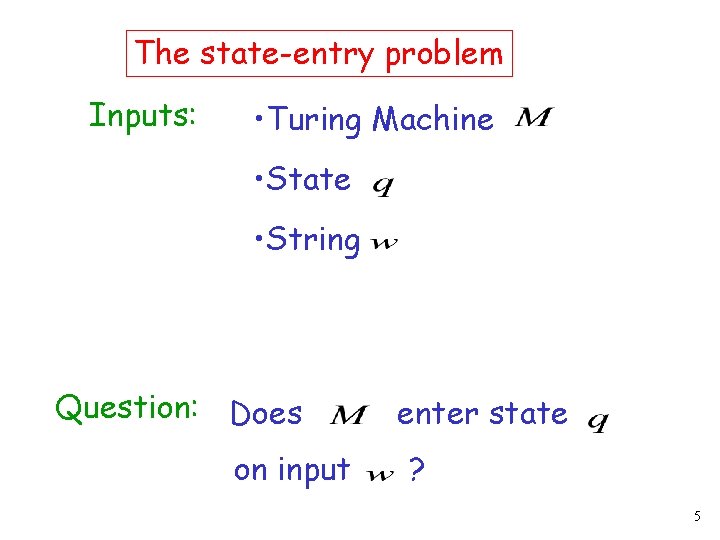
The state-entry problem Inputs: • Turing Machine • State • String Question: Does on input enter state ? 5
Theorem: The state-entry problem is undecidable Proof: Reduce the halting problem to the state-entry problem 6
Suppose we have an algorithm (Turing Machine) that solves the state-entry problem We will construct an algorithm that solves the halting problem 7
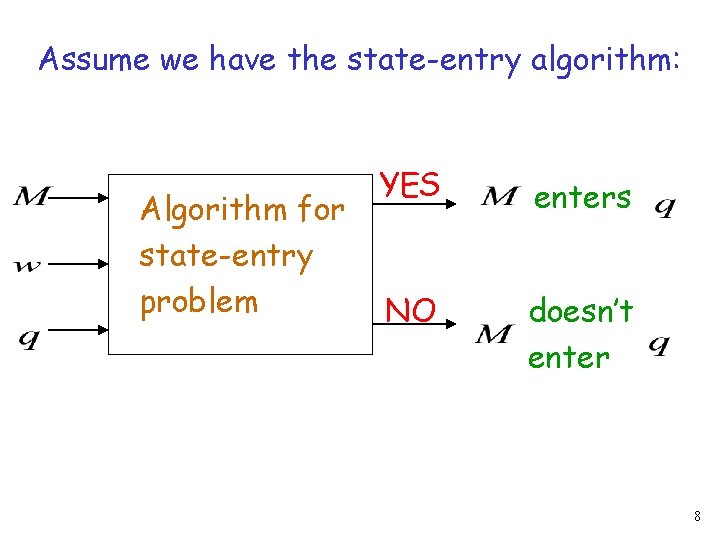
Assume we have the state-entry algorithm: Algorithm for state-entry problem YES enters NO doesn’t enter 8
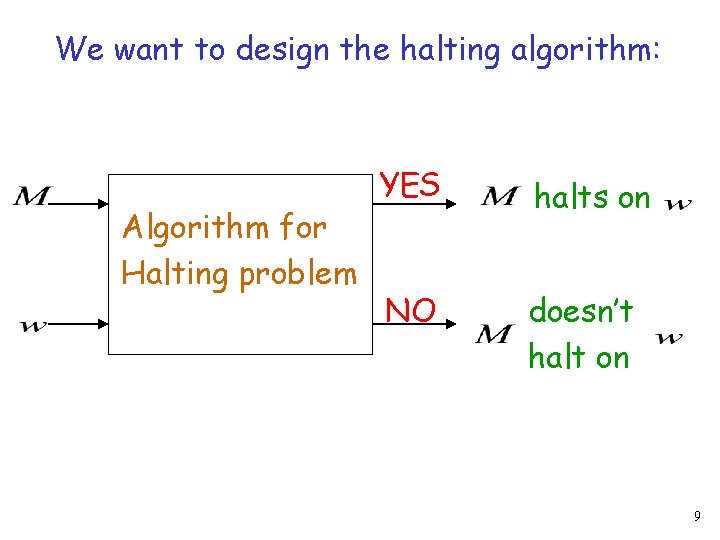
We want to design the halting algorithm: Algorithm for Halting problem YES halts on NO doesn’t halt on 9
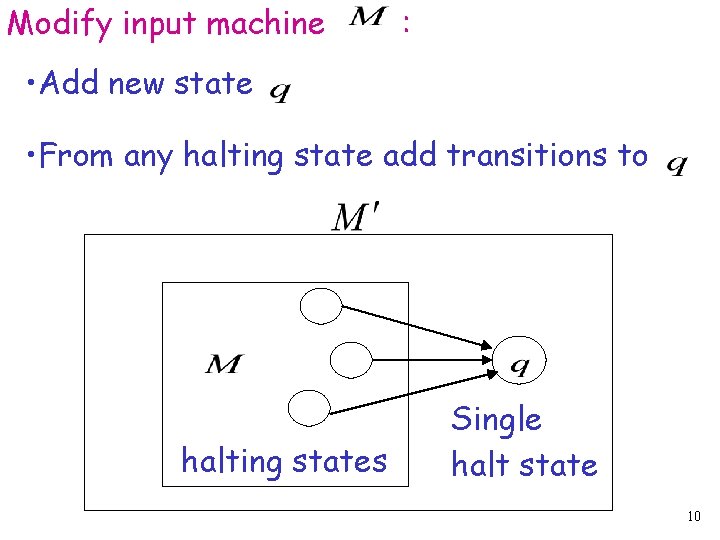
Modify input machine : • Add new state • From any halting state add transitions to halting states Single halt state 10
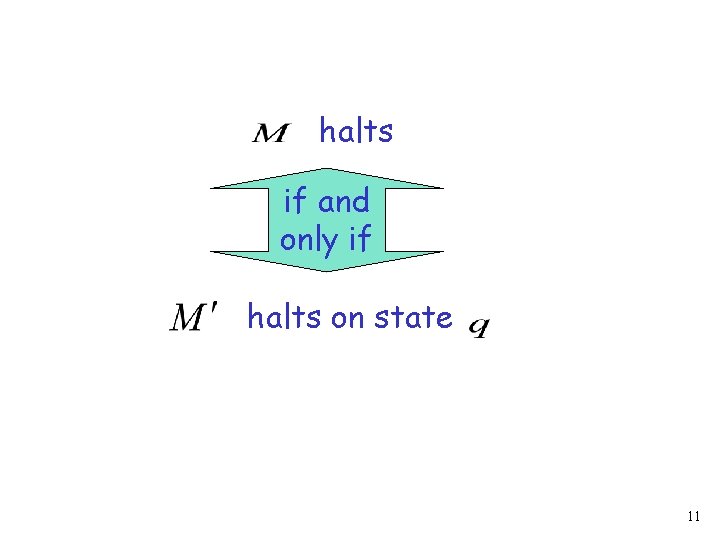
halts if and only if halts on state 11
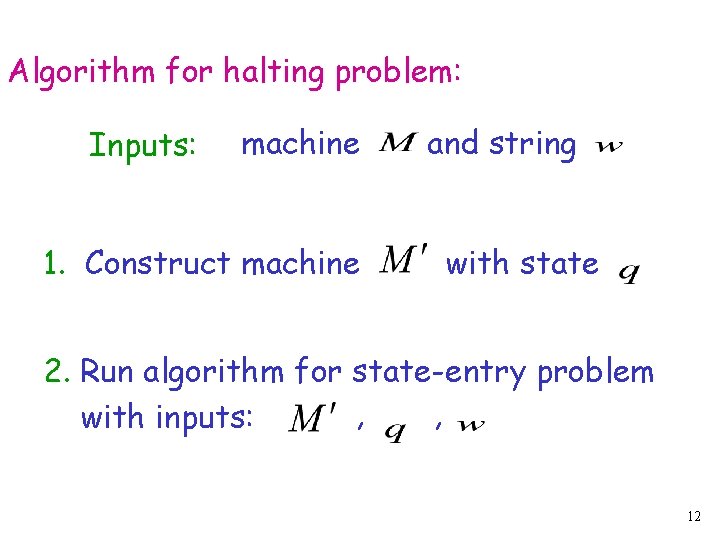
Algorithm for halting problem: Inputs: machine 1. Construct machine and string with state 2. Run algorithm for state-entry problem , , with inputs: 12
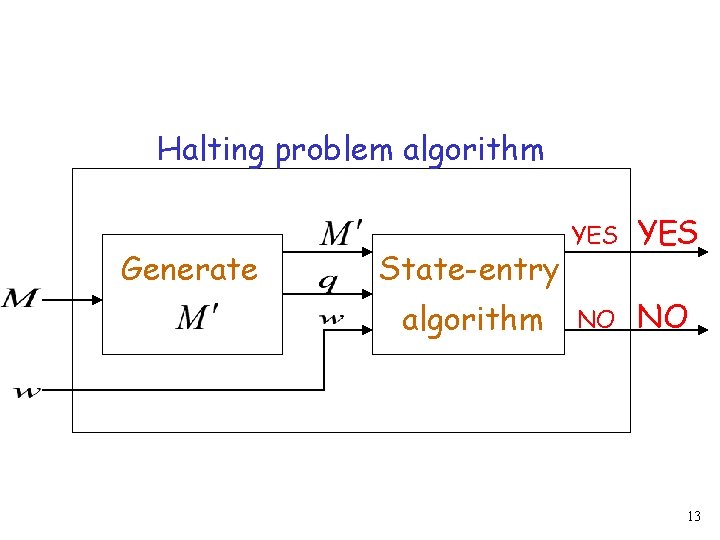
Halting problem algorithm Generate State-entry algorithm YES NO NO 13
We reduced the halting problem to the state-entry problem Since the halting problem is undecidable, it must be that the state-entry problem is also undecidable END OF PROOF 14
Another example: the halting problem is reduced to the blank-tape halting problem 15
The blank-tape halting problem Input: Turing Machine Question: Does halt when started with a blank tape? 16
Theorem: The blank-tape halting problem is undecidable Proof: Reduce the halting problem to the blank-tape halting problem 17
Suppose we have an algorithm for the blank-tape halting problem We will construct an algorithm for the halting problem 18
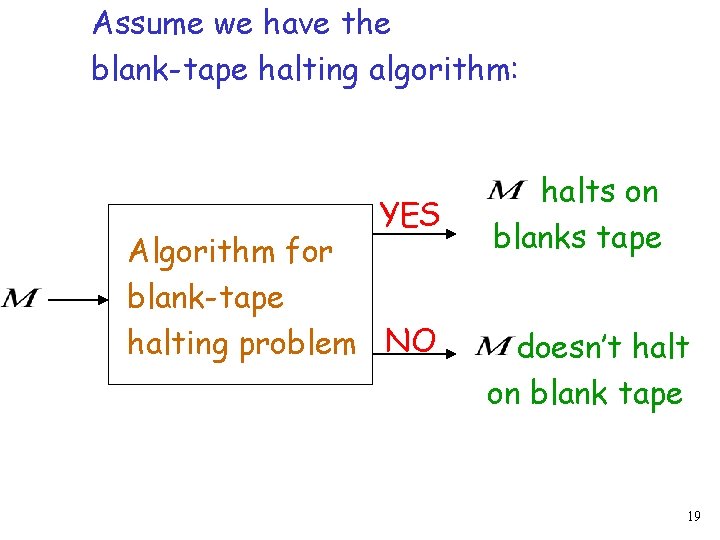
Assume we have the blank-tape halting algorithm: YES Algorithm for blank-tape halting problem NO halts on blanks tape doesn’t halt on blank tape 19
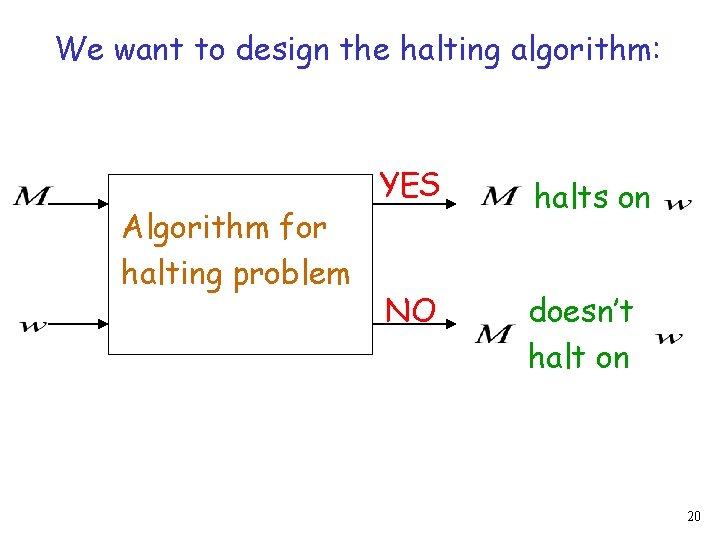
We want to design the halting algorithm: Algorithm for halting problem YES halts on NO doesn’t halt on 20
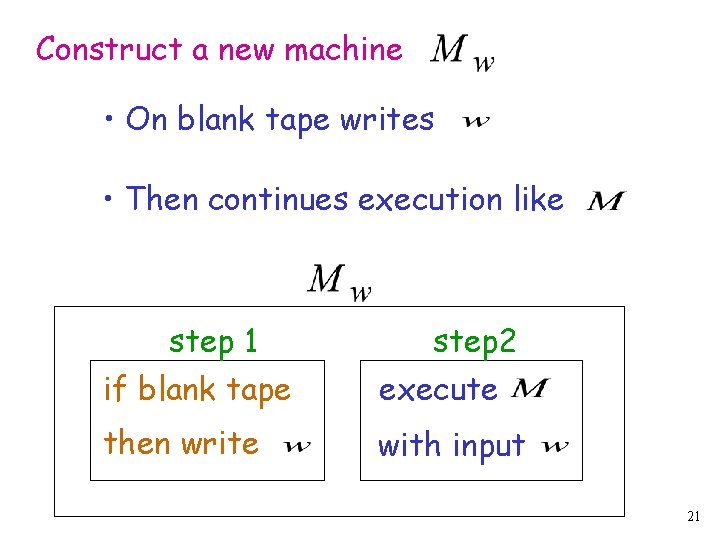
Construct a new machine • On blank tape writes • Then continues execution like step 1 if blank tape step 2 execute then write with input 21
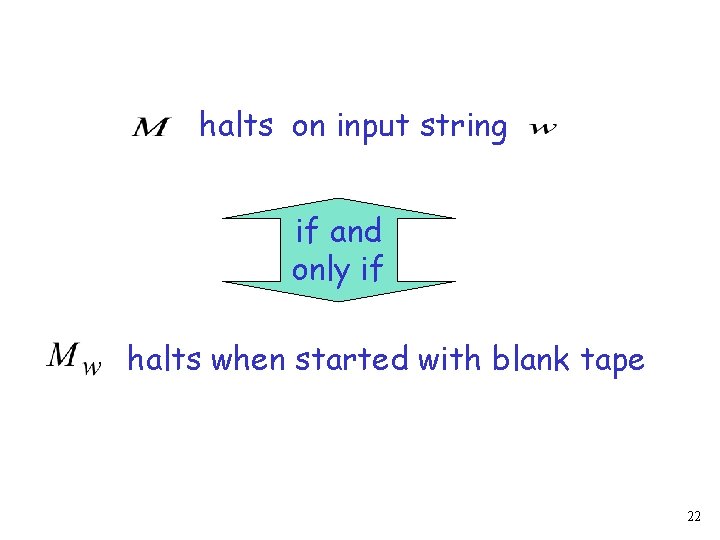
halts on input string if and only if halts when started with blank tape 22
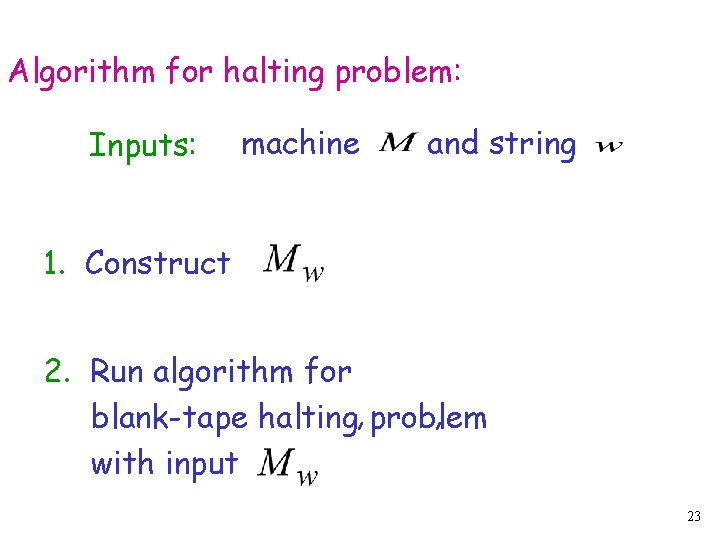
Algorithm for halting problem: Inputs: machine and string 1. Construct 2. Run algorithm for , blank-tape halting, problem with input 23
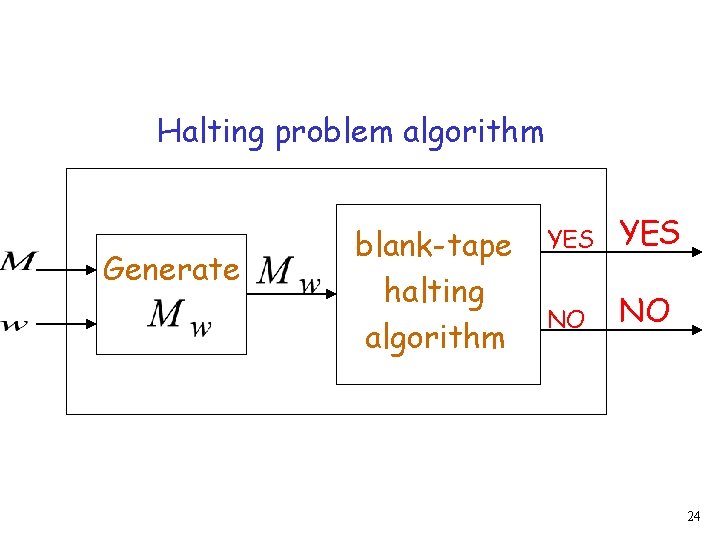
Halting problem algorithm Generate blank-tape halting algorithm YES NO NO 24
We reduced the halting problem to the blank-tape halting problem Since the halting problem is undecidable, the blank-tape halting problem is also undecidable END OF PROOF 25
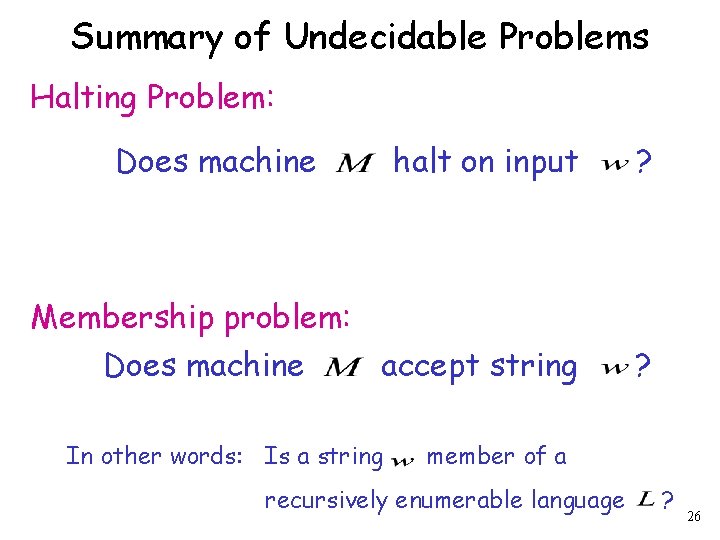
Summary of Undecidable Problems Halting Problem: Does machine halt on input ? Membership problem: Does machine accept string ? In other words: Is a string member of a recursively enumerable language ? 26
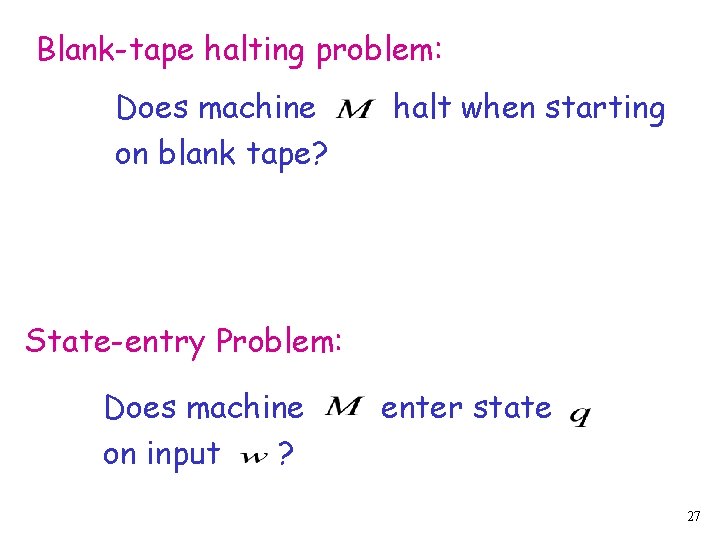
Blank-tape halting problem: Does machine on blank tape? halt when starting State-entry Problem: Does machine on input ? enter state 27
Uncomputable Functions 28
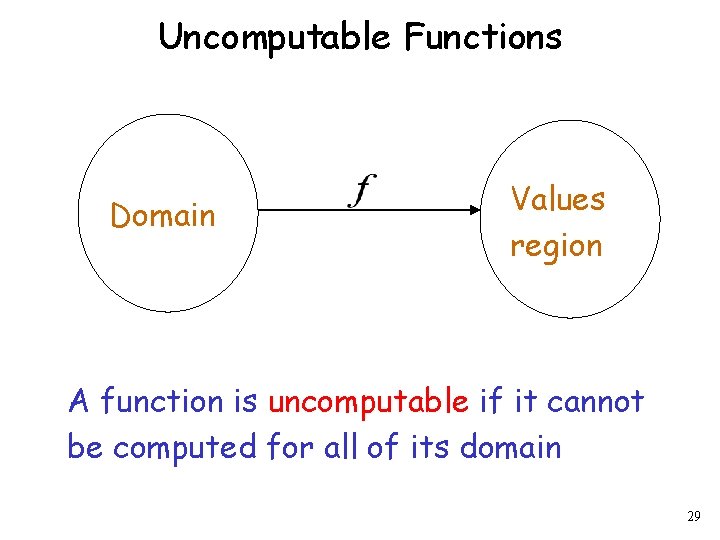
Uncomputable Functions Domain Values region A function is uncomputable if it cannot be computed for all of its domain 29
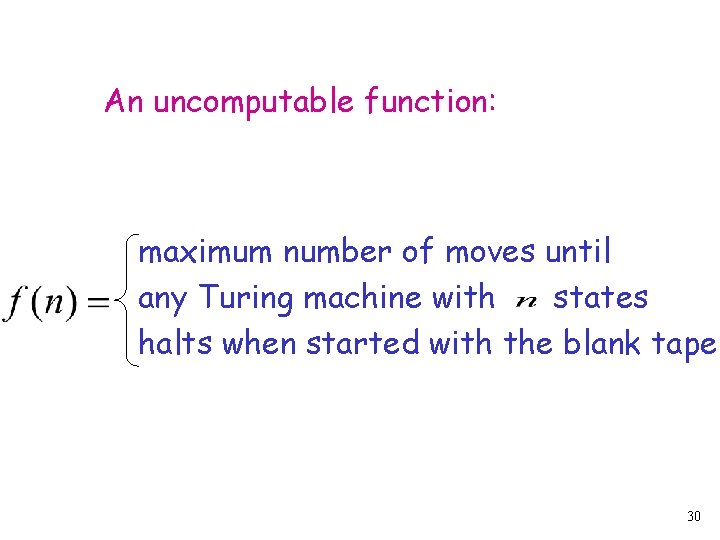
An uncomputable function: maximum number of moves until any Turing machine with states halts when started with the blank tape 30
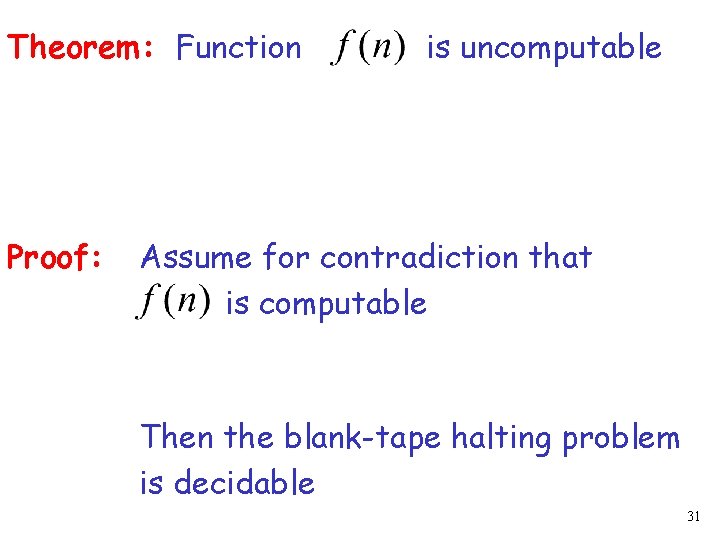
Theorem: Function Proof: is uncomputable Assume for contradiction that is computable Then the blank-tape halting problem is decidable 31
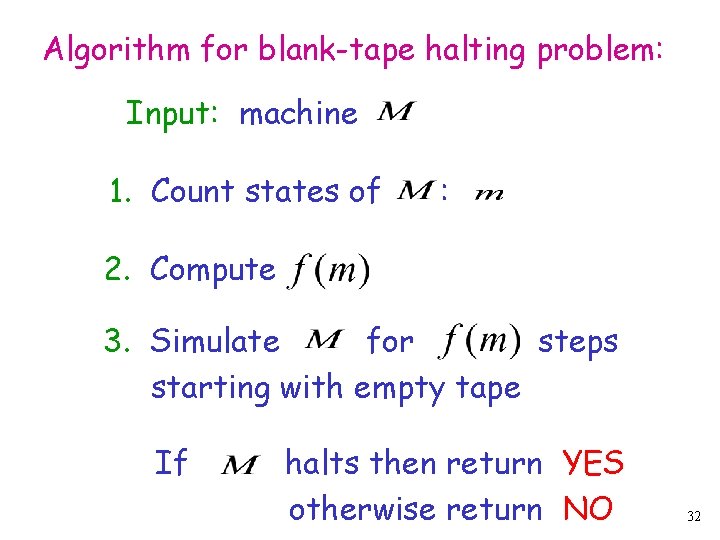
Algorithm for blank-tape halting problem: Input: machine 1. Count states of : 2. Compute 3. Simulate for steps starting with empty tape If halts then return YES otherwise return NO 32
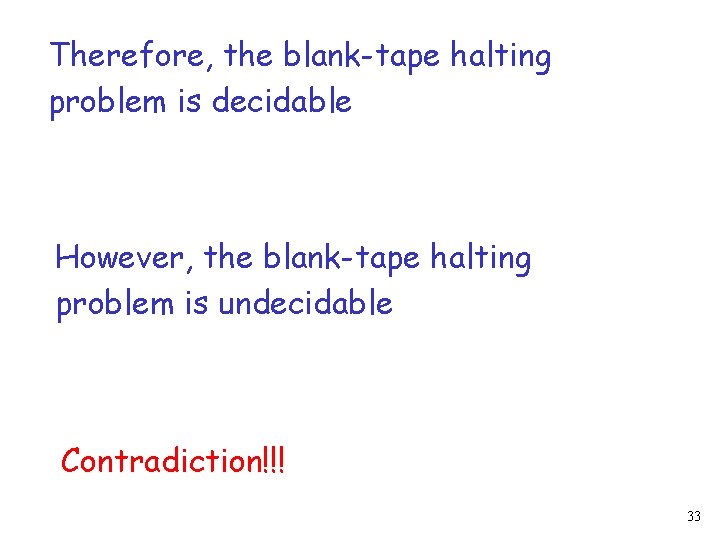
Therefore, the blank-tape halting problem is decidable However, the blank-tape halting problem is undecidable Contradiction!!! 33
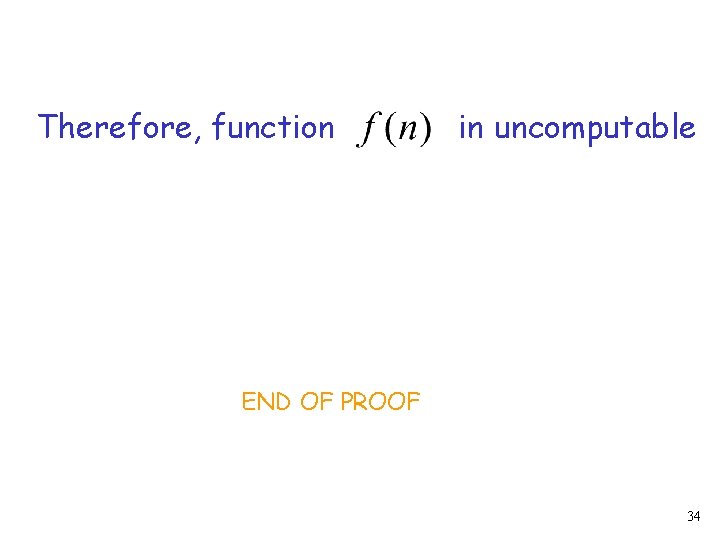
Therefore, function in uncomputable END OF PROOF 34
Rice’s Theorem 35
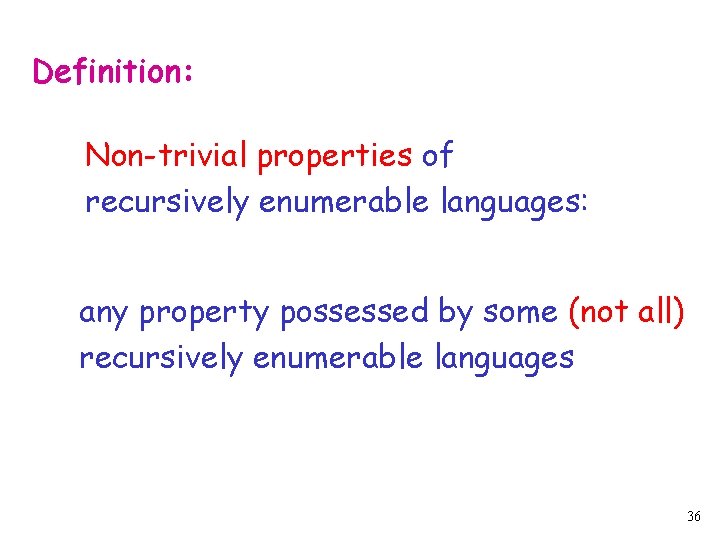
Definition: Non-trivial properties of recursively enumerable languages: any property possessed by some (not all) recursively enumerable languages 36
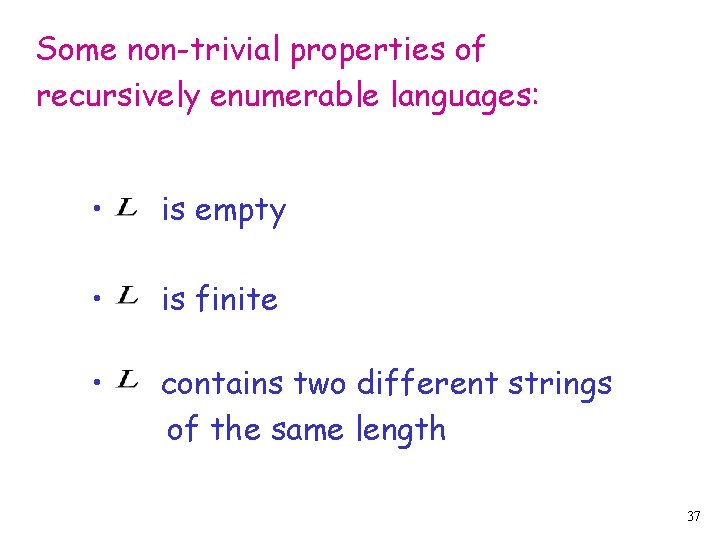
Some non-trivial properties of recursively enumerable languages: • is empty • is finite • contains two different strings of the same length 37
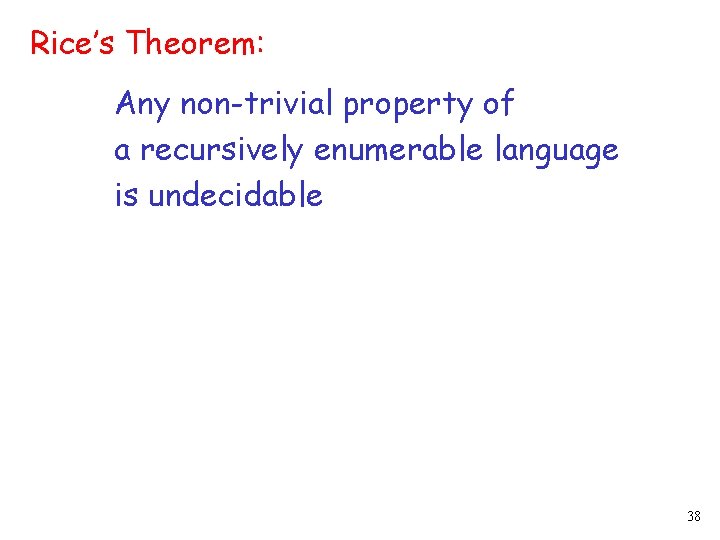
Rice’s Theorem: Any non-trivial property of a recursively enumerable language is undecidable 38
We will prove some non-trivial properties without using Rice’s theorem 39
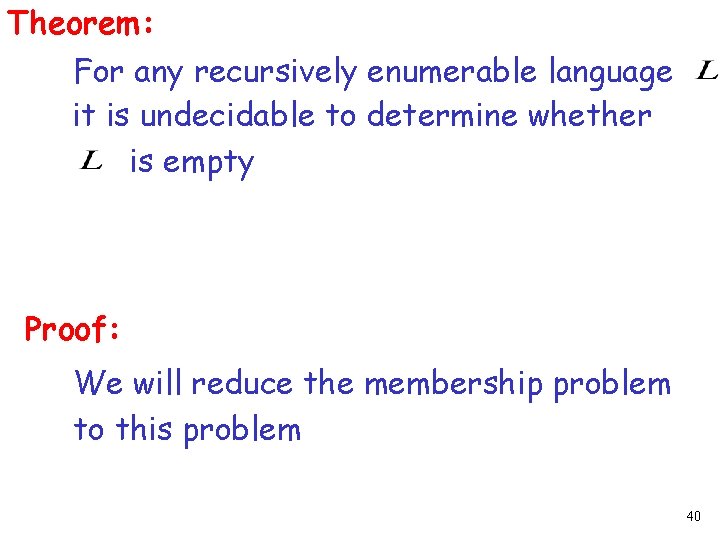
Theorem: For any recursively enumerable language it is undecidable to determine whether is empty Proof: We will reduce the membership problem to this problem 40
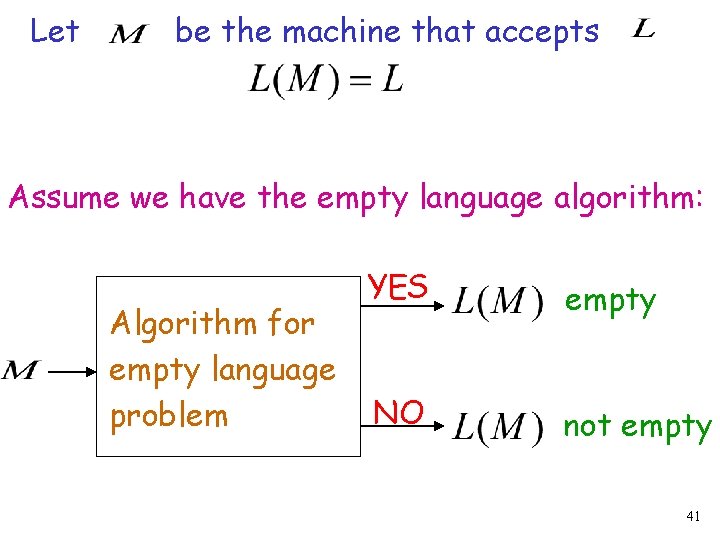
Let be the machine that accepts Assume we have the empty language algorithm: Algorithm for empty language problem YES empty NO not empty 41
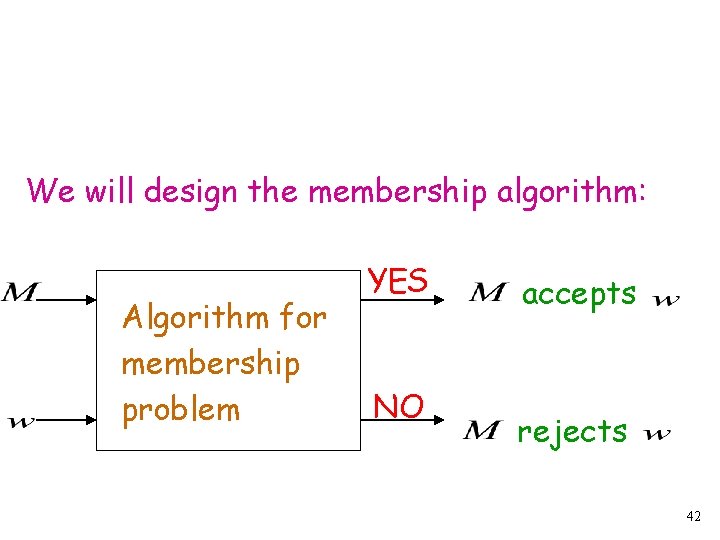
We will design the membership algorithm: Algorithm for membership problem YES NO accepts rejects 42
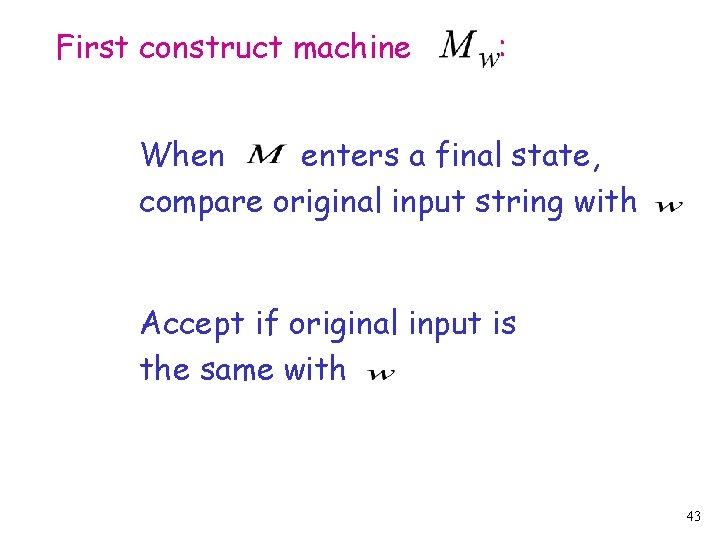
First construct machine : When enters a final state, compare original input string with Accept if original input is the same with 43
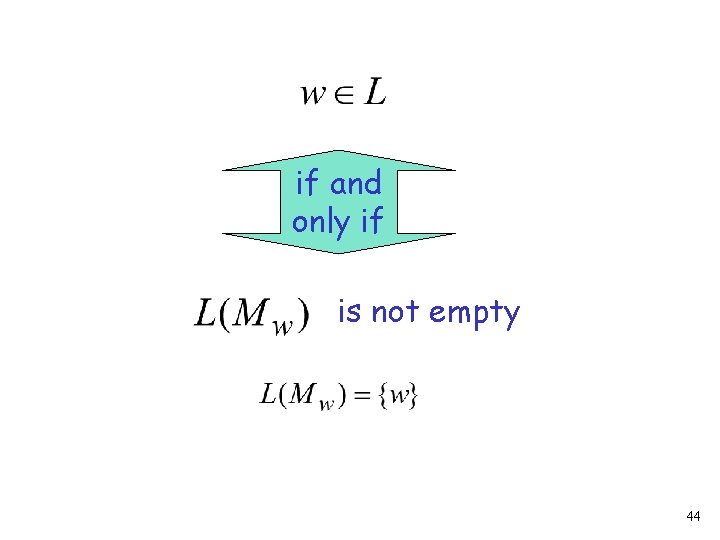
if and only if is not empty 44
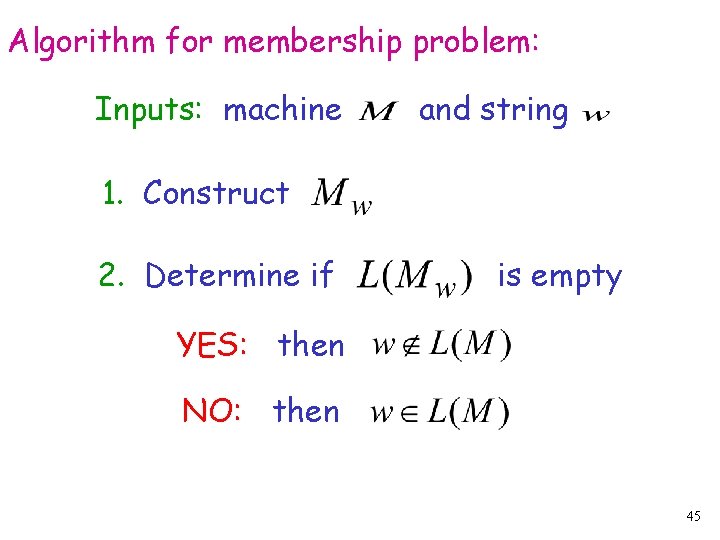
Algorithm for membership problem: Inputs: machine and string 1. Construct 2. Determine if is empty YES: then NO: then 45
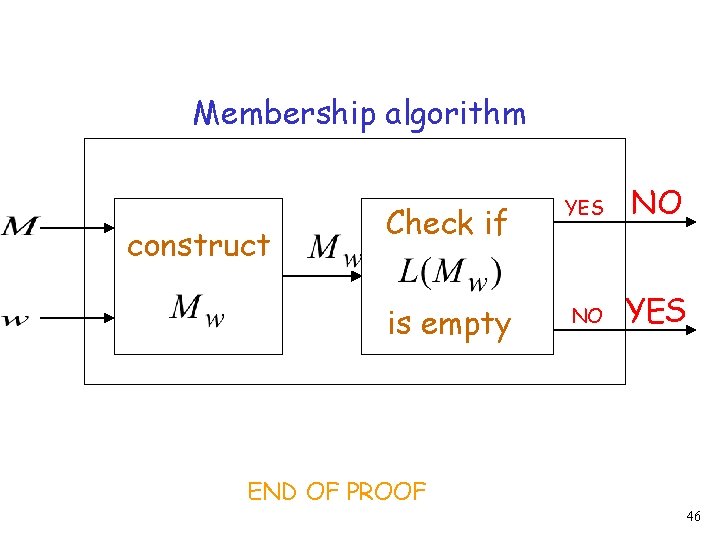
Membership algorithm construct Check if YES NO is empty NO YES END OF PROOF 46
- Slides: 46