
Reduced AreaAgent Treatments RAATs Do More With Less


- Slides: 19
Reduced Area-Agent Treatments (RAATs): Do More With Less Scott Schell and Alex Latchininsky Extension Entomology Dept. of Renewable Resources - CES
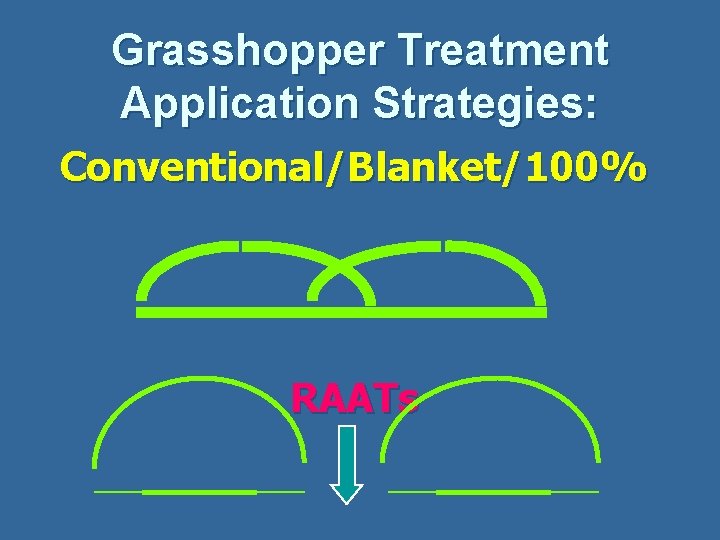
Grasshopper Treatment Application Strategies: Conventional/Blanket/100% RAATs
THE RAATs CONCEPT: - Hoppers killed directly in the treated swaths - More predacious insects and parasitoids survive treatment - Hoppers move into treated strips - Birds continue to feed on hoppers - Less disruption to bio-control agents of weeds (APHIS data on Aphthona spp. beetles on leafy spurge in Montana)
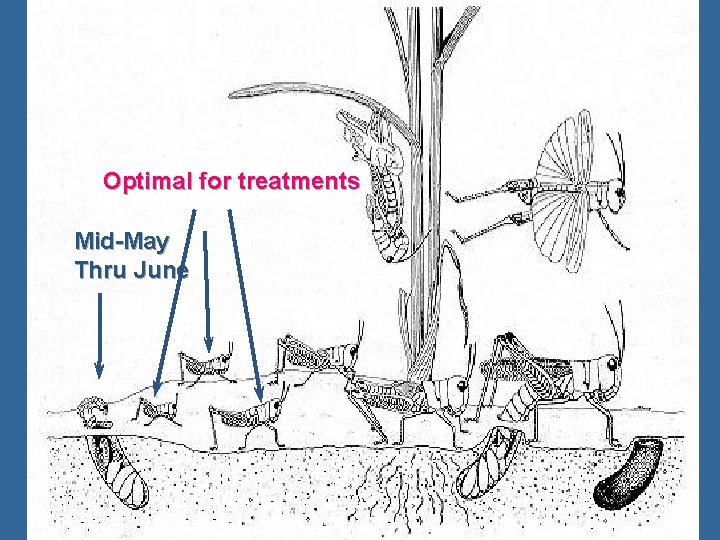
Optimal for treatments Mid-May Thru June
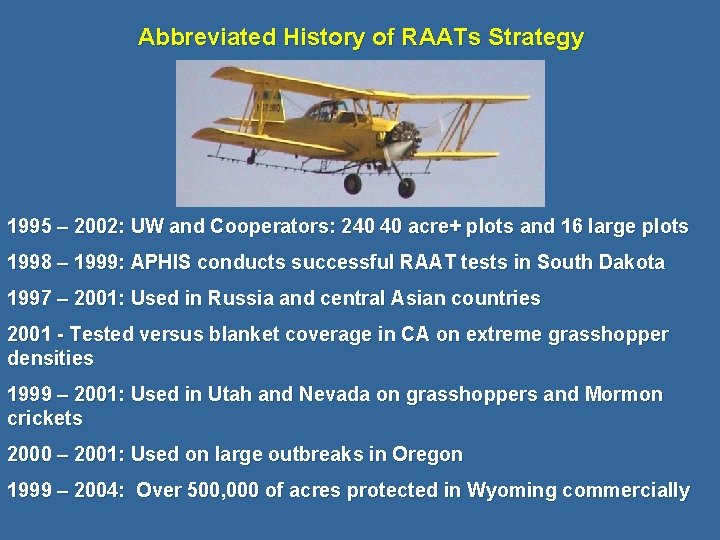
Abbreviated History of RAATs Strategy 1995 – 2002: UW and Cooperators: 240 40 acre+ plots and 16 large plots 1998 – 1999: APHIS conducts successful RAAT tests in South Dakota 1997 – 2001: Used in Russia and central Asian countries 2001 - Tested versus blanket coverage in CA on extreme grasshopper densities 1999 – 2001: Used in Utah and Nevada on grasshoppers and Mormon crickets 2000 – 2001: Used on large outbreaks in Oregon 1999 – 2004: Over 500, 000 of acres protected in Wyoming commercially
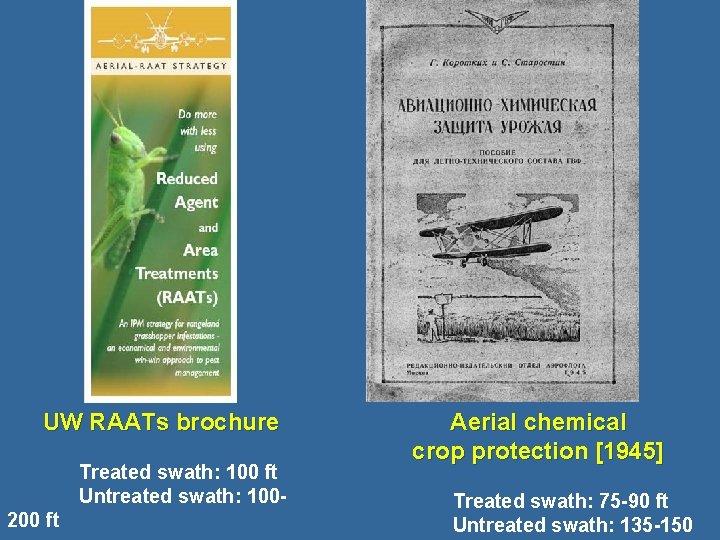
UW RAATs brochure Treated swath: 100 ft Untreated swath: 100200 ft Aerial chemical crop protection [1945] Treated swath: 75 -90 ft Untreated swath: 135 -150
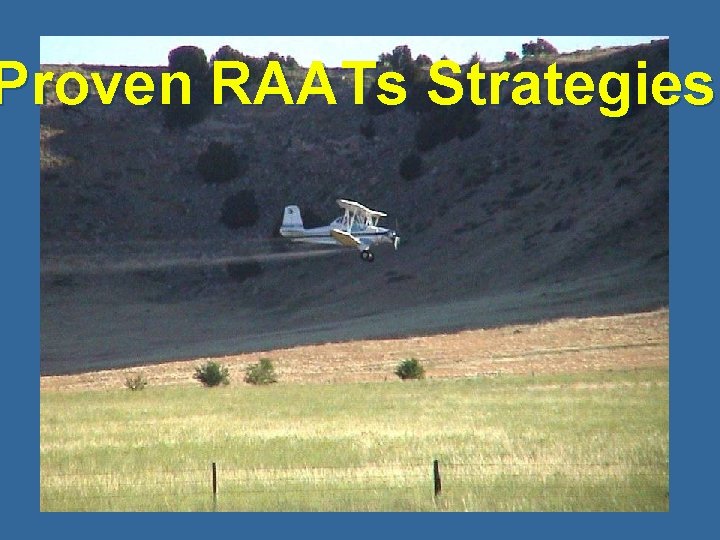
Proven RAATs Strategies
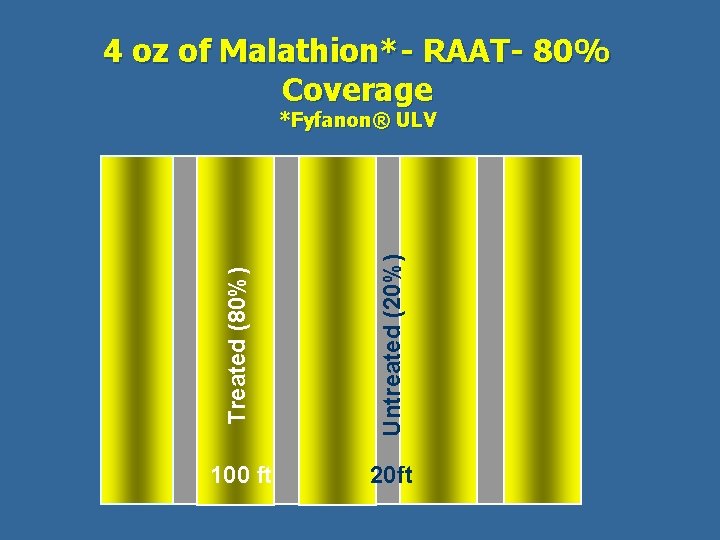
4 oz of Malathion*- RAAT- 80% Coverage Treated (80%) Untreated (20%) *Fyfanon® ULV 100 ft 20 ft
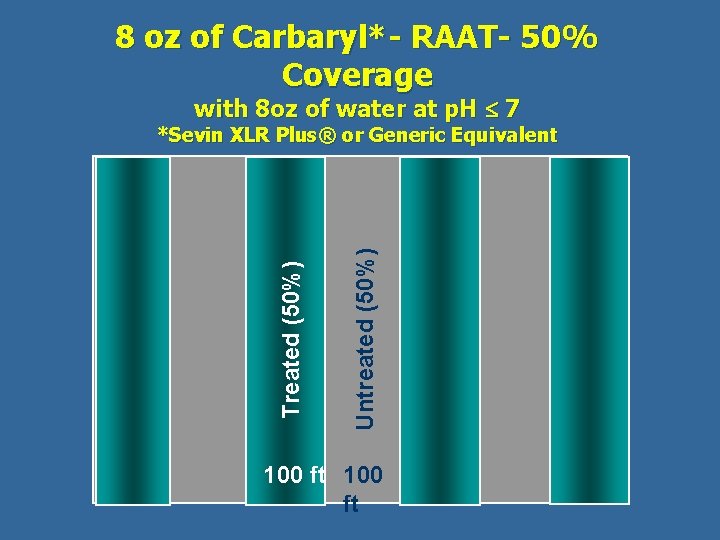
8 oz of Carbaryl*- RAAT- 50% Coverage with 8 oz of water at p. H 7 Untreated (50%) Treated (50%) *Sevin XLR Plus® or Generic Equivalent 100 ft
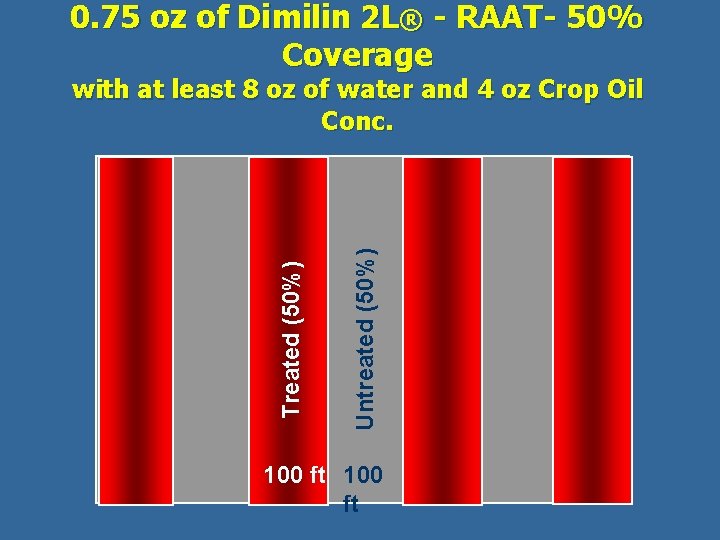
0. 75 oz of Dimilin 2 L® - RAAT- 50% Coverage Untreated (50%) Treated (50%) with at least 8 oz of water and 4 oz Crop Oil Conc. 100 ft
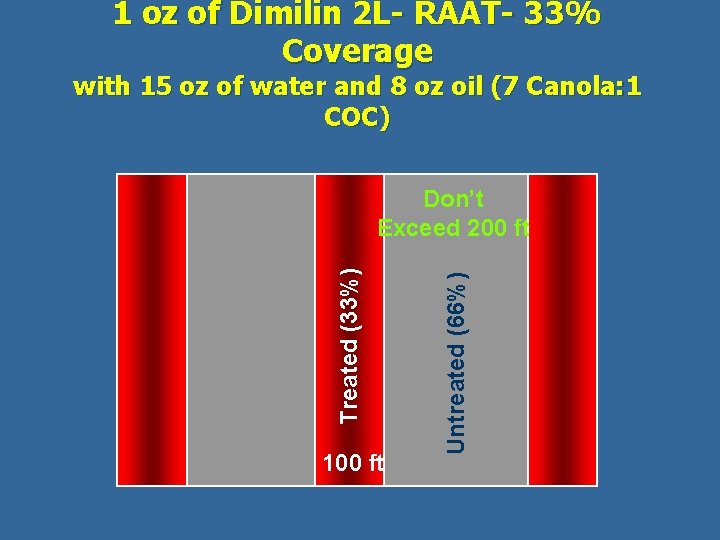
1 oz of Dimilin 2 L- RAAT- 33% Coverage with 15 oz of water and 8 oz oil (7 Canola: 1 COC) 100 ft Untreated (66%) Treated (33%) Don’t Exceed 200 ft
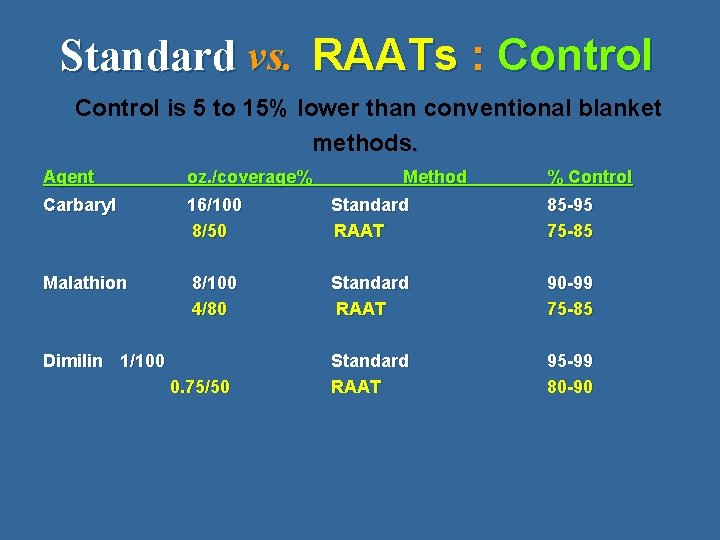
Standard vs. RAATs : Control is 5 to 15% lower than conventional blanket methods. Agent Carbaryl oz. /coverage% 16/100 8/50 Method Standard RAAT % Control 85 -95 75 -85 Malathion 8/100 4/80 Standard RAAT 90 -99 75 -85 Standard RAAT 95 -99 80 -90 Dimilin 1/100 0. 75/50
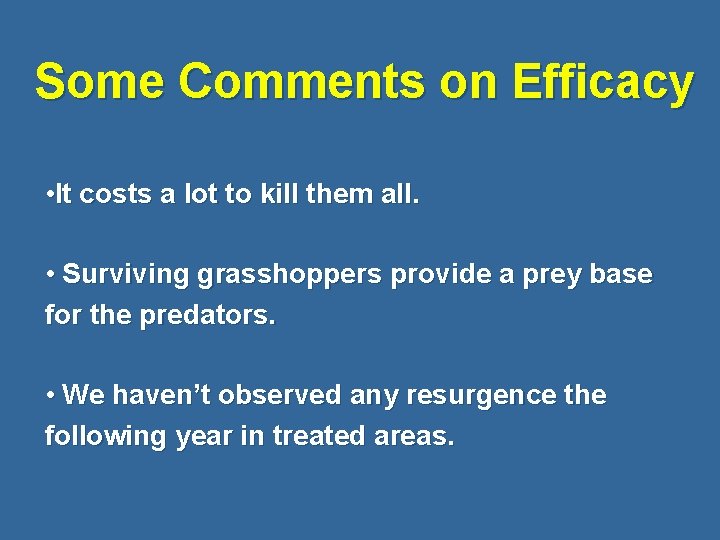
Some Comments on Efficacy • It costs a lot to kill them all. • Surviving grasshoppers provide a prey base for the predators. • We haven’t observed any resurgence the following year in treated areas.
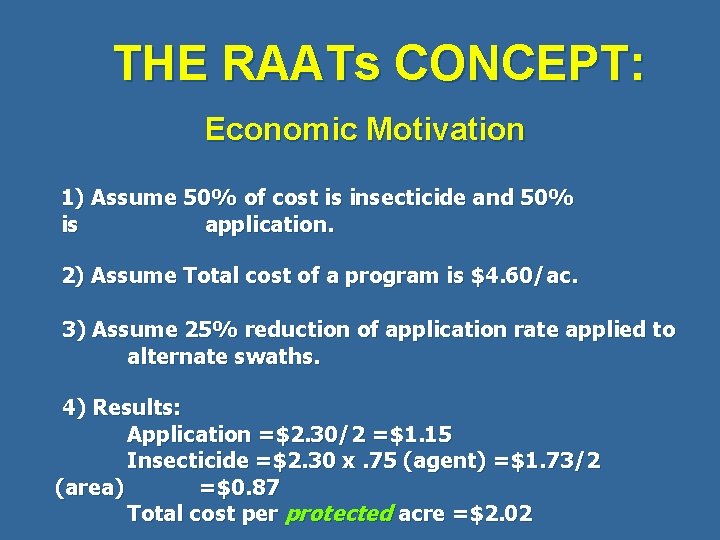
THE RAATs CONCEPT: Economic Motivation 1) Assume 50% of cost is insecticide and 50% is application. 2) Assume Total cost of a program is $4. 60/ac. 3) Assume 25% reduction of application rate applied to alternate swaths. 4) Results: Application =$2. 30/2 =$1. 15 Insecticide =$2. 30 x. 75 (agent) =$1. 73/2 (area) =$0. 87 Total cost per protected acre =$2. 02
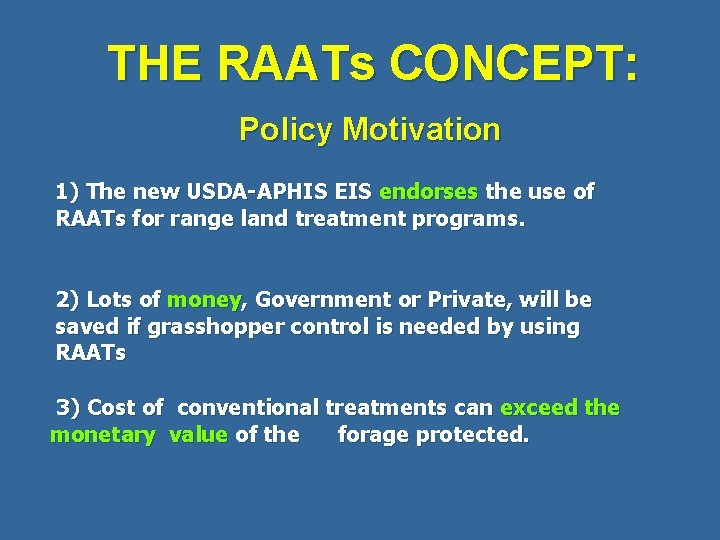
THE RAATs CONCEPT: Policy Motivation 1) The new USDA-APHIS EIS endorses the use of RAATs for range land treatment programs. 2) Lots of money, Government or Private, will be saved if grasshopper control is needed by using RAATs 3) Cost of conventional treatments can exceed the monetary value of the forage protected.
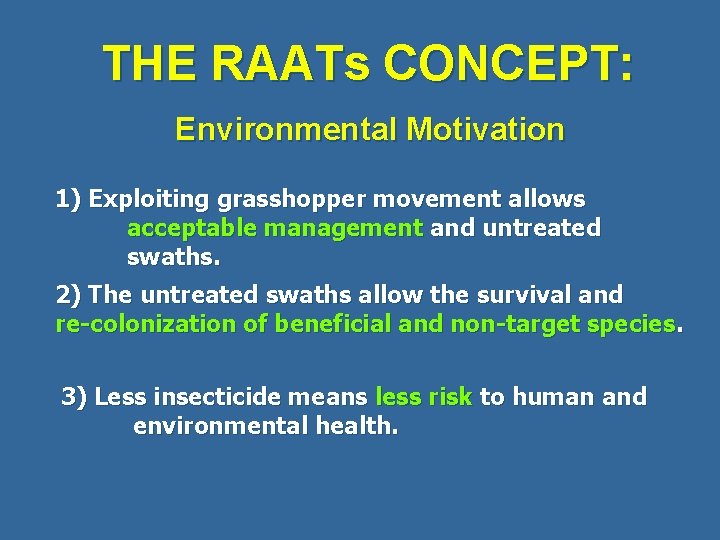
THE RAATs CONCEPT: Environmental Motivation 1) Exploiting grasshopper movement allows acceptable management and untreated swaths. 2) The untreated swaths allow the survival and re-colonization of beneficial and non-target species. 3) Less insecticide means less risk to human and environmental health.
Exceptions Higher rates or coverages may be needed if: - treatments are applied to late instar nymphs (especially if using Dimilin 2 L), - ground temperatures exceed air temperatures (especially if using malathion), - grasshopper densities are extreme, - forage cover is tall or dense, or - terrain is rough. In all cases, grasshopper management software (CARMA or HOPPER) should be used to assess a program. Apply insecticides in accordance with label directions and established guidelines for buffers around water, bees, and human habitations.
CARMA can be downloaded from Grasshoppers of Wyoming and the West at: www. wygisc. uwyo. edu/grasshopper/ or request a free Grasshoppers: Their Biology, Identification and Management CD-ROM from: www. sidney. ars. usda. gov/grasshopper/ You can also write or call in your request to the: USDA-ARS Northern Plains Agricultural Research Laboratory, 1500 N. Central Ave. Sidney, Montana 59270. 406/433/2020.