
Reduce Reuse Recycle and Rot Samantha Carr Single
- Slides: 21
Reduce, Reuse, Recycle, and Rot Samantha Carr
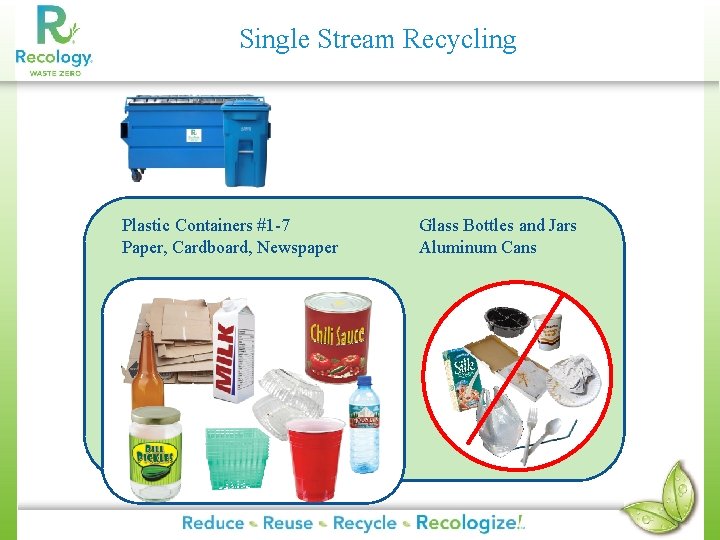
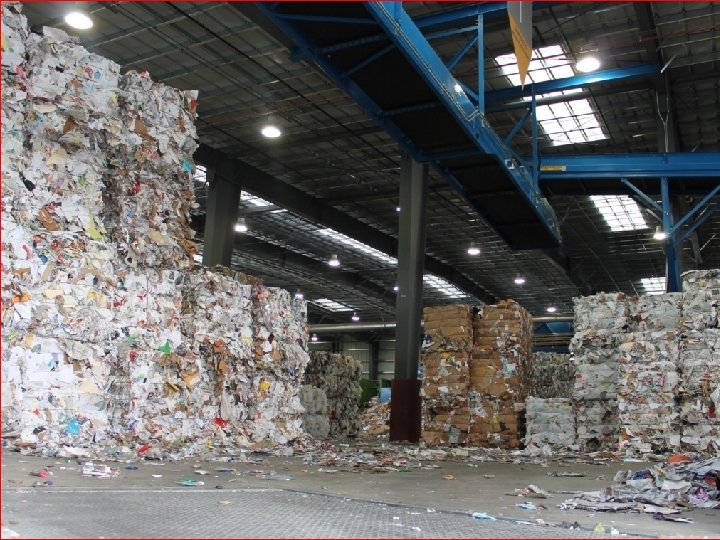
Single Stream Recycling Plastic Containers #1 -7 Paper, Cardboard, Newspaper Glass Bottles and Jars Aluminum Cans
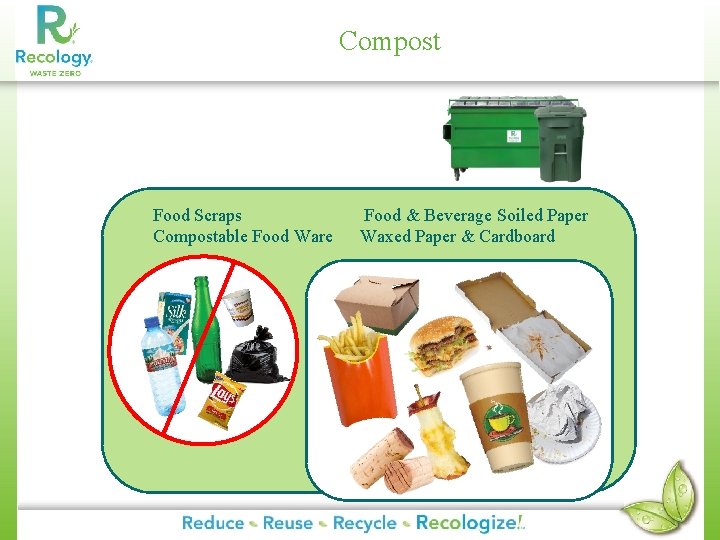
Compost Food Scraps Compostable Food Ware Food & Beverage Soiled Paper Waxed Paper & Cardboard
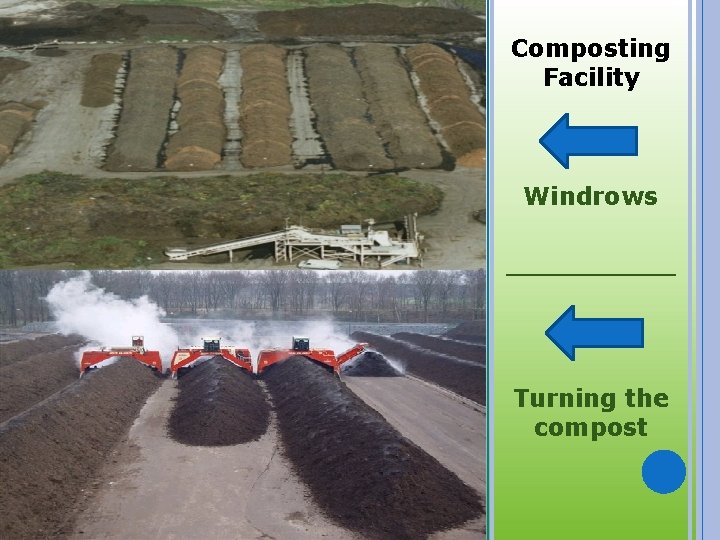
Composting Facility Windrows _____ Turning the compost
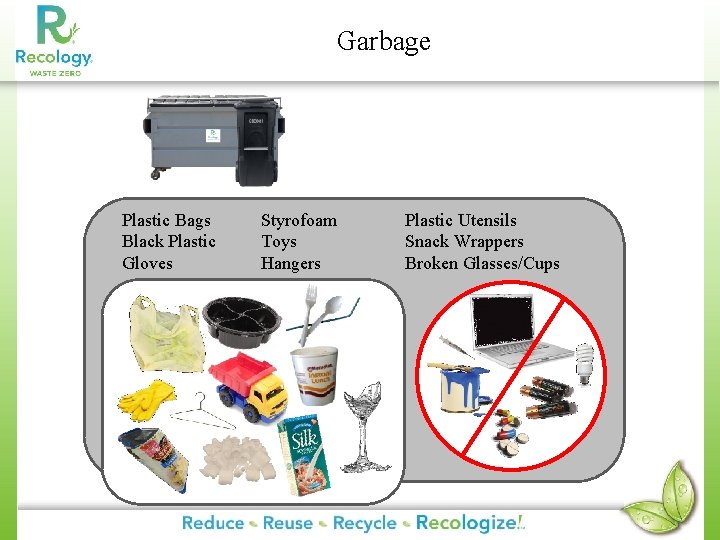
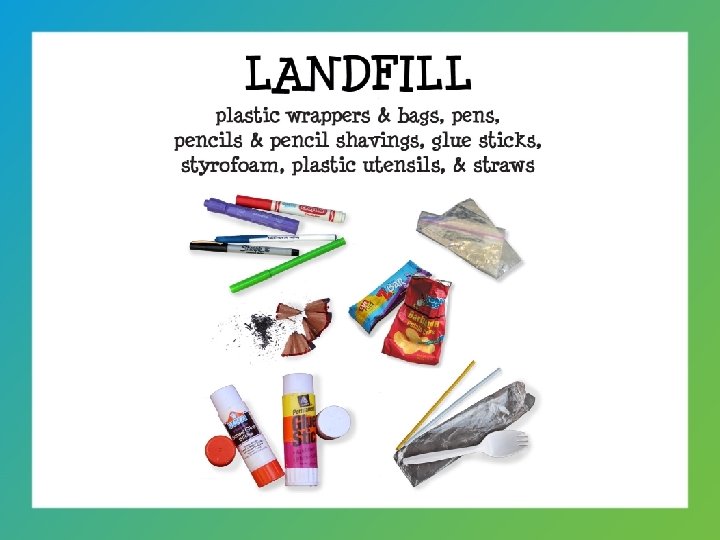
Garbage Plastic Bags Black Plastic Gloves Styrofoam Toys Hangers Plastic Utensils Snack Wrappers Broken Glasses/Cups
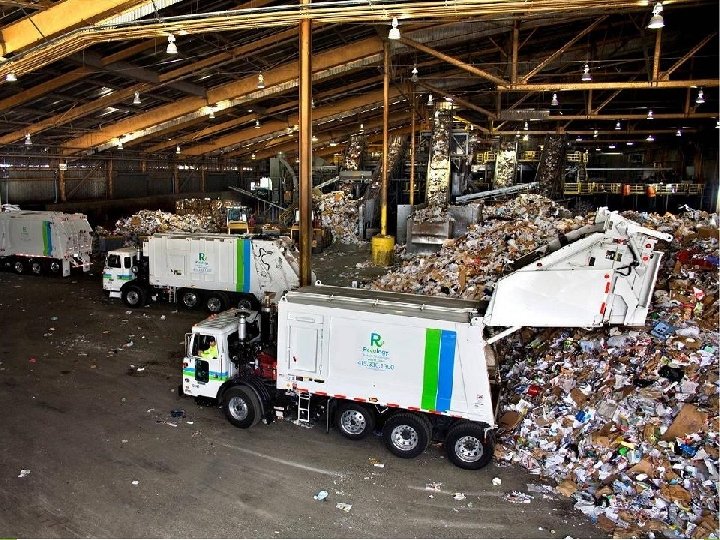
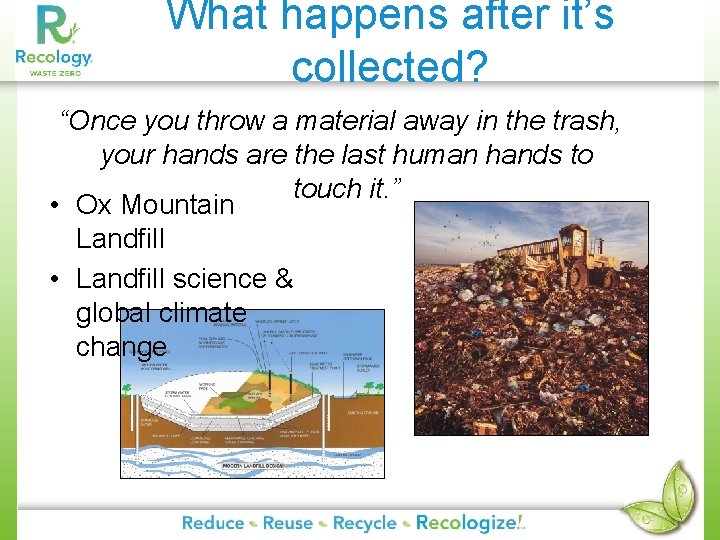
What happens after it’s collected? “Once you throw a material away in the trash, your hands are the last human hands to touch it. ” • Ox Mountain Landfill • Landfill science & global climate change
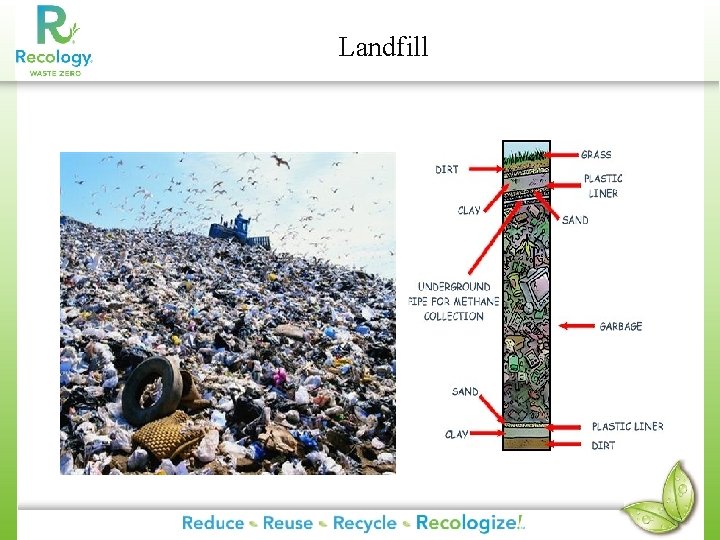
Landfill
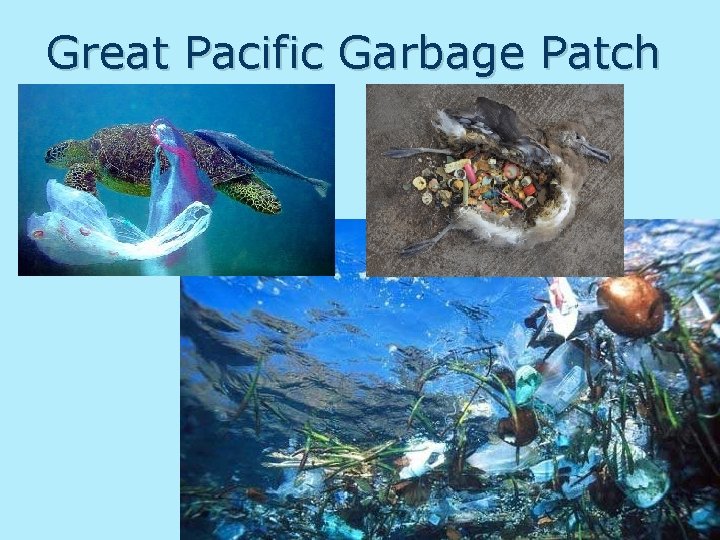
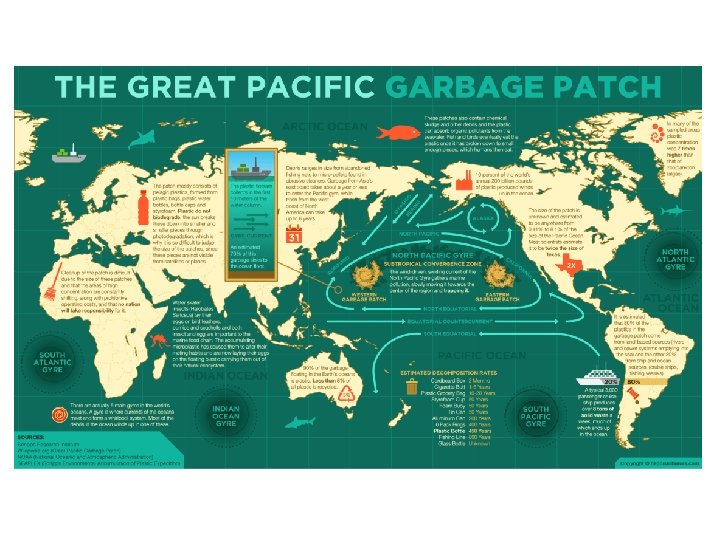
Great Pacific Garbage Patch
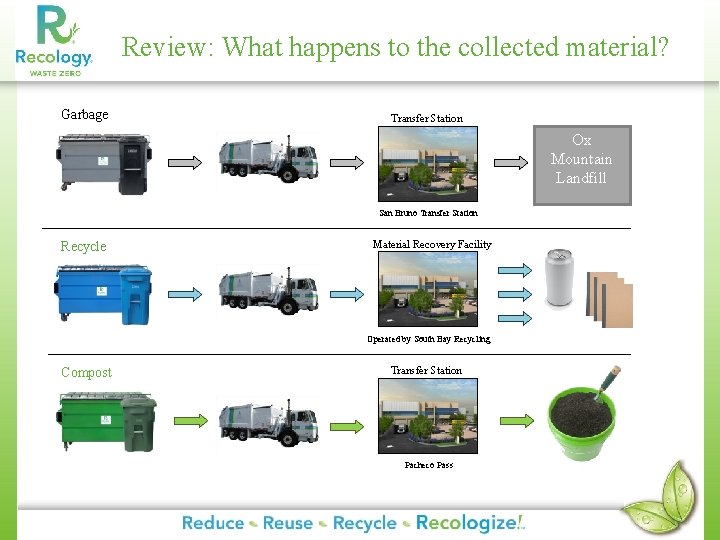
Review: What happens to the collected material? Garbage Transfer Station Ox Mountain Landfill San Bruno Transfer Station Recycle Material Recovery Facility Operated by South Bay Recycling Compost Transfer Station Pacheco Pass
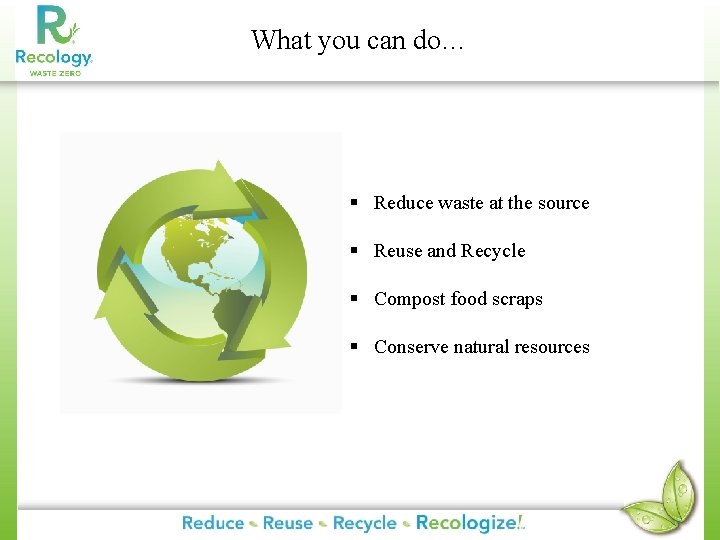
What you can do… § Reduce waste at the source § Reuse and Recycle § Compost food scraps § Conserve natural resources
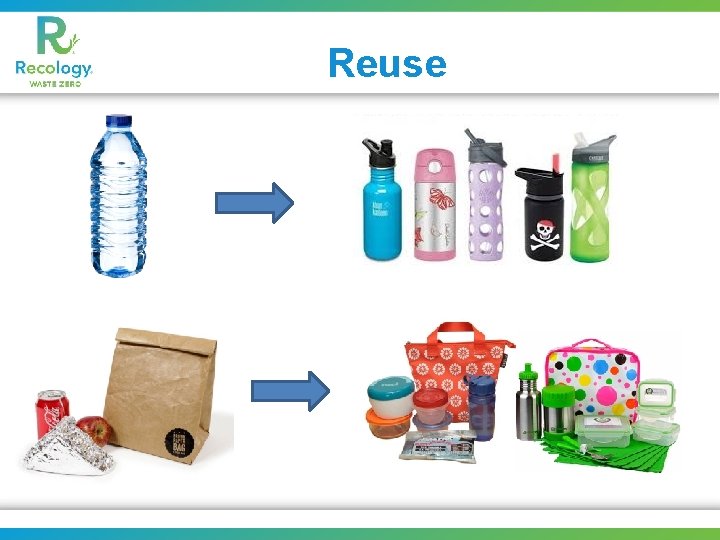
Reuse
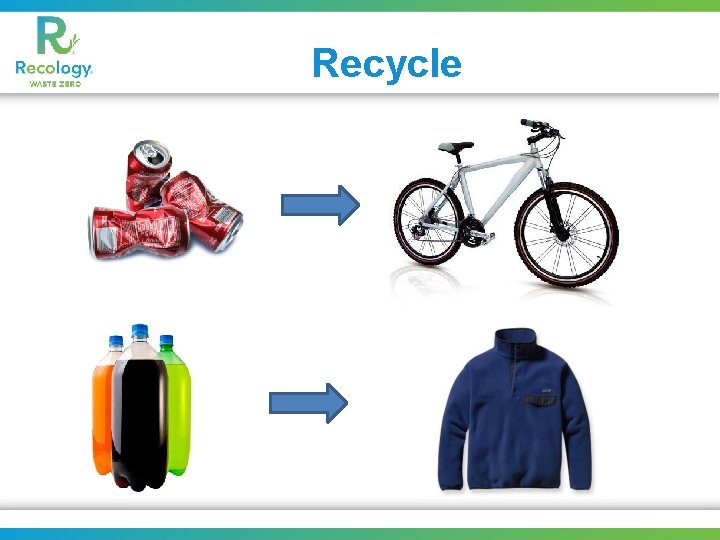
Recycle
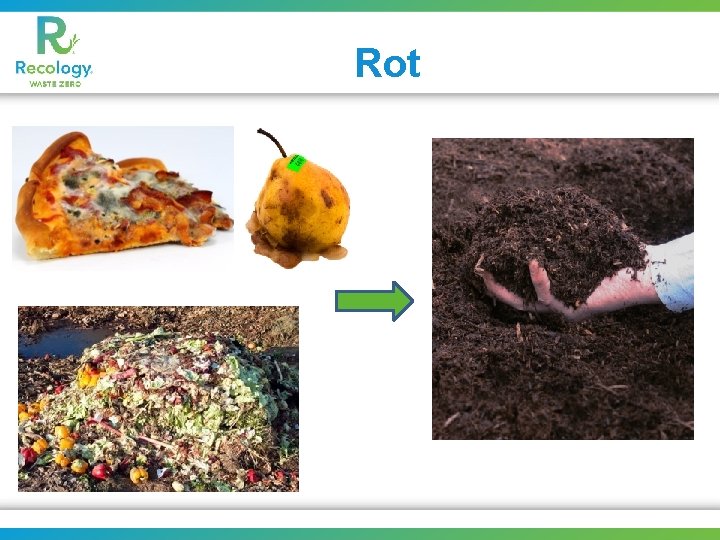
Rot
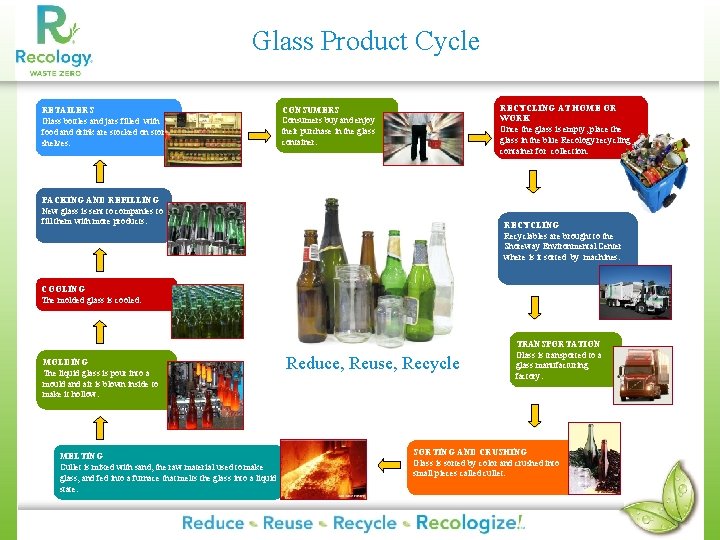
Glass Product Cycle RETAILERS Glass bottles and jars filled with food and drink are stocked on store shelves. RECYCLING AT HOME OR WORK Once the glass is empty, place the glass in the blue Recology recycling container for collection. CONSUMERS Consumers buy and enjoy their purchase in the glass container. PACKING AND REFILLING New glass is sent to companies to fill them with more products. RECYCLING Recyclables are brought to the Shoreway Environmental Center where is it sorted by machines. COOLING The molded glass is cooled. MOLDING The liquid glass is pour into a mould and air is blown inside to make it hollow. MELTING Cullet is mixed with sand, the raw material used to make glass, and fed into a furnace that melts the glass into a liquid state. Reduce, Reuse, Recycle TRANSPORTATION Glass is transported to a glass manufacturing factory. SORTING AND CRUSHING Glass is sorted by color and crushed into small pieces called cullet.
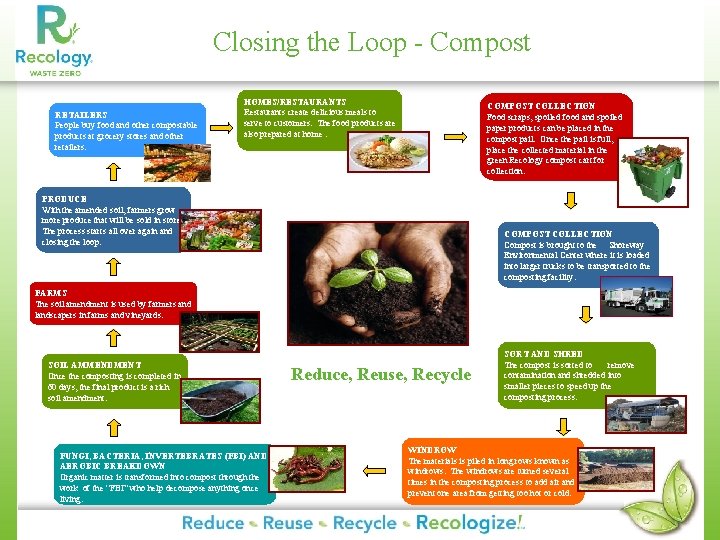
Closing the Loop - Compost RETAILERS People buy food and other compostable products at grocery stores and other retailers. HOMES/RESTAURANTS Restaurants create delicious meals to serve to customers. The food products are also prepared at home. COMPOST COLLECTION Food scraps, spoiled food and spoiled paper products can be placed in the compost pail. Once the pail is full, place the collected material in the green Recology compost cart for collection. PRODUCE With the amended soil, farmers grow more produce that will be sold in stores. The process starts all over again and closing the loop. COMPOST COLLECTION Compost is brought to the Shoreway Environmental Center where it is loaded into larger trucks to be transported to the composting facility. FARMS The soil amendment is used by farmers and landscapers in farms and vineyards. SOIL AMMENDMENT Once the composting is completed in 60 days, the final product is a rich soil amendment. FUNGI, BACTERIA, INVERTEBRATES (FBI) AND AEROBIC BREAKDOWN Organic matter is transformed into compost through the work of the “FBI” who help decompose anything once living. Reduce, Reuse, Recycle SORT AND SHRED The compost is sorted to remove contamination and shredded into smaller pieces to speed up the composting process. WINDROW The materials is piled in long rows known as windrows. The windrows are turned several times in the composting process to add air and prevent one area from getting too hot or cold.