
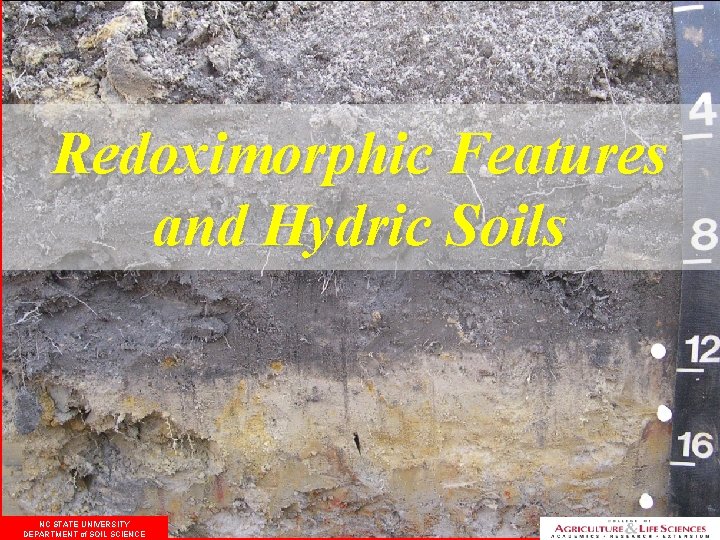
Redoximorphic Features and Hydric Soils NC STATE UNIVERSITY


- Slides: 27
Redoximorphic Features and Hydric Soils NC STATE UNIVERSITY DEPARTMENT of SOIL SCIENCE
Redoximorphic Features § Formed by changes in redox conditions in saturated soil § Reduction and oxidation of C, Fe, Mn, and S compounds § Translocation of C, Fe, Mn, and S compounds NC STATE UNIVERSITY DEPARTMENT of SOIL SCIENCE
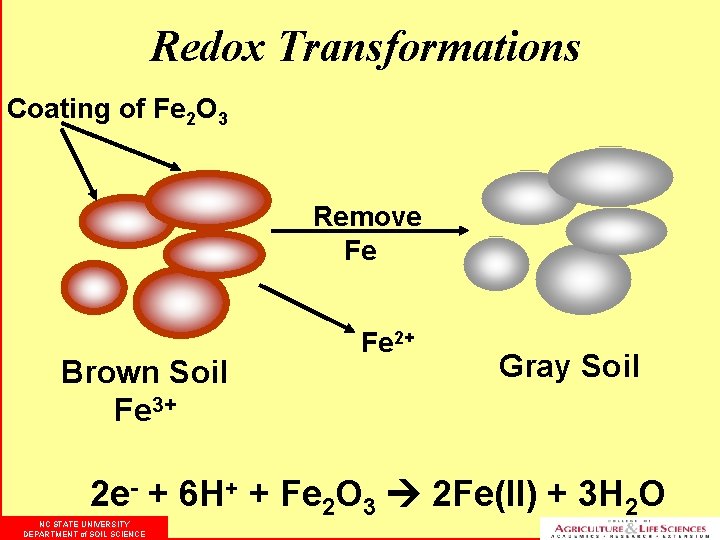
Redox Transformations Coating of Fe 2 O 3 Remove Fe Brown Soil Fe 3+ Fe 2+ Gray Soil 2 e- + 6 H+ + Fe 2 O 3 2 Fe(II) + 3 H 2 O NC STATE UNIVERSITY DEPARTMENT of SOIL SCIENCE
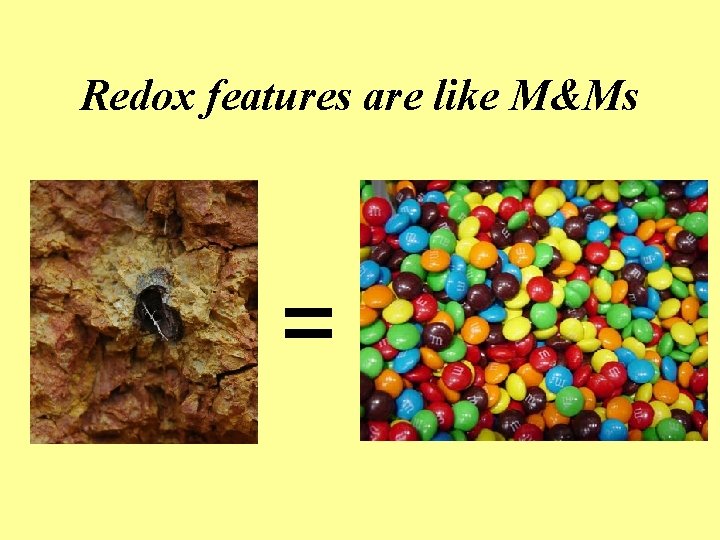
Redox features are like M&Ms =
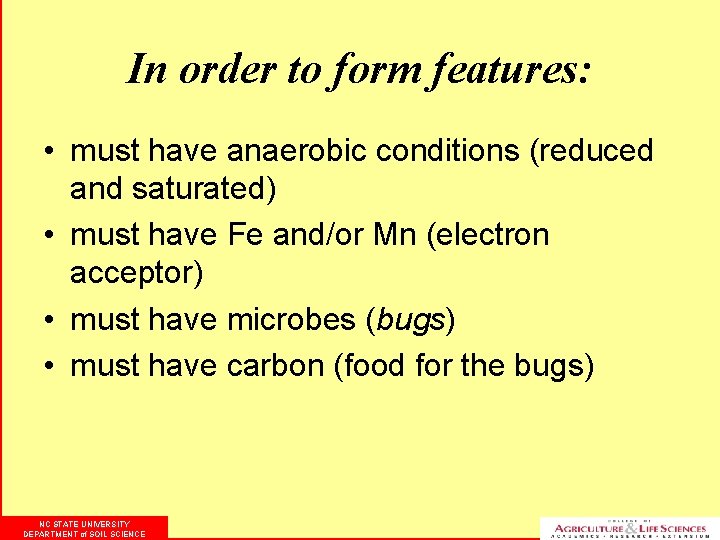
In order to form features: • must have anaerobic conditions (reduced and saturated) • must have Fe and/or Mn (electron acceptor) • must have microbes (bugs) • must have carbon (food for the bugs) NC STATE UNIVERSITY DEPARTMENT of SOIL SCIENCE
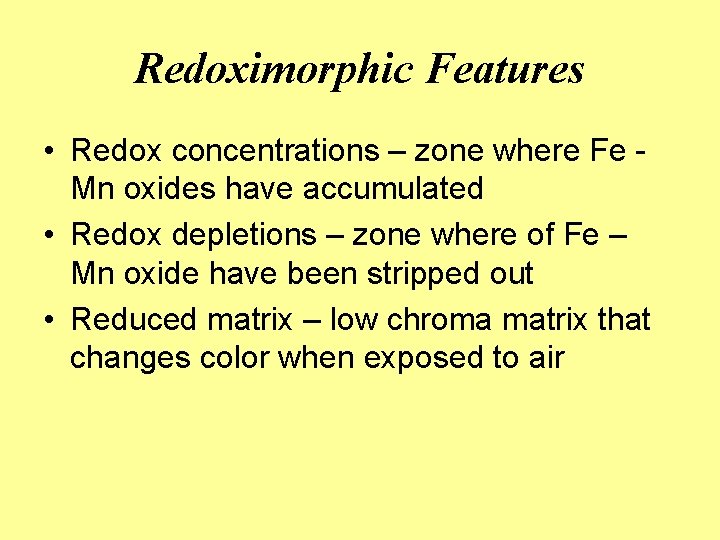
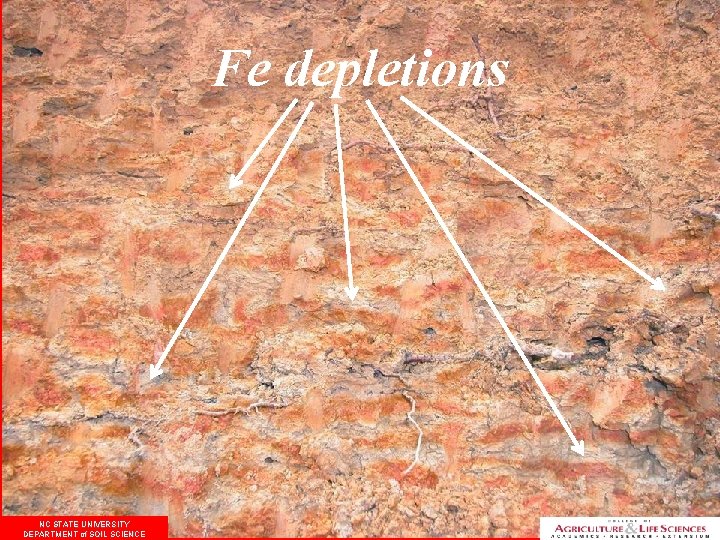
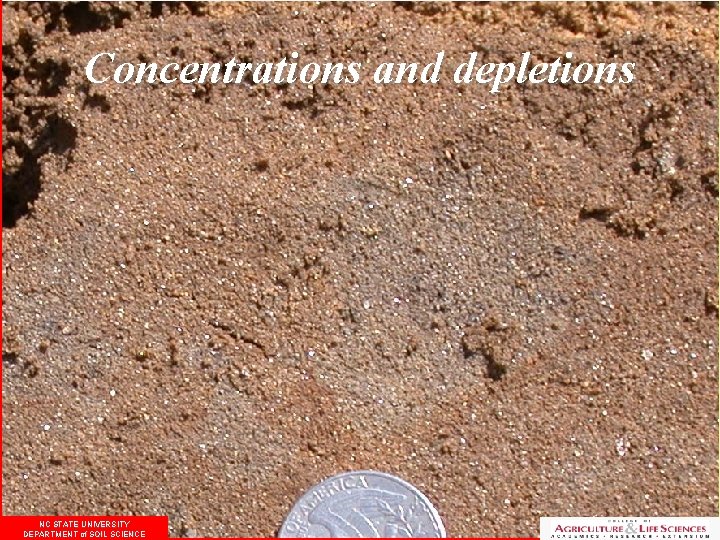
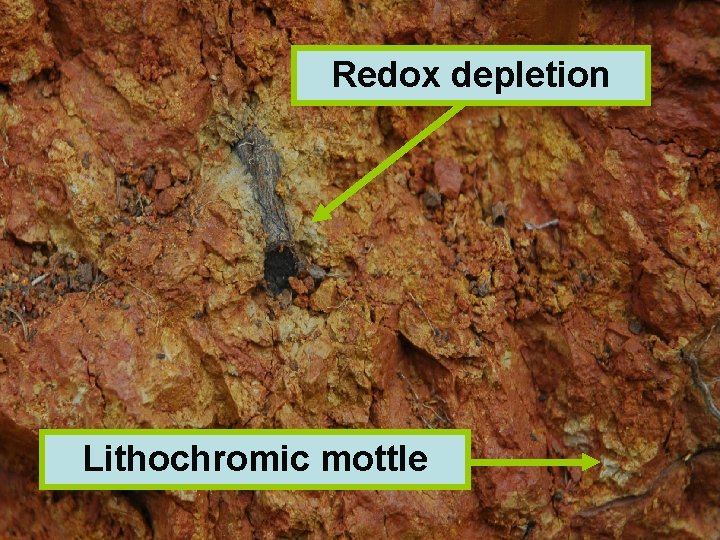
Redoximorphic Features • Redox concentrations – zone where Fe Mn oxides have accumulated • Redox depletions – zone where of Fe – Mn oxide have been stripped out • Reduced matrix – low chroma matrix that changes color when exposed to air
Redox depletions (Fe depletions) NC STATE UNIVERSITY DEPARTMENT of SOIL SCIENCE
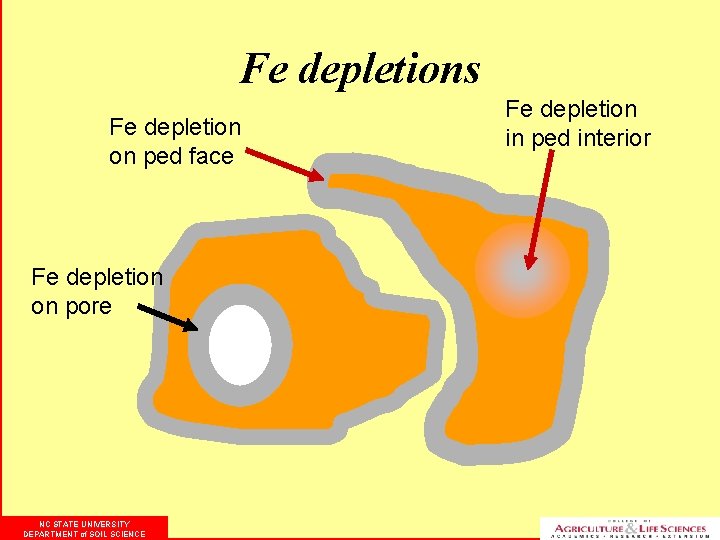
Fe depletions Fe depletion on ped face Fe depletion on pore NC STATE UNIVERSITY DEPARTMENT of SOIL SCIENCE Fe depletion in ped interior
Fe depletions NC STATE UNIVERSITY DEPARTMENT of SOIL SCIENCE
Concentrations and depletions NC STATE UNIVERSITY DEPARTMENT of SOIL SCIENCE
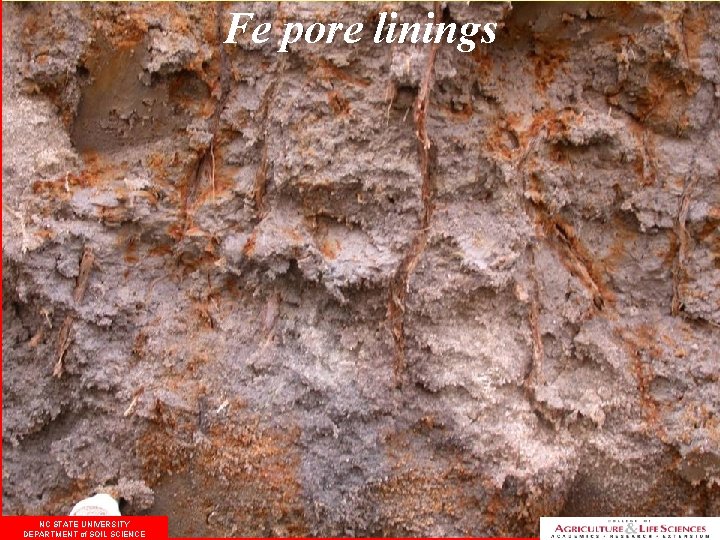
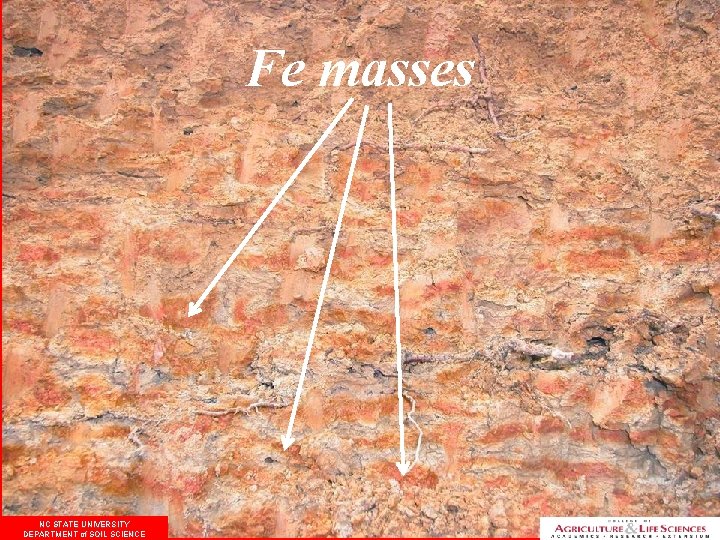
Redox concentrations (Fe masses, Fe pore linings) NC STATE UNIVERSITY DEPARTMENT of SOIL SCIENCE
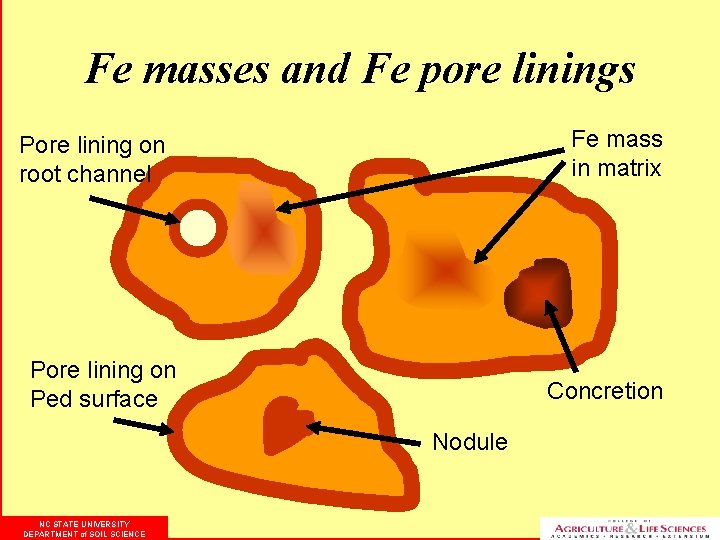
Fe masses and Fe pore linings Fe mass in matrix Pore lining on root channel Pore lining on Ped surface Concretion Nodule NC STATE UNIVERSITY DEPARTMENT of SOIL SCIENCE
Fe pore linings NC STATE UNIVERSITY DEPARTMENT of SOIL SCIENCE
Fe masses NC STATE UNIVERSITY DEPARTMENT of SOIL SCIENCE
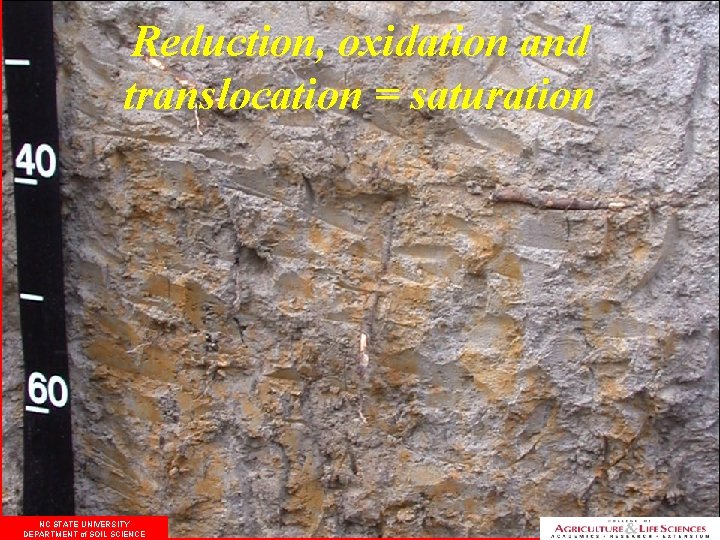
Reduction, oxidation and translocation = saturation NC STATE UNIVERSITY DEPARTMENT of SOIL SCIENCE
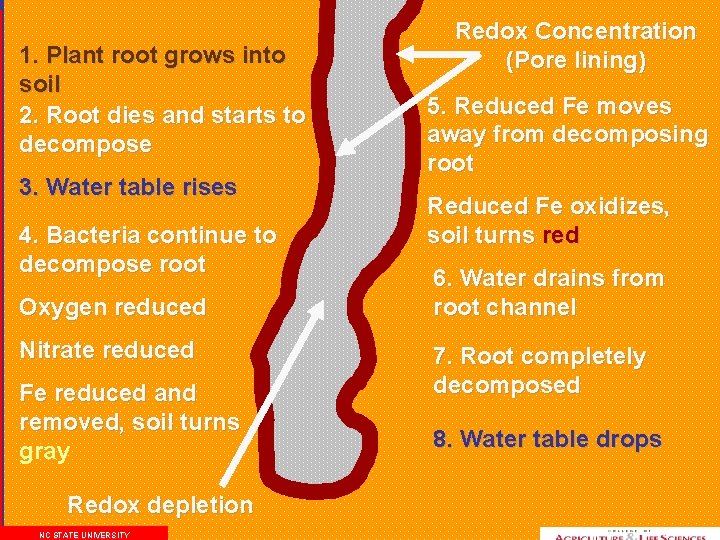
1. Plant root grows into soil 2. Root dies and starts to decompose 3. Water table rises 4. Bacteria continue to decompose root Oxygen reduced Nitrate reduced Fe reduced and removed, soil turns gray Redox depletion NC STATE UNIVERSITY Redox Concentration (Pore lining) 5. Reduced Fe moves away from decomposing root Reduced Fe oxidizes, soil turns red 6. Water drains from root channel 7. Root completely decomposed 8. Water table drops
Redox depletion Lithochromic mottle
Concepts of Wetlands, Hydric Soils, and Wetland Hydrology
What is a wetland?
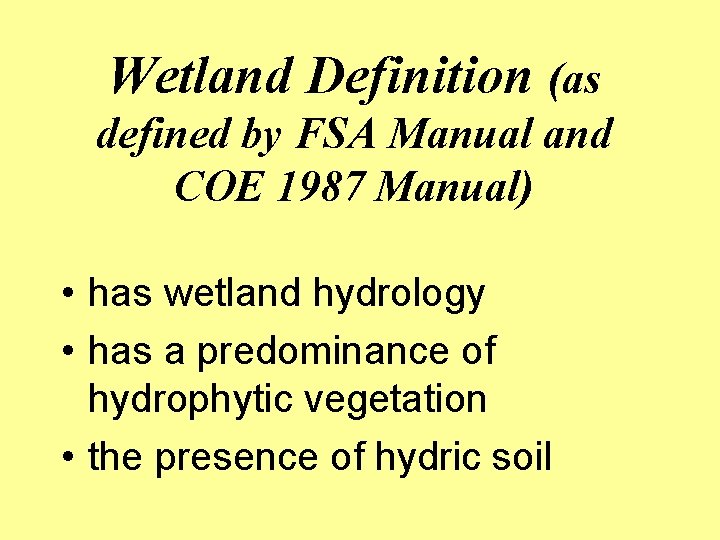
Wetland Definition (as defined by FSA Manual and COE 1987 Manual) • has wetland hydrology • has a predominance of hydrophytic vegetation • the presence of hydric soil
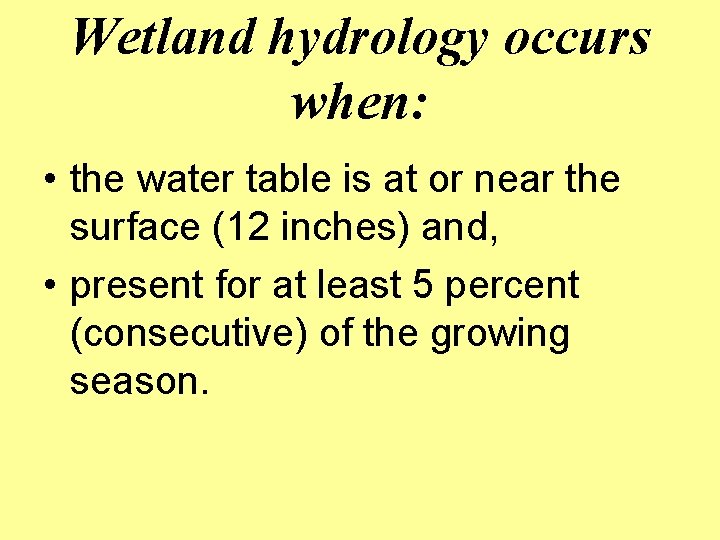
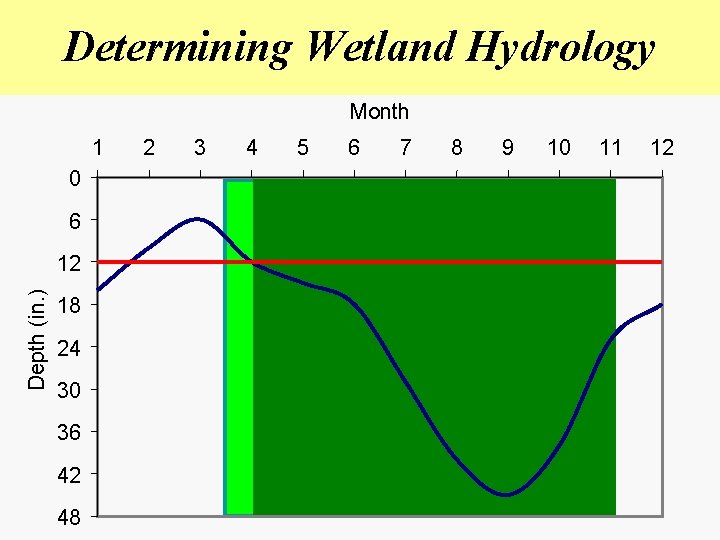
Wetland hydrology occurs when: • the water table is at or near the surface (12 inches) and, • present for at least 5 percent (consecutive) of the growing season.
Determining Wetland Hydrology Month 1 0 6 Depth (in. ) 12 18 24 30 36 42 48 2 3 4 5 6 7 8 9 10 11 12
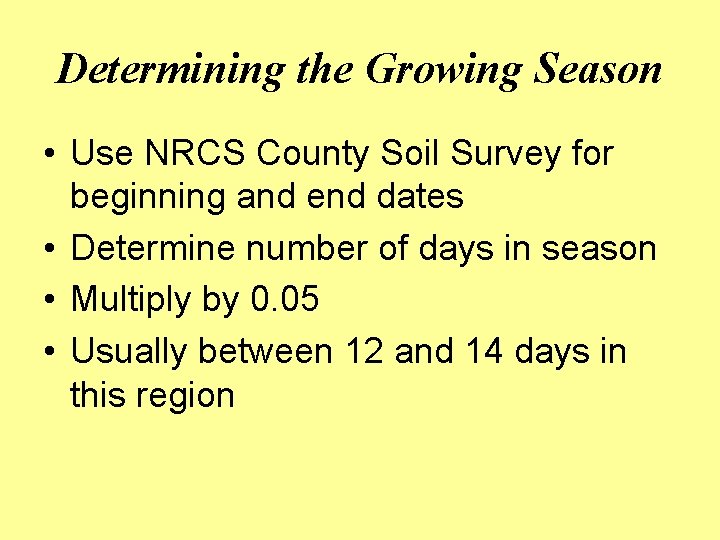
Determining the Growing Season • Use NRCS County Soil Survey for beginning and end dates • Determine number of days in season • Multiply by 0. 05 • Usually between 12 and 14 days in this region
Definition of Hydric Soil A hydric soil is a soil that formed under conditions of saturation, flooding, or ponding long enough during the growing season to develop anaerobic conditions in the upper part
Field Indicators of Hydric Soils Field indicators of hydric soils are designed for on-site identification of hydric soils
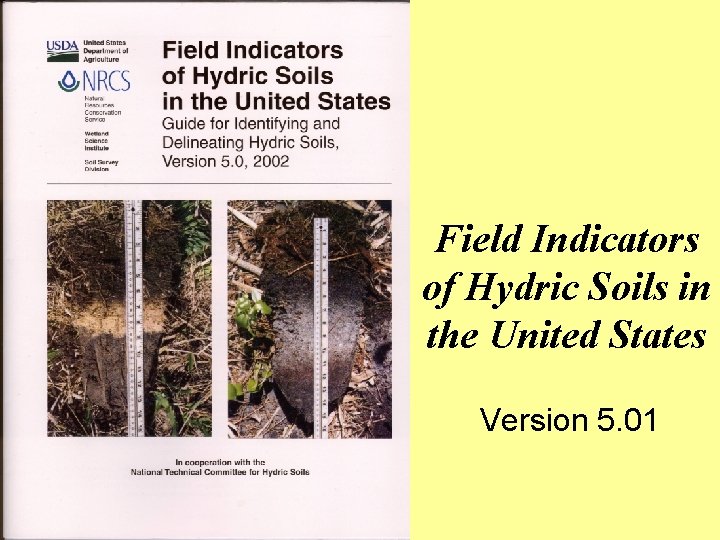
Field Indicators of Hydric Soils in the United States Version 5. 01