
REDOX CHEMISTRY Redox Reactions Single replacement reactions are
- Slides: 6
REDOX CHEMISTRY
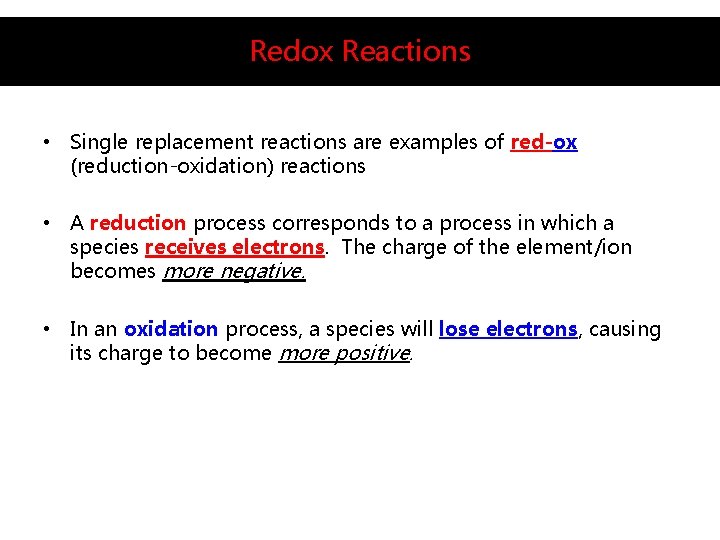
Redox Reactions • Single replacement reactions are examples of red-ox (reduction-oxidation) reactions • A reduction process corresponds to a process in which a species receives electrons. The charge of the element/ion becomes more negative. • In an oxidation process, a species will lose electrons, causing its charge to become more positive.
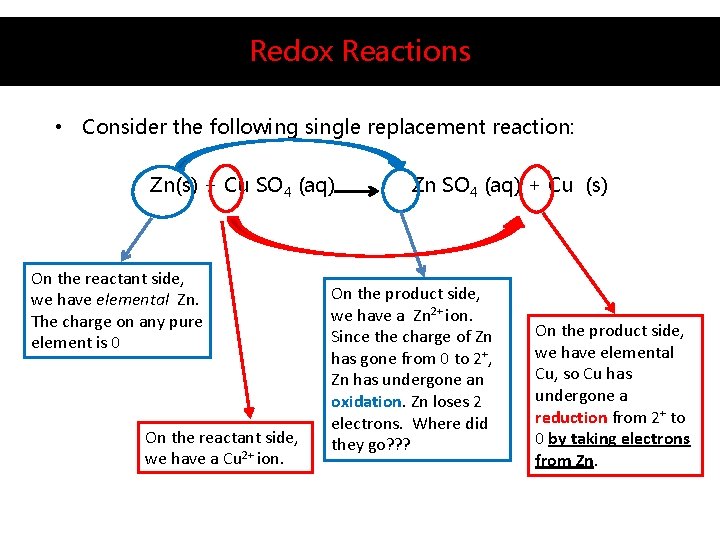
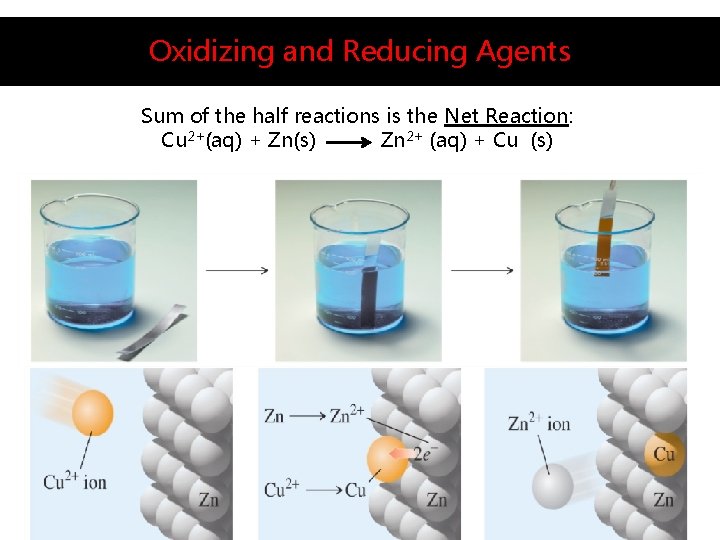
Redox Reactions • Consider the following single replacement reaction: Zn(s) + Cu SO 4 (aq) On the reactant side, we have elemental Zn. The charge on any pure element is 0 On the reactant side, we have a Cu 2+ ion. Zn SO 4 (aq) + Cu (s) On the product side, we have a Zn 2+ ion. Since the charge of Zn has gone from 0 to 2+, Zn has undergone an oxidation. Zn loses 2 electrons. Where did they go? ? ? On the product side, we have elemental Cu, so Cu has undergone a reduction from 2+ to 0 by taking electrons from Zn.
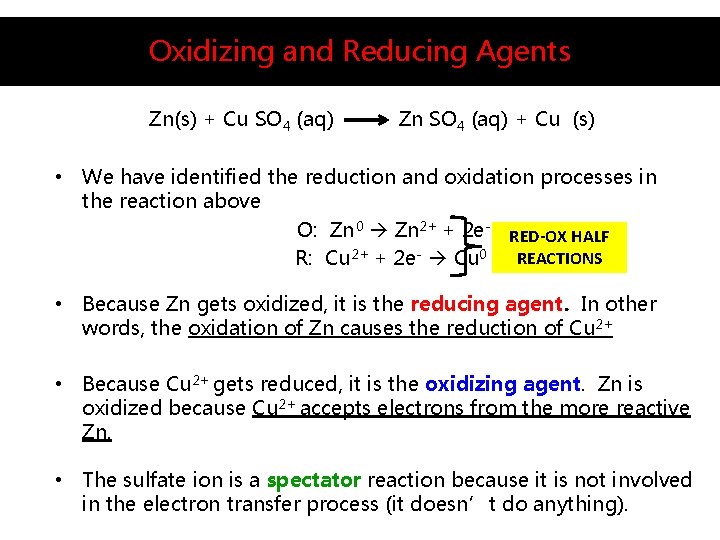
Oxidizing and Reducing Agents Zn(s) + Cu SO 4 (aq) Zn SO 4 (aq) + Cu (s) • We have identified the reduction and oxidation processes in the reaction above O: Zn 0 Zn 2+ + 2 e- RED-OX HALF R: Cu 2+ + 2 e- Cu 0 REACTIONS • Because Zn gets oxidized, it is the reducing agent. In other words, the oxidation of Zn causes the reduction of Cu 2+ • Because Cu 2+ gets reduced, it is the oxidizing agent. Zn is oxidized because Cu 2+ accepts electrons from the more reactive Zn. • The sulfate ion is a spectator reaction because it is not involved in the electron transfer process (it doesn’t do anything).
Oxidizing and Reducing Agents Sum of the half reactions is the Net Reaction: Cu 2+(aq) + Zn(s) Zn 2+ (aq) + Cu (s)
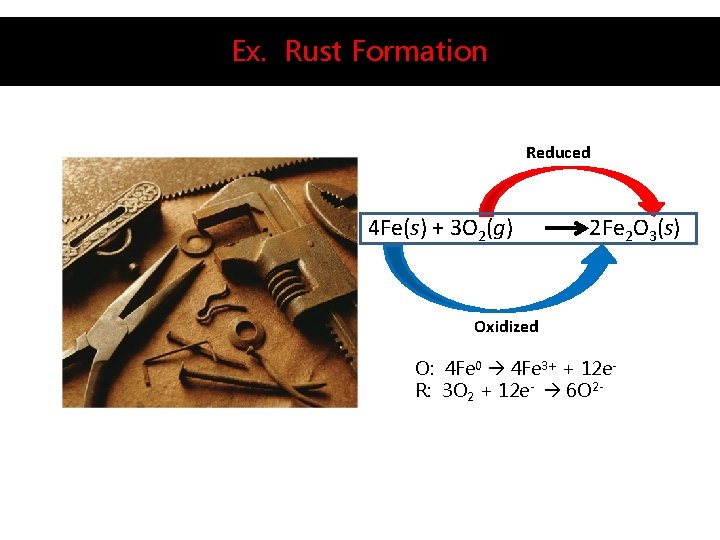
Ex. Rust Formation Reduced 4 Fe(s) + 3 O 2(g) 2 Fe 2 O 3(s) Oxidized O: 4 Fe 0 4 Fe 3+ + 12 e. R: 3 O 2 + 12 e- 6 O 2 -