
Redis Experiment Spontaneous Generation He was trying to
- Slides: 15
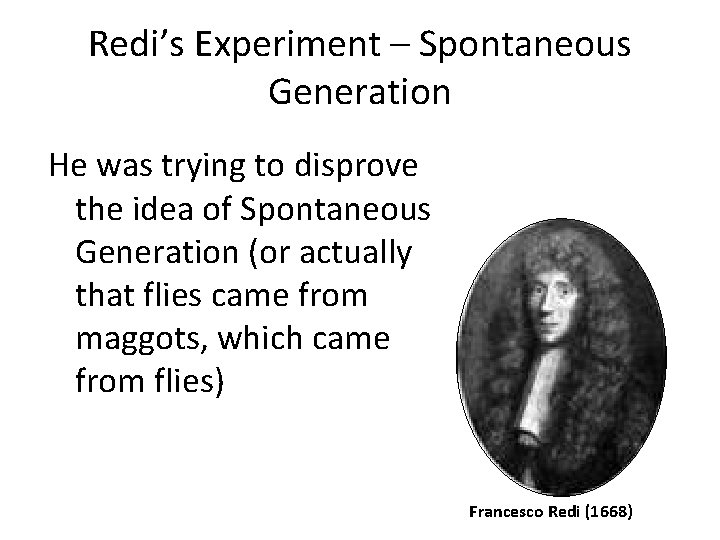
Redi’s Experiment – Spontaneous Generation He was trying to disprove the idea of Spontaneous Generation (or actually that flies came from maggots, which came from flies) Francesco Redi (1668)
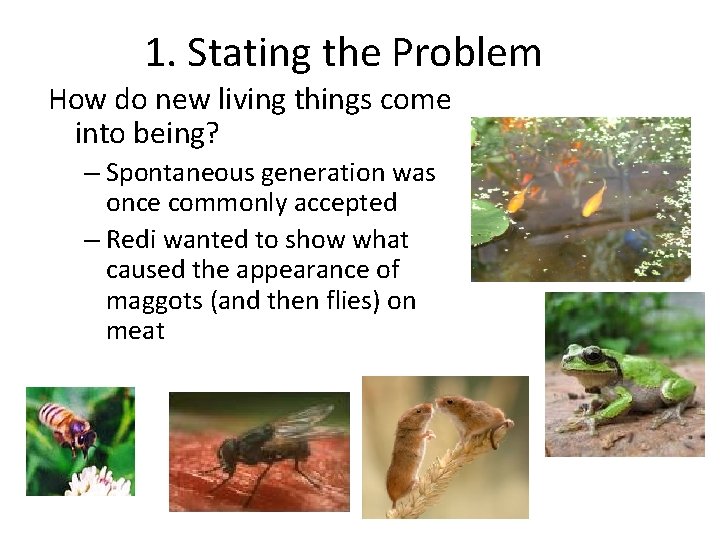
1. Stating the Problem How do new living things come into being? – Spontaneous generation was once commonly accepted – Redi wanted to show what caused the appearance of maggots (and then flies) on meat
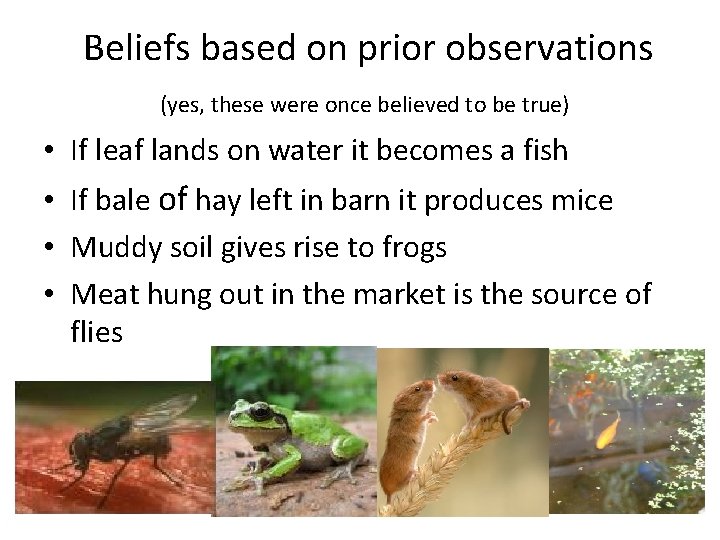
Beliefs based on prior observations (yes, these were once believed to be true) • If leaf lands on water it becomes a fish • If bale of hay left in barn it produces mice • Muddy soil gives rise to frogs • Meat hung out in the market is the source of flies
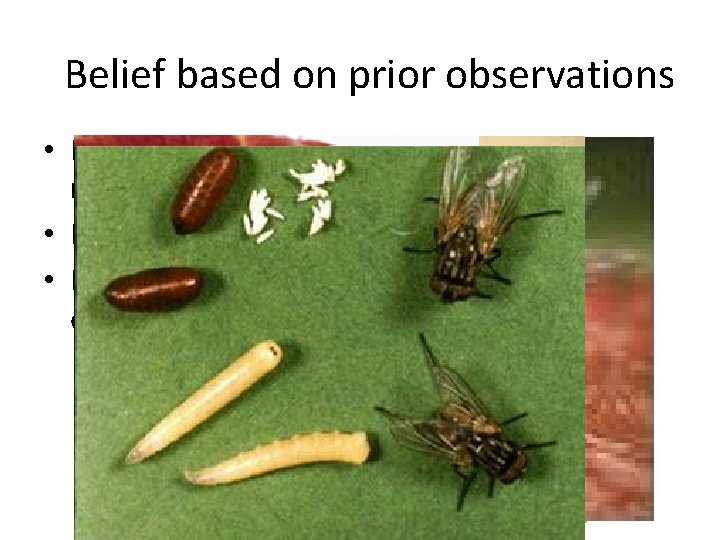
Belief based on prior observations • Redi observed that maggots appeared on meat a few days after flies were on meat • No microscope = no way to see eggs • But Redi believed that maggots came from eggs that were laid by flies
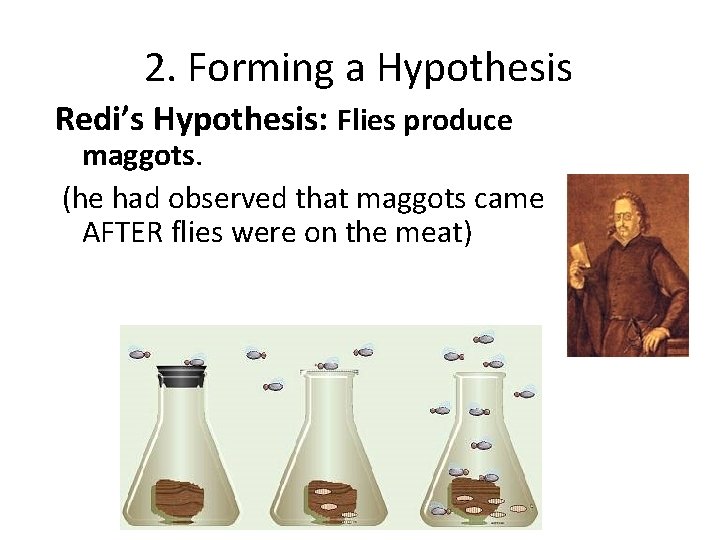
2. Forming a Hypothesis Redi’s Hypothesis: Flies produce maggots. (he had observed that maggots came AFTER flies were on the meat)
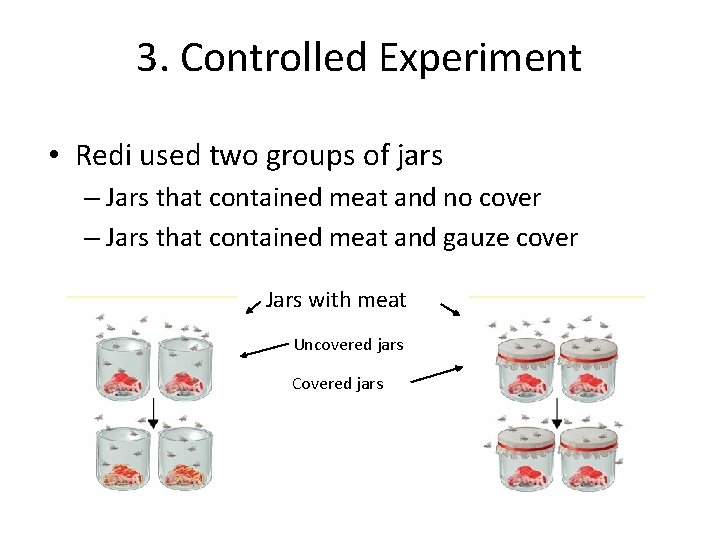
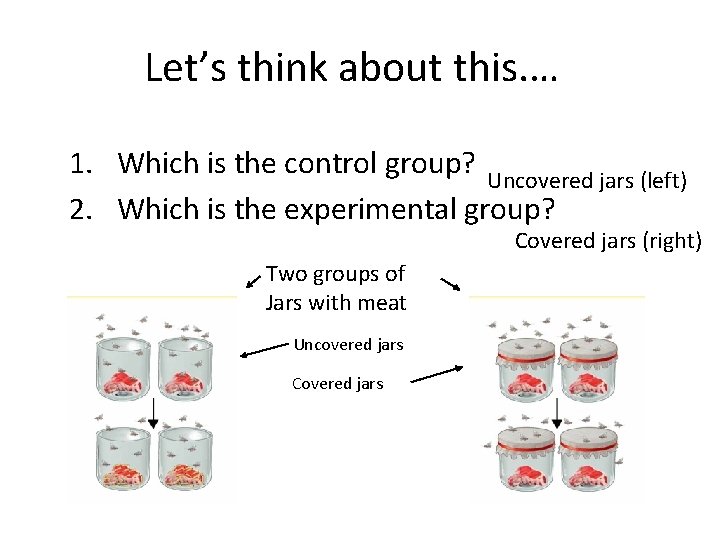
3. Controlled Experiment • Redi used two groups of jars – Jars that contained meat and no cover – Jars that contained meat and gauze cover Jars with meat Uncovered jars Covered jars
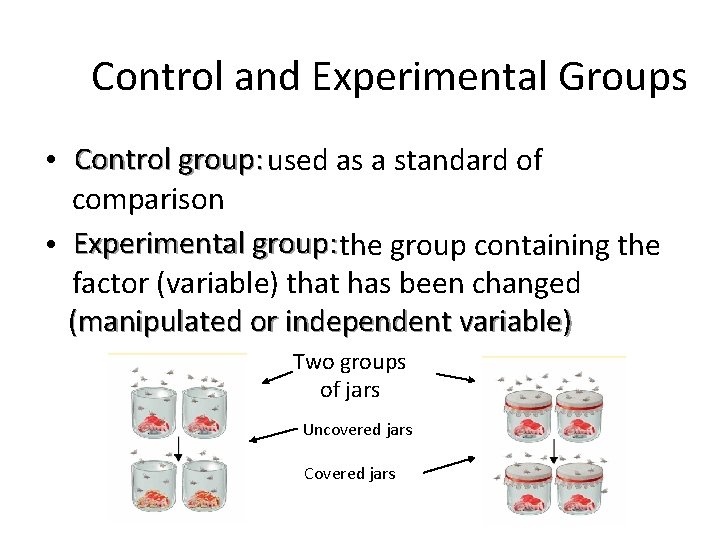
Control and Experimental Groups • Control group: used as a standard of comparison • Experimental group: the group containing the factor (variable) that has been changed (manipulated or independent variable) Two groups of jars Uncovered jars Covered jars
Setting up a Controlled Experiment In a controlled experiment, only one factor is changed at a time. – Independent (manipulated) variable: the factor that is deliberately changed – Dependent (responding) variable: the factor that the scientist wants to observe; it changes in response to the independent variable
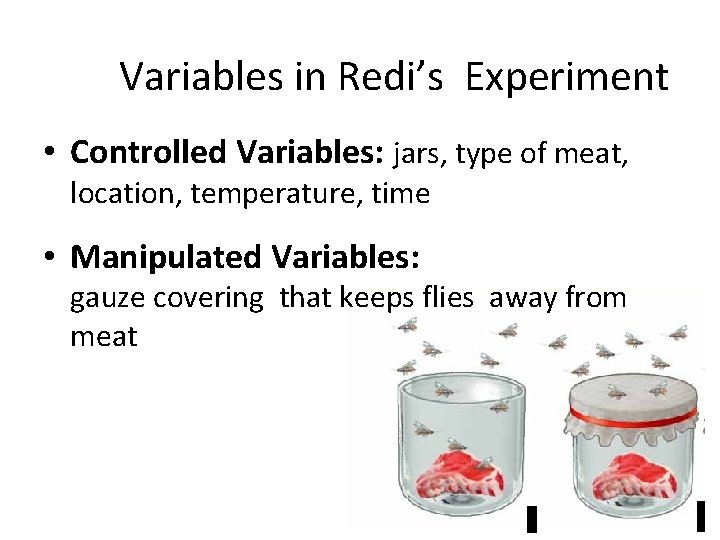
Variables in Redi’s Experiment • Controlled Variables: jars, type of meat, location, temperature, time • Manipulated Variables: gauze covering that keeps flies away from meat
Let’s think about this. … 1. Which is the control group? Uncovered jars (left) 2. Which is the experimental group? Covered jars (right) Two groups of Jars with meat Uncovered jars Covered jars
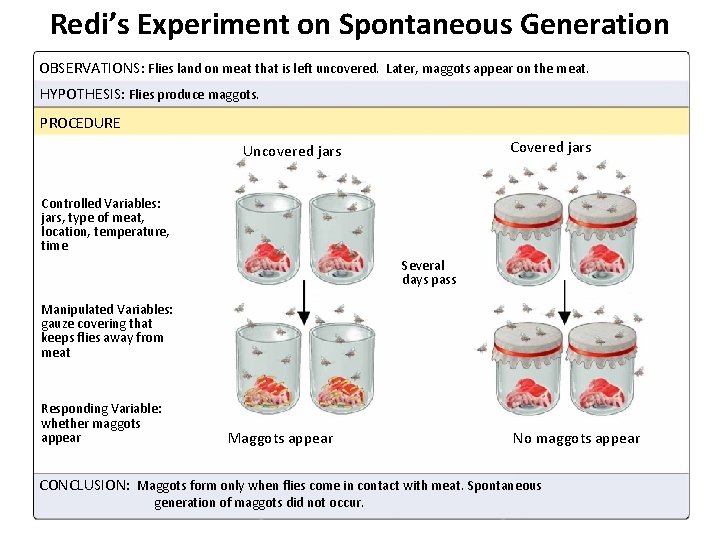
Redi’s Experiment on Spontaneous Generation OBSERVATIONS: Flies land on meat that is left uncovered. Later, maggots appear on the meat. HYPOTHESIS: Flies produce maggots. PROCEDURE Covered jars Uncovered jars Controlled Variables: jars, type of meat, location, temperature, time Several days pass Manipulated Variables: gauze covering that keeps flies away from meat Responding Variable: whether maggots appear Maggots appear No maggots appear CONCLUSION: Maggots form only when flies come in contact with meat. Spontaneous generation of maggots did not occur.
4. Collect and Record Data observations and measurements made in an Data: experiment Types of Recorded Data – Quantitative - observations that involve measurements/numbers; i. e. 3 days, 12 maggots, 4 g, 13 sec – Qualitative - observations that do not involve numbers, are of a descriptive nature i. e. white maggots covered the meat, leaves were all wilting
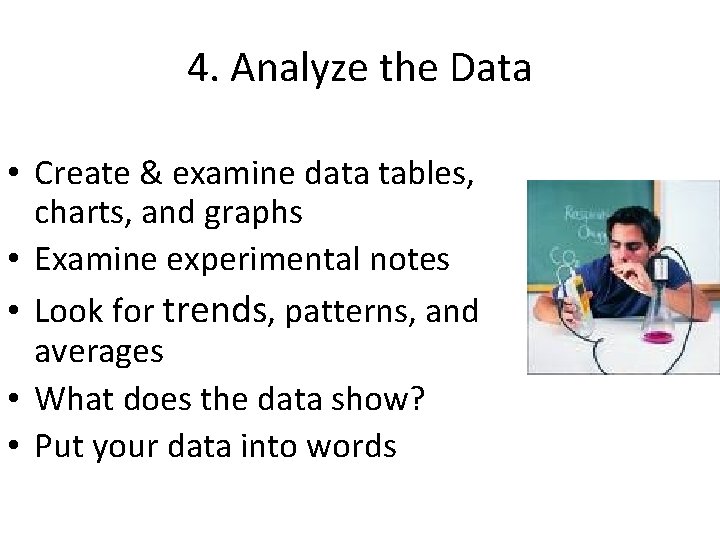
4. Analyze the Data • Create & examine data tables, charts, and graphs • Examine experimental notes • Look for trends, patterns, and averages • What does the data show? • Put your data into words
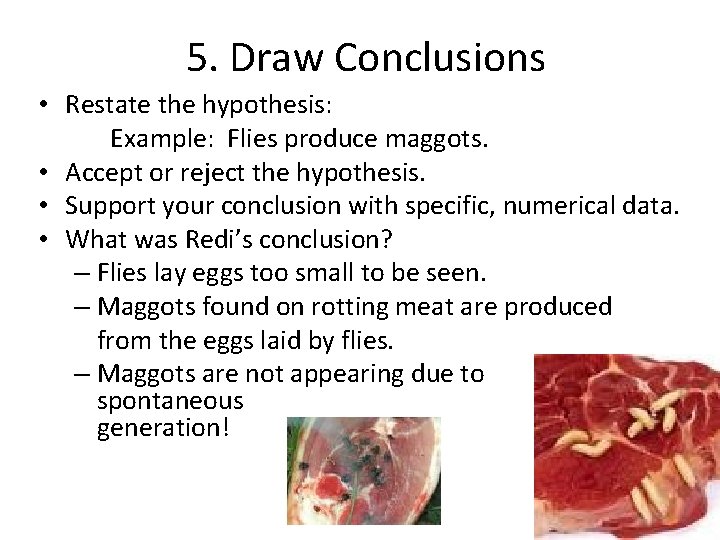
5. Draw Conclusions • Restate the hypothesis: Example: Flies produce maggots. • Accept or reject the hypothesis. • Support your conclusion with specific, numerical data. • What was Redi’s conclusion? – Flies lay eggs too small to be seen. – Maggots found on rotting meat are produced from the eggs laid by flies. – Maggots are not appearing due to spontaneous generation!
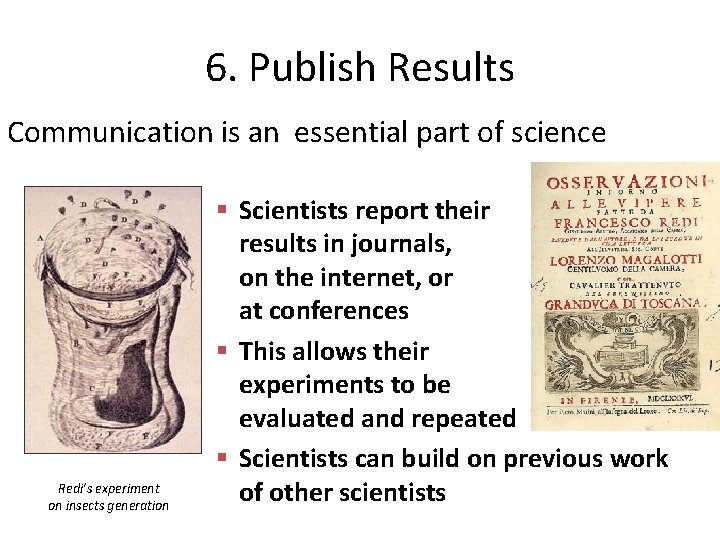
6. Publish Results Communication is an essential part of science Redi’s experiment on insects generation § Scientists report their results in journals, on the internet, or at conferences § This allows their experiments to be evaluated and repeated § Scientists can build on previous work of other scientists