
Redesigning the allergy module of the electronic health
- Slides: 22
Redesigning the allergy module of the electronic health record Eric Macy MD MS FAAAAI Southern California Permanente Medical Group Kaiser Permanente San Diego Allergy Department
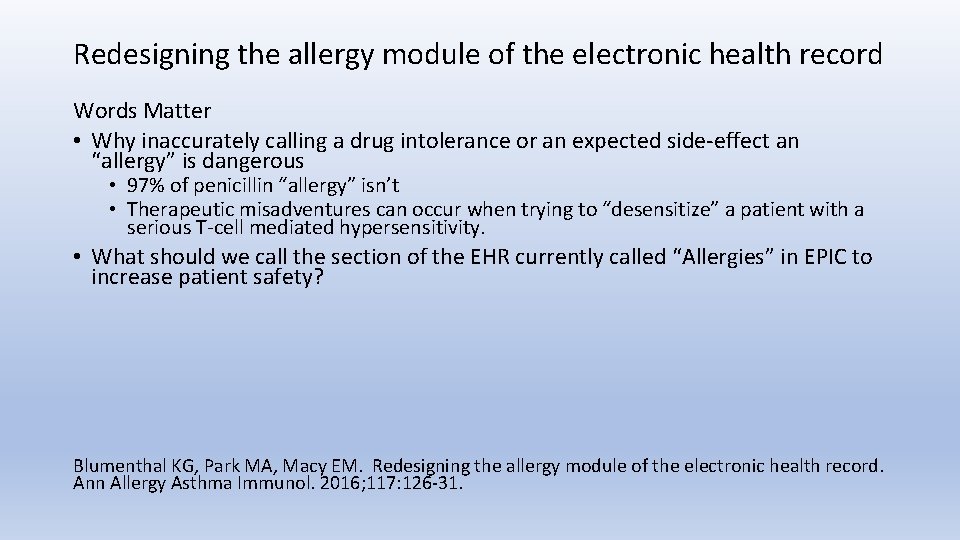
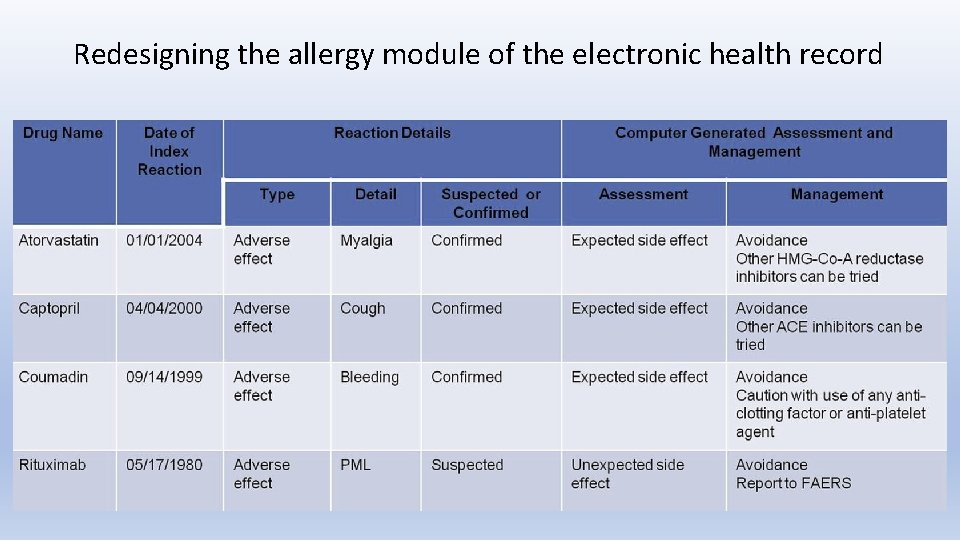
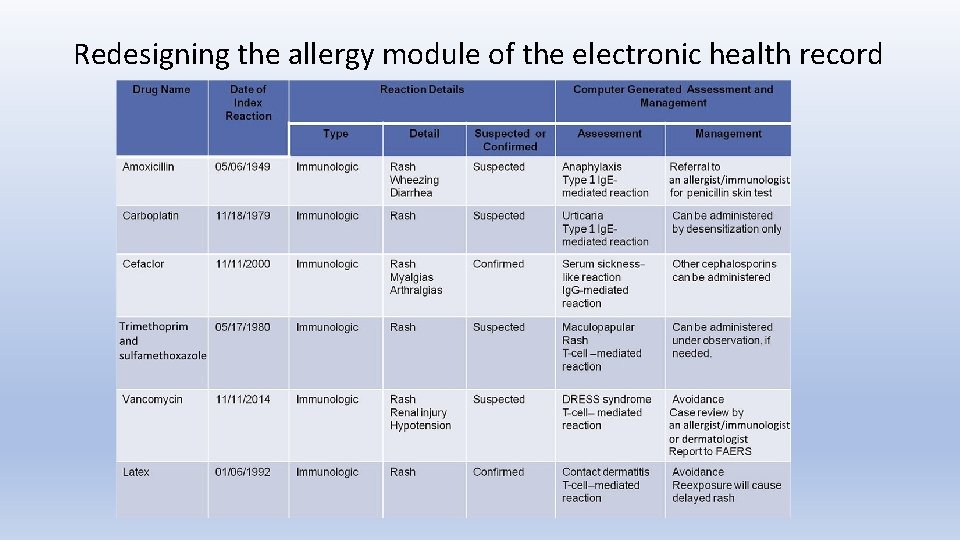
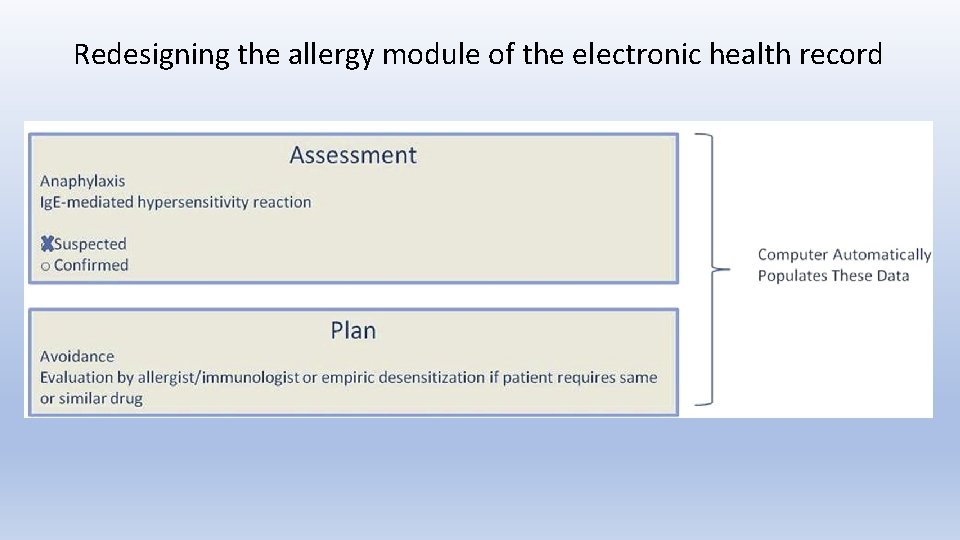
Redesigning the allergy module of the electronic health record Words Matter • Why inaccurately calling a drug intolerance or an expected side-effect an “allergy” is dangerous • 97% of penicillin “allergy” isn’t • Therapeutic misadventures can occur when trying to “desensitize” a patient with a serious T-cell mediated hypersensitivity. • What should we call the section of the EHR currently called “Allergies” in EPIC to increase patient safety? Blumenthal KG, Park MA, Macy EM. Redesigning the allergy module of the electronic health record. Ann Allergy Asthma Immunol. 2016; 117: 126 -31.
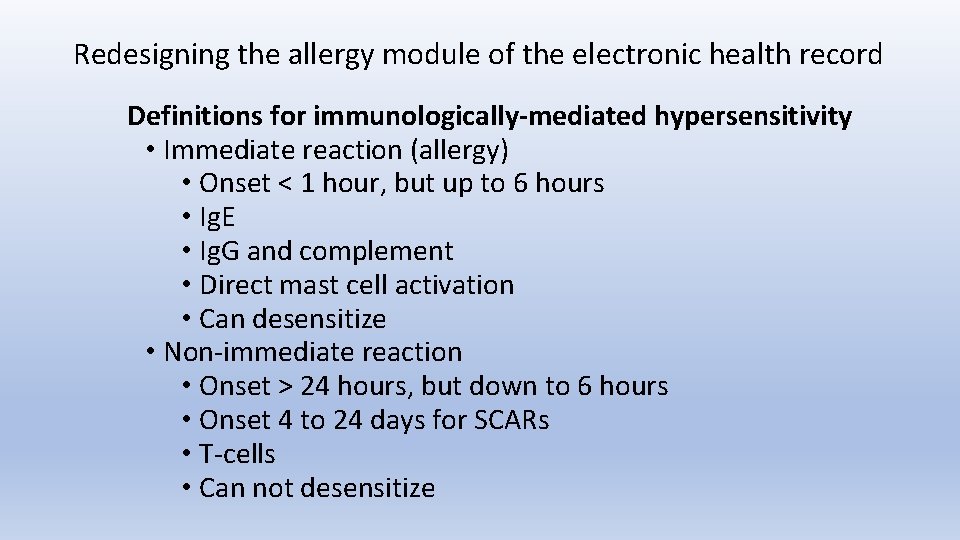
Redesigning the allergy module of the electronic health record Definitions for immunologically-mediated hypersensitivity • Immediate reaction (allergy) • Onset < 1 hour, but up to 6 hours • Ig. E • Ig. G and complement • Direct mast cell activation • Can desensitize • Non-immediate reaction • Onset > 24 hours, but down to 6 hours • Onset 4 to 24 days for SCARs • T-cells • Can not desensitize
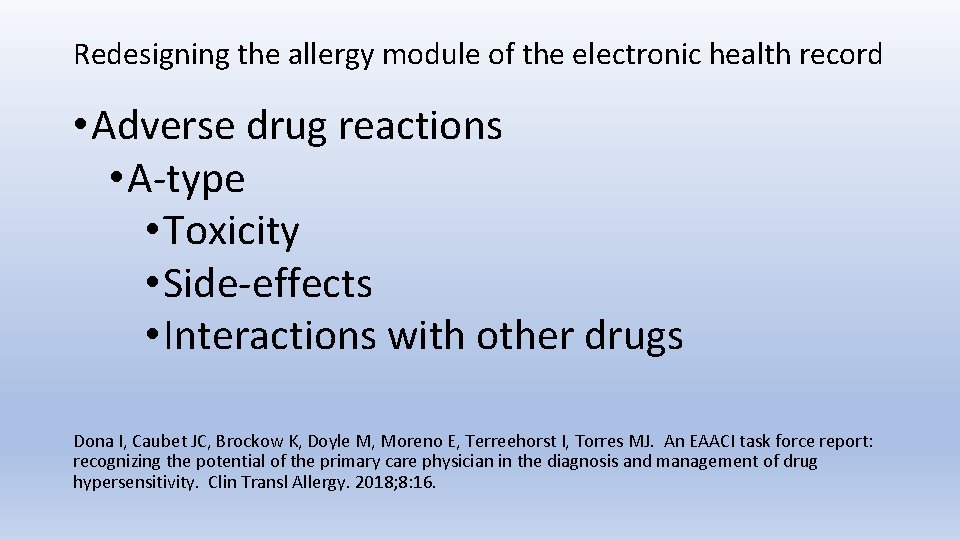
Redesigning the allergy module of the electronic health record • Adverse drug reactions • A-type • Toxicity • Side-effects • Interactions with other drugs Dona I, Caubet JC, Brockow K, Doyle M, Moreno E, Terreehorst I, Torres MJ. An EAACI task force report: recognizing the potential of the primary care physician in the diagnosis and management of drug hypersensitivity. Clin Transl Allergy. 2018; 8: 16.
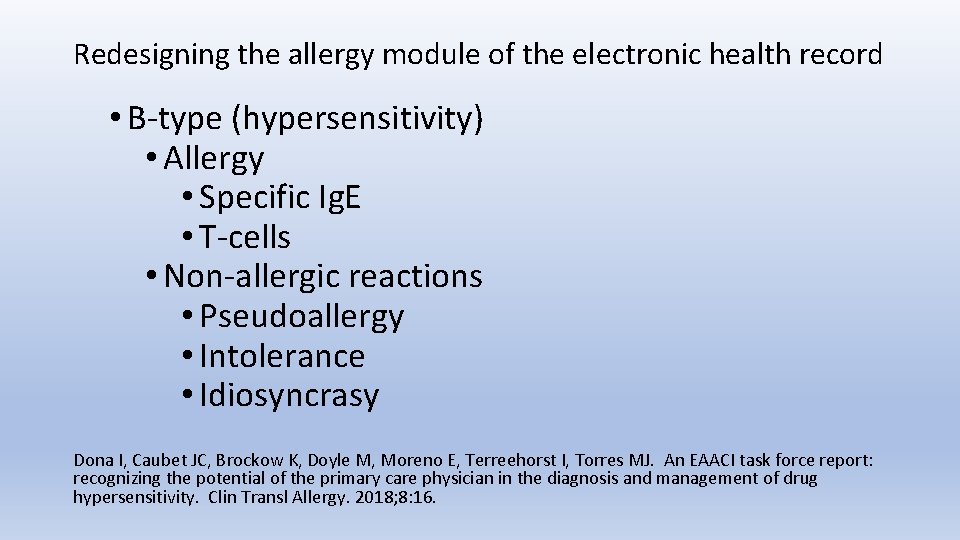
Redesigning the allergy module of the electronic health record • B-type (hypersensitivity) • Allergy • Specific Ig. E • T-cells • Non-allergic reactions • Pseudoallergy • Intolerance • Idiosyncrasy Dona I, Caubet JC, Brockow K, Doyle M, Moreno E, Terreehorst I, Torres MJ. An EAACI task force report: recognizing the potential of the primary care physician in the diagnosis and management of drug hypersensitivity. Clin Transl Allergy. 2018; 8: 16.
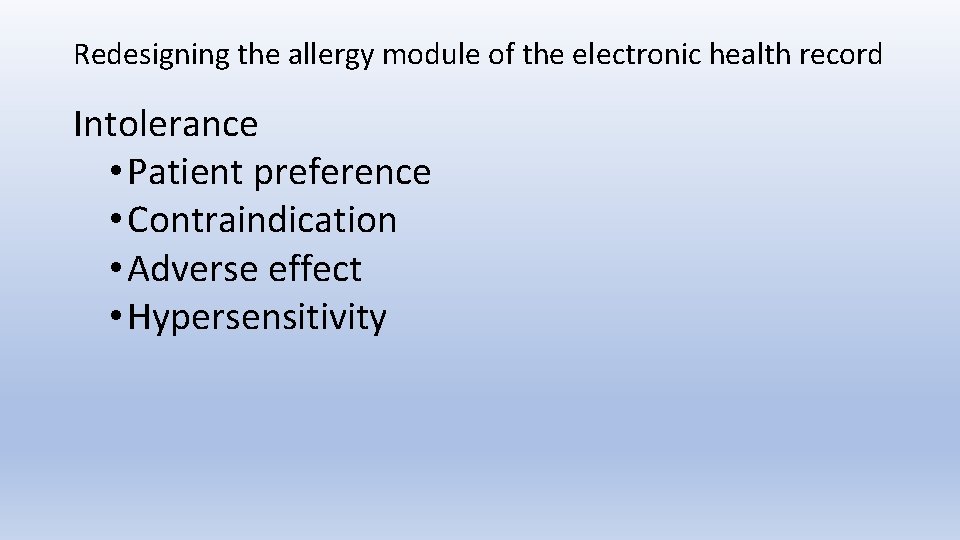
Redesigning the allergy module of the electronic health record Intolerance • Patient preference • Contraindication • Adverse effect • Hypersensitivity
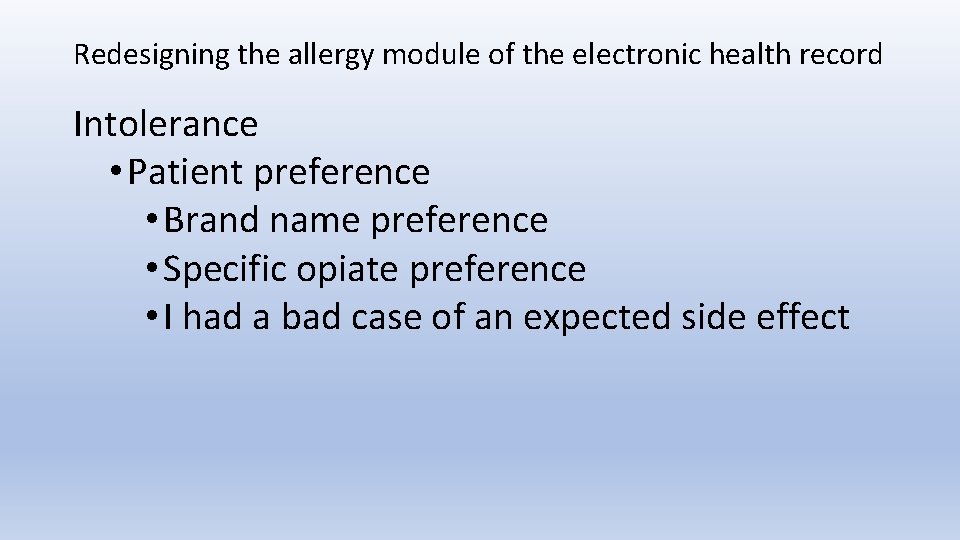
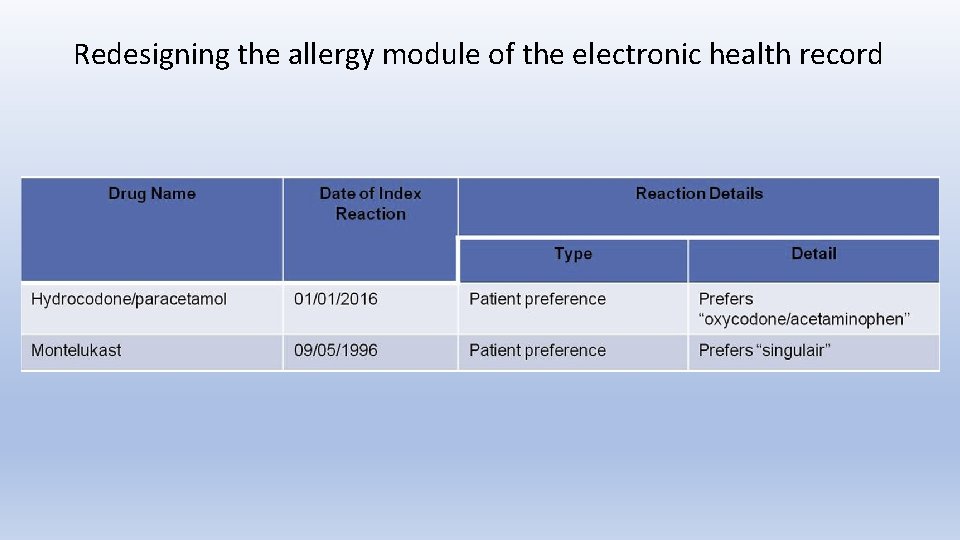
Redesigning the allergy module of the electronic health record Intolerance • Patient preference • Brand name preference • Specific opiate preference • I had a bad case of an expected side effect
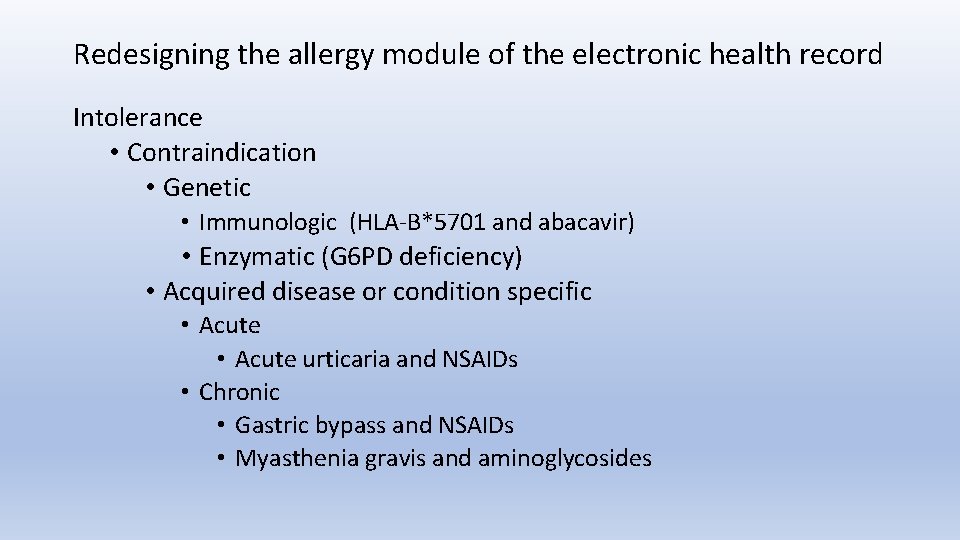
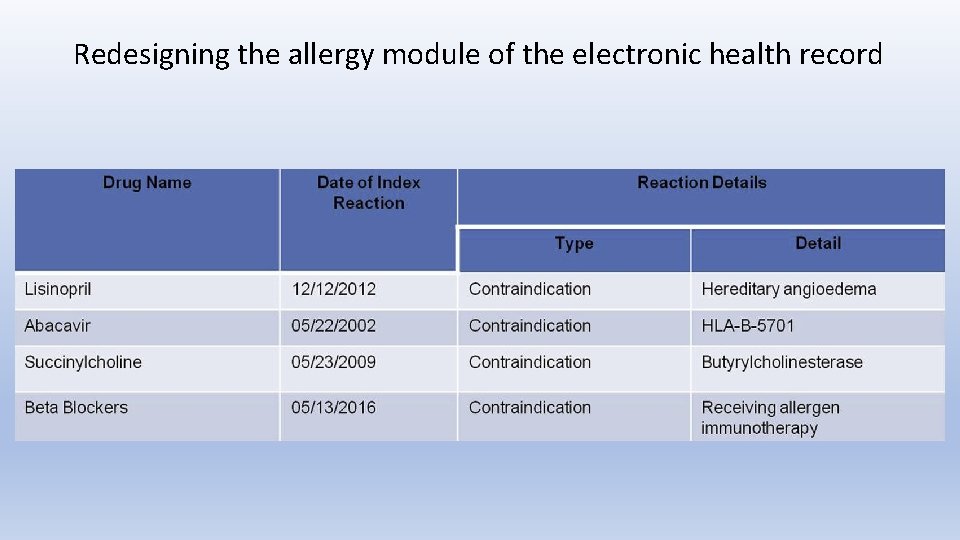
Redesigning the allergy module of the electronic health record Intolerance • Contraindication • Genetic • Immunologic (HLA-B*5701 and abacavir) • Enzymatic (G 6 PD deficiency) • Acquired disease or condition specific • Acute urticaria and NSAIDs • Chronic • Gastric bypass and NSAIDs • Myasthenia gravis and aminoglycosides
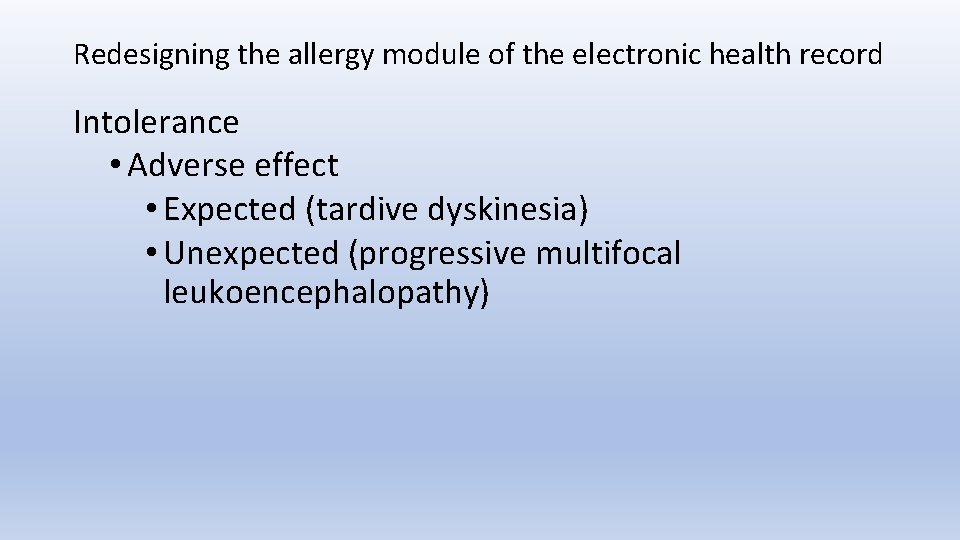
Redesigning the allergy module of the electronic health record Intolerance • Adverse effect • Expected (tardive dyskinesia) • Unexpected (progressive multifocal leukoencephalopathy)
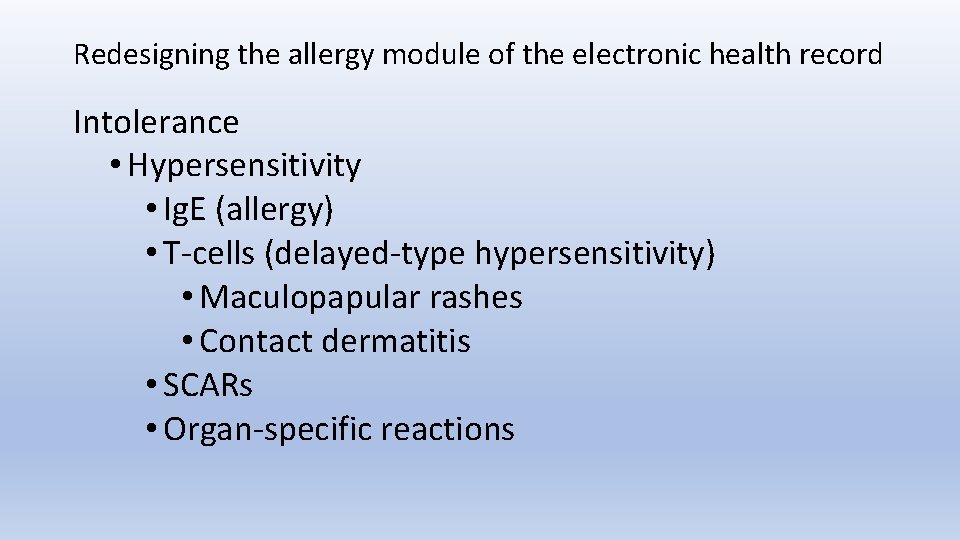
Redesigning the allergy module of the electronic health record Intolerance • Hypersensitivity • Ig. E (allergy) • T-cells (delayed-type hypersensitivity) • Maculopapular rashes • Contact dermatitis • SCARs • Organ-specific reactions
Redesigning the allergy module of the electronic health record
Redesigning the allergy module of the electronic health record
Redesigning the allergy module of the electronic health record
Redesigning the allergy module of the electronic health record
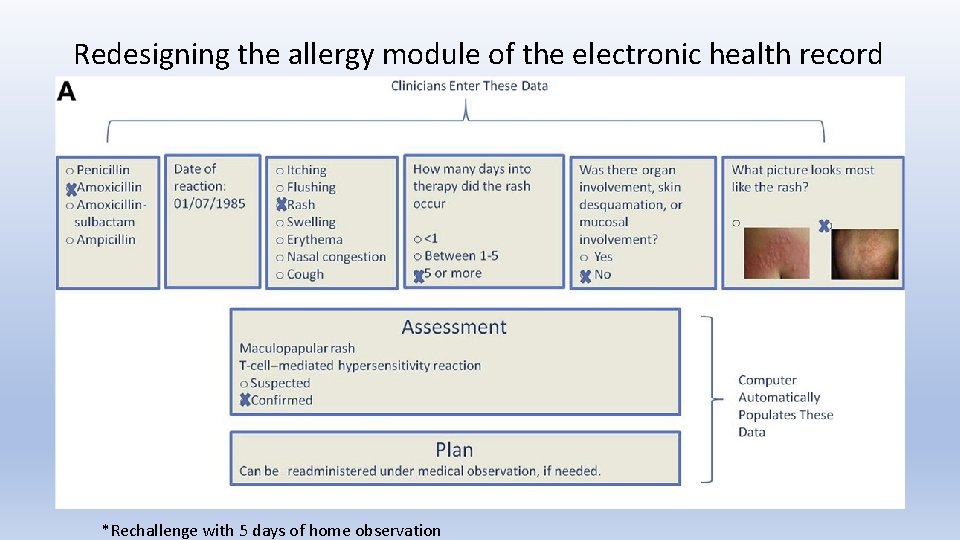
Redesigning the allergy module of the electronic health record *Rechallenge with 5 days of home observation
Redesigning the allergy module of the electronic health record
Redesigning the allergy module of the electronic health record
Redesigning the allergy module of the electronic health record Make it Relevant • The most common drugs and reasons for drug intolerance would be listed first. • Environmental (eg, ragweed, dog dander) or venom (eg, yellow jacket, wasp) allergies would not be noted in the drug intolerance field. These would be included in the problem list or diagnoses. • Food allergens would have their own EHR territory. Ig. Emediated reactions to foods are particularly important for the safety of hospitalized patients and must communicate with dietary services.
Redesigning the allergy module of the electronic health record Make it Interactive and Reactive • Intolerances would communicate with the EHR problem list or diagnoses to auto-populate contraindicated medications associated with specific conditions • Intolerances would automatically delete when the problem is resolved. • Intolerances would communicate with laboratory ordering. • New suspected anaphylaxis prompts ordering of a serum tryptase • entry of latex prompts ordering of the commercially available anti-latex Ig. E ELISA test
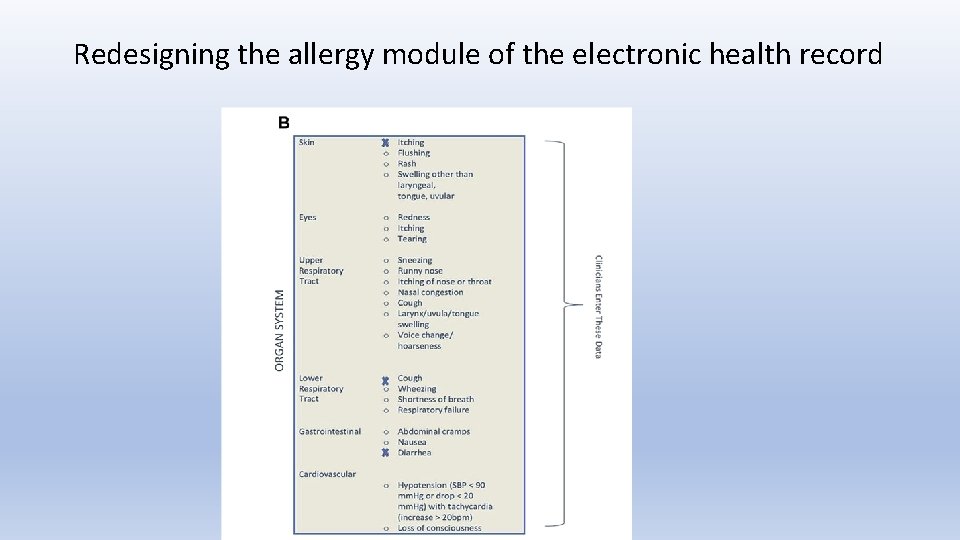
Redesigning the allergy module of the electronic health record Make it Interactive and Reactive • Intolerances would connect to the FDA Adverse Event Reporting System, the nation’s system for collecting adverse events data, when indicated. • Reaction detail would be required for intolerances. On demand clinical decision support would launch at the time of allergen entry for immunologic reactions to provide more accurate assessments. • Patients with potential immunologically-mediated hypersensitivity would be automatically referred for allergy testing. • Patients with suspected SCARs would receive subspecialist case verification.
Redesigning the allergy module of the electronic health record Make Pop-Up Fatigue Stop • Alerts would use both drug and reaction details • Although many alerts do not signal an absolute contraindication, when a drug is absolutely contraindicated, it would not be possible to administer • System-wide alerts that are widely ignored would be assessed annually for removal
Redesigning the allergy module of the electronic health record Make Pop-Up Fatigue Stop • If an alert is overridden 3 or more times, then the intolerance would be deemed inconsequential to care and the clinician would be prompted to delete the intolerance • If a patient carries an intolerance that is potentially immunologically mediated and tolerates drug re-exposure (whether purposeful or accidental), the original “intolerance” would be automatically removed from the EHR