
Redesigning curricula in higher education design considerations Martin

- Slides: 48
"Redesigning curricula in higher education: design considerations" Martin Valcke Department Educational Studies Ghent University Martin. Valcke@UGent. be http: //users. ugent. be/~mvalcke/CV_2012/
Structure • Towards a design concept? • What works in education? • Ingredients of a “design concept” – – – Learning objectives Learning content Didactical strategies Media Evaluation • From course to program level • Conclusions
Design concept? • Can students predict how a course will be given by different teachers? A Not at all B For some courses C For most courses D For all courses
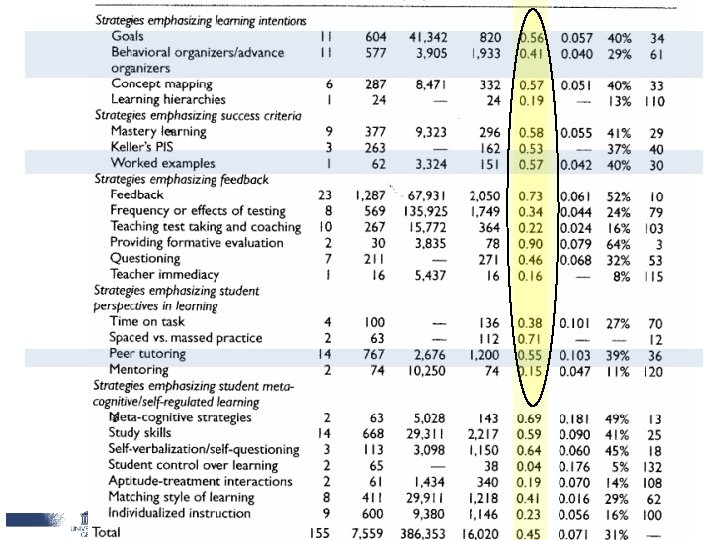
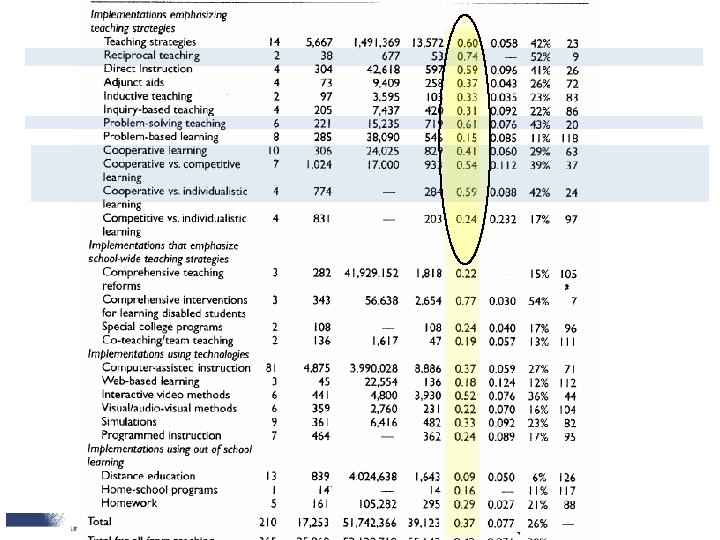
What works in education? Hattie, J. (2009). Visible Learning: A Synthesis of over 800 Meta. Analysis relating to Achievement. Milton Park, Oxon: Routledge.
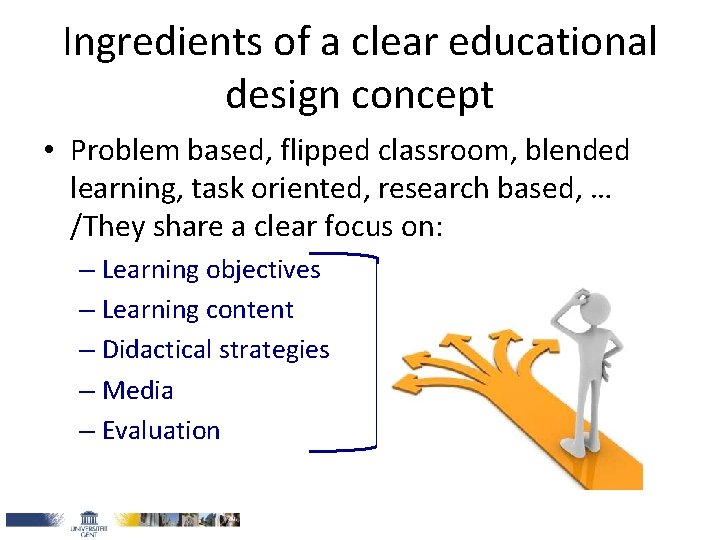
Ingredients of a clear educational design concept • Problem based, flipped classroom, blended learning, task oriented, research based, … /They share a clear focus on: – Learning objectives – Learning content – Didactical strategies – Media – Evaluation
Ingredients of a design concept • Learning objectives
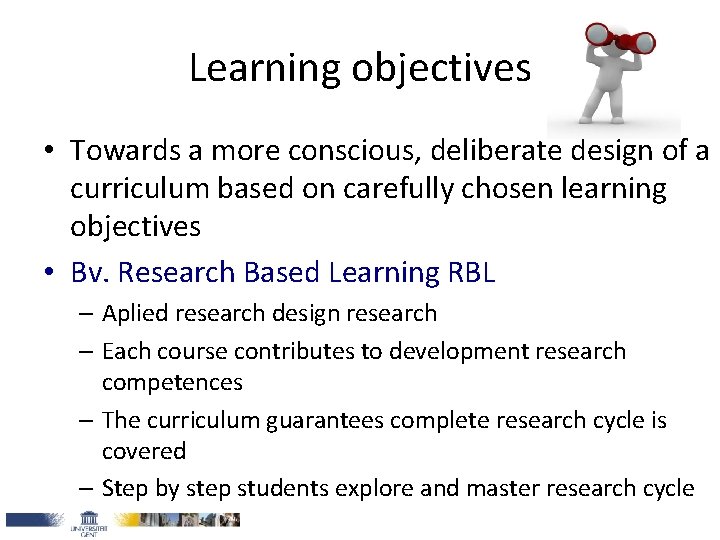
Learning objectives • Towards a more conscious, deliberate design of a curriculum based on carefully chosen learning objectives • Bv. Research Based Learning RBL – Aplied research design research – Each course contributes to development research competences – The curriculum guarantees complete research cycle is covered – Step by step students explore and master research cycle
Design concept? • To what extent is research critical in your university program? A Not at all important B A little bit important in some courses C Important in most courses D Always important in all courses
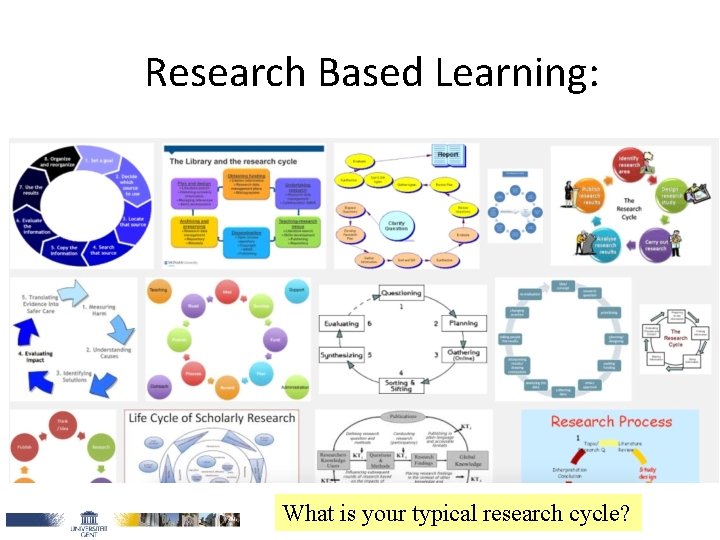
Research Based Learning: What is your typical research cycle?
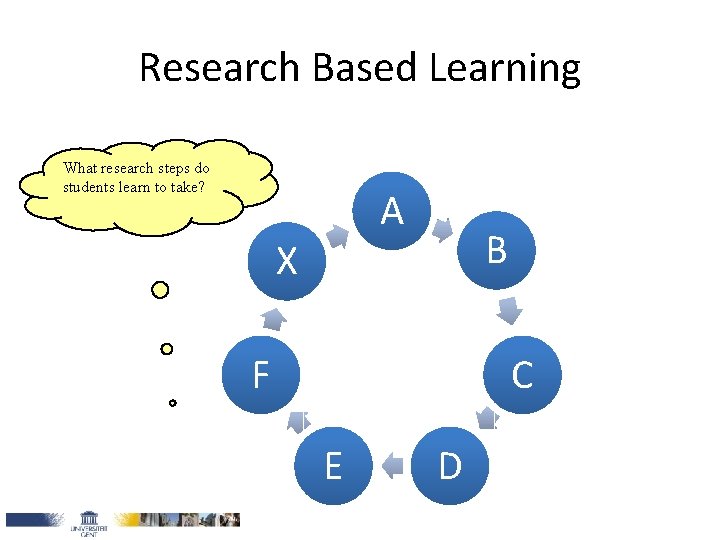
Research Based Learning What research steps do students learn to take? A X B F C E D
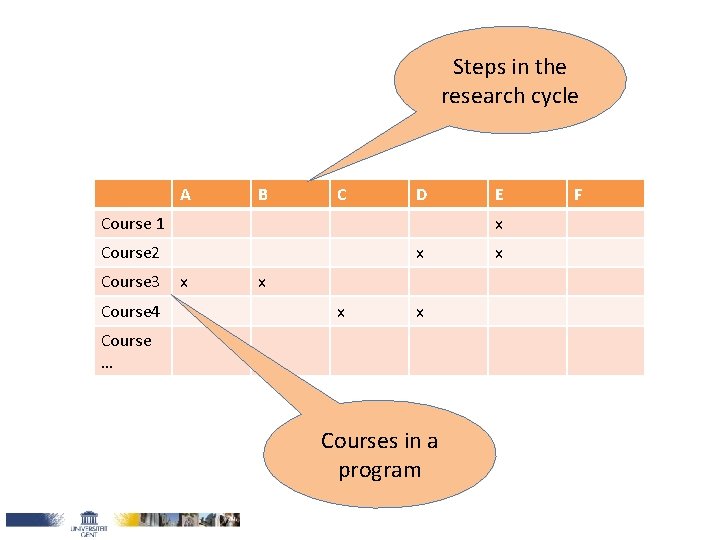
Steps in the research cycle A B C D Course 1 x Course 2 Course 3 Course 4 E x x x Course … Courses in a program x F
Ingredients of a design concept • Learning content – Problems – Cases – Tasks –…
Learning content? • To what extent do you agree on the “nature” of the learning content to be used in courses or the program? A No discussion about this B Hardly discussions C Some agreement D Total agreement
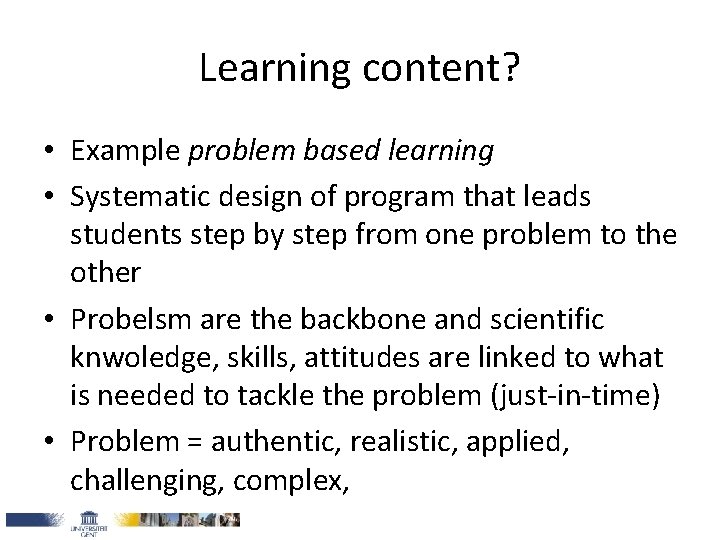
Learning content? • Example problem based learning • Systematic design of program that leads students step by step from one problem to the other • Probelsm are the backbone and scientific knwoledge, skills, attitudes are linked to what is needed to tackle the problem (just-in-time) • Problem = authentic, realistic, applied, challenging, complex,
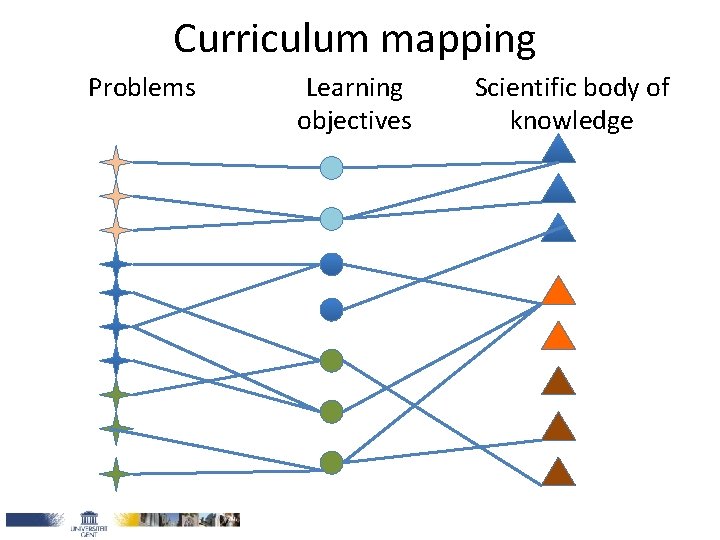
Curriculum mapping Problems Learning objectives Scientific body of knowledge
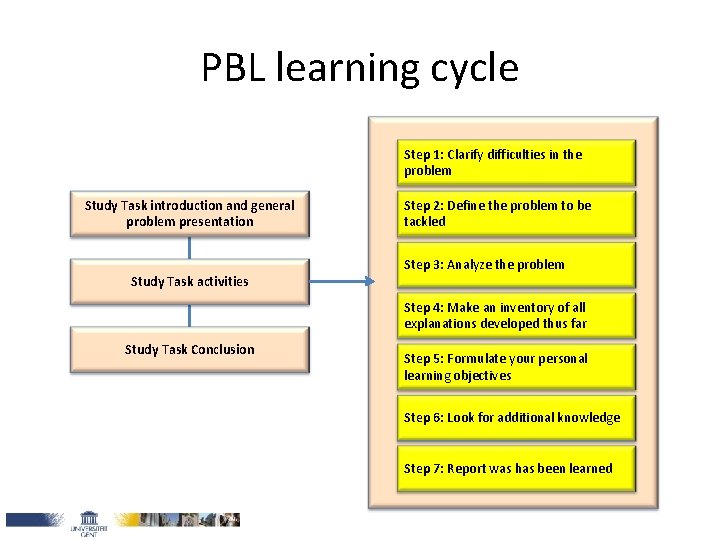
PBL learning cycle Step 1: Clarify difficulties in the problem Study Task introduction and general problem presentation Study Task activities Step 2: Define the problem to be tackled Step 3: Analyze the problem Step 4: Make an inventory of all explanations developed thus far Study Task Conclusion Step 5: Formulate your personal learning objectives Step 6: Look for additional knowledge Step 7: Report was has been learned
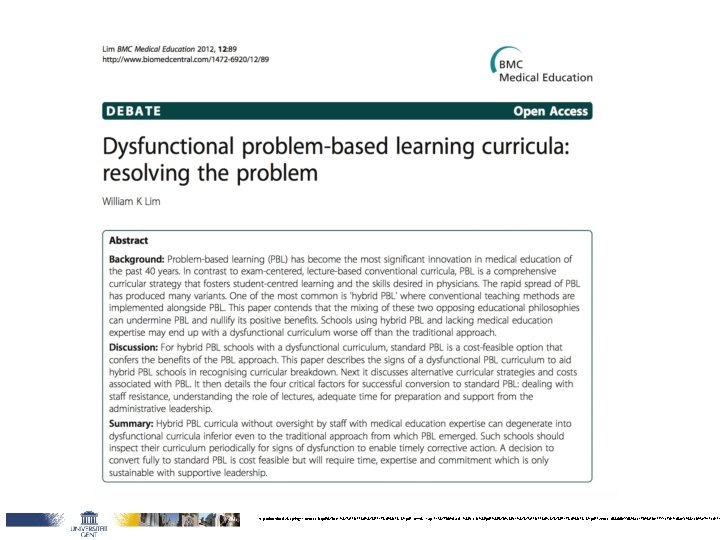
http: //download-v 2. springer. com/static/pdf/850/art%253 A 10. 1186%252 F 1472 -6920 -12 -89. pdf? token 2=exp=1432570096~acl=%2 Fstatic%2 Fpdf%2 F 850%2 Fart%25253 A 10. 1186%25252 F 1472 -6920 -12 -89. pdf*~hmac=d 826 d 0556892 cc 47098 af 0 c 41754 c 7 defe 68 b 5 a 9224 c 093 a 5941 ad 414
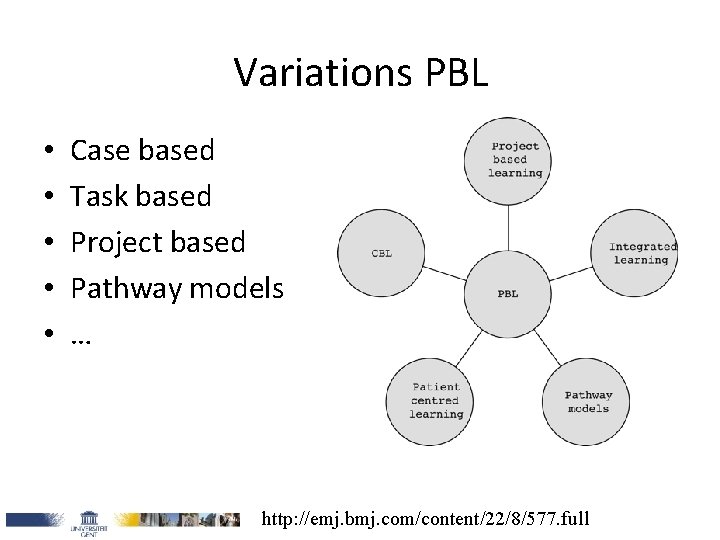
Variations PBL • • • Case based Task based Project based Pathway models … http: //emj. bmj. com/content/22/8/577. full
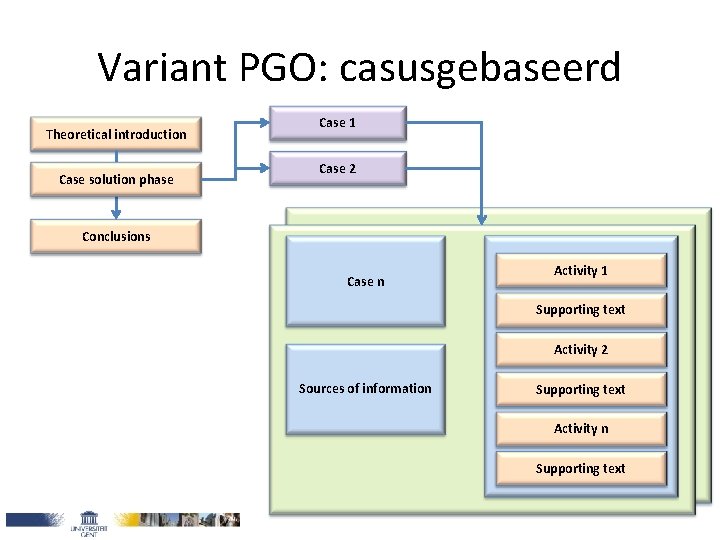
Variant PGO: casusgebaseerd Theoretical introduction Case solution phase Case 1 Case 2 Conclusions Case n Activity 1 Supporting text Activity 2 Sources of information Supporting text Activity n Supporting text
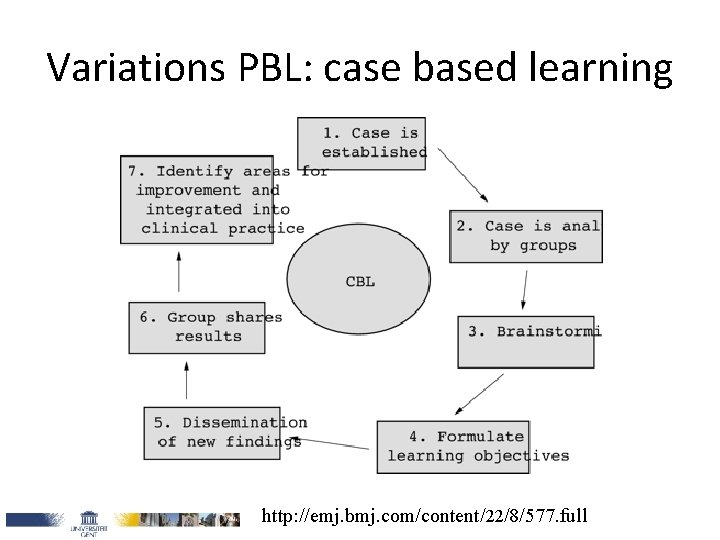
Variations PBL: case based learning http: //emj. bmj. com/content/22/8/577. full
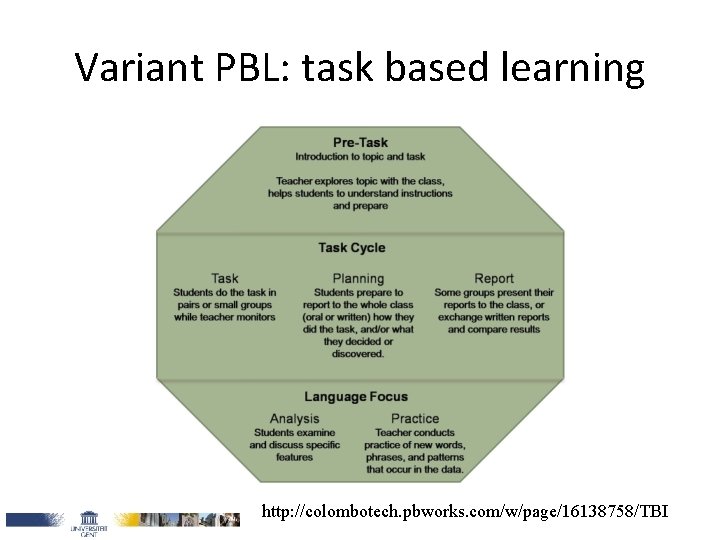
Variant PBL: task based learning http: //colombotech. pbworks. com/w/page/16138758/TBI
Ingredients of a design concept • Didactical strategies
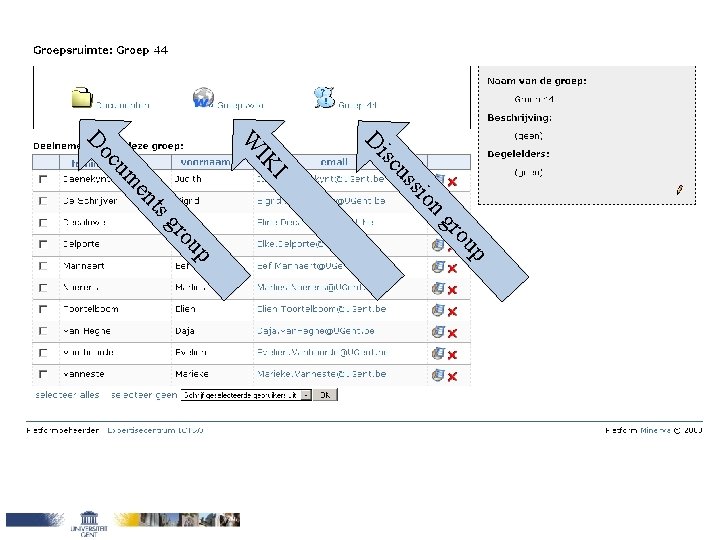
Didactical strategies • Example: collaborative learning as a key design concept for learning
Didactical strategies? • To what extent is collaborative learning already consistently implemented in every course? A In none of the courses B In some courses C In most courses D In all courses
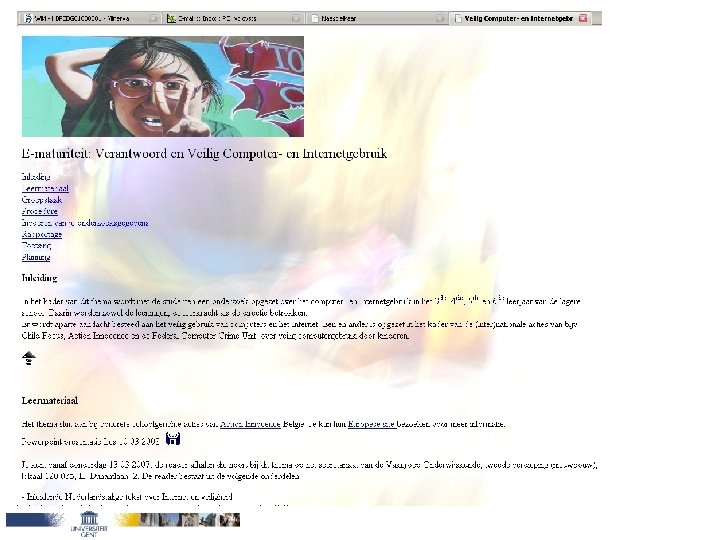
n sio us sc Di I IK W gr p ou up ro sg t en m cu Do
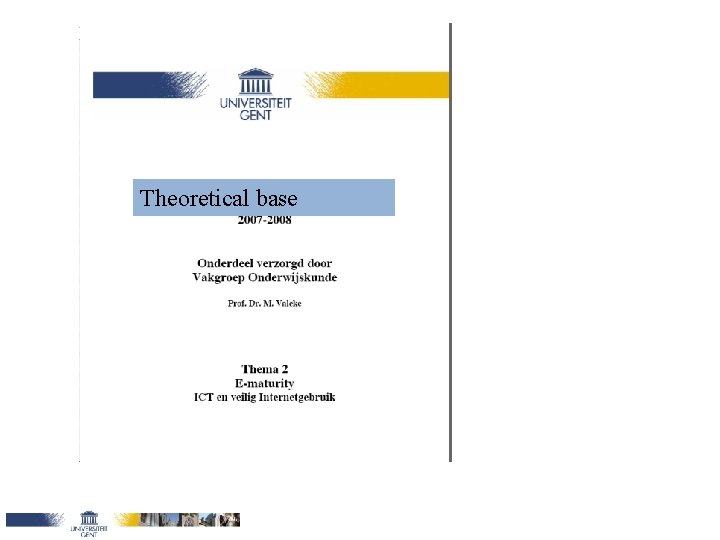
Theoretical base
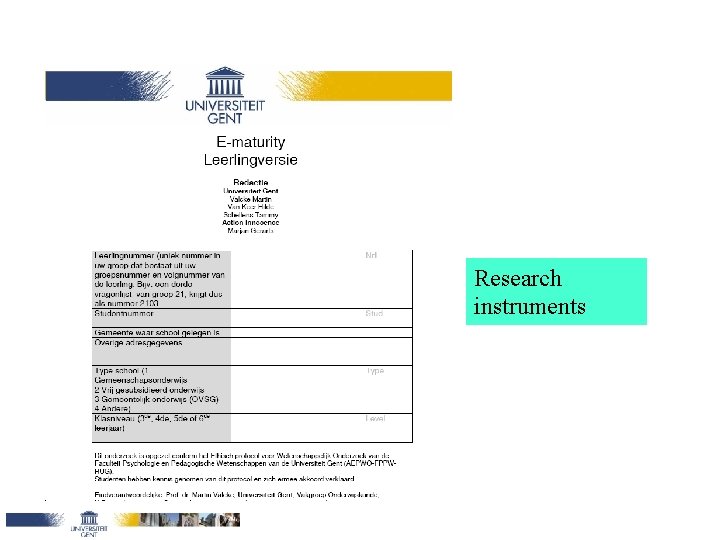
Research instruments
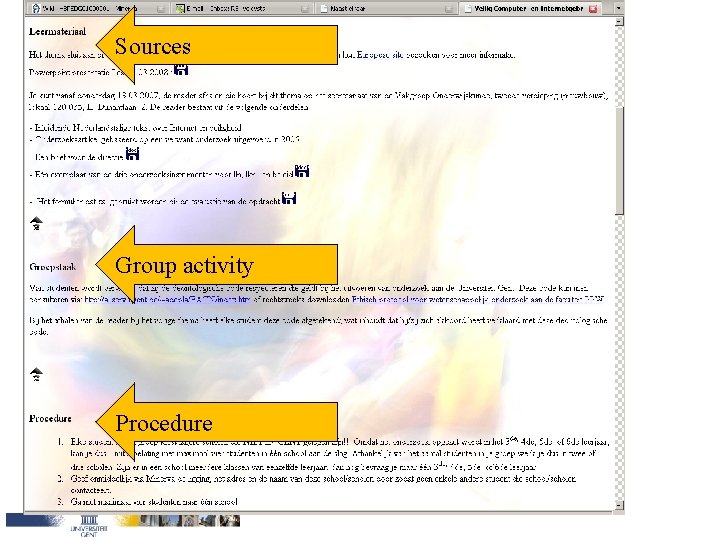
Sources Group activity Procedure
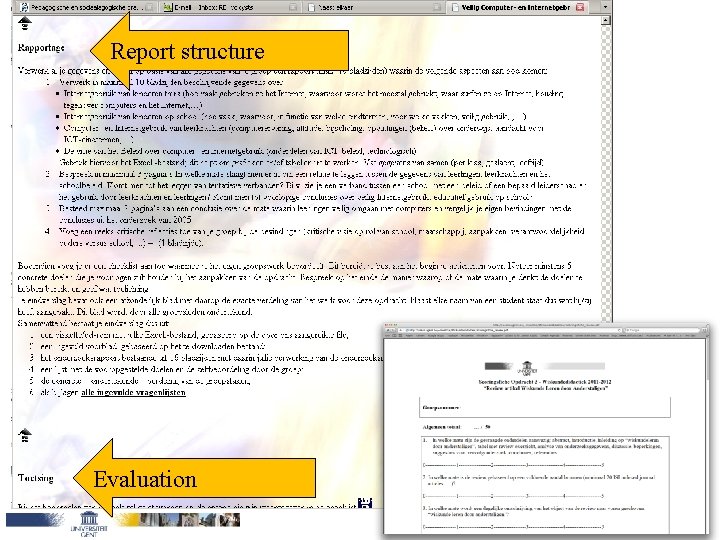
Report structure Evaluation
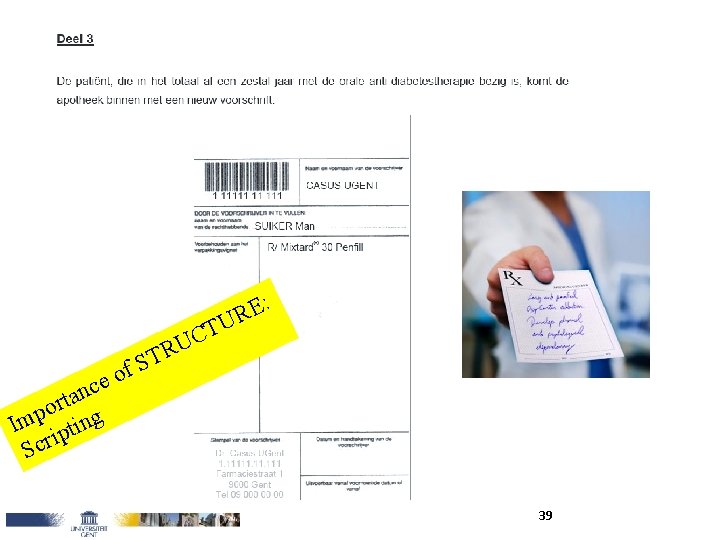
: E UR T C U e c n ta r o Imp ipting Scr R T S of 39
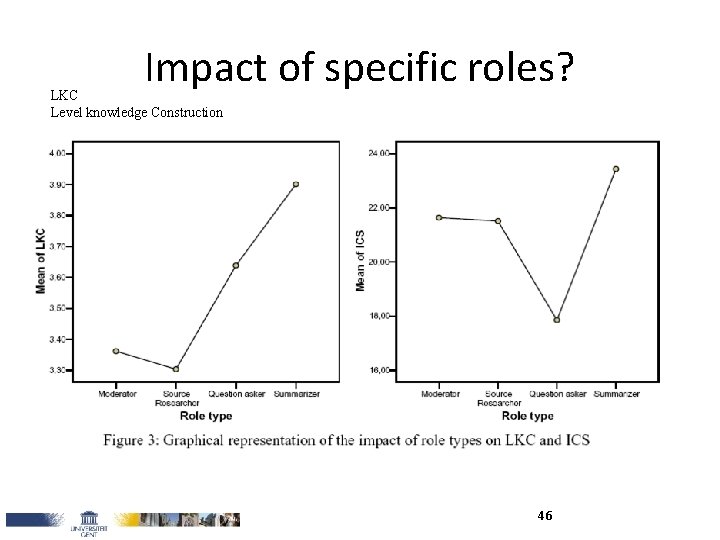
Example scripting: roles • • Pharmacy education 5 th year students 5 month internship Problem: lack of use of integarted pharmceutical knowledge (Timmers, Valcke, De Mil & Baeyens, 2008) http: //users. ugent. be/~mvalcke/CV/thesis_finaal_timmers_2. pdf 40
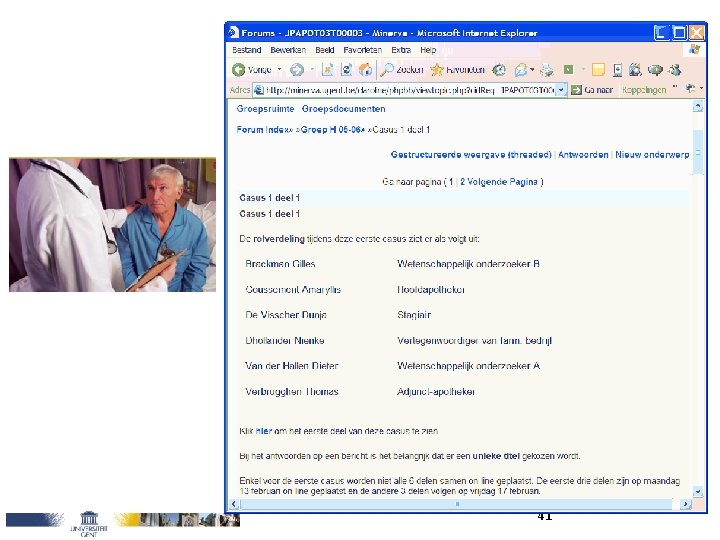
41
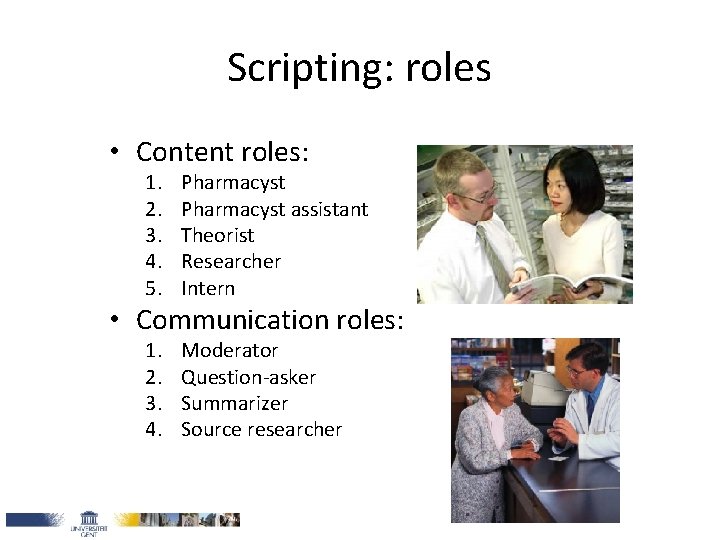
Scripting: roles • Content roles: 1. 2. 3. 4. 5. Pharmacyst assistant Theorist Researcher Intern 1. 2. 3. 4. Moderator Question-asker Summarizer Source researcher • Communication roles: 42
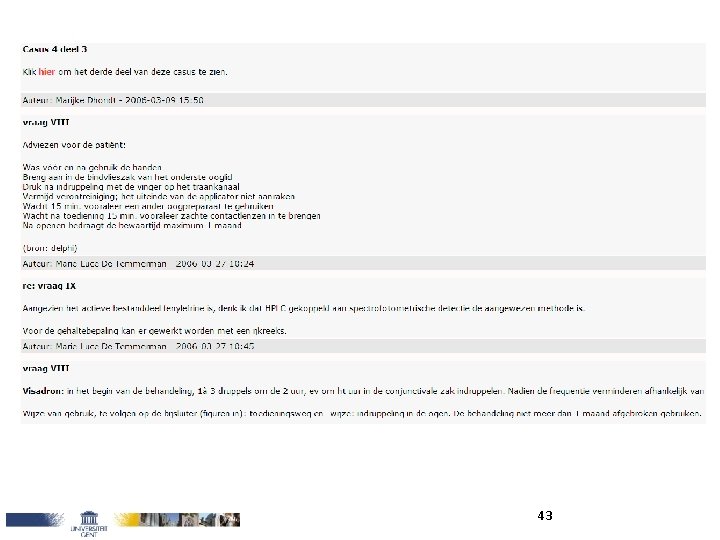
Exchange 43
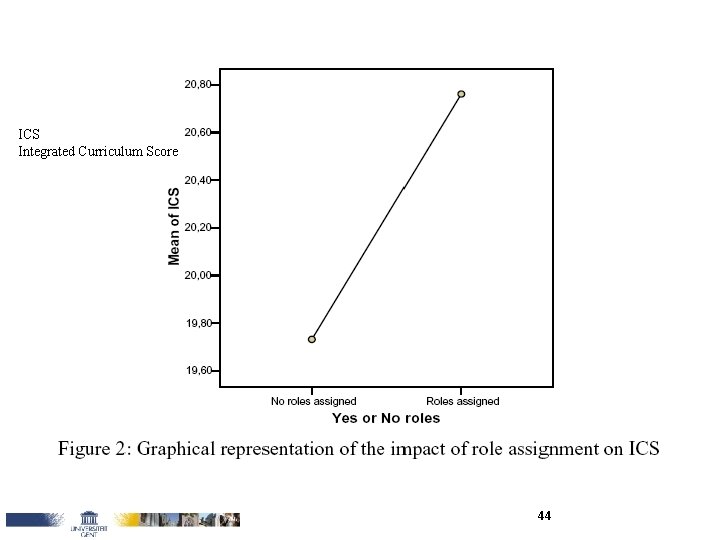
ICS Integrated Curriculum Score 44
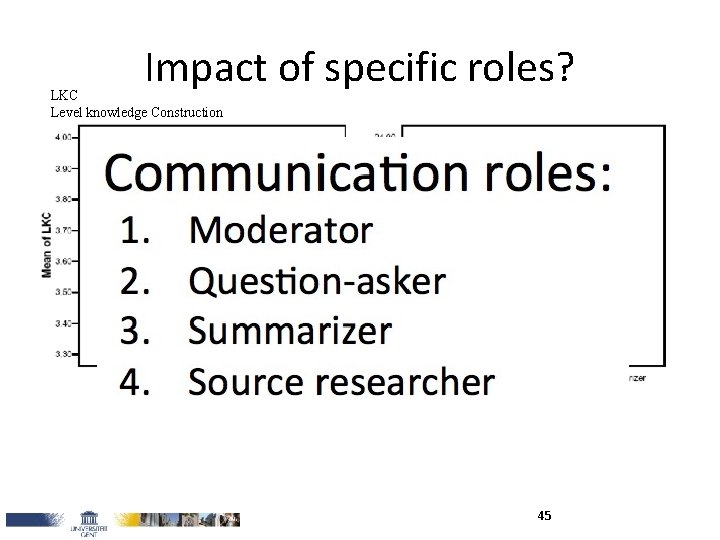
Impact of specific roles? LKC Level knowledge Construction 45
Impact of specific roles? LKC Level knowledge Construction 46
Ingredients of a design concept • Media
Didactical strategies? • How systematic is an elearning environment (LMS) being implemented in your university courses? A In no courses at all B In some courses C In most courses D In all courses