
Redefining the Fundamentals of Cash Forecasting With Artificial








- Slides: 45
Redefining the Fundamentals of Cash Forecasting With Artificial Intelligence 1
Speaker Tracey Ferguson Knight Director - Solution Engineering (Treasury)
Agenda 01 Turbulent Times 02 Cash Forecasting 03 Why is Forecasting Challenging? 04 Artificial Intelligence 101 05 Future State of a ‘Digital Treasurer’
Turbulent Times 4
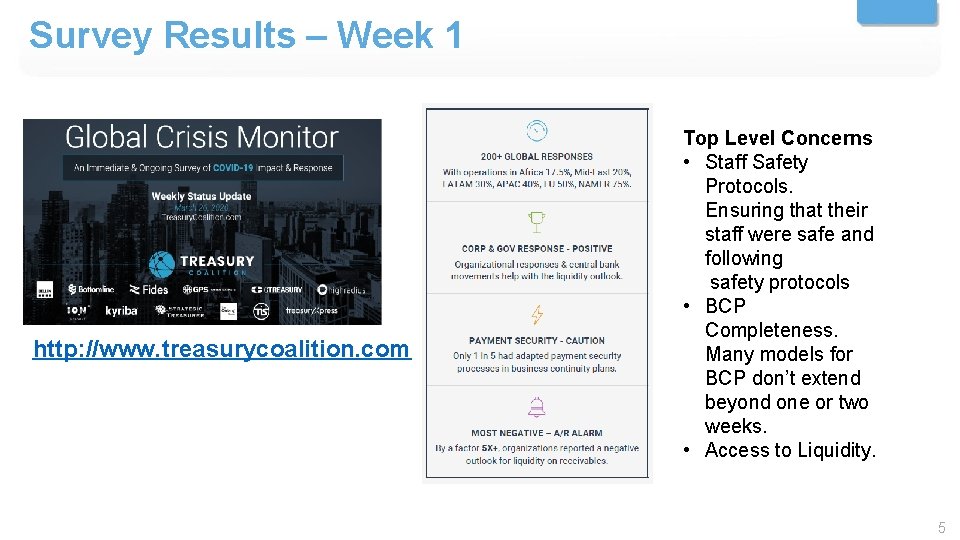
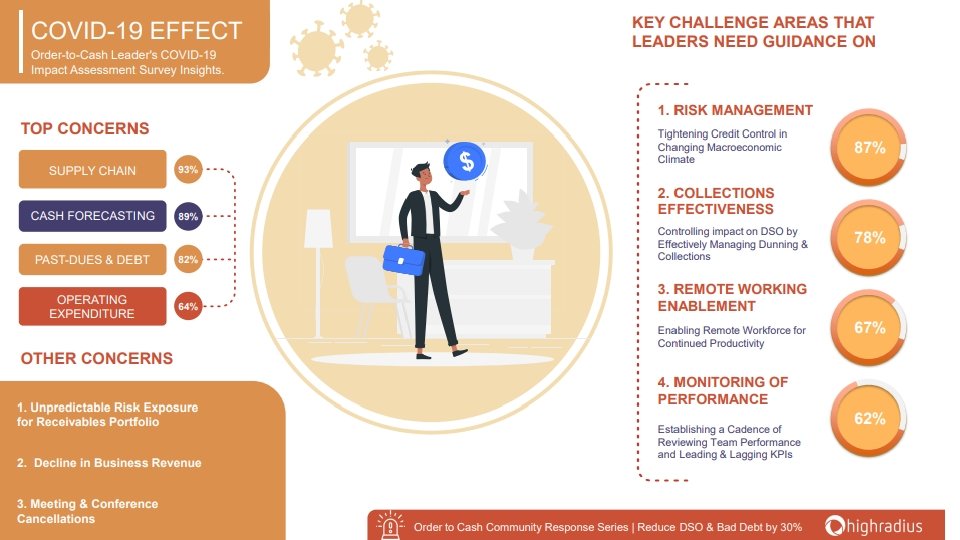
Survey Results – Week 1 http: //www. treasurycoalition. com Top Level Concerns • Staff Safety Protocols. Ensuring that their staff were safe and following safety protocols • BCP Completeness. Many models for BCP don’t extend beyond one or two weeks. • Access to Liquidity. 5
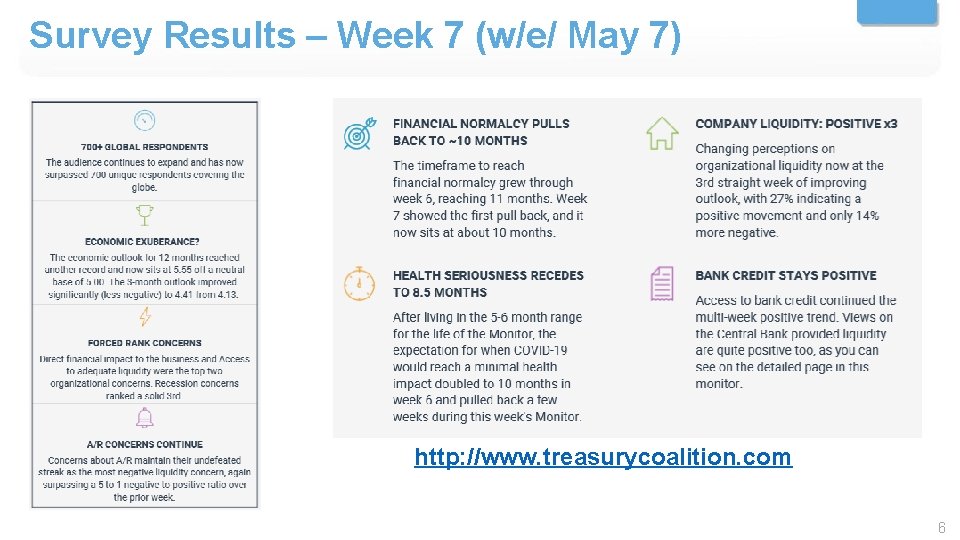
Survey Results – Week 7 (w/e/ May 7) http: //www. treasurycoalition. com 6
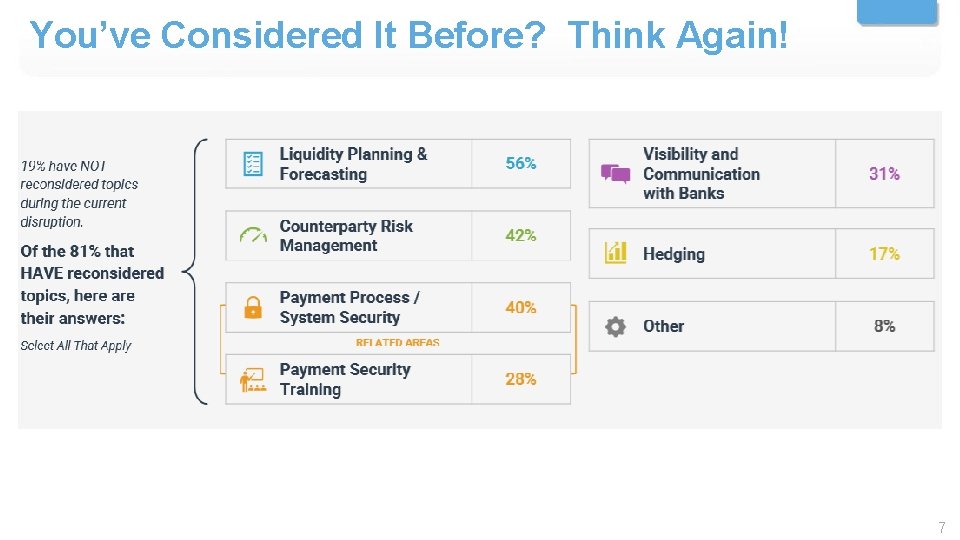
You’ve Considered It Before? Think Again! 7
8
Cash Forecasting 9
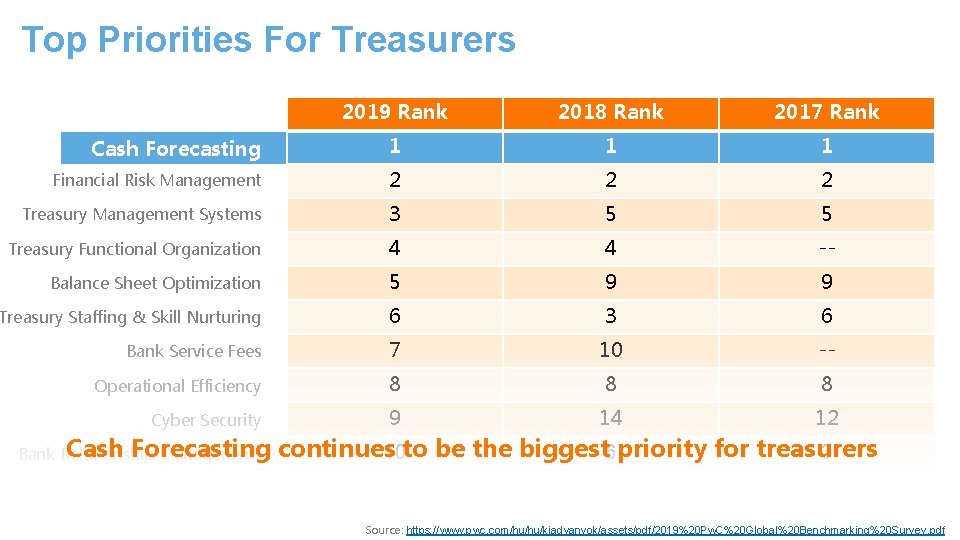
Top Priorities For Treasurers 2019 Rank 2018 Rank 2017 Rank Cash Forecasting 1 1 1 Financial Risk Management 2 2 2 Treasury Management Systems 3 5 5 Treasury Functional Organization 4 4 -- Balance Sheet Optimization 5 9 9 Treasury Staffing & Skill Nurturing 6 3 6 Bank Service Fees 7 10 -- Operational Efficiency 8 8 8 Cyber Security 9 14 12 Cash Forecasting Bank Relationship Management continues 10 to be the biggest 6 priority for treasurers 3 Source: https: //www. pwc. com/hu/hu/kiadvanyok/assets/pdf/2019%20 Pw. C%20 Global%20 Benchmarking%20 Survey. pdf
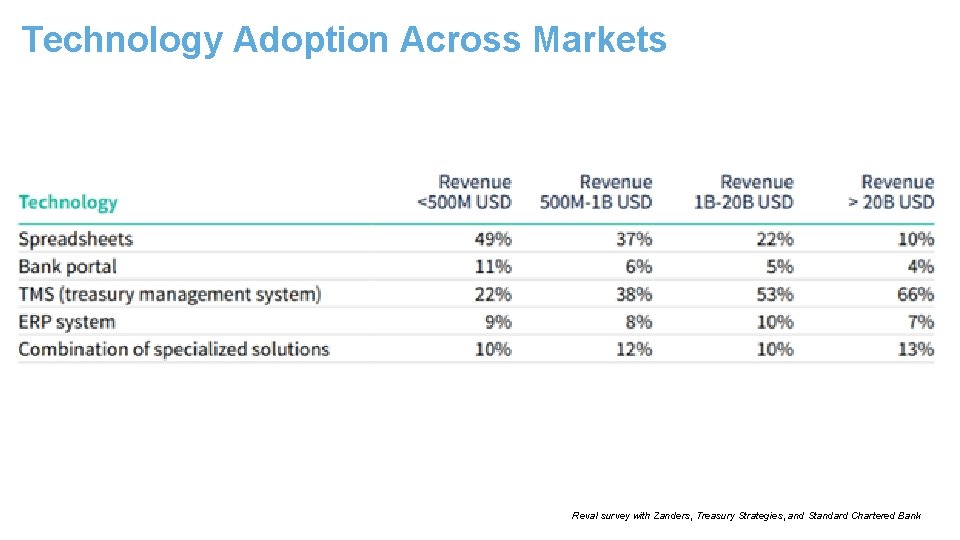
Technology Adoption Across Markets Reval survey with Zanders, Treasury Strategies, and Standard Chartered Bank
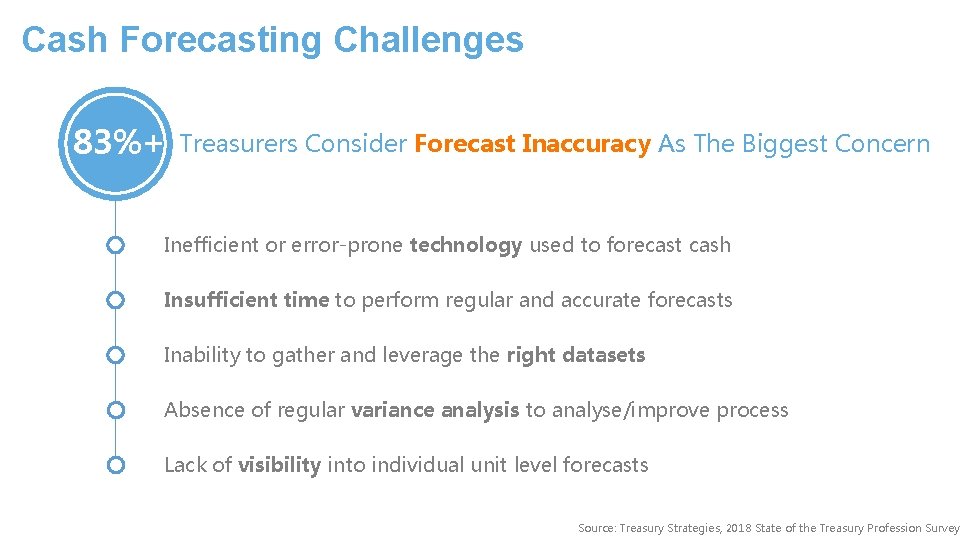
Cash Forecasting Challenges 83%+ Treasurers Consider Forecast Inaccuracy As The Biggest Concern Inefficient or error-prone technology used to forecast cash Insufficient time to perform regular and accurate forecasts Inability to gather and leverage the right datasets Absence of regular variance analysis to analyse/improve process Lack of visibility into individual unit level forecasts Source: Treasury Strategies, 2018 State of the Treasury Profession Survey
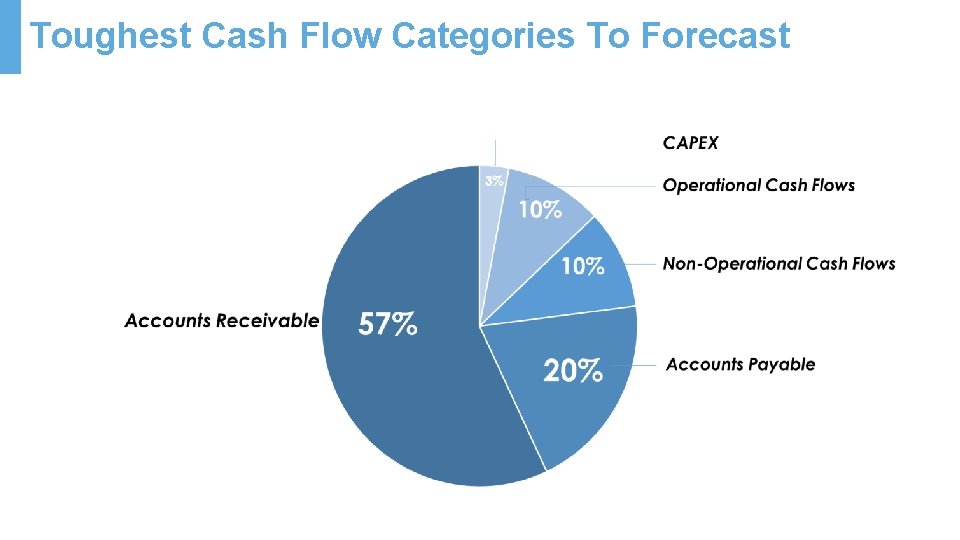
Toughest Cash Flow Categories To Forecast
Why is forecasting challenging? 14
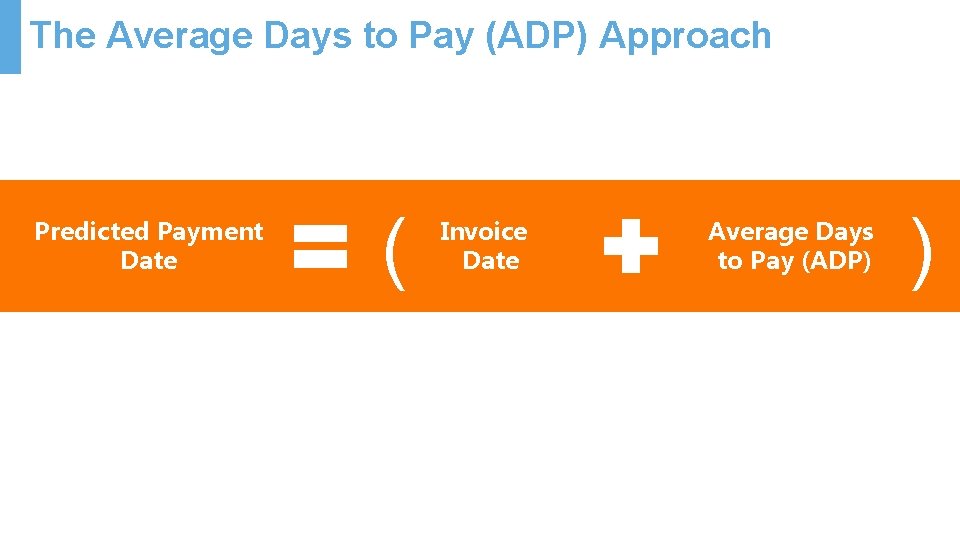
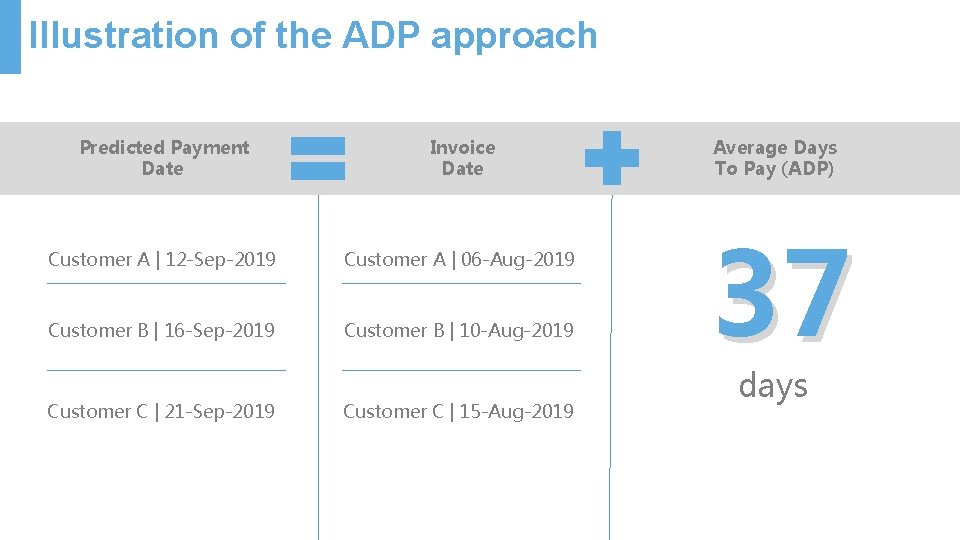
The Average Days to Pay (ADP) Approach Predicted Payment Date ( Invoice Date Average Days to Pay (ADP) )
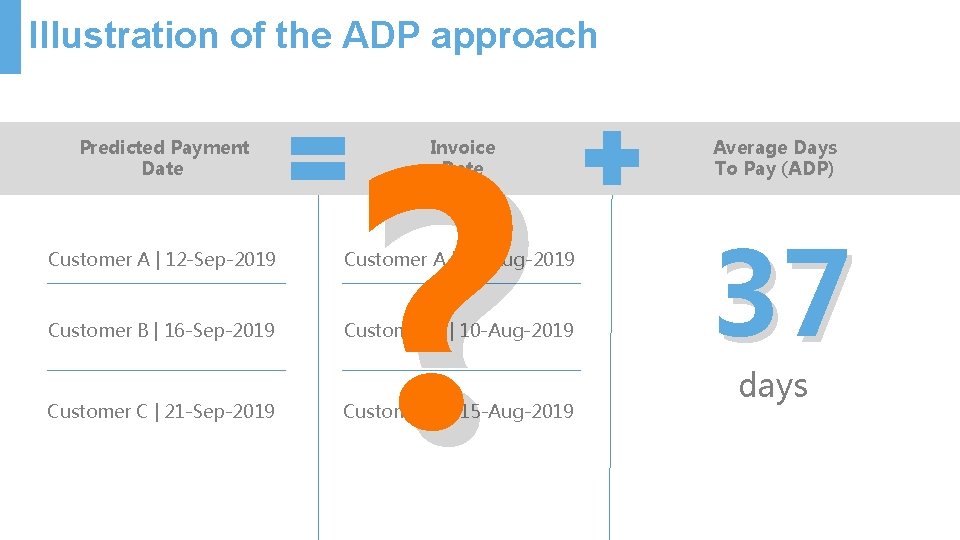
Illustration of the ADP approach Predicted Payment Date Invoice Date Customer A | 12 -Sep-2019 Customer A | 06 -Aug-2019 Customer B | 16 -Sep-2019 Customer B | 10 -Aug-2019 Customer C | 21 -Sep-2019 Customer C | 15 -Aug-2019 Average Days To Pay (ADP) 37 days
Illustration of the ADP approach Predicted Payment Date ? Invoice Date Customer A | 12 -Sep-2019 Customer A | 06 -Aug-2019 Customer B | 16 -Sep-2019 Customer B | 10 -Aug-2019 Customer C | 21 -Sep-2019 Customer C | 15 -Aug-2019 Average Days To Pay (ADP) 37 days
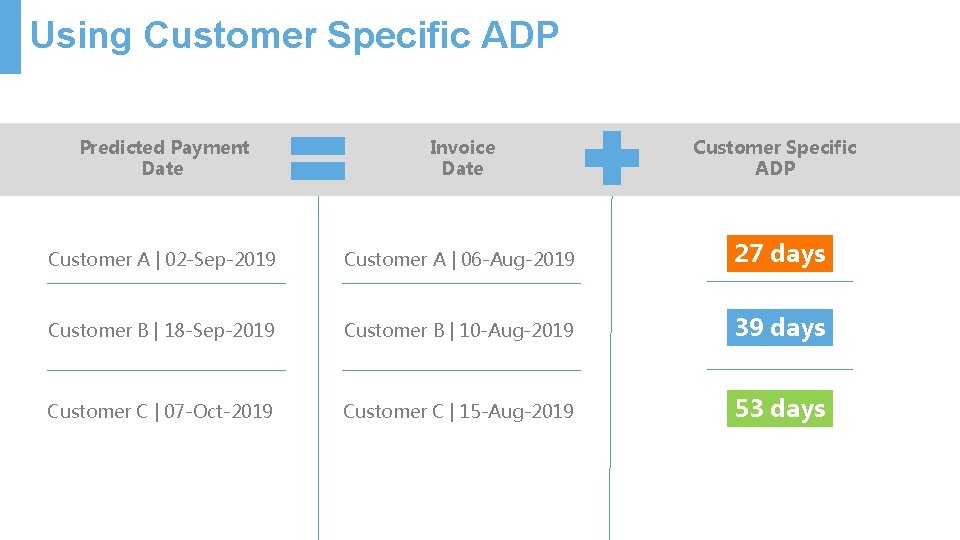
Using Customer Specific ADP Predicted Payment Date Invoice Date Customer Specific ADP Customer A | 02 -Sep-2019 Customer A | 06 -Aug-2019 27 days Customer B | 18 -Sep-2019 Customer B | 10 -Aug-2019 39 days Customer C | 07 -Oct-2019 Customer C | 15 -Aug-2019 53 days
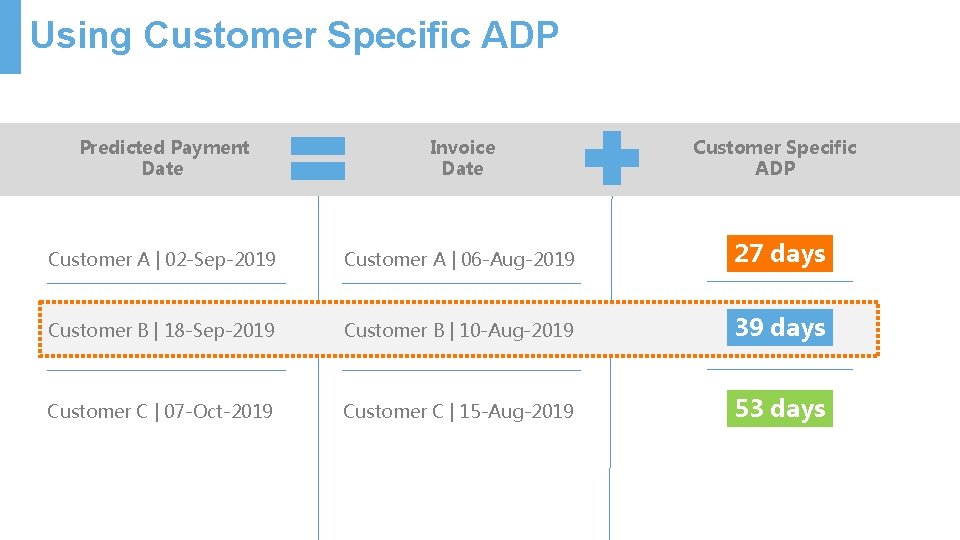
Using Customer Specific ADP Predicted Payment Date Invoice Date Customer Specific ADP Customer A | 02 -Sep-2019 Customer A | 06 -Aug-2019 27 days Customer B | 18 -Sep-2019 Customer B | 10 -Aug-2019 39 days Customer C | 07 -Oct-2019 Customer C | 15 -Aug-2019 53 days
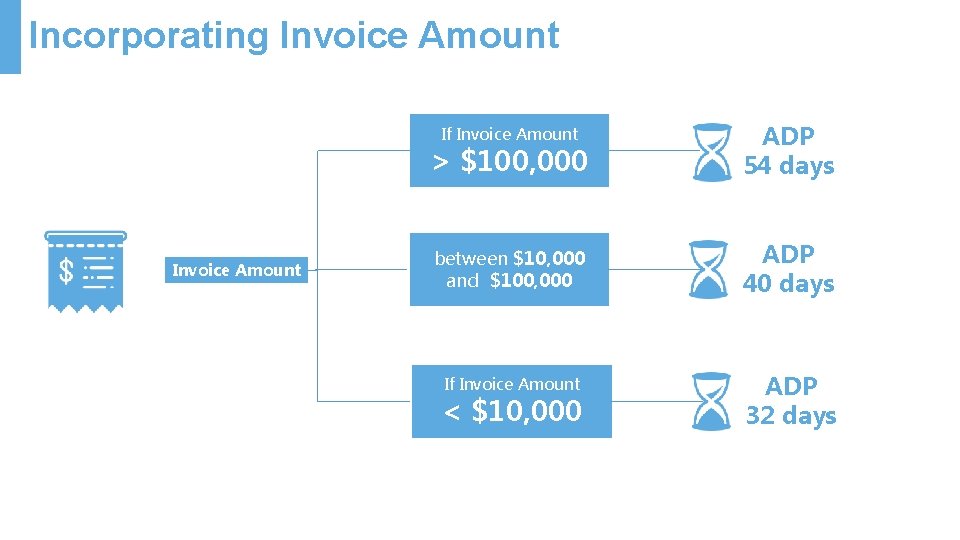
Incorporating Invoice Amount > $100, 000 ADP 54 days between $10, 000 and $100, 000 ADP 40 days If Invoice Amount < $10, 000 ADP 32 days
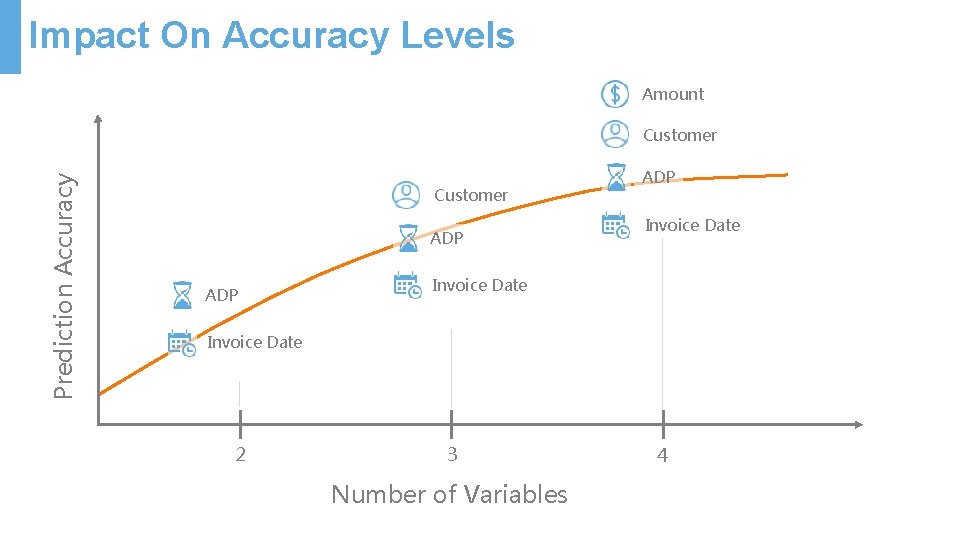
Impact On Accuracy Levels Amount Prediction Accuracy Customer ADP ADP Invoice Date 2 3 Number of Variables 4
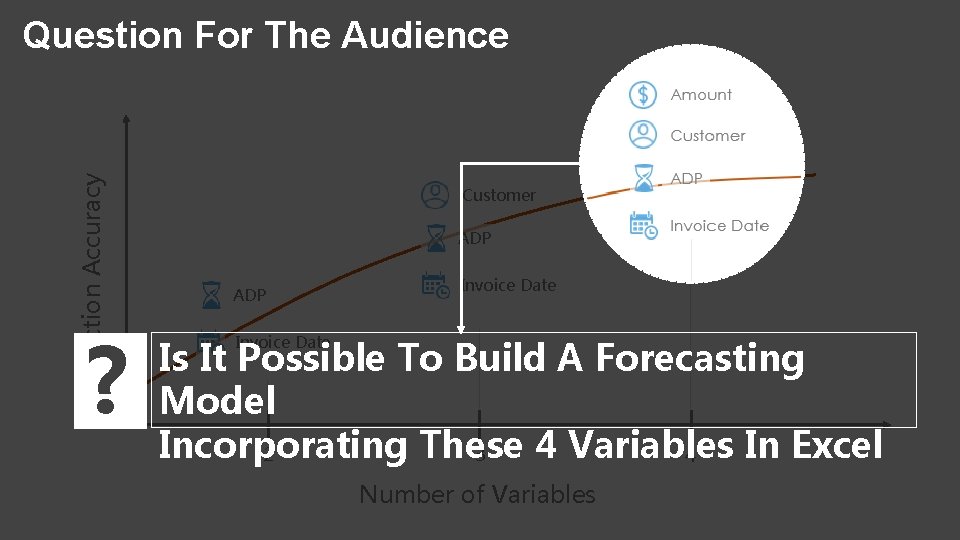
Question For The Audience Amount Prediction Accuracy Customer ? Customer ADP ADP Invoice Date Is It Possible To Build A Forecasting Model Incorporating These 4 Variables In Excel 2 3 4 Number of Variables
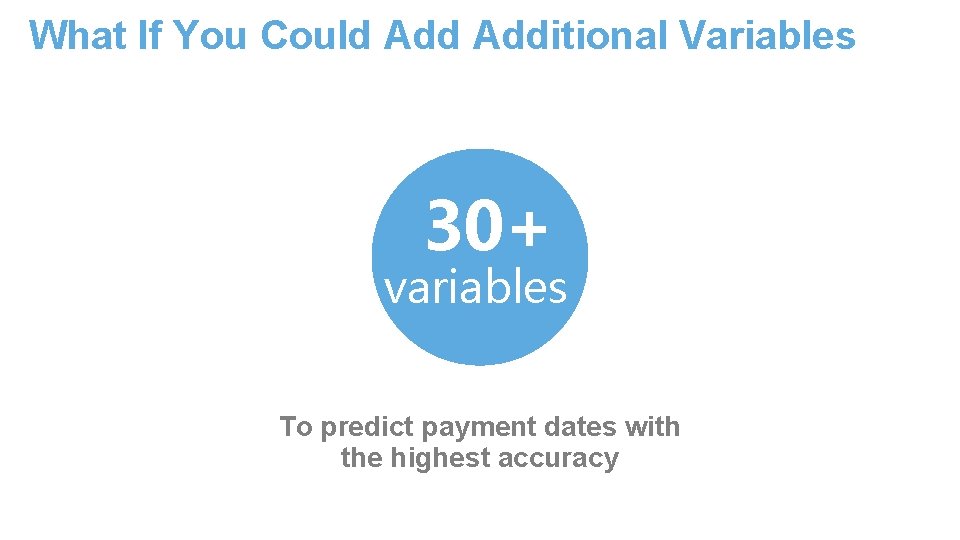
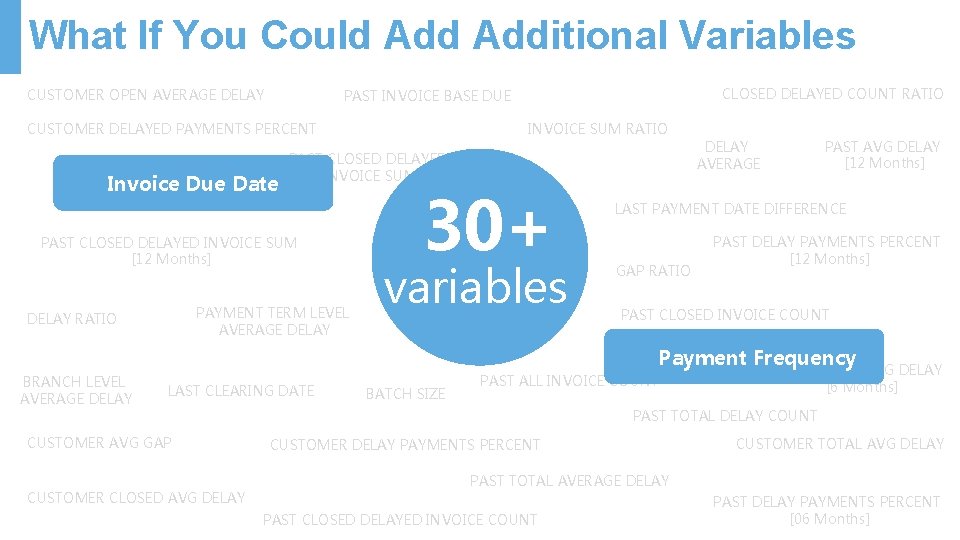
What If You Could Additional Variables 30+ variables To predict payment dates with the highest accuracy
What If You Could Additional Variables CUSTOMER OPEN AVERAGE DELAY CUSTOMER DELAYED PAYMENTS PERCENT Invoice Due Date INVOICE SUM RATIO PAST CLOSED DELAYED INVOICE SUM [12 Months] PAYMENT TERM LEVEL AVERAGE DELAY RATIO CLOSED DELAYED COUNT RATIO PAST INVOICE BASE DUE 30+ variables PAST AVG DELAY [12 Months] DELAY AVERAGE LAST PAYMENT DATE DIFFERENCE GAP RATIO PAST DELAY PAYMENTS PERCENT [12 Months] PAST CLOSED INVOICE COUNT Payment Frequency BRANCH LEVEL AVERAGE DELAY LAST CLEARING DATE CUSTOMER AVG GAP CUSTOMER CLOSED AVG DELAY BATCH SIZE PAST ALL INVOICE COUNT PAST TOTAL AVG DELAY [6 Months] PAST TOTAL DELAY COUNT CUSTOMER DELAY PAYMENTS PERCENT CUSTOMER TOTAL AVG DELAY PAST TOTAL AVERAGE DELAY PAST CLOSED DELAYED INVOICE COUNT PAST DELAY PAYMENTS PERCENT [06 Months]
Artificial Intelligence 101 25
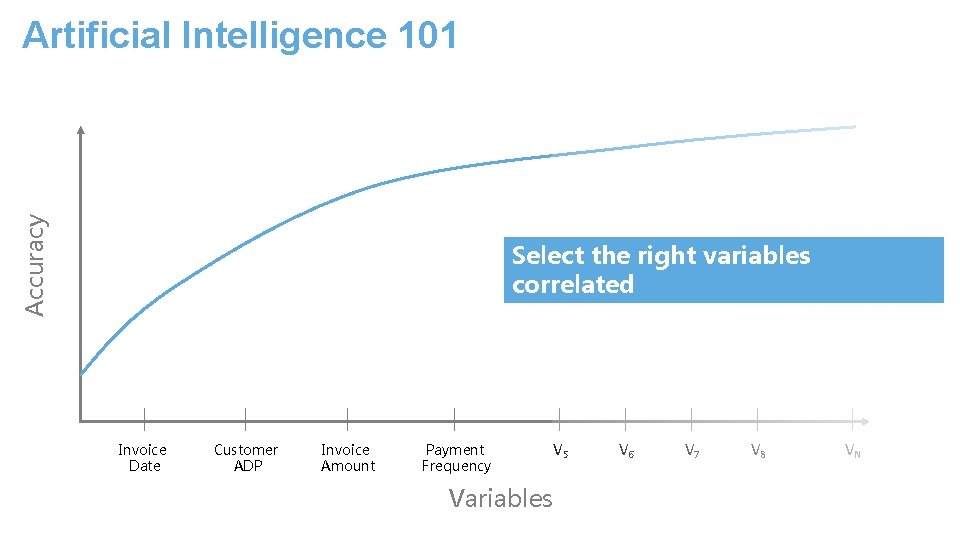
Accuracy Artificial Intelligence 101 Select the right variables correlated to the predicted variable Invoice Date Customer ADP Invoice Amount Payment Frequency V 5 Variables V 6 V 7 V 8 VN
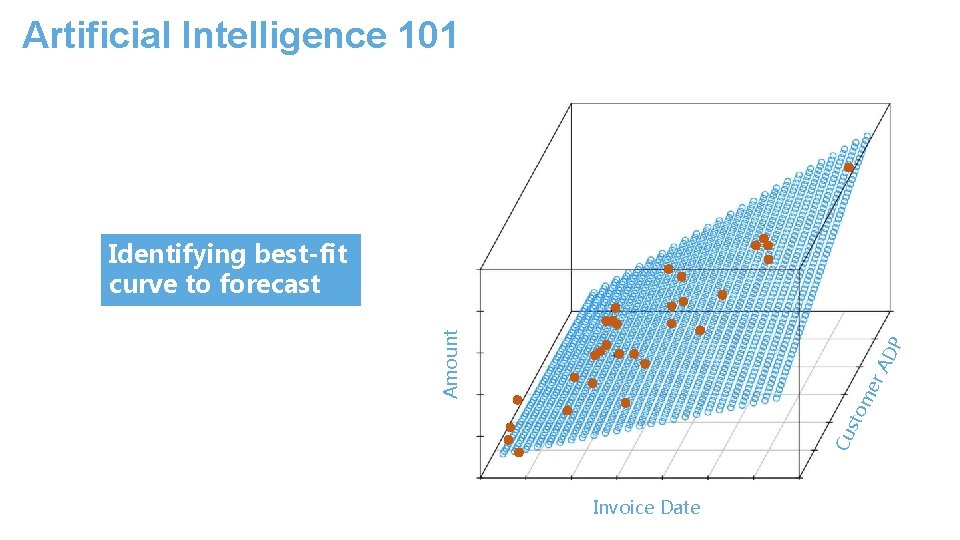
Artificial Intelligence 101 Cu sto me r. A DP Amount Identifying best-fit curve to forecast Invoice Date
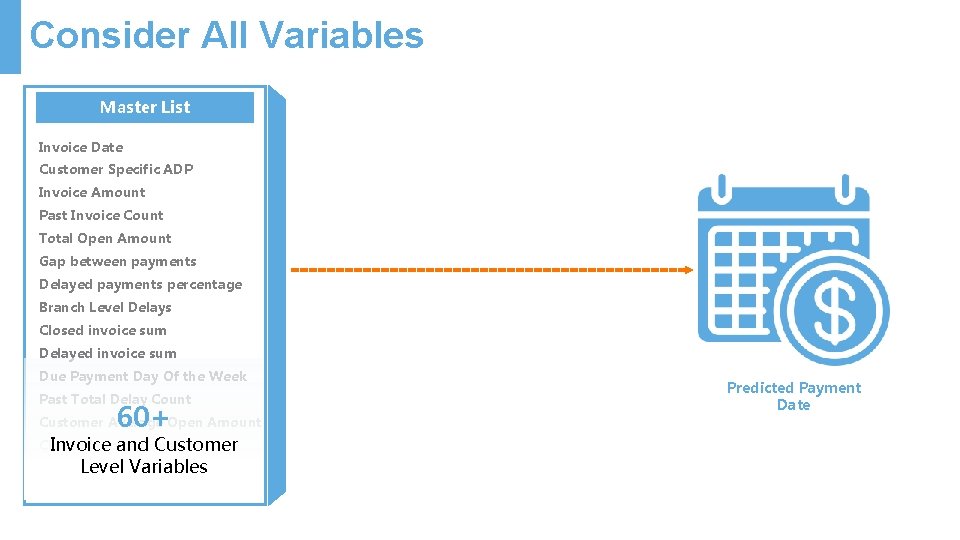
Consider All Variables Master List Invoice Date Customer Specific ADP Invoice Amount Past Invoice Count Total Open Amount Gap between payments Delayed payments percentage Branch Level Delays Closed invoice sum Delayed invoice sum Due Payment Day Of the Week Past Total Delay Count 60+ Customer Average Open Amount Closed Invoice Count Invoice and Customer Past All Invoice Count Level Variables Due Gap For Customer Predicted Payment Date
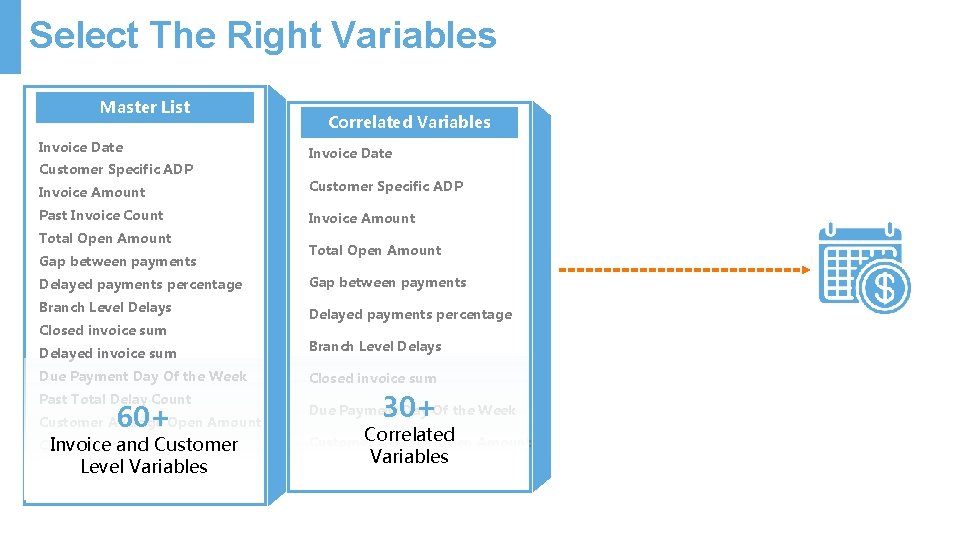
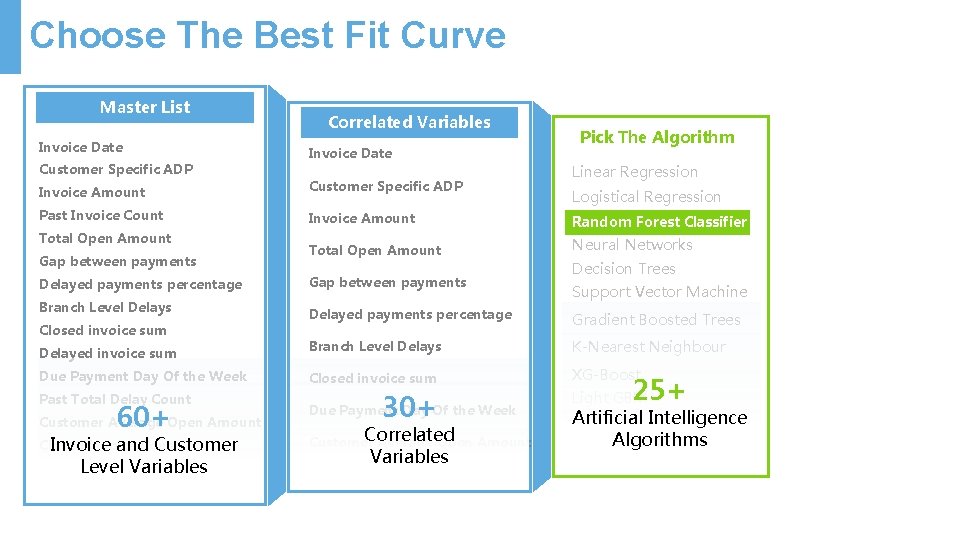
Select The Right Variables Master List Invoice Date Customer Specific ADP Invoice Amount Past Invoice Count Total Open Amount Gap between payments Delayed payments percentage Branch Level Delays Closed invoice sum Delayed invoice sum Due Payment Day Of the Week Past Total Delay Count 60+ Customer Average Open Amount Closed Invoice Count Invoice and Customer Past All Invoice Count Level Variables Due Gap For Customer Correlated Variables Invoice Date Customer Specific ADP Invoice Amount Total Open Amount Gap between payments Delayed payments percentage Branch Level Delays Closed invoice sum 30+ Due Payment Day Of the Week Correlated Customer Average Open Amount Variables Past All Invoice Count
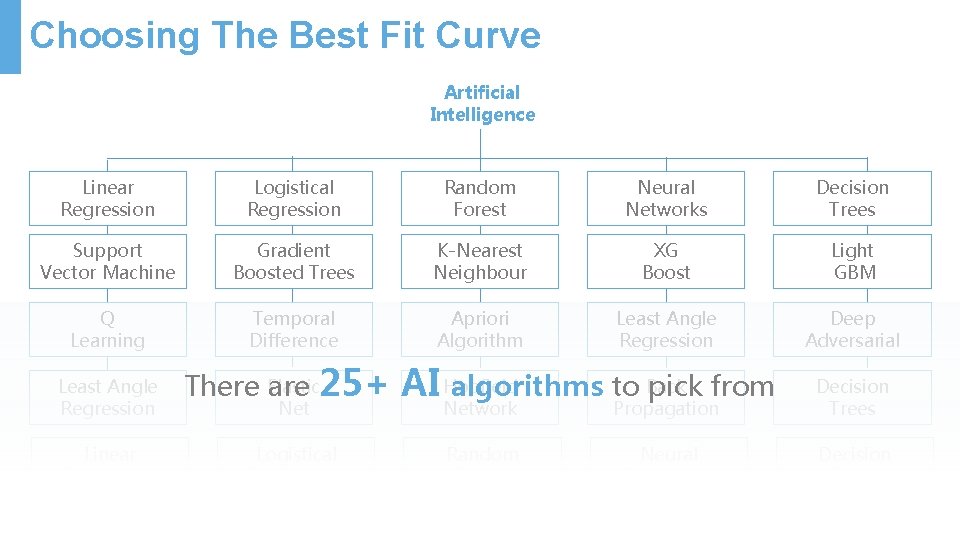
Choosing The Best Fit Curve Artificial Intelligence Linear Regression Logistical Regression Random Forest Neural Networks Decision Trees Support Vector Machine Gradient Boosted Trees K-Nearest Neighbour XG Boost Light GBM Q Learning Temporal Difference Apriori Algorithm Least Angle Regression Deep Adversarial Least Angle Regression Linear Regression There Elastic are 25+ Net Logistical Regression AI Hopfield algorithms to Back pick from Network Propagation Decision Trees Random Forest Neural Networks Decision Trees
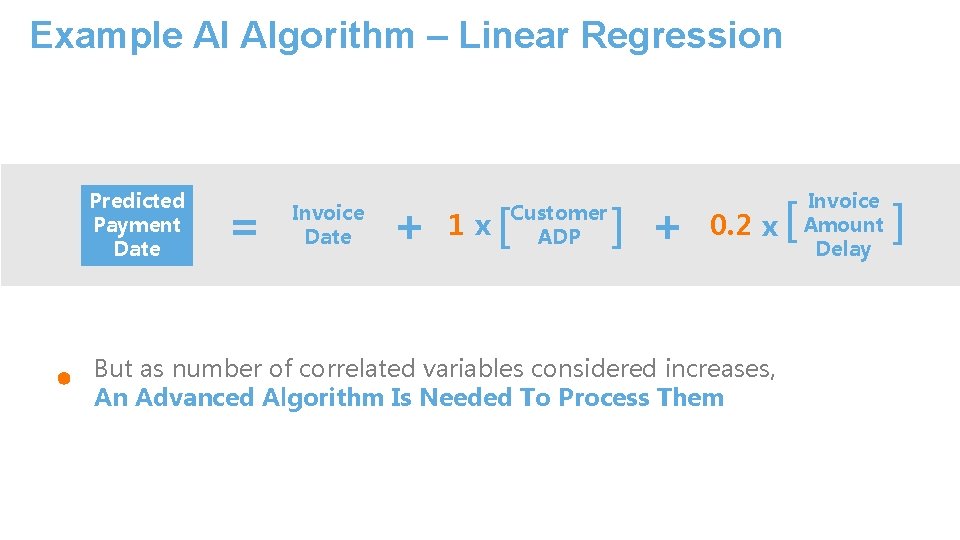
Example AI Algorithm – Linear Regression Predicted Payment Date = Invoice Date + 1 x[ Customer ADP ] + 0. 2 x [ But as number of correlated variables considered increases, An Advanced Algorithm Is Needed To Process Them Invoice Amount Delay ]
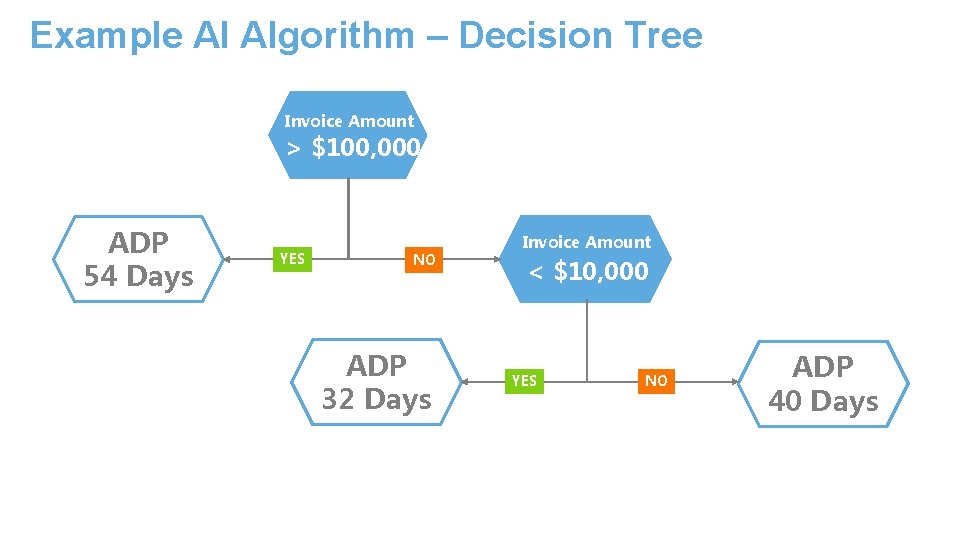
Example AI Algorithm – Decision Tree Invoice Amount > $100, 000 ADP 54 Days YES NO ADP 32 Days Invoice Amount < $10, 000 YES NO ADP 40 Days
Choose The Best Fit Curve Master List Invoice Date Customer Specific ADP Invoice Amount Past Invoice Count Total Open Amount Gap between payments Delayed payments percentage Branch Level Delays Closed invoice sum Delayed invoice sum Due Payment Day Of the Week Past Total Delay Count 60+ Customer Average Open Amount Closed Invoice Count Invoice and Customer Past All Invoice Count Level Variables Due Gap For Customer Correlated Variables Invoice Date Customer Specific ADP Pick The Algorithm Linear Regression Logistical Regression Invoice Amount Random Forest Classifier Total Open Amount Neural Networks Gap between payments Decision Trees Support Vector Machine Delayed payments percentage Gradient Boosted Trees Branch Level Delays K-Nearest Neighbour Closed invoice sum XG-Boost 30+ Due Payment Day Of the Week Correlated Customer Average Open Amount Variables Past All Invoice Count 25+ Light GBM Artificial Q-Learning. Intelligence Algorithms Temporal Difference
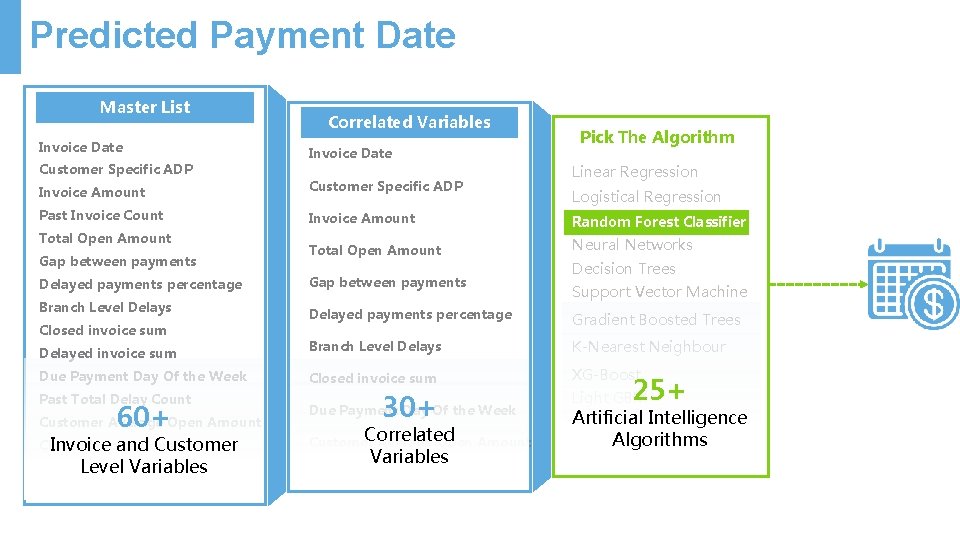
Predicted Payment Date Master List Invoice Date Customer Specific ADP Invoice Amount Past Invoice Count Total Open Amount Gap between payments Delayed payments percentage Branch Level Delays Closed invoice sum Delayed invoice sum Due Payment Day Of the Week Past Total Delay Count 60+ Customer Average Open Amount Closed Invoice Count Invoice and Customer Past All Invoice Count Level Variables Due Gap For Customer Correlated Variables Invoice Date Customer Specific ADP Pick The Algorithm Linear Regression Logistical Regression Invoice Amount Random Forest Classifier Total Open Amount Neural Networks Gap between payments Decision Trees Support Vector Machine Delayed payments percentage Gradient Boosted Trees Branch Level Delays K-Nearest Neighbour Closed invoice sum XG-Boost 30+ Due Payment Day Of the Week Correlated Customer Average Open Amount Variables Past All Invoice Count 25+ Light GBM Artificial Q-Learning. Intelligence Algorithms Temporal Difference
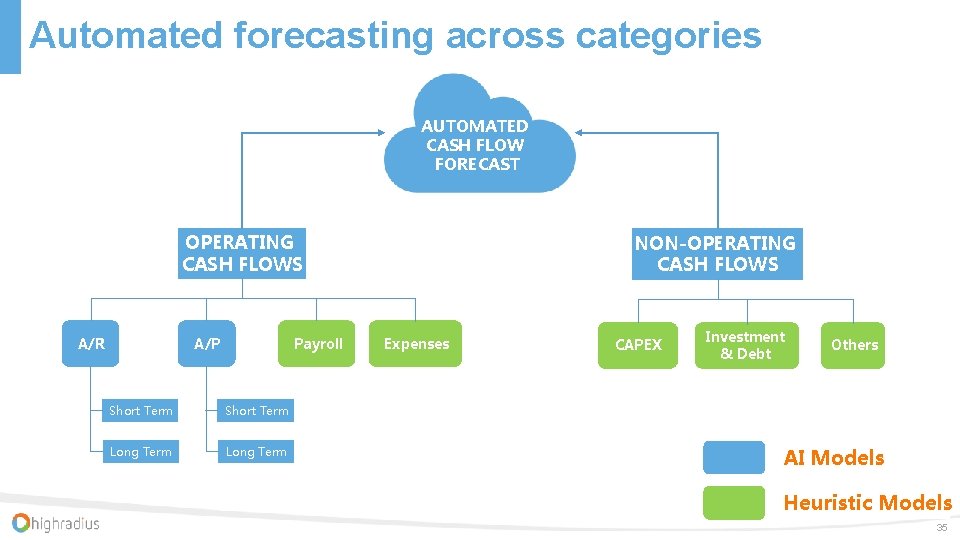
Automated forecasting across categories AUTOMATED CASH FLOW FORECAST OPERATING CASH FLOWS A/R A/P Payroll Short Term Long Term NON-OPERATING CASH FLOWS Expenses CAPEX Investment & Debt Others AI Models Heuristic Models 35
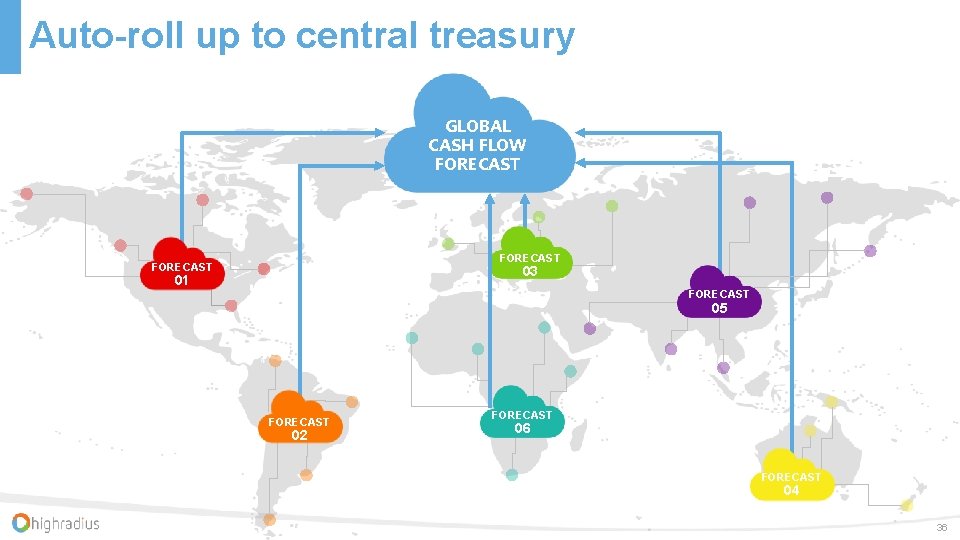
Auto-roll up to central treasury GLOBAL CASH FLOW FORECAST 03 01 FORECAST 05 FORECAST 02 FORECAST 06 FORECAST 04 36
Future State of a ‘Digital Treasurer’ 37
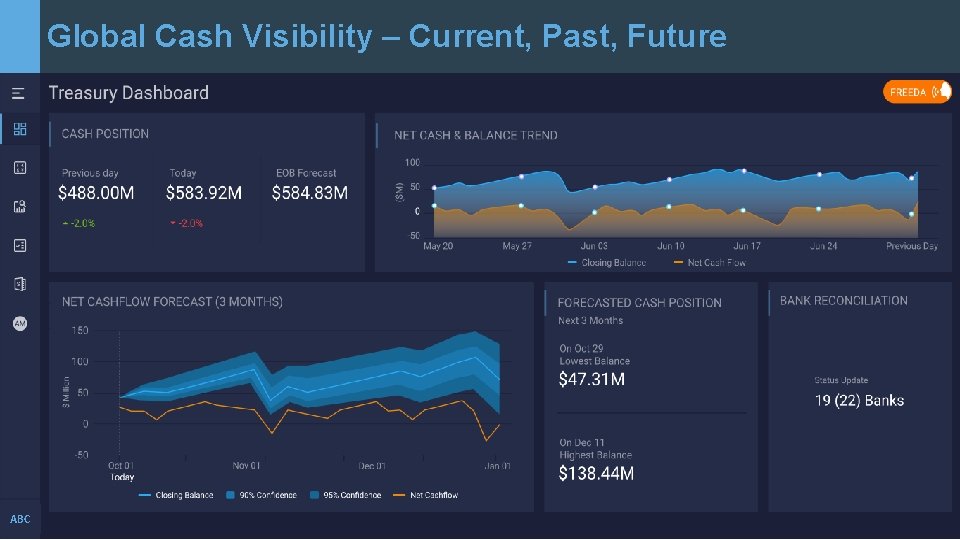
Global Cash Visibility – Current, Past, Future ABC
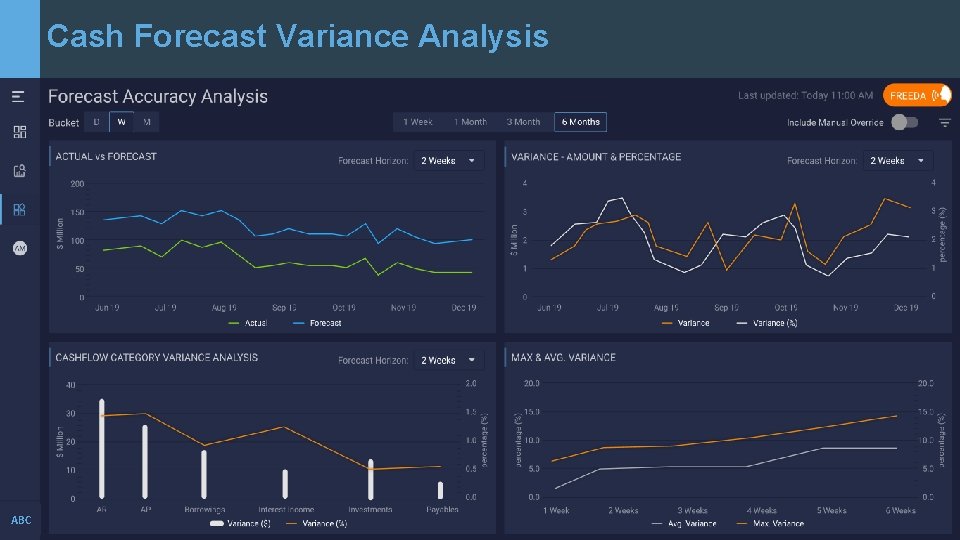
Cash Forecast Variance Analysis ABC
About High. Radius 40
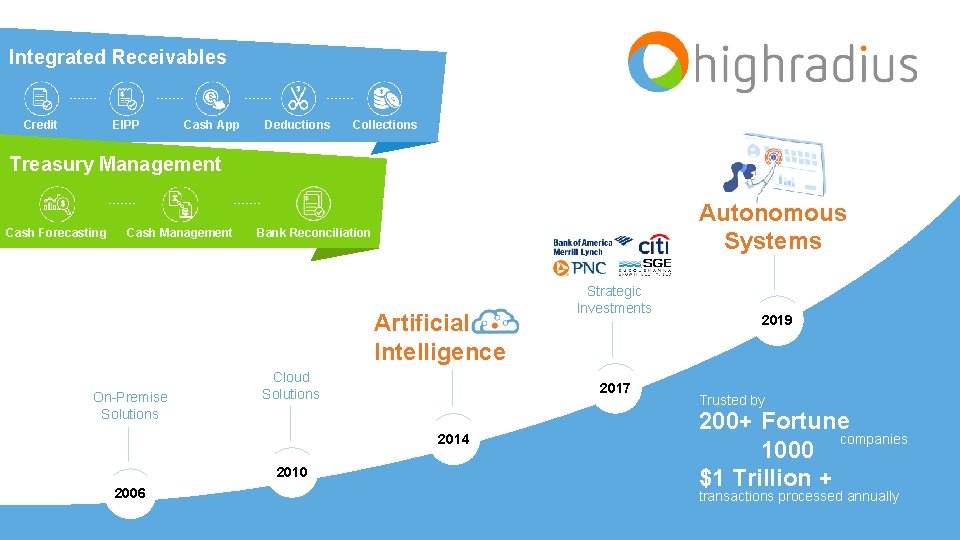
Integrated Receivables Credit EIPP Cash App Deductions Collections Treasury Management Cash Forecasting Cash Management Autonomous Systems Bank Reconciliation Artificial Intelligence On-Premise Solutions Cloud Solutions 2017 2014 2010 2006 Strategic Investments 2019 Trusted by 200+ Fortune companies 1000 $1 Trillion + transactions processed annually
Partial List of Customers 42
Partial List of Customers 950+ Finance Transformation Projects 6 continents | 92 countries 43
QUESTIONS 44
Interested in Learning More? Email: Phillip. Chambers@highradius. com Or Tracey. Knight@highradius. com 45