
Redclaw Crayfish Hatchery Development of mass production hatchery
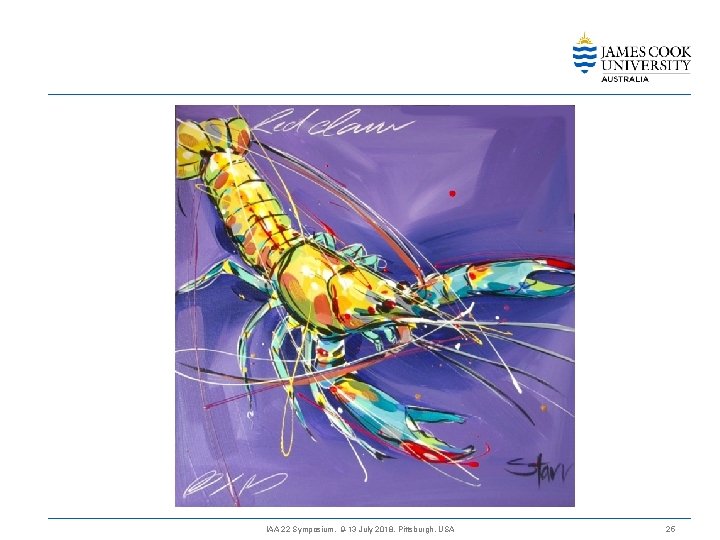
- Slides: 25
Redclaw Crayfish Hatchery Development of mass production hatchery technology for Cherax quadricarinatus Clive Jones, Colin Valverde and Damian Rigg IAA 22 Symposium, 9 -13 July 2018, Pittsburgh, USA 1
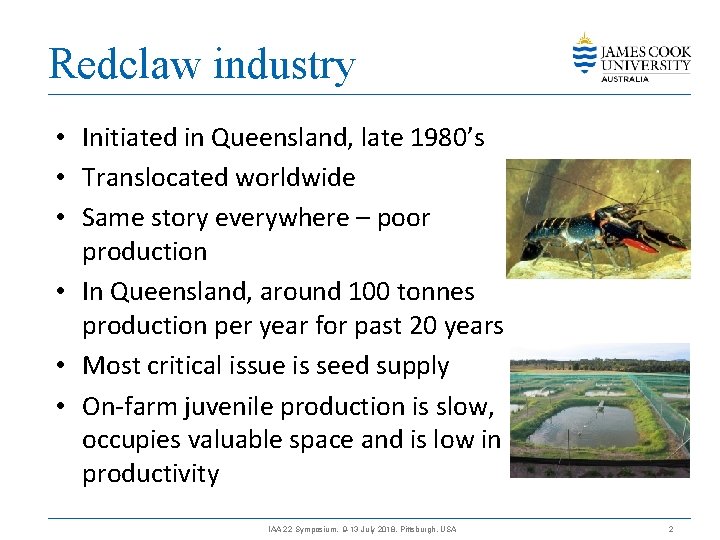
Redclaw industry • Initiated in Queensland, late 1980’s • Translocated worldwide • Same story everywhere – poor production • In Queensland, around 100 tonnes production per year for past 20 years • Most critical issue is seed supply • On-farm juvenile production is slow, occupies valuable space and is low in productivity IAA 22 Symposium, 9 -13 July 2018, Pittsburgh, USA 2
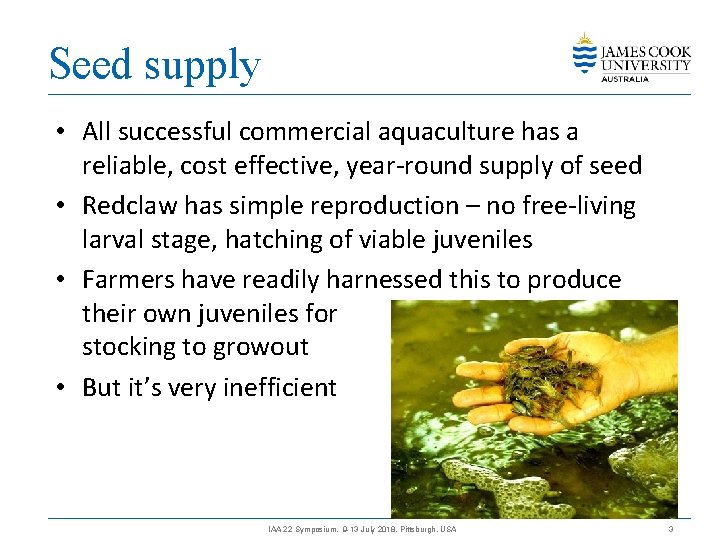
Seed supply • All successful commercial aquaculture has a reliable, cost effective, year-round supply of seed • Redclaw has simple reproduction – no free-living larval stage, hatching of viable juveniles • Farmers have readily harnessed this to produce their own juveniles for stocking to growout • But it’s very inefficient IAA 22 Symposium, 9 -13 July 2018, Pittsburgh, USA 3
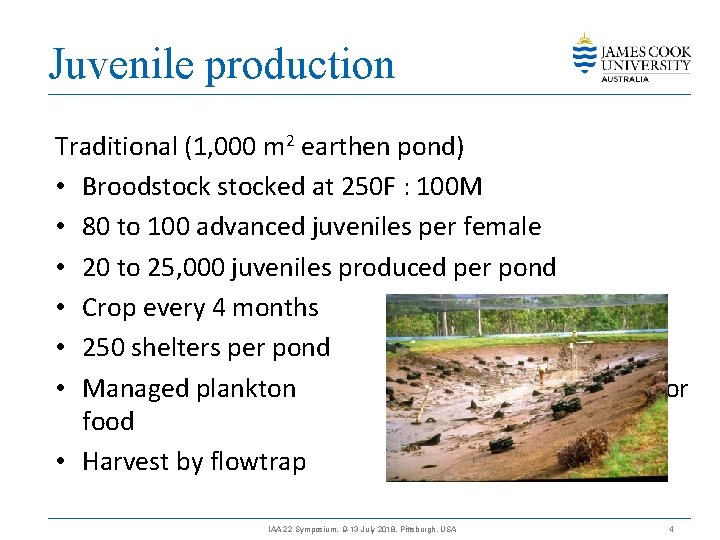
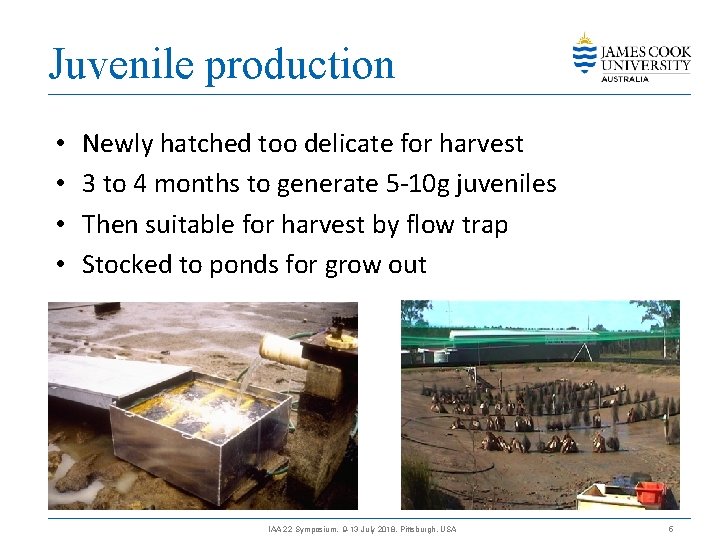
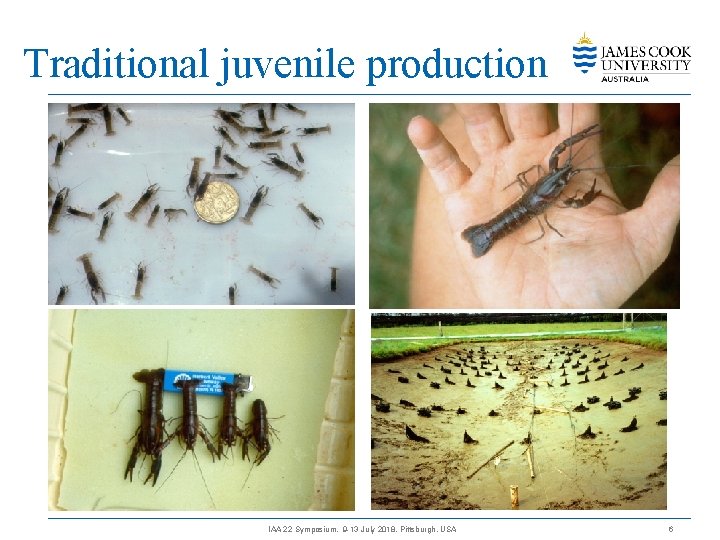
Juvenile production Traditional (1, 000 m 2 earthen pond) • Broodstocked at 250 F : 100 M • 80 to 100 advanced juveniles per female • 20 to 25, 000 juveniles produced per pond • Crop every 4 months • 250 shelters per pond • Managed plankton production for food • Harvest by flowtrap IAA 22 Symposium, 9 -13 July 2018, Pittsburgh, USA 4
Juvenile production • • Newly hatched too delicate for harvest 3 to 4 months to generate 5 -10 g juveniles Then suitable for harvest by flow trap Stocked to ponds for grow out IAA 22 Symposium, 9 -13 July 2018, Pittsburgh, USA 5
Traditional juvenile production IAA 22 Symposium, 9 -13 July 2018, Pittsburgh, USA 6
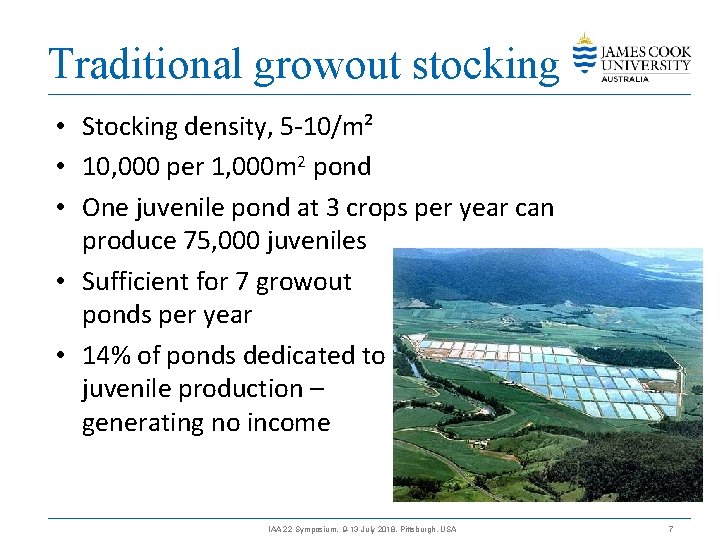
Traditional growout stocking • Stocking density, 5 -10/m² • 10, 000 per 1, 000 m 2 pond • One juvenile pond at 3 crops per year can produce 75, 000 juveniles • Sufficient for 7 growout ponds per year • 14% of ponds dedicated to juvenile production – generating no income IAA 22 Symposium, 9 -13 July 2018, Pittsburgh, USA 7
Alternative approach • • • Redclaw farmer Colin Valverde - Aquaverde Located in north-east Australia Ideal, tropical location for redclaw Constrained by supply of juveniles Is there a better way? IAA 22 Symposium, 9 -13 July 2018, Pittsburgh, USA 8
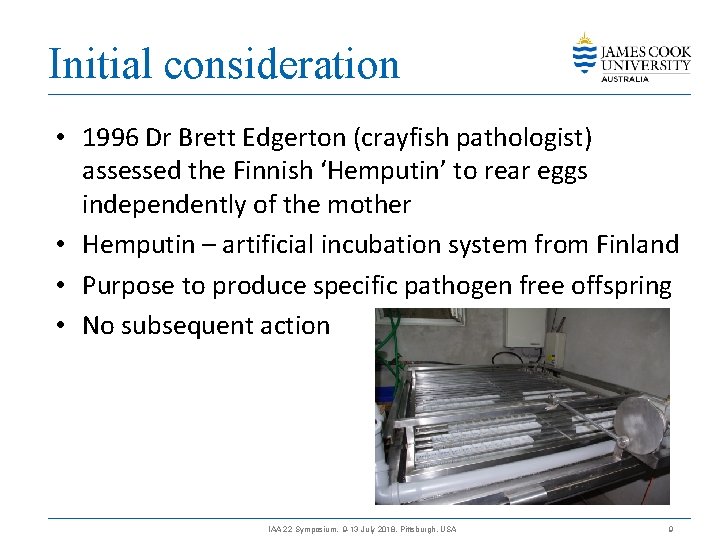
Initial consideration • 1996 Dr Brett Edgerton (crayfish pathologist) assessed the Finnish ‘Hemputin’ to rear eggs independently of the mother • Hemputin – artificial incubation system from Finland • Purpose to produce specific pathogen free offspring • No subsequent action IAA 22 Symposium, 9 -13 July 2018, Pittsburgh, USA 9
Selective breeding • In 2005, Colin Valverde imported a ‘Hemputin’ system from Finland to apply it to juvenile production • It became integral to a selective breeding program to improve stock quality and eliminate disease • From 2007 to 2010 the incubator was tested and modified IAA 22 Symposium, 9 -13 July 2018, Pittsburgh, USA 10
Artificial incubation • Long history in Europe for freshwater crayfish • To accelerate incubation for producing juveniles for stocking purposes (not aquaculture) • Multiple species and approaches • Widely published • ‘Hemputin’ first scaled up system IAA 22 Symposium, 9 -13 July 2018, Pittsburgh, USA 11
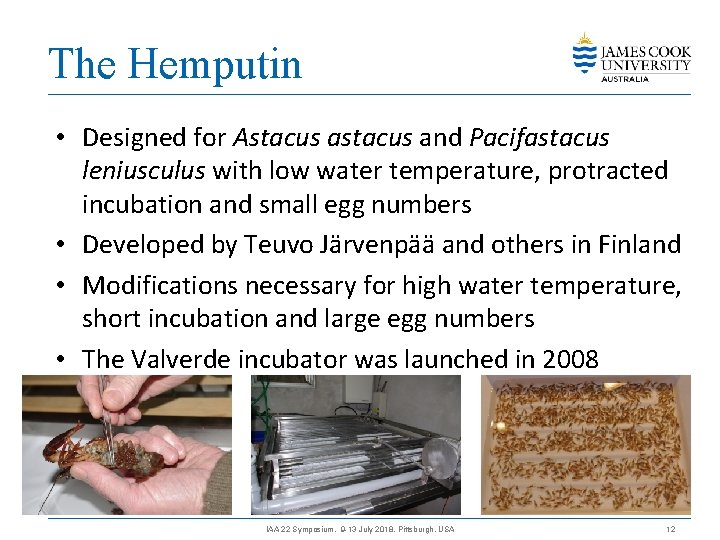
The Hemputin • Designed for Astacus and Pacifastacus leniusculus with low water temperature, protracted incubation and small egg numbers • Developed by Teuvo Järvenpää and others in Finland • Modifications necessary for high water temperature, short incubation and large egg numbers • The Valverde incubator was launched in 2008 IAA 22 Symposium, 9 -13 July 2018, Pittsburgh, USA 12
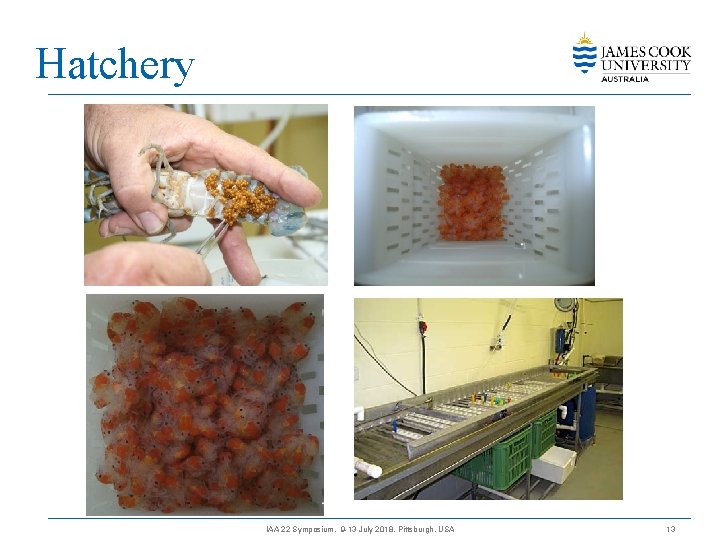
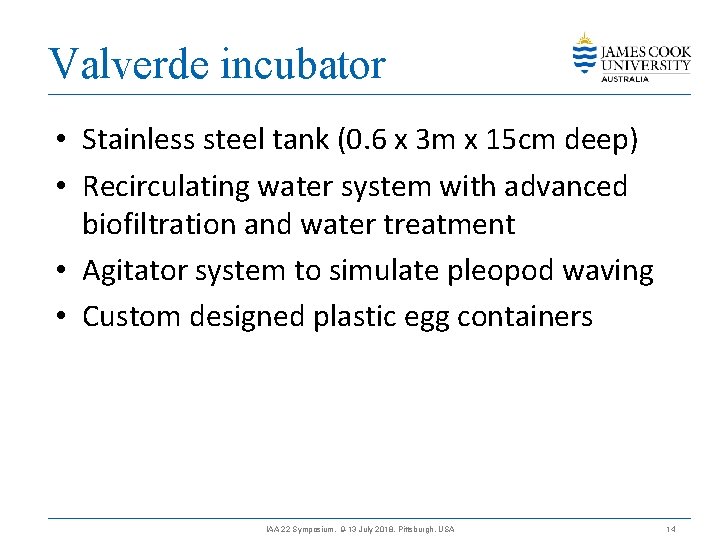
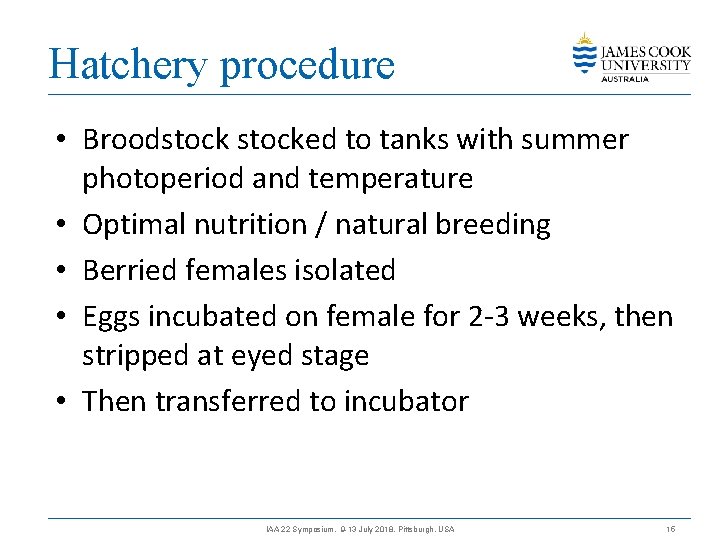
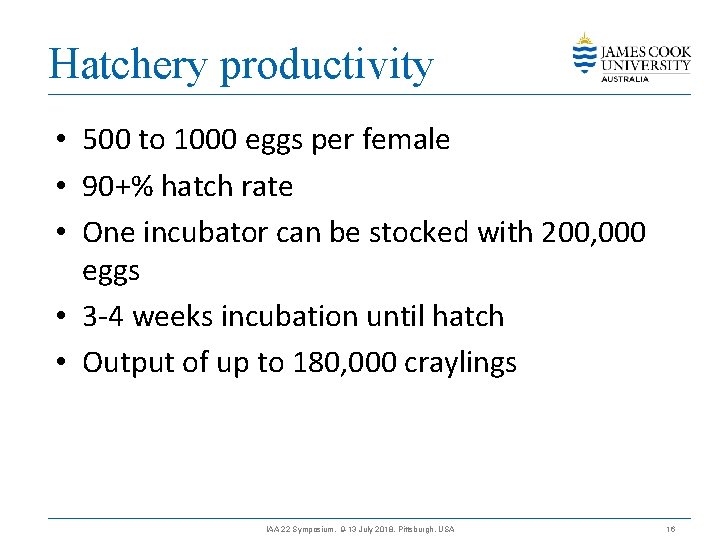
Hatchery IAA 22 Symposium, 9 -13 July 2018, Pittsburgh, USA 13
Valverde incubator • Stainless steel tank (0. 6 x 3 m x 15 cm deep) • Recirculating water system with advanced biofiltration and water treatment • Agitator system to simulate pleopod waving • Custom designed plastic egg containers IAA 22 Symposium, 9 -13 July 2018, Pittsburgh, USA 14
Hatchery procedure • Broodstocked to tanks with summer photoperiod and temperature • Optimal nutrition / natural breeding • Berried females isolated • Eggs incubated on female for 2 -3 weeks, then stripped at eyed stage • Then transferred to incubator IAA 22 Symposium, 9 -13 July 2018, Pittsburgh, USA 15
Hatchery productivity • 500 to 1000 eggs per female • 90+% hatch rate • One incubator can be stocked with 200, 000 eggs • 3 -4 weeks incubation until hatch • Output of up to 180, 000 craylings IAA 22 Symposium, 9 -13 July 2018, Pittsburgh, USA 16
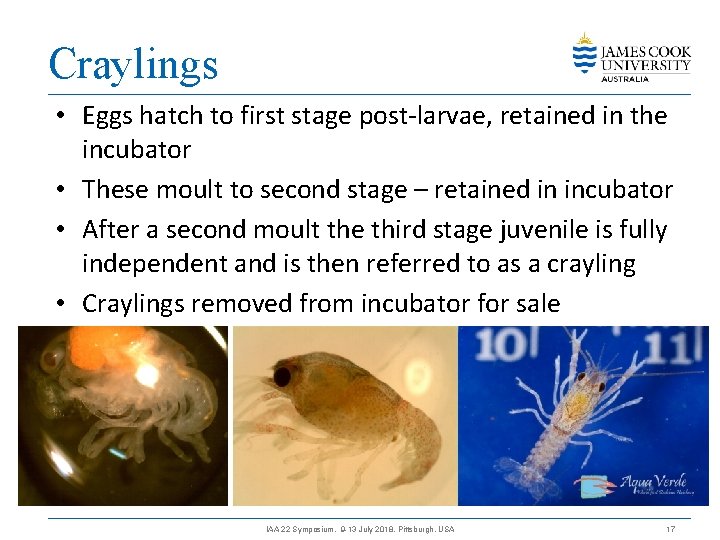
Craylings • Eggs hatch to first stage post-larvae, retained in the incubator • These moult to second stage – retained in incubator • After a second moult the third stage juvenile is fully independent and is then referred to as a crayling • Craylings removed from incubator for sale IAA 22 Symposium, 9 -13 July 2018, Pittsburgh, USA 17
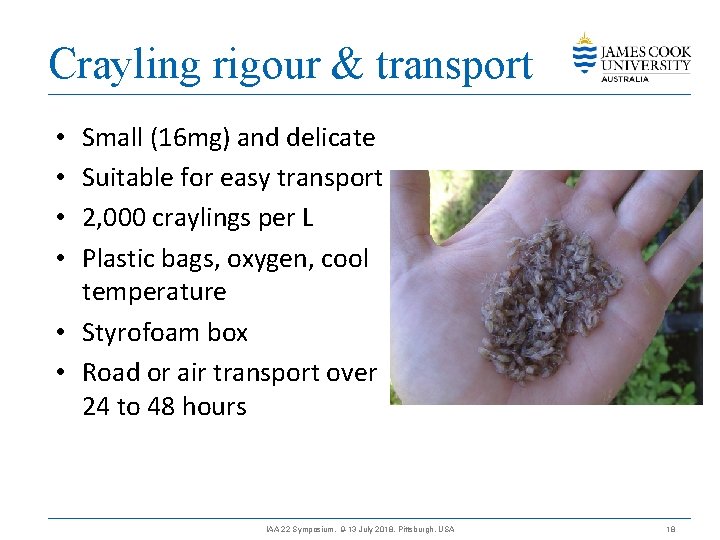
Crayling rigour & transport Small (16 mg) and delicate Suitable for easy transport 2, 000 craylings per L Plastic bags, oxygen, cool temperature • Styrofoam box • Road or air transport over 24 to 48 hours • • IAA 22 Symposium, 9 -13 July 2018, Pittsburgh, USA 18
Crayling performance • Variable survival and production in earthen pond • Is a nursery phase required? • Ph. D research – Damian Rigg JCU IAA 22 Symposium, 9 -13 July 2018, Pittsburgh, USA 19
Further R&D - hatchery • Survival through incubation • Periodic bacterial induced mass mortality – Aeromonas hyrdophila • Development of Bacteriophage • System hygiene • Key - consistency IAA 22 Symposium, 9 -13 July 2018, Pittsburgh, USA 20
Further R&D - craylings • • Survival over first 4 weeks Nursery phase Diet Temperature Density Shelter Damian Rigg Ph. D research IAA 22 Symposium, 9 -13 July 2018, Pittsburgh, USA 21
Commercial hatchery status • Aquaverde Hatchery (http: //www. aquaverde. com. au) • 1 to 2 million craylings per year from 2 incubators • Capacity for 5 -10 million if bacteria-induced crashes could be eliminated • Year-round production through managed breeding IAA 22 Symposium, 9 -13 July 2018, Pittsburgh, USA 22
Status • Queensland redclaw industry ready to embrace hatchery generated craylings • Demand for 50 million per year • Foundation for significant industry expansion IAA 22 Symposium, 9 -13 July 2018, Pittsburgh, USA 23
Thankyou IAA 22 Symposium, 9 -13 July 2018, Pittsburgh, USA 24
IAA 22 Symposium, 9 -13 July 2018, Pittsburgh, USA 25