
Red flags for serious back pain u Fever


Red flags for serious back pain u Fever, weight loss u Pain with recumbency, nocturnal pain u Morning stiffness u Persistent pain lasting > 6 weeks u Age over 50 with new onset pain u Abnormal neurology u Point tenderness
Further evaluation u Goal is to discriminate between “ benign” cases and disorders that require further diagnostic studies u Radiological imaging: Xray/ CT Scan/ MRI u Useful lab tests: – FBC, ESR – Calcium, ALP – protein electrophoresis
What should I be worried about? – Herniated disc – Spinal stenosis – Cauda equina syndrome – Inflammatory spondylarthropathy – Spinal infection – Vertebral fracture – Cancer – Referred visceral pain
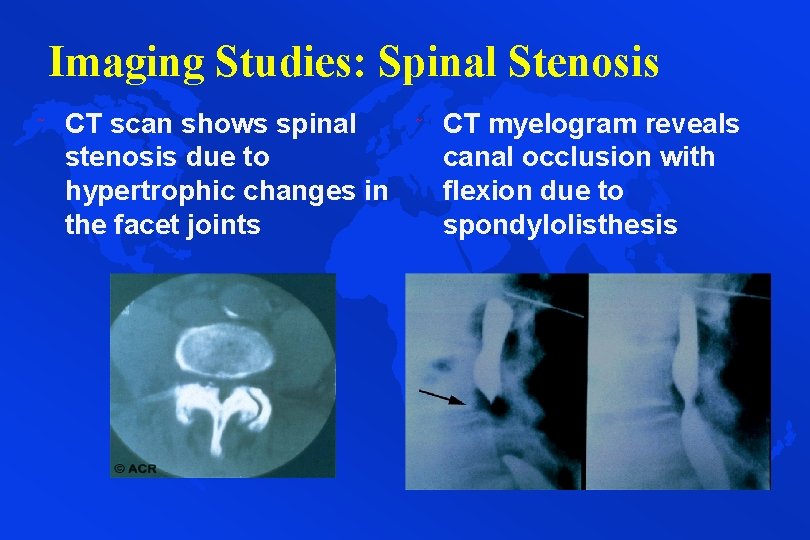
Imaging Studies: Spinal Stenosis ˜ CT scan shows spinal stenosis due to hypertrophic changes in the facet joints ˜ CT myelogram reveals canal occlusion with flexion due to spondylolisthesis
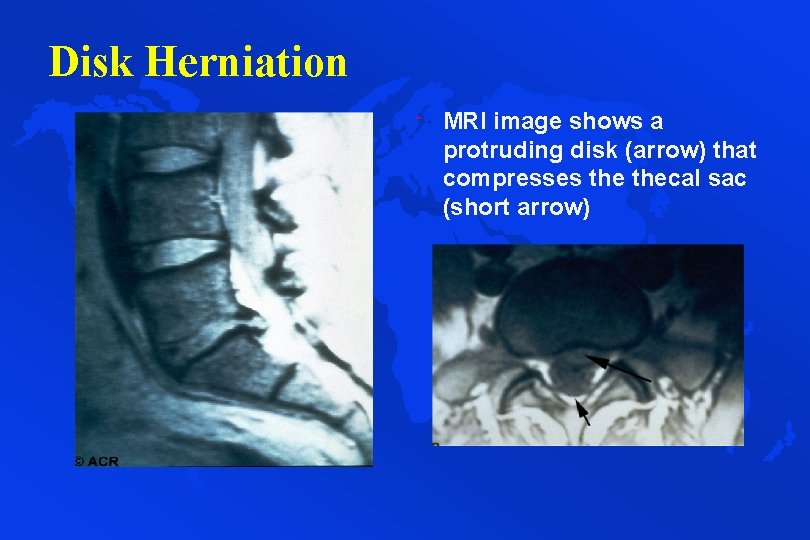
Disk Herniation ˜ MRI image shows a protruding disk (arrow) that compresses thecal sac (short arrow)
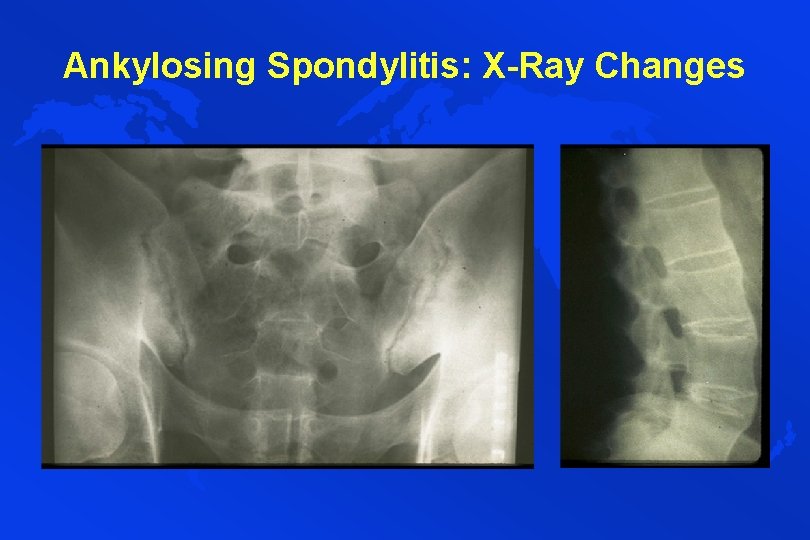
Ankylosing Spondylitis: X-Ray Changes
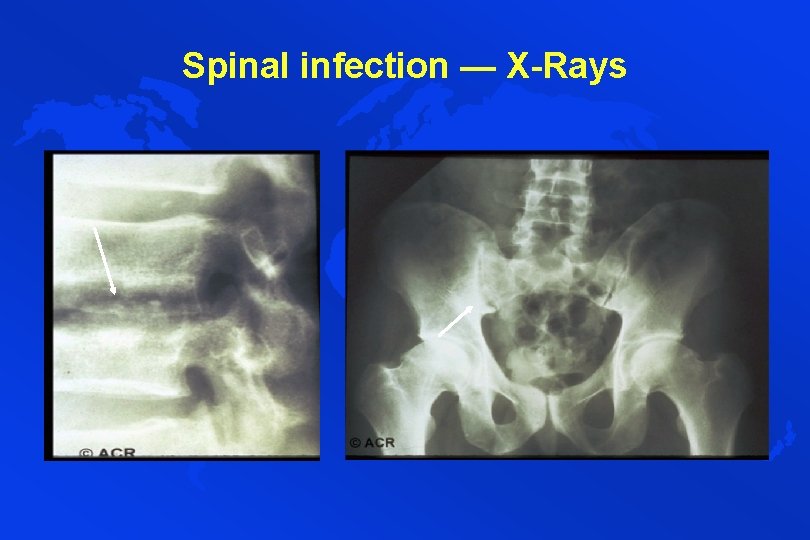
Spinal infection — X-Rays
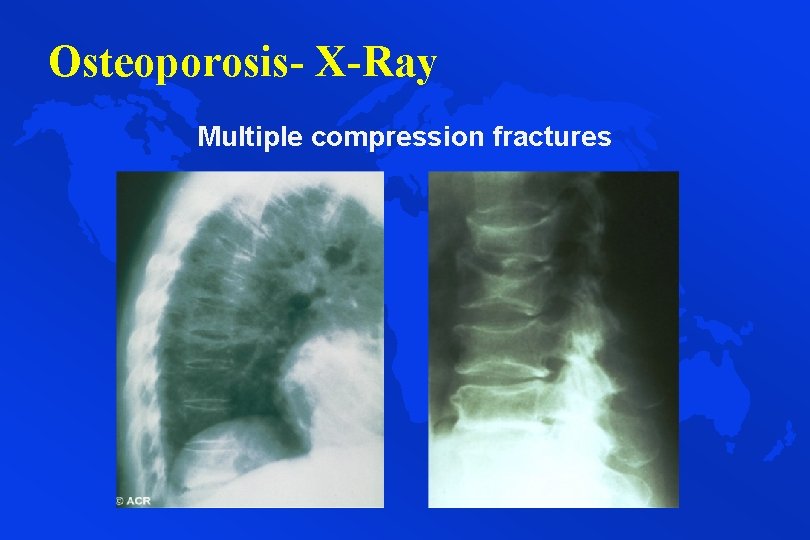
Osteoporosis- X-Ray Multiple compression fractures
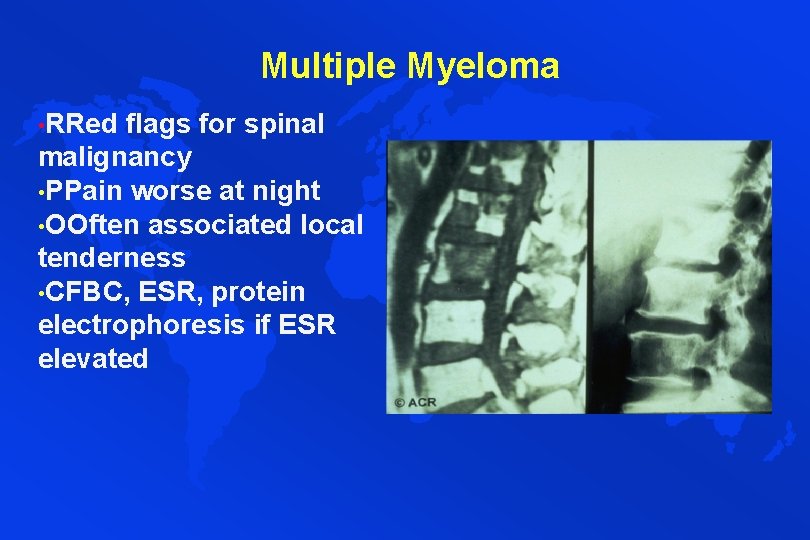
Multiple Myeloma • RRed flags for spinal malignancy • PPain worse at night • OOften associated local tenderness • CFBC, ESR, protein electrophoresis if ESR elevated
When is surgical referral indicated? u Sciatica and probable herniated discs – Cauda equina syndrome – Progressive or severe neurological deficit – Persistent neuromotor deficit after 4 -6 weeks conservative treatment – Persistent sciatica with consistent neurologic and clinical findings
When is surgical referral indicated? u Spinal Stenosis – Progressive or severe neurological deficit – Persistent back and leg pain improving with flexion and associated with spinal stenosis on imaging u Spondylolisthesis – Progressive or severe neurological deficit – Severe back pain/ sciatica with functional impairment that persists > 1 year
Key Points about low back pain – 90% are due to mechanical causes and will resolve spontaneously within 6 weeks to 6 mths – Pursue diagnostic workup if any red flags found during initial evaluation – If ESR elevated, evaluate for malignancy or infection – In older patients initial Xray useful to diagnose compression fracture or tumuor
Key Points about low back pain – Bed rest is not recommended for low back pain or sciatica, with a rapid return to normal activities usually the best course – Back exercises are not useful for the acute phase but help to prevent recurrences and treat chronic pain – Surgery is appropriate for a small portion of patients with low back pain
Further reading – Deyo RA, Weinstein JN. Low back pain. NEJM 2001; 344: 363 -370 – Malmivaara A, Hakkinen U, et al. The treatment of acute low back pain. NEJM 1995; 332: 351 -355 – Borenstein DG. Low back pain. In: Klippel J , Dieppe P, editors. Rheumatology. London : Mosby; 1994. p. 5. 4. 1 -5. 4. 26
- Slides: 15