
Recycling Works in Massachusetts Best Management Practices for
Recycling. Works in Massachusetts Best Management Practices for Donating Food December 2015
Food Donations Commercial Organics Waste Ban effective October 1, 2014 • Noticeable increase in Recycling. Works hotline inquiries regarding food donations • No Statewide guidance on donations
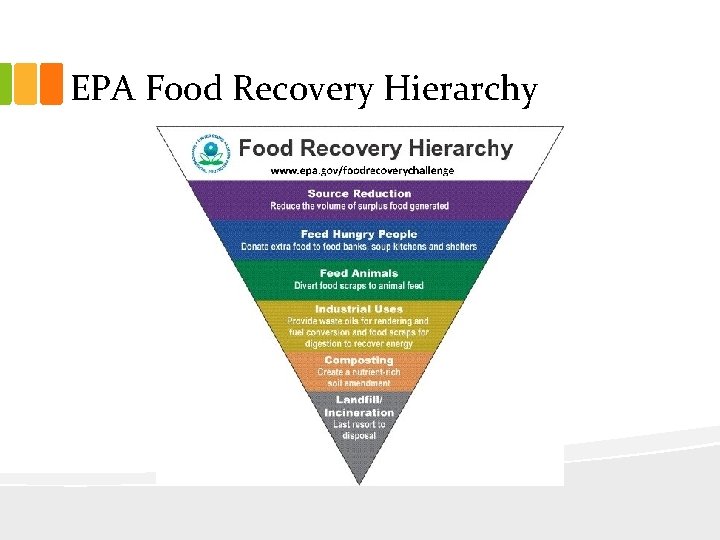
EPA Food Recovery Hierarchy
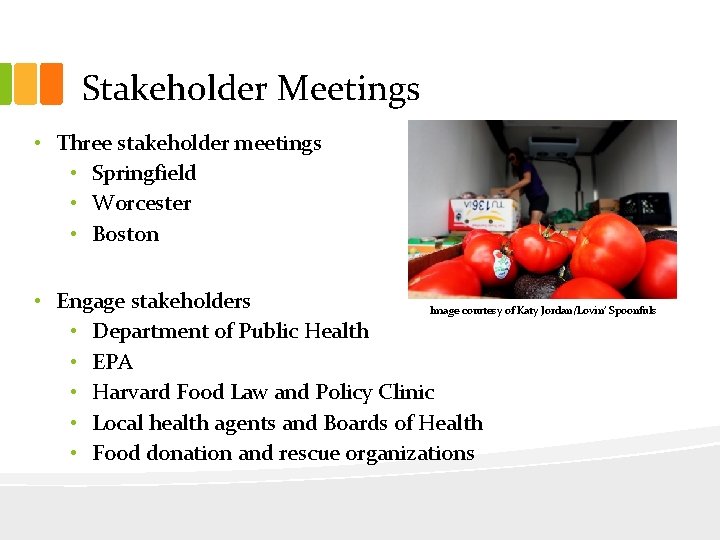
Stakeholder Meetings • Three stakeholder meetings • Springfield • Worcester • Boston • Engage stakeholders Image courtesy of Katy Jordan/Lovin’ Spoonfuls • Department of Public Health • EPA • Harvard Food Law and Policy Clinic • Local health agents and Boards of Health • Food donation and rescue organizations
• Key stakeholder group • Developed three legal fact sheets – Liability Protection – Date Labeling – Tax Incentives
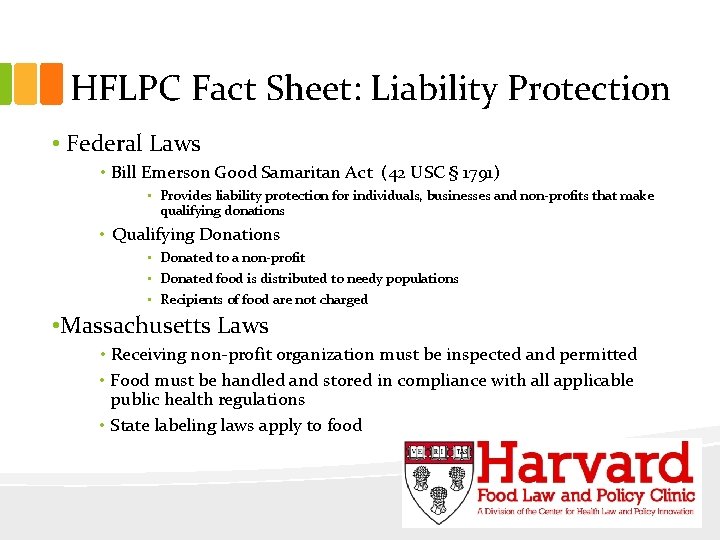
HFLPC Fact Sheet: Liability Protection • Federal Laws • Bill Emerson Good Samaritan Act (42 USC § 1791) • Provides liability protection for individuals, businesses and non-profits that make qualifying donations • Qualifying Donations • Donated to a non-profit • Donated food is distributed to needy populations • Recipients of food are not charged • Massachusetts Laws • Receiving non-profit organization must be inspected and permitted • Food must be handled and stored in compliance with all applicable public health regulations • State labeling laws apply to food
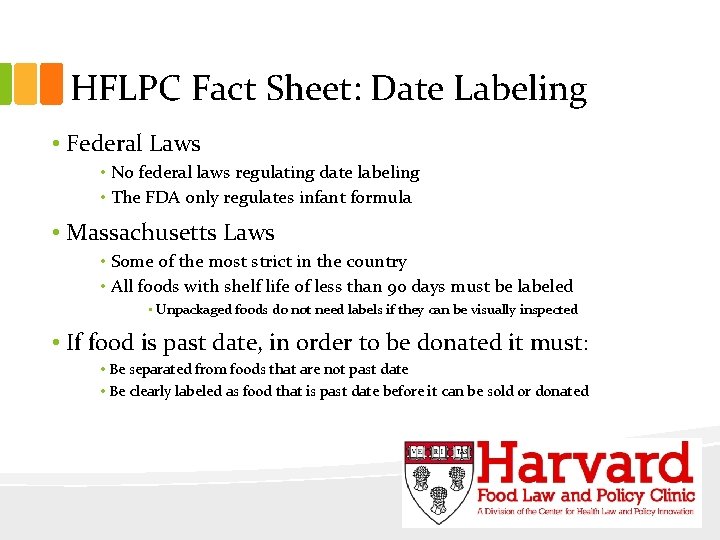
HFLPC Fact Sheet: Date Labeling • Federal Laws • No federal laws regulating date labeling • The FDA only regulates infant formula • Massachusetts Laws • Some of the most strict in the country • All foods with shelf life of less than 90 days must be labeled • Unpackaged foods do not need labels if they can be visually inspected • If food is past date, in order to be donated it must: • Be separated from foods that are not past date • Be clearly labeled as food that is past date before it can be sold or donated
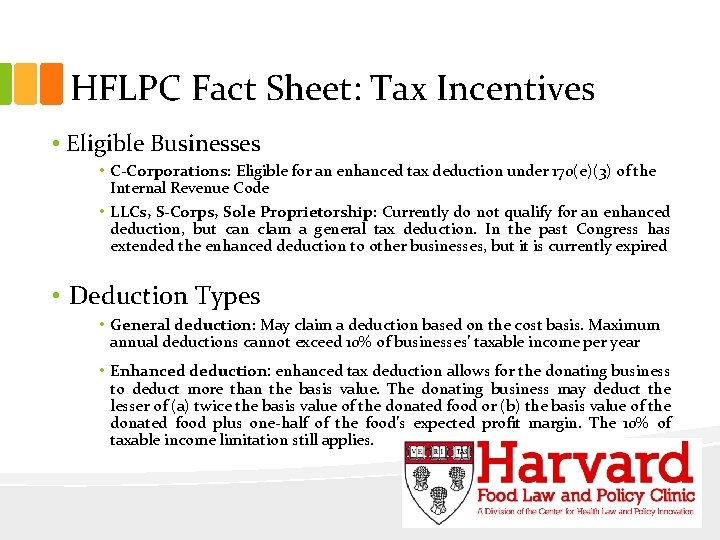
HFLPC Fact Sheet: Tax Incentives • Eligible Businesses • C-Corporations: Eligible for an enhanced tax deduction under 170(e)(3) of the Internal Revenue Code • LLCs, S-Corps, Sole Proprietorship: Currently do not qualify for an enhanced deduction, but can clam a general tax deduction. In the past Congress has extended the enhanced deduction to other businesses, but it is currently expired • Deduction Types • General deduction: May claim a deduction based on the cost basis. Maximum annual deductions cannot exceed 10% of businesses’ taxable income per year • Enhanced deduction: enhanced tax deduction allows for the donating business to deduct more than the basis value. The donating business may deduct the lesser of (a) twice the basis value of the donated food or (b) the basis value of the donated food plus one-half of the food’s expected profit margin. The 10% of taxable income limitation still applies.
Best Management Practice Guidelines • Trends • Consensus • Guidance for business • Resource for Health Agents
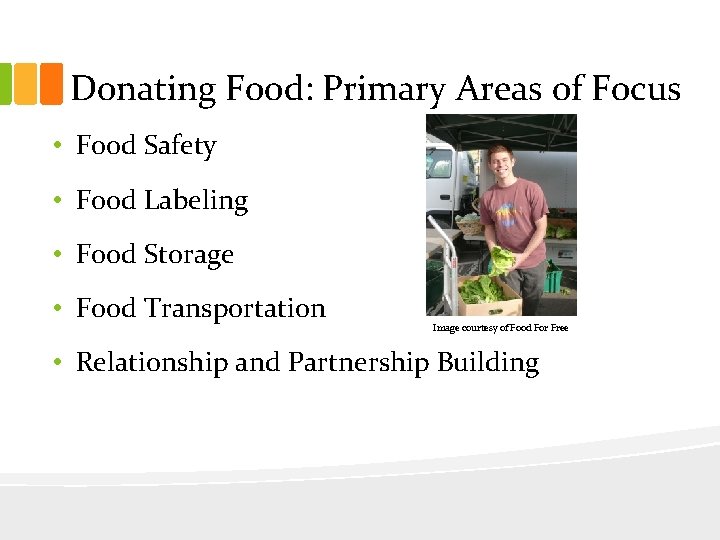
Donating Food: Primary Areas of Focus • Food Safety • Food Labeling • Food Storage • Food Transportation Image courtesy of Food For Free • Relationship and Partnership Building
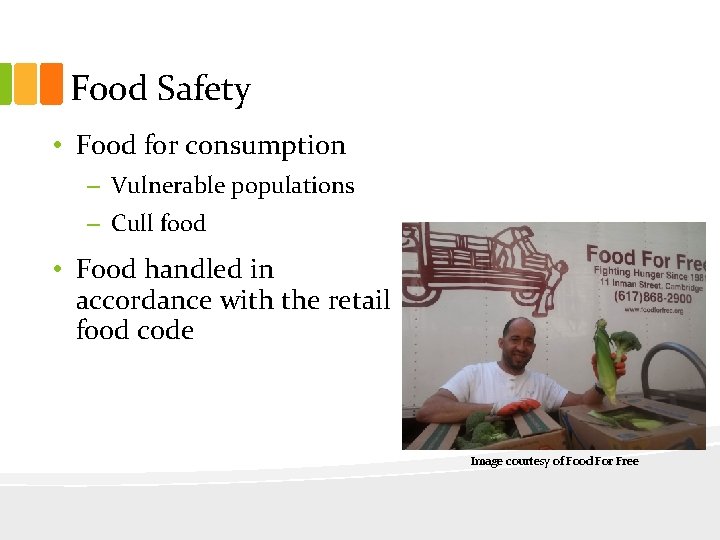
Food Safety • Food for consumption – Vulnerable populations – Cull food • Food handled in accordance with the retail food code Image courtesy of Food For Free
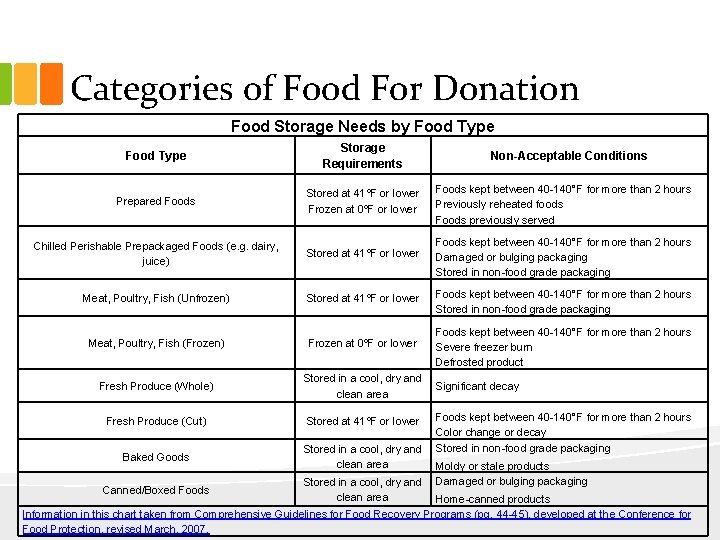
Categories of Food For Donation Food Storage Needs by Food Type Storage Requirements Prepared Foods Stored at 41ºF or lower Frozen at 0ºF or lower Foods kept between 40 -140°F for more than 2 hours Previously reheated foods Foods previously served Chilled Perishable Prepackaged Foods (e. g. dairy, juice) Stored at 41ºF or lower Foods kept between 40 -140°F for more than 2 hours Damaged or bulging packaging Stored in non-food grade packaging Meat, Poultry, Fish (Unfrozen) Stored at 41ºF or lower Foods kept between 40 -140°F for more than 2 hours Stored in non-food grade packaging Meat, Poultry, Fish (Frozen) Frozen at 0ºF or lower Foods kept between 40 -140°F for more than 2 hours Severe freezer burn Defrosted product Fresh Produce (Whole) Stored in a cool, dry and clean area Fresh Produce (Cut) Stored at 41ºF or lower Baked Goods Stored in a cool, dry and clean area Canned/Boxed Foods Stored in a cool, dry and clean area Non-Acceptable Conditions Significant decay Foods kept between 40 -140°F for more than 2 hours Color change or decay Stored in non-food grade packaging Moldy or stale products Damaged or bulging packaging Home-canned products Information in this chart taken from Comprehensive Guidelines for Food Recovery Programs (pg. 44 -45), developed at the Conference for Food Protection, revised March, 2007.
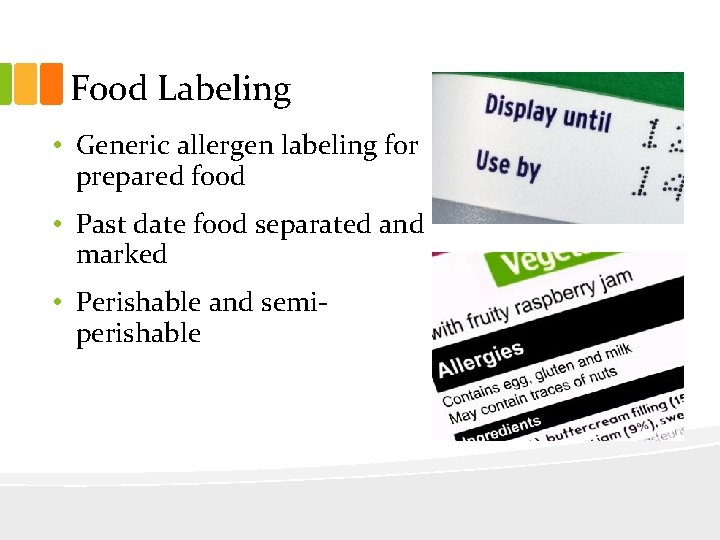
Food Labeling • Generic allergen labeling for prepared food • Past date food separated and marked • Perishable and semiperishable
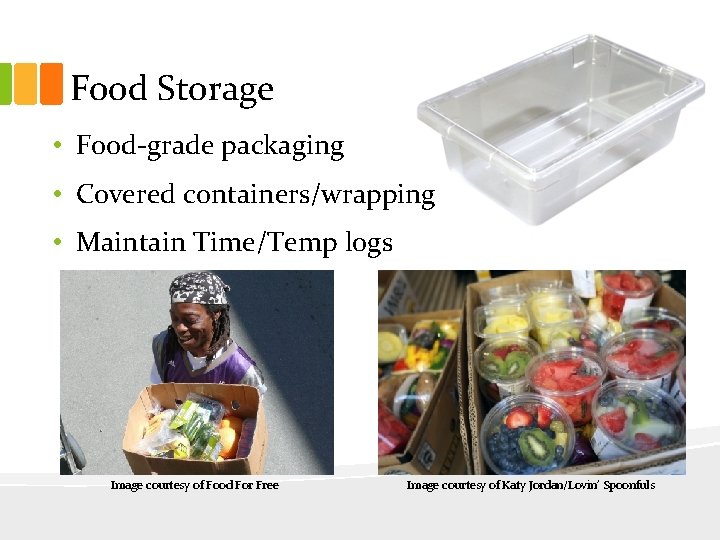
Food Storage • Food-grade packaging • Covered containers/wrapping • Maintain Time/Temp logs Image courtesy of Food For Free Image courtesy of Katy Jordan/Lovin’ Spoonfuls
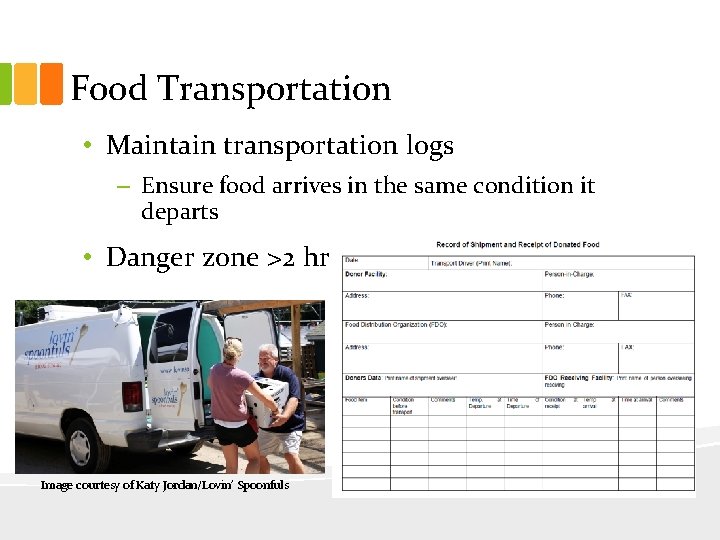
Food Transportation • Maintain transportation logs – Ensure food arrives in the same condition it departs • Danger zone >2 hr Image courtesy of Katy Jordan/Lovin’ Spoonfuls
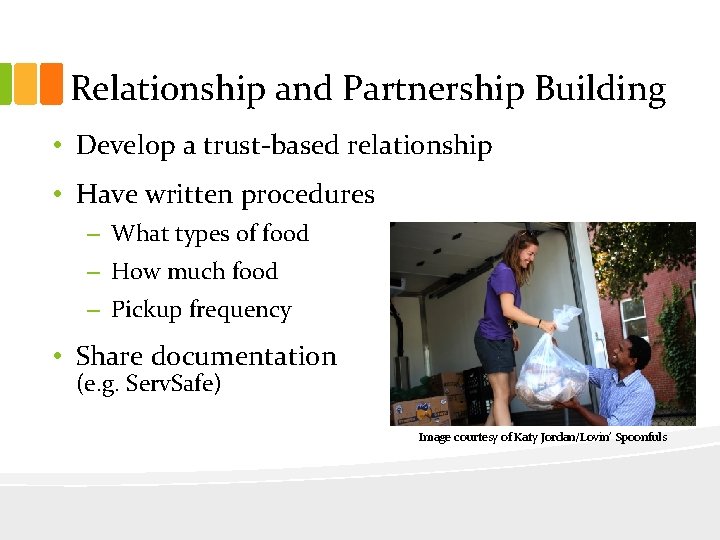
Relationship and Partnership Building • Develop a trust-based relationship • Have written procedures – What types of food – How much food – Pickup frequency • Share documentation (e. g. Serv. Safe) Image courtesy of Katy Jordan/Lovin’ Spoonfuls
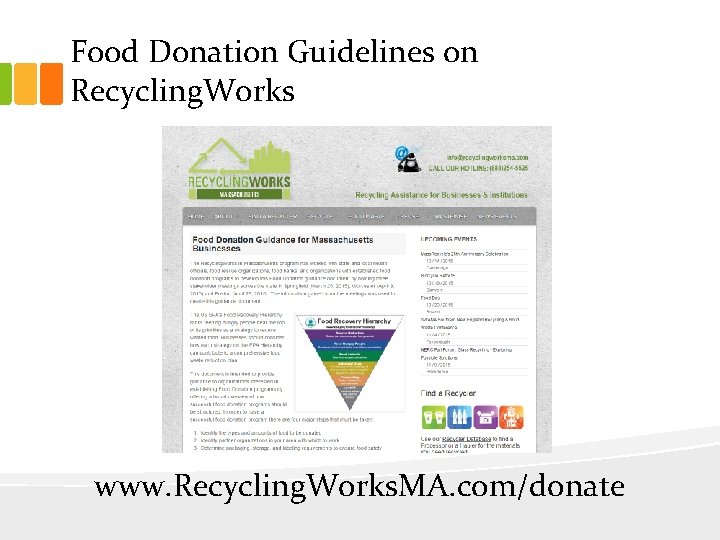
Food Donation Guidelines on Recycling. Works www. Recycling. Works. MA. com/donate
Using the Guidelines www. Recycling. Works. MA. com/donate • Read the donation guidelines on the Recycling. Works website • Determine the types and quantities of food you have for donation • Network with local hunger relief organizations that can accept your donateable food • Create an agreement between organizations that covers • Types and quantities of foods • Pickup frequency • How food will be handled • Share certifications and documentations Contact Recycling. Works for additional assistance 888 -254 -5525 | info@recyclingworksma. com
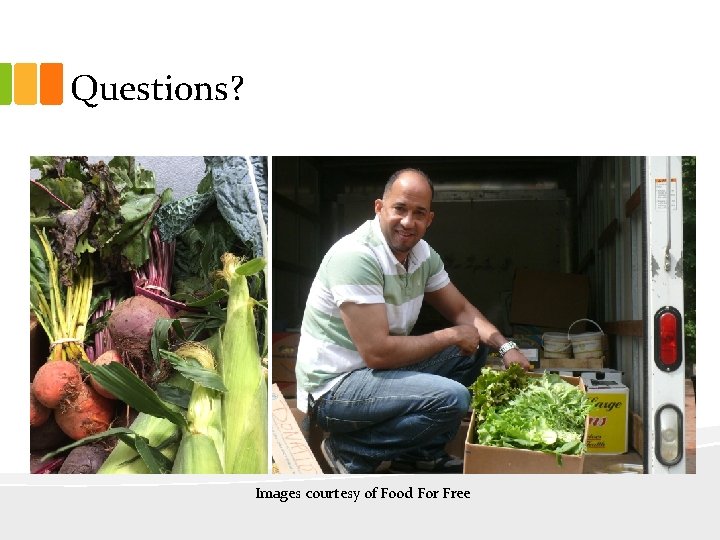
Questions? Images courtesy of Food For Free
Additional Information Visit our website at www. recyclingworksma. com Recycling. Works Hotline (888) 254 -5525 info@recyclingworksma. com Contact Joshua Cook Green Business Specialist Joshua. Cook@state. ma. us
- Slides: 20