
Recursion II Fundamentals of Computer Science Outline Recursion
- Slides: 43
Recursion II Fundamentals of Computer Science
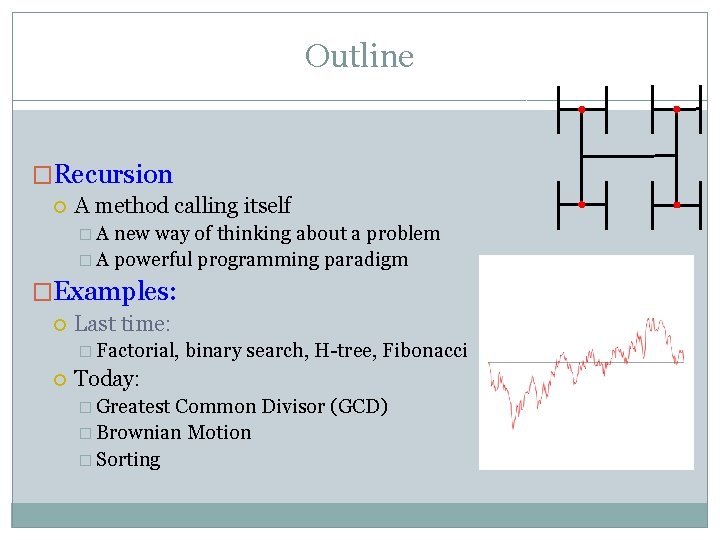
Outline �Recursion A method calling itself �A new way of thinking about a problem � A powerful programming paradigm �Examples: Last time: � Factorial, binary search, H-tree, Fibonacci Today: � Greatest Common Divisor (GCD) � Brownian Motion � Sorting
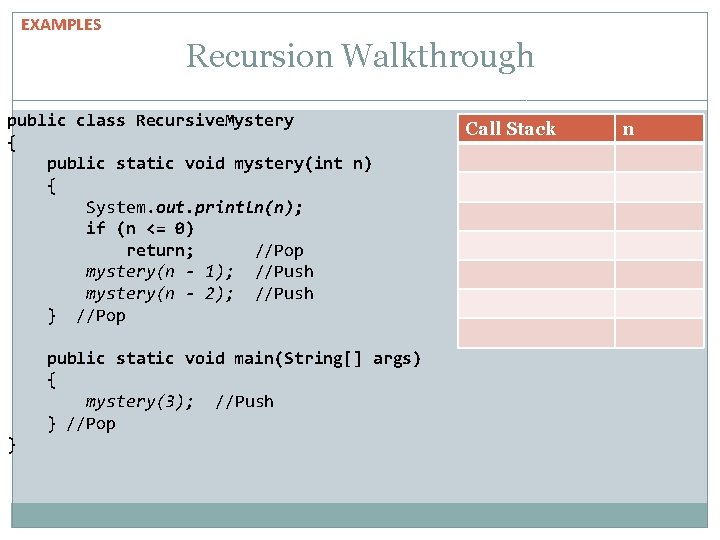
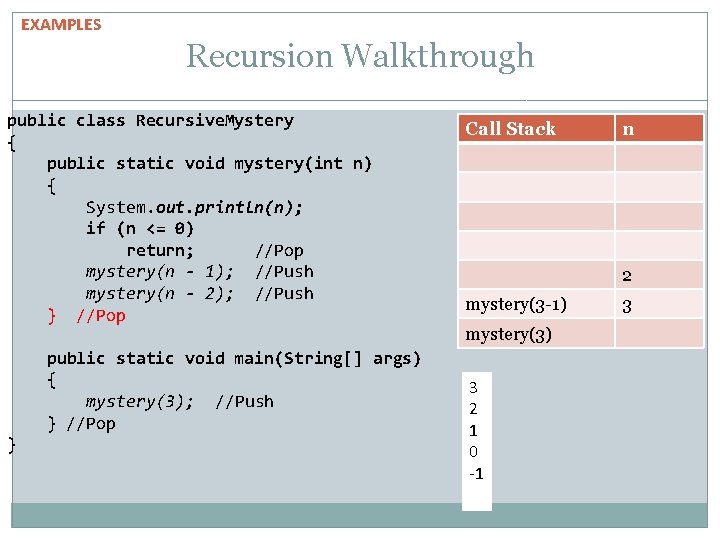
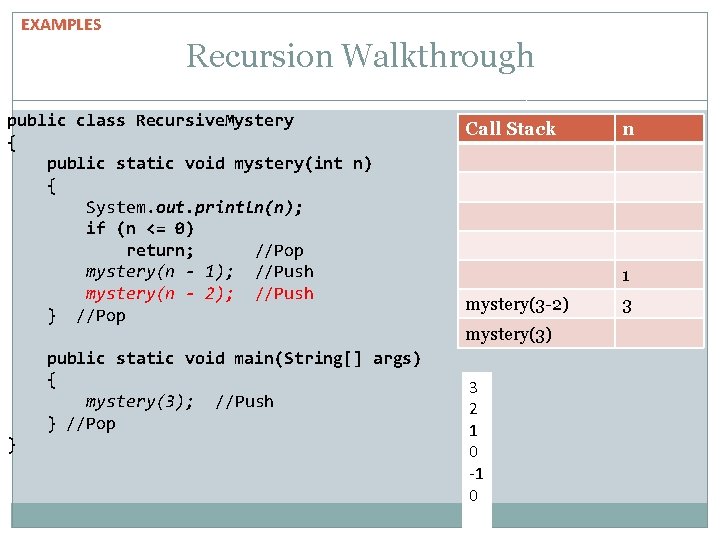
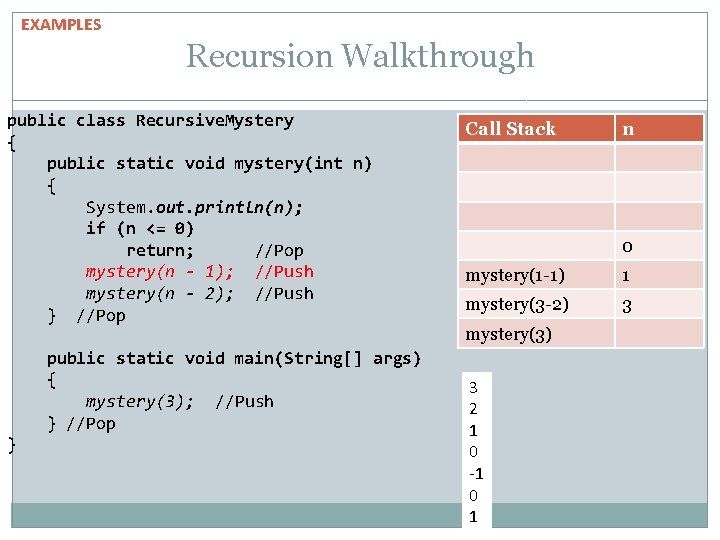
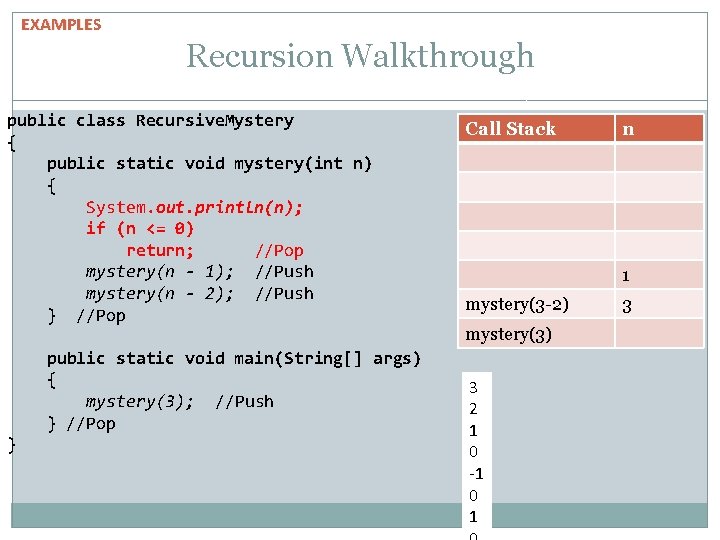
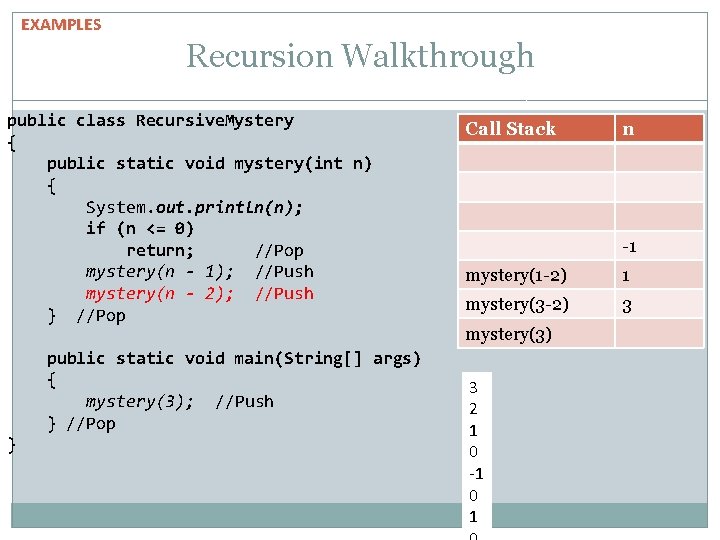
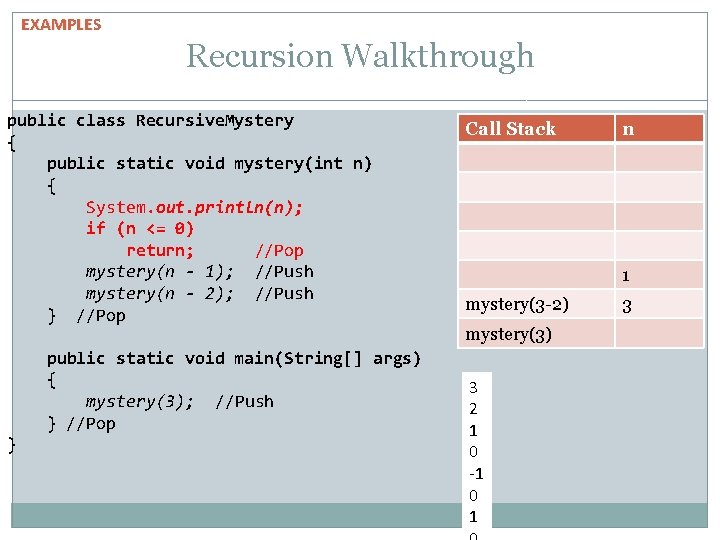
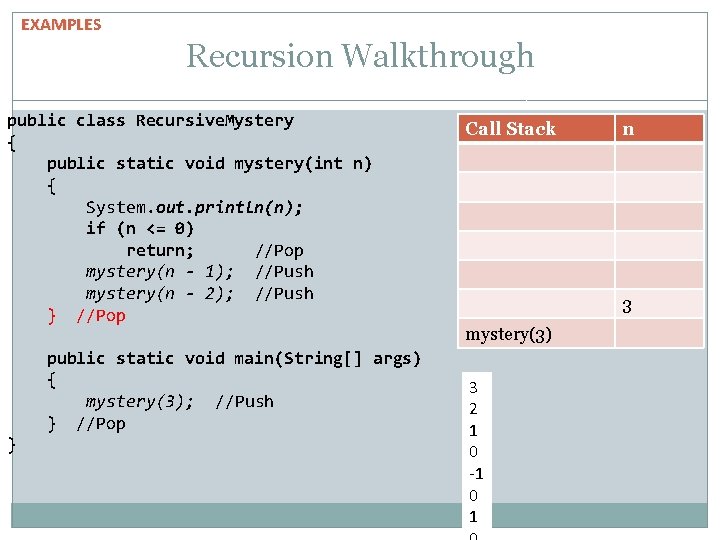
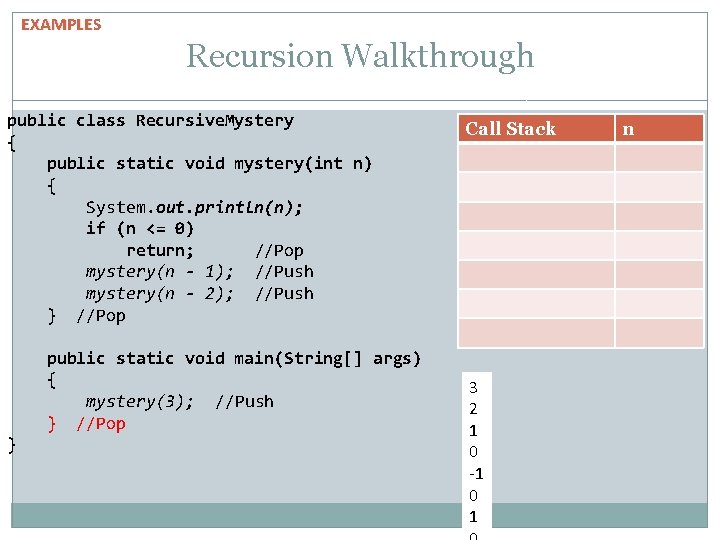
EXAMPLES Recursion Walkthrough public class Recursive. Mystery { public static void mystery(int n) { System. out. println(n); if (n <= 0) return; //Pop mystery(n - 1); //Push mystery(n - 2); //Push } //Pop public static void main(String[] args) { mystery(3); //Push } //Pop } Call Stack n
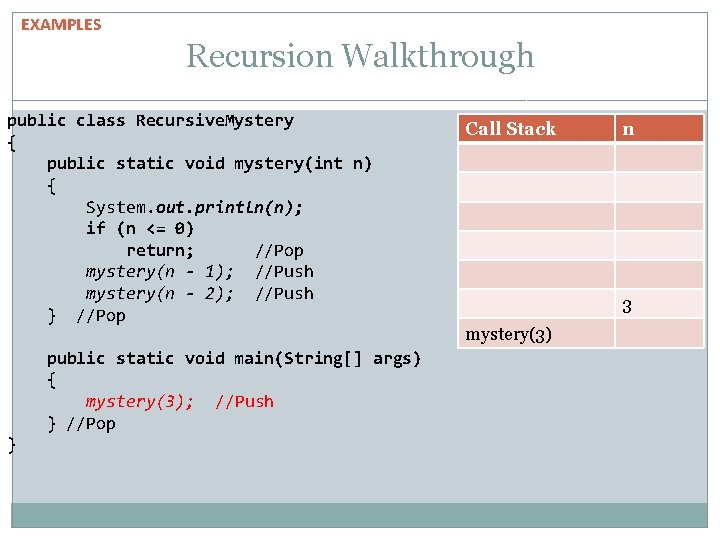
EXAMPLES Recursion Walkthrough public class Recursive. Mystery { public static void mystery(int n) { System. out. println(n); if (n <= 0) return; //Pop mystery(n - 1); //Push mystery(n - 2); //Push } //Pop public static void main(String[] args) { mystery(3); //Push } //Pop } Call Stack n 3 mystery(3)
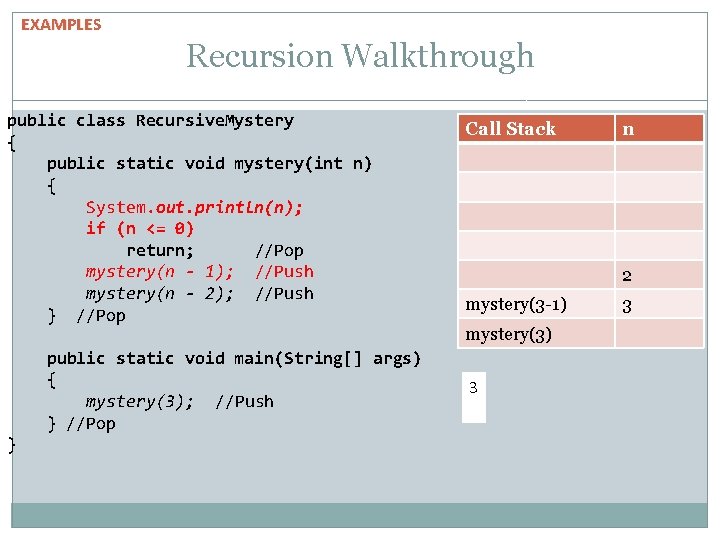
EXAMPLES Recursion Walkthrough public class Recursive. Mystery { public static void mystery(int n) { System. out. println(n); if (n <= 0) return; //Pop mystery(n - 1); //Push mystery(n - 2); //Push } //Pop public static void main(String[] args) { mystery(3); //Push } //Pop } Call Stack n 2 mystery(3 -1) mystery(3) 3 3
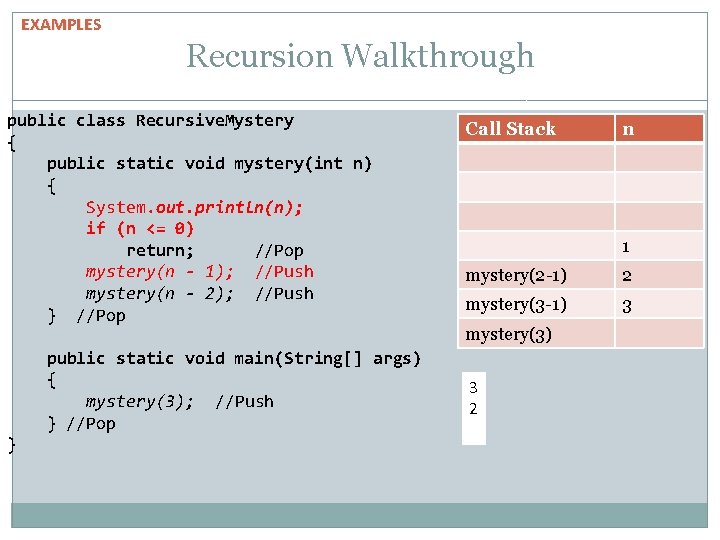
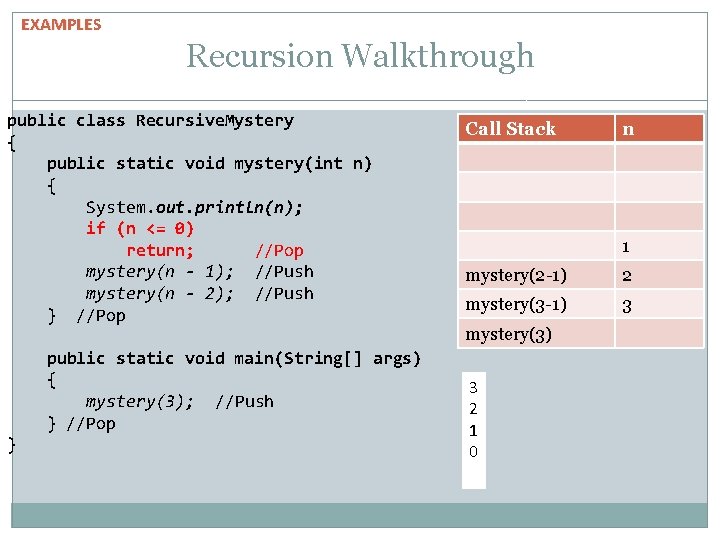
EXAMPLES Recursion Walkthrough public class Recursive. Mystery { public static void mystery(int n) { System. out. println(n); if (n <= 0) return; //Pop mystery(n - 1); //Push mystery(n - 2); //Push } //Pop public static void main(String[] args) { mystery(3); //Push } //Pop } Call Stack n 1 mystery(2 -1) 2 mystery(3 -1) 3 mystery(3) 3 2
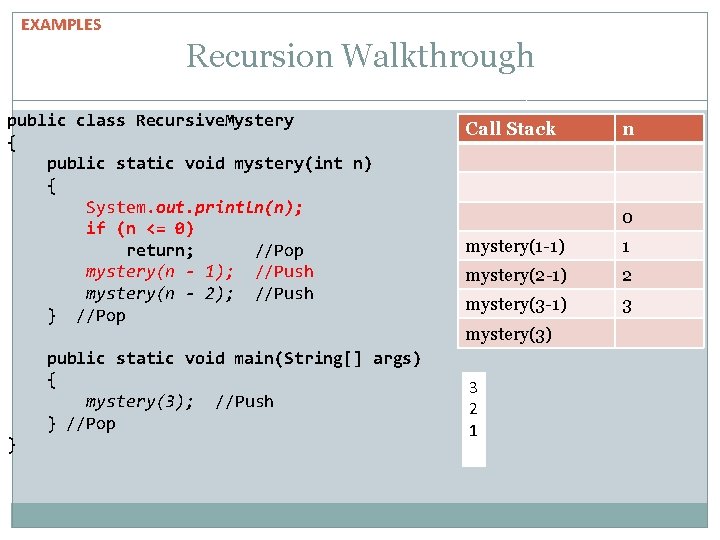
EXAMPLES Recursion Walkthrough public class Recursive. Mystery { public static void mystery(int n) { System. out. println(n); if (n <= 0) return; //Pop mystery(n - 1); //Push mystery(n - 2); //Push } //Pop public static void main(String[] args) { mystery(3); //Push } //Pop } Call Stack n 0 mystery(1 -1) 1 mystery(2 -1) 2 mystery(3 -1) 3 mystery(3) 3 2 1
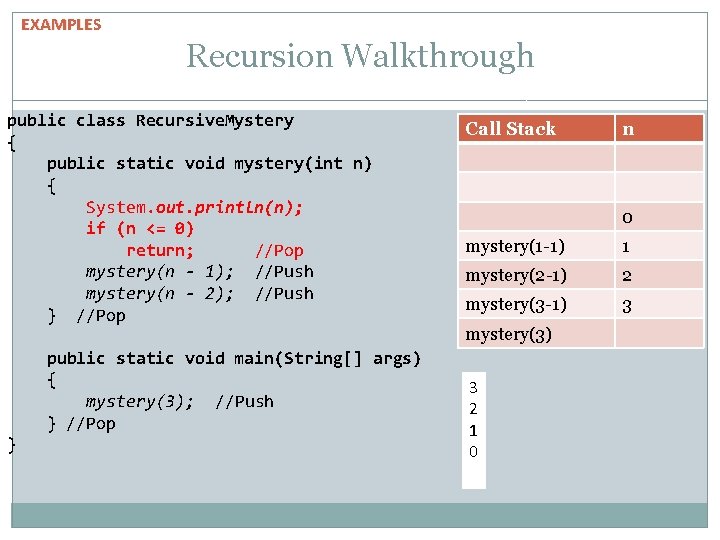
EXAMPLES Recursion Walkthrough public class Recursive. Mystery { public static void mystery(int n) { System. out. println(n); if (n <= 0) return; //Pop mystery(n - 1); //Push mystery(n - 2); //Push } //Pop public static void main(String[] args) { mystery(3); //Push } //Pop } Call Stack n 0 mystery(1 -1) 1 mystery(2 -1) 2 mystery(3 -1) 3 mystery(3) 3 2 1 0
EXAMPLES Recursion Walkthrough public class Recursive. Mystery { public static void mystery(int n) { System. out. println(n); if (n <= 0) return; //Pop mystery(n - 1); //Push mystery(n - 2); //Push } //Pop public static void main(String[] args) { mystery(3); //Push } //Pop } Call Stack n 1 mystery(2 -1) 2 mystery(3 -1) 3 mystery(3) 3 2 1 0
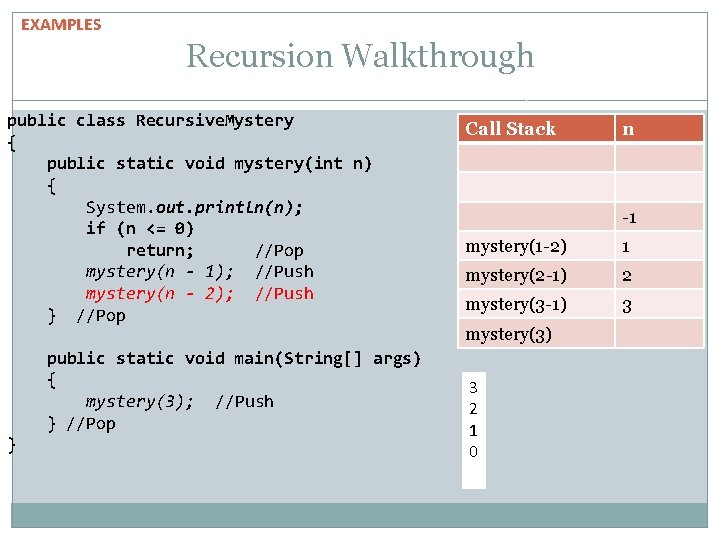
EXAMPLES Recursion Walkthrough public class Recursive. Mystery { public static void mystery(int n) { System. out. println(n); if (n <= 0) return; //Pop mystery(n - 1); //Push mystery(n - 2); //Push } //Pop public static void main(String[] args) { mystery(3); //Push } //Pop } Call Stack n -1 mystery(1 -2) 1 mystery(2 -1) 2 mystery(3 -1) 3 mystery(3) 3 2 1 0
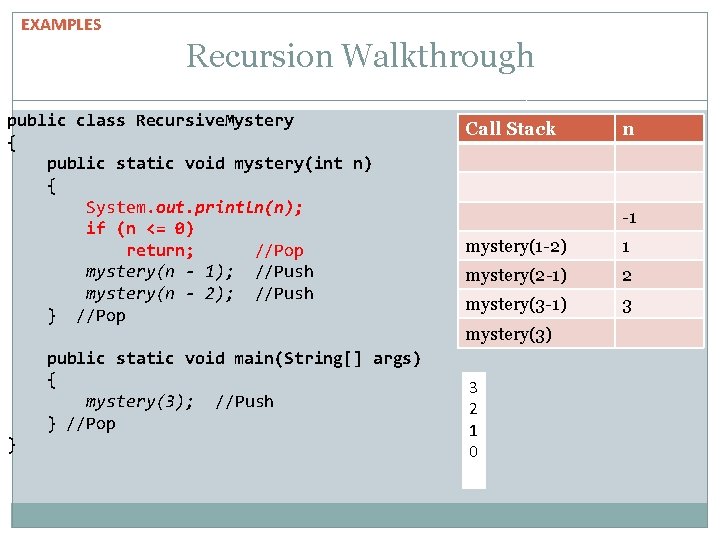
EXAMPLES Recursion Walkthrough public class Recursive. Mystery { public static void mystery(int n) { System. out. println(n); if (n <= 0) return; //Pop mystery(n - 1); //Push mystery(n - 2); //Push } //Pop public static void main(String[] args) { mystery(3); //Push } //Pop } Call Stack n -1 mystery(1 -2) 1 mystery(2 -1) 2 mystery(3 -1) 3 mystery(3) 3 2 1 0
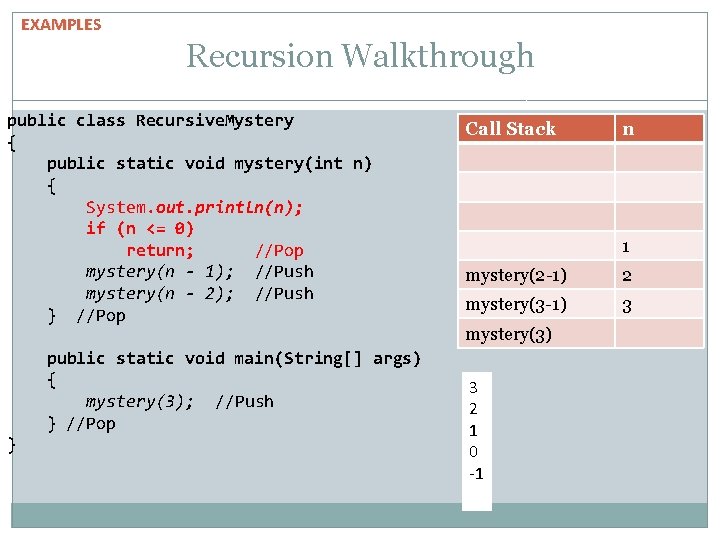
EXAMPLES Recursion Walkthrough public class Recursive. Mystery { public static void mystery(int n) { System. out. println(n); if (n <= 0) return; //Pop mystery(n - 1); //Push mystery(n - 2); //Push } //Pop public static void main(String[] args) { mystery(3); //Push } //Pop } Call Stack n 1 mystery(2 -1) 2 mystery(3 -1) 3 mystery(3) 3 2 1 0 -1
EXAMPLES Recursion Walkthrough public class Recursive. Mystery { public static void mystery(int n) { System. out. println(n); if (n <= 0) return; //Pop mystery(n - 1); //Push mystery(n - 2); //Push } //Pop public static void main(String[] args) { mystery(3); //Push } //Pop } Call Stack n 2 mystery(3 -1) mystery(3) 3 2 1 0 -1 3
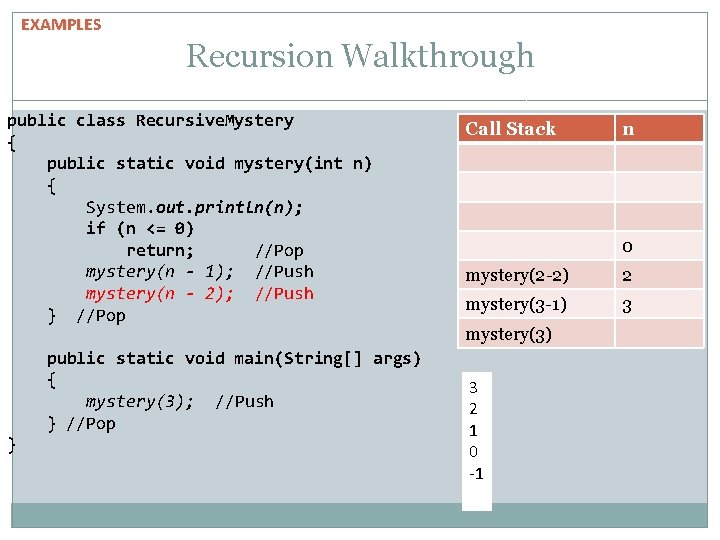
EXAMPLES Recursion Walkthrough public class Recursive. Mystery { public static void mystery(int n) { System. out. println(n); if (n <= 0) return; //Pop mystery(n - 1); //Push mystery(n - 2); //Push } //Pop public static void main(String[] args) { mystery(3); //Push } //Pop } Call Stack n 0 mystery(2 -2) 2 mystery(3 -1) 3 mystery(3) 3 2 1 0 -1
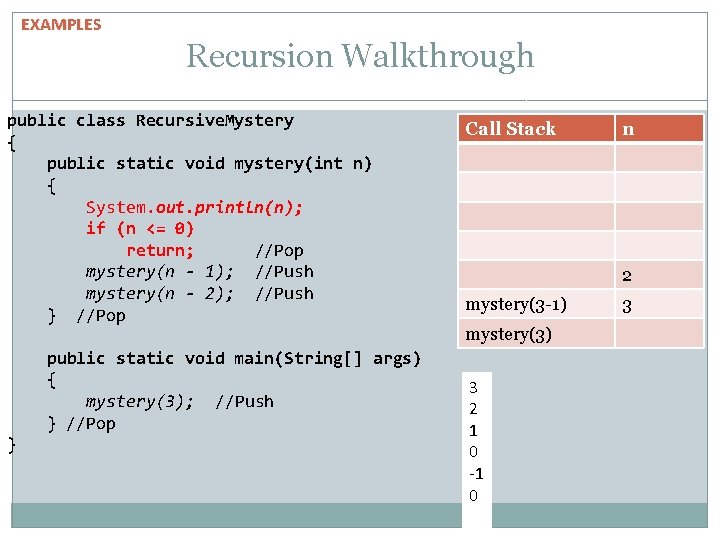
EXAMPLES Recursion Walkthrough public class Recursive. Mystery { public static void mystery(int n) { System. out. println(n); if (n <= 0) return; //Pop mystery(n - 1); //Push mystery(n - 2); //Push } //Pop public static void main(String[] args) { mystery(3); //Push } //Pop } Call Stack n 2 mystery(3 -1) mystery(3) 3 2 1 0 -1 0 3
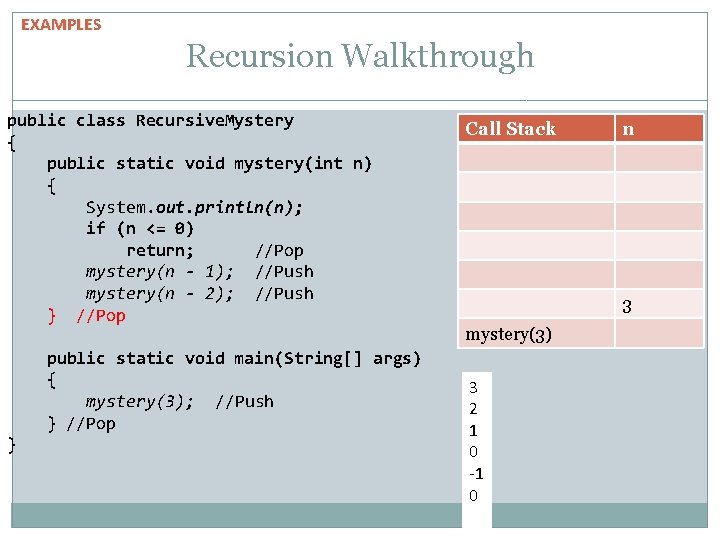
EXAMPLES Recursion Walkthrough public class Recursive. Mystery { public static void mystery(int n) { System. out. println(n); if (n <= 0) return; //Pop mystery(n - 1); //Push mystery(n - 2); //Push } //Pop public static void main(String[] args) { mystery(3); //Push } //Pop } Call Stack n 3 mystery(3) 3 2 1 0 -1 0
EXAMPLES Recursion Walkthrough public class Recursive. Mystery { public static void mystery(int n) { System. out. println(n); if (n <= 0) return; //Pop mystery(n - 1); //Push mystery(n - 2); //Push } //Pop public static void main(String[] args) { mystery(3); //Push } //Pop } Call Stack n 1 mystery(3 -2) mystery(3) 3 2 1 0 -1 0 3
EXAMPLES Recursion Walkthrough public class Recursive. Mystery { public static void mystery(int n) { System. out. println(n); if (n <= 0) return; //Pop mystery(n - 1); //Push mystery(n - 2); //Push } //Pop public static void main(String[] args) { mystery(3); //Push } //Pop } Call Stack n 0 mystery(1 -1) 1 mystery(3 -2) 3 mystery(3) 3 2 1 0 -1 0 1
EXAMPLES Recursion Walkthrough public class Recursive. Mystery { public static void mystery(int n) { System. out. println(n); if (n <= 0) return; //Pop mystery(n - 1); //Push mystery(n - 2); //Push } //Pop public static void main(String[] args) { mystery(3); //Push } //Pop } Call Stack n 1 mystery(3 -2) mystery(3) 3 2 1 0 -1 0 1 3
EXAMPLES Recursion Walkthrough public class Recursive. Mystery { public static void mystery(int n) { System. out. println(n); if (n <= 0) return; //Pop mystery(n - 1); //Push mystery(n - 2); //Push } //Pop public static void main(String[] args) { mystery(3); //Push } //Pop } Call Stack n -1 mystery(1 -2) 1 mystery(3 -2) 3 mystery(3) 3 2 1 0 -1 0 1
EXAMPLES Recursion Walkthrough public class Recursive. Mystery { public static void mystery(int n) { System. out. println(n); if (n <= 0) return; //Pop mystery(n - 1); //Push mystery(n - 2); //Push } //Pop public static void main(String[] args) { mystery(3); //Push } //Pop } Call Stack n 1 mystery(3 -2) mystery(3) 3 2 1 0 -1 0 1 3
EXAMPLES Recursion Walkthrough public class Recursive. Mystery { public static void mystery(int n) { System. out. println(n); if (n <= 0) return; //Pop mystery(n - 1); //Push mystery(n - 2); //Push } //Pop public static void main(String[] args) { mystery(3); //Push } //Pop } Call Stack n 3 mystery(3) 3 2 1 0 -1 0 1
EXAMPLES Recursion Walkthrough public class Recursive. Mystery { public static void mystery(int n) { System. out. println(n); if (n <= 0) return; //Pop mystery(n - 1); //Push mystery(n - 2); //Push } //Pop public static void main(String[] args) { mystery(3); //Push } //Pop } Call Stack 3 2 1 0 -1 0 1 n
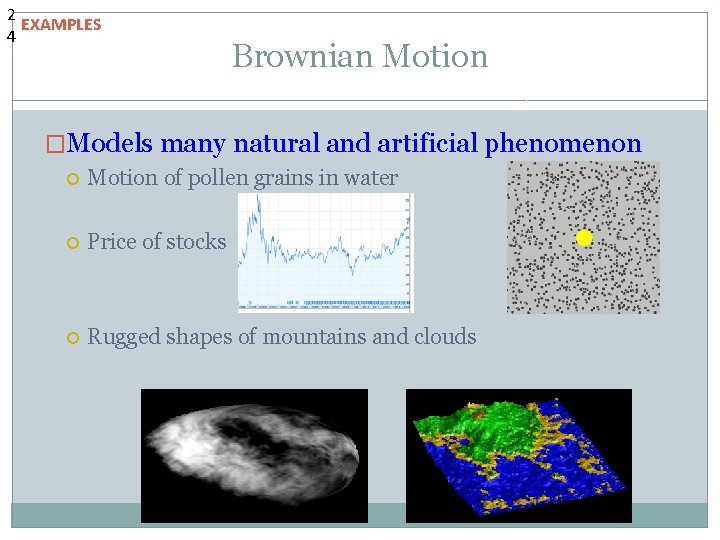
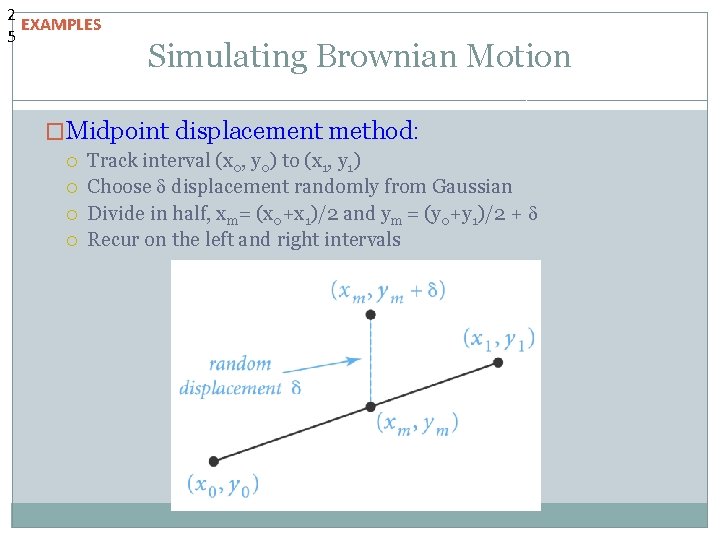
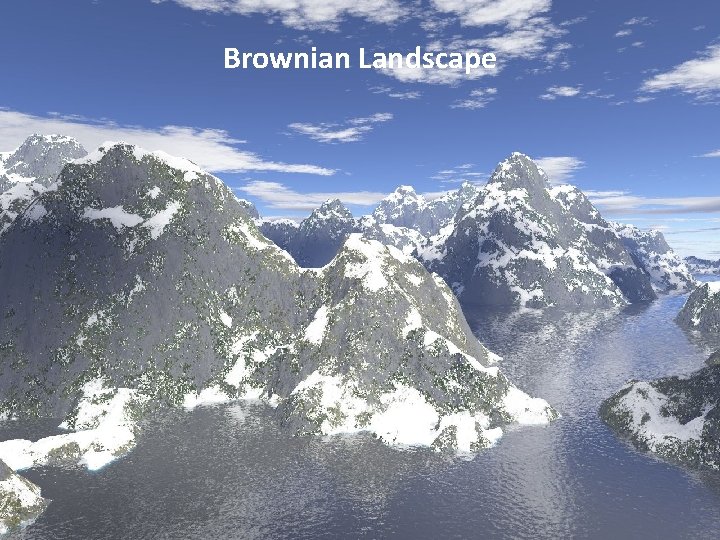
2 EXAMPLES 4 Brownian Motion �Models many natural and artificial phenomenon Motion of pollen grains in water Price of stocks Rugged shapes of mountains and clouds
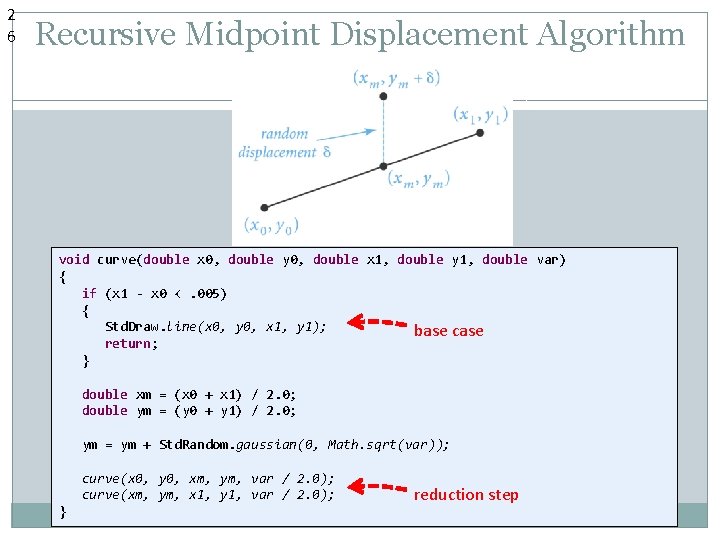
2 EXAMPLES 5 Simulating Brownian Motion �Midpoint displacement method: Track interval (x 0, y 0) to (x 1, y 1) Choose d displacement randomly from Gaussian Divide in half, xm= (x 0+x 1)/2 and ym = (y 0+y 1)/2 + d Recur on the left and right intervals
2 6 Recursive Midpoint Displacement Algorithm void curve(double x 0, double y 0, double x 1, double y 1, double var) { if (x 1 - x 0 <. 005) { Std. Draw. line(x 0, y 0, x 1, y 1); base case return; } double xm = (x 0 + x 1) / 2. 0; double ym = (y 0 + y 1) / 2. 0; ym = ym + Std. Random. gaussian(0, Math. sqrt(var)); curve(x 0, y 0, xm, ym, var / 2. 0); curve(xm, ym, x 1, y 1, var / 2. 0); } reduction step
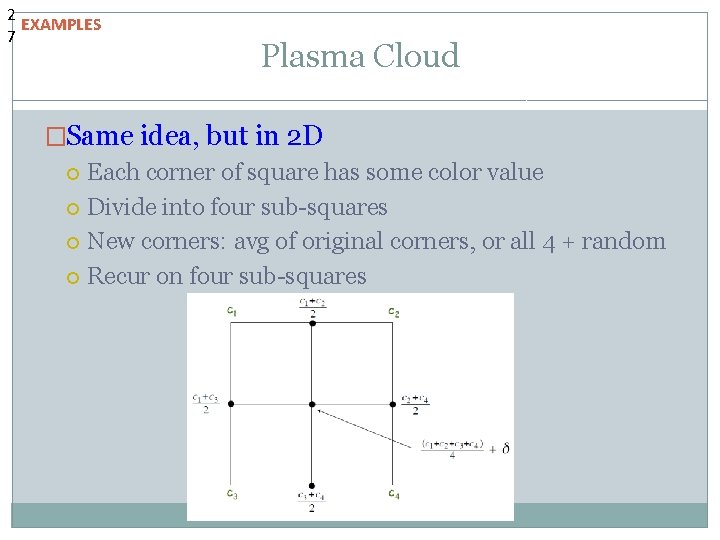
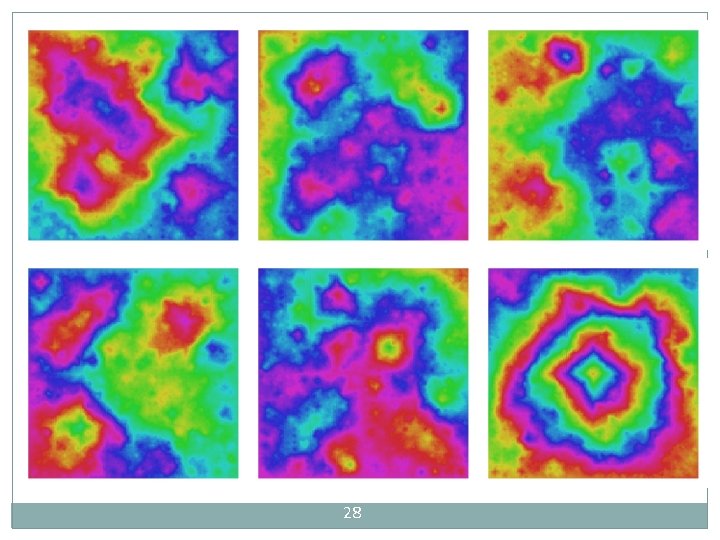
2 EXAMPLES 7 Plasma Cloud �Same idea, but in 2 D Each corner of square has some color value Divide into four sub-squares New corners: avg of original corners, or all 4 + random Recur on four sub-squares
28
Brownian Landscape 29
3 EXAMPLES 0 Divide and Conquer �Divide and conquer paradigm Break big problem into small sub-problems Solve sub-problems recursively Combine results “Divide et impera. Vendi, vidi, vici. ” -Julius Caesar �Used to solve many important problems Sorting things, mergesort: O(N log N) Parsing programming languages Discrete FFT, signal processing Multiplying large numbers Traversing multiply linked structures (stay tuned)
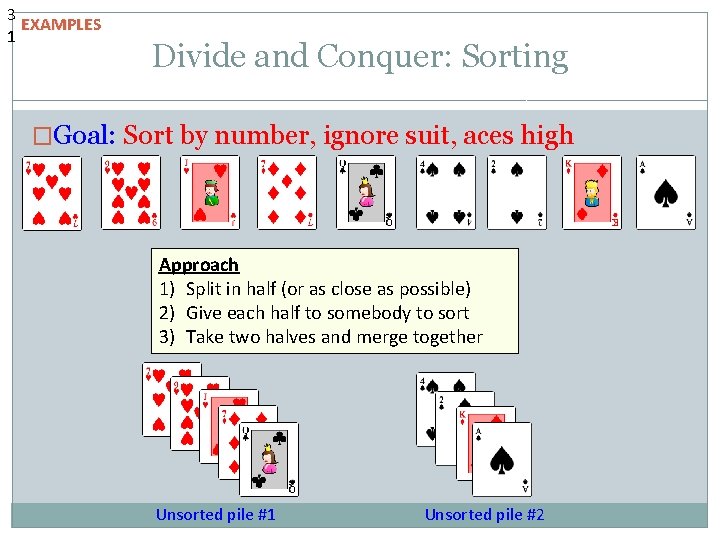
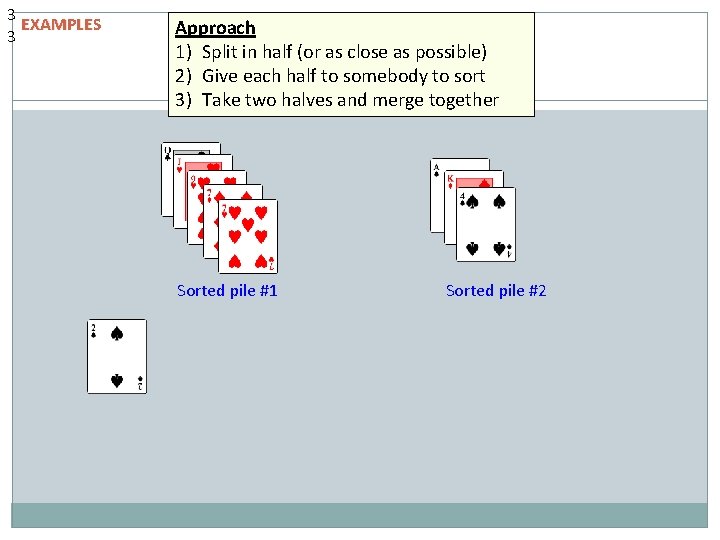
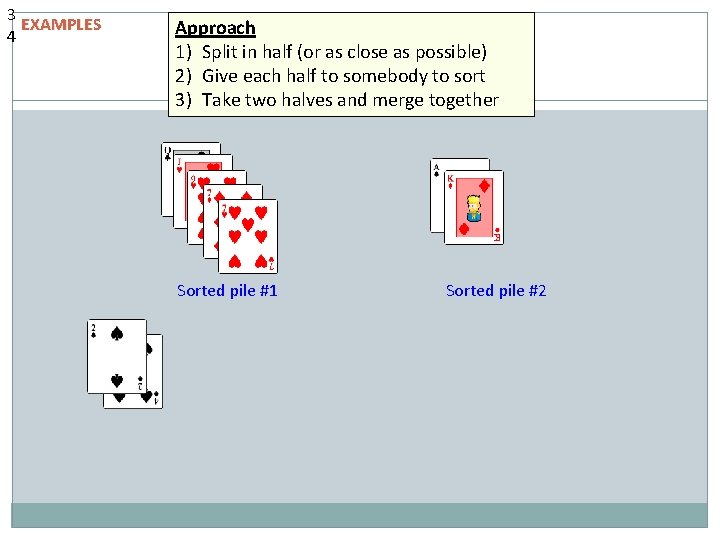
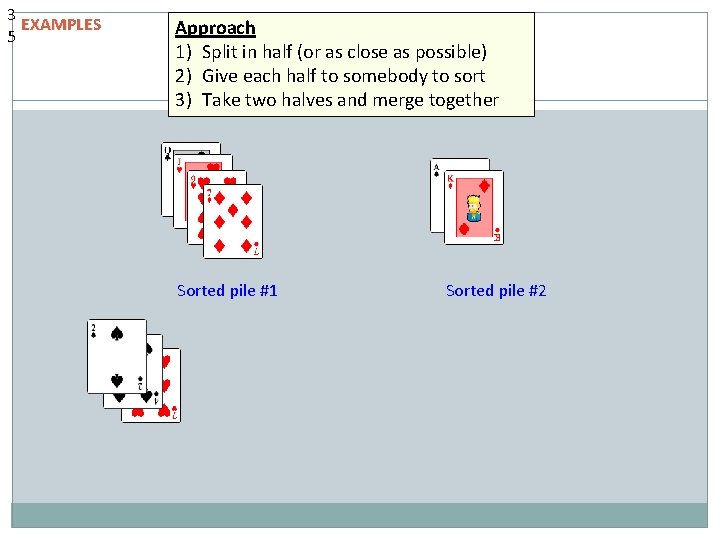
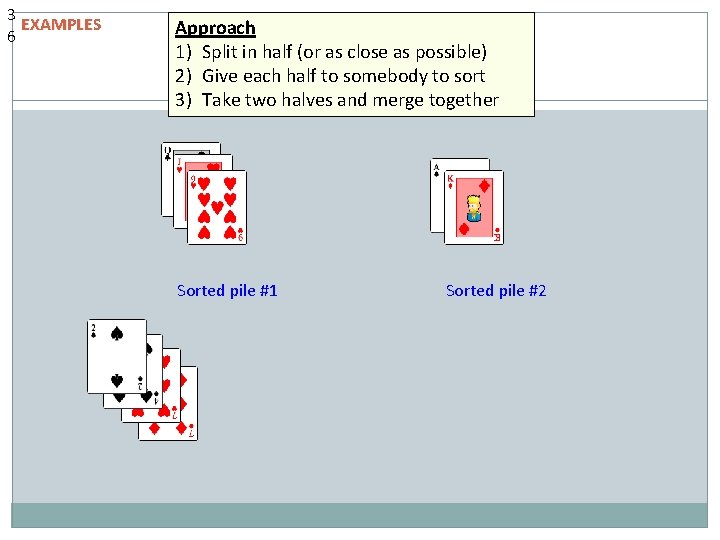
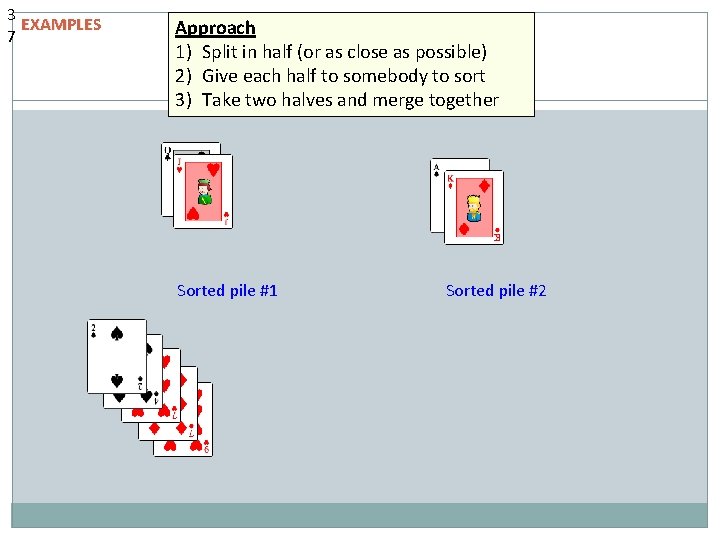
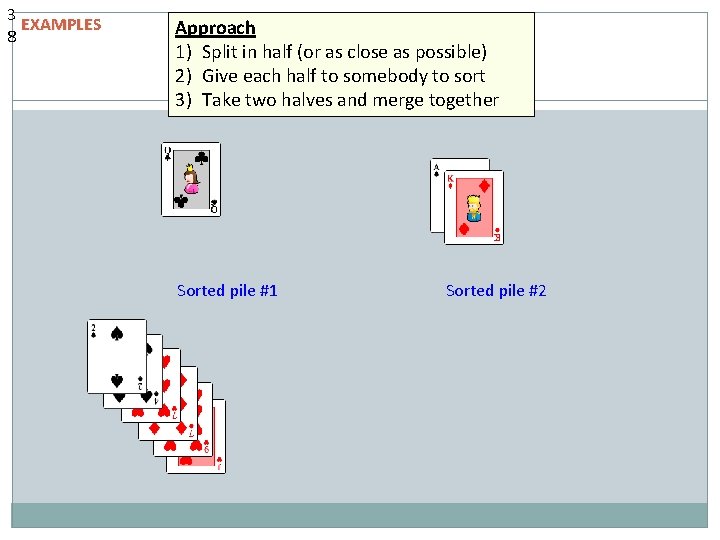
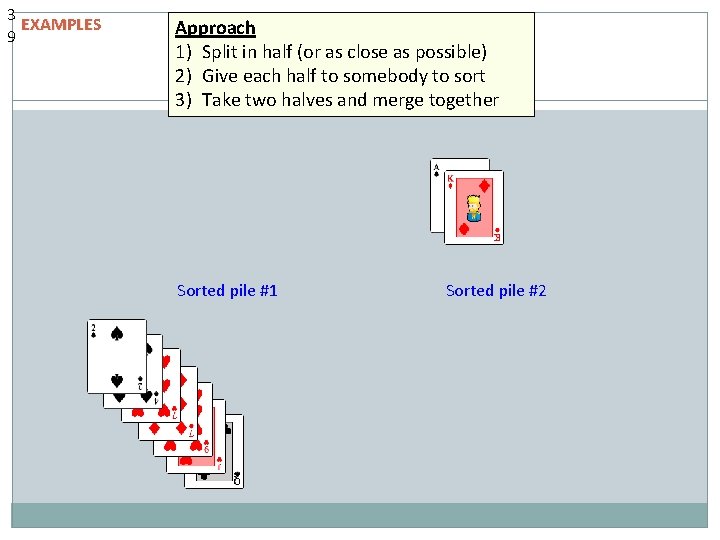
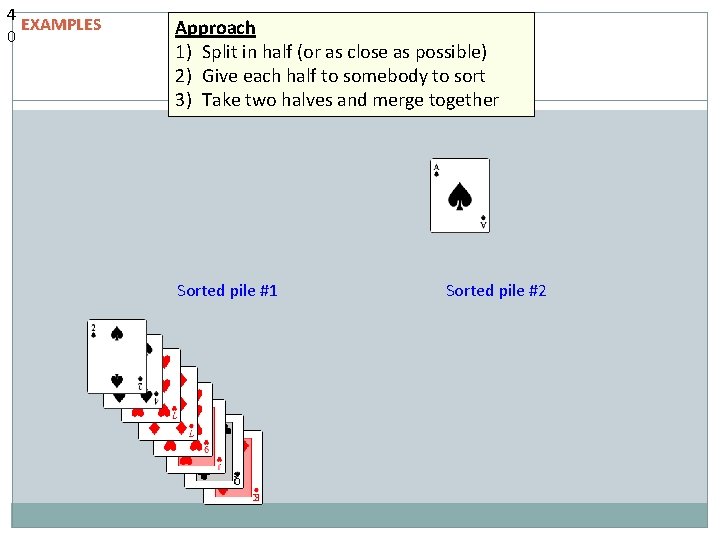
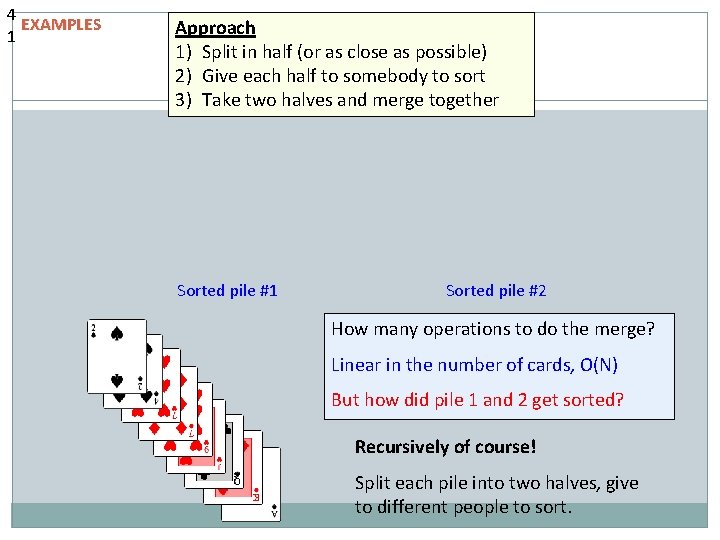
3 EXAMPLES 1 Divide and Conquer: Sorting �Goal: Sort by number, ignore suit, aces high Approach 1) Split in half (or as close as possible) 2) Give each half to somebody to sort 3) Take two halves and merge together Unsorted pile #1 Unsorted pile #2
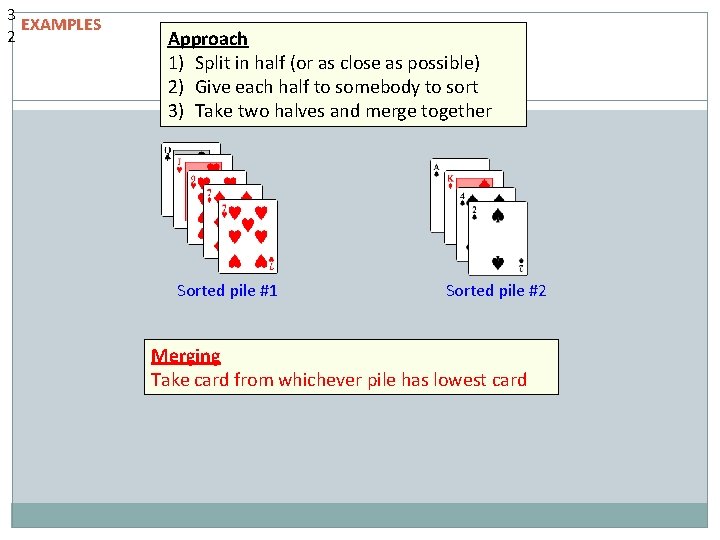
3 EXAMPLES 2 Approach 1) Split in half (or as close as possible) 2) Give each half to somebody to sort 3) Take two halves and merge together Sorted pile #1 Sorted pile #2 Merging Take card from whichever pile has lowest card
3 EXAMPLES 3 Approach 1) Split in half (or as close as possible) 2) Give each half to somebody to sort 3) Take two halves and merge together Sorted pile #1 Sorted pile #2
3 EXAMPLES 4 Approach 1) Split in half (or as close as possible) 2) Give each half to somebody to sort 3) Take two halves and merge together Sorted pile #1 Sorted pile #2
3 EXAMPLES 5 Approach 1) Split in half (or as close as possible) 2) Give each half to somebody to sort 3) Take two halves and merge together Sorted pile #1 Sorted pile #2
3 EXAMPLES 6 Approach 1) Split in half (or as close as possible) 2) Give each half to somebody to sort 3) Take two halves and merge together Sorted pile #1 Sorted pile #2
3 EXAMPLES 7 Approach 1) Split in half (or as close as possible) 2) Give each half to somebody to sort 3) Take two halves and merge together Sorted pile #1 Sorted pile #2
3 EXAMPLES 8 Approach 1) Split in half (or as close as possible) 2) Give each half to somebody to sort 3) Take two halves and merge together Sorted pile #1 Sorted pile #2
3 EXAMPLES 9 Approach 1) Split in half (or as close as possible) 2) Give each half to somebody to sort 3) Take two halves and merge together Sorted pile #1 Sorted pile #2
4 EXAMPLES 0 Approach 1) Split in half (or as close as possible) 2) Give each half to somebody to sort 3) Take two halves and merge together Sorted pile #1 Sorted pile #2
4 EXAMPLES 1 Approach 1) Split in half (or as close as possible) 2) Give each half to somebody to sort 3) Take two halves and merge together Sorted pile #1 Sorted pile #2 How many operations to do the merge? Linear in the number of cards, O(N) But how did pile 1 and 2 get sorted? Recursively of course! Split each pile into two halves, give to different people to sort.
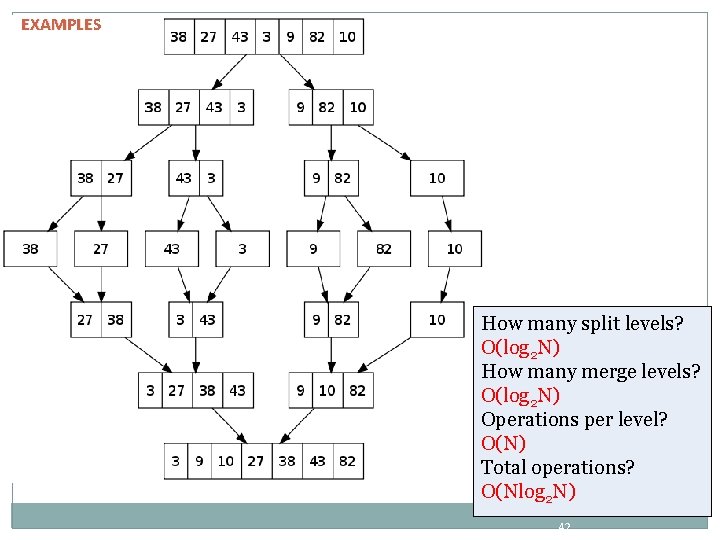
EXAMPLES How many split levels? O(log 2 N) How many merge levels? O(log 2 N) Operations per level? O(N) Total operations? O(Nlog 2 N) 42
Summary �Recursion A method calling itself: � Sometimes just once, e. g. binary search � Sometimes twice, e. g. mergesort � Sometimes multiple times, e. g. H-tree All good recursion must come to an end: � Base case that does NOT call itself recursively A powerful tool in computer science: � Allows elegant and easy to understand algorithms � (Once you get your head around it)