
Recurrent Respiratory Papillomatosis RRP Mario Nastasi Anatomy Physiology


- Slides: 9
Recurrent Respiratory Papillomatosis (RRP) Mario Nastasi Anatomy & Physiology II Dr. Mark Pandolfo Dec 10, 2014
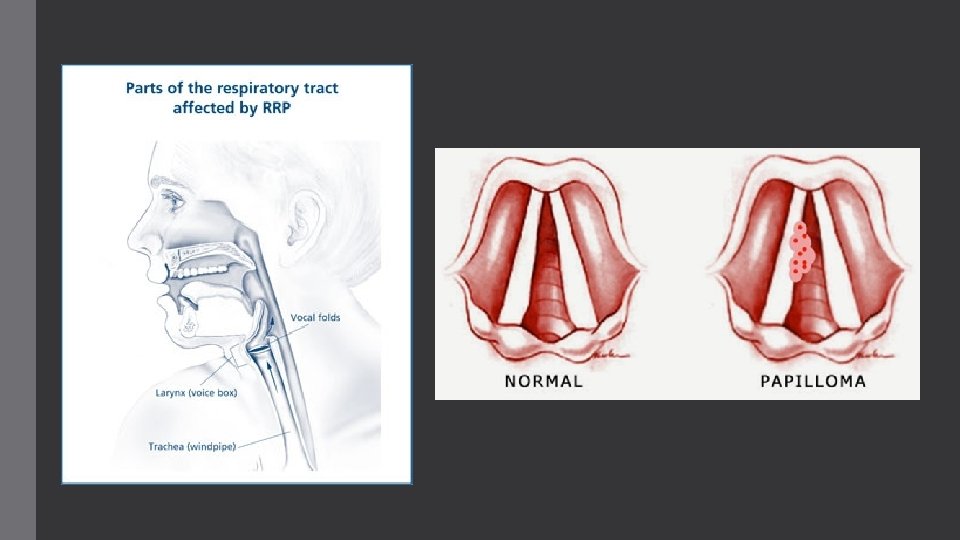
What is Recurrent Respiratory Papillomatosis (RRP)? • A disease in which tumors grow in the air passages leading from the nose and mouth into the lungs (respiratory tract). • Although the tumors can grow anywhere in the respiratory tract, their presence in the larynx (voice box) causes the most frequent problems, a condition called laryngeal papillomatosis. • The tumors may vary in size and grow very quickly. • These tumors often grow back even when removed.
What is the cause of Recurrent Respiratory Papillomatosis (RRP)? • Caused by two types of human papilloma virus (HPV), called HPV 6 and HPV 11. • Most people who encounter HPV never develop any illness. However, many HPVs can cause small wart-like, non-cancerous tumors called papillomas. • The most common illness caused by HPV 6 and HPV 11 is genital warts. • The virus is thought to be spread through sexual contact or when a mother with genital warts passes it to her baby during childbirth.
Who is affected? • RRP affects adults as well as infants and small children who may have contracted the virus during childbirth. • According to the RRP Foundation, there are roughly 20, 000 cases in the United States. • Among children, the incidence of RRP is approximately 4. 3 per 100, 000; among adults, it’s about 1. 8 per 100, 000. • According to the Centers for Disease Control and Prevention, the incidence of RRP is rare. Fewer than 2, 000 children get RRP each year.
Symptoms of RRP • When the tumors interfere with the normal vibrations of the vocal folds, it causes hoarseness, which is the most common symptom of RRP. • Eventually, the tumors may block the airway passage and cause difficulty breathing. • Adults and children may experience hoarseness, chronic coughing, or breathing problems. • Because of the similarity of the symptoms, RRP is sometimes misdiagnosed as asthma or chronic bronchitis.
Treatment • There is no cure for Recurrent Respiratory Papillomatosis. • Surgery is the primary method for removing tumors from the larynx or airway. • Once the tumors have been removed, they have a tendency to return unpredictably. It is common for patients to require repeat surgery. • With some patients, surgery may be required every few weeks in order to keep the breathing passage open, while others may require surgery only once a year. • In the most extreme cases where tumor growth is aggressive, a tracheotomy may be performed.
Other Treatments • Adjuvant therapies—therapies that are used in addition to surgery— have been used to treat more severe cases of RRP. • Drug treatments may include antivirals such as interferon and cidofovir, which block the virus from making copies of itself, and indole-3 carbinol, a cancer-fighting compound found in cruciferous vegetables, such as broccoli and Brussels sprouts. • To date, the results of these and other adjuvant therapies have been mixed or not yet fully proven.
Sources • Recurrent Respiratory Papillomatosis or Laryngeal Papillomatosis. National Institute on Deafness and Other Communication Disorders (NIDCD). NIDCD Information Clearinghouse. October 2010. Web. 8 December 2014. • Recurrent Respiratory Papilloma- Papillomas on Vocal Cords & Throat. NYU Voice Center. NYU Langone Medical Center. Web. 8 December 2014.