
Rectal cancer mimic a rare case of syphilitic

- Slides: 3
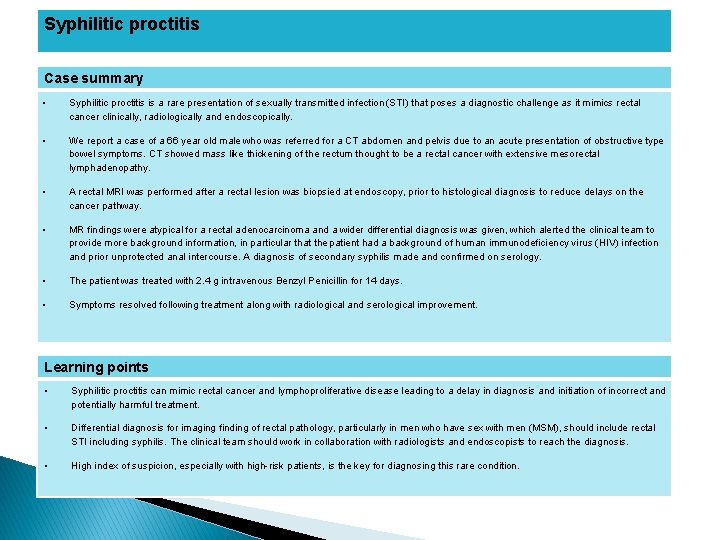
Rectal cancer mimic: a rare case of syphilitic proctitis. Dr Rajashri Patil ( Spr) Dr James Stephenson (Consultant) Dr Yvette Griffin (Consultant) University hospitals of Leicester
Syphilitic proctitis Case summary • Syphilitic proctitis is a rare presentation of sexually transmitted infection (STI) that poses a diagnostic challenge as it mimics rectal cancer clinically, radiologically and endoscopically. • We report a case of a 66 year old male who was referred for a CT abdomen and pelvis due to an acute presentation of obstructive type bowel symptoms. CT showed mass like thickening of the rectum thought to be a rectal cancer with extensive mesorectal lymphadenopathy. • A rectal MRI was performed after a rectal lesion was biopsied at endoscopy, prior to histological diagnosis to reduce delays on the cancer pathway. • MR findings were atypical for a rectal adenocarcinoma and a wider differential diagnosis was given, which alerted the clinical team to provide more background information, in particular that the patient had a background of human immunodeficiency virus (HIV) infection and prior unprotected anal intercourse. A diagnosis of secondary syphilis made and confirmed on serology. • The patient was treated with 2. 4 g intravenous Benzyl Penicillin for 14 days. • Symptoms resolved following treatment along with radiological and serological improvement. Learning points • Syphilitic proctitis can mimic rectal cancer and lymphoproliferative disease leading to a delay in diagnosis and initiation of incorrect and potentially harmful treatment. • Differential diagnosis for imaging finding of rectal pathology, particularly in men who have sex with men (MSM), should include rectal STI including syphilis. The clinical team should work in collaboration with radiologists and endoscopists to reach the diagnosis. • High index of suspicion, especially with high-risk patients, is the key for diagnosing this rare condition.
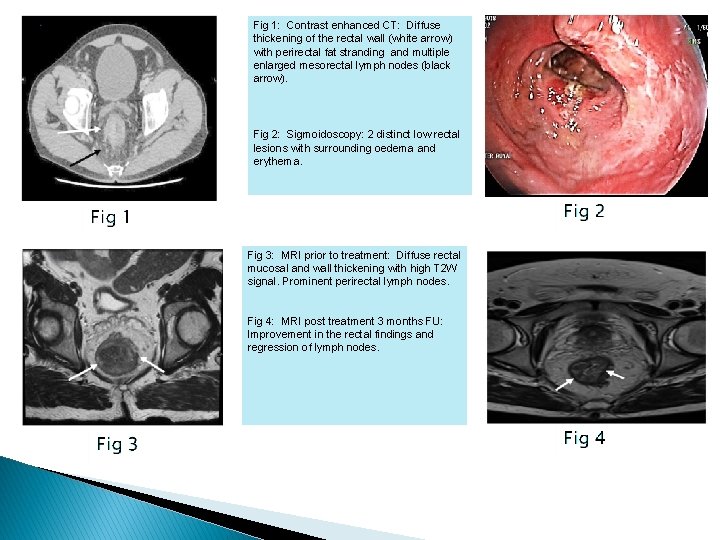
Fig 1: Contrast enhanced CT: Diffuse thickening of the rectal wall (white arrow) with perirectal fat stranding and multiple enlarged mesorectal lymph nodes (black arrow). Fig 2: Sigmoidoscopy: 2 distinct low rectal lesions with surrounding oedema and erythema. Fig 3: MRI prior to treatment: Diffuse rectal mucosal and wall thickening with high T 2 W signal. Prominent perirectal lymph nodes. Fig 4: MRI post treatment 3 months FU: Improvement in the rectal findings and regression of lymph nodes.