
Recreating a piece of WWII history The Paraset







- Slides: 46
Recreating a piece of WWII history The Paraset radio
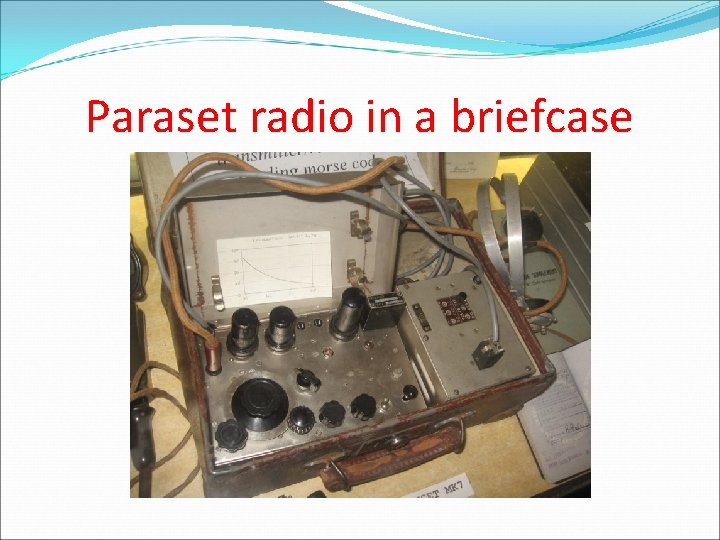
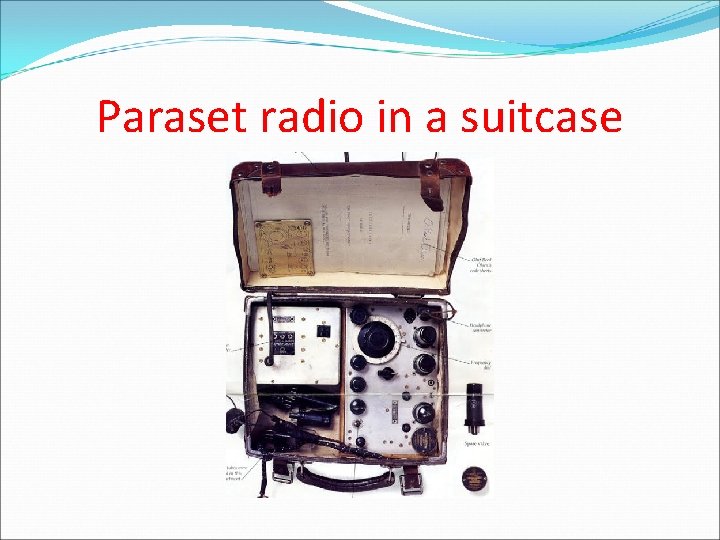
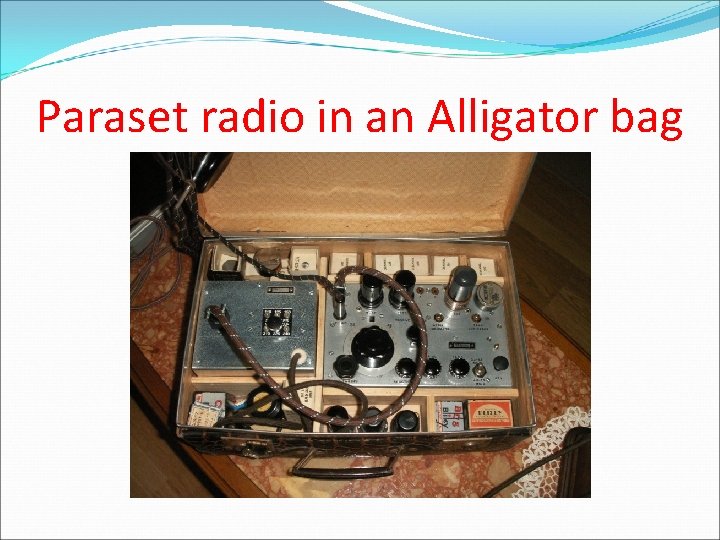
What is a Paraset Radio? The Paraset (Paratrooper radio set) was dropped in with their operators behind enemy lines and were some of the most compact and portable communications devices in the world at the time. The Paraset was a small, low-power, thermionic valve CW morse code -only radio transmitter-receiver supplied to the resistance groups in France, Belgium and the Netherlands during World War II. The Paraset was a three tube transceiver developed by the British during the early part of World War II. It was a "Spy Radio" used by the resistance forces on the mainland of Europe. Messages were sent on schedule from an array of powerful transmitters in Britain and the Parasets replied. The original "Paraset" was the Whaddon Mk. V suitcase set which was first dropped into France in around 1941. The Whaddon Mk. VII didn't come along until much later, around 1943.
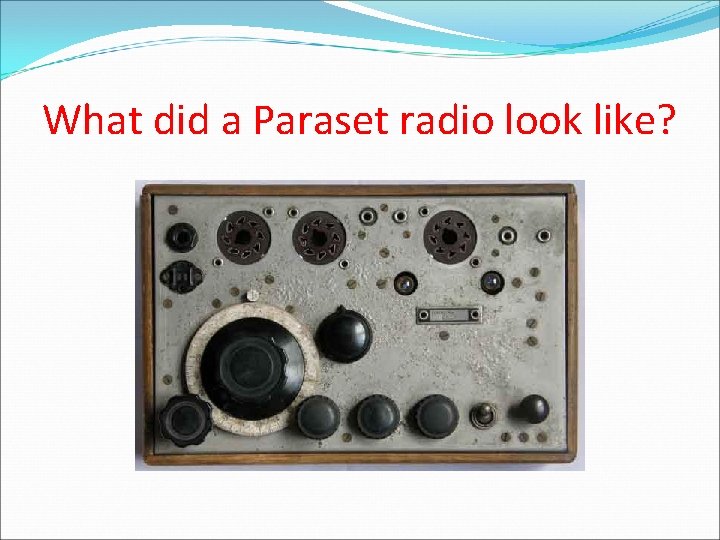
What did a Paraset radio look like?
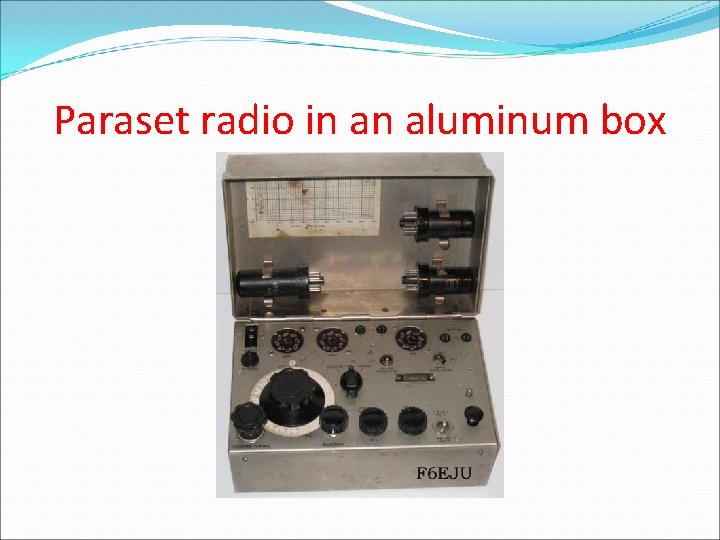
Paraset radio in an aluminum box
Paraset radio in a briefcase
Paraset radio in a suitcase
Paraset radio in an Alligator bag
How did this project start? A fellow ham from Baton Rouge Louisiana, Jim Giammanco – N 5 IB brought a homebrew modern transistor version of the Paraset radio to Ozarkcon in 2015. He called it the Bayou Jumper. It consisted of two circuirt boards and lots of parts. It was not a kit and the parts had to be collected to build it if you could get a set of the circuit boards. It was a popular topic at the Ozarkcon event that year.
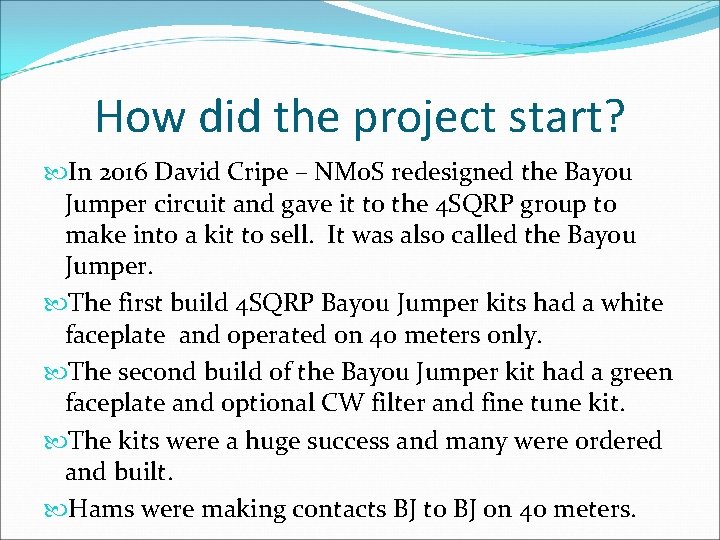
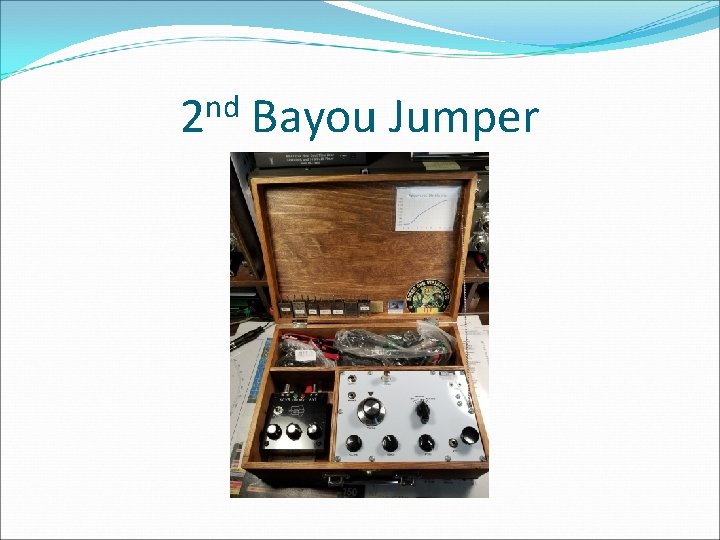
How did the project start? In 2016 David Cripe – NM 0 S redesigned the Bayou Jumper circuit and gave it to the 4 SQRP group to make into a kit to sell. It was also called the Bayou Jumper. The first build 4 SQRP Bayou Jumper kits had a white faceplate and operated on 40 meters only. The second build of the Bayou Jumper kit had a green faceplate and optional CW filter and fine tune kit. The kits were a huge success and many were ordered and built. Hams were making contacts BJ to BJ on 40 meters.
st 1 Generation Bayou Jumper
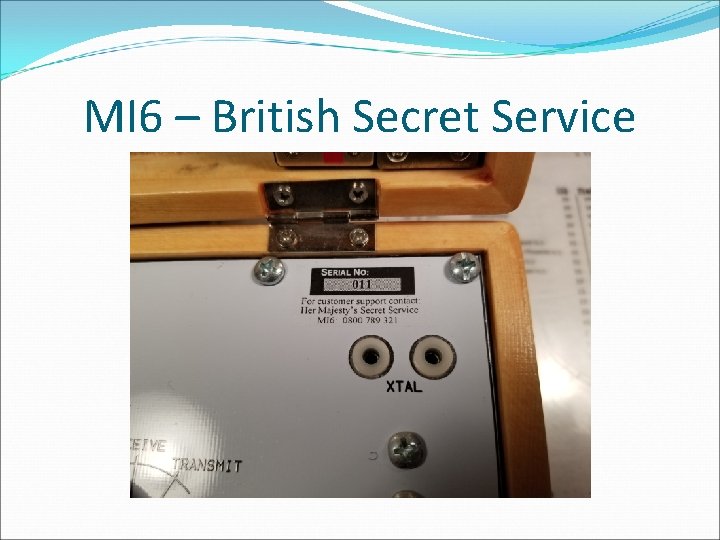
MI 6 – British Secret Service
nd 2 Bayou Jumper
nd 2 Generation Bayou Jumper
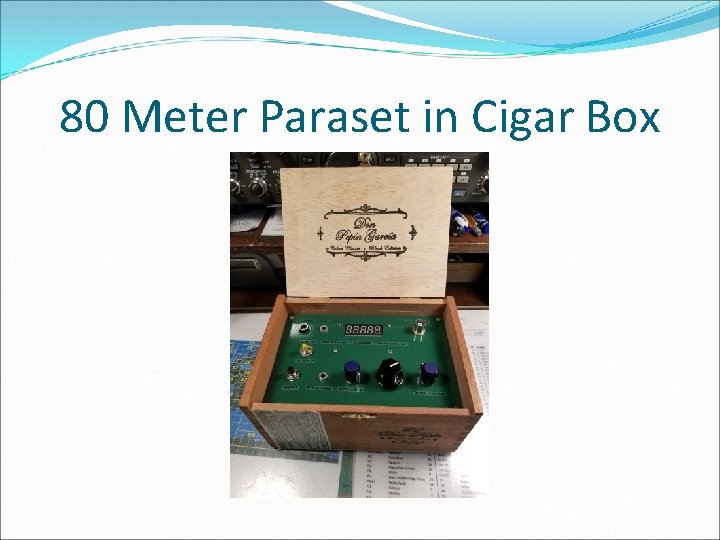
80 Meter Paraset in Cigar Box
How did the project start? Eventually like everything else the kit ran its course and was discontinued in 2018. Not because it was not popular anymore, it was due to slowing sales and the project was due for a third build run. Since the sales were slowing the decision was made to not invest any more money in another run of circuit boards and parts, plus the time to assemble the kits into parts bags. All kits are assembled by volunteers of the 4 SQRP group.
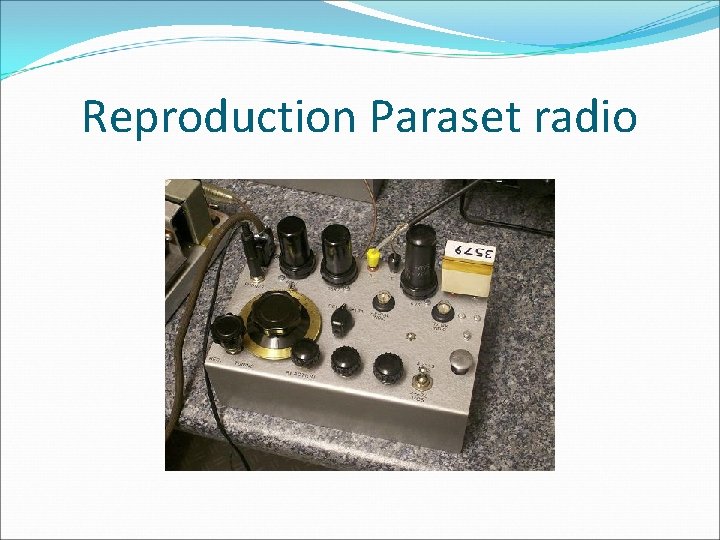
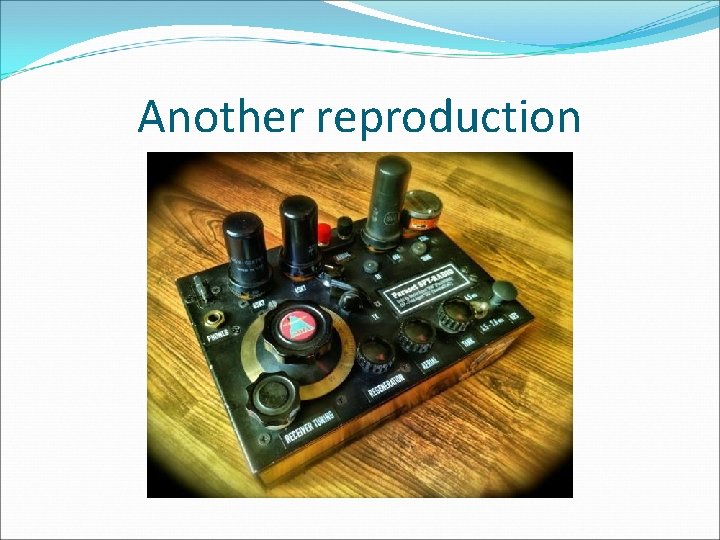
What was happening in the world at this time? Many hams around the world had several years earlier caught the bug to build a replica of the Paraset radio using tubes (Valves). There was a lot of information on building a Paraset radio on the internet, but some of it was not very easy to read at times. Pictures and drawings of dimensions were fuzzy, so it left a lot of room for error when building a Paraset on a faceplate that was only 8 ½ inches by 5 ½ inches.
Reproduction Paraset radio
Another reproduction
How did I start my Paraset building project? I had already built three of the 4 SQRP Paraset kits and they were all the transistor type and kits. I wanted to build a replica of the Whaddon MKVII model that was put in use in 1943. I always enjoyed working with tube radios and especially old type radios so this design really caught my attention. I was looking for something different to build that was a tube version radio.
How do you build a Whaddon MKVII? First step is to decide how you want it to look. Do you want a modern tube version with newer knobs and such? Do you want it to look more like the versions seen in WWII with older knobs and dials? I wanted to make it look as close to original as I could using older parts if I could find them. The hunt for parts was on. Little did I know it would take me over a year to find the needed parts.
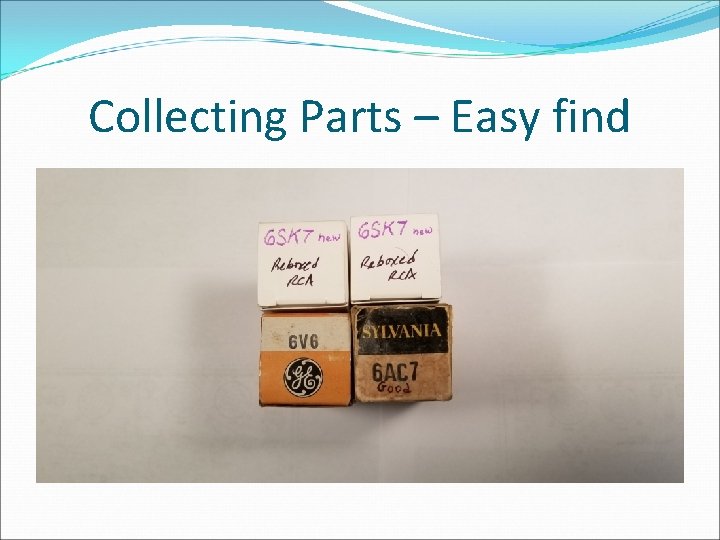
Collecting Parts – Easy find
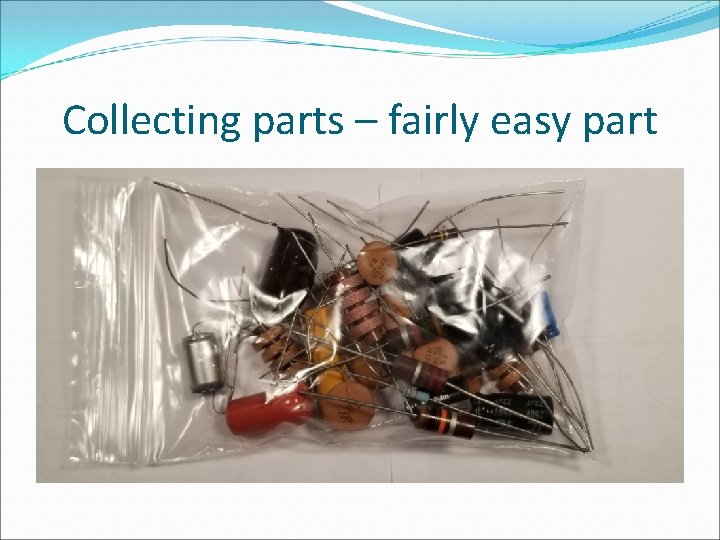
Collecting parts – fairly easy part
Collecting parts – harder parts to find
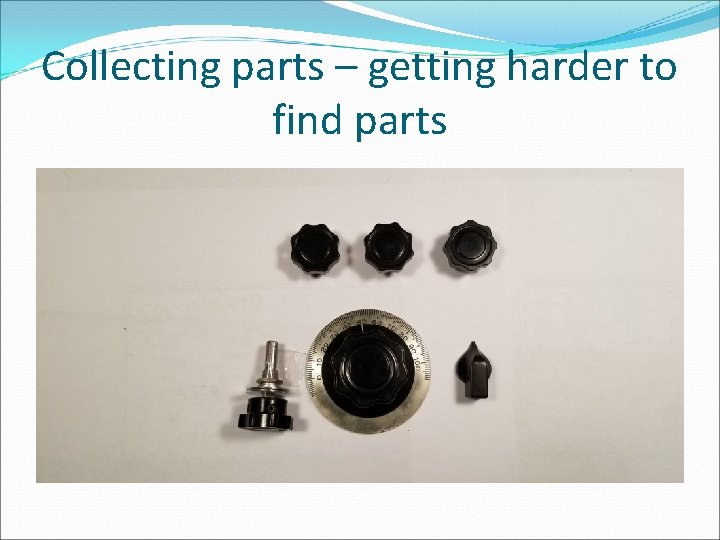
Collecting parts – getting harder to find parts
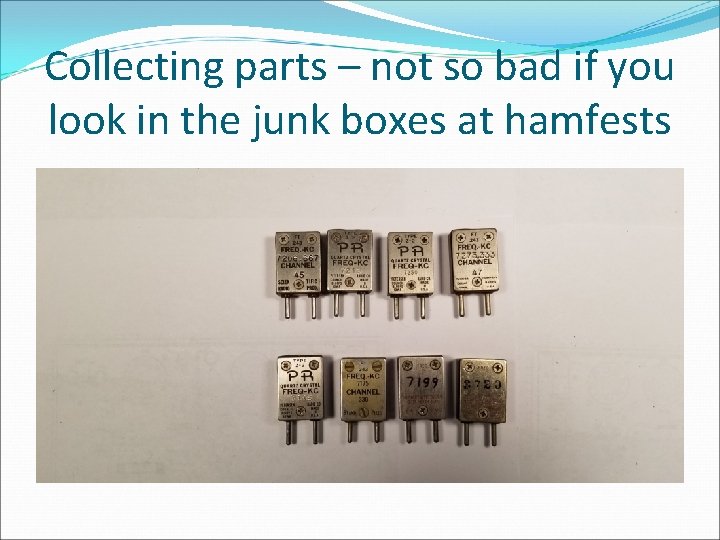
Collecting parts – not so bad if you look in the junk boxes at hamfests
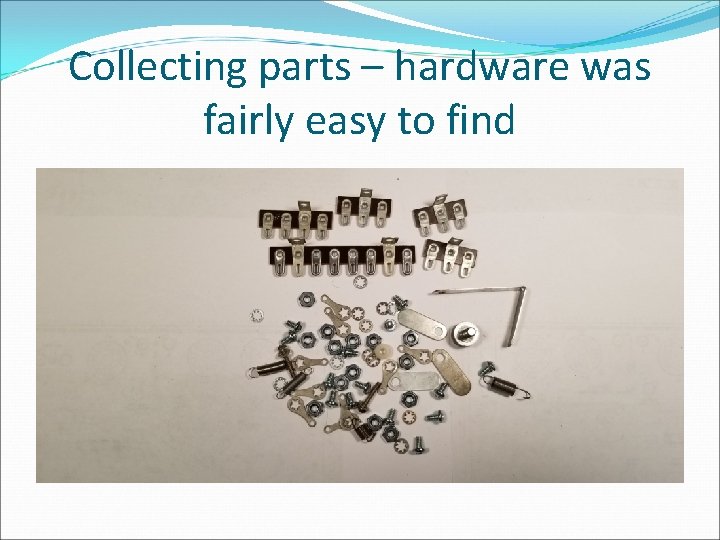
Collecting parts – hardware was fairly easy to find
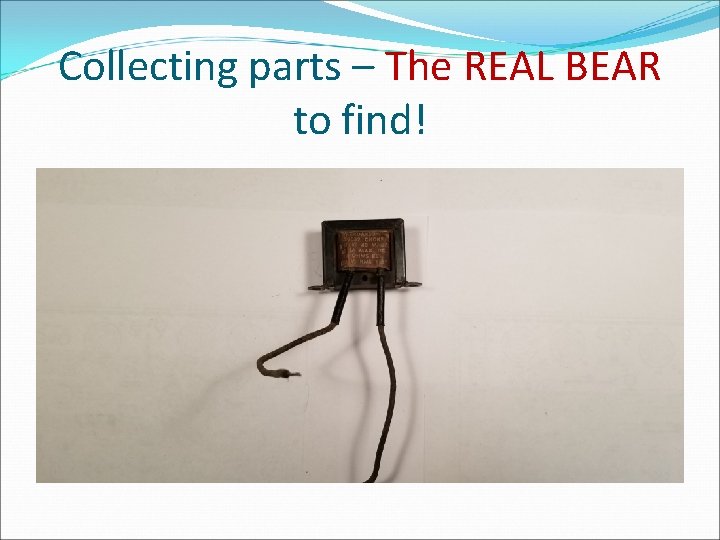
Collecting parts – The REAL BEAR to find!
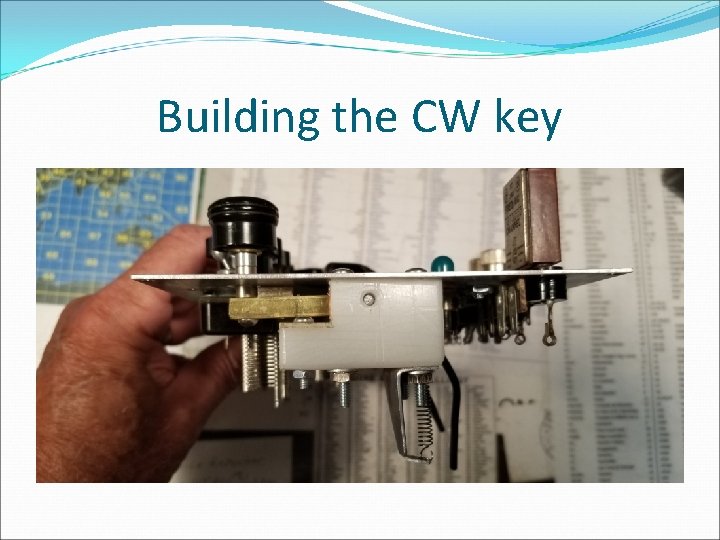
Building the CW key
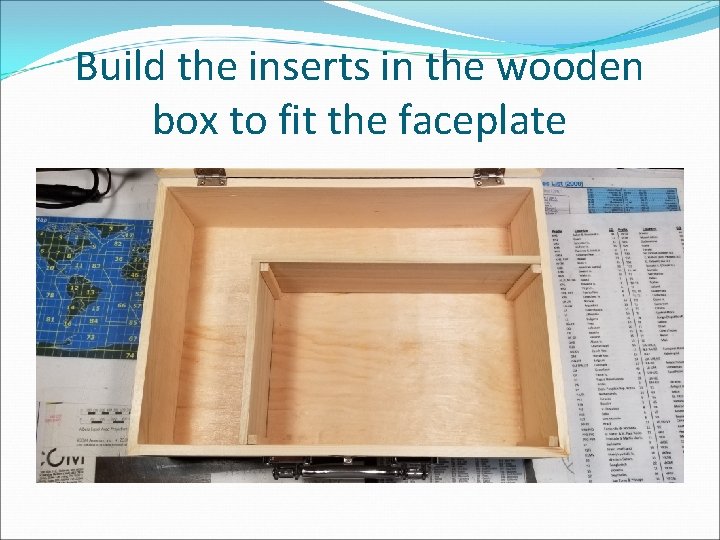
Collecting parts – the box Hobby Lobby makes three different sizes of wooden project boxes. The largest is 12 inches by 8 ½ inches by 4 inches. It had enough space for the radio, tubes and crystals plus any small extra items you might want to carry. It was $9. 99 and could be stained any way you wanted it to look, plus had a hinged top and carrying handle.
Build the inserts in the wooden box to fit the faceplate
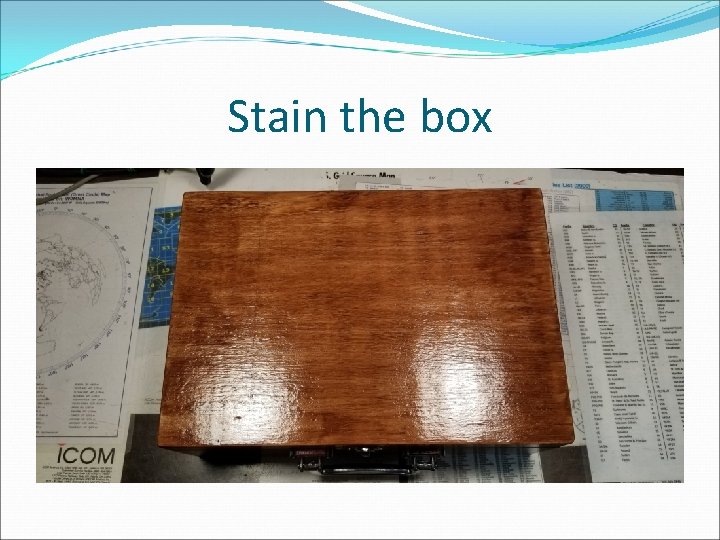
Stain the box
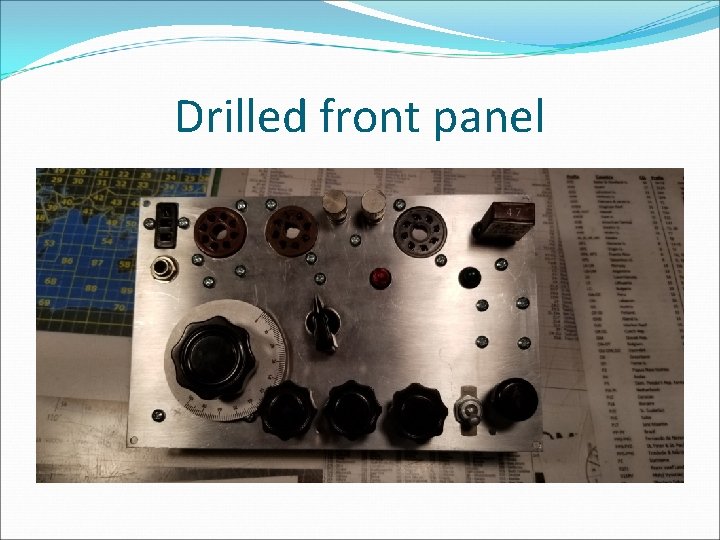
Next step in the building process Find an aluminum plate that can be cut to 8 ½ inches by 5 ½ inches. Very carefully mark where all of the holes need to be drilled for mounting all of the tube sockets and other parts. CAREFULLY drill the 48 holes and hope you didn’t make any errors. Static mount the parts and see if they fit correctly.
Drilled front panel
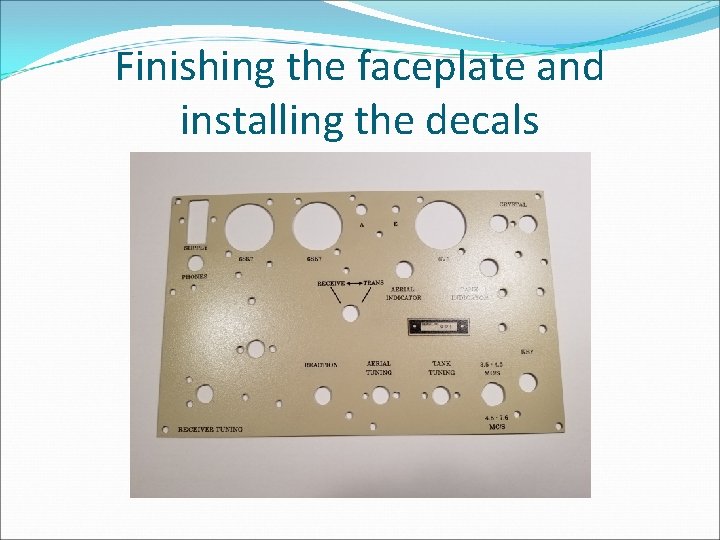
Finishing off the faceplate Search the internet until you get lucky and find a place in the Netherlands called the Paraset Warehouse. Order the decals. Wait a couple of weeks for them to arrive and hope you remember how to apply decals from your model airplane days. Not as easy at you remembered it being. Glad they sent two sets in the package. I think they knew I would mess up some of them when applying them on the faceplate.
Finishing the faceplate and installing the decals
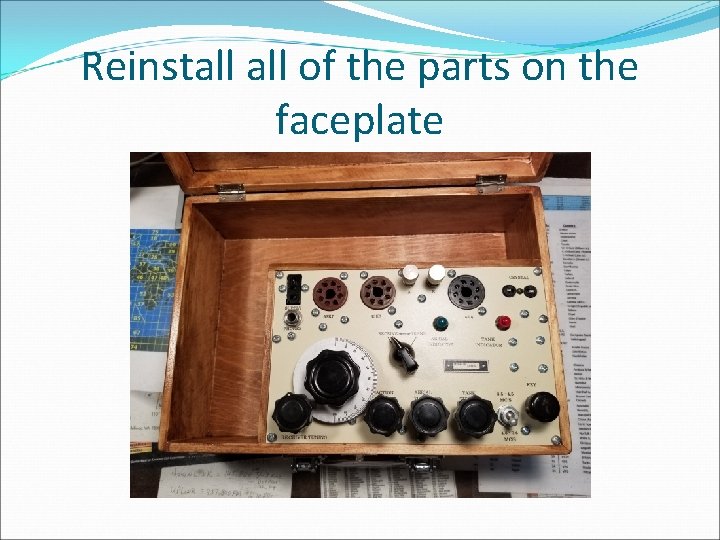
Reinstall of the parts on the faceplate
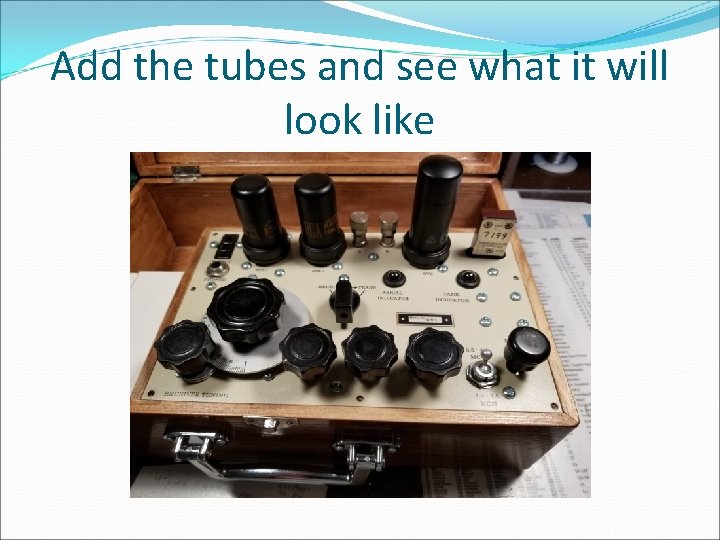
Add the tubes and see what it will look like
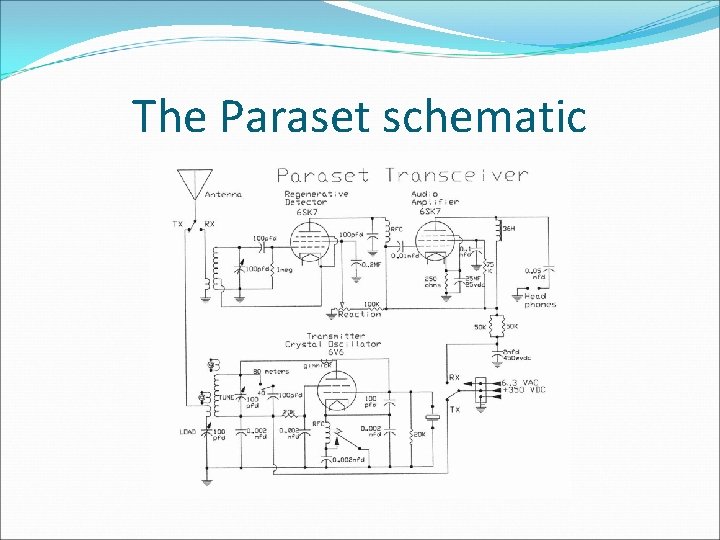
The Paraset schematic
Adding the bottom side parts – receiver section
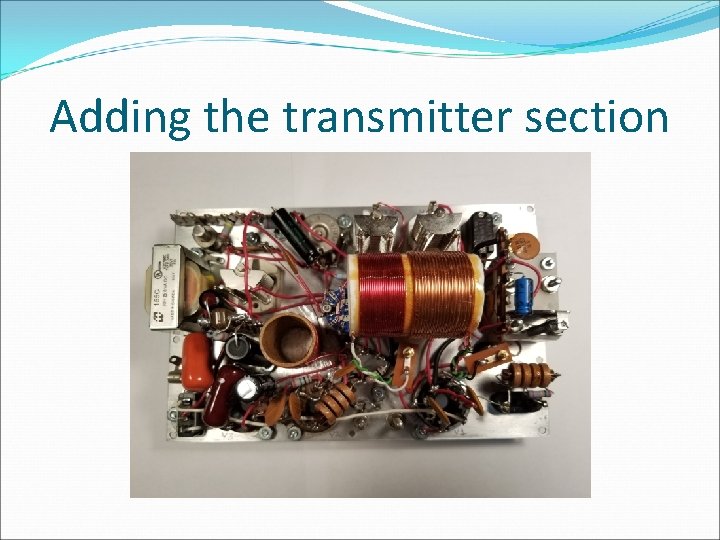
Adding the transmitter section
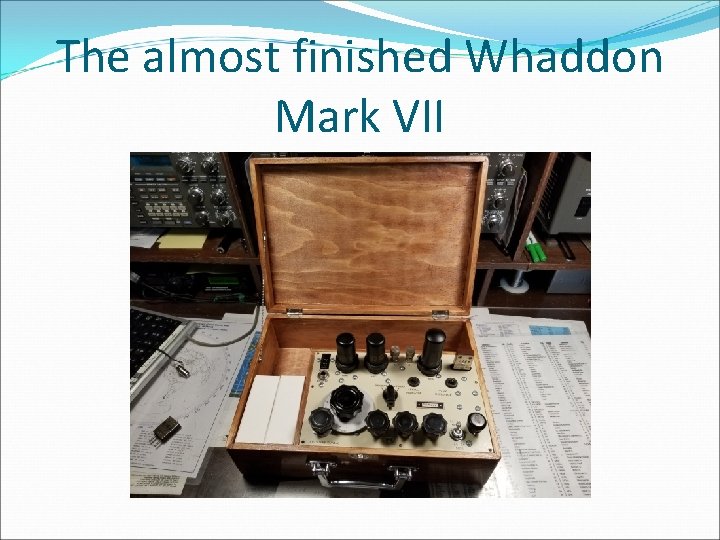
The almost finished Whaddon Mark VII
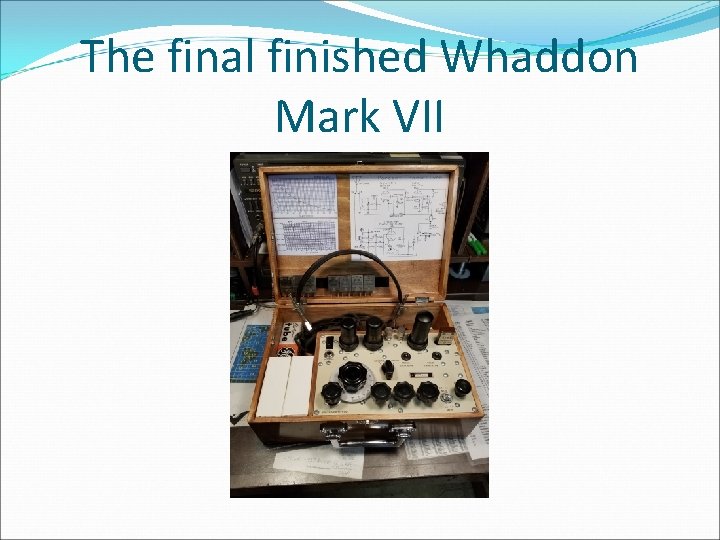
The final finished Whaddon Mark VII
How does it perform? Receive range is from 3. 00 Mhz to 7. 600 Mhz. Transmit power output is 8. 5 watts. Covers the full 80 meter and 40 meter bands.
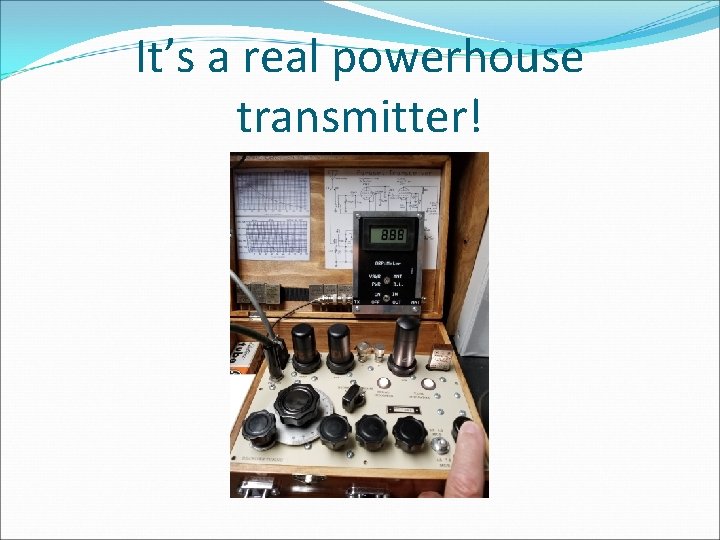
It’s a real powerhouse transmitter!
Resourses to read The Clandestine Radio Operators by Jean-Louis Perquin. Two Eggs On My Plate by Oluf Reed Olsen. The Secret History of WWII by Neil Kagan and Stephen g. Hyslop. A Woman of No Importance by Sonia Purnell. D-Day Girls: The Spies Who Armed the Resistance, Sabotaged the Nazis, and helped win WWII by Sarah Rose. Code Girls by Liza Mundy. The Woman Who Smashed Codes by Jason Fagone. Code Name: “Lise” by Larry Loftis.
Questions/Comments?