
RecoveryOriented Cognitive Therapy Actualizing Recovery Resilience and Flourishing
![“In essence, we have used [CT-R training] to try to create a continuum of](https://slidetodoc.com/presentation_image_h2/ed76f0f74723411aa744886ff21e9cfb/image-32.jpg "“In essence, we have used [CT-R training] to try to create a continuum of")
- Slides: 47
Recovery-Oriented Cognitive Therapy: Actualizing Recovery, Resilience, and Flourishing Paul M. Grant, Ph. D. Ellen Inverso, Psy. D. Aaron Brinen, Psy. D. National Alliance on Mental Illness
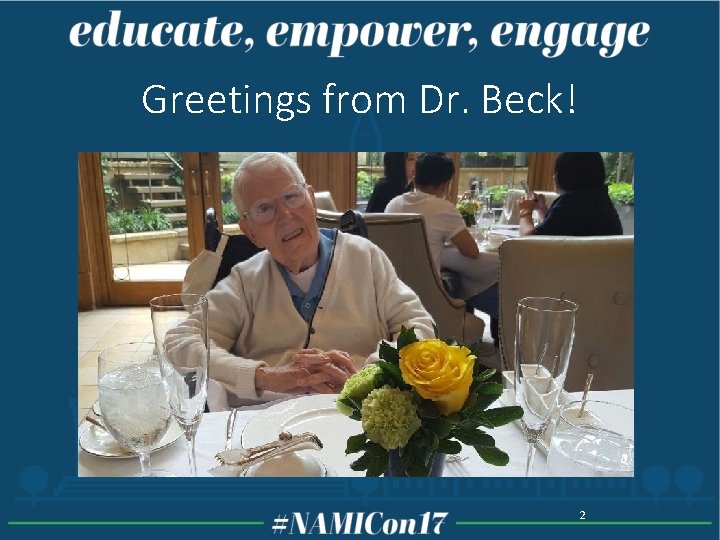
Greetings from Dr. Beck! 2
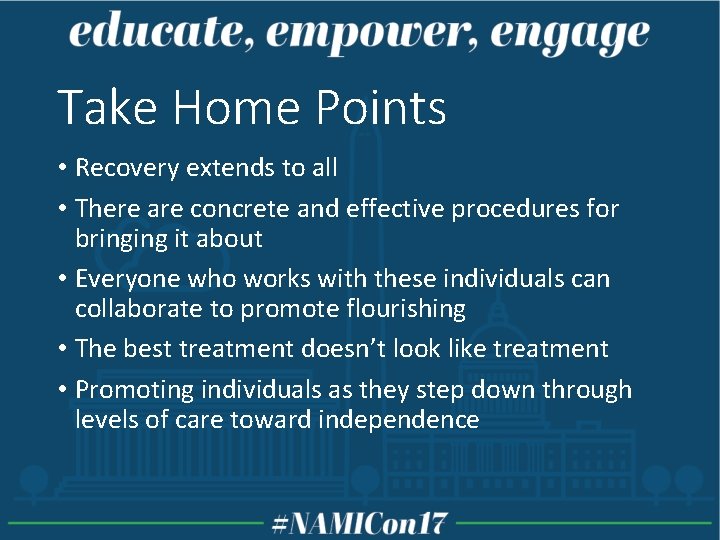
Take Home Points • Recovery extends to all • There are concrete and effective procedures for bringing it about • Everyone who works with these individuals can collaborate to promote flourishing • The best treatment doesn’t look like treatment • Promoting individuals as they step down through levels of care toward independence
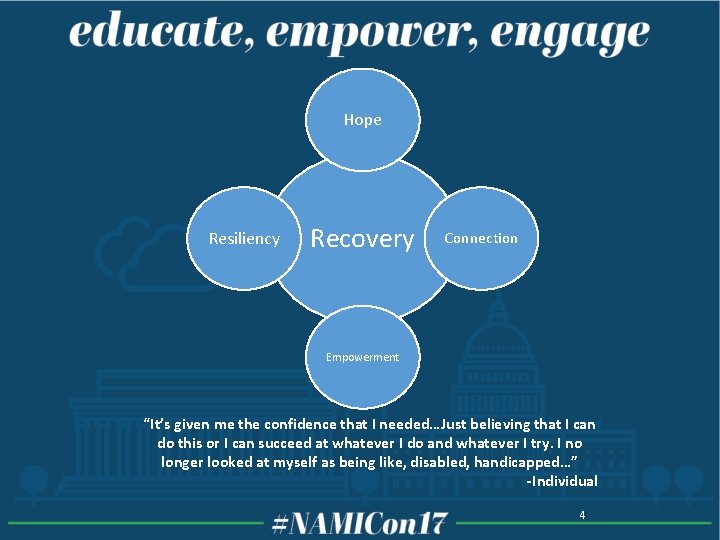
Hope Resiliency Recovery Connection Empowerment “It’s given me the confidence that I needed…Just believing that I can do this or I can succeed at whatever I do and whatever I try. I no longer looked at myself as being like, disabled, handicapped…” -Individual 4
Recovery extends to all
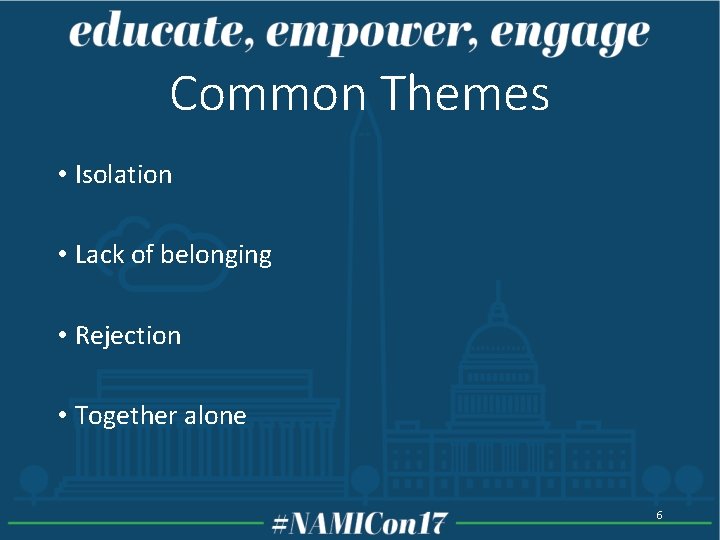
Common Themes • Isolation • Lack of belonging • Rejection • Together alone 6
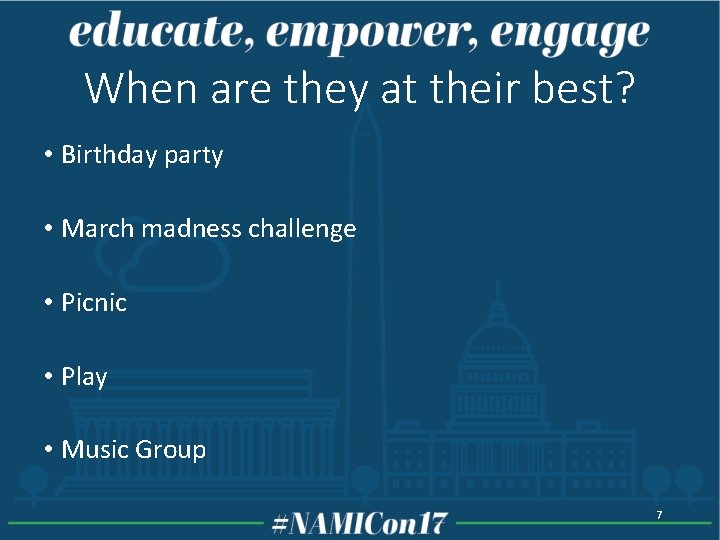
When are they at their best? • Birthday party • March madness challenge • Picnic • Play • Music Group 7
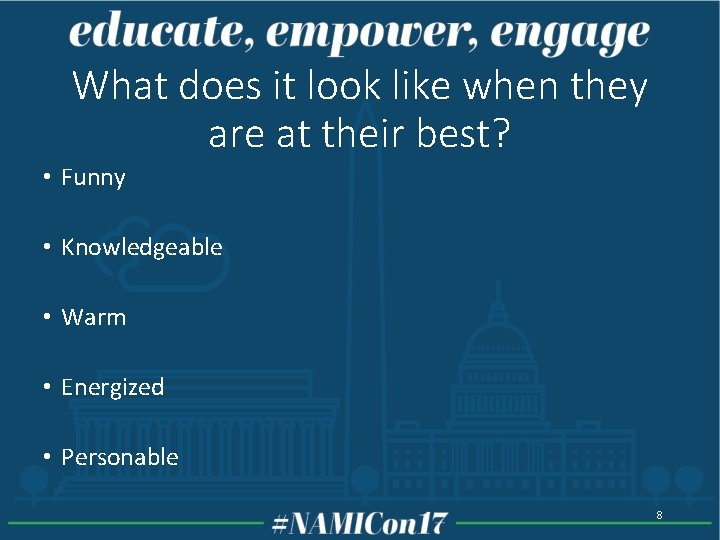
What does it look like when they are at their best? • Funny • Knowledgeable • Warm • Energized • Personable 8
Concrete and effective procedures for bringing about recovery 9
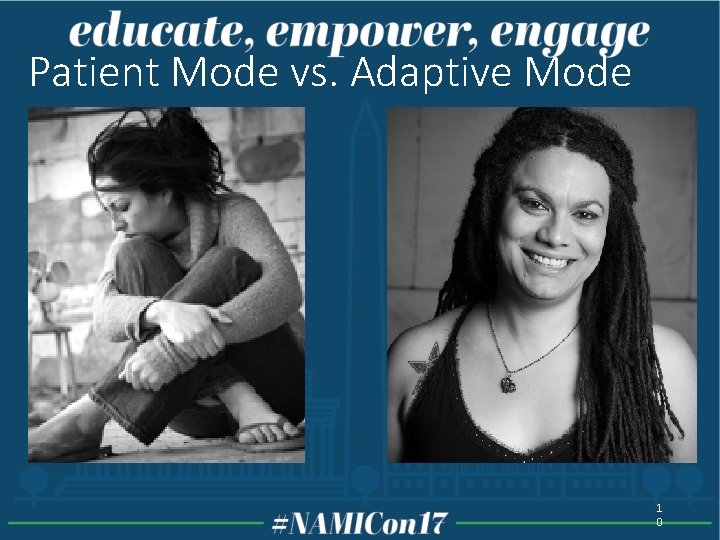
Patient Mode vs. Adaptive Mode 1 0
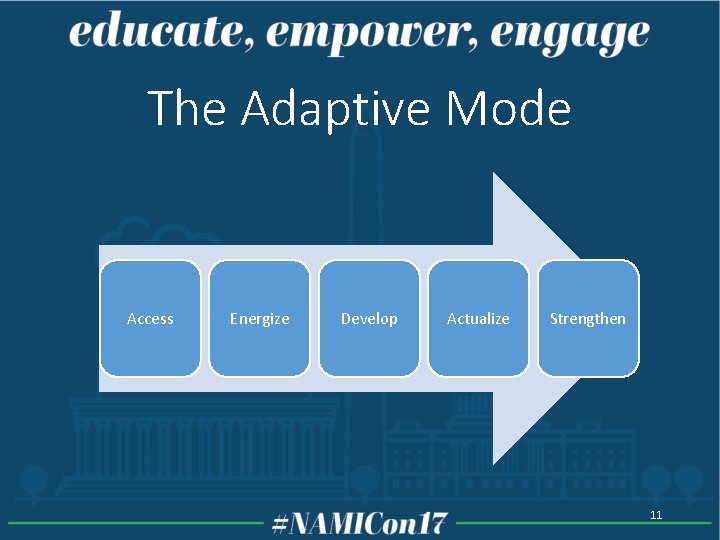
The Adaptive Mode Access Energize Develop Actualize Strengthen 11
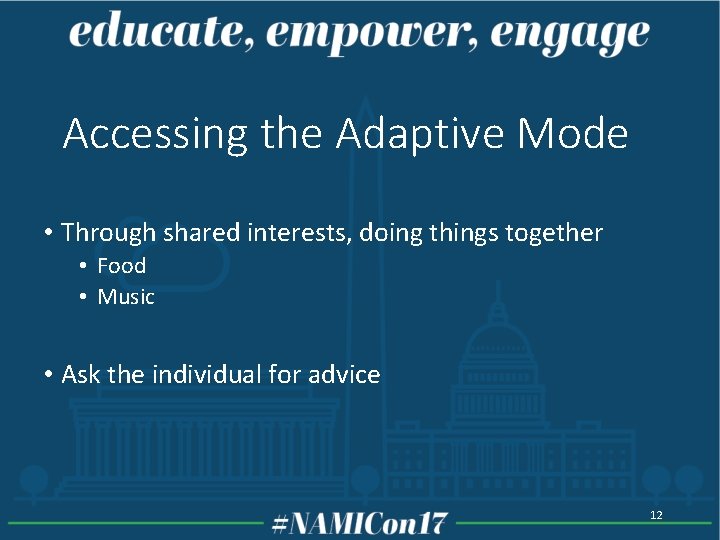
Accessing the Adaptive Mode • Through shared interests, doing things together • Food • Music • Ask the individual for advice 12
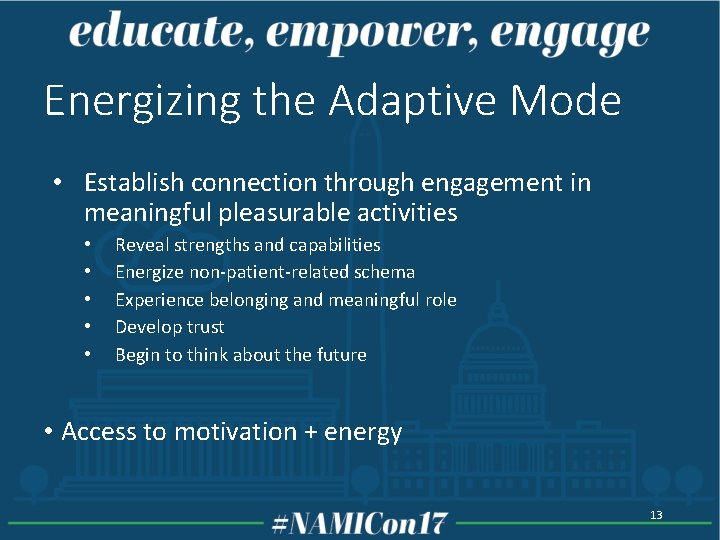
Energizing the Adaptive Mode • Establish connection through engagement in meaningful pleasurable activities • • • Reveal strengths and capabilities Energize non-patient-related schema Experience belonging and meaningful role Develop trust Begin to think about the future • Access to motivation + energy 13
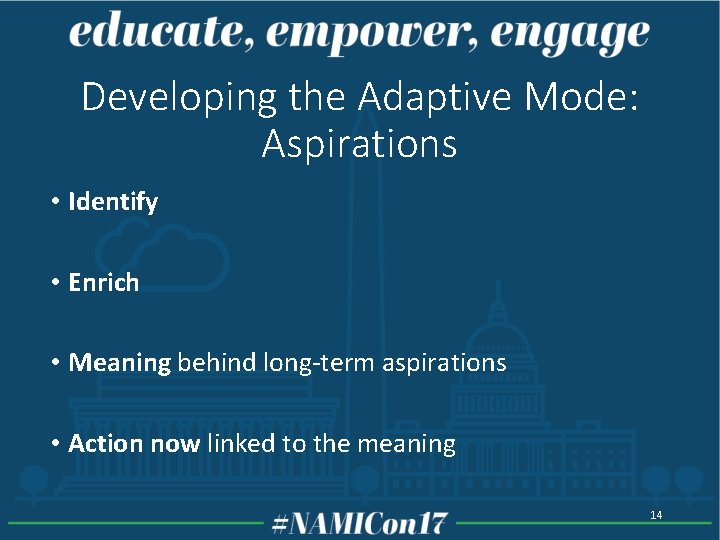
Developing the Adaptive Mode: Aspirations • Identify • Enrich • Meaning behind long-term aspirations • Action now linked to the meaning 14
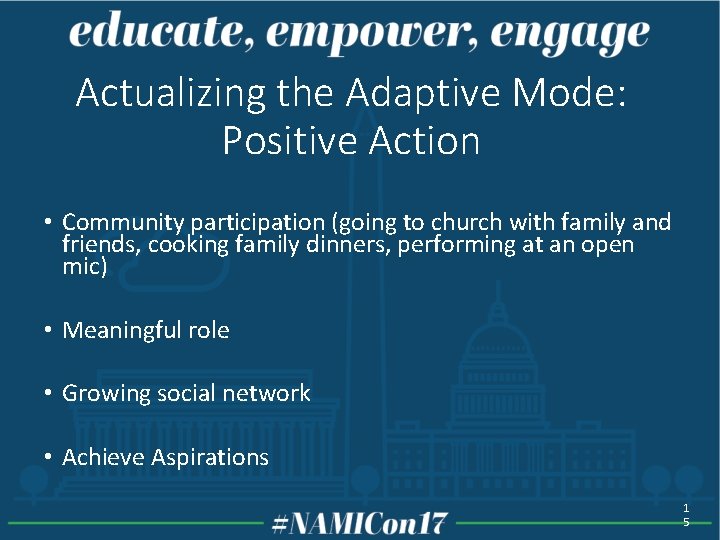
Actualizing the Adaptive Mode: Positive Action • Community participation (going to church with family and friends, cooking family dinners, performing at an open mic) • Meaningful role • Growing social network • Achieve Aspirations 1 5
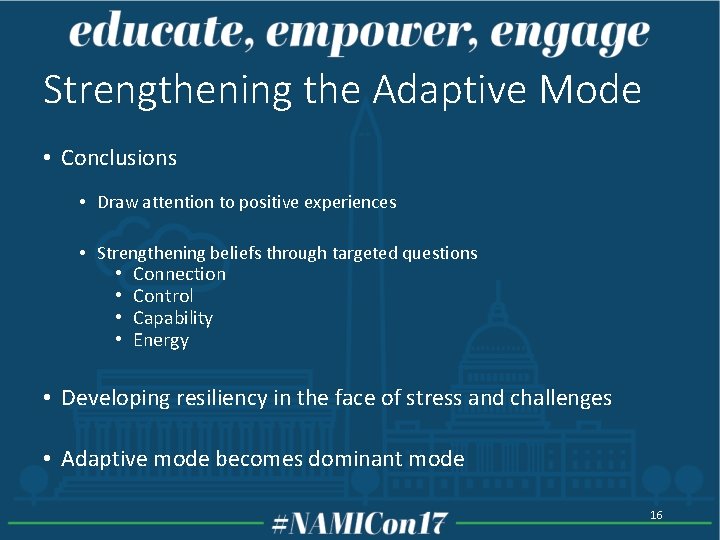
Strengthening the Adaptive Mode • Conclusions • Draw attention to positive experiences • Strengthening beliefs through targeted questions • Connection • Control • Capability • Energy • Developing resiliency in the face of stress and challenges • Adaptive mode becomes dominant mode 16
Deactivating the Patient Mode: Neutralizing Challenges • Positive beliefs strengthened • Negative beliefs weakened • Resiliency-promoting skills and interventions 17
It Works
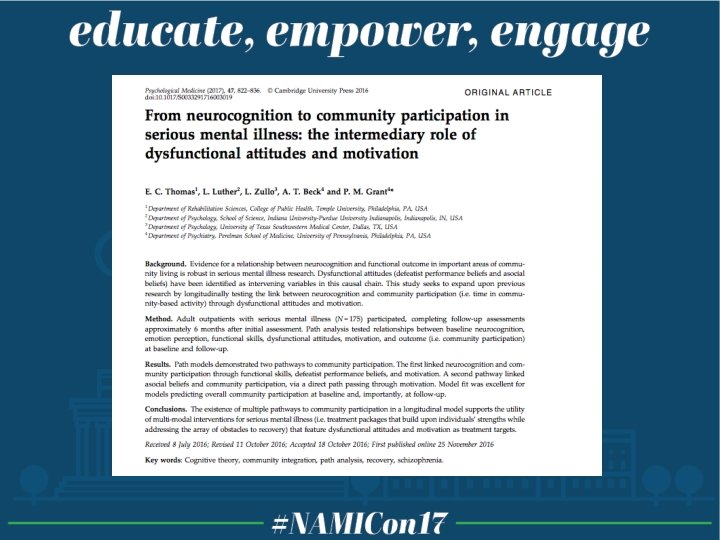
Pathway Paper • Asocial and defeatist beliefs are linked to community participation • These beliefs are a part of the patient mode 20
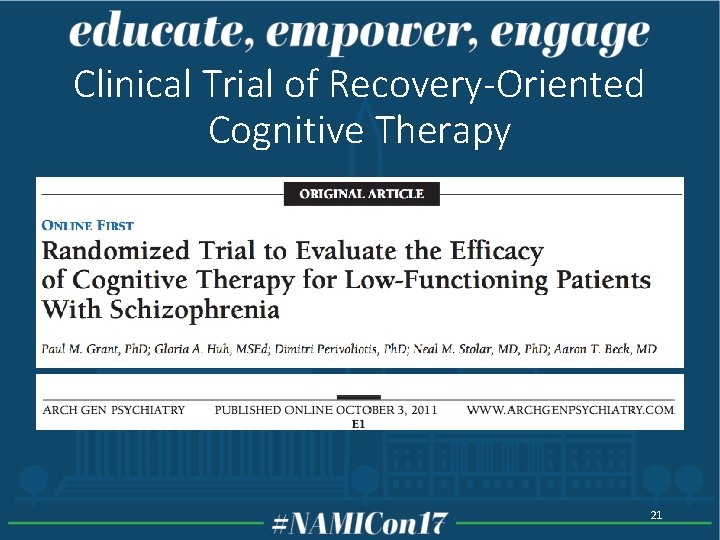
Clinical Trial of Recovery-Oriented Cognitive Therapy 21
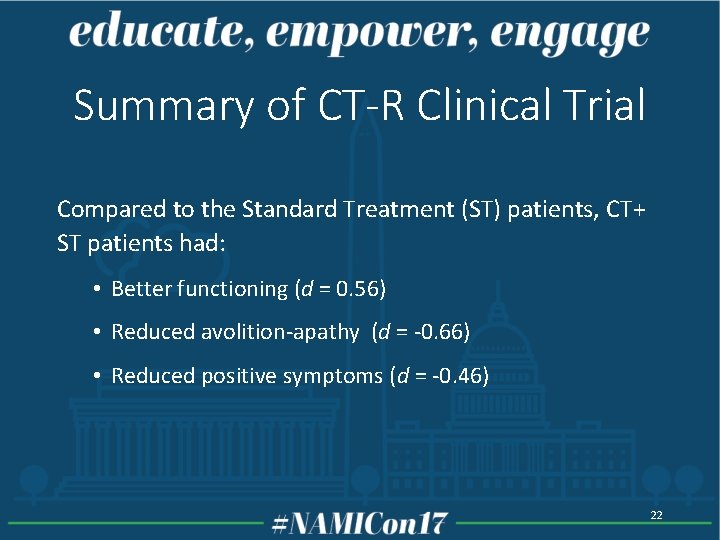
Summary of CT-R Clinical Trial Compared to the Standard Treatment (ST) patients, CT+ ST patients had: • Better functioning (d = 0. 56) • Reduced avolition-apathy (d = -0. 66) • Reduced positive symptoms (d = -0. 46) 22
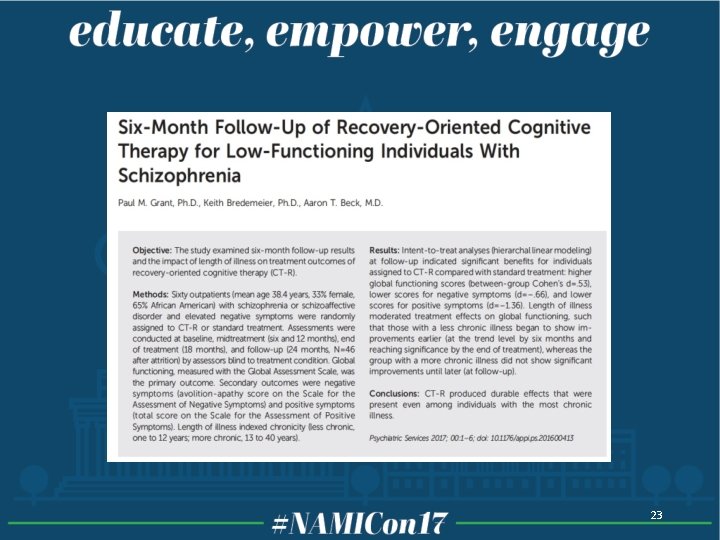
23
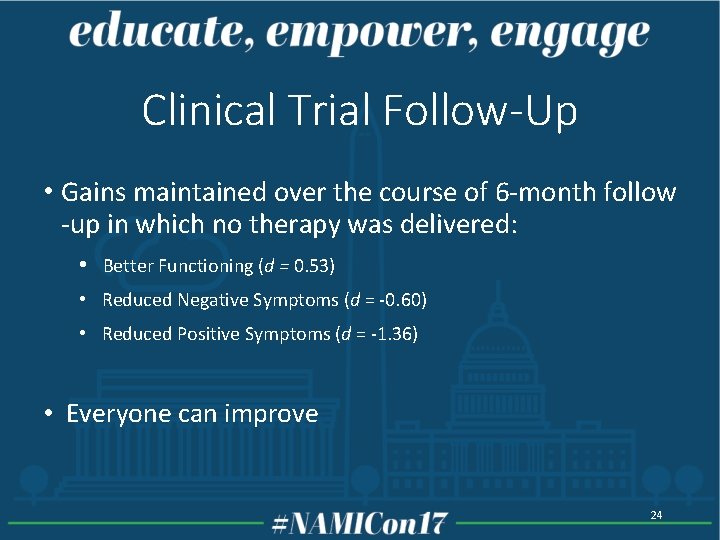
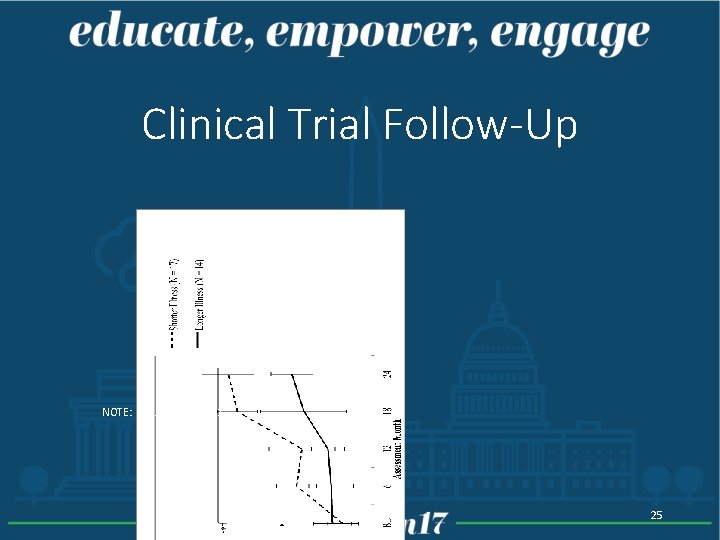
Clinical Trial Follow-Up • Gains maintained over the course of 6 -month follow -up in which no therapy was delivered: • Better Functioning (d = 0. 53) • Reduced Negative Symptoms (d = -0. 60) • Reduced Positive Symptoms (d = -1. 36) • Everyone can improve 24
Clinical Trial Follow-Up NOTE: * p. 05, ** p <. 01 25
Neurocognition Review • Performance on neurocognitive tests do not truly reflect potential • Factors that get in the way of performance on these tests include: • • • Stress Beliefs Effort Context Symptoms
Mechanism of Change in the Clinical Trial • Changes in attitudes, self-concept, hopelessness relate to changes in behavioral outcome • Changes in neurocognitive test performance do not relate to these outcomes
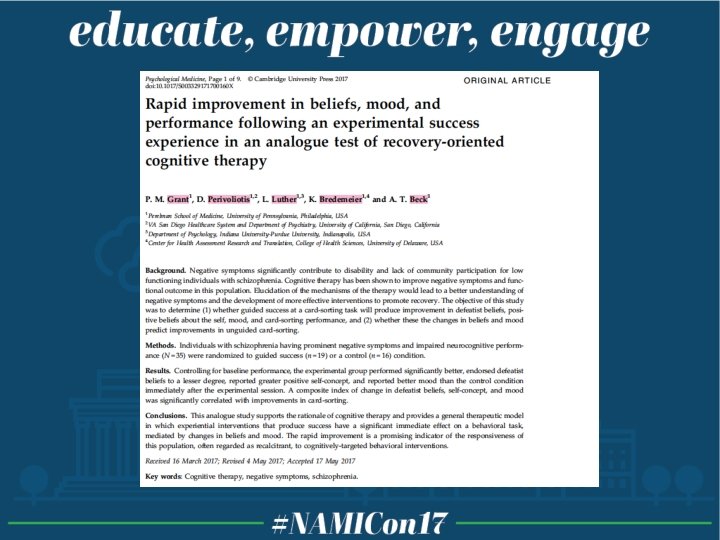
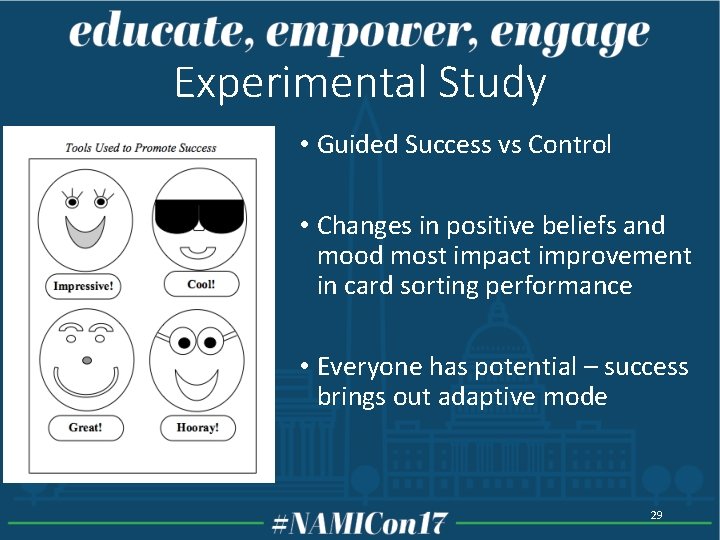
Experimental Study • Guided Success vs Control • Changes in positive beliefs and mood most impact improvement in card sorting performance • Everyone has potential – success brings out adaptive mode 29
Promoting individuals as they step down through levels of care toward independence
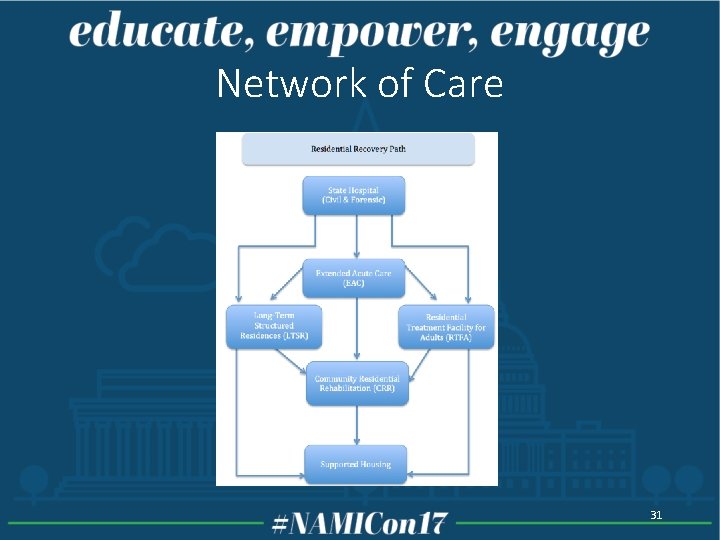
Network of Care 31
“In essence, we have used [CT-R training] to try to create a continuum of care for these very challenged citizens, who otherwise might languish in institutions bereft of hope for a better life. Succinctly put, [the Beck team] have performed miracles…” -Lawrence Real, M. D. Chief Medical Officer Philadelphia Department of Behavioral Health and Intellectual dis. Ability Services
State Hospital • Forensic • Step-down units 33
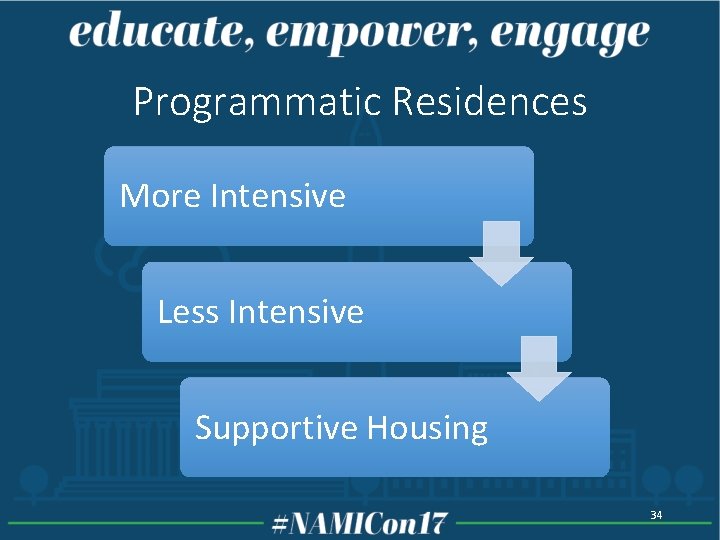
Programmatic Residences More Intensive Less Intensive Supportive Housing 34
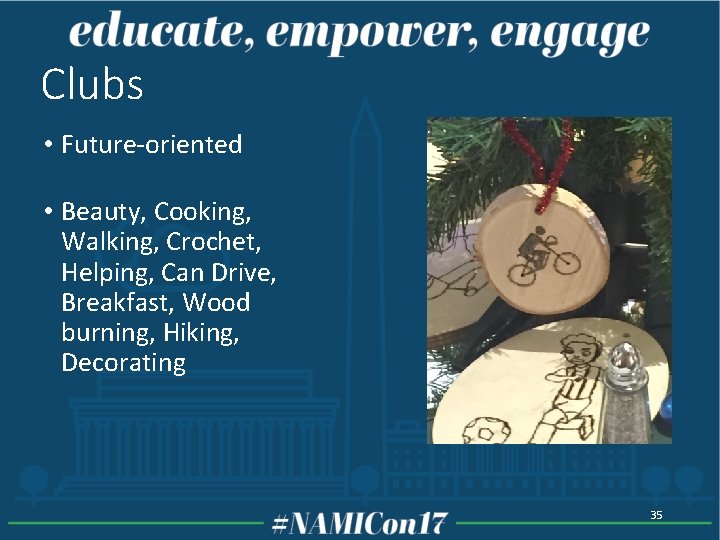
Clubs • Future-oriented • Beauty, Cooking, Walking, Crochet, Helping, Can Drive, Breakfast, Wood burning, Hiking, Decorating 35
Feedback From Individuals
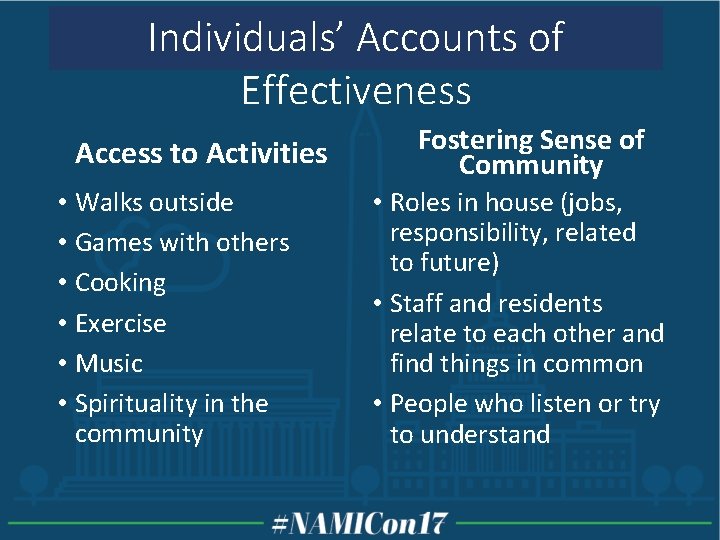
Individuals’ Accounts of Effectiveness Access to Activities • Walks outside • Games with others • Cooking • Exercise • Music • Spirituality in the community Fostering Sense of Community • Roles in house (jobs, responsibility, related to future) • Staff and residents relate to each other and find things in common • People who listen or try to understand
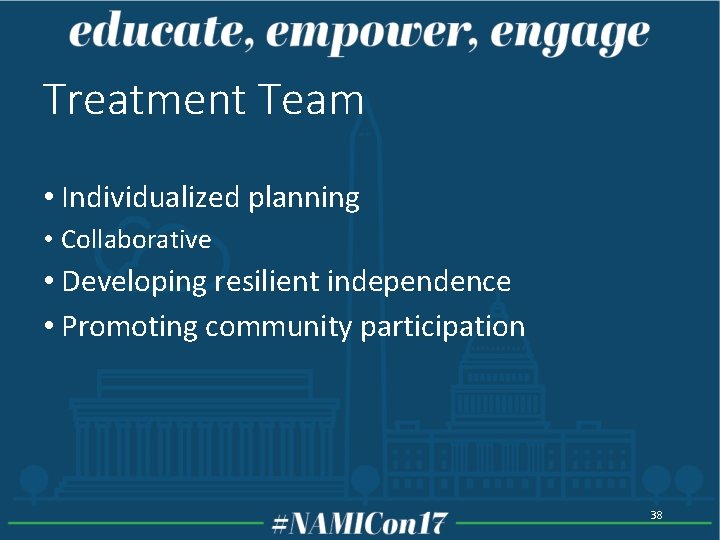
Treatment Team • Individualized planning • Collaborative • Developing resilient independence • Promoting community participation 38
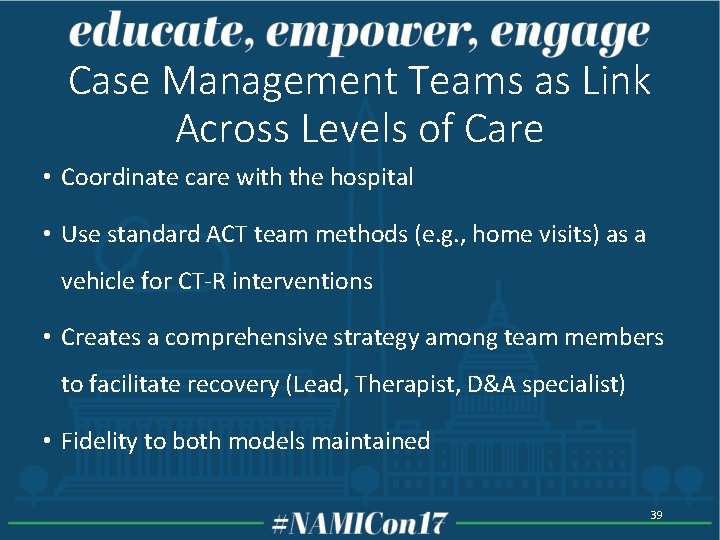
Case Management Teams as Link Across Levels of Care • Coordinate care with the hospital • Use standard ACT team methods (e. g. , home visits) as a vehicle for CT-R interventions • Creates a comprehensive strategy among team members to facilitate recovery (Lead, Therapist, D&A specialist) • Fidelity to both models maintained 39
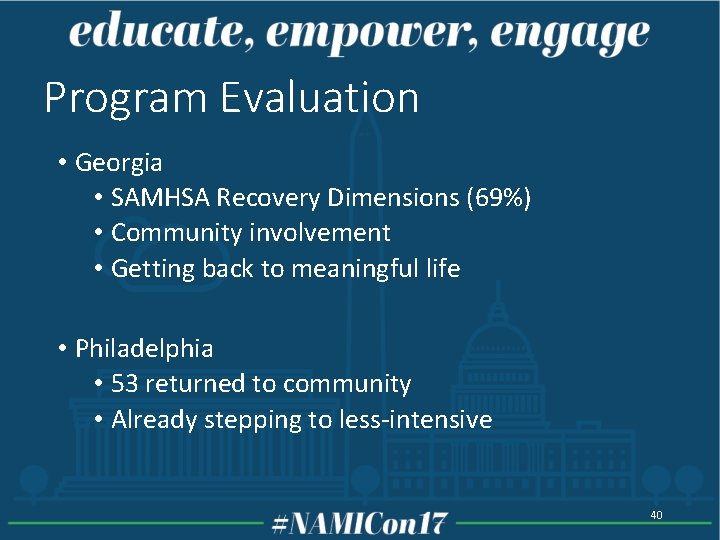
Program Evaluation • Georgia • SAMHSA Recovery Dimensions (69%) • Community involvement • Getting back to meaningful life • Philadelphia • 53 returned to community • Already stepping to less-intensive 40
Frontiers
Supportive Housing • Promote Resilience • Grow and sustain social network • Hook up to resources • Collaboration with Mark Salzer of Temple University 42
Acting Class
VA Study
Families & Peers • In an emerging crisis: • Intervene early 1. What are they doing when they are at their best 0 ask to do that 2. Offer an opportunity to help you
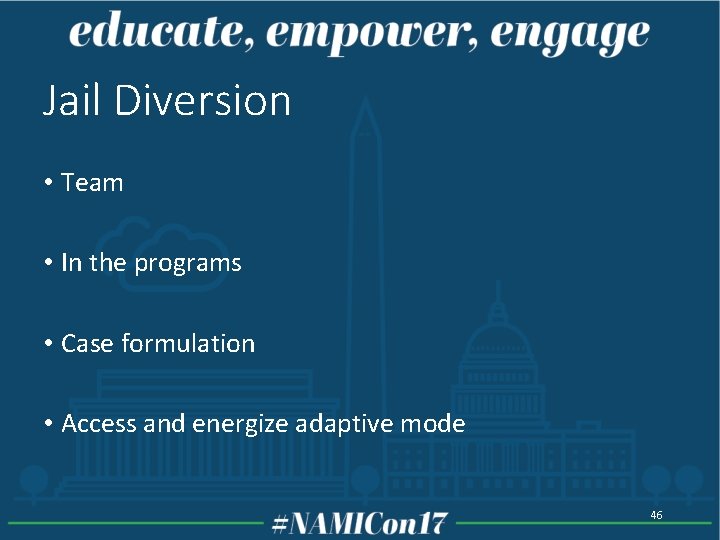
Jail Diversion • Team • In the programs • Case formulation • Access and energize adaptive mode 46
Thank you Paul M. Grant, Ph. D. Department of Psychiatry, Perelman School of Medicine, University of Pennsylvania, 3535 Market Street, Room 3049 Philadelphia, PA 19104 Telephone: (215) 898 -1825 Email: pgrant@mail. med. upenn. edu